
Edit: the response to this article got out of control. What started as a simple confession of being thankful to leave a place I spent my own money and time traveling to (something I honestly have not experienced in 20 years of travel through dozens of countries) turned into…see the comments for yourself, if you’d like. I loved Morocco; the people I met were incredibly warm and welcoming, and I am thankful for the opportunity to travel there. I would recommend anyone go if they want to. I still believe it’s okay to be honest with ourselves when writing about travel and won’t sugarcoat my experience, but maybe next time I won’t publish something from the bus as I’m leaving town.
Maybe that’s a level of immediacy that doesn’t belong on the internet.
If you’ve read any of the travel pieces I’ve written here over the last three years, it might sound like I’ve never met a place I disliked. Up until five days ago, I think that honestly might have been true. I’m pretty sure I’ve even said those exact words before. I worried for some time that maybe I was being too one-dimensional. Before I get too far, I want to be clear that I think when traveling to places that aren’t as well-off as what we’re used to, there needs to be a certain amount of looking beyond minor discomforts to enjoy and appreciate them. I believe wholeheartedly that if you’re traveling well, you should be uncomfortable at times. That act of traveling to different places and facing uncomfortable realities is where I think you learn to have a better understanding of the world, how despite different circumstances in life, we’re all basically the same. You will think differently about how you brush your teeth when you go somewhere people spend eight hours of their day moving water from a well to get it into their homes and grow food.
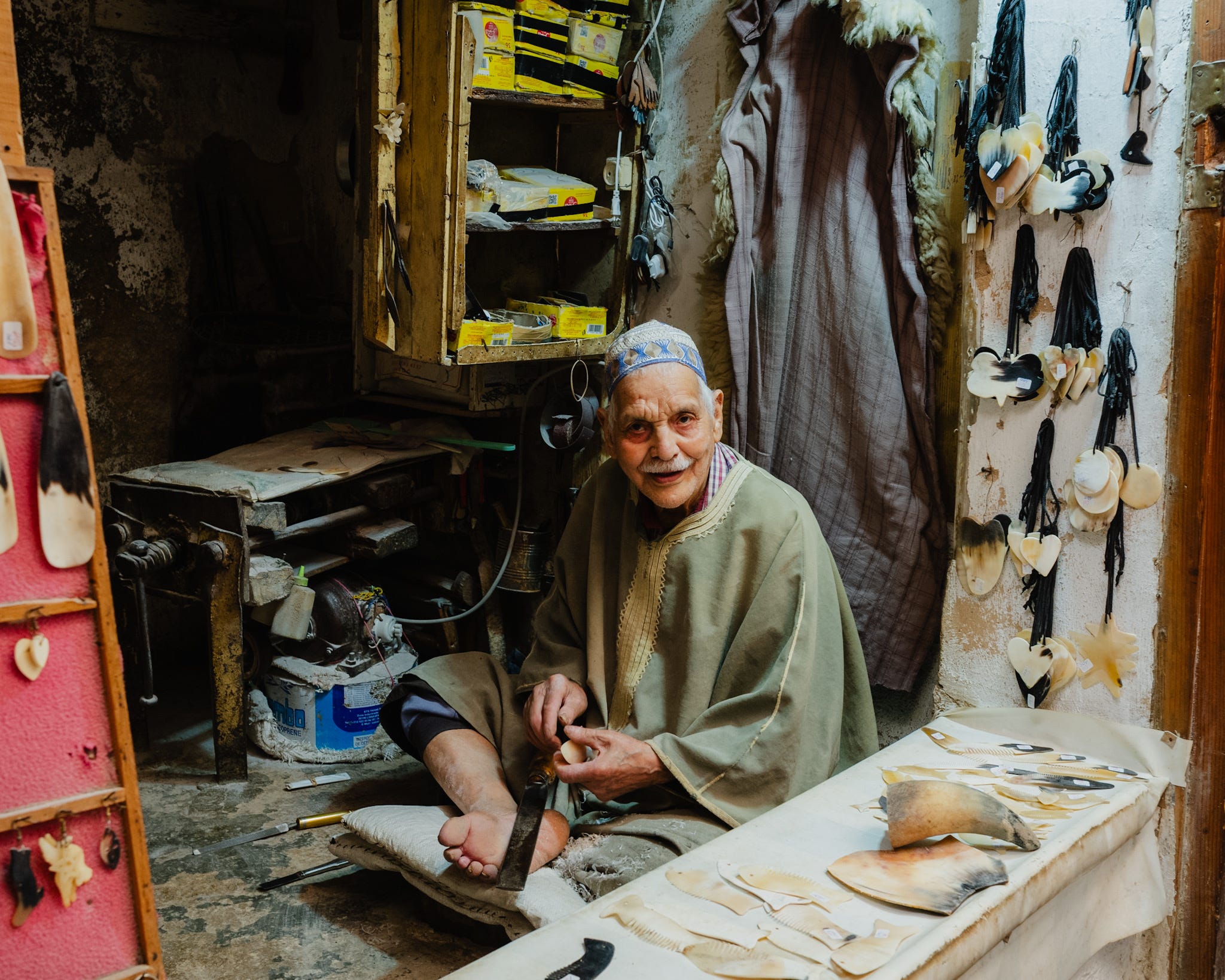
A note on this post: the portraits of individual people here and anywhere I’ve been in Morocco were taken after asking permission. As a rule, I wouldn’t recommend practicing street photography in the way most of us think about it in Morocco, as people really hate the idea of their photo being taken without permission.
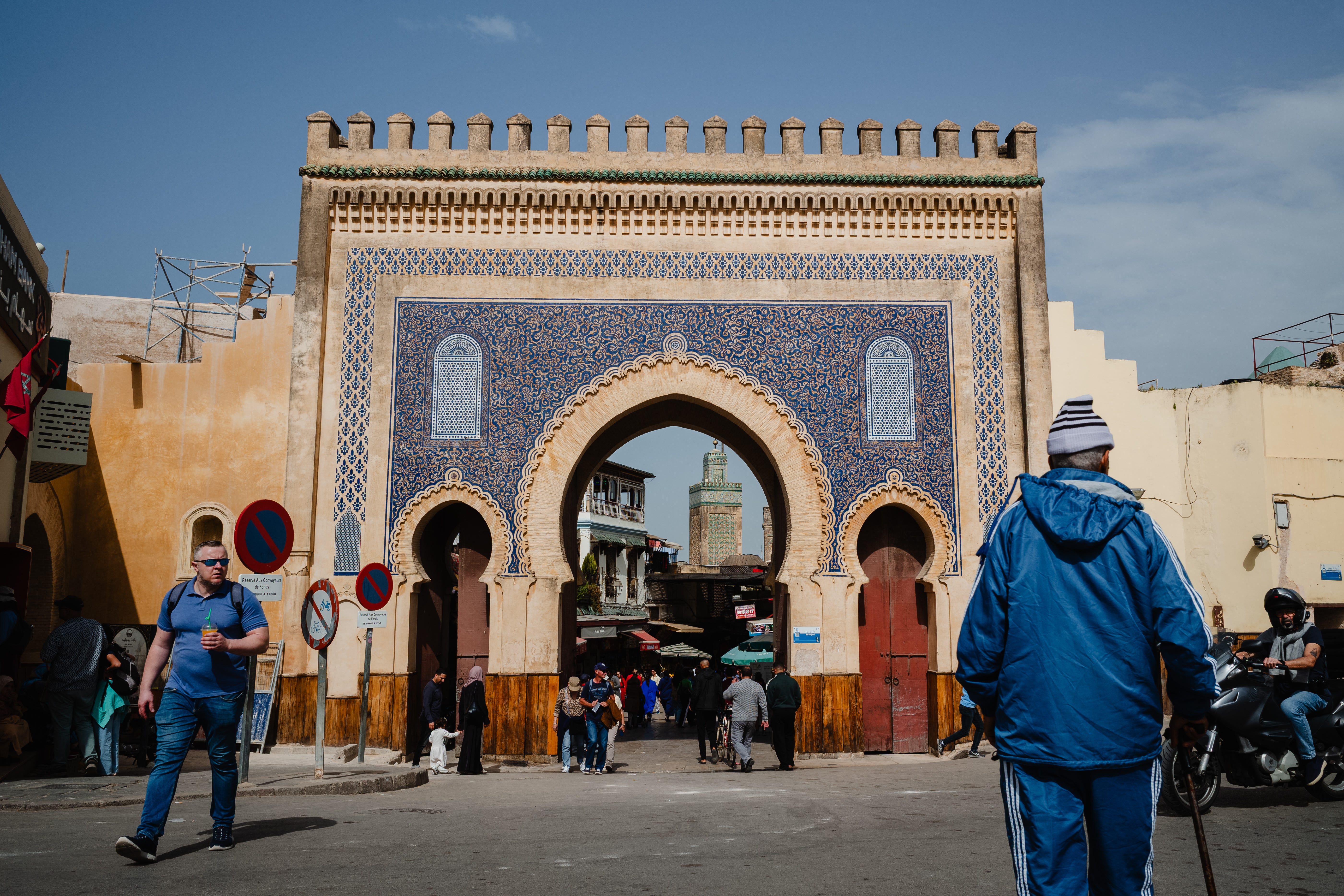
Just like I don’t want to write glowy platitudes that sound AI-generated about every place, I also don’t want to sound like an angry Yelper reviewing an entire city or country over a few uncomfortable situations. The gist of this is that I had a pretty rough time in Fes, but it’s also true that it’s like no other place on earth. Some of that truth can be interesting and beautiful at times. Some of it is also deeply uncomfortable.
I planned this four week trip to Morocco around four main areas I wanted to see: Marrakech and the High Atlas, Essaouira and a few smaller coastal towns, the desert near the Algerian border, and Fes. Fes, the Spiritual Capital of Morocco, seemed like the place I thought I’d love the most, so I allocated five days here before I continue north and fly home from Tangier. I read Paul Bowles’ The Spiders House and plenty of accounts and assertions that the medina in Fes hasn’t changed much in 70 or even 700 years.
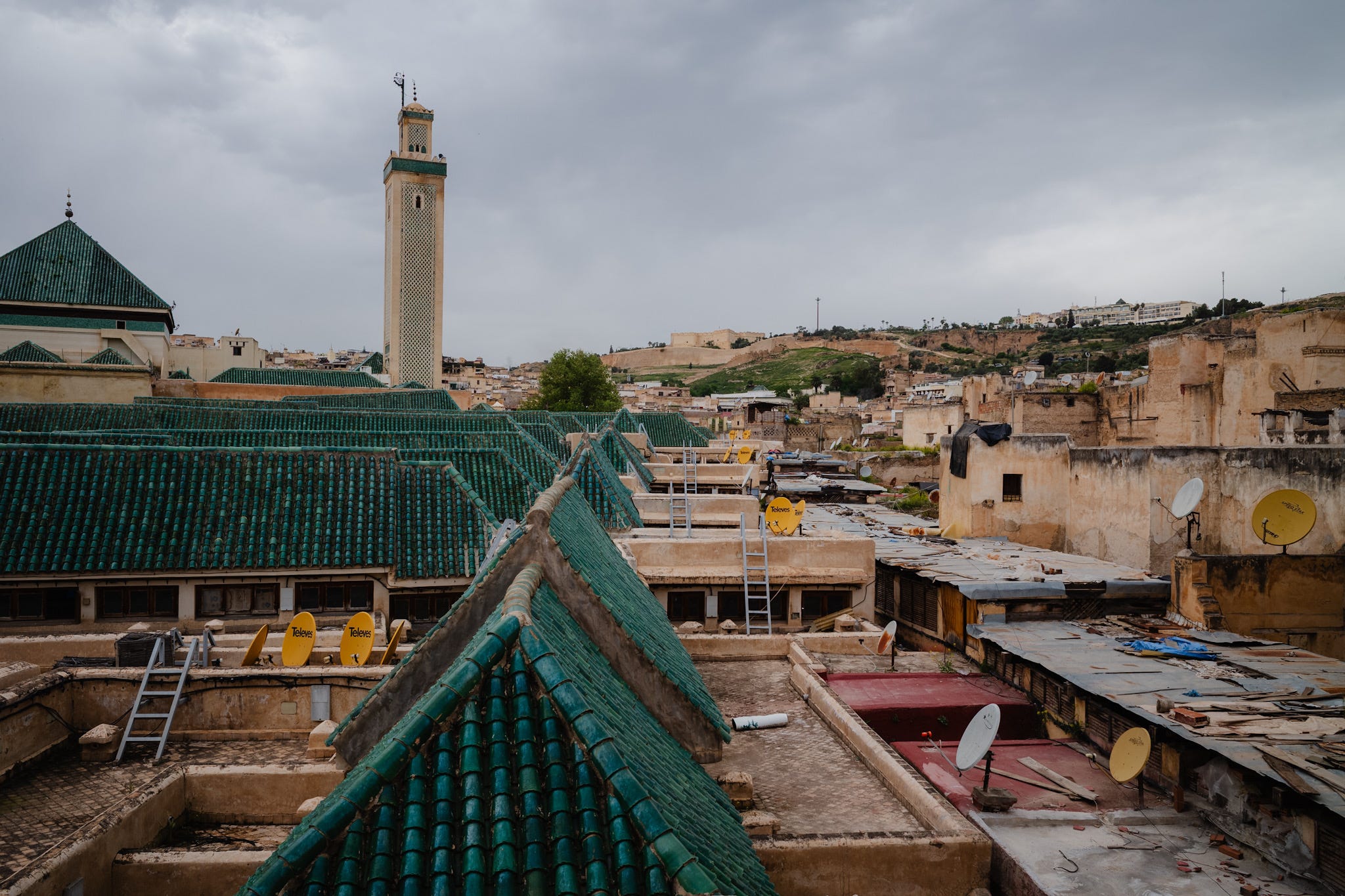
The expression trapped in time accompanies a lot of writing on Fes’ notoriously confusing labyrinth of the old city, which was founded by Idris I in 789 A.D. and later expanded by his son, Idris II, who founded a separate settlement on the opposite bank of the river in 809 A.D. It’s a city that was deliberately designed to be deceptive as a form of protection from potential intruders. Fes is the oldest of Morocco’s imperial cities, and because it’s endured under so many different occupations and dynasties over the centuries, it has texture and layers like nowhere else I’ve ever been. This character and evidence of life all seemed like something I’d really love. While I think saying it’s trapped in time is a little reductive when there’s a satellite dish on every roof and an iPhone in every person’s hand, it’s true that the layout of the streets hasn’t changed much or at all.
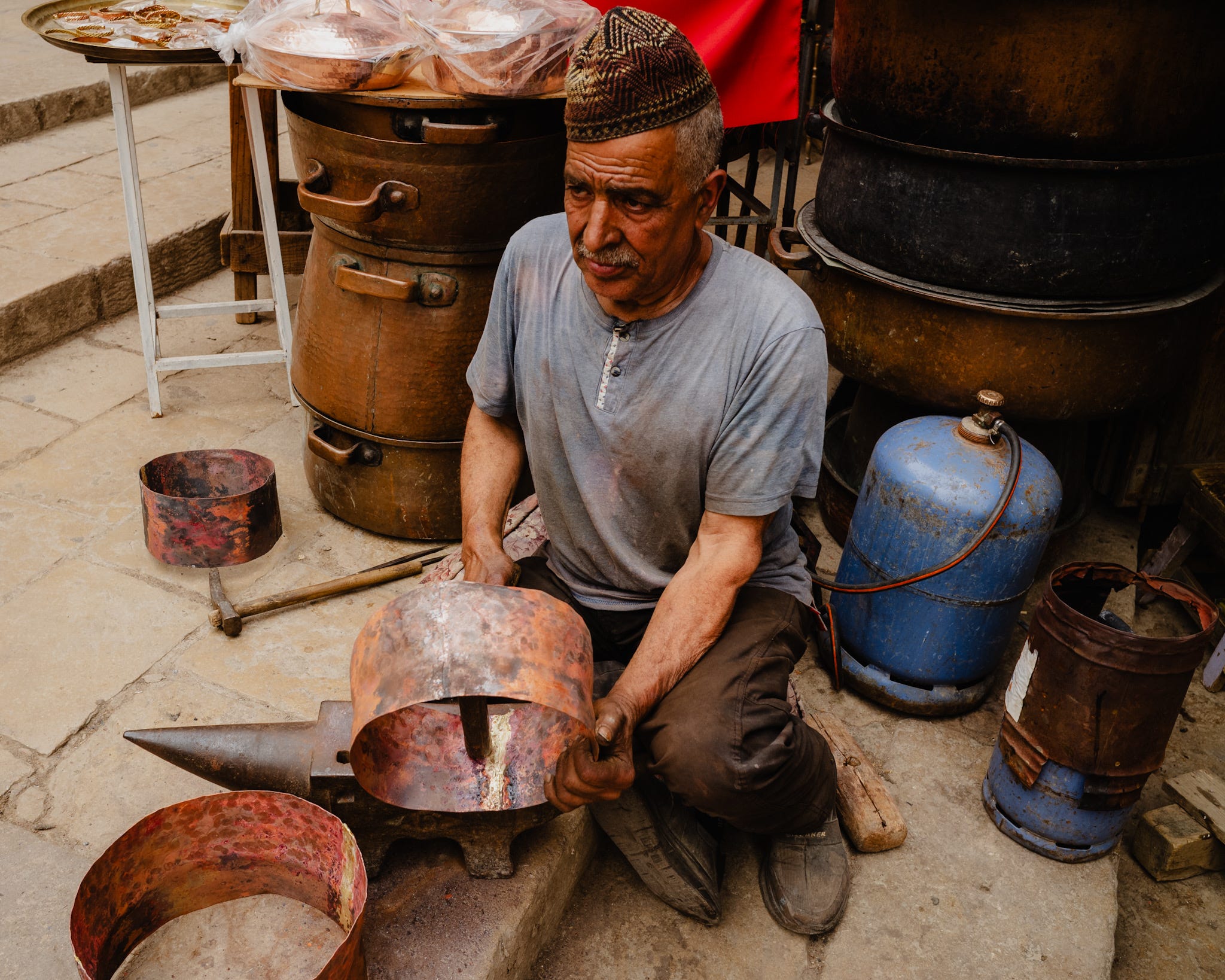
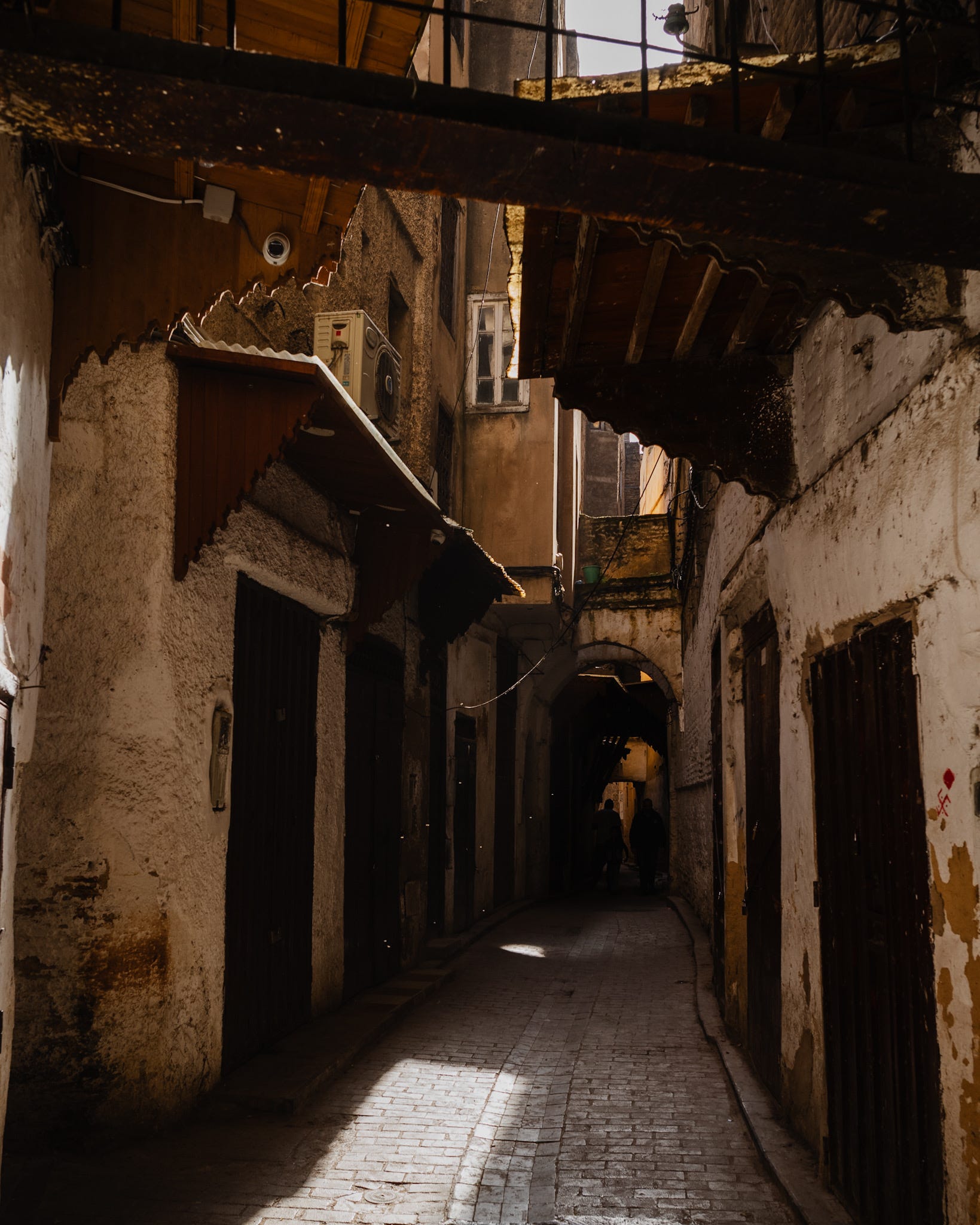
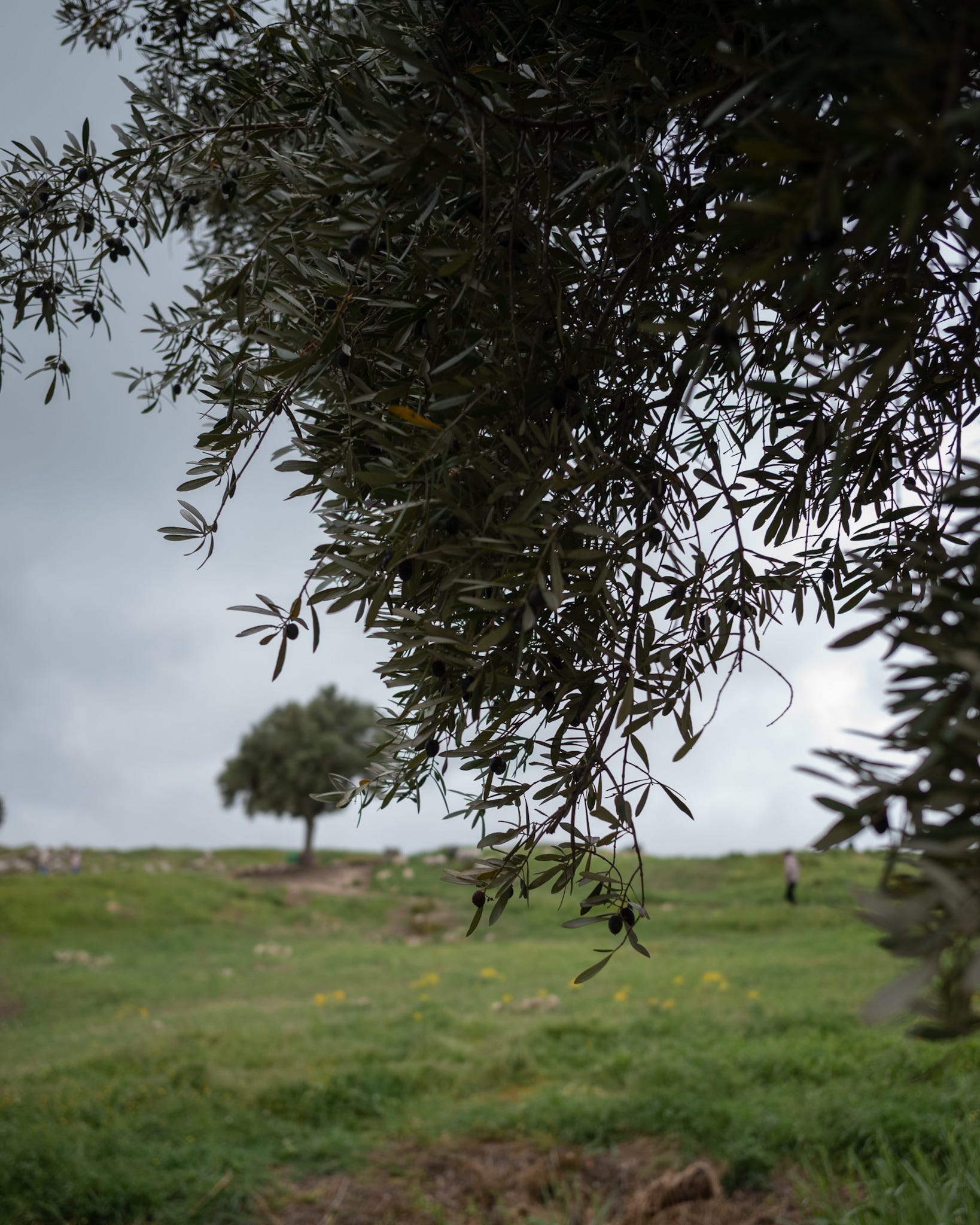
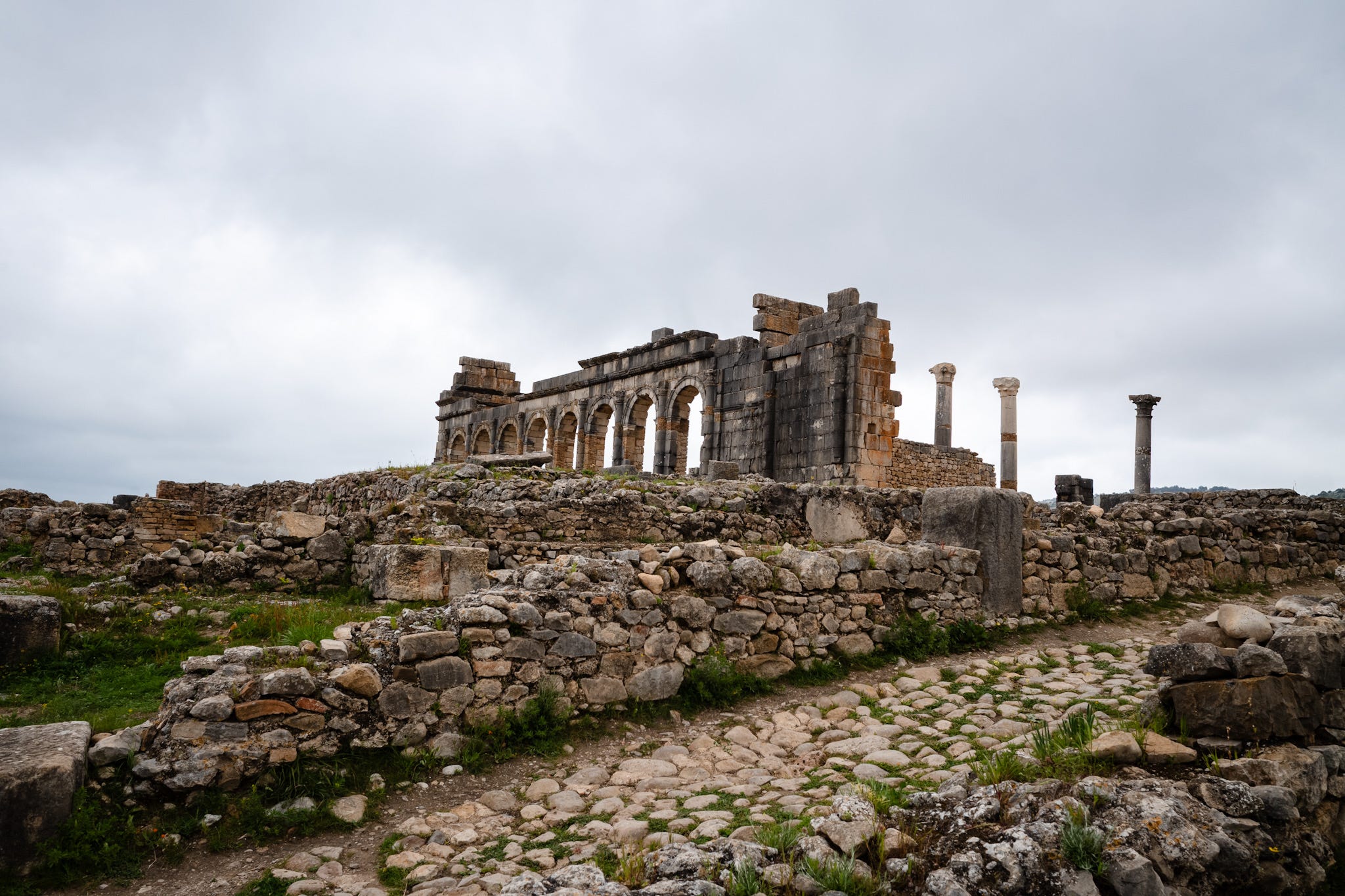
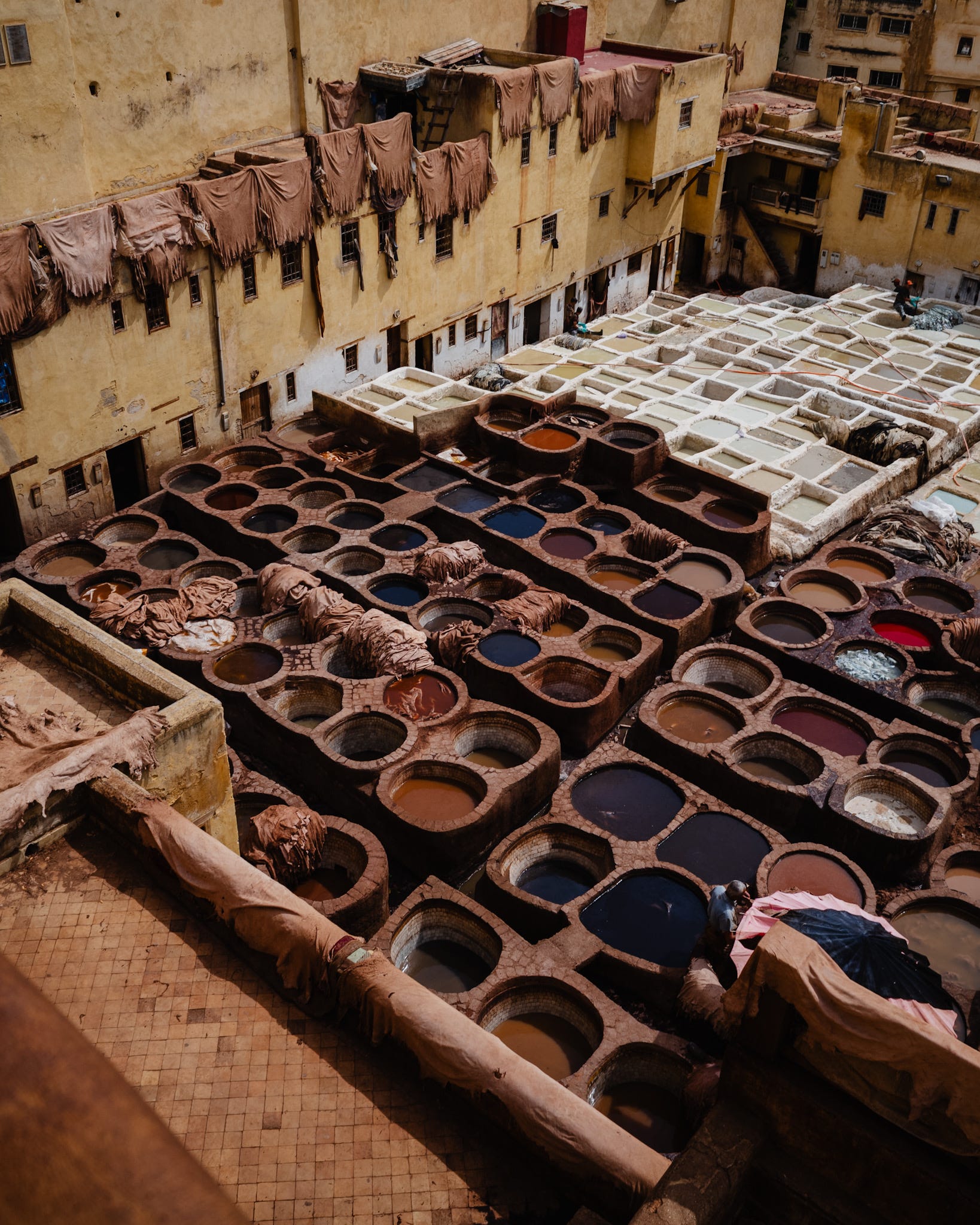
Some truths: the landscapes and surrounding Middle Atlas and Rif Mountains outside of Fes are gorgeous. Even from the medina, if you can manage to get a view beyond the rooftops (not hard with the amount of terraces here), you’ll see lush, rolling green hills dotted with sheep, olive trees, and bright, red poppies just beyond the old city walls. A short drive away is the ancient Roman ruins of Volubilis, which was unbelievably cool to see and walk around. Fes has one of the best handicrafts industry in Morocco and most of the country’s ceramics, metalwork, textiles, and leather goods come from here, which make it a really good place to shop. The food is cheaper than other parts of Morocco I’ve been to by at least 25%, and I’d say that half the people I’ve met here have been some of the kindest, most welcoming I’ve found.
But from the moment I even reached the outskirts of the city, everything seemed to go wrong. Traffic was backed up for miles getting into Fes due to a police checkpoint, which by then I was used to. At this particular checkpoint, one of the guards waved his AK-47 towards the side of the road and signaled us to pull over. The small bus I was on had roughly 17 people and as it would turn out, five of them may or may not have had seatbelts on. The guard walked around the bus, peering inside, before he went up to the driver and asked him to open the side door. I heard a couple of clicks behind me, certainly not five. The driver sighed deeply in his seat as he looked back at us all.
Not wearing a seatbelt in Morocco carries a fine of 300 dirhams, or roughly $30. It’s an amount of money that I wouldn’t necessarily be unphased to lose, but which I’d happily hand over to not have to deal with someone who has a loaded automatic weapon around their shoulder. The driver was visibly upset at both the guard and the five people who weren’t buckled. He had, in fact, reminded us all to buckle up each time we started on the road again during the roughly 8-hour drive from Merzouga. The guard came inside the bus and took five passports, then went outside where the driver worked up an exuberant show of frustration. One thing that astonished me was how vocal he seemed to get with the police, something that would have simply gotten anyone arrested immediately where I live.
Two minutes later, the driver came back on the bus and said those who weren’t buckled could either pay the police a bribe (about 5 euros each) or take the ticket, which seemed to have some implication on their passports. For some reason, probably because they actually were buckled despite what the cop said, the entirety of the group did not want to pay the bribe or face the consequences of the ticket. One of the five from an evidently far more well-mannered, once-European country seemed to have a moral objection to paying a bribe. Debate and heated conversation continued as the driver rubbed his eyes, sighed, and went back outside the van to plead some more. He had just told us hours before that he was going home to Fes to spend three days off with his family, something he hadn’t done in weeks. This set back was losing precious time he’d gained by weaving in and out of lanes all day, passing trucks stacked high with propane tanks on dangerous corners and slamming on the brakes to avoid hitting a sheep more than once. The cop came back some five minutes later and decided that there would be no tickets, and they didn’t need to pay the bribe. Handshakes, smiles, and we moved on.
This is the way things are in Morocco. Not everywhere, but more often than any other place I’ve been, people will fuck with you just to rile you up and see what comes of it. Either way, they’ll part ways with a smile on their face and you’ll probably find yourself a few dollars short or wishing you’d gone down another street. I write this knowing that a lot of people who undoubtedly have spent more than a month in this country might disagree, but this has been my experience since before I even left the airport. Up until this week, I’ve mostly been able to shrug it off or ignore it. But the reality is that in every city and town, even as a male traveler, you will get shouted at, called by whatever nationality a person thinks you are (I’ve gotten German, Italian, Portuguese, and French so far which has made them half-right half the time), harassed, followed, forcibly guided in the wrong direction, or possibly worse. My experience this week showed me that Fes seems to contain the worst of all of this behavior packed into its densely populated medina.
I knew the medina was an insane, unsettling, deeply dark, and at times (after nightfall, you do not walk around here) dangerous place before I arrived. I knew about the street signage that indicates which streets are dead ends and which ones have multiple exit points. I even knew about most of the scams that seemingly every male between the ages of 6 and 66 will try to hit you with around every corner. Still, the reality of all of this combined hit me so hard from the moment I stepped foot on the street and has not let up since.
A lot of the circumstances that led me to loathe Fes are unique to my experience. First impressions of a place can be as dependent upon chance as flipping a coin, but somehow, mine turned up unfavorably every time. First, I couldn’t get inside the place I was staying because despite agreeing upon a time to meet, my host never showed up and didn’t answer my messages, leaving me standing on a dark street with my bag to get heckled by every person passing by me. When I finally got into the riad, I was greeted with the smell of cat litter and ammonia so strongly I felt immediately sick. I would later find that there was something off about this place as I heard people coming and going at 3am and consistently could not get in touch with the host. In short, I probably got what I paid for it.
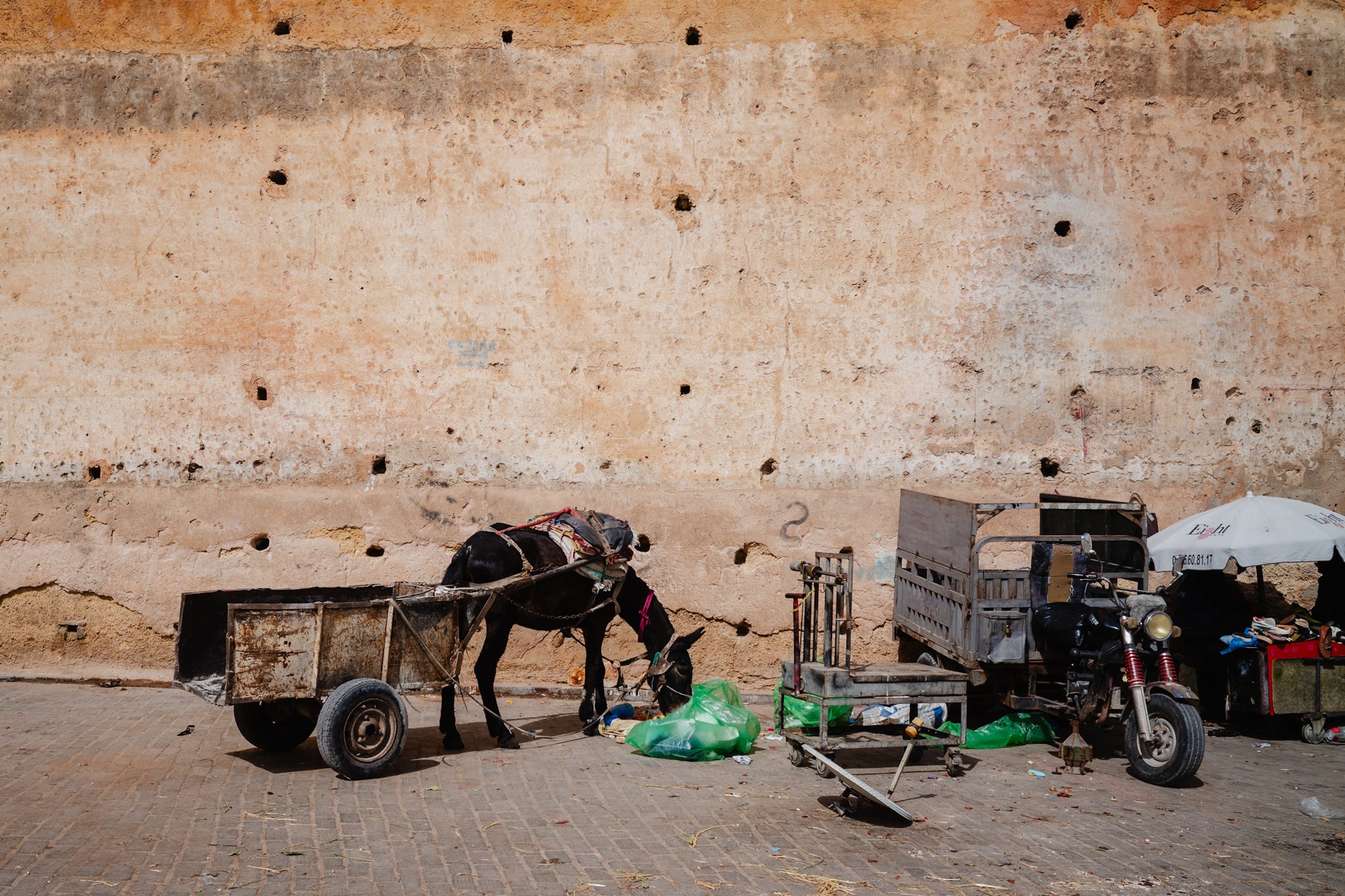
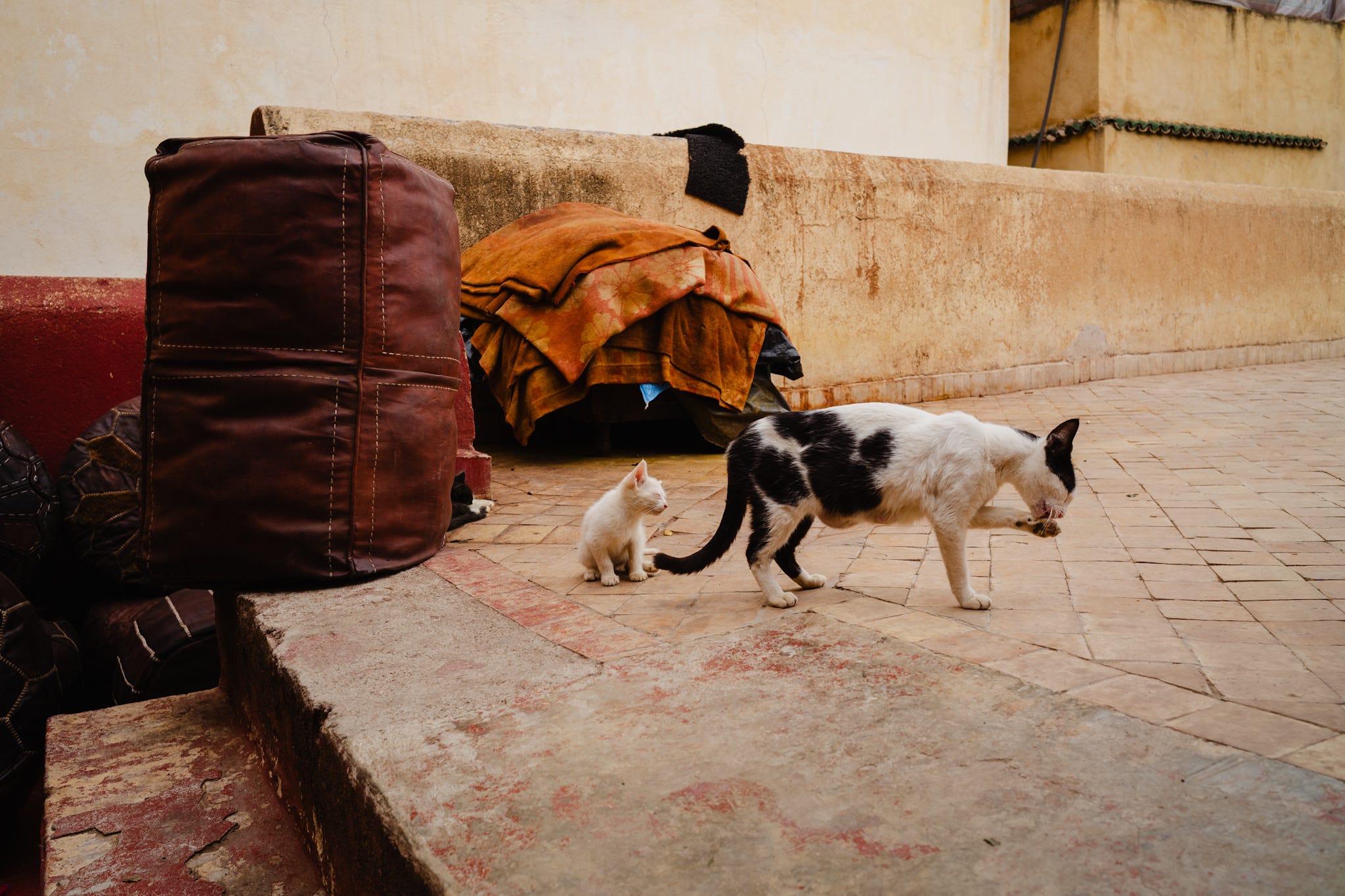
I spent three days in and out of the medina (realizing that outside of the medina is a much better choice than inside in Fes). I lost count of how many times I was offered directions to the tanneries or told a street was closed for Muslims only. I witnessed a cat that seemed to be paralyzed dying on top of a sewer grate as people stepped over it to get by. I walked through clouds of flies hovering over the donkey-shit-covered streets enough times to have caught more than one up my nose. I laid awake every night listening to blood curdling screams and shouting outside my window. For some reason, the dogs only seem to bark here a few hours before dawn and they do this in unison. But, let’s be real: most of that is petty stuff that I’d be better off looking beyond. There are certain realities we have to accept in countries where you can get a meal for a couple of dollars. That stuff is not what would shape a place negatively in my mind.
On Wednesday night, someone forced me down an empty street in the souks and out of nowhere, three other guys came out from the shadows and started following me. He asked me where I was going, told me the street I was trying to go down was closed (it wasn’t), and got up in my face as he walked alongside me. I knew that things were suddenly very wrong and made a gut instinct to keep walking faster, hoping the street I was on turned into another one that might be busier with someone around to hopefully stop what was happening. I realized that it’s more than likely no one will do anything to save you if you’re in a situation like this in Fes. Just hours before, I overheard an older Canadian woman talking about how she was thrown to the ground a few days earlier when someone on a motorbike tried to rip a crossbody bag off of her. They didn’t get the bag, but managed to knock an elderly woman to the ground.
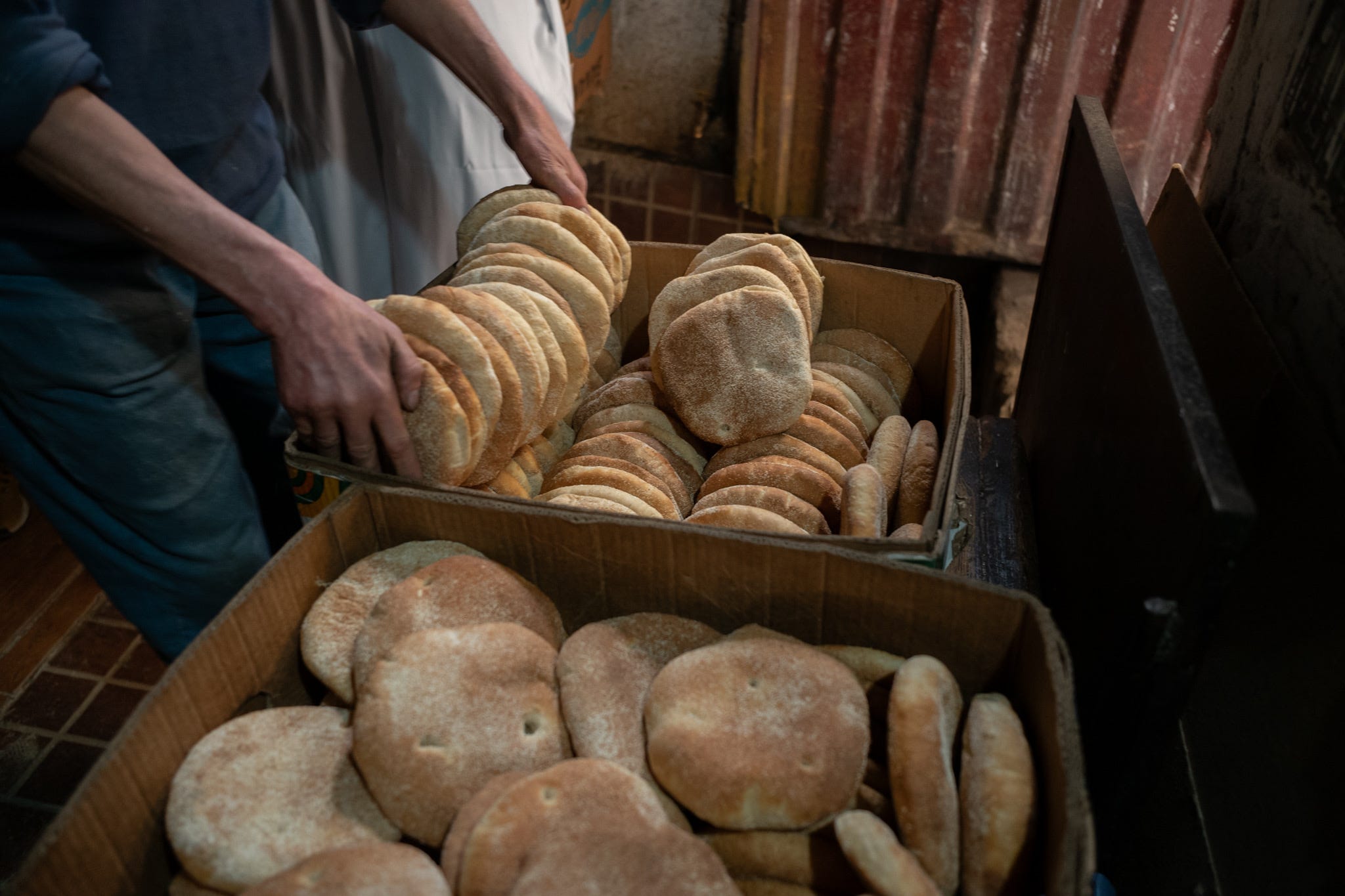
Luckily, I happened to get to a square where it was apparently too busy to do anything like mug someone. The streets were soaked with rain and because I was so nervous, I slipped, which led to a chorus of laughter from the four men and everyone around me. The thought of using the top corner of my brass-plated camera to hit every one of them square in the face crossed my mind. I was so full of anger it made me upset at myself. Instead, I lingered around an open storefront with a bloody knee while I waited for them to go find someone else to prey on, then walked back to where I was staying as quickly as I could. The next morning, I woke up with the unmistakable indicators of food poisoning and spent the subsequent 36 hours with my head in my hands wanting to die. I’ve gotten food poisoning in places I totally love so I won’t even count this against Fes. Nevertheless, I haven’t come away with many experiences worth remembering here. I have to at least fairly say that when the bread’s fresh out of the oven, it’s really good, but that’s the case anywhere you go in Morocco.
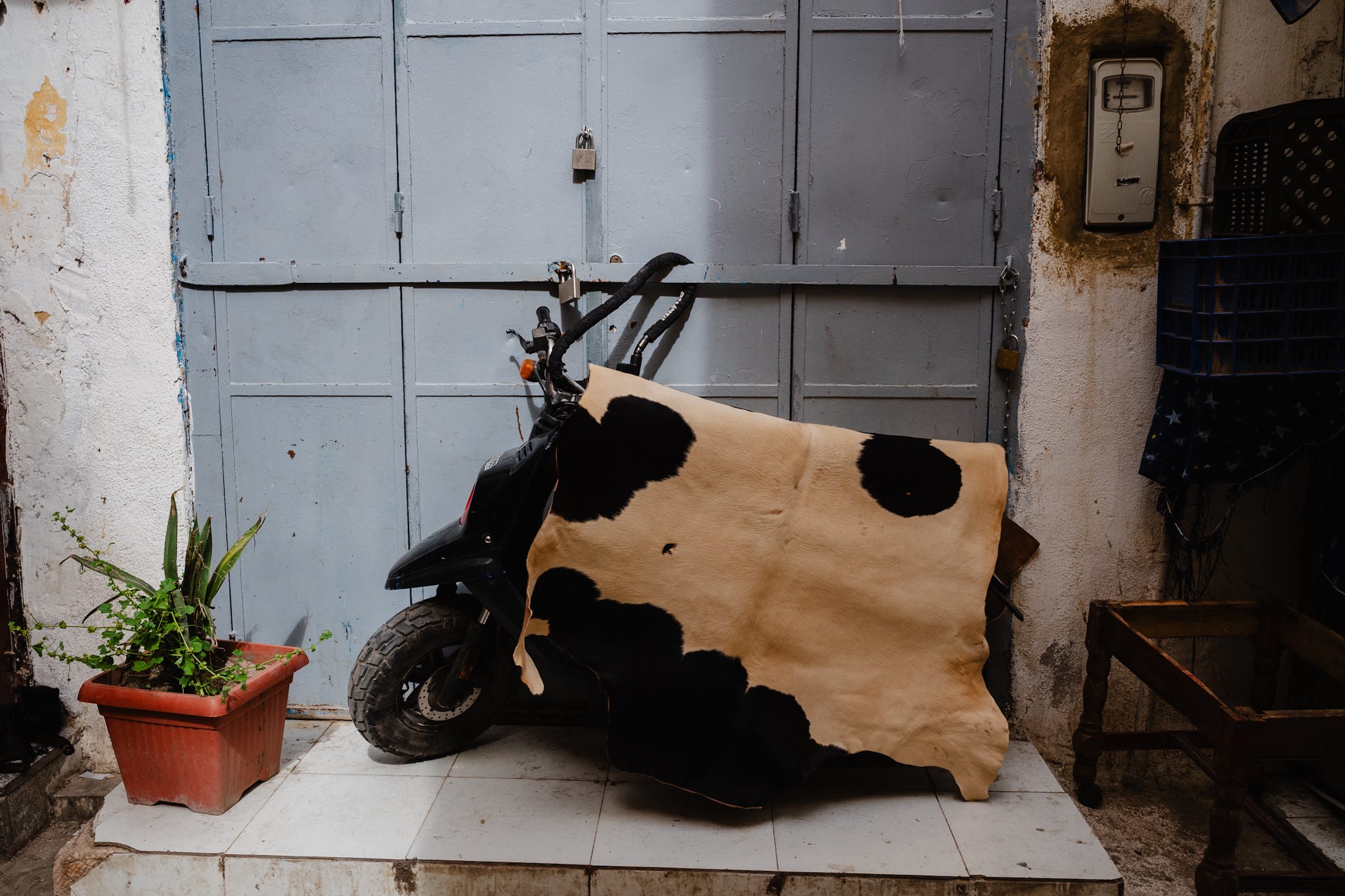
What I realized after five days is that the medina in Fes is specifically bad because of the tourism. Every person who visits and inevitably looks lost creates an opportunity for those who live here. If you stay inside the medina, you’re basically trapped and have to walk everywhere unless you’re right by one of the main gates, since this is a totally car-free zone. That aspect of being literally walled in, combined with the fact that the rest of Fes beyond the medina is mostly unremarkable from a tourist’s perspective, creates an obvious influx of foreigners on these narrow, labyrinthine streets that were never designed to hold so many lost and confused people.
I guess maybe it’s a natural phenomenon. Fes overall is a much poorer place than other parts of Morocco. What’s the solution, then? Stay in a fancy hotel in the Villa Nouvelle, the new part of the city the French built during their recent protectorate, where there’s a mall and plenty of McDonald’s, and skip the entire reason that Fes is on the map in the first place? Or do you spend $700/night (roughly the average monthly income here) to stay at Riad Fes, the Relais & Châteaux property inside the medina, and never leave the hotel? Do you then leave telling everyone you saw Fes, that it’s a magically beautiful and ancient place? Neither of those are options I’d be totally comfortable with, although I would unashamedly take the comfort of one of those beds if it was offered to me.
I can accept the cultural differences of haggling, driving with zero regard for anyone else’s life, and even some of the more abrasive interactions that happen on an everyday basis here, but I will not sugar coat what is blatant mistreatment or taking advantage of other people. I refuse to romanticize a place like Fes because I don’t want anyone to read what I write and be misled (which happened to me). It’s touristy in the worst way: its tourism has resulted in an industry of predatory behavior, where the people who need money the most find themselves with no shortage of prey.
I mostly write about travel because I enjoy sharing my own tips and experiences, and because I like to encourage people to travel outside of their own country. If you want to go to Morocco, I can’t recommend it enough. If you want to go to Fes, I’d recommend you ask yourself long and hard why and be willing to accept the realities here. I will admit that it seems crazy to come here and not stop in Fes, but the last thing I would ever want to do is encourage travel to a place that carries significant risk of harm. For a woman traveling alone, all of these problems and dangers are multiplied significantly. The truth is that most people who go to Fes leave unscathed. During the day, it’s mostly fine if you don’t mind enduring the constant barrage of petty scams.
At what point is traveling to places like this just enabling the same bad people and their tired tactics? Do we call this a tourism industry if it’s just a handful of men endlessly ripping off those who visit to make money? The government in Morocco has seemed to take some steps in recent years to curtail this and promote tourism, but much of that seems like solely rhetoric. Technically, the whole scam of guiding someone somewhere is illegal, but does that really matter if people are doing it around every corner? If the cops will shake you down at a checkpoint and make a false accusation to try to get a bribe, why wouldn’t anyone on the street also do the same? Tourism can absolutely lift a country’s struggling economy and actually benefit local people, but when corruption is so rampant, is that really a possibility?
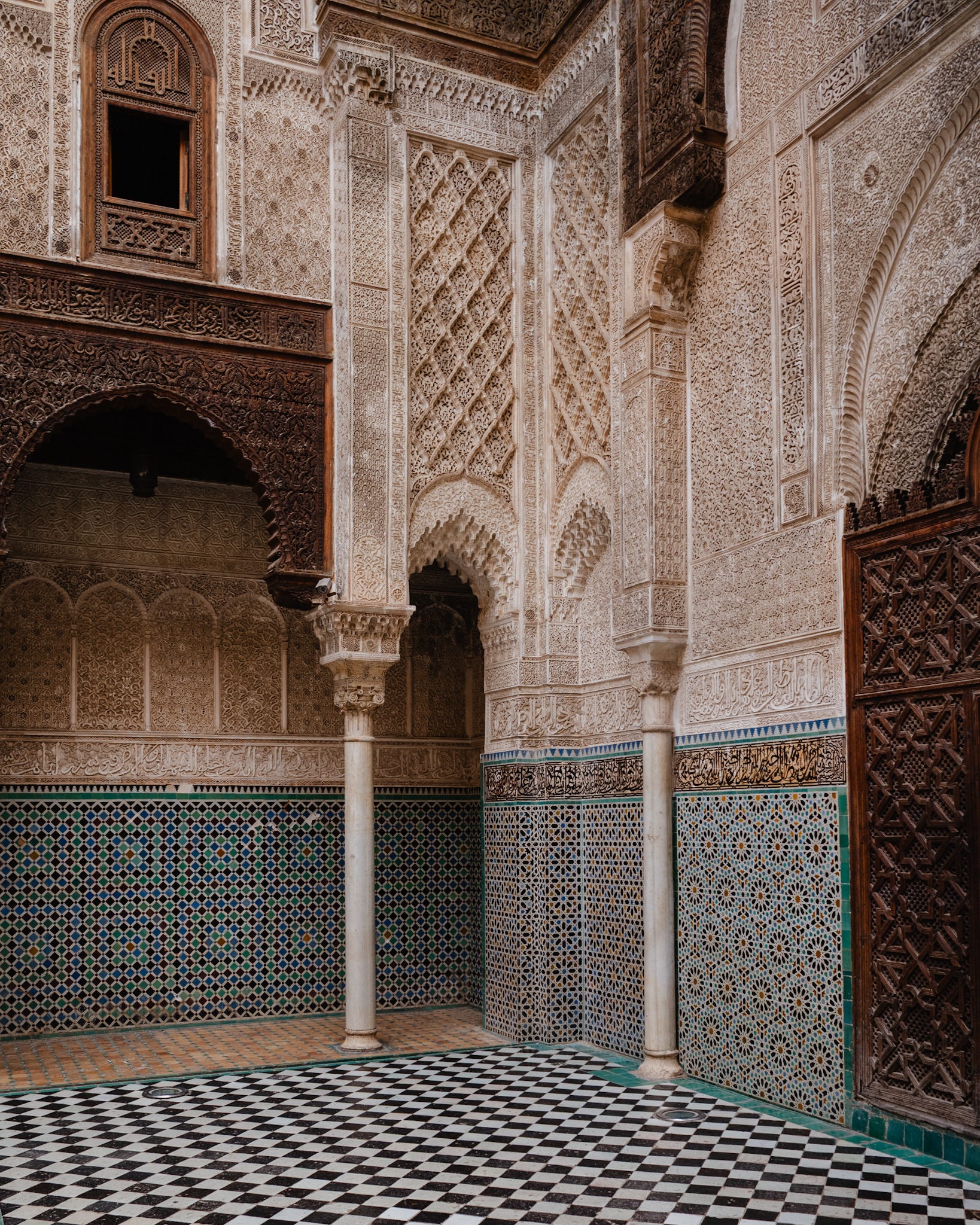
I don’t think it’s as simple as saying I didn’t like Fes. There is no shortage of beauty here as evidenced by the photographs. Maybe, as a foreigner, I’m just not meant to be here, or maybe I should have only spent a night and barely caught a glimpse like most people do. Maybe to some extent, Fes will remain a place that’s unapproachable to outsiders, impossible to ever fully understand. Probably, I should have taken Bowles’ message on Fes more seriously: being present does not actually mean you belong somewhere.
I’ve mostly made it a point to follow the rule of not saying anything if I don’t have something nice to say about a place, but I think when it comes to travel, that’s sometimes the wrong approach. Most of all, I want to be honest. I want to be respectful of every country I visit and honor the privilege of being a guest somewhere, but at what point do we draw a line and focus on reality? It’d be completely disingenuous of me to write some starry-eyed reflection on this week in Fes. I heard a lot of that before I came here and I’m sure lots of people have gone to Fes and liked it, but my experience did not lead me to that conclusion. I have honestly never been so happy to leave a place. There may have been a tear in my eye when the bus pulled away from the station a few hours ago. Maybe someday when the Ondansetron has left my system and I’ve forgotten what it’s like to know that you’re about to be robbed, I’ll have something more nostalgic to write about you.
This one is free, feel free to share it! If you’d like to support my work, you can subscribe below or purchase a print here. I also take custom print orders. Feel free to reach out by messages or email at hello@chrismongeau.com. Thanks as always for reading.
Comments
Nothing yet. Say the first thing.
Sign in to join the conversation.