
During the last few weeks, as Europe burned and my apartment got so hot it threatened to turn me into a statistic, I’ve had two whole TV shows that I looked forward to every week. The Vampire Lestat, the renamed third season of AMC’s Interview with the Vampire, and House of the Dragon, the first Game of Thrones spin-off in its fifth year and third season, have a lot in common. They’re fantasy shows, produced by excellent actors and craftspeople, green-lit in the wake of Game of Thrones’ successful merging of genre and late prestige TV. They both adapt their cult authors’ later, more difficult works.
And they both have a lot of incest in them.
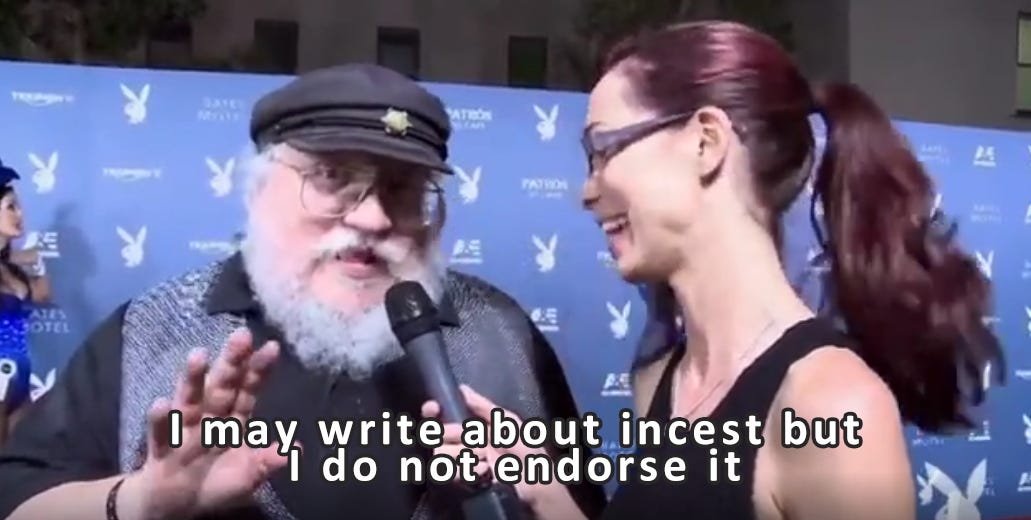
In an article for Parapraxis, Brian Connolly analyses discourses around incest – that is public art and debate abound incest, not the sociological fact of the act – as an expression of anxieties around the nuclear family. “In short, when the family appears in crisis we seem to talk about sex in the family.” The nuclear family, as has been extensively written about, is a construction of nineteenth century wage labour and the privatisation of unpaid domestic work. Its golden era in the Anglosphere is figured, socio-politically but also libidinally, as white American suburban life from post World War II to the mid 1970s. Incest discourse can be read therefore as an attempt to retvrn to this golden era, but with the fatalistic destructiveness of reactionary extremism. Donald Trump, in a tower of gold, leering on his daughter come to mind. After all, what is incest if not an even more nuclear nuclear family?
But family in House of the Dragon is not political in the critical theory sense like it appears in, say, Mad Men. Family is political in the sense that who you are related to determines the means of production and the monopoly of state violence. George R. R. Martin’s intertexts are therefore stories of royal families — Tolkien’s kingly races and classical or late medieval histories. Martin took Tolkien’s reactionary idea of a bloodline that will put the world to right, and put it in conversation with the Ptolemic or Habsburg dynasties who perhaps practised incest because of a belief in their magic breeding or perhaps practised it out of realpolitik ambitions.
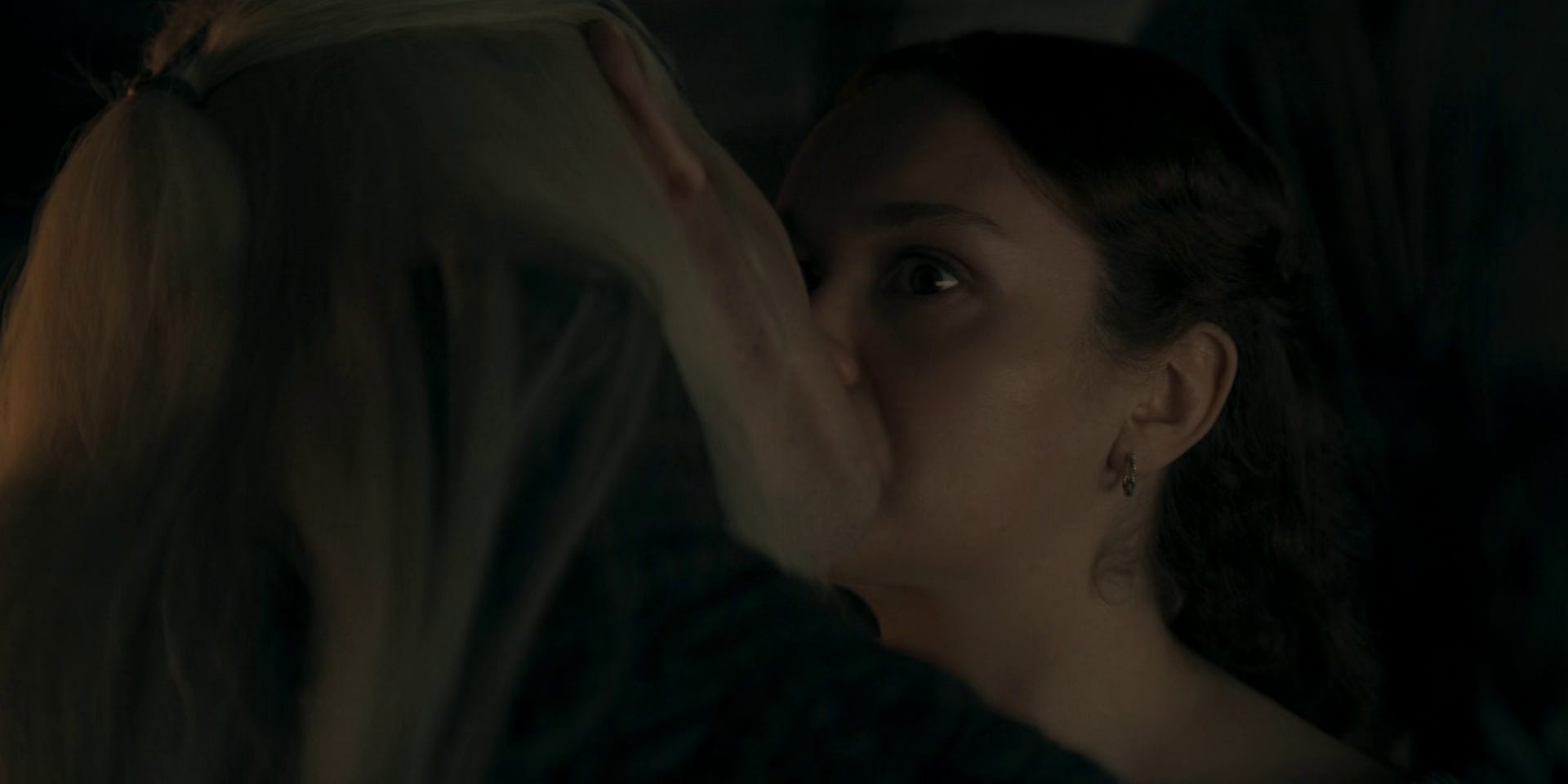
Therefore Targaryen incest is both a sincere belief in anointed blood that binds double-cousin-spouse-siblings to magic lizards, bringing order and stability to “the realm”, and also a self-conscious performance of that myth. The psychodrama comes when the characters themselves get lost between these two. Alicent Hightower allowed her son and daughter to be married to each other for the appearance of Targaryen legitimacy. But then, when her other son yearns for more incest princes and kisses her, Olivia Cooke gives massive “I fucked up so bad” eyes to camera.
In The Vampire Lestat incest represents desire problematically untethered from morality. As Connolly writes, “The politics of liberation are fraught, as much a project of domination as freedom.” So where the adaptation of Anne Rice’s novels are often successfully played for their queer liberation thematics, Lestat’s groomer-mother Gabriella is a vision of desire and appetite unleashed. Gabriella (controversially for Rice-loyalists) is portrayed by the series as less of a character and more of a monster-God-parent, Chronos at the end of time devouring her own. She purrs (in an accent I’ll describe as “European” and leave it at that) about making Dante’s vision of hell on earth.
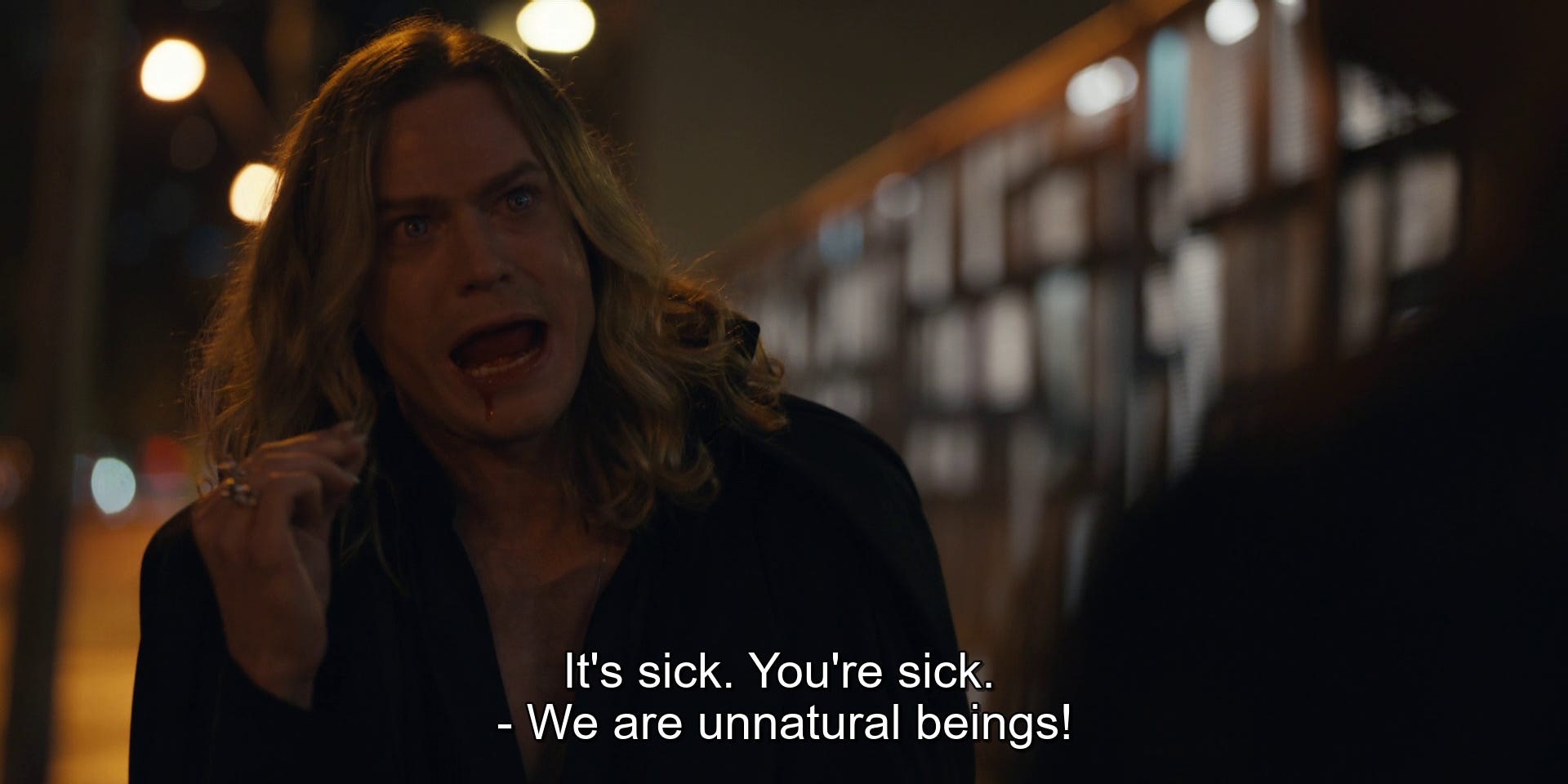
But the pain she causes is portrayed in a surprisingly human register. Sam Reid’s Lestat, so often portrayed this season as a kind of beautiful gay French muppet, vomits blood when his husband finds out about this foundational trauma. The shame of wanting affection and recognition from a family member, and receiving it in a way that violates everything about you, is portrayed in an expulsion of pain and disgust.
Like the Targaryens, these magic incest people are aristocrats. Lestat and Gabriella are pre-revolution blue bloods and Jacob Anderson’s Louis is revealed to be the 566th richest person in the world this season. Therefore their traumas and desires are of profound political consequence. This season added a surprising ecological reading of vampirism, where Justin Kirk arrives into scenes stressed out about the unsustainable conversion rates of vampires. The unrestrained desires of the ruling classes seems to be linked to climate change and the season ends with an apocalyptic cliffhanger.
The shock value of incest on television can’t be ignored. TV audiences may be encouraged to put their phone down if they have to shout “stop, that’s your sister-mother-uncle!” at the screen. But it does all smell a little like late empire collapse. It is telling that incest was once the structuring secret of American television mythology. Twin Peaks’ shadow and mystery was produced by an inciting sin that was also revealed to undergird the beautiful Americana of the town in daylight. But this reveal collapsed the show. Here the incest is revealed from the start and the structure never seems built to hold anything in the first place. Neither the state nor the family seem strong enough to last, and incest doesn’t seem to be helping.
Comments
Nothing yet. Say the first thing.
Sign in to join the conversation.