
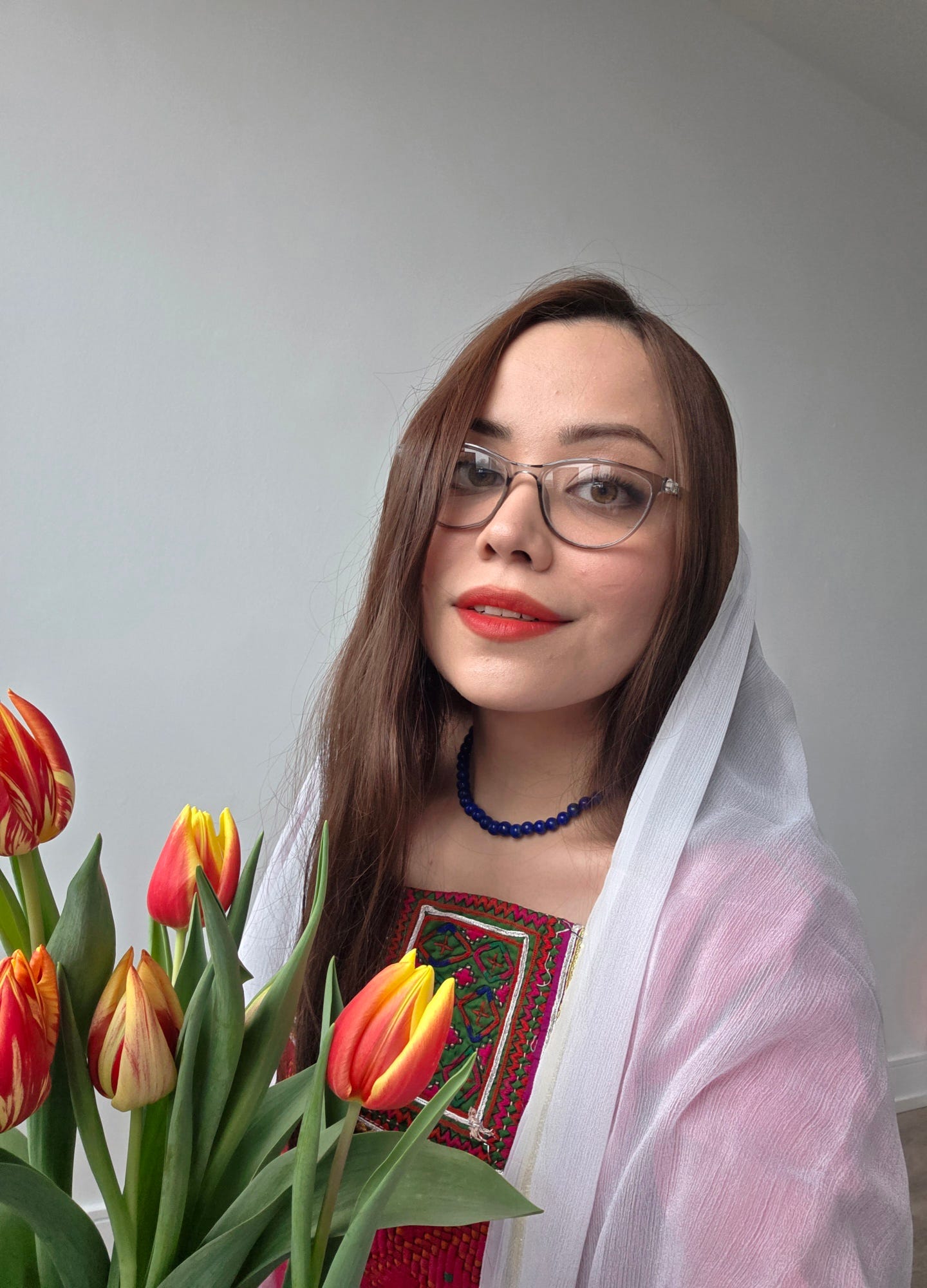
This was the first year I was so far away from Afghanistan, and even from the feeling of Nowruz itself.
The day before March 20, I convinced myself to go outside and get something. Something symbolic. Something that could still connect me, somehow. Maybe it was about doing what you can, when you cannot do much.
A kind of quiet selectivity of goal investment.
Around noon, I took the bus to the library, returned the books I had read, and then walked a few meters to a shop where fresh flowers were visible through the glass.
Since I arrived here, I have rarely gone into shops. Even when I needed something, I often did not go.
Which is slightly ironic, because exploring is supposed to feel exciting.
But that day, I tried to focus only on what I came for.
There was a small section in the shop dedicated to flowers.
The atmosphere there felt different. Lighter. More human.
There were cut flowers, and some that were still alive, standing quietly in their pots.
I kept turning in small circles, searching for tulips.
There were so many flowers I had never really known, unfamiliar and quietly striking, but not the one I was looking for.
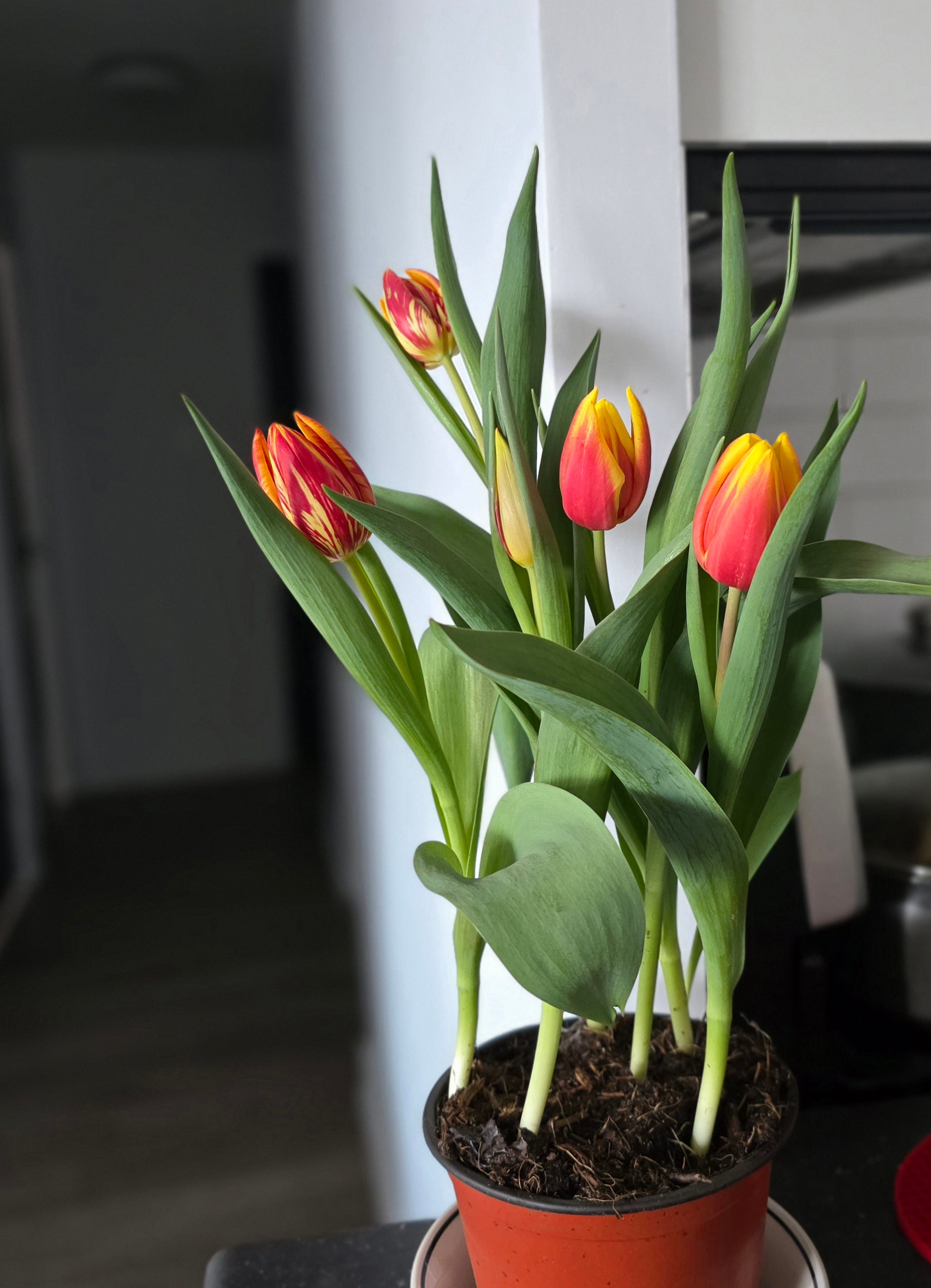
Toward the end, just when I was starting to feel disappointed, I saw a pot in the corner. It looked almost hidden.
They were not fully red. They had streaks of yellow and red.
Like many of us who have migrated.
Not completely from there. Not completely from here.
I asked the florist and picked up the pot.
At the counter, the woman said this was the last pot of tulips.
I said I bought it for the new year tomorrow. She said, oh, someone bought tulips yesterday for Nowruz too.
There must be thousands like me in this city.
And then I was back outside, waiting for the bus again.
Thinking.
About when we were in Afghanistan and my father was still alive.
How colorful life felt. Or maybe nostalgia places a soft pink filter over memory, and only lets the good parts remain.
Without realizing it, I had always loved Nowruz more than any other celebration. As a child, I would wait for it. For the old apple tree in our yard to blossom.
For the moment I would open the window and the branches would be right there, almost touching.
Back then, I did not know what Nowruz really meant.
Later, I learned that Nowruz is perhaps one of the most meaningful beginnings of a year, not because people decided it should be, but because the earth does.
It begins at an exact moment.
The spring equinox.
The moment when the sun crosses the equator and day and night become equal everywhere on earth.
Not earlier. Not later.
There is something quiet but powerful about that precision.
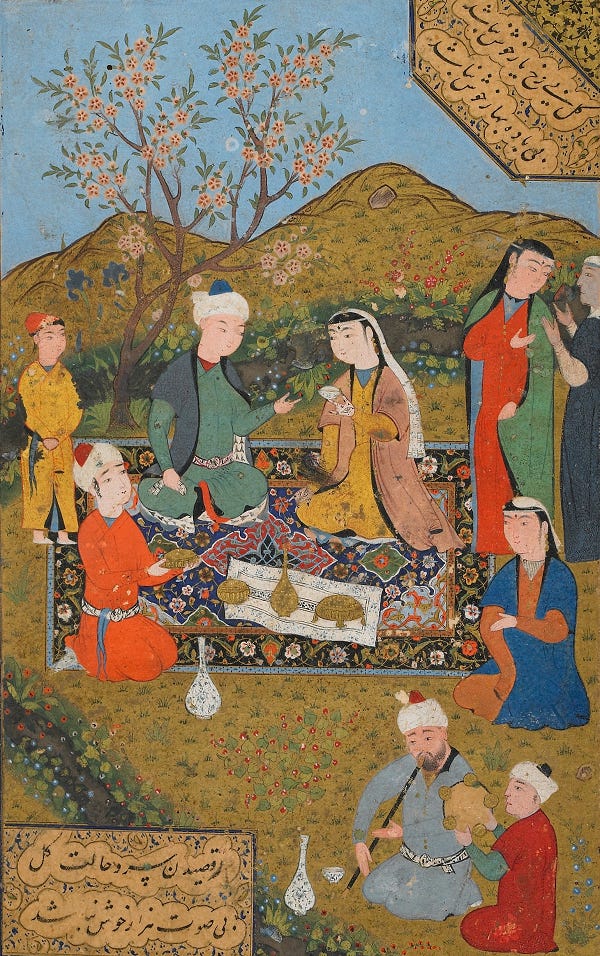
The solar calendar used in places like Afghanistan was designed with remarkable accuracy, aligned with the seasons, not drifting away from them.
It follows the movement of the earth itself.
That is why Nowruz feels different.
Because it is not just symbolic.
It is a moment when time, nature, and human life meet.
Back home, when Nowruz was getting closer, the city would slowly change.
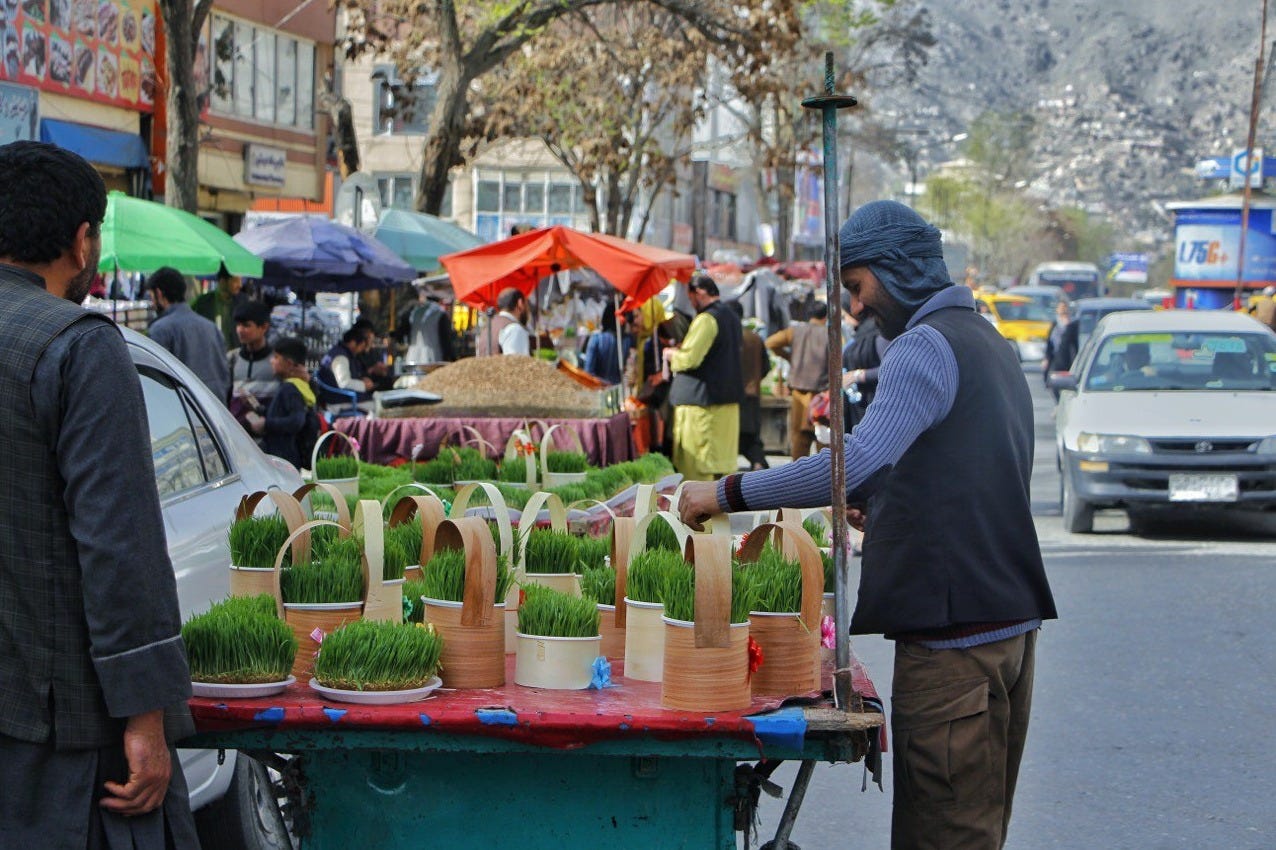
There was a kind of soft unrest in the air.
Almost like everything was preparing, even if no one said it out loud.
At home, everyone started cleaning.
Carpets, curtains, clothes, windows.
I remember the carpet washing. It was never just a task. It was a small gathering.
In the beginning, we gathered in the yard. Cold water, detergent, and the sound of laughter from cousins.
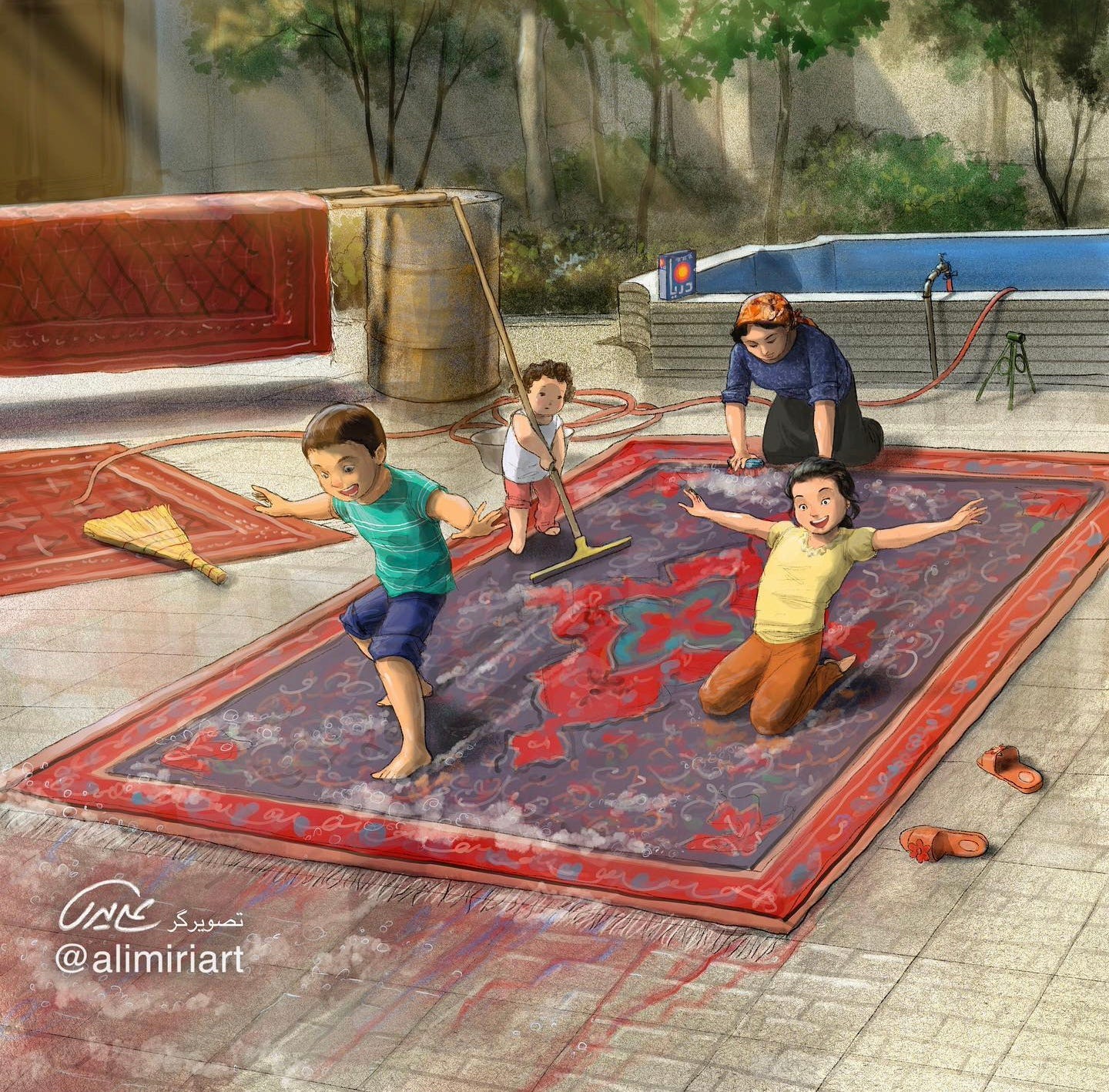
For us as children, it was mostly play.
Running through water, slipping, laughing, getting in the way.
Mothers busy with the work. And somehow, all of it felt light.
Afterwards, tired and hungry, we would sit together and eat whatever was at home. Simple food, but it always tasted different after.
In the middle of a tense life, it felt like a kind of rest.
There was also something we had, called Shab-e Amwat, the night of the dead.
I searched for it later and could not find much written about it. It seems to exist more in lived memory than in official history.
In many Afghan communities, especially among older Kabul families, the last Thursday night or Friday before Nowruz was a time when families visited cemeteries.
We went together.
Visited the graves.
Cleaned them.
Prayed.
It was not only about grief.
It was a way of acknowledging something very simple and very difficult.
That this path ends in death.
And still, life continues.
That evening, we ate fried fish and jalebi, a deep orange, syrup-soaked sweet.
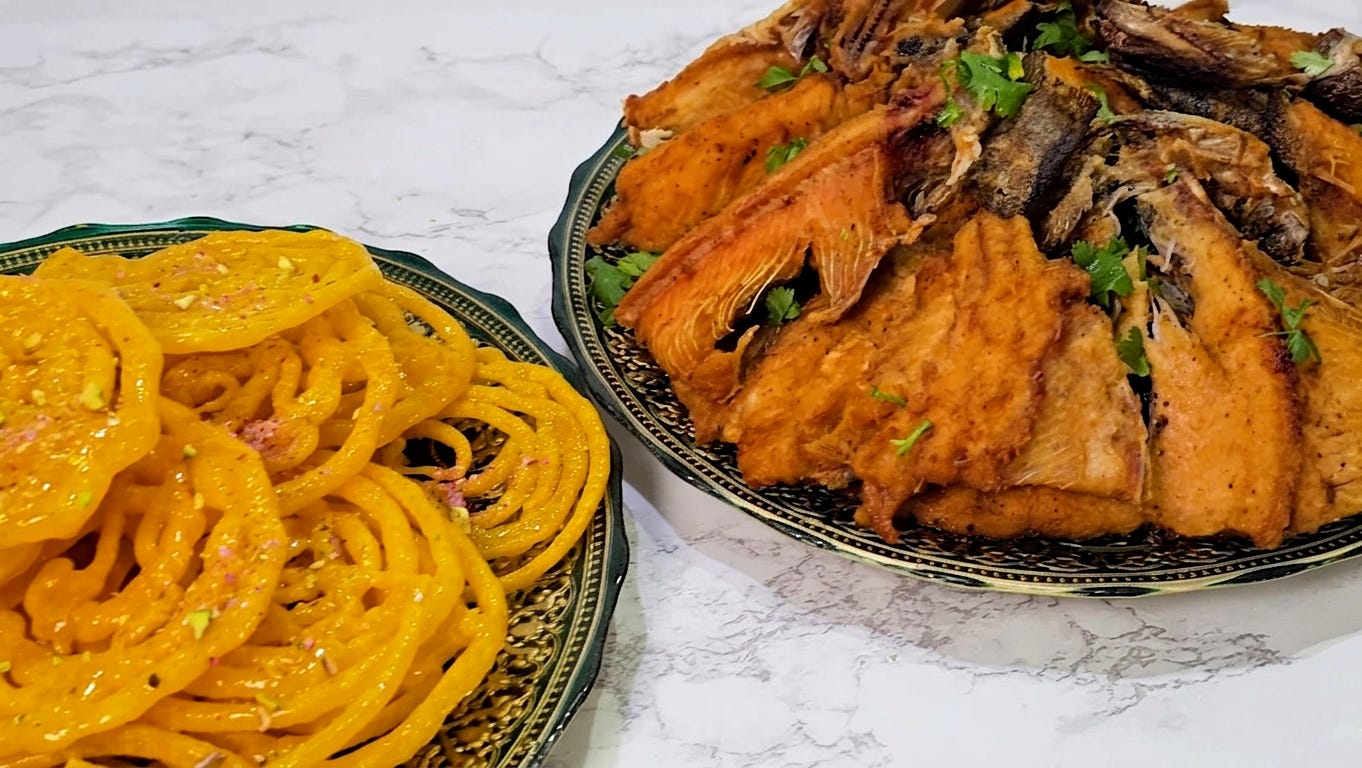
There was something intentional about the sweetness.
As if even in remembering death, life insisted on itself. In every step, my father made sure everything was the best it could be.
Later, when part of our house was taken into the road, we had to destroy that yard.
The old apple tree was cut down.
The carpets were no longer washed in the yard. A hired worker came, washed them quickly on the roof, and left.
It felt like moving further away from something alive. From that small garden my father had built with care.
When we first arrived at that house, the yard was completely empty. My father slowly filled it with flowers and plants.
Once, I noticed a small tomato plant had grown two tiny tomatoes. I ran to my father’s workplace nearby and told him,
Father, the tomato had babies :)
I covered them with leaves so my cousins would not see them and take them.
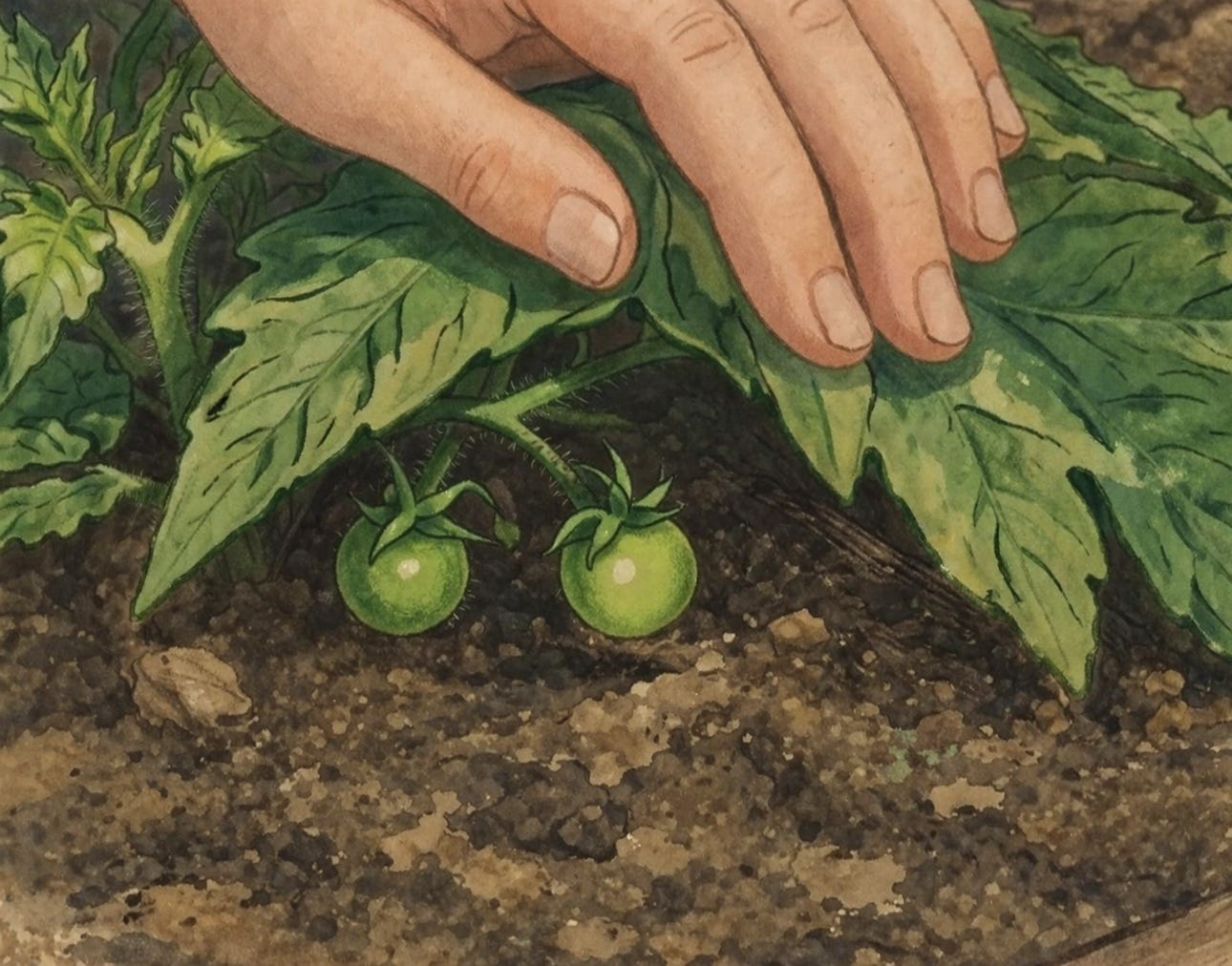
You know, it feels like even as a child, I had a tendency to build things. And to protect them from people who liked to destroy.
Maybe I was not supposed to say that out loud.
On the night of Nowruz, we always prepared sabzi challow,
a spinach stew with white rice.
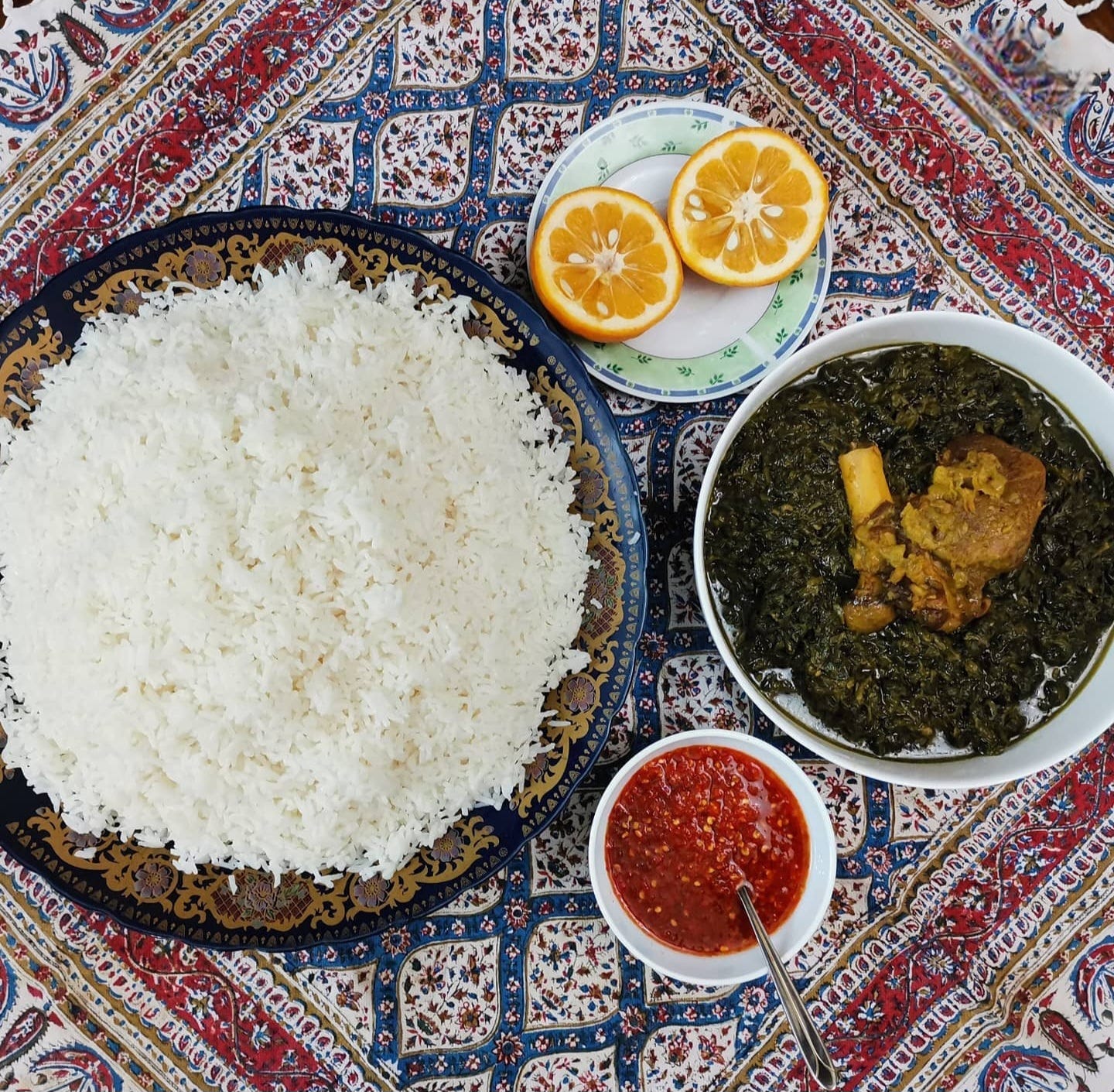
Green foods have always carried meaning in Nowruz traditions.
They represent renewal.
Growth.
The return of life after winter.
And that same night, my mother would prepare haft mewa_ هفت میوه.
Haft means seven.
Mewa means fruits.
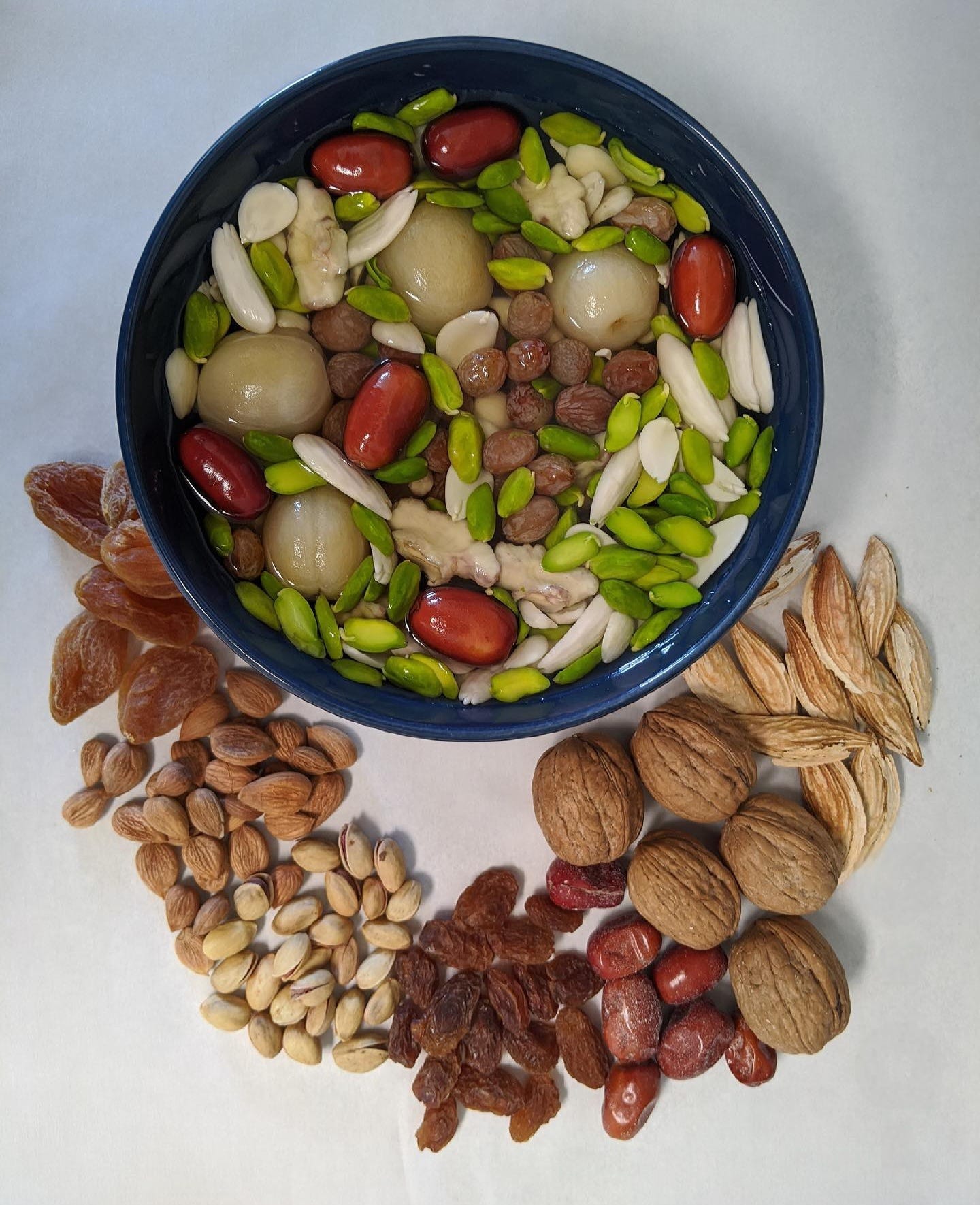
Haft mewa is a traditional Afghan Nowruz dish made from seven dried fruits and nuts, soaked in water, often naturally sweetened with raisins.
Unlike decorative traditions, it is meant to be eaten, shared, passed between people. Its meaning is not something you look at.
It is something you taste.
Each ingredient brings a different texture.
Soft, crunchy, sweet, slightly sour.
And together, they create something layered, like memory itself.
In a way, soaking them in water feels like bringing them back to life, something symbolic, and quietly in tune with the coming of spring.
My favorite was always senjed or oleaster fruit.
There was something strange and beautiful about it.
Sweet, slightly sour, powdery, softened in the sweetness of raisin water.
Others preferred nuts, pistachios, almonds. Taste had little to do with it. Price did.
Some people also prepare haft seen_ هفت سین.
Haft seen literally means seven items that begin with the Persian letter S.
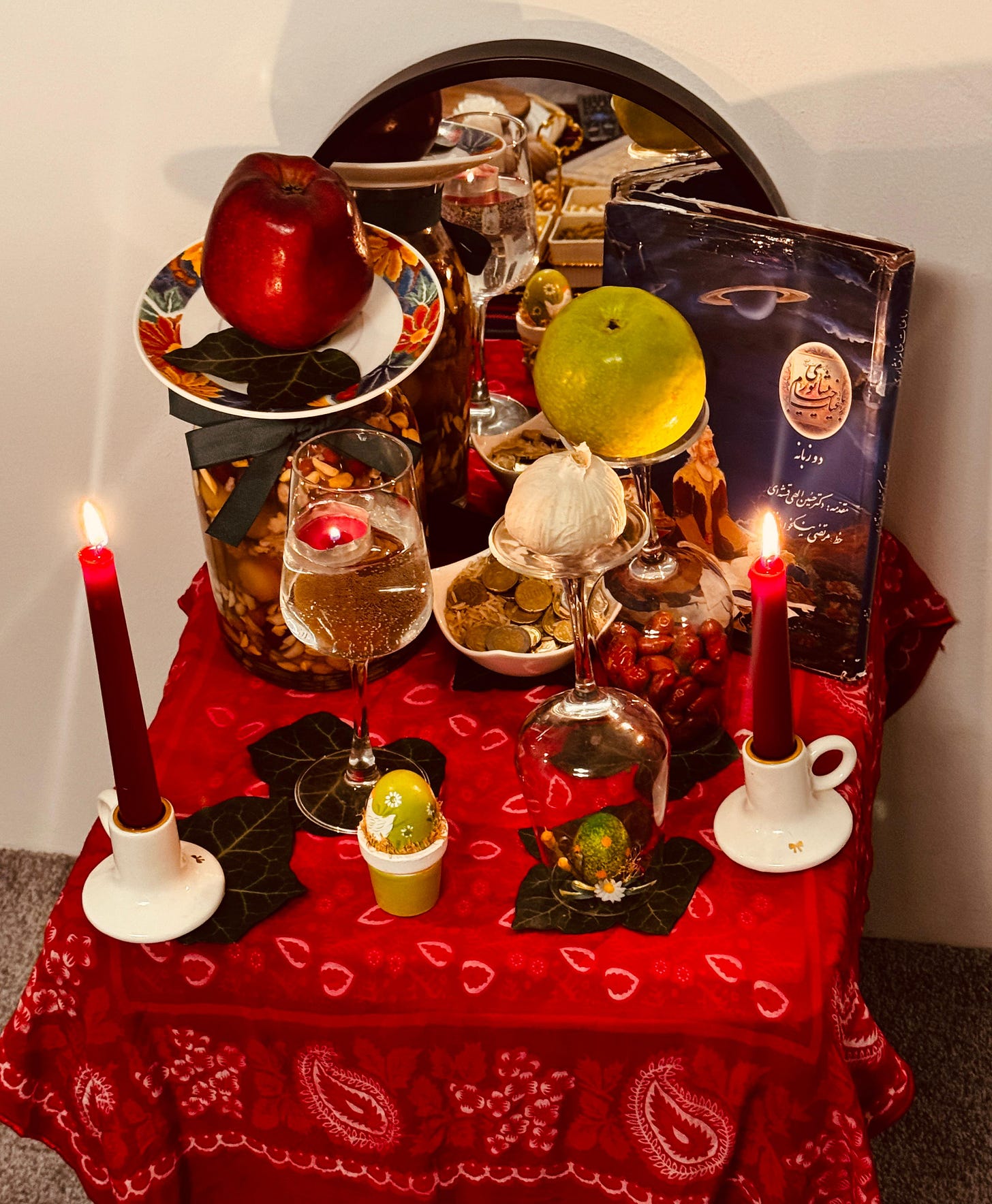
Each one carries a symbolic meaning:
سبزه، sabzeh, greens or sprouts, for rebirth
سیب، sib, apple, for beauty and health
سیر، sir, garlic, for protection and medicine
سرکه، serkeh, vinegar, for patience and time
سکه، sekkeh, coin, for prosperity
سمنک، samank, sweet wheat pudding, for strength and abundance
سنجد، senjed, oleaster fruit, for love and reflection
It is a way of placing meanings in front of yourself before the year begins.
I did not see it very often in Kabul.
What I remember more is people.
Guests coming to our house.
And us going to theirs.
At the beginning of the new year, we also had Jahenda Bala (Raising the flag)
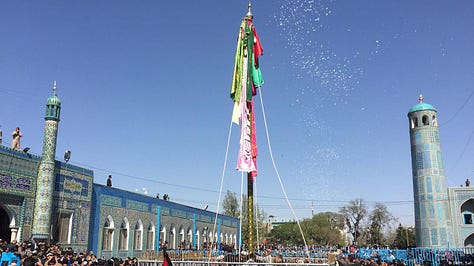
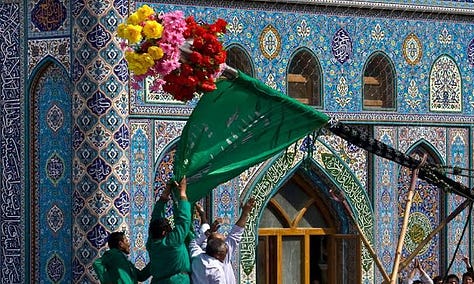
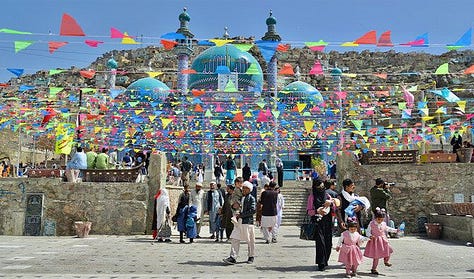
Both in Kabul, in Karte Sakhi, and in Mazar, in Balkh.
A large flag would be raised.
Some people say it is connected to Derafsh-e Kaviani, an ancient banner from Persian mythology associated with resistance and justice. Whether or not that connection is historically exact, the meaning people give to it is very real.
There was a belief that if the flag rose smoothly, the year would be a good one.
And if not, something was wrong.
People traveled from different provinces to Mazar. And the people of Mazar were known for hosting them.
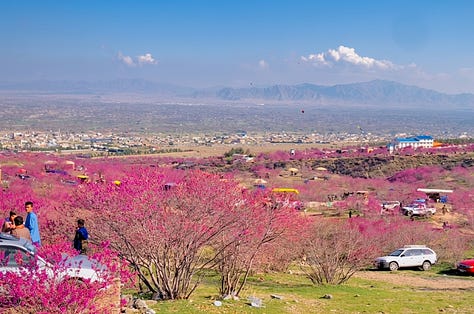
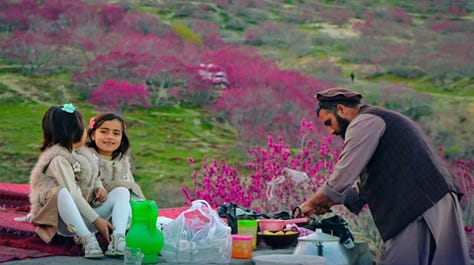
Alongside it was Jashn-e Gul-e Surkh, the Red Flower Festival.
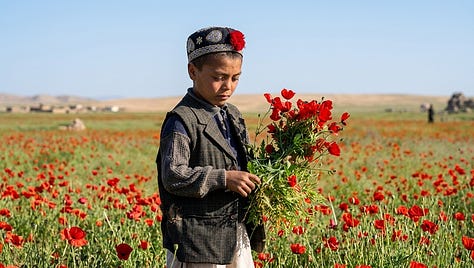
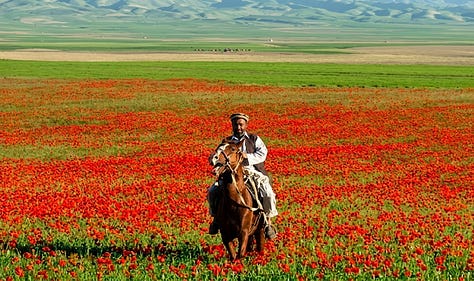
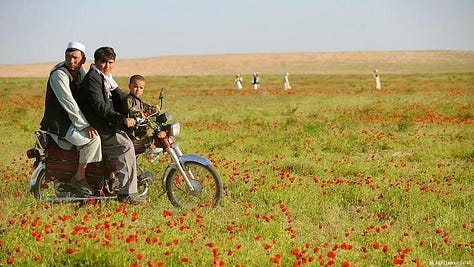
It happens at the same time as Nowruz, when red tulips and anemones bloom across the region.
Fields would turn red.
People gathered, walked, watched, stayed.
Mostly, it was the men you would see there, like the ones in these images.
There were other festivals too.
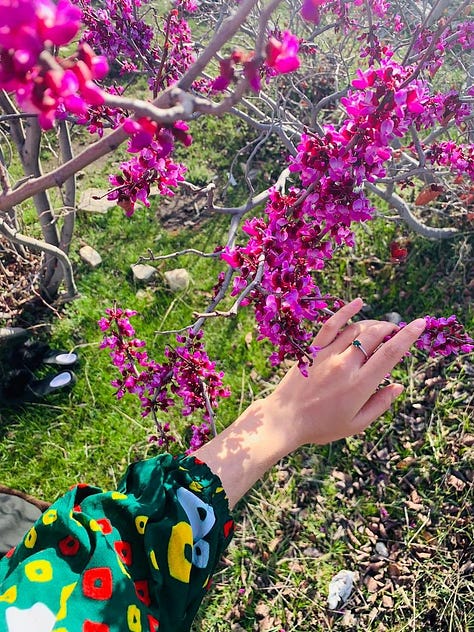
Mela-e Gol-e Ghandi, also known as Jashn-e Gul-e Arghawan, celebrating the purple blossoms of the Judas tree.
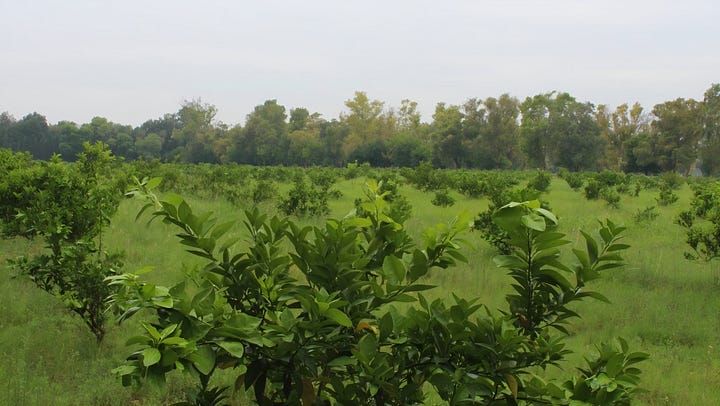
Mela-e Gol-e Narenj, the orange blossom festival, especially in warmer regions like Jalalabad.
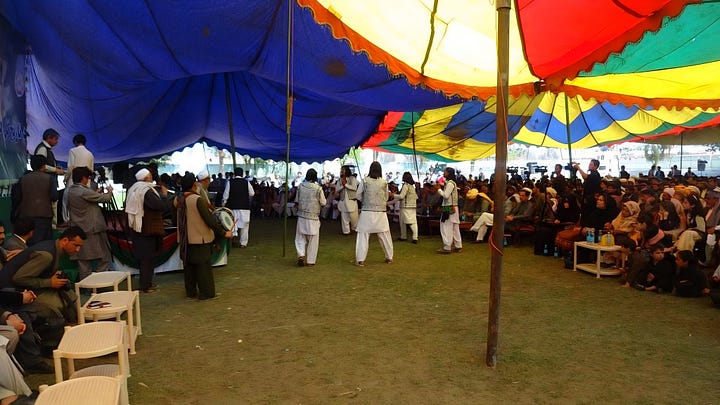
People just come, share, listen.
There is poetry, music, and sometimes the slow rhythm of the Atan.
There was another celebration, called Samanak.
In Iran, it is called Samanu.
In Tajikistan, Sumanak.
We called it Samanak.
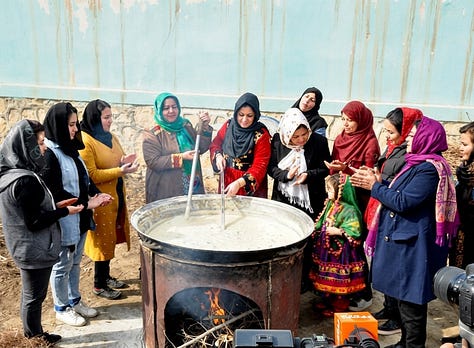
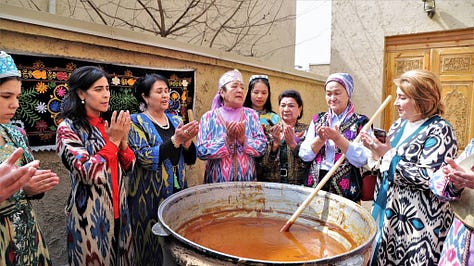
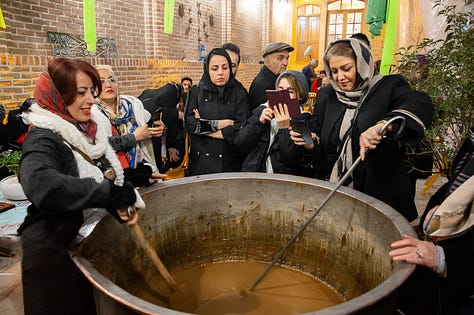
But it was never just a food. It was something women gathered around.
They would come together, often at night, stirring it slowly for hours.
Talking, laughing, singing old songs.
It took patience.
It took time.
Until I was about sixteen or seventeen, I remember it always being prepared in my grandmother’s house.
And the next day, my clothes would still carry the smell of smoke, because it was cooked over firewood.
Maybe I would rather write about those memories another day, in more detail.
And maybe that was the point.
People went like picnics…
Families gathered outdoors, brought food, sat under trees, and stayed for hours. But in the later years, even before everything changed, fewer families went.
More men.
Fewer women.
Something had already begun to close.
The second day, March 23, was Farmer’s Day, and the third day was the beginning of school.
And now, for the fifth or sixth year, girls in Afghanistan have been banned from going to school.
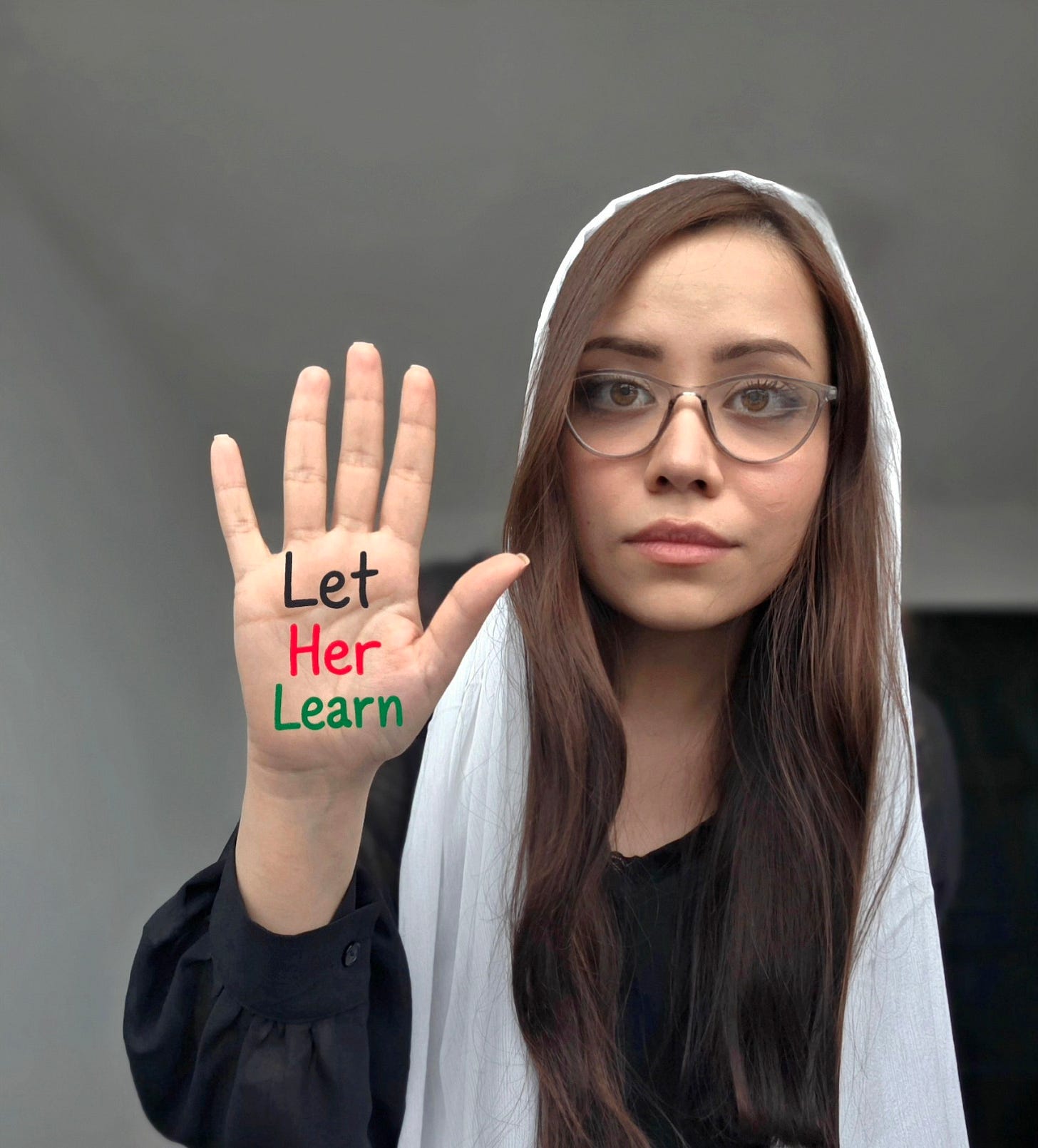
The school year still begins.
The bells still ring.
But girls are not allowed to enter.
I remember my own first days of school.
The air was still cold.
The rules were strict.
If we wore something slightly colorful, even a light pink or green jacket, we would be corrected.
Even small things.
A hair clip.
A slightly lighter socks.
I used to say, no one even sees it.
Who even notices a small hair tie?
But they did.
Maybe I learned how to adjust.
Or maybe I simply did not have the capacity to endure too much pressure.
As Afghanistan moved closer to 2021, people also became more closed, even before everything changed completely.
I remember at school, when I wished someone a happy Nawruz, they would say,
do not say that, it is a pagan celebration.
It felt like we were learning how to make life smaller. As if limitation had become more familiar, more acceptable, even more comfortable than joy. As if freedom had slowly become something suspicious.
One day, I should write properly about my school. It was a public school, and one of the strictest ones. About all its rules, written and unwritten. In those same early days of the school year, something else was happening outside.
Farmers would come into the city of Kabul carrying baskets of flowers on their heads.
Red poppies. Tulips.
I still remember that image near Shah-Do Shamshira Mosque.
Bright. Alive. Moving through the city.
My friend and classmate, Nawida, who now lives in America, always bought them.
Even though her home was in a part of Kabul where there were already many plants and flowers.
That living, moving image of Kabul.
It stayed somewhere in my mind.
These days, I find myself thinking about many things.
About what I had in the past.
About what I cannot do now.
And what, maybe, exists instead.
The condition of a person who grows up in displacement.
It still feels strange to me.
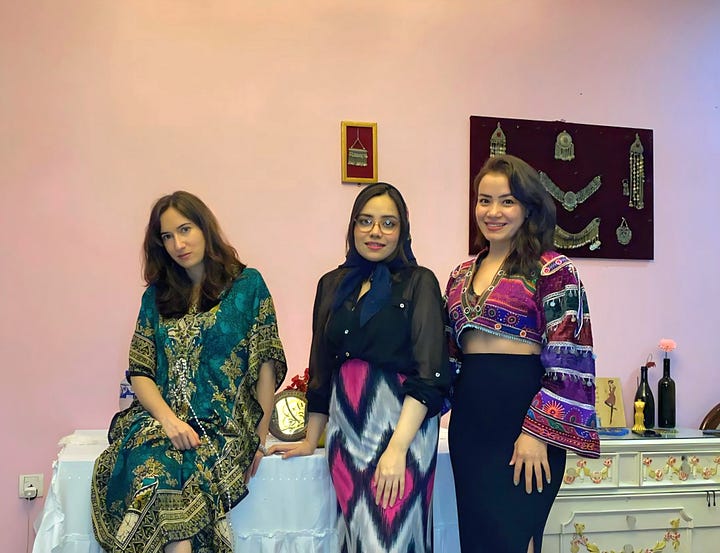
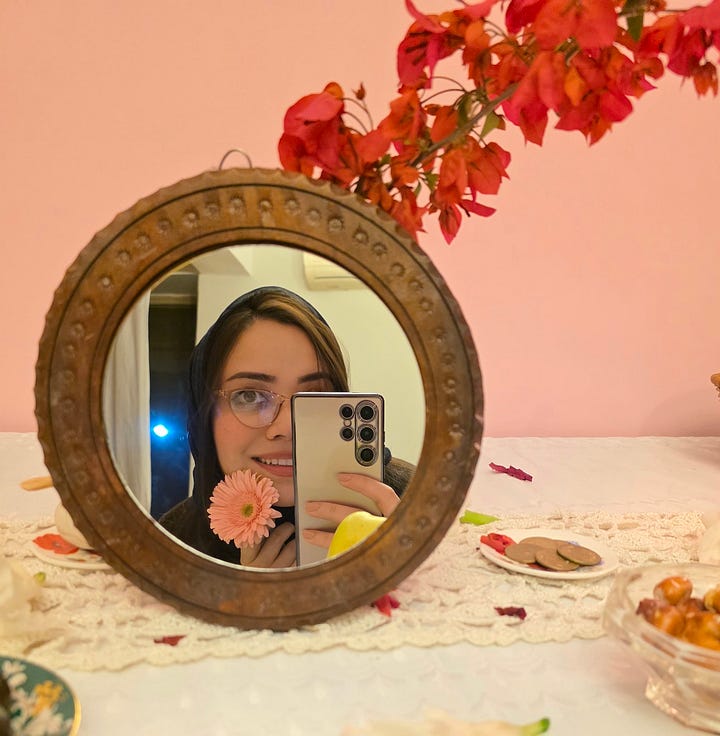
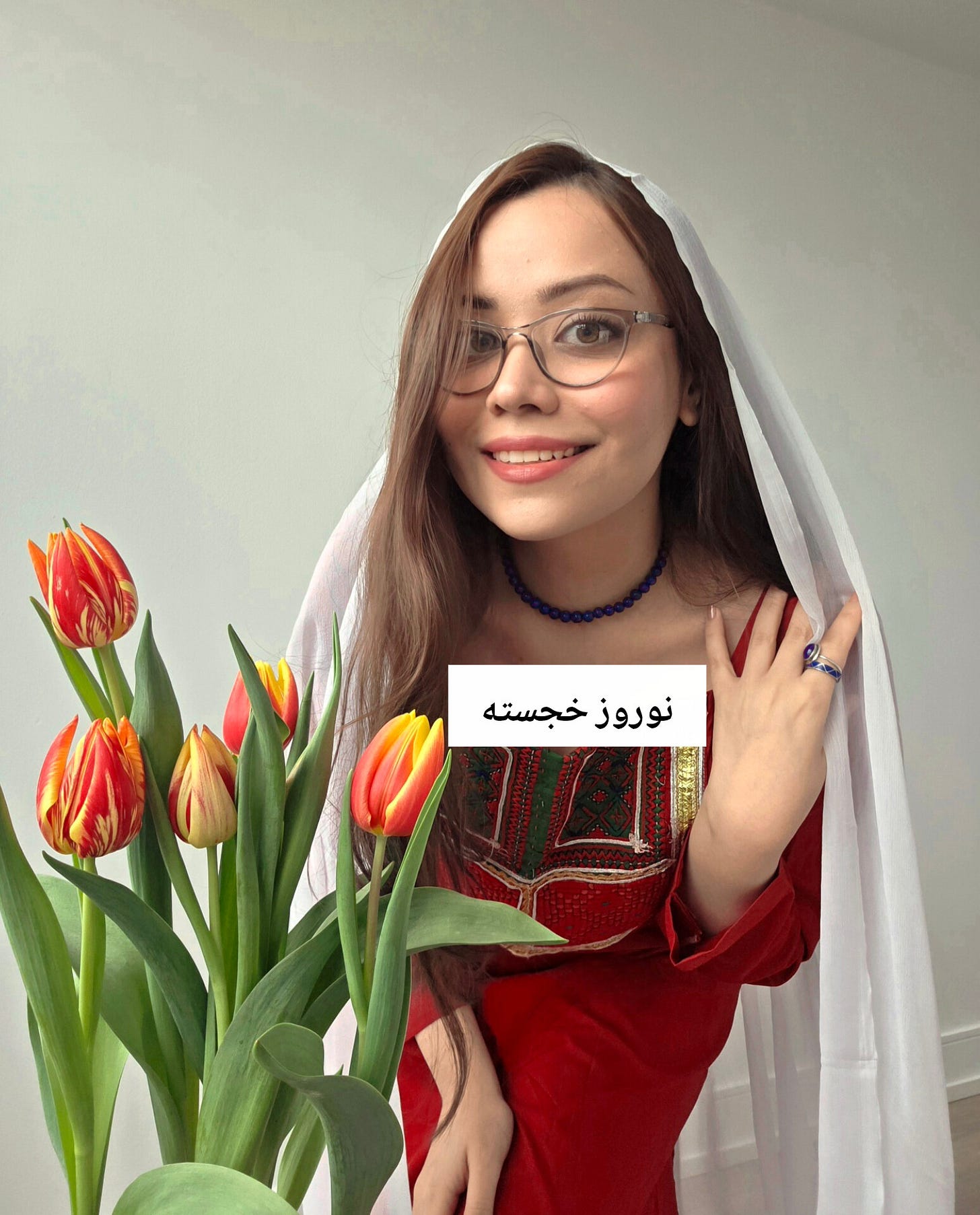
This year, I tried to mark Nawruz.
Even if it was only with a few tulips.
For me, tulips have always meant freedom.
A quiet kind of freedom.
The kind that continues.
The kind that stays alive.
Sometimes, I find myself quietly repeating a poem about Tulips by Safa,
as if it steadies something inside me,
as if it gives me the courage to continue on this path,
this different path I have chosen:
من لاله آزادم، خود رویم و خود بویم
در دشت مکان دارم، همفطرت آهویم
آبم نمِ باران است، فارغ ز لبِ جویم
تنگ است محیط آنجا، در باغ نمیرویم
I won’t translate it,
Persian poetry doesn’t like being translated. It complains quietly ;)
That morning, after I woke up, I cleaned my small space/territory.
I got ready.
I did my makeup.
I dressed.
And I asked my mother and my sister to take a photo together.
One said she was not ready.
One said she had not dressed yet.
I said it is okay.
I will wait.
We took one photo.
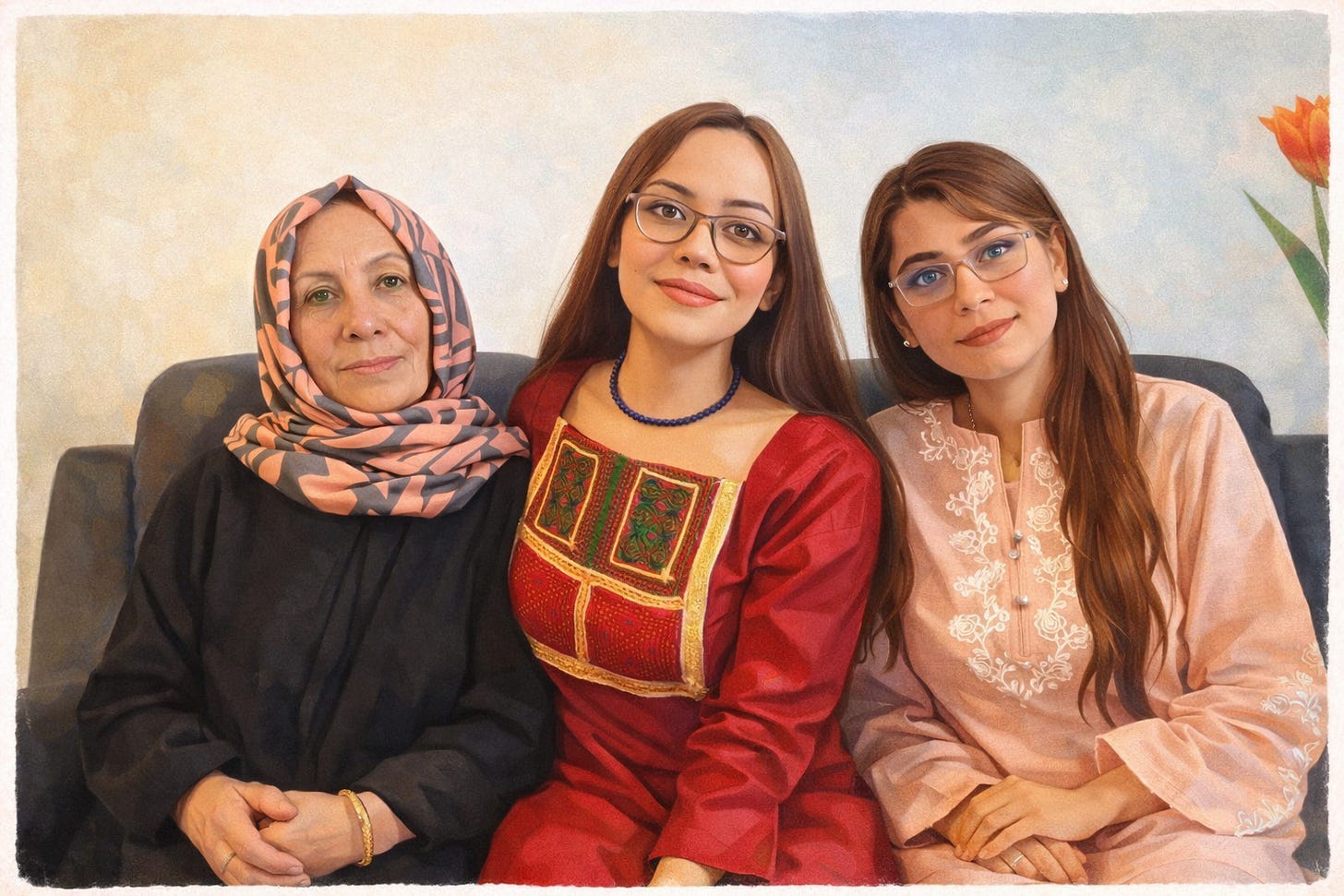
The embroidery of my dress came from the south of Afghanistan.
The fabric was bought in Pakistan, where it was also tailored in my last days there.
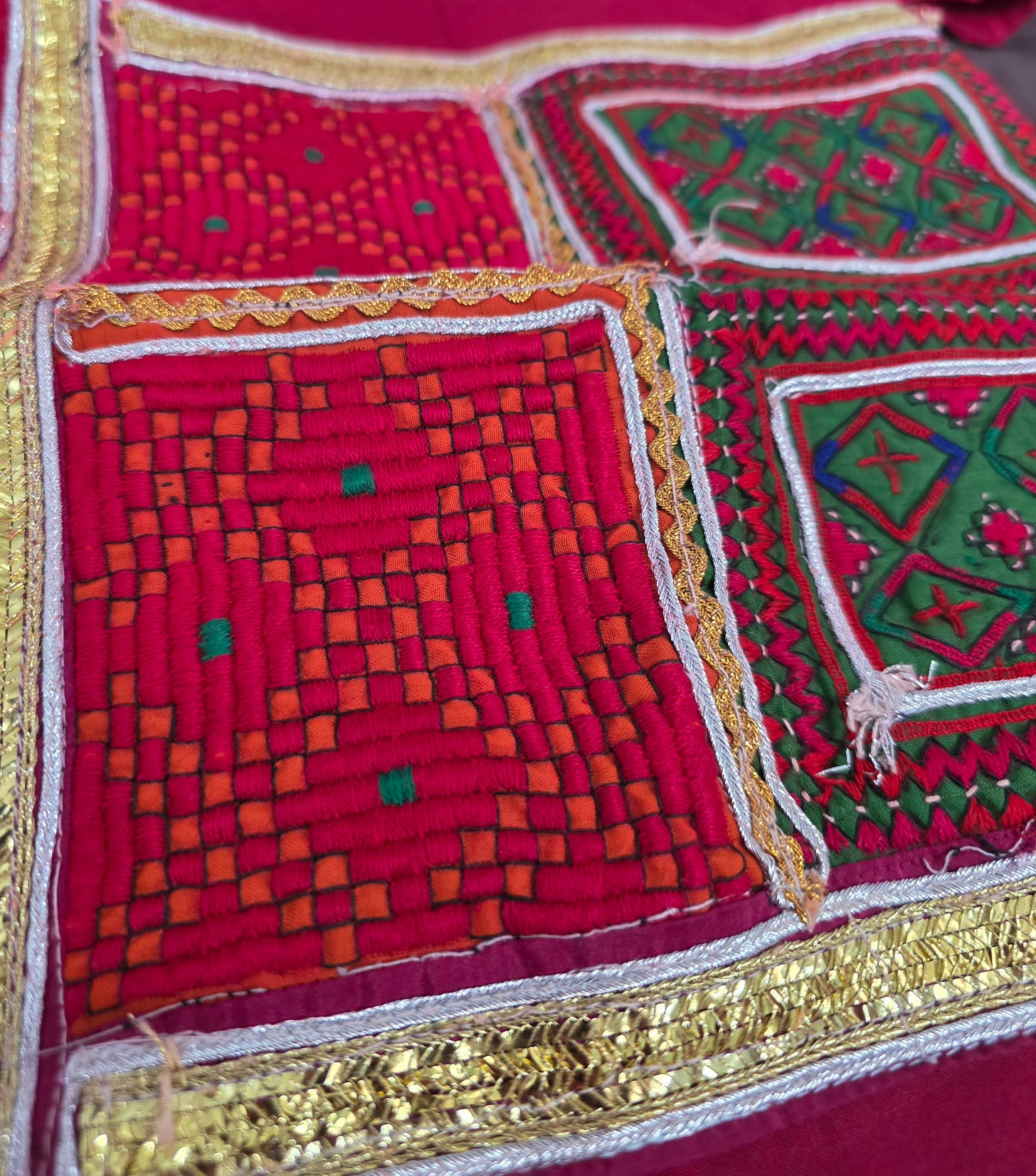
And the person inside it, not belonging entirely to any border, or any place.
And I thought about a country where a woman’s voice is not meant to be heard.
Where she cannot go to school.
Cannot go to a park.
Cannot even go to work to feed herself.
What scares me is not only the Taliban.
It is the thinking.
The way it slowly spreads.
The way it is absorbed, like a sponge.
And how joy disappears, one piece at a time.
A place where even Nowruz has been declared forbidden.
Comments
Nothing yet. Say the first thing.
Sign in to join the conversation.