
I finished a long, crowded day.
The kind of day that empties you quietly.
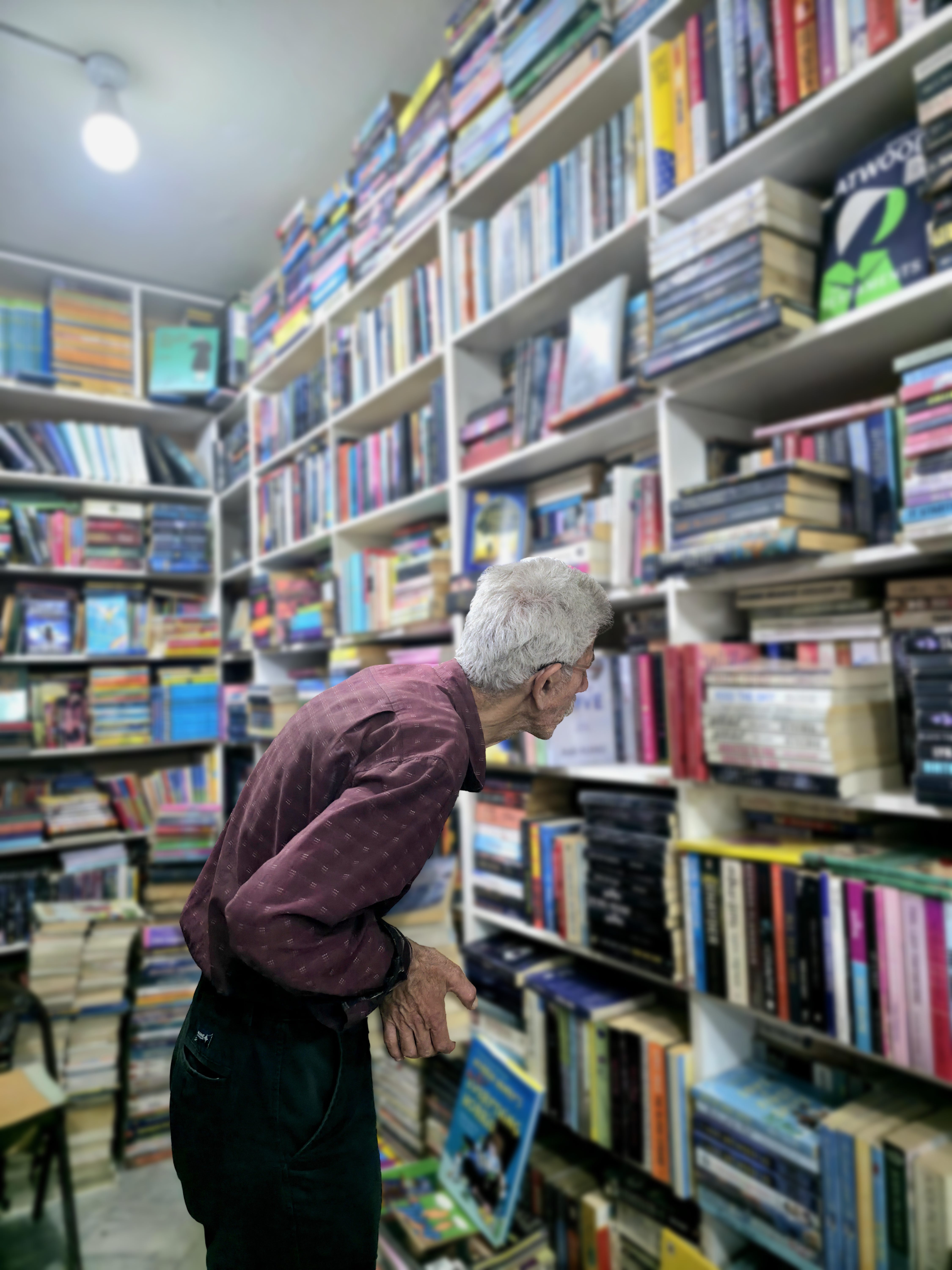
There were still a few things I needed to do outside. When I was done in the city center of Islamabad, I stopped beneath the dense green I had framed so carefully in my mind. Light filtered through thick branches. It was silent. The air was heavy, humid, yet for reasons I couldn’t explain, I liked even that.
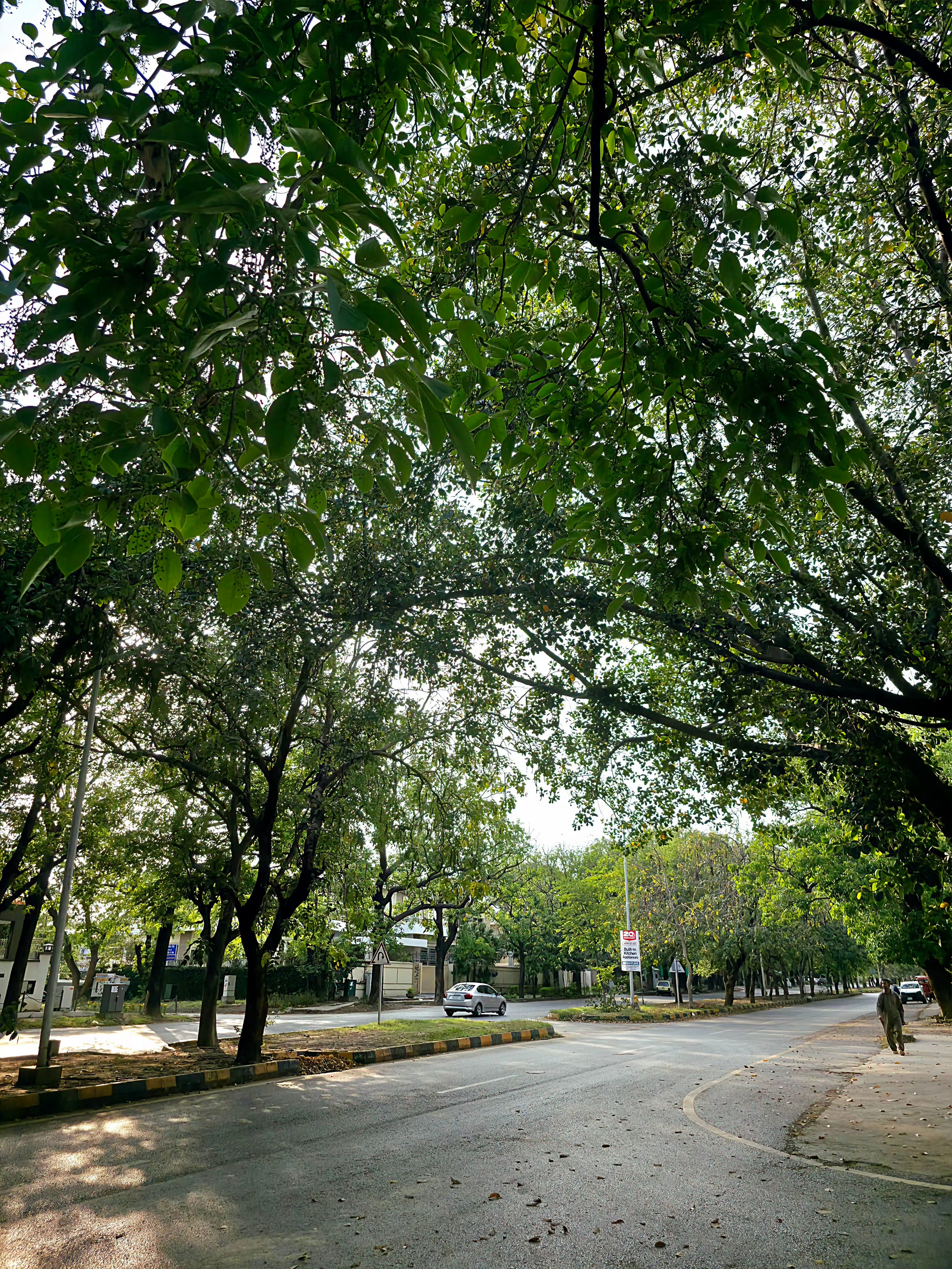
I stood there, waiting for a car.
When I got in, I greeted the driver in deep, accented Urdu.
It made me think of Afghanistan, back when I was there, until late 2022. There were no ride-hailing apps then. First encounters were only about money.
“How much to Shahr-e-Naw?”
“Two hundred?”
“No.”
And then came the bargaining. Minutes of it.
The funniest part was that once people finally sat inside the car, only then, sometimes, they would say hello.
I watched the city move. I want to place a short video here, Islamabad’s green passing by, because truly, this land is far more beautiful than its policies toward refugees.
In my first year in Islamabad, when foreigners asked me what I thought of the city, I would laugh and say it was my favorite. I had never been anywhere outside Afghanistan and Pakistan. I had seen very little of the world…
Lost in thought, I watched the roads, the trees, the ease of motion.
Motorbikes were everywhere.
It was one of the first things I noticed when I arrived in Pakistan. And the women, always sitting behind the driver. Balanced. Unafraid. I often think about their courage.
In Islamabad, drivers are impatient.
Because traffic is rare, even a few minutes of congestion makes people restless. They rush, press forward, refuse stillness. It’s one of those small things that stayed with me about Pakistan.
Later, I went to get my hair cut.
Once, my hair reached my knees.
Back then, when my mindset was more fragile, I believed my value lived in what could be seen, my body, my appearance, the things I carried outwardly. Growing up taught me otherwise. What I own now is mostly invisible.
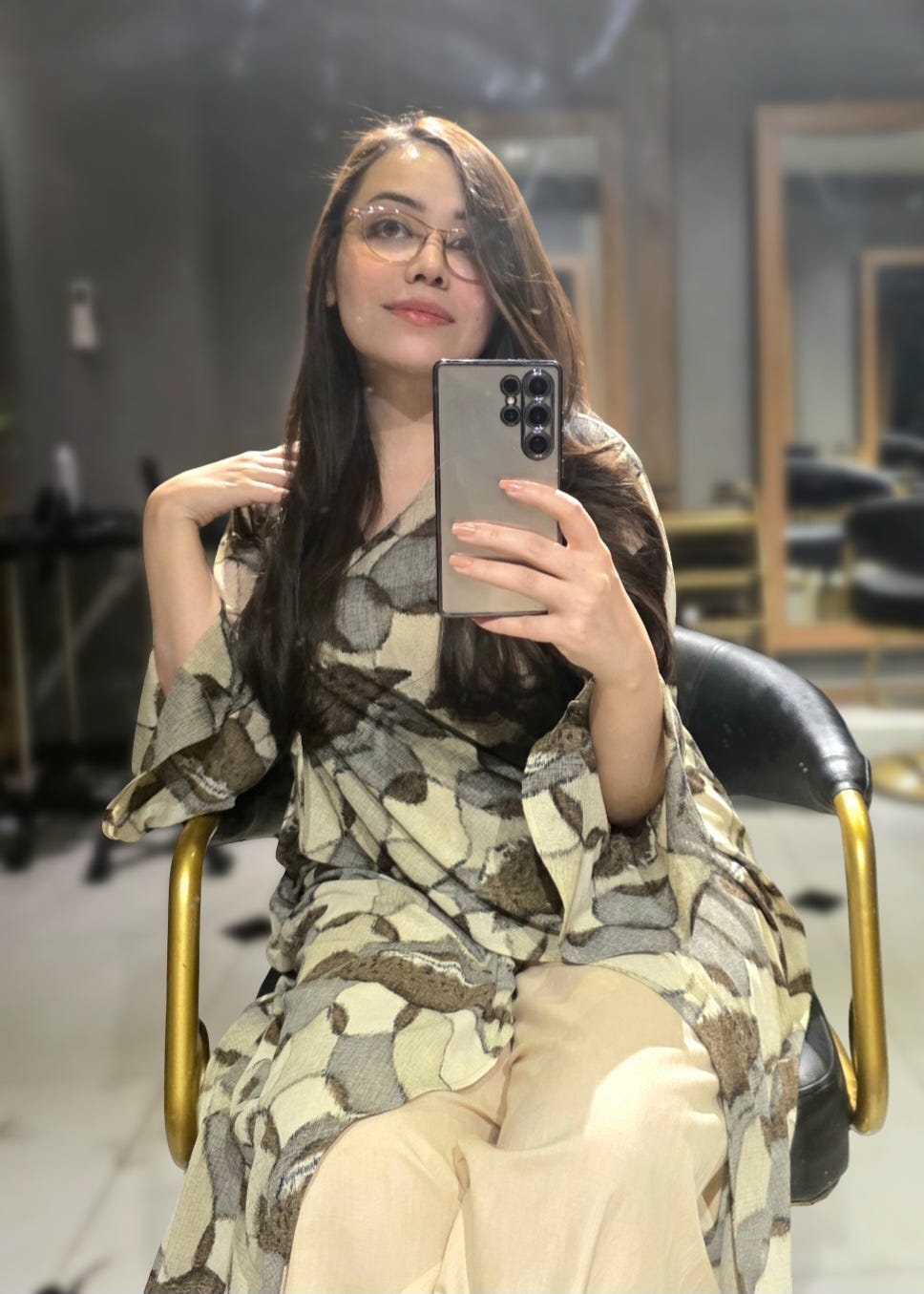
They cut my hair until it rested just below my chest.
Since coming to Pakistan, I had been slowly shedding layers of severity, loosening the grip life had held on me. When I stepped out of the salon, it was nearly dark. My hair felt light.
I should say, I’m not someone who goes to salons often. I’ve never gone for makeup. This was just hair. Just a small act.
And then I remembered the bookstore.
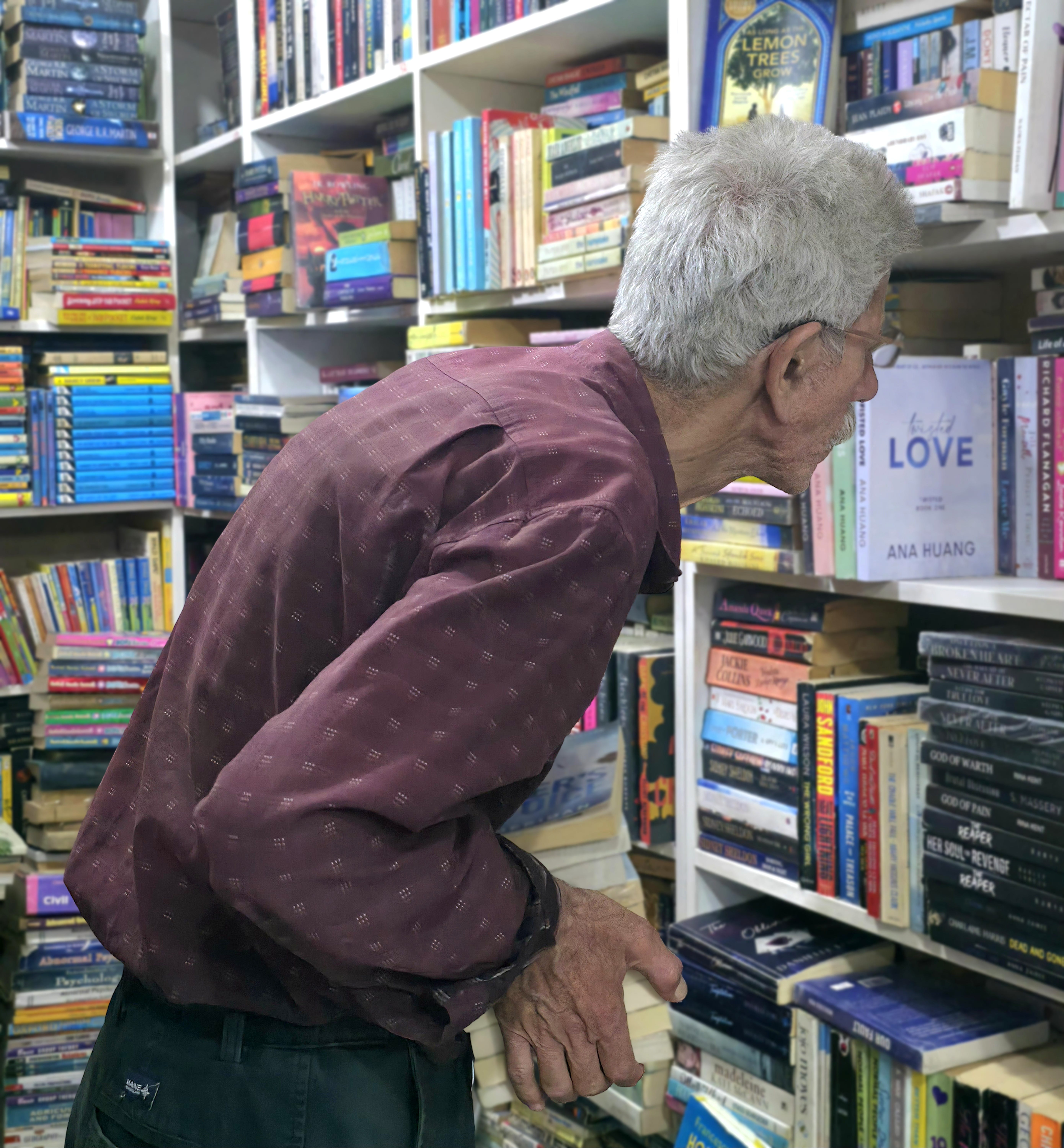
Every time I passed through one of Islamabad’s affluent neighborhoods, I noticed it. Basement level. Books everywhere. An elderly man with white hair. There was something about his face, quiet, dignified. He never stared. Never lingered his gaze the way many men in South, West, or Central Asia do.
Somewhere in me, I had always wanted to stop one day and speak to him.
This time, his books weren’t displayed outside. I bent my head and saw he was inside.
I went in.
The shop was full of books, stacked, crowded, alive. Up close, I noticed his eyes. Blue.
I showed him a photo on my phone and asked if he had a book I had searched for many times: Funny in Farsi.
“Yes,” he said. “I’ll find it.”
He began searching.
I told him not to trouble himself if it took too long.
“No, no,” he said, and brought me a chair to sit on. I remember thinking how rare this would be in the West.
“I’ll look,” he said again.
He moved books. Opened shelves. Checked corners.
While he searched, we talked, slowly. His Urdu wasn’t strong. His English wasn’t either. Between fragments, I asked where he was from.
“Iran,” he said.
I became unexpectedly childlike with excitement.
Really? I told him I think in Iranian Persian. That I started watching Iranian films when I was twelve. That I wanted to learn the language because it felt richer, deeper.
“You speak really really well,” he said.
“Have you been to Iran?”
“No,” I said. “Not yet.”
I asked what he was doing here.
“I’m a refugee,” he said. “I have a UNHCR resettlement case.”
He shared a few details of his life.
I told him I was sorry, but also glad he worked among books. That it was a good place to be.
Then I asked if there was anything I could help him with.
I don’t know why. As a refugee myself, what could I really offer? But it wasn’t the voice of a young woman speaking, it was simply the voice of a human being.
What he said next surprised me.
He said he was looking for a woman to marry, while he was in Pakistan. Preferably someone financially stable.
“Do you know any women? Afghan women?” he asked.
I didn’t.
Something shifted inside me.
He kept searching through the books.
I felt uneasy. (Not only because of him, but because status, your place in a country, the support you have or lack, can quietly alter your confidence and your judgment in moments like this.)
It was getting late. I said I should go.
“What about you?” he asked. “Are you married?”
I don’t know why I said it. (In many cultures in this region, a question like this, especially asked with that kind of intention, carries meanings beyond simple curiosity.)
“Yes,” I replied.
His gaze changed, more focused, more deliberate.
Then he asked if he could have my number.
I said I didn’t have a Pakistani one.
About twenty minutes had passed.
The book was never found.
I said goodbye, quickly, lightly, and left, almost escaping.
I carried a different image of him than the one I had held for so long.
Outside, the heat pressed down.
As I walked, questions circled in my mind:
Had I been too open?
Had I misstepped?
Had I sent the wrong signal?
Was I too trusting?
I come from a place where religious teachings tell me not even to meet the gaze of a non-mahram man (a man with whom closeness is culturally and religiously restricted), let alone interact. As a woman caught between deep-rooted tradition and modern calls for openness, I am always balancing my behavior with men from both East and West, careful not to be too warm, not to be too distant.
I walked a little further and stopped at a small shop, still thinking, my thoughts and inner processing moving faster than my steps in that aimless air. I wanted to do something, anything, to feel in control again.
I had once seen a frog figurine there, lounging, almost amused. It had been sold. Another one remained. I bought it.
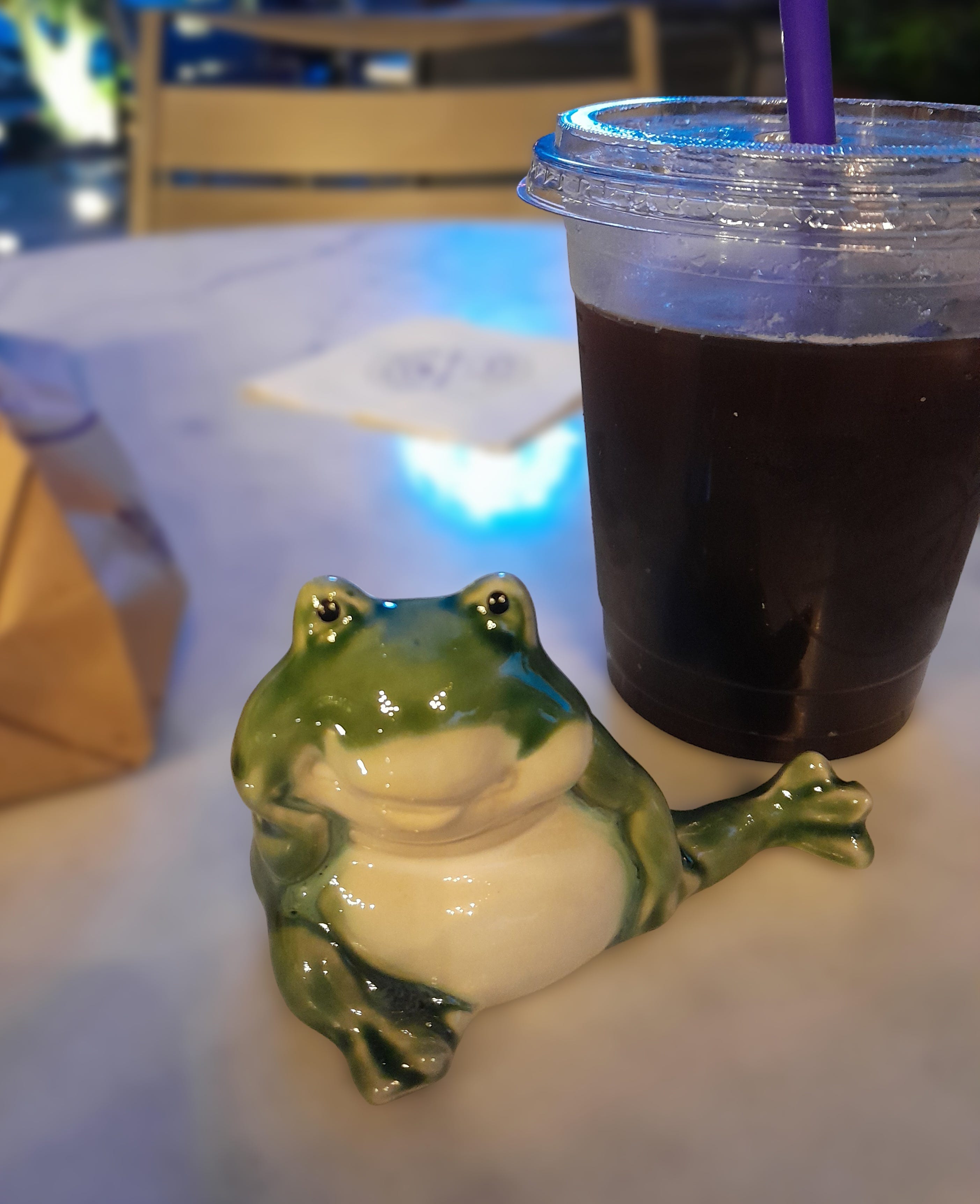
I keep it now on my desk, to remind myself, on the most overwhelming days, to stay chill. Like a frog.
I was thirsty. Very thirsty.
I ordered an iced Americano, bitter enough to erase the strange sweetness of this quietly tragic, faintly absurd day.
And then I went home.
Islamabad.
May 2025.
Comments
Nothing yet. Say the first thing.
Sign in to join the conversation.