
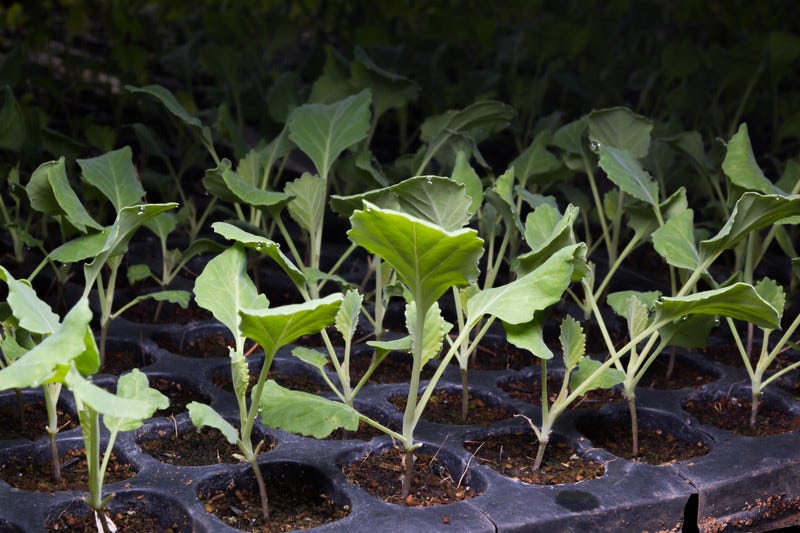
Field Notes: Stephen Albert, in the Sonoma Garden
By late August, it is time to think ahead to the months when daylight will be short.
For many vegetable gardeners, the important signal isn’t a particular date or even a particular temperature. It is daylength.
When there are 10 hours or less of daylight, cool-season vegetables may survive and remain harvestable, but their growth slows dramatically. When daylength rises above 10 hours again, growth begins to accelerate.
This changes how you should think about growing vegetables through winter.
Don’t wait for winter to grow your winter vegetables. Grow them now, while the soil is warm, days are still long, and plants can establish themselves before winter arrives.
The goal is to have winter vegetables well rooted and growing before short days and cold temperatures slow them down.
The date when your garden reaches 10 hours of daylight depends on latitude.
Northern gardeners reach the 10-hour threshold much earlier in autumn and remain below it much longer. Gardeners farther south may have only a relatively short period below 10 hours—or may never reach it at all.
The important thing is not the calendar date.
It’s knowing when your garden will fall below 10 hours of daylight.
The 10-hour daylight threshold arrives at different times across the United States. The farther north you live, the earlier the days fall to 10 hours or less—and the later they climb back above 10 hours in winter. Find a city and latitude close to you:
In the Pacific Northwest, Seattle (47.6° N) reaches 10 hours of daylight around October 29, while Portland (45.5° N) reaches it around November 2. Daylight rises above 10 hours again in February—about February 12 in Seattle and February 9 in Portland.
Across the Northeast and Midwest, the threshold arrives in early to mid-November. Boston (42.4° N) reaches 10 hours around November 7, Chicago (41.9° N) around November 8, New York (40.7° N) around November 11, and Philadelphia (40.0° N) around November 12. These locations return to more than 10 hours of daylight between late January and early February.
In the central United States, Denver (39.7° N) reaches 10 hours around November 13, Kansas City (39.1° N) around November 14, Washington, DC (38.9° N) around November 14, and St. Louis (38.6° N) around November 15. By late January, daylight in these cities is again longer than 10 hours.
In Northern California, Sonoma (38.3° N) reaches the 10-hour mark around November 16, while San Francisco (37.8° N) reaches it around November 17. Both climb back above 10 hours in late January—around January 25 in Sonoma and January 23 in San Francisco.
Farther south, the period is much shorter. Los Angeles (34.1° N) reaches 10 hours around December 4 and rises above 10 hours again around January 8. Atlanta (33.7° N) reaches the threshold around December 6 and returns above it around January 6. Phoenix (33.4° N) reaches 10 hours around December 8 and rises above it around January 4.
In Dallas (32.8° N), daylight reaches 10 hours around December 16 and rises above 10 hours again around December 28—only about two weeks later.
Farther south still, some locations never reach 10 hours of daylight. Houston (29.8° N) and Miami (25.8° N) remain above 10 hours throughout the year.
The 10-hour threshold is especially important for gardeners growing through winter. Many cool-season vegetables can tolerate cold temperatures, but short days can slow growth dramatically.
A gardener in Seattle, Boston, Chicago, or other northern locations may have several months when short daylight limits growth. In Sonoma, the period is much shorter—roughly November 16 through January 25. In Southern California, Arizona, Texas, and the Southeast, the period is shorter still.
So winter gardening is not simply a question of how cold it gets. It is also a question of how much daylight the garden receives.
So there is no single national date for planting a winter garden.
Your latitude determines your winter light.
Suppose you want a bed of spinach, lettuce, kale, or Asian greens to carry you through winter.
You don’t want those plants entering the short-day period as tiny seedlings.
Instead, work backward from your local 10-hour date.
Give the plants enough time to germinate, establish roots, and develop substantial leaves while there is still plenty of daylight.
Then, when the days become short, the plants can simply hold.
A mature plant can survive a period of slow growth much better than a tiny seedling trying to establish itself under low light.
Build → Hold → Resume
Build:
Grow plants while days are still long. This is when you establish the winter garden.
Hold:
When daylight falls to 10 hours or less, growth slows. Harvest what is ready and keep plants healthy.
Resume:
When daylight rises above 10 hours, plants begin putting on new growth more rapidly.
This explains why an overwintered garden can seem almost motionless in December and January and then suddenly come alive as winter gives way to spring.
To plan your winter garden, determine when your location reaches 10 hours of daylight.
Then ask:
How large do I want this crop to be when that happens?
For a crop that needs six weeks to reach a useful size, for example, begin it at least six weeks before your 10-hour date—and preferably earlier if temperatures are cooling.
For crops that require a long growing season, such as broccoli, cabbage, and cauliflower, start even earlier.
The exact timing varies with crop, variety, climate, and whether you are starting from seed or transplant.
But the principle is the same:
Give winter crops their growing time before the days become too short.
You can still sow vegetables when daylight is below 10 hours.
Seeds will germinate if soil temperature is suitable, and some crops will continue to grow during mild, sunny weather.
But growth may be very slow.
A lettuce planted in December might not reach harvest size until January or February. A spinach planting made during the shortest days may seem to do almost nothing for several weeks.
That doesn’t necessarily mean something is wrong.
The plant may simply be waiting for more light.
For this reason, fall plantings are often your main winter crop, while winter sowings become crops for later winter or early spring.
Daylength is only one part of the equation.
Winter gardening depends on three things working together:
Soil temperature determines whether seeds will germinate and roots can grow.
Daylength determines how much sunlight is available for photosynthesis.
Soil moisture determines whether plants can make use of the conditions around their roots.
A crop may have the right soil temperature but too little light for rapid growth.
Or it may have plenty of light but soil that is too cold.
Successful winter gardening comes from understanding the interaction of all three.
This is the idea I would remember:
Winter vegetables are often grown into winter rather than grown during winter.
Use the longer days of late summer and fall to establish your crops.
Let them slow down when daylight falls below 10 hours.
Harvest what you can while they are holding.
Then, as daylength rises above 10 hours again, watch the garden wake up.
The plants that survived the dark season are already rooted, established, and ready to grow.
Find your local 10-hour daylight dates.
Then plan backward.
Start seeds early enough that plants are well established before the first 10-hour day.
That may be September in one climate, October or November in another, and perhaps never be necessary in a tropical climate.
The calendar changes.
The principle doesn’t.
Grow before the light fades. Hold through the short days. Grow again when the light returns.
The Complete Guide to Winter Vegetable Gardening: Grow Fresh Food All Winter with Season Extension
The Complete Guide to Fall Vegetable Gardening: Planning, Planting, Growing, and Harvesting
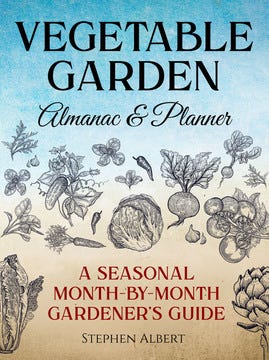
Vegetable Garden Almanac & Planner is designed to sit beside you through the gardening year. It helps you track planting dates, garden tasks, weather patterns, and harvests so you can learn from each season and improve the next.
The Vegetable Garden Grower’s Guide is a practical handbook for growing vegetables from planting to harvest. It covers soil preparation, planting times, crop care, and troubleshooting common problems—everything you need to grow a productive vegetable garden.
The Kitchen Garden Grower’s Guide is a practical vegetable and herb garden encyclopedia. This book has information you can use today. Here you will find all you need to grow more than eighty different edible plants.
Tomato Grower’s Answer Book gives you answers to every tomato growing question you’ll ever ask with solutions to every tomato growing problem you’ll every face. Nearly 400 questions and answers with 120 color photographs to help you grow.
If you’d like to learn more, you can find both books here:
For step-by-step guidance, visit the Harvest to Table YouTube Channel, where you’ll find more than 60 videos showing how to grow nearly every vegetable—from seed planting to harvest.
No posts
Comments
Nothing yet. Say the first thing.
Sign in to join the conversation.