

I have recently been thinking about how I use scaffolding in lessons to support student understanding. For the level of scaffolding I felt was necessary for some classes, I often found creating the resources I needed to be far too time-consuming and not sustainable. This is where AI can help.
Two points to note:
The thinking is not being outsourced to artificial intelligence; rather, the AI is completing the procedural parts that I find are a barrier to effectively scaffolding a lesson, due to time constraints in creating them.
I use the term scaffolding to mean providing support that enables students to focus on smaller individual parts of a process and to ensure they understand these parts before bringing them together to understand the full process.
How to create the resources I mention in this post is detailed in depth in my previous posts here and here.
This lesson was for a Year 10 class of middle-to-low-prior attainers who will be sitting Foundation Tier Mathematics in Year 11. The aim is to ensure that 100% of students in the room can find the nth term of a given linear sequence by the end of the lesson.
We had covered generating sequences in the previous lesson. I started this lesson by generating the first 5 terms of the sequences 3n, 4n, 7n and 9n. We discuss that these are just the 3, 4, 7 and 9 times tables, respectively, then we explore the slides below.
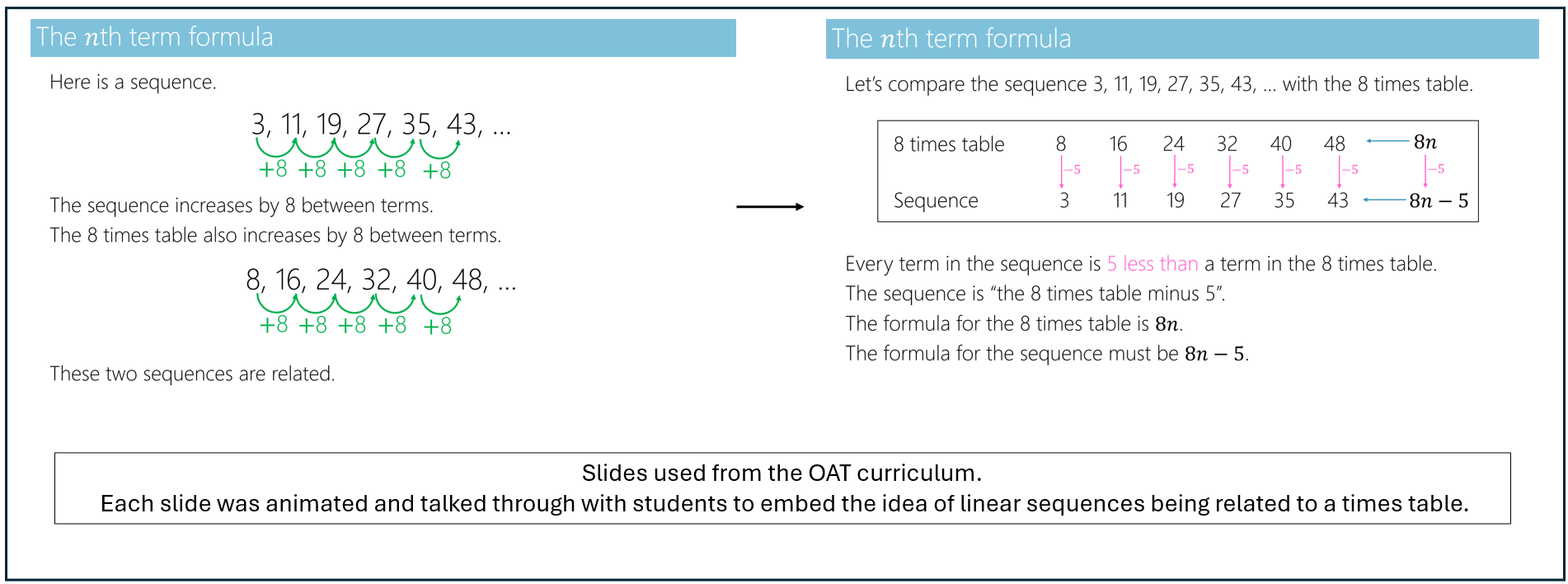
The slides above are taken from the OAT Maths Curriculum, unit A7 (link)
Once I have explored this with the class, I decide to check that students understand the idea of comparing a sequence to a times table as a skill in isolation from the rest of the process before we go further.
This is where AI helps. I use a Gem on Gemini* that I have set up, and ask for:
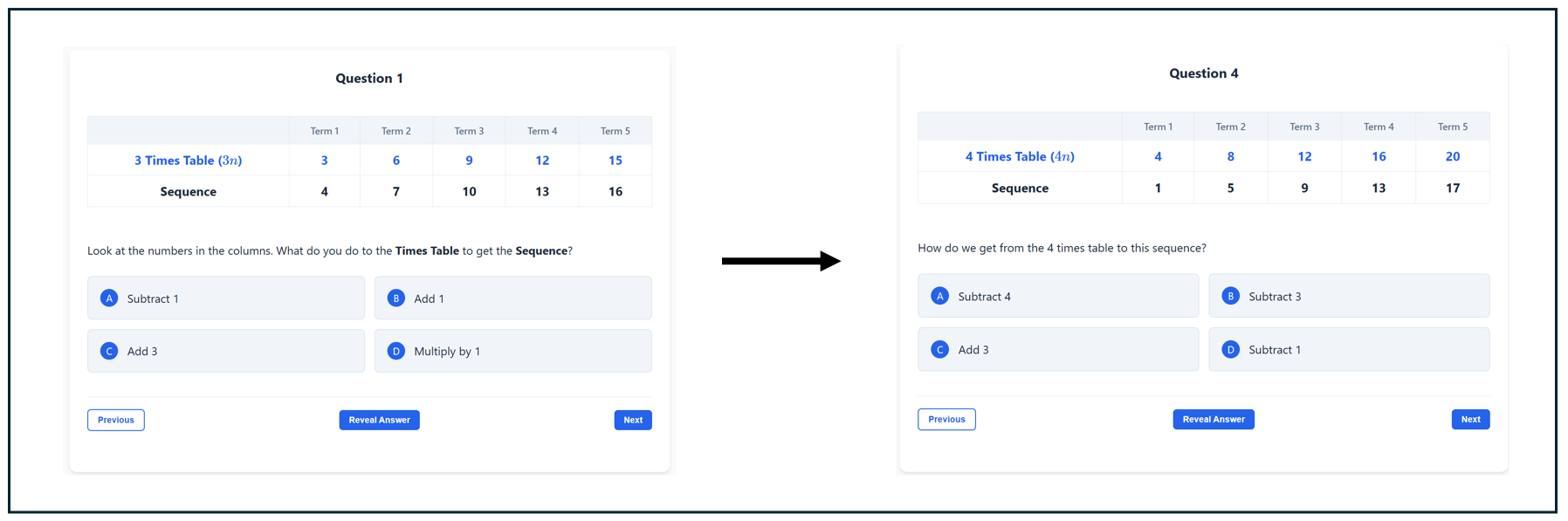
“a set of 6 questions where a times table is shown above a sequence, and students need to state what is happening to get from the times table to the sequence , as a prerequisite to finding the nth term of a sequence. Each sequence should be an incresing sequence”*The ‘Gem’ refers to a set of instructions that work in the background for the above prompt. I have set this up to ensure that wrong answers check for misconceptions and to control how the questions look, as described in a previous post. The Gem allows these instructions to be there in the background as soon as you click it.
This is a check for understanding, using mini-whiteboards. It gives me back the following, which allows me to check that students understand this idea and for them to think about it and embed it before we move on.
Once I am confident that students understand this part of the process, I can model the rest. Note that I am intentionally focusing only on increasing sequences at this point.
If it had been a lower-attaining class, I may have first made a set of questions where students just needed to identify which times table to compare when given a sequence, as a further intermediate step. AI again would have been very helpful here.
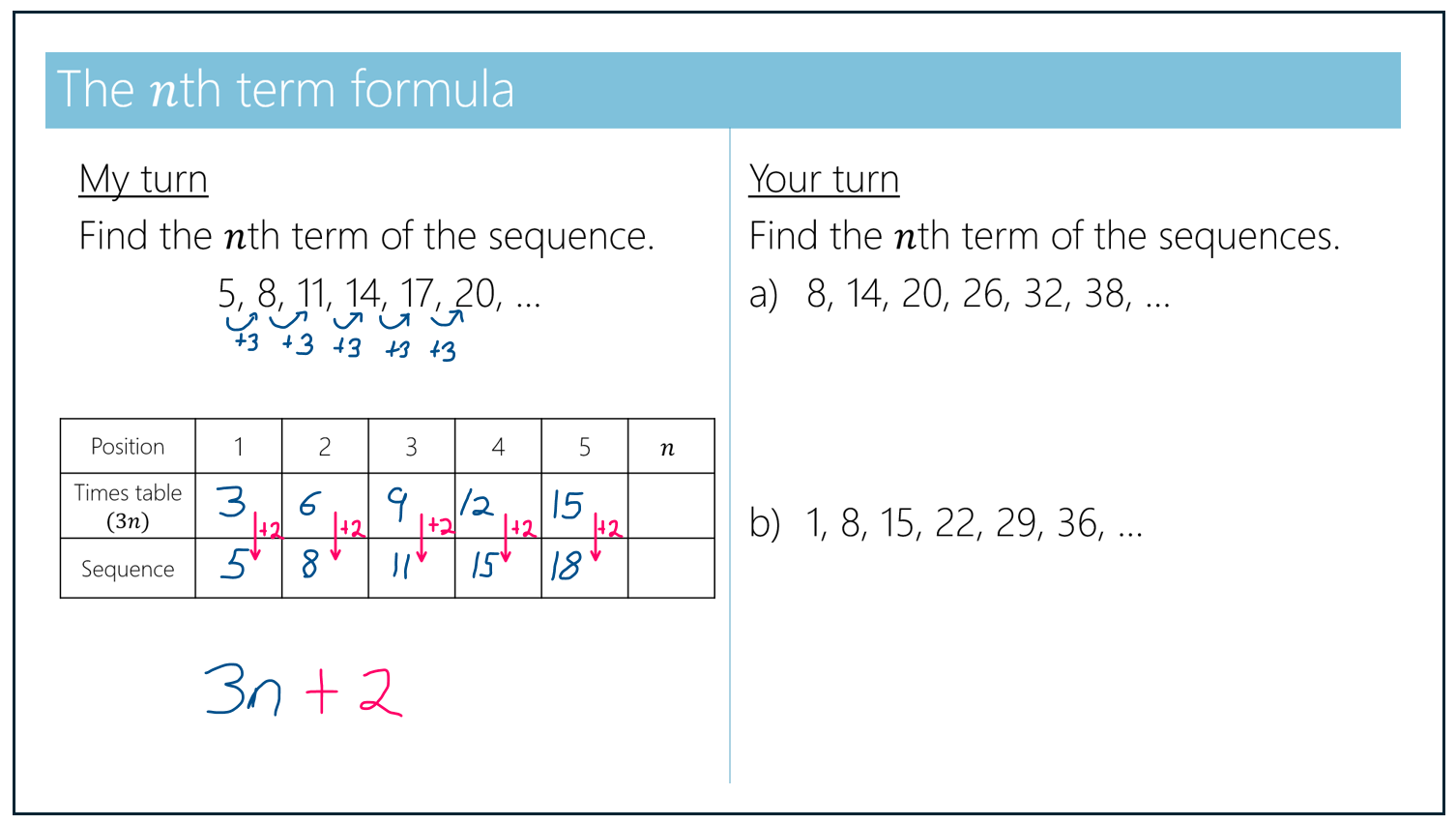
Once this has been modelled and students have had a go at it themselves, I want to check understanding. Again, I use AI to generate an increasingly difficult set of questions that check for misconceptions for increasing linear sequences. I give the prompt:
"Create a set of 4 questions where students need to find the nth term of a positive increasing linear sequence"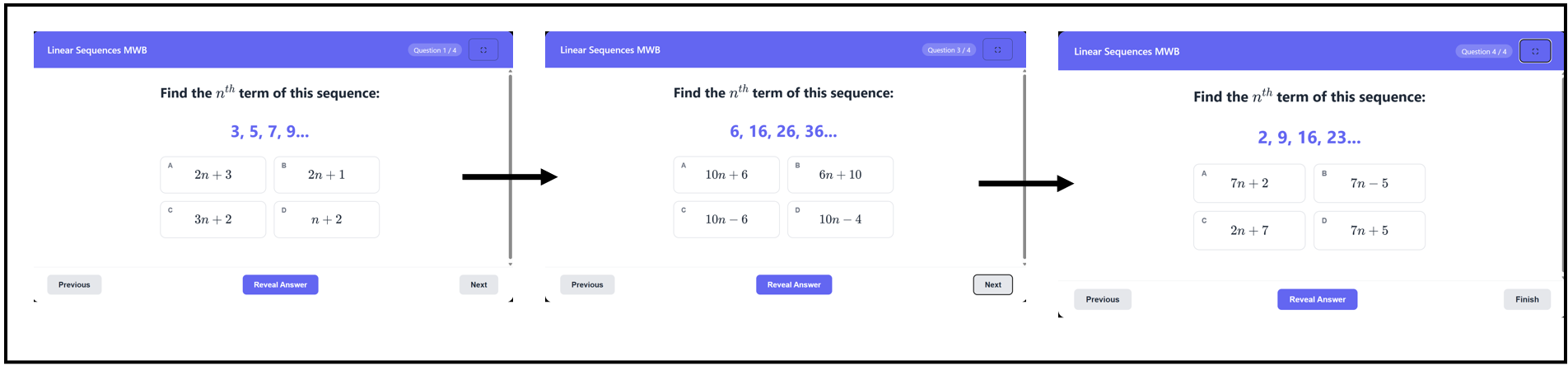
You could be more specific about, for example, having negative numbers in a sequence, or anything else, to control the questions more.
Once I see that all students can do this, I give them a set of questions. I again use AI for this because I want students to get lots of practice with increasing sequences before we look at decreasing sequences, and it would be difficult to find a set of 20 questions that already exist.
I again use a Gem, which ensures that questions gradually increase in difficulty and allows me to click to reveal answers as students work through them. I give the instruction:
"Create 20 questions, 4 columns, 5 rows on finding the nth term of a linear increasing sequence"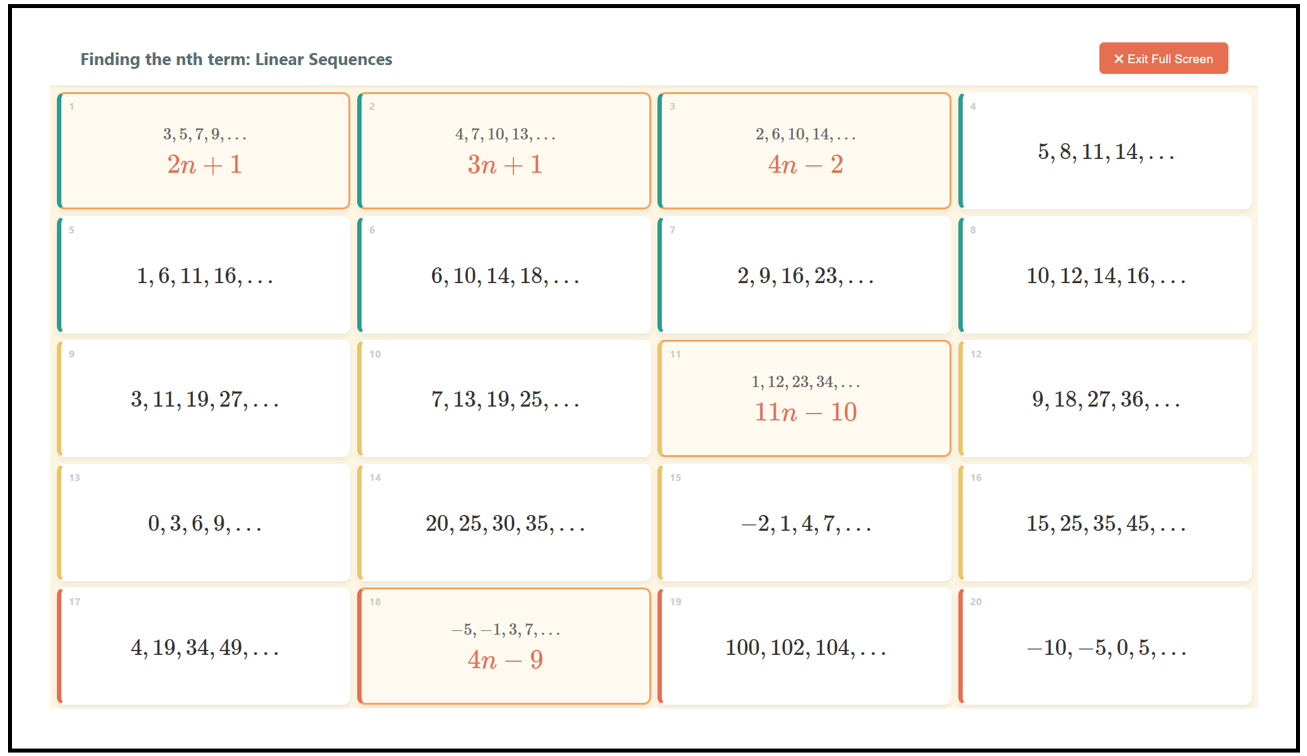
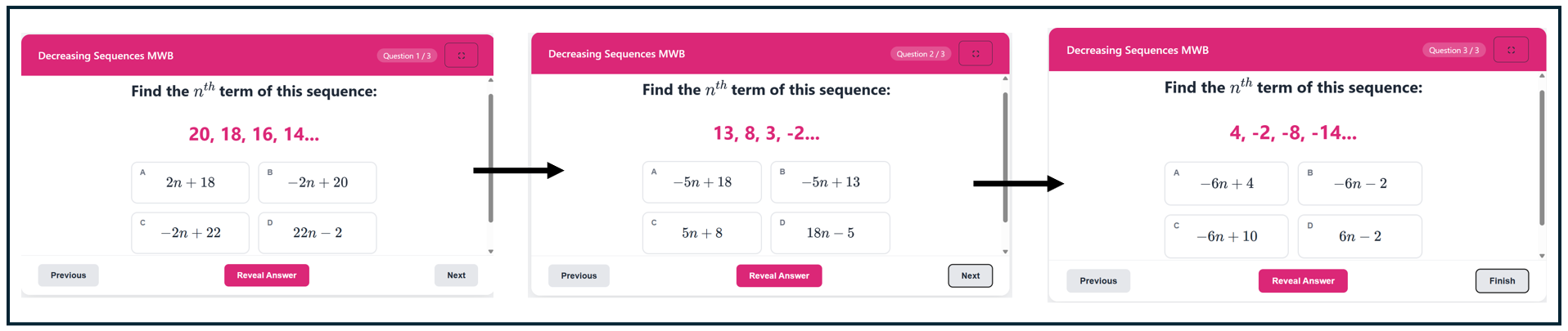
I then repeat this process for decreasing sequences, using the following example, followed by a similar check for understanding
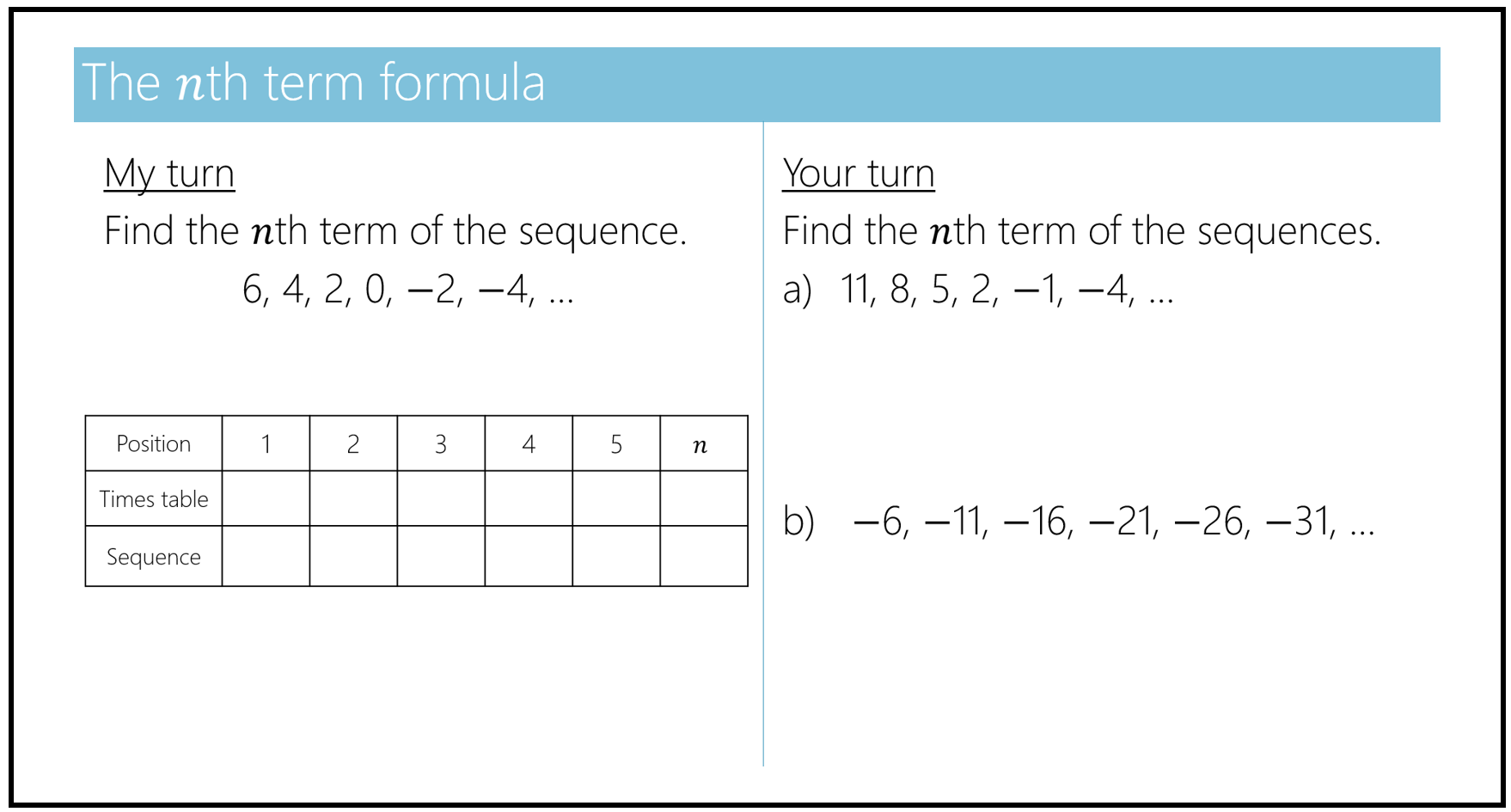
The check for understanding:
The independent practice:
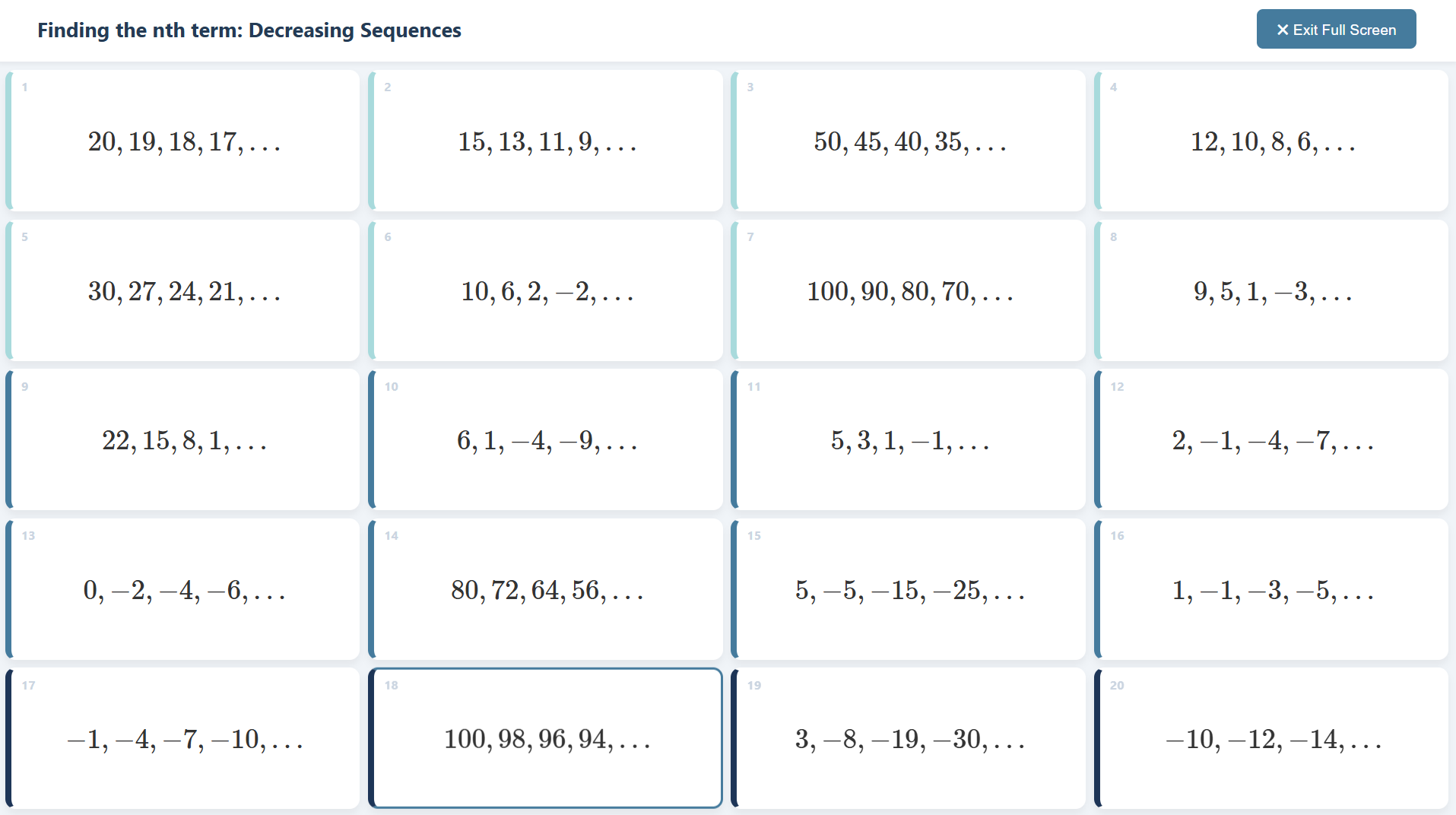
At this point, I would have ideally given students a mix of increasing and decreaing sequences to check that they can identify if the nth term starts with for example +3n or -3n, to further take away the scaffold that was given by all the questions so far either being increasing or decreasing in the same activity. However, I ran out of time, so I will do this next lesson.
Below are some activities I used when teaching factorising non-monic quadratics (using the ‘split the middle term’ method), where I had broken it down into smaller parts.
First, I want to check that students can understand the representation they will end up with at the end of the process. First, I model and then use the generated MWB check questions:
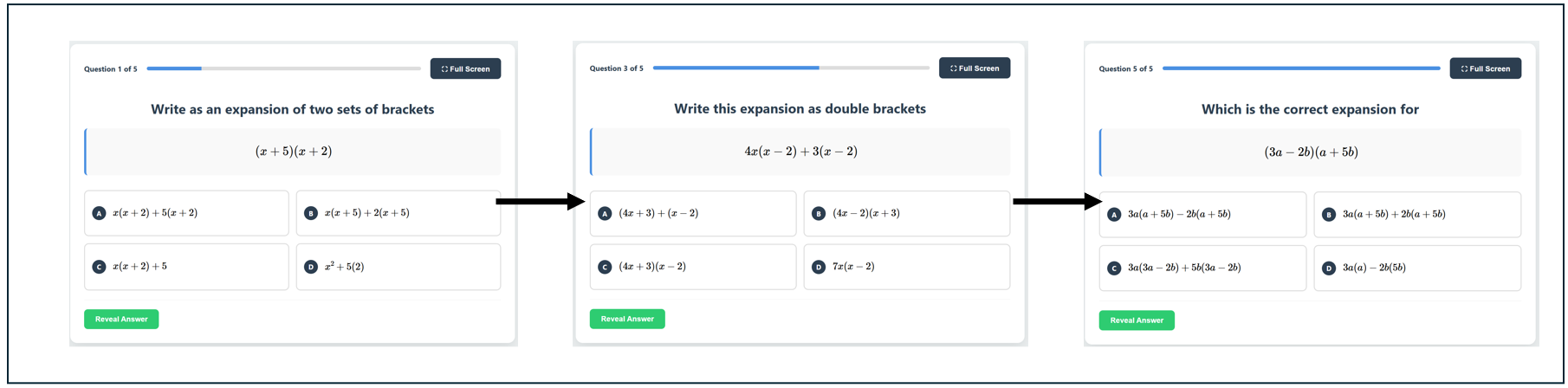
Then a short activity on this:
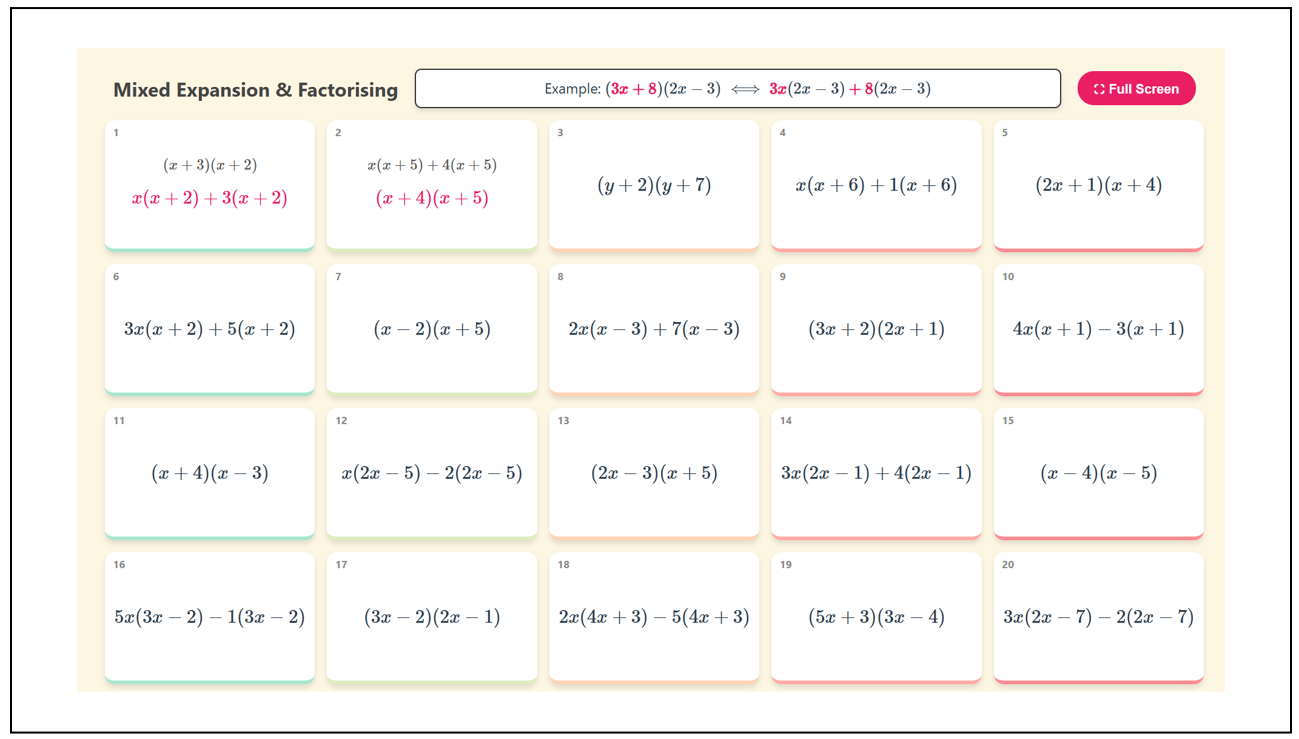
Then, I model the part of the process that is ‘splitting the middle term’ and again use MWBs to check for understanding, before giving students practice.
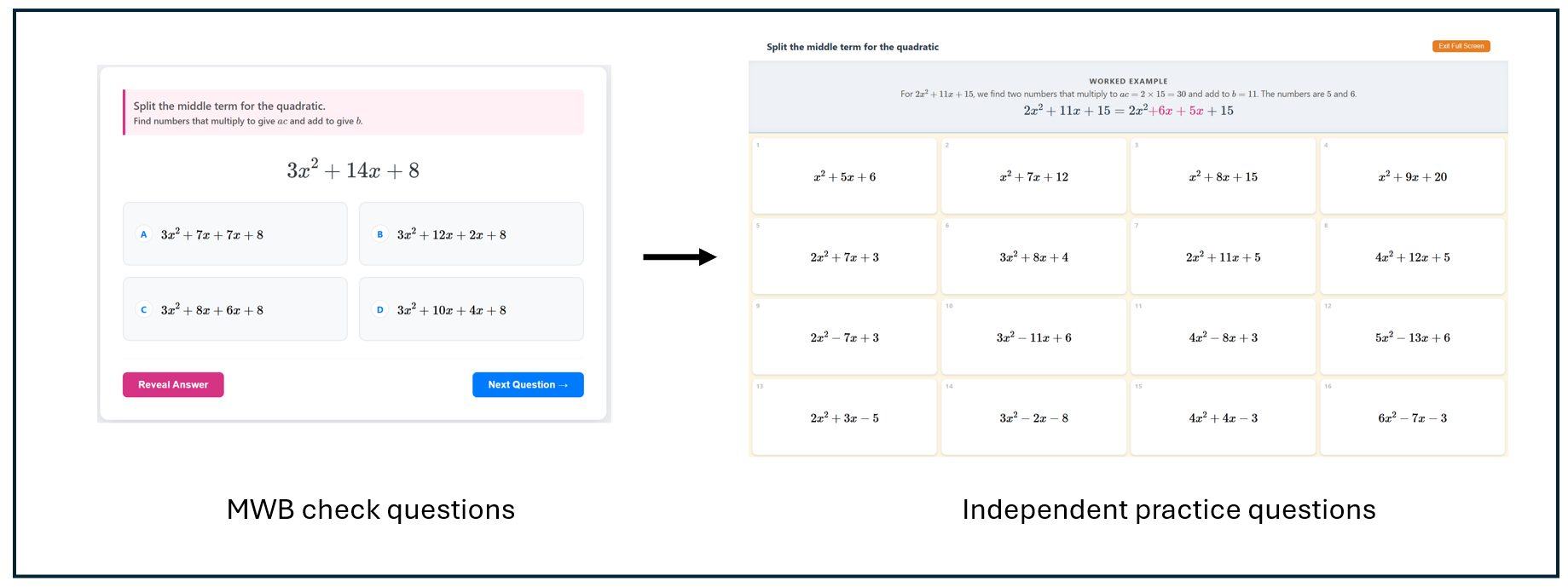
I then modelled the entire process, using the same structure.
This is intended to serve as an example of how AI can aid in scaffolding lessons. You may disagree with some of my choices or find improvements, but I hope you might take some ideas about how it can help support students in your classroom.
I have also been experimenting with using AI to create scaffolded worksheets, which I plan to share in a future post.
Thank you for reading. My previous posts, which detail how to create the resources, are linked below.
No posts
Comments
Nothing yet. Say the first thing.
Sign in to join the conversation.