
My desk for the foreseeable future look like this:
Lying on my bed, propped up by pillows, my left foot elevated with an ice pack nestled between two socks.
I’m experiencing a nasty flare up of plantar fasciitis and some suspected arthritis, and while I await an x-ray to rule out anything more serious, I’ve been told to take rest, ice and gentle mobility as seriously as possible. Or, as seriously and practically as I can when I have a toddler rampaging around, a dog that is used to two walks a day, and an allotment to take care of.
This is coming on the back of probably the worst four weeks of my life (I plan to share more when I can), including my daughter bringing home a tummy bug two weeks ago, which meant she was off childcare the rest of the week while the bug ripped through the rest of our household. Trust me when I tell you that hobbling my way to the toilet multiple times a day on an extremely painful foot, while trying to keep my toddler and all of us sane without watching every episode of Bluey in a single day, was not what I had on my bingo card for this Spring.
The tummy bug was followed by a cold, and my daughter had a miserable few days of fever. We’ve both been snotty and gross. Oh, and it’s hay fever season. Truly, when it rains it pours.
We’ve been in survival mode, and I’m profoundly grateful for my wonderful family, friends and community for stepping up and helping us out.
My post this week is inspired partly by this spectacularly shit period of my life. I’m sure like many of you, I’m also in recovery from beliefs and thoughts that make it hard for me to ask for help. I’m also relearning constantly that taking care of myself is a priority, not a luxury. And that self-care and community-care often look different to how capitalism and consumption want us to believe.
So I thought I’d share a few of the ideas, strategies and practices I lean into when then going gets tough. For the busy and stressful weeks, or the weeks when some new bug is living its best life in your household. For when things are just a bit shitty and you need some bolstering. None of them are revolutionary I’m sure, but my hope is that they normalise giving and receiving help, and taking time to recognise the small, simple things that contribute to our sense of self and wellbeing.
These ideas might be good for times of sickness, recovery, bereavement, stress or fatigue. You can use them to support yourself, but I also hope they give you some ideas and strategies for supporting the people around you as well.
Identify the simple areas of everyday life you can get help with. For example, this week I asked my childminder if my daughter could start half an hour earlier each morning. This means my husband can drop her off on his way to work and still make it on time, and that I don’t have to walk to drop her off in the mornings, allowing more rest for my foot. I arranged our dog walker for two mornings, and when she had to cancel one of the walks, I was able to ask my neighbours. One was busy but said to ask again as she loves our dog (and he adores her). My other neighbour was able to take our dog out with her own (we’ve previously walked her dog when she’s been sick, and while never expected, the goodwill and reciprocity is very much appreciated).
Yes these are both services I need to pay for (an extra £13.50 across the week to cover the early starts at childcare, and £17 for a dog walk), and I’m fortunate that I can afford the ~£30 needed to cover them. If it was a different situation, I might send the call out to our wider family and friends to see if anyone was able to help me with childcare/dog walking.
Radically accept imperfection. When you’re in survival mode is not the moment to be stressing about perfectly nourishing meals and how much screen time you’re all having. Recognising that you can let go of some of your aspirations in order to better serve yourself and your family in the present moment can be liberating.
Beans on toast for dinner is perfectly acceptable. An afternoon snuggled up on the couch watching Zootropolis 2 for the third time that week is great, if it offers you the opportunity to rest and spend quality time with your family. You can return to your usual programming when things are more settled, and accepting imperfection in the meantime isn’t a failure. It’s a success in prioritising rest and recovery.
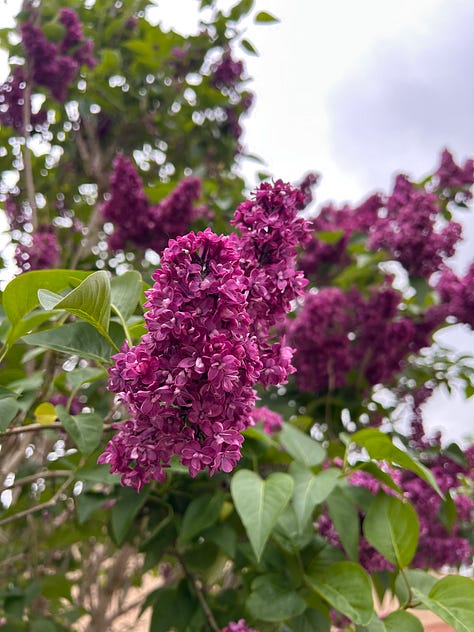
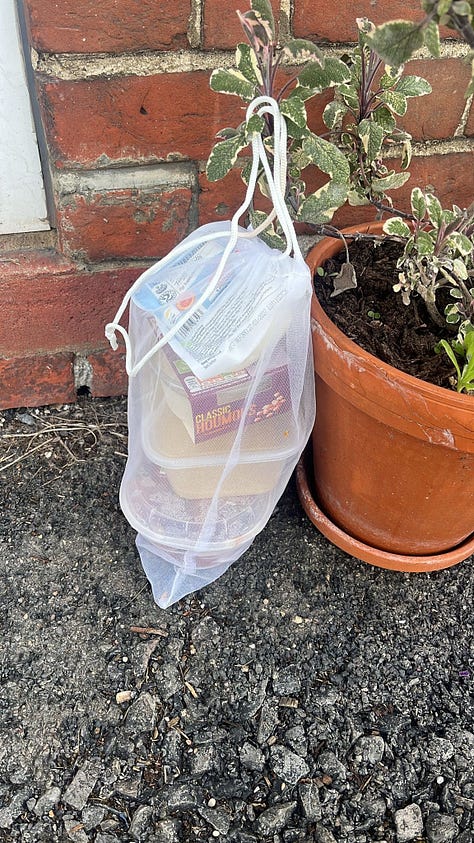
Be honest with people. When people ask you how you are, be honest that things are a bit shit. Let them know things are tough. People can’t show up and support you unless you give them the opportunity too. The responses from my friends and family (even work relationships), never cease to humble me with their support and kindness. I’ve never appreciated more than I do now, a random message of “Sending you a hug on this sunny Tuesday” or “Wow that is profoundly shit”. I’ve had friends drop off meals unexpectedly, or plants, or offer to catch up.
Give yourself some space for you. This might look like journaling, reading a book, a yoga or meditation practice, a long shower, a bath, going for a walk. Whatever activity or practice gives you a moment to pause, disconnect from the demands and busyness of life, and open up space for reflection and ease. When the shit hits the fan this is usually the first aspect of our lives to be depriorisited, but the impact of even five minutes a day to slow down and take stock can be huge.
For me at the moment, journaling has felt really important, and I’m spending usually 10-20 minutes most days just emptying my head. If I can get to journal in the morning, I find it really helps me zero-in on what I need that day, and what would be useful/nourishing/meaningful for me to spend my time doing.
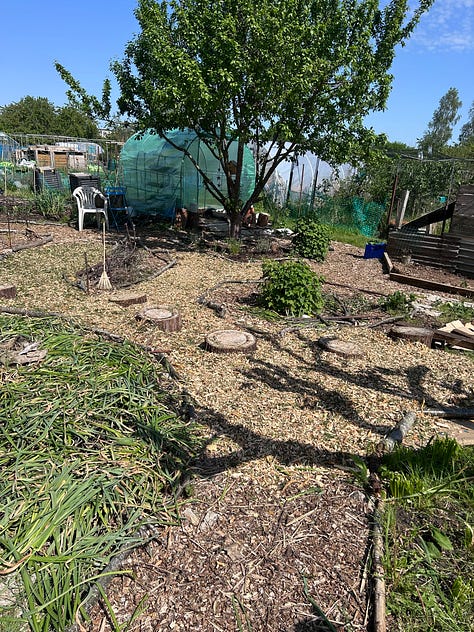
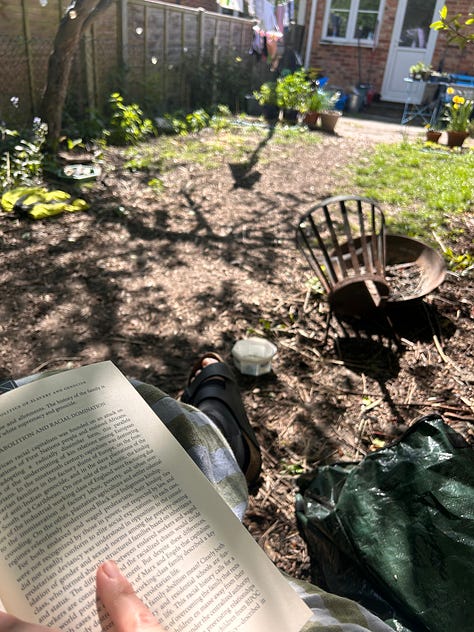
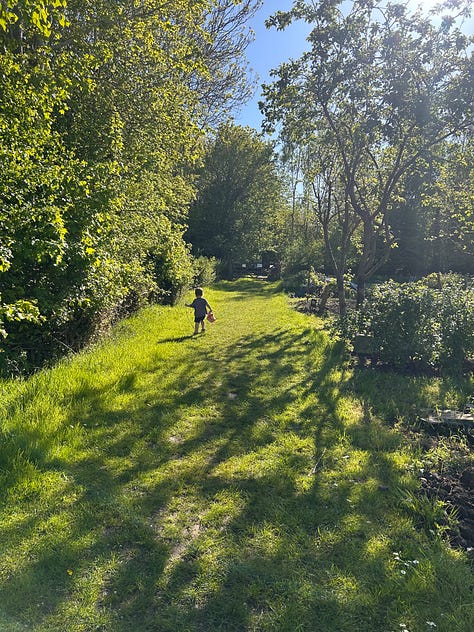
Get outside. Whatever the weather, spending time outside is one of the most profound ways I know for grounding myself and slowing down. Some days all that might be accessible to you is resting in your bed or on a chair with an open window, breathing in the fresh air and observing what’s around you. Other days it might be sitting in the garden or park, taking a walk, gardening or tending to an allotment. Getting outside can be social or solitary, whichever you need.
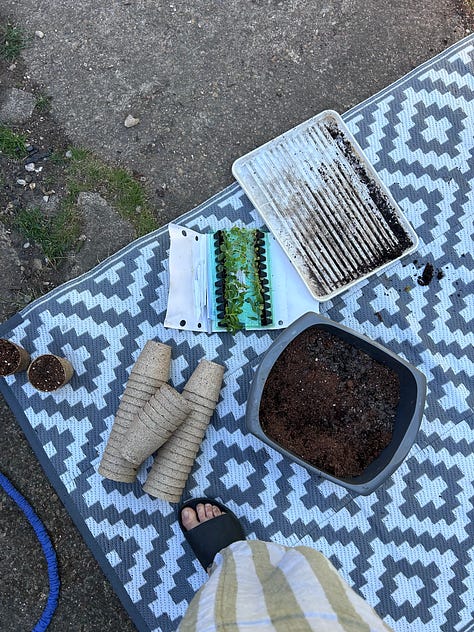
I’ve really been limited in my capacity to walk with my foot, so I’ve been spending more time tending to my garden at home, rather than heading down to the allotment super frequently. It’s not how I would normally balance my time between these two spaces, but I’m still able to access the outdoors and do a nourishing activity. The added bonus of course is more beauty and enjoyment from my outdoor spaces at home.
Focus on the basics. Drink plenty of water, wash your hands, brush your teeth, have a shower. Try to wear comfortable, (mostly) clean clothes that feel like you. Having a shower especially is a wonderful nervous system reset, and I find it useful when I’m feeling particularly stuck, irritable or grouchy.
Connect to gratitude and express it. I love telling people that they are appreciated. That I’m grateful to be their friend, or in their family. That it is a joy to know them. Especially when the world is on fire, reminding ourselves and others of the connections and relationships between us can be so valuable and rewarding. A simple thank you is plenty, and sometimes I’ll also let them know how their help or support has impacted me specifically.
For example, “I really appreciate you walking my dog, my foot has been so painful and it made a big difference to be able to rest it. You were such a big help.” or (to my husband) “Thank you so much for vacuuming the stairs, they were really bugging me and I wouldn’t have been able to do them at the moment.” I believe gratitude is most impactful for both receiver and giver when it is specific and timely.
Lean into something familiar. Often during moments like this I find reading new books, watching new shows, etc, really overwhelming. I figure that my brain and nervous system are already working hard and processing a lot. So reading, watching, eating or doing something familiar allows our nervous systems to rest somewhat. After I had emergency surgery three years ago I re-read Harry Potter (borrowed from my in-laws because I’m not giving my money to fund anti-trans legislation). Just the other day I finished re-reading Jane Eyre. North and South is next on my list.
For you, it might be binge-watching greys anatomy, or re-reading LOTR. There might be a recipe or meal you return to (the symbolic chicken soup), to access a sense of comfort and rest.
What all of these ideas have in common is that none require some fancy self-care product or device. All of them are adaptable to a variety of capacities and energy levels. They either rely on or promote community and connectedness. Creating an ecosystem of care and relationships.
I’d love to know how these land for you, and if they resonate. And I’d especially love to hear your additions to this list!
What do you do when the going gets tough?
Harriet x
No posts
Comments
Nothing yet. Say the first thing.
Sign in to join the conversation.