
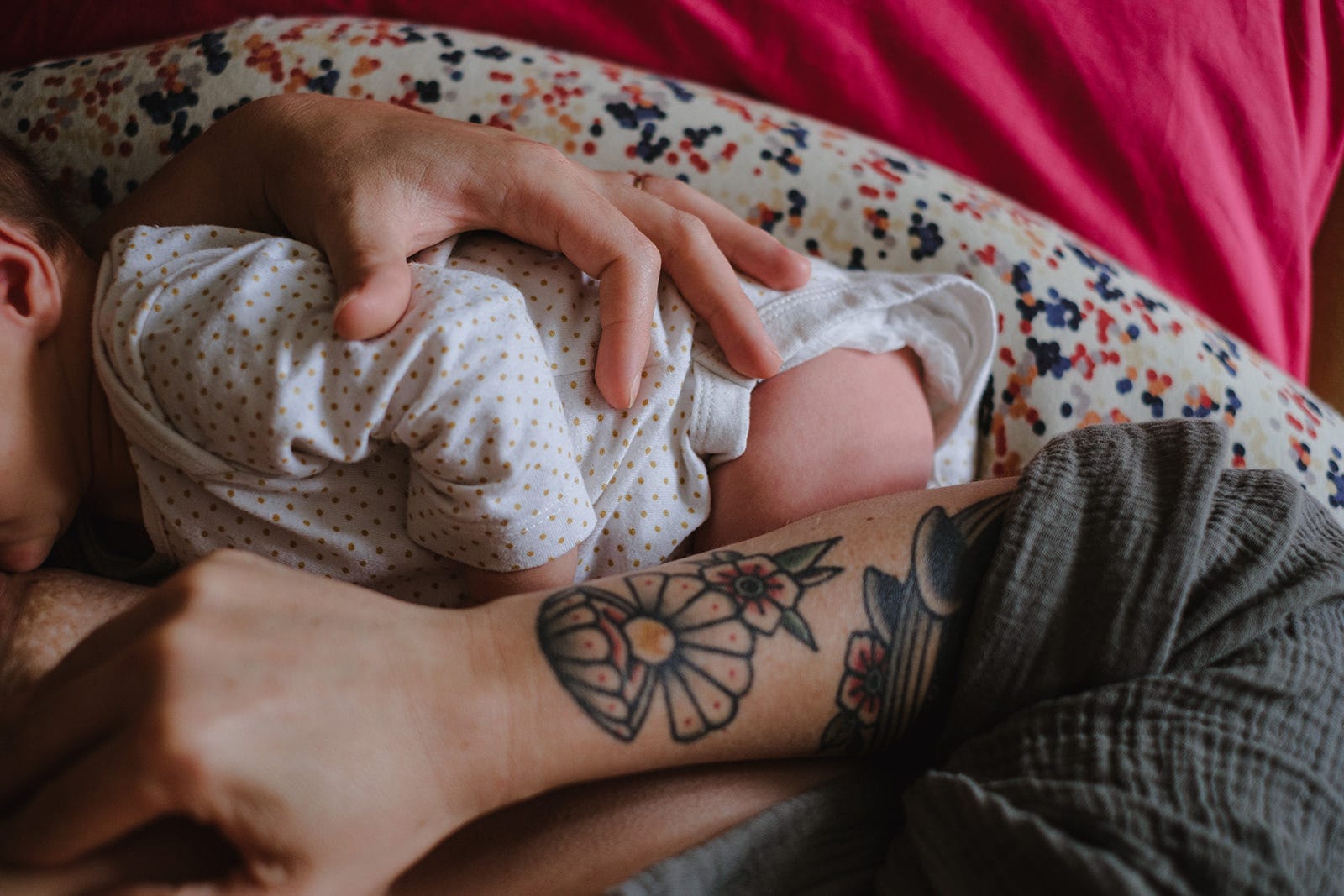
Postpartum is an amazing, transformative and challenging time. I was chatting recently with a midwife friend Aly and she put it beautifully, “during birth people often feel at their strongest, and then in postpartum they’ve often never felt more vulnerable in their life.” And it resonated deeply with my own experience.
Everything is raw, tender, healing. It’s a time of heart-exploding love, sleepless nights, and big adjustments. A time when the newly postpartum parent and the entire family constellation need extra support and holding by those around them.
While this post certainly won’t be revolutionary, and the ideas are certainly not unique to me (there are many others like it out there like this lovely post), I have been reflecting on my own postpartum and the learning I’ve done since then, and wanted to get my ideas down in one place. Most of this post flowed out of me during a stretch of 2am insomnia, I’ve made a few tweaks since then, and I hope it is genuinely useful to share.
You might be pregnant or know someone who is, and it could help shape some ideas for the postpartum period ahead. None of these are rules and of course it’s vital to acknowledge that there are vast cultural differences around how postpartum and birth are treated and viewed around the world.
My hope is that the suggestions below offer some scaffolding to your expectations if you are supporting a postpartum family, some much needed softness, ease and love.
I’d love to know what you think and if you have any suggestions to add in the comments.
P.S. at the bottom of the post I’ve got an exciting announcement
I’ve broken these suggestions down into two parts. First if you are going to visit the family, and second if visiting the family isn’t practical or possible for you. Knowing how to support a postpartum parent and family can be hard if you can’t show up or drop off a lasagna. Of course, anyone visiting can also do things from the second list!
If you are nearby, and going to visit the family:
Take food and snacks: a prepped dinner, fruit, chocolate, flapjacks/baked oats, banana bread, pastries. Think calorie and nutrient dense, and can be eaten with one hand. Probably the most suggested form of help for a postpartum family ever, but it’s a classic for a reason. It’s one less meal/snack they’ll need to think about, and that is truly helpful.
Wash your hands when you arrive/before you are offered to hold baby. Don’t visit if you are sick. Try not to kiss baby, or kiss their feet rather than face/head/hands. Babies are incredibly vulnerable to germs and bugs (and if they contract viruses like herpes simplex which causes cold sores, it can be a much more serious and life-threatening infection than in an adult).
Make your own tea/coffee and ask what the family wants to drink, they’re not there to host you. Refill water bottles, clear empty glasses, top up their tea/coffee
Ask if they need any help while you are there. Unpack/load the dishwasher, hang out or fold laundry, sweep the floor, empty the bins. Even better, tidy up after yourself without asking and despite their protests! One of my sisters-in-law came to visit us when our daughter was a few weeks old. Without asking she hung out a load of washing, emptied the dishwasher and swept our floor. I’ll probably remember how this made me feel for the rest of my life, it was so kind and exactly what we needed.
If they have an older child/children, try to keep them as your focus. I know you’re visiting because there’s a new baby to cherish, but those kids are likely so excited to see you too. Take time to read a book or play a game with them. (Same goes if they have a dog - are you comfortable offering to take them for a quick walk? Or even just taking them into the backyard if they have one and playing with a toy.)
I know this one usually causes some consternation but don’t ask to hold the baby. Wait to be offered to hold the baby. For all sorts of reasons (that are nothing to do with you) it might be hard for the postpartum parent to hand their little bundle over. If you would really like a cuddle, of course you can say so, but be prepared to be told no. When I was newly postpartum, I always appreciated if someone asked if there was anything I needed to do for myself while they were visiting. This usually meant they got a cuddle while I went to the bathroom or got changed or did whatever I needed to do.
Maybe this one is more personal (but there’s also some science behind it!), but don’t wear strong perfumes or scents when going to visit a newborn. Scent is one of the primary bonding mechanisms between parent and infant, and being able to smell their parent’s scent has a profoundly calming and soothing effect on a baby’s nervous system. And vice versa, smelling their newborn has been shown to promote oxytocin and dopamine in the parent’s brain, helping them to fine tune their caregiving and improve their responsiveness to their baby. When my daughter was small, I cannot tell you the visceral response it provoked in me when she was handed back to me smelling of someone’s perfume. It was a wrongness that I felt in my bones. I can’t say everyone will have the same strength of reaction, but it really affected me.
Don’t bring flowers, they are beautiful but just more work for the family.
Ideas that also work if you aren’t nearby (these usually involve cost, so I’ve tried to give an estimate and also some no-cost ideas):
Gift voucher for a takeaway delivery service (any amount, £30 will usually cover a meal for two people)
Delivery of frozen, wholesome meals (like nuuda) (~£15 per meal for 2)
Once they might be attending baby classes/activities, offer to pay for a session (usually £10-15) or a term (£50-60) of classes. They can be valuable social experiences for the parent and entertainment for the baby, but the cost really adds up.
Send a book for baby, and a book for any older children as well (~£20). Here is a list of some of my favourites for an infant (under 1) and for older children. (aff link)
Organise a grocery delivery of snacks, drinks and a few household essentials (£20-£50, what you can afford)
Pay for a dog walk if they have a dog (~£20)
Text and ask how they are, with no pressure or expectation of a quick reply (free).
Send a card (<£5) or a text/email (free) telling them how proud you are of them, and how amazed you are that they have birthed a baby. Make it from you, genuine and authentic. Make it about them and your relationship - the oxytocin (the cuddle hormone) we produce in nourishing and supportive friendships will also support bonding with baby, and milk production if they are breastfeeding.
On the oxytocin train, send something to make them laugh (free): a meme, reel, podcast - anything you think will make them giggle.
And, don’t forget about the family/parent/baby once they are a few months old. Of course a newborn is something to cherish and the first time meeting them is exciting. Once the fuss has died down, partners have returned to work, rhythms might be re-established and seasons shift. Still make sure to check in and offer to visit where you can. It’s a demanding phase of parenting, but especially in the first year, the intensity of a baby’s need for their parent doesn’t really lessen, it just changes expression and form.
I’d love to know what you found most helpful and supportive during postpartum? Please share away in the comments, hearing other people’s experiences can be so validating, inspiring and rewarding.
And now for some exciting news: I am launching a new course!
Postnatal Yoga Teacher Training (50 hour) - Pilot Program
Join me for one of the only dedicated postnatal yoga teacher trainings, delivered live online via zoom.
This course is building and expanding on the work I have been doing for over 8 years, training Pregnancy and Postnatal Yoga Teachers. Having experienced my own postpartum, and immersed myself in learning about the postnatal period and infant development, I recognised the need to give this critical, beautiful, transformative and challenging period its own space and time.
We’ll be going deeper into postnatal recovery, brain changes, mental wellbeing, working with babies and nurturing parent-infant relationships. I’m passionate about creating a space that nourishes and supports parents, whilst also giving them opportunities to explore and cultivate their relationship with their babies.
More information below. Booking opens on 14 April 2026. Spots are limited and will be offered to the waitlist first, if you are interested, pop me an email to register your interest (harriet@nourishyogatraining.com)
What is a Pilot Program?
Because this is the first time I’ll be running this course, I’m calling it a Pilot Program. You can still expect the same polished, researched, passionate and inclusive teaching you have come to expect from me and Nourish. I’ll be writing the manual sections as we go, so you’ll be provided with digital chapters of the manual and course workbook throughout the course. Once the manual is all complete, you’ll be sent a physical copy at the end of the course. The workbook is digital to make it easier for you to submit.
I’ll also be confirming the course accreditation closer to launching, but the course will be available under my YACEP accreditation through Yoga Alliance, and will also be accredited (I hope) with the American Yoga Council.
Who is this course for?
This course is suitable for yoga teachers, teacher trainees, midwives, doctors, doulas, and those working within the birthing and postpartum space. It is not a requirement to have completed a Pregnancy Yoga training course as a prerequisite, though it will certainly help inform your experience.
This course is suitable to complete during pregnancy. If you are newly postpartum, I generally recommend waiting until 6-8 weeks post-birth before joining the course. If you have any questions or concerns regarding your pregnancy, postpartum or individual situation, I am more than happy to discuss the course on a case-by-case basis.
Modules
Scope of Practice, What is Postnatal Yoga?
Postnatal Anatomy & Recovery
Postures & Practice
Pelvic Floor & Core
Working with Baby
The Postnatal Brain & Mental Wellbeing
Nurturing Parent-Infant Relationships
When Things Are Difficult: Birth Trauma, Loss and Complications
Breath
Rest & Contemplation
Teaching together
Class set up & logistics
Cost
£389 - pilot cost, the course will never be this cheap again!
Bursary spots £175
No further discounts available on pilot program.
Payment plans available.
Dates
9am-4pm, 5 days total:
15 & 22 August 2026
5, 12 & 19 September 2026
Delivered live via zoom & recorded for catch ups
No posts
Comments
Nothing yet. Say the first thing.
Sign in to join the conversation.