


Erin Somers reports in her cover story for the September issue that cultivated meats were once predicted to topple the U.S. meat industry by 2030. However, the significant barriers—building expensive manufacturing facilities, training a highly-skilled workforce, and passing multiple rounds of Food and Drug Administration and the U.S. Department of Agriculture inspections, and eventually scaling—proved too daunting for most producers. Somers writes that some of her interest in the lab-grown meat industry stemmed from qualms with the environmental consequences of industrial meat production, and her hope that engineered foods might allow consumers to avoid some of the sins of the American agricultural system. In this week’s From The Archive newsletter: four writers deconstruct the business of food production and the ethical quandaries that it entails: Wendell Berry critiques the urban food consumer’s illusions about agriculture, Joy Williams advocates for the rights of the farm animal, Ted Conover reports on the challenges of meatpacking, and Frederick Kaufman details the effects of food speculation on world hunger. To read these articles and gain access to our fully digitized archive, subscribe to Harper’s Magazine today.

In a 1991 essay, excerpted from the book The Pleasures of Eating, Wendell Berry argues that industrial food systems have estranged people from the ethical, political, and aesthetic considerations of their food’s production. “They will grow, deliver, and cook your food for you, and (just like your mother) beg you to eat it,” he writes. “That they do not yet offer to insert it, prechewed, into your mouth is only because they have found no profitable way to do so.”
Do creatures have the same rights that we do?
By Joy Williams
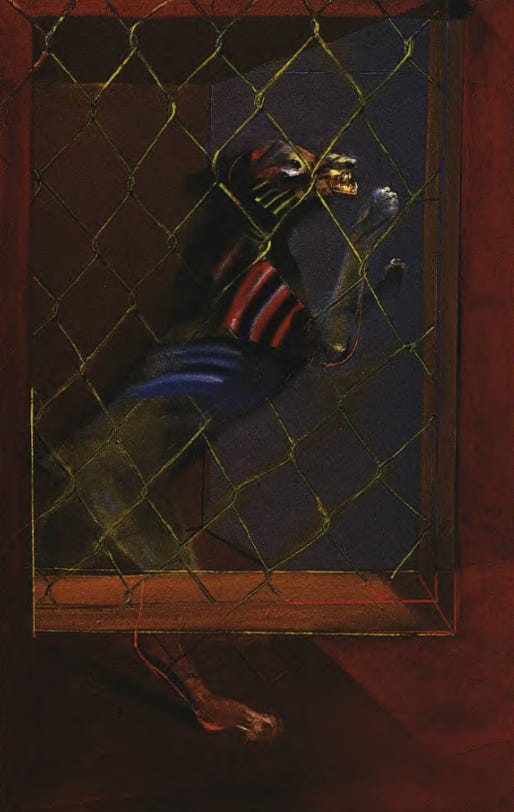
In her 1997 essay, Joy Williams questions the justification for the animal cruelty that the industrialization has seemed to necessitate.
“Factory farmers are all Cartesians,” she writes. “Animals are no more than machines-milk machines, piglet machines, egg machines-production units converting themselves into profits. They are explicitly excluded from any protection offered by the federal Animal Welfare Act, an act that is casually and lightly enforced, if at all, by the Department of Agriculture: ‘Normal agricultural operation’ precludes ‘humane’ treatment, and anticruelty laws do not apply to that which is raised for food.”
Undercover in an industrial slaughterhouse
By Ted Conover

Ted Conover reports from Schuyler, Nebraska, in the May 2013 issue, on the changing face of the meatpacking industry. After taking a job as a federal meat inspector at Cargill Meat Solutions, Conover’s boss takes him out for steak.
“I hadn’t eaten any beef at all since the day I started at the pack,” Conover writes. “Seeing the knocker at work was part of the problem. So was standing near the cattle as they were herded up Temple Grandin’s doomsday ramp. And then there were the heads, eyeballs intact, and the highly rationalized industrial setting, the idea of a powerful enterprise devoted to wholesale killing. And if you believe that animals might have souls—sometimes I do—then you might relate to my mental picture of a spiritual highway spiraling upward from the knocking room, through the ceiling of Cargill Meat Solutions, and into bovine heaven, with a constant stream of cattle arriving every day.”
How Wall Street starved millions and got away with it
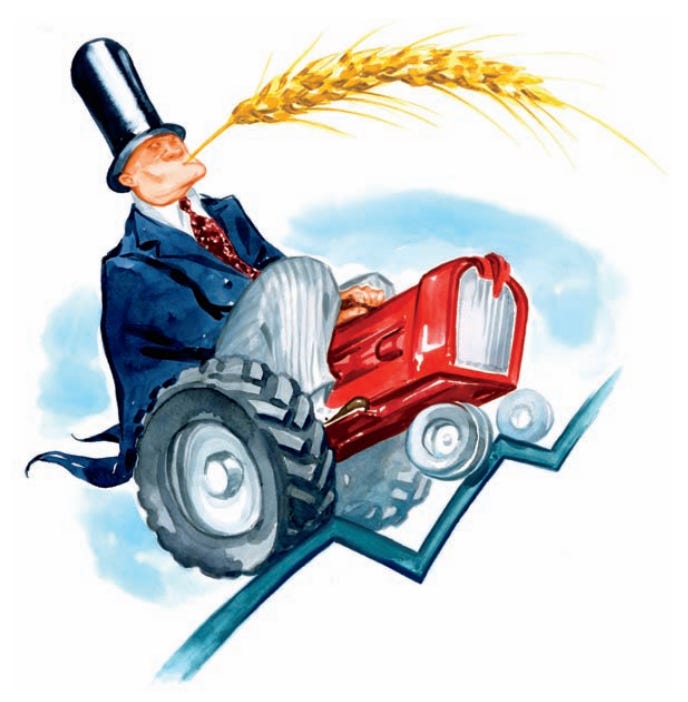
Frederick Kaufman details, in the July 2010 issue, how Goldman Sachs’s commodity index came to inflate food costs. “The history of food took an ominous turn in 1991, at a time when no one was paying much attention,” he writes. “That was the year Goldman Sachs decided our daily bread might make an excellent investment.”

Comments
Nothing yet. Say the first thing.
Sign in to join the conversation.