
That familiar buzz of overwhelm tingles through your body as you stare at yet another “quick favor” request in your inbox. 🌀
In my last year of my college music program, I remember standing in the practice room one evening, completely unable to play a simple excerpt I’d been practicing for months. My hands felt heavy, my brain foggy, and my usually sparkly creative energy had dimmed to a dull flicker.
As a neurodivergent musician and entrepreneur, I had fallen into the all-too-familiar trap of saying “yes” to every opportunity, every collaboration, and every “it’ll just take 5 minutes” request that came my way. The result? Classic ADHD burnout that left me questioning my passion for music itself.
Here’s the thing about us neurosparkly folks — our enthusiasm and ability to hyperfocus can make us amazing at what we do, but they can also lead us straight into the arms of burnout if we’re not careful. Learning to say “no” isn’t just about time management; it’s about energy conservation and honoring our unique nervous systems. ✨
Before we dive into boundary-setting, let’s talk about how burnout might show up for your sparkly brain:
Creativity becomes harder to access, like trying to tune an instrument with mittens on
Executive function goes from “challenging” to “practically impossible”
Sensory sensitivity dials up to 11
The things that usually light you up feel heavy and draining
Your emotional regulation feels like a roller coaster you can’t get off
Let’s be real — saying “no” can feel extra challenging for those of us with ADHD. Our rejection sensitive dysphoria might scream that we’ll disappoint people, lose opportunities, or be seen as “difficult.”
Trust me, I get it. My people-pleasing tendencies used to have me offering feedback on percussion parts for student composers during my lunch break while simultaneously trying to build my consulting business and maintain a regular practice schedule to keep up my musical chops.
But here’s what I’ve learned: saying “no” is actually saying “yes” to:
Your creative flow states
Your sensory needs
Your energy management
Your authentic expression
Your mental health
As a sound healer, I’ve discovered that our bodies hold wisdom about when to say “no” — we just need to tune in and listen. Here’s my favorite practice for finding clarity when making decisions:
Find a quiet space where you won’t be interrupted
Place one hand on your heart and one on your belly
Take three deep breaths, focusing on the sound of your exhale
Hum a low, steady tone (I like to use “Om” or a simple “mmm”)
Notice where you feel resonance in your body
Think about the request or opportunity
Pay attention to how your body’s resonance changes
If you feel tension, constriction, or discord, that’s your body’s way of saying “no.” If you feel expansion, warmth, or harmony, that’s a “yes.” It’s like having an internal tuning fork for decision-making!
Setting boundaries doesn’t have to mean building walls. Think of it more like creating a beautiful piece of music — there needs to be space between the notes for the melody to shine. Here’s how to start:
Begin with a “boundary audit” — track where your energy goes for a week
Create templates for common “no” responses (save that executive function!)
Practice delayed responses instead of immediate “yes” answers
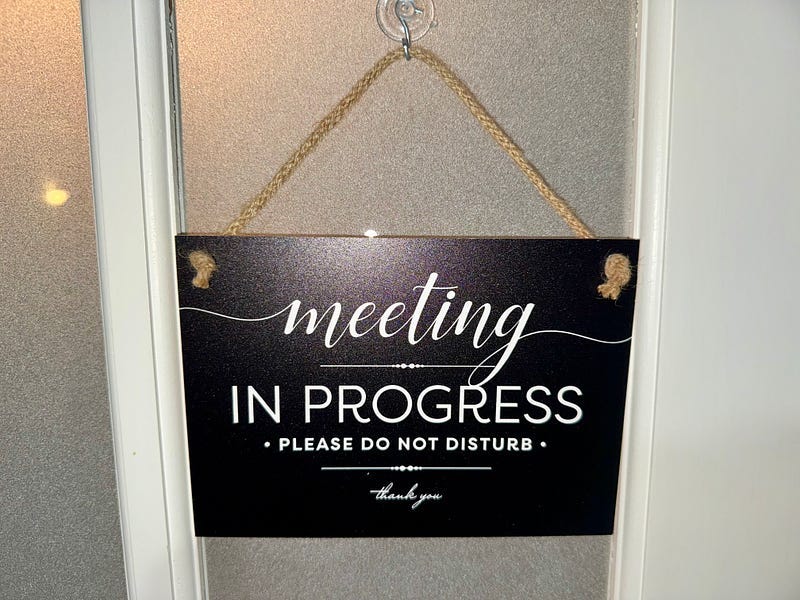
Set up systems to protect your focus time (I use a ‘Meeting in progress’ sign on my door to signal “do not disturb” time)
When I finally started setting firm boundaries, something magical happened. Not only did my creativity flow more freely, but my anxiety decreased, and my work became more impactful. I had the energy to fully show up for the projects and people that truly aligned with my purpose.
Remember, beautiful souls, saying “no” isn’t about limiting yourself — it’s about creating space for your gifts to flourish. It’s about tuning your life to resonate with your authentic frequency. 🎵
Learning to say “no” is a practice, just like learning a new instrument or meditation technique. Be patient with yourself as you develop this skill. Your neurosparkly brain deserves the gift of boundaries, and the world deserves your best, most energized creative contributions.
Want to explore more practices for managing neurodivergent burnout through sound healing? Sign up for the Harmonic Vibes newsletter to receive weekly tips and grounding exercises straight to your inbox.
👋🏼 Tasia is a classically trained percussionist turned Notion Certified Consultant at Rhythm Productive, where she helps the creative arts streamline their digital operations with Notion and supporting tools.
Tasia shares her love of music & sound through her sound healing studio, Harmonic Vibes. 🎶💜🎶
As an ADHD entrepreneur, Tasia is passionate about teaching neurosparklies and creatives how to embrace peaceful productivity for a better work-life-art balance through her newsletter, YouTube channel, and community.
Comments
Nothing yet. Say the first thing.
Sign in to join the conversation.