
Topics worth your time: turning a crypto wallet’s display bus into an eavesdropping channel, the projection equipment that makes IMAX 70mm possible, underground robot logistics, and learning to pot electronics in epoxy.
P.S. We’re back in SF for another happy hour on 8/11! We’re setting aside a few tables for teams with demos or other work they’d like to bring into the room. If that’s you, send us an email.
For many of us who build physical systems for a living, the object of our work comes to us with its identity already fixed. The same is often true of the philosophy by which we build it. It is a system to be architected, a methodology to follow, an assembly to be built and tested.
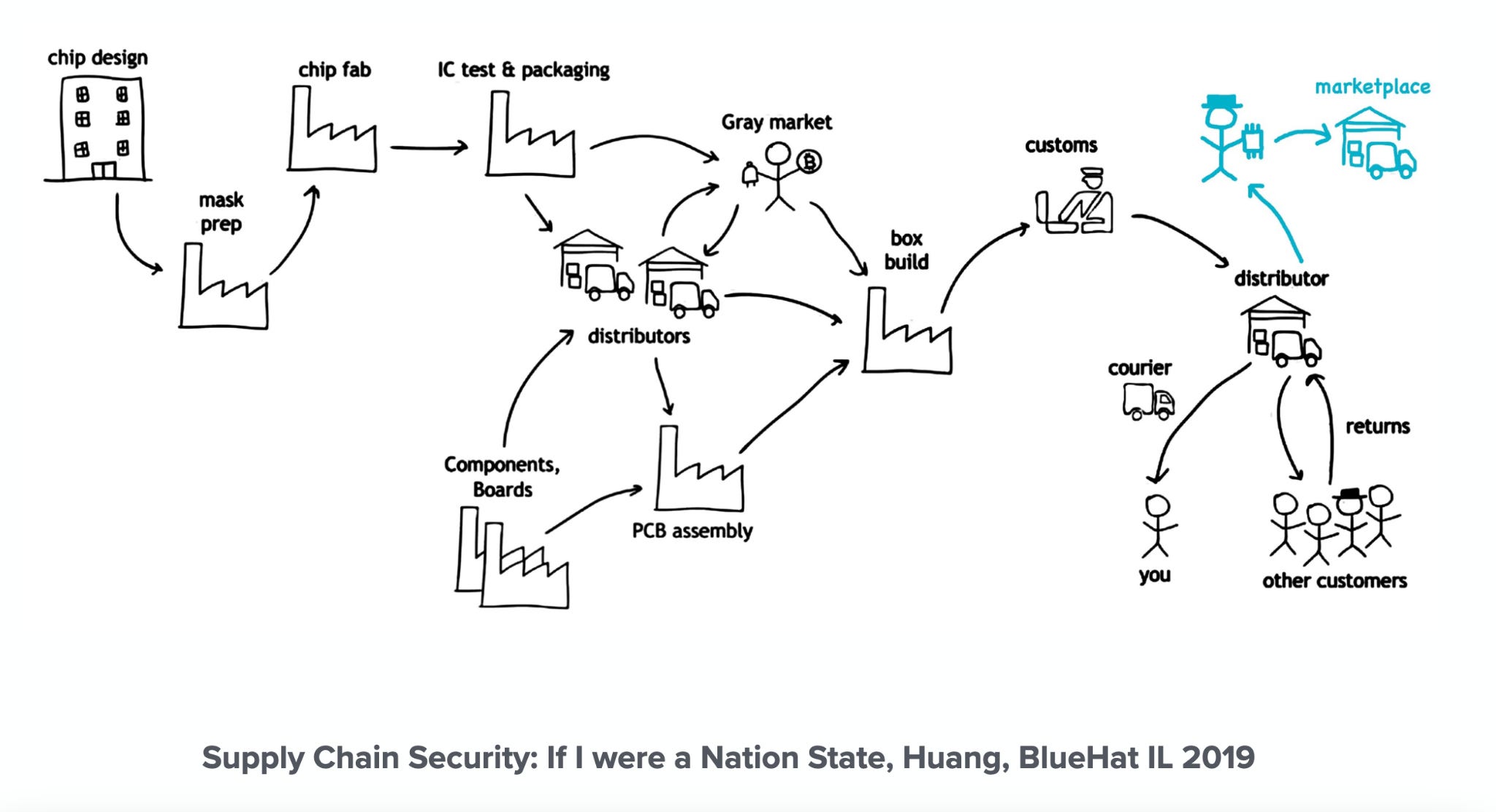
There is, however, an alternative school of thought — one not usually taught in academic circles, and in industry, is more concerned about defense and evaluation. This is the world of hardware hacking. Hardware hacking does not treat a system as an object with a fixed identity, but as a physical layer that can be opened, probed, and even manipulated for points of exploitation.
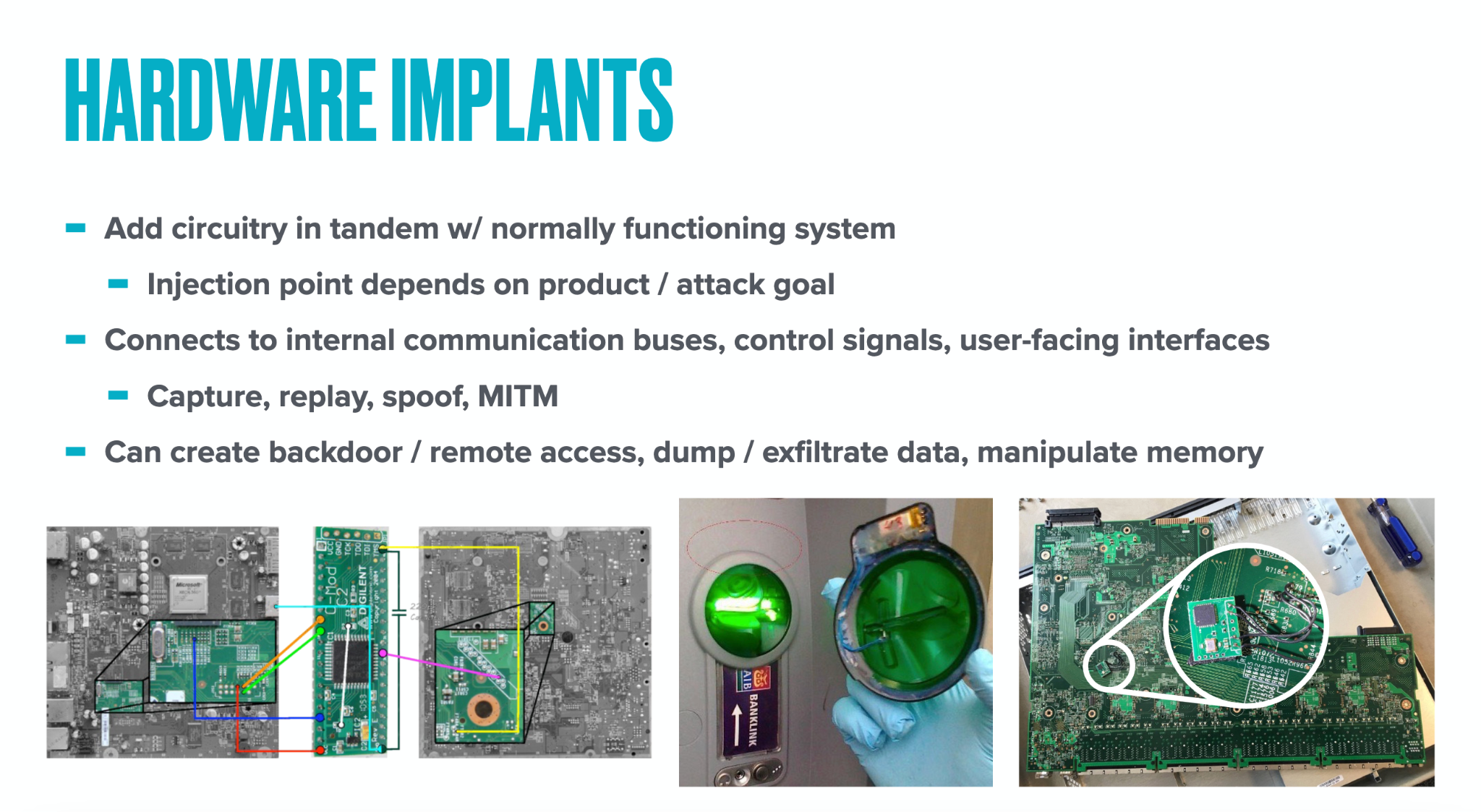
For those curious, Joe Grand’s presentation on reverse engineering an implant found inside a cryptocurrency wallet is a real-world case study in hardware espionage. Specifically, a supply-chain attack where a legitimate cryptocurrency wallet was modified after leaving the factory to capture a user’s recovery seed during setup, then transmit the data over a cellular network.
Here’s the simplified breakdown:
A customer bought a cheap Nano X online as a donor for a failing wallet battery. Upon opening the device, he found a smaller battery, extra circuit board, wiring, and an antenna.
While the wallet itself was genuine, someone had replaced its original battery to make room for the implant, then resealed and resold it.
The added board tapped the SPI bus driving the display, while cellular hardware (modem, eSIM, antenna) gave it a path off-device.
Rather than attacking the wallet’s secure element, the implant monitored display traffic during initial setup, when the display renders the recovery seed for backup.
The implant firmware then reconstructed the seed from character glyphs, and transmitted it over cellular to the attacker.
The original product was still there, performing as designed. So was a second product, nested inside it.
If a deal just so happens to be too good to be true, it may be because someone else expects to make the margin (and much more) back later.
Grand’s full slides and write-up are linked here.
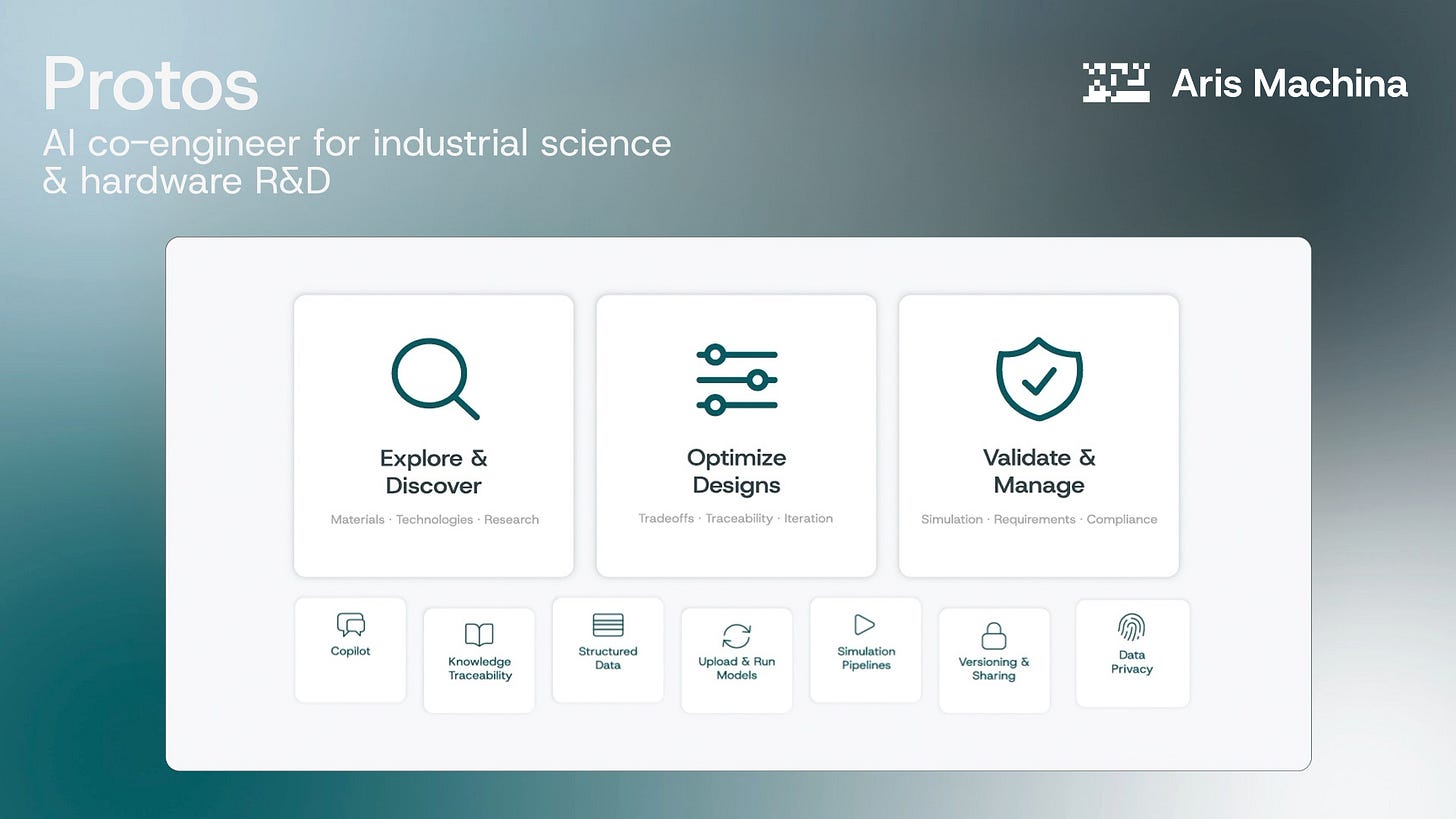
Aris Machina Protos is the AI co-engineer for industrial science & hardware R&D, built to help engineers design, validate, and iterate faster without losing rigor. Protos brings your engineering context into a single environment, connecting requirements, models, and test results.
Use Protos to explore concepts, reason from first principles, compare tradeoffs, simulate “what-if” threads, and visualize results before committing time and resources to the next build. Protos helps teams move from question to model to decision with more confidence.
Try Protos today - no registration required: arismachina.com/protos
A technical writeup on how to coordinate underground robot trains in a single pipe network. Pipedream builds autonomous underground delivery systems; this covers the scheduling and control architecture they use to prevent collisions.
One way to waterproof a circuit board is to ‘pot’ it in a case of epoxy. See walkthrough here.
Reverse engineering a payment card terminal. Same vein of what we’ve written about above, now probing for exploits.
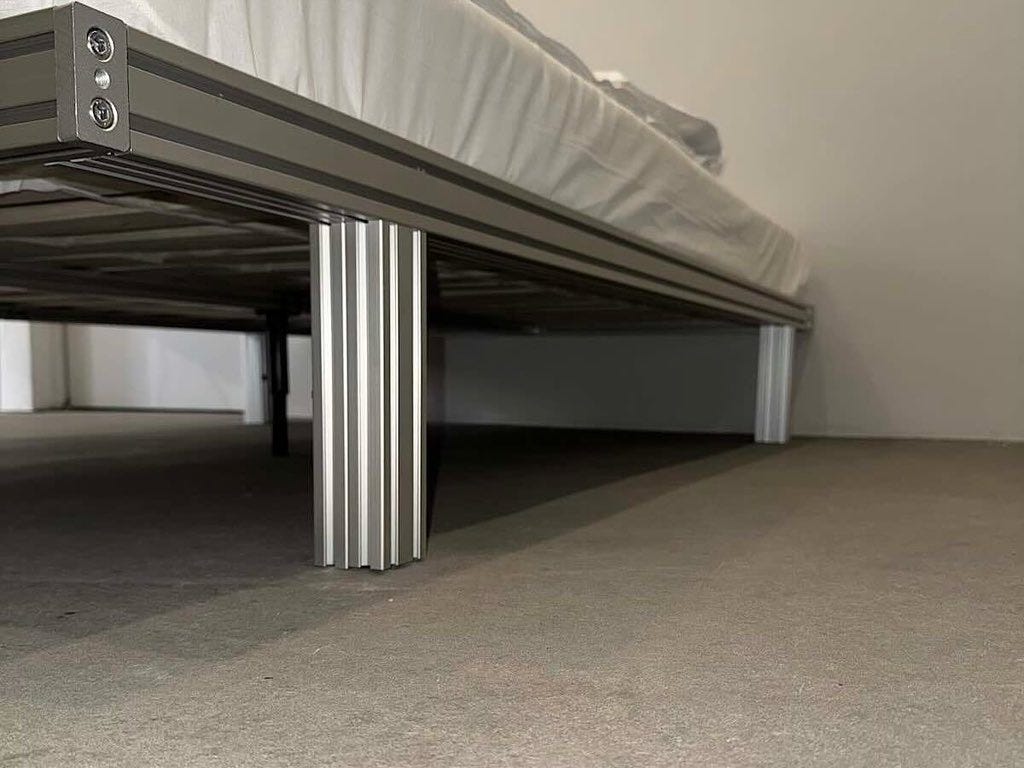
A bedframe built from 80/20 - pretty much adult Legos.
Sponsored: Modeling Mersenne’s Clavichord was the winning project from Zoo’s Makeathon back in June. It’s a neat use of applying AI CAD to reconstruct a 17th-century instrument from historical measurements and a healthy amount of math around string tension. Zoo is running it back with a virtual API Makeathon - prizes include a Bambu Lab 3D printer and API credits. Register here.
Adam Savage’s tour of IMAX’s projection and film-printing equipment. The Odyssey came out last week and the 70mm projectors the film was optimized for are near impossible to build at scale.
There are only 41 theaters worldwide that can project in IMAX 70mm.
Walden Robotics launched from stealth with $300M in funding to build and deploy general-purpose robots that use ‘Large Behavior Models’ to learn new tasks for applications in manufacturing and logistics.
BRINC raised $125M in new financing to expand domestic manufacturing of its public-safety response drone.
1872 raised $15M in seed funding to build a steel fabrication factory in Cincinnati that uses AI software and robotic welding.
Splash Industries raised $4.2M in funding to build uncrewed surface vessels for naval resupply.
Aris Machina Protos – Design & validate anything, with the AI-native workspace for industrial science and hardware R&D.
Jiga – Custom parts at digital speed, with trusted shop access.
SolidWorks for Startups – Full access to SolidWorks’ product development tools, free for early-stage startups.
Zoo – AI-native CAD with a modern geometry engine, readable code, and editable feature trees for precise, editable models.
Refer three friends to Hardware FYI and unlock our full archive.
Missed an issue? Hunting for that one link? Every tool, guide, and article we’ve ever shared is in here.
P.S. If you find something interesting—an article, tool, funding round, project, really anything—send it our way!
P.P.S. 20,000+ engineers, founders, and operators read this newsletter. If you want to reach them, get in touch.
Comments
Nothing yet. Say the first thing.
Sign in to join the conversation.