
Hope you had a great time at Automate! Let me know what you think ✉️!
Writing back to you from San Francisco—what a week to be watching all the breakthroughs! 🤯 It's exclusively robotics news this week, so get excited!
🤖 Two liquidity events in one week?! Kinisi gets acquired! And ‘Digit’ maker Agility Robotics to go public in $2.5B deal
🤖 UBTECH UWORLD U1 hits ~4,000 pre-orders in 10 days — the first consumer humanoid companion ships June 30
🏪 China’s First Humanoid Robot 7S Store — robot retail is real, 17 models, 149 yuan to 700,000 yuan
🏭 Autonomique goes live on Honda/Toyota/GM Tier-1 production line — Physical AI graduates from pilot to real manufacturing
💰 DeepSeek raises $7.4B at $50B+ valuation — China’s AI giant goes external, but the state gets the voting rights
🤖 AGIBOT G2 humanoids live on a real tablet factory floor — six-day livestream, 310 units/hour, 99%+ success rate
🏎️ XPeng CEO He Xiaopeng personally takes over the IRON humanoid robotics unit — mass production target: end of 2026
👉 Want to feature your company in HardTech Reads? Apply here
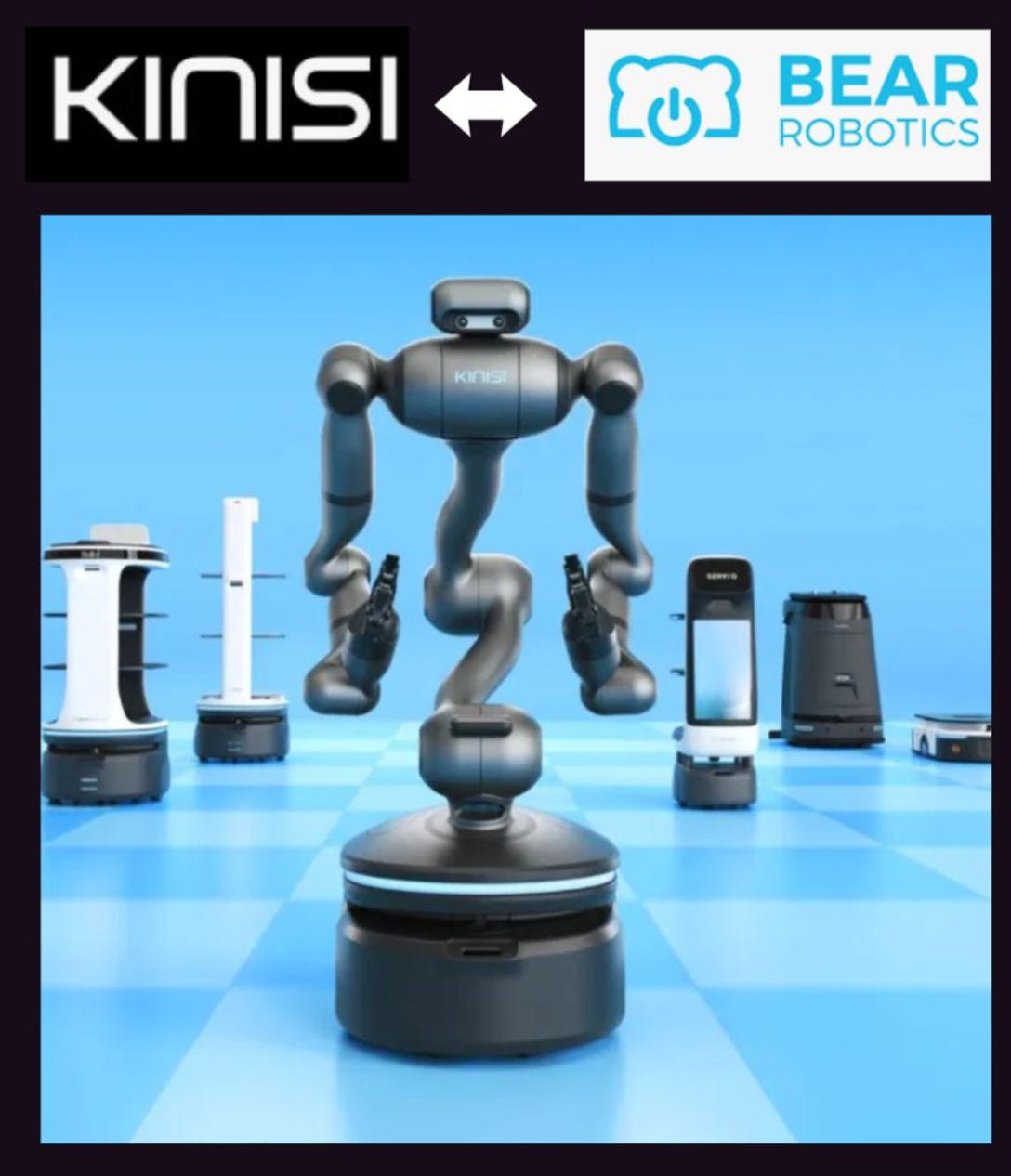
Bear has 16,000+ service robots deployed commercially worldwide.
Kinisi built the KR1, a manipulation-first humanoid that went from idea to working robot in under 6 months, currently running paid pilots in warehouses, logistics and retail!!! The deal is essentially Bear buying the one thing it was missing: hands🤔
Bear’s fleet already does navigation, delivery, floor cleaning. But manipulation has been the gap. Kinisi closes it. Now one platform handles move, deliver, and handle on a single coordinated system. The other layer here: Brennand Pierce, Kinisi’s founder, co-founded Bear. He left, built Kinisi on a steep timeline with a small team, ran it to live customer pilots... and is now coming back as Chief Robotics Officer. Full circle.
Kinisi is incredible! It trained new tasks from human demos in a single day. That’s the data flywheel that Bear’s 16,000 deployed robots will now massively accelerate. This is exactly the “platform vs. product” consolidation pattern I wrote about in February (link in comments).
𝗪𝗲 𝗸𝗲𝗲𝗽 𝘀𝗲𝗲𝗶𝗻𝗴 𝘁𝗵𝗲 𝘀𝗮𝗺𝗲 𝘁𝗵𝗲𝘀𝗶𝘀 𝗽𝗹𝗮𝘆 𝗼𝘂𝘁: humanoid exits are going to incumbents building full-stack Physical AI platforms, not hyperscalers: Mobileye/Mentee, 1X/Kind, now Bear/Kinisi. The list is growing fast 😌
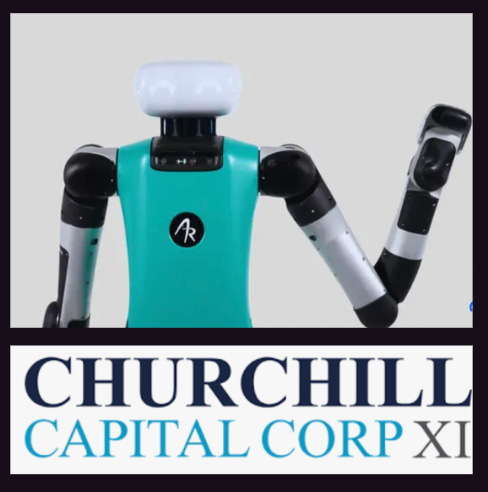
Agility Robotics announced plans to go public through a $2.5B SPAC merger, becoming the first U.S.-listed company focused exclusively on humanoid robotics. The company expects to raise more than $600M to scale production of Digit V5, with over $300M in customer orders already secured from more than 30 customers, including Amazon, GXO, Toyota, and Schaeffler.
More interesting than the listing itself is what it signals: humanoid robotics is moving from venture-backed experimentation into the public markets. Investors are no longer underwriting prototypes—they’re underwriting manufacturing capacity, commercial deployments, and recurring enterprise demand. Agility plans to produce up to 10,000 robots annually at its Oregon facility while continuing to expand real-world deployments. This feels like an important milestone for the industry. The next phase of humanoid robotics will be judged less by viral demos and more by revenue, customer adoption, production scale, and public-market execution—and Agility is the first company that will have to prove that case quarter after quarter.
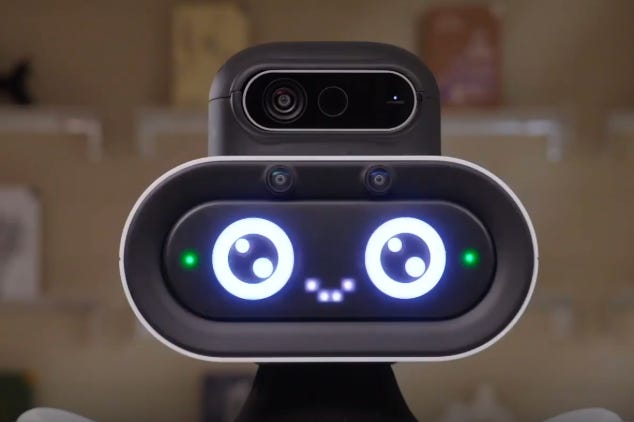
Just saw R-Noid again--a wheeled humanoid from Robot.com that debuted in a promo last November. Now, it already delivers 19 deployable tasks across five roles: restaurant assistant, packer, picker, folder, and host. Ideal for repetitive, multi-shift jobs that are hard to staff. Already packing at an award-winning golf course. Full autonomy + VR teleoperation.
Quite impressive and comfortable design:
- Cute, no legs, dual 7-DoF arms (4kg each), turning torso reaches floor to 1.9m, 90kg. and ~3h battery.
- TBH,I like the friendly HRI:R-Soul platform ( collab with Japan’s Yukai Engineering) features big-eyed display, LED expressions, conversation, and customizable personality--perfect for customer-facing work. It appears to be an integration strategy-Powered by Physical Intelligence π0.7 VLA, FieldAI map-free navigation, and NVIDIA Jetson + Isaac Sim.
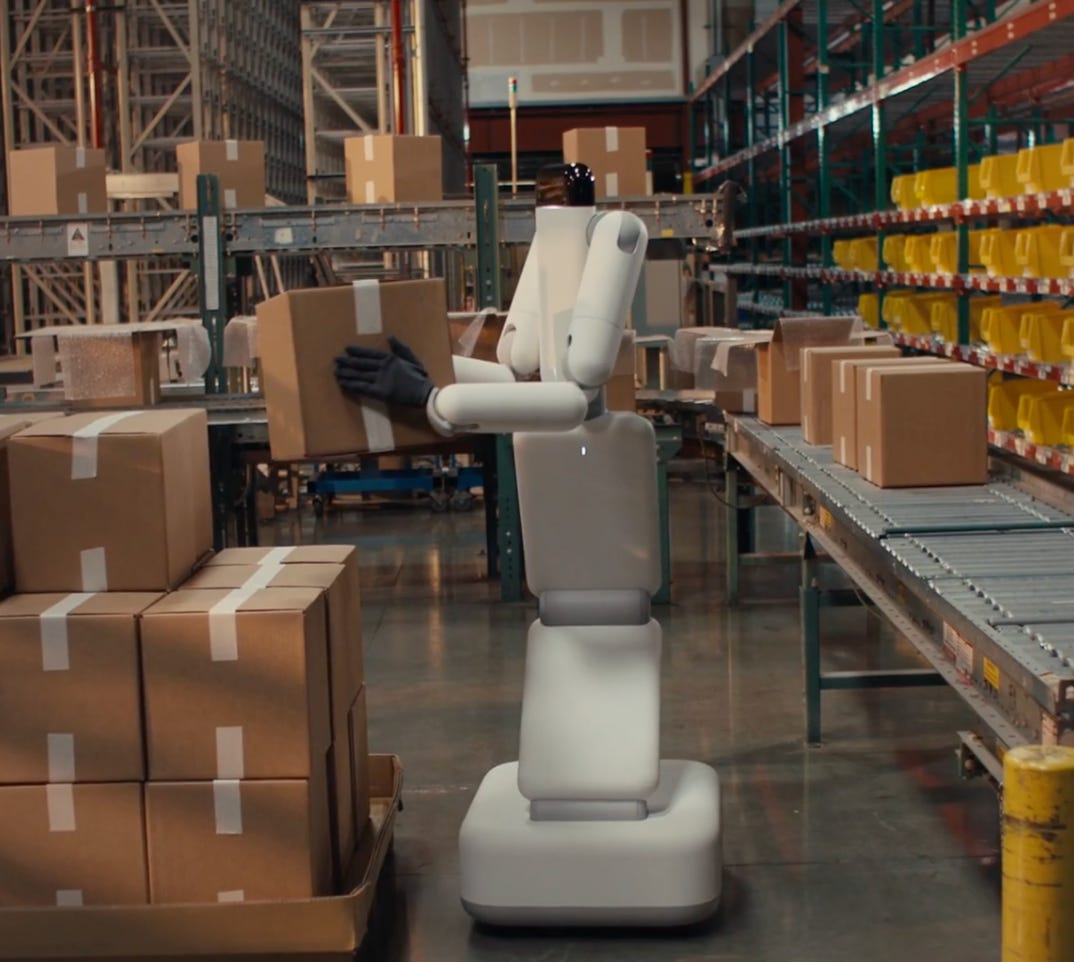
The humanoid robot designed to look nothing like a human. While most robotics startups are aiming to build humanoid robots as close to humans as possible, Genesis AI is going the opposite direction with Eno, a wheeled ‘humanoid’ robot that ditches the typical look and opts for a more minimalist, appliance-like design instead. Built to blend into a living room, the robot is entirely headless and faceless, and successfully performed lab automation in demos.
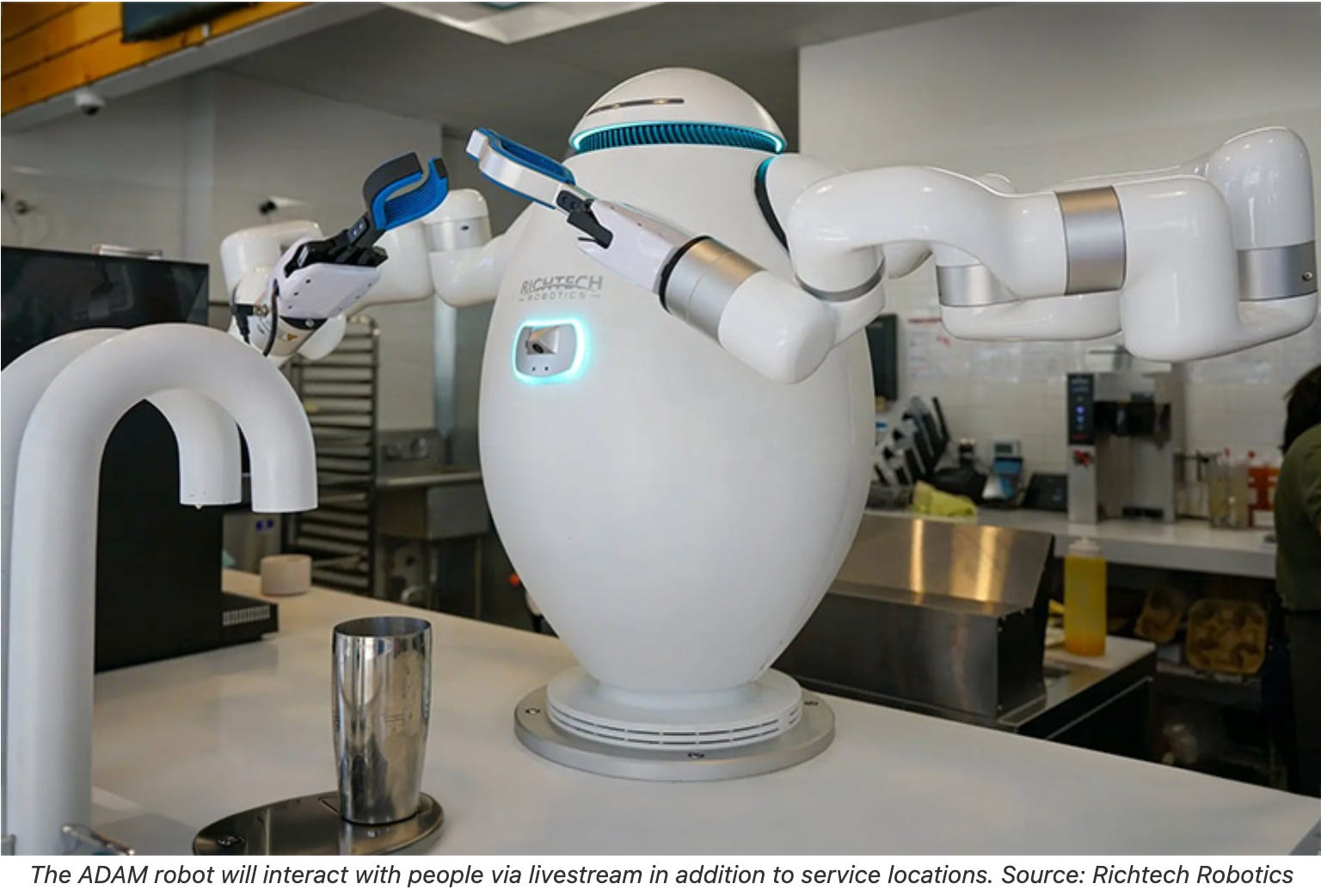
Richtech Robotics just launched an interactive livestream for ADAM, its AI-powered humanoid robot, letting people around the world talk to it in real time and watch how it responds in the physical world.
Antoniq Robotics, a startup from Portugal, has officially emerged from stealth, building embodied AI systems purpose-built for agriculture. Rather than adapting general-purpose robots to farming, the company is developing autonomous robots designed to operate in complex outdoor environments, helping address labor shortages while improving productivity and precision in agriculture. Agriculture has long been one of robotics’ most challenging frontiers due to unstructured environments, variable weather, and delicate manipulation tasks. Antoniq’s focus on embodied AI for farming reflects a broader industry shift toward domain-specific robotic intelligence instead of one-size-fits-all humanoids.
I continue to believe agriculture will become one of the earliest large-scale commercial applications of embodied AI. Companies that can reliably automate repetitive outdoor work have the potential to unlock enormous productivity gains in one of the world’s largest and most labor-constrained industries.
Starting June 23, AGIBOT launched a six-day global livestream from Longcheer Technology’s tablet factory in Nanchang, China. Its G2 wheeled humanoid robots are working a real mass-production quality-inspection line — picking tablets, running onboard sensor inspection, placing them into trays — alongside the existing industrial workflow, not in a separate demo cell.
Numbers from the first run: 310 units per hour throughput, 99%+ operational success rate, 800+ products processed without errors in the first three hours. The livestream runs daily 8AM to 7PM through June 28 on AGIBOT’s X and YouTube channels. Six days, not six minutes. Live footage from a real production facility, not a controlled lab. This is the credibility the humanoid-in-factory thesis has needed — actual uptime data from actual operations. The founders are doing a remarkable job making this real.
He Xiaopeng, XPeng’s chairman and CEO, announced in June that he’s personally taking on the role of CEO of the company’s robotics division. The timing is deliberate: XPeng has declared IRON is in a “mass-production sprint phase” and is targeting mass production of its bipedal humanoid by end of 2026, with initial retail store deployments before commercial customer delivery starting in 2027.
The company is redirecting its automotive supply chain relationships, manufacturing process know-how, and global expansion infrastructure directly into the robotics division. New dedicated data centers and production facilities are going up. He Xiaopeng framed the move as transforming XPeng from an “intelligent automobile company” into a “Physical AI company.”
When a CEO directly takes operational control of a business line six months before a production launch, that’s not a reorg. It’s an all-in bet. I love seeing humanoids become CEO-level strategy inside major mobility companies — these aren’t side experiments anymore.

UBTECH launched UWORLD U1 on JD.com — a full-size bipedal humanoid designed for home companionship, marketed as the world’s first “ultra-bionic” consumer humanoid robot. Two SKUs: a male model (183cm, 42kg) and a female model (168cm, 35kg), both with 88 degrees of freedom. The emotional AI system reads tone, facial expressions, and speaking pace to adapt its responses to your mood. Memory is stored locally and encrypted. Nearly 4,000 pre-orders in 10 days, total deposits exceeding 10 million yuan. Ships June 30. Listed as adult-only. Consumer humanoids have been “18 months away” for years. UBTECH is actually shipping them in two weeks — and the market apparently agrees, because a lot of people put money down fast. Excited about this one!
Morgan Stanley released one of the most bullish outlooks yet for humanoid robotics, forecasting that the global market could reach $5 trillion by 2050, with China expected to emerge as the largest manufacturing and deployment hub. The firm estimates that hundreds of millions of humanoids could eventually be deployed across manufacturing, logistics, healthcare, retail, and home services, supported by China’s scale, supply chain, and policy support.
The report reinforces a trend that’s becoming increasingly difficult to ignore: humanoids are no longer being viewed as experimental research projects but as the next major industrial platform. Similar to the rise of EVs, China is leveraging its manufacturing ecosystem to accelerate commercialization while companies invest aggressively in production capacity, embodied AI, and real-world deployment.
The exact market size is, of course, impossible to predict. But the direction is clear: we’re watching the early formation of a multi-decade industry, where manufacturing scale, data, and deployment—not just robot design—are likely to determine the winners.
In Wuhan’s Optics Valley, China’s first Humanoid Robot 7S Store is doing something the industry has been talking about for years: selling robots like cars. The 7S model extends the traditional automotive 4S concept (sales, service, spare parts, survey) by adding solution, show, and school — covering the full chain from components to deployment to workforce training. Seventeen robot models in stock, ranging from 149 yuan to 700,000 yuan (~$20 to ~$97,000). Inside: robots playing soccer, serving as retail assistants, playing musical instruments. The store is operated by Hubei Humanoid Robot Innovation Center and is targeting 100,000 visits and 50 training sessions in 2026. Robot retail isn’t a concept anymore. It has a floor plan. It has price tags.
Autonomique’s AI-powered robots have moved from a limited pilot to full production deployment at F&P Mfg. — a Tier-1 automotive parts manufacturer that builds chassis and suspension systems for Honda, Toyota, and General Motors. The technology running on the line: a bi-manual wheeled robot using Autonomique’s Generalist-Specialist architecture, now performing live assembly tasks. The pilot started in Fall 2025; the upgrade to production happened this week. F&P Mfg. is in talks to deploy Autonomique’s platform across its global network — which would make this one of the first Physical AI systems operating at real Tier-1 automotive scale, not in a controlled demo environment. The gap between “robot on a trade show floor” and “robot on a live Honda production line” is the hardest gap in this industry. Autonomique just closed it.
➡️ DeepSeek — builds open-weight AI foundation models; China’s most influential AI lab, known for training models at a fraction of what Western labs spend. Raised $7.4B in its first-ever external funding round at $50B+ valuation. Founder Liang Wenfeng personally contributed ~$3B; Tencent added $1.4B; CATL put in $700M. China’s National AI Industry Fund is the only investor with voting rights — and the only one not locked in for five years.
➡️ Copia — builds version control and code management infrastructure for industrial automation (PLCs, OT systems); protects critical factory code from cyberattacks and unplanned downtime. Raised $26M in new funding co-led by AE Ventures and Squadra Ventures, with Lux Capital, Construct Capital, and Renegade Partners. Total raised: $55M. Manufacturing is coming back to the US — and nobody has been thinking about what happens when the factory software gets hit.
➡️ Einride — builds electric autonomous freight vehicles and logistics software, deployed commercially across North America, Europe, and the Middle East. Went public via SPAC merger with Legato Merger Corp. III on June 10, trading on Nasdaq as ENRD at a pre-money equity value of ~$1.35B. Location: Stockholm, Sweden / global operations.
➡️ Coram AI — AI-native physical security platform that converts existing cameras and access control systems into real-time detection and investigation tools; deployed at 1,500+ sites including Fortune 500 companies, large school districts, and healthcare providers. Raised $35M Series B led by Ansa Capital and Battery Ventures, with participation from UP.Partners, 8VC, and Mosaic Ventures. Total raised: $66M. Location: Sunnyvale, USA.
➡️ Architect Labs — builds AI systems to design custom chips end-to-end for organizations pushing beyond what off-the-shelf silicon can handle. Raised $24M seed led by Kindred Ventures, with TQ Ventures, Race Capital, Together Fund, and angels including leaders from Google DeepMind, OpenAI, and NVIDIA. Location: Palo Alto, USA.
➡️ Vision Lab — collects first-person factory operator video and converts it into structured training data for robotics and frontier AI labs; building the embodied AI data supply chain. Raised $6M to scale its Physical AI data infrastructure platform. Location: USA / global factory network.
➡️ Mine Storage — converts decommissioned mines and open pits into long-duration pumped-hydro energy storage assets. Raising $7M Series A at a reported $32M post-money valuation. Location: Sweden.
➡️ Torev Motors — develops high-performance magnet-free electric motors for automotive and defense vehicles. Raising $5M seed at a reported $17.5M post-money valuation. Location: USA.
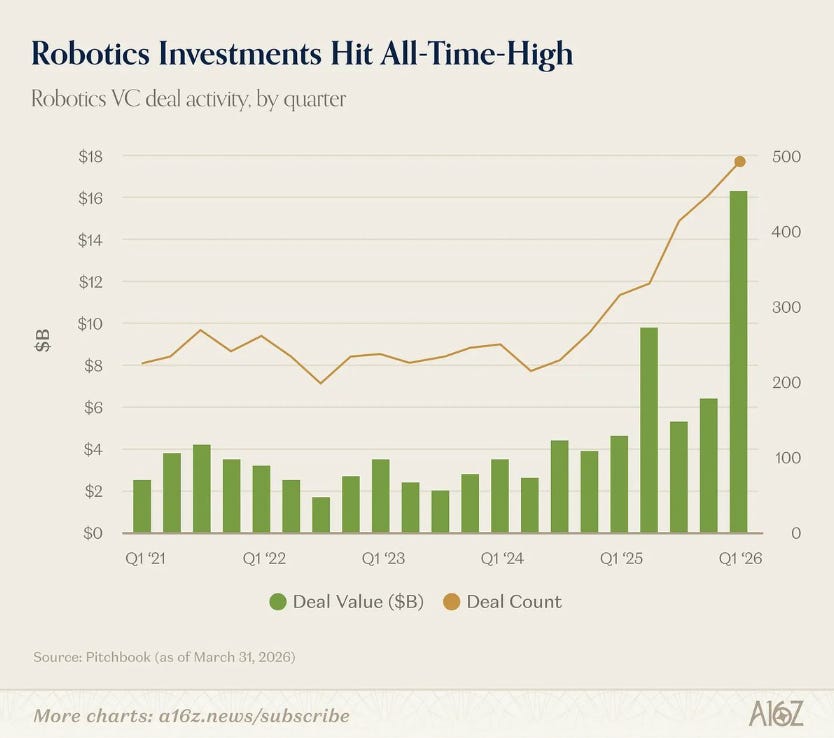
Q1 2026 Robotics & Physical AI VC Trends — PitchBook’s latest report shows robotics VC hit a record $16.3 billion across 492 deals in Q1 2026 alone — driven by megadeals for Shield AI, Saronic, and NEURA Robotics. The big shift: investors are no longer asking whether the technology works. They’re asking whether a company can manufacture at scale, win paying customers, and cut integration costs. The capital is moving toward industrial robotics, defense autonomy, and robotics software platforms. Worth reading before Automate 2026 this week.
From June 23–28, AGIBOT humanoid robots operated on a real factory production line at Longcheer Technology’s Nanchang factory. ⏰ Life streaming time: 8:00AM-6:00PM (UTC+8). Real production workflows. Tablet quality inspection. Long-duration operation!
Complexity of the humanoid platform is undeniable.
What’s next? Actuate by Foxglove! One on my fav robotics conferences in SF. See you in August.
🌍 More Global Hard Tech Events here
If you are interested in AI, Robotics & HardTech, check my previous posts:
→ Rebuilding the American Arsenal: A Strategic Roadmap for a U.S. Manufacturing Renaissance
→ The Physical AI Revolution: Mapping the $60 Trillion Transformation
→ Why 2026 Will Be the Year Space Becomes Big Business 🤔
→ 19 Robotic Hands Startups to Watch
→ The world doesn’t fix itself. These startups are trying / Top 100 HardTech Startups
→ Will we have a chatGPT moment for Robots?
→ The Art and Science of Venture Capital Investing
→ Deep Thinkers & Builders in Tech, Science and Bio
🤝 Passionate about HardTech? Have comments, want to share some thoughts or ask about sponsorships? Let’s connect!
👉 Want to feature your company in HardTech Reads? Apply Here
👉 Want to schedule a meeting directly, check my schedule on Intro: intro.co/paulinaszyzdek
#AI #Robotics #Humanoids #HardTechReads #Startups #DeepTech #Automation #PhysicalAI
No posts
Comments
Nothing yet. Say the first thing.
Sign in to join the conversation.