
Late in the evening on 20th August 1968, Richard Allen, an adviser to Richard Nixon’s presidential campaign, learned that Warsaw Pact forces had invaded Czechoslovakia. He immediately telephoned Nixon, who responded simply, “those bastards.”
Just twelve days earlier, Nixon had secured the Republican nomination, while Vice President Hubert Humphrey was campaigning to succeed President Lyndon B. Johnson. Although Johnson had already announced he would not seek re-election, he remained responsible for managing an international crisis that threatened to undo the diplomatic progress made between Washington and Moscow over the previous year.
Concerned that the invasion would become a partisan issue, Johnson telephoned Nixon and urged him to “be careful” with his public remarks. Nixon, however, was determined not to allow Humphrey appear “as a knight on a white horse” by adopting the toughest public stance on the crisis.
The domestic stakes were therefore high, but Washington could not let electoral politics dictate its response to an event of such international significance. After all, the occupation of Czechoslovakia became the defining example of what was soon known as the Brezhnev Doctrine – the Soviet claim that it had the right to intervene in socialist states whenever socialism itself was deemed to be under threat.
Johnson, whose presidency had already been weakened by the Vietnam War, was under immense pressure; his handling of events mattered not only for East-West relations, but also for the political fortunes of Humphrey and the Democratic Party.
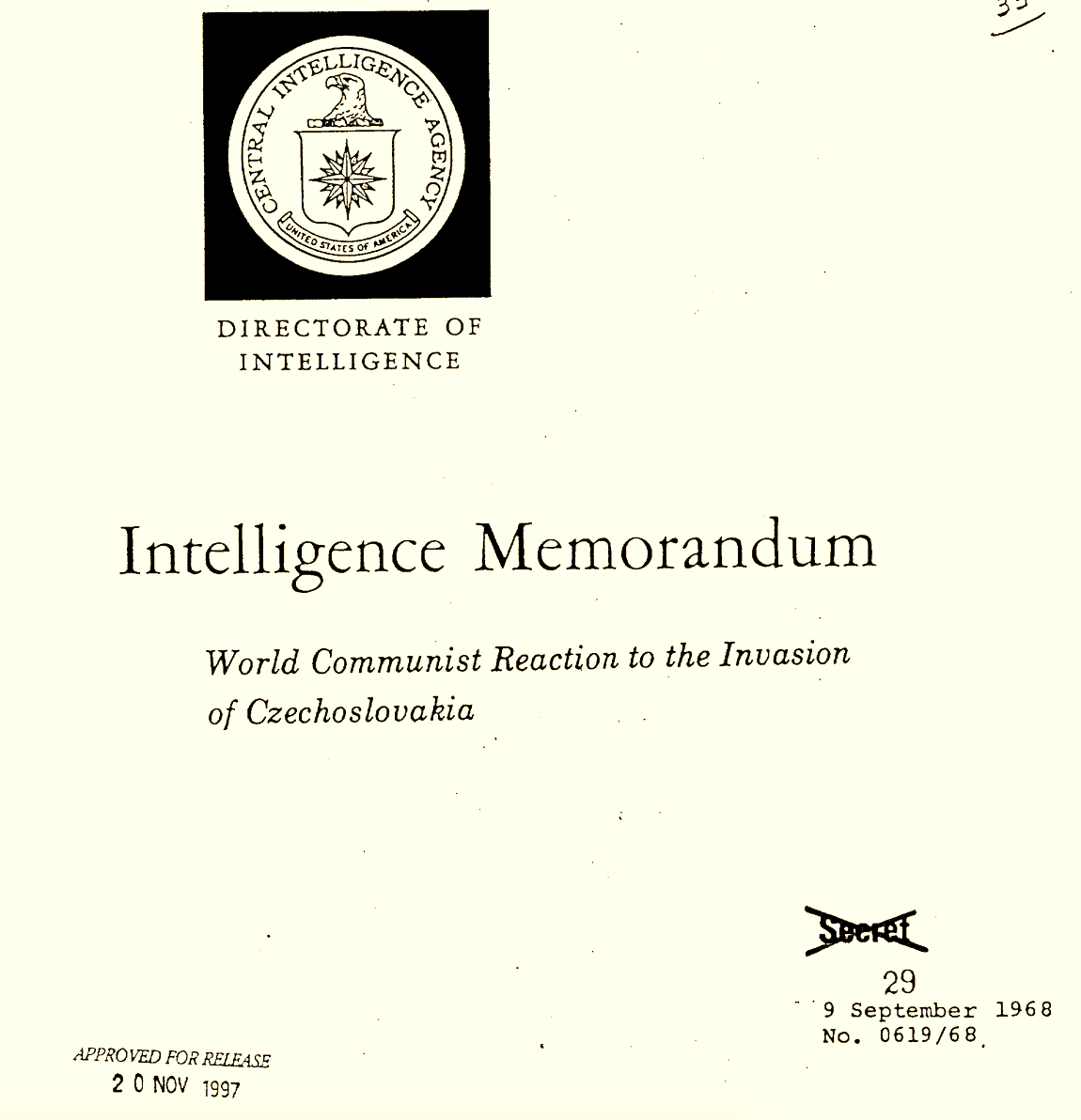
Using declassified White House memoranda, CIA intelligence assessments and diplomatic cables, this article traces the Johnson administration’s response to the invasion of Czechoslovakia, showing how Cold War strategy and electoral politics shaped its decision-making.
20th August 1968
The Johnson administration is informed of the invasion:
President Johnson and National Security Advisor Walt Rostow received official confirmation of the invasion during a meeting with Soviet Ambassador Anatoly Dobrynin on the evening of 20th August. After briefly discussing a film Johnson had watched at his Texas ranch two nights earlier, Dobrynin abruptly turned to what he called “serious business”.
Comments
Nothing yet. Say the first thing.
Sign in to join the conversation.