
An arson attack last week destroyed two cars owned by geologists from the Italian National Institute of Geophysics and Volcanology (INGV), who recently moved to the small mining town of Lula in Sardinia to start preparations for an important scientific project. The vehicles were parked in the courtyard of the home rented by the two scientists, who had moved there about ten days ago. Carabinieri and local police are investigating the incident, but no suspects have been identified.
Both researchers are engaged with the ambitious next generation gravitational wave detection project called the Einstein Telescope. Italian research institutions are working to secure the future of gravitational research in the country, after the success of detecting the first gravitational wave – signal GW150914, produced by the merger of a system of two black holes 3 billion light-years away – was made by the LIGO Scientific Collaboration and the Virgo Collaboration (LVC) in September 2015. The 2017 Nobel Prize in Physics was awarded to R. Weiss, B. C. Barish and K. S. Thorne; all three of them members of the LVC.
Albert Einstein predicted the existence of gravitational waves but he himself doubted they would ever be detected by human science, because they are very faint, originating from very distant but violent sources like collisions of black holes. The LIGO and Virgo experiments (and the Japanese KAGRA) therefore consist of kilometer-long detector assemblies that need to be extremely sensitive to the infinitely small ripples in spacetime concerned.
The next generation experiment on the ground in Italy is planned to increase the sensitivity of the observatory 10 times. Hence, it must be even more isolated from outside interference, which is better achieved by burying it underground.
At least two locations are under consideration, one in Saxony in Germany and the other one in Italy, in a former Galena (the natural mineral form of Lead Sulfide, a major ore used to extract lead and silver) mine in Lula, Sardinia. Currently, the Miniera di Sos Enattos is a museum site and it is exhausted from a mineralogic/economic point of view. The mine is ancient, having seen exploitation by the Romans and most likely also by the pre-historic Nuragic civilization that preceded the Romans and many other colonizers of Sardinia. Centuries of work have left a very interesting site, however also contaminated by poisonous residues.
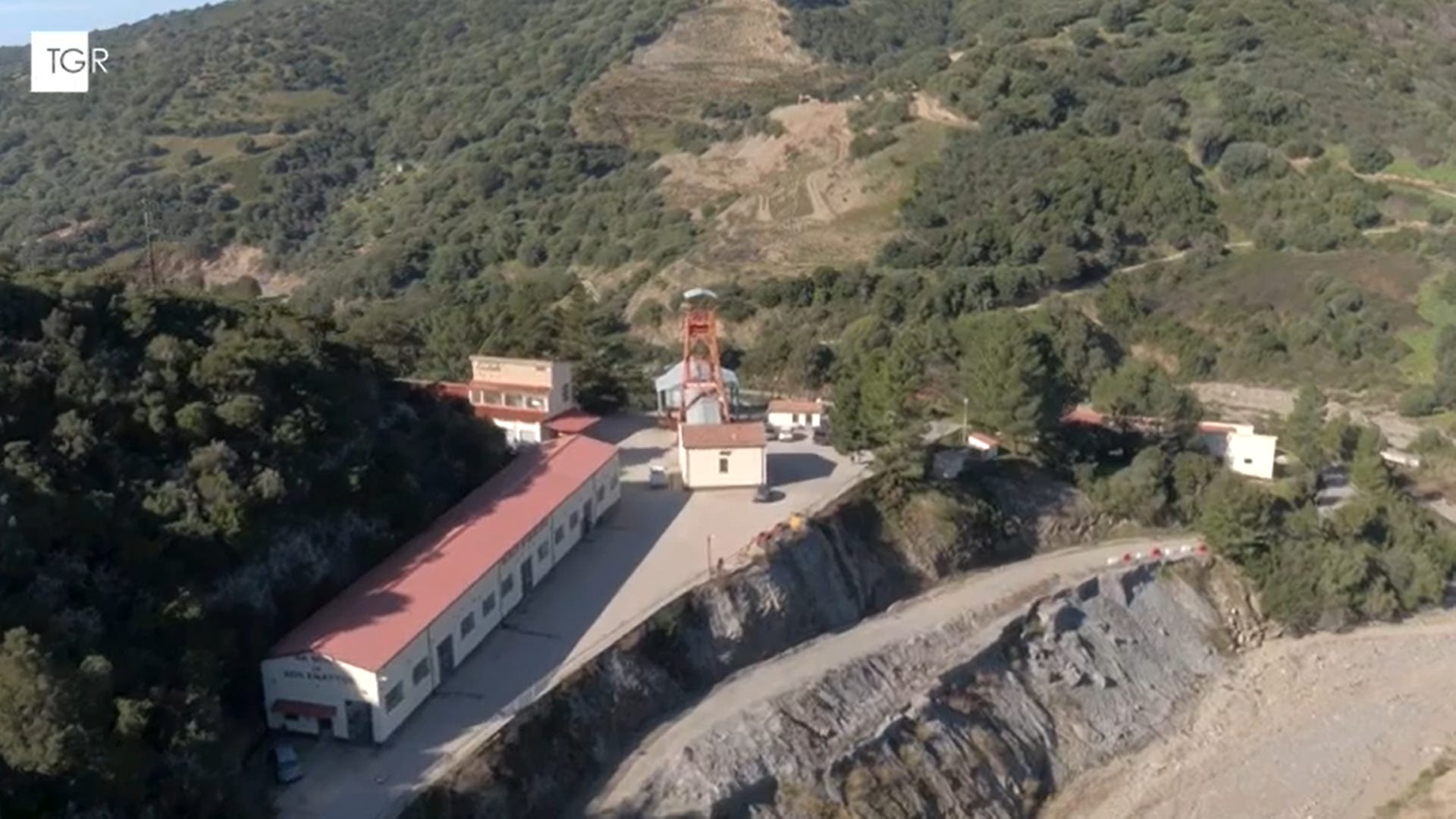
Sos Enattos mine museum. RAI TG1
According to reports in local press and in a recent article in Science, most locals support the Einstein Telescope but a campaign called ‘No to Einstein Telescope in Sardinia’ are arguing that the project will harm the local economy. The main problem is that the government—in preparation for the observatory project—places restrictions on activities that could disrupt the observatory’s measurements, including road and railway construction, certain industrial projects, electricity generation, and stone cutting. Some opponents also fear the extensive excavation required and the facility’s consumption of electricity and water, leading to environmental harm.
At times, opposition has become extreme. In 2023, a bomb was planted at the site by unknown perpetrators [the bomb did not go off, apparently], and graffiti reading “No to Einstein Telescope” appeared shortly afterward on the walls of Lula’s historic center. Many researchers believe this month’s arson attack was also an act of intimidation against the project, conducted by individuals acting alone. (There is no suggestion that members of the No to Einstein Telescope in Sardinia campaign were involved in either incident.)
Scientists leading the activities have tried to address local concerns at different community meetings over the past 3 years. The restrictions on particular activities are strict, but most jobs in the area are in agriculture and not affected. On the plus side, the telescope would generate new jobs and increased economic activity in the remote region with few other alternatives.
The local site Sardegna e Libertà is pointing towards that authorities may have overlooked some issues that arise from the limitations in economic activities in the area, including previous intentions of installing renewable energy plants.
The nefarious attack was not directed against Carlo Giunchi as a person, but against the ongoing project. The ET directly affects about twenty municipalities whose territories have been subjected to various types of restrictions. As is well known, restrictions are rarely welcomed by those subject to them, even when they pertain to the common good. They create discontent. For example, until a few years ago, discussions were underway regarding wind turbines and photovoltaic systems to be installed in those very territories now subject to restrictions. Private owners had already reached agreements to lease their land and obtain lucrative profits. Obviously, they don’t applaud the restrictions that have robbed them of a bright economic future. We’re talking about private property to remember that not all of those territories are public, and the balance between these two is a very complex one.
Local and national politicians condemn the attacks and vow to strengthen surveillance and control services, heighten investigative vigilance, and implementing public lighting and video surveillance by the municipal administration, the Prefecture issued a statement after an open meeting of the municipal council:
During the meeting, everyone agreed that the construction of the Einstein Telescope is of paramount importance, not only from a scientific perspective but also for the future development of the region. Achieving this goal requires the concerted effort of all institutional stakeholders and civil society. In this regard, the indispensable active role of the communities of Lula and the entire Nuoro area affected by the Project was also emphasized, as they must unite in forcefully rejecting all forms of violence and intimidation.
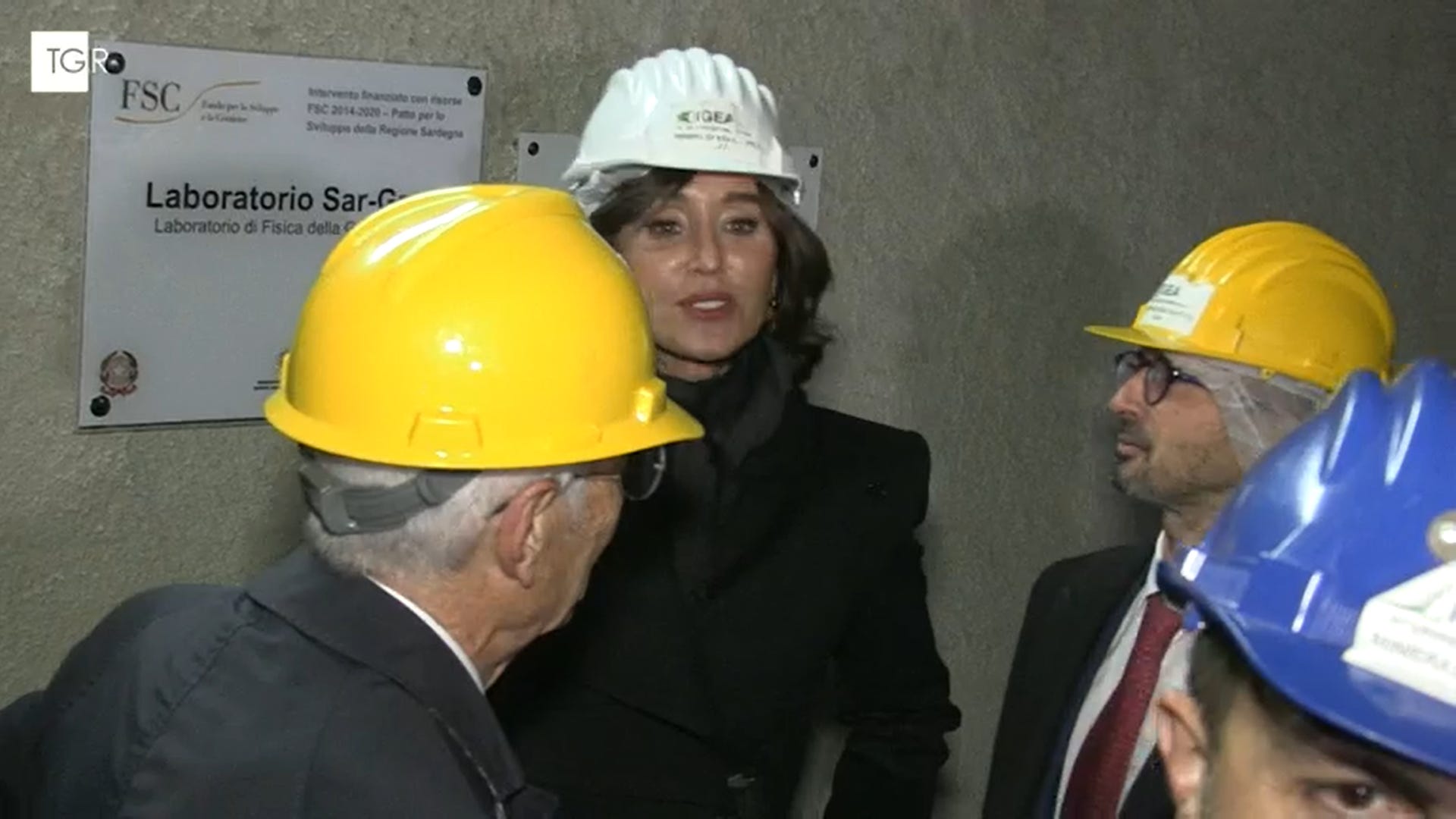
Minister of Universities and Research Anna Maria Bernini. Still from RAI TG1
The research minister stated:
Italy’s bid to host the Einstein Telescope, a gravitational wave detector, is the best possible one for its scientific value and the economic well-being it will bring to the region. The Italian government and the Sardinia Region have already allocated all the necessary funds. Therefore, it won’t be an isolated gesture that will jeopardize all this.
The minister, together with heads of the research institutes INFN and INGV, expressed her sympathy to the affected researchers and to the entire academic community involved in the project’s development.
Comments
Nothing yet. Say the first thing.
Sign in to join the conversation.