
About a year ago, I ran the math on how to draft a novel doing just 3,000 words a week.
That’s the most I could manage while caring for myself, my little family, and my home as a new mom fresh out of the corporate sphere. Daily goals weren’t working for me—but I was decently consistent at snagging 1-2 nights per week for writing, and I figured 3k words/week for 30 weeks would land me at a 90k novel by the end.
Today’s newsletter shares a reflection on that challenge, what it taught me, and how I’m using that same framework again this summer to write my next novel.
Welcome back to my newsletter, On Paper & Light. Here I chat about writing, language, art, design, and the psychology of each (especially when they intersect or fuse together). I also share regular updates on my novels-in-progress.
If you’re a writer, a designer, a linguist, a creative, and especially if you’re a parent on top of it, you’re in the right place.
You’ve probably heard the idea tossed around that “every writer is different,” and I agree with it—in part. Our rituals that put us into creative flow state will differ from person to person. However, there are some elements of writing books for publication that I feel are universal:
No matter how you draft, it’s no question that you need to get words on the page.
No matter whether you edit during or after the draft, at some point, you have to revise.
And regardless of whether you self-publish or traditionally publish, your book will need proofreading, typesetting, cover design, ISBNs, copyright, marketing, and a release date.
One of the first lessons to change my writing trajectory was learning how to work with deadlines. Deadlines are one of the few concrete elements of publishing; much of the industry is subjective and variable, but when a release date is set or a manuscript deadline is negotiated and decided upon, those dates can serve as an anchor.
Last summer, I didn’t have anyone holding me accountable for my writing. No publisher, no agent, not even a critique partner. Publishing a book was my dream alone. Setting deadlines for myself had proven helpful in writing my third book, so I chose one for this project, but this time with an element of built-in celebration:
I was going to finish my next novel by my birthday, as a gift to myself.

I spent a few weeks experimenting with how frequently I could steal time in the week for a writing session, and how many words I could write in the average week (not my best weeks, and not my worst).
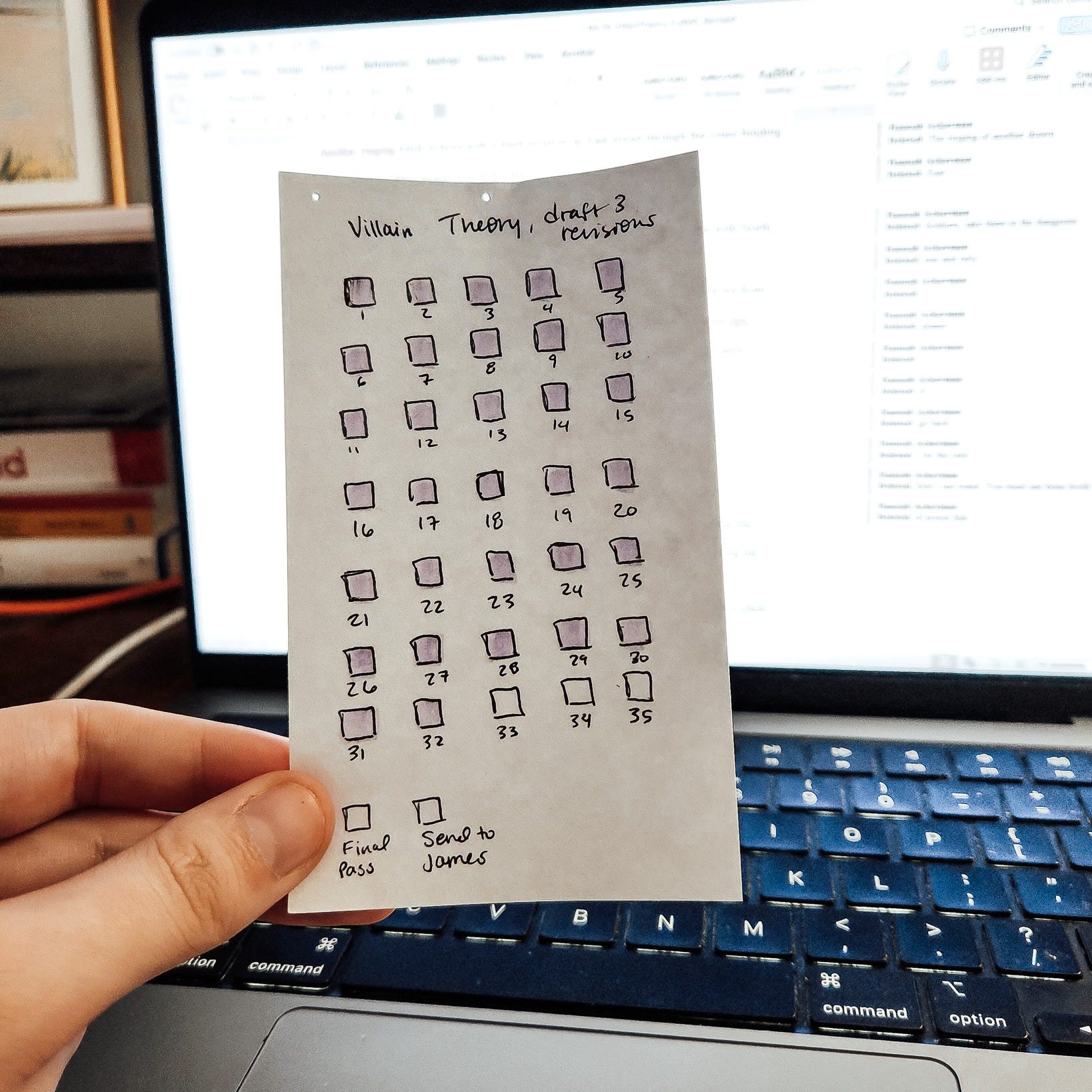
After learning I could manage a 3,000-word target on a weekly basis, and setting my draft goal for 90,000 by my birthday, the challenge was there: 30 weeks to write a novel, 30 weeks to master the drafting process while managing my other commitments and trying to prevent burnout.
I polished up my plot outline, and mid-April of 2025, I jumped in with both feet. Over the course of the summer, I maintained an “imperfect consistency” through the challenge that had me showing up for my writing at least once a week until I finished the novel and hit 90k over a month early!
A novel in six months? That’s the kind of schedule I’d dreamed of, but I ended the challenge with more than just a book. Here’s what else I got out of it:
I established a regular writing habit focused on the craft
I proved to myself that I can be both creative and keep a schedule
I set a goal and accomplished it, building my self-confidence
I learned what my “author voice” sounded like, and how I like to write
I paced myself in drafting and produced a cleaner, more intentional first draft
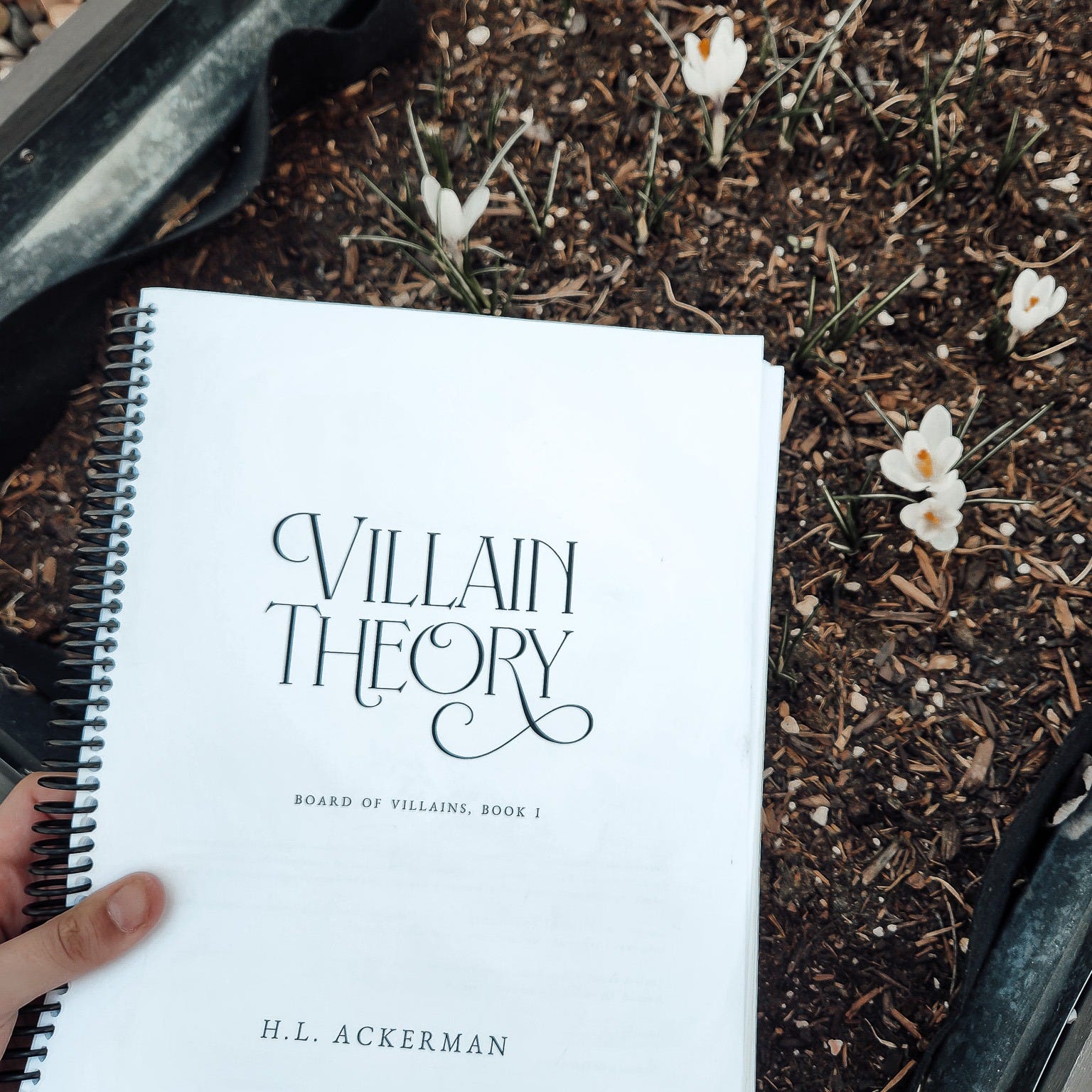
By the end of the summer I held in my hands the full 90,000 words of Villain Theory, a story that had previously lived only in my head. I would then take that book on through revisions, beta readers, more revisions, and queries, to ultimately sign with a dream literary agent. That book is now out on submission to publishers.
This week marks one year since I sat down and started drafting that book. I find myself 30 weeks out from my birthday with a new story idea brewing, so it’s time to sit down again and begin writing my next 90k novel.
Plot is one of many topics in publishing that always comes up as a question. Where to start plotting a story idea? Which structure to use, if any? Should you plot at all, or are you better off creating your “zero draft” and discovery writing the story first?
Only you can answer these questions for your own work, but I’ll walk you through the thought process that I have when approaching a new story idea.
In addition to writing, I’m a voracious reader, a wife, a mom, a small business owner. I lift weights when I can. I like to bake, and watch movies, and hike, etc. My time is extremely valuable to me, and limited—so I’m only interested in pursuing creative projects that propel me forward with efficiency.
I write too slowly to do a “draft zero” before executing on my vision for a book. I have a lot of capacity for extensive preparations on the front end. In simpler terms, I like making plans and carrying them out. But I wasn’t always a “plotter.”
PLOTTING VS. PANTSING
Between my two most recent manuscripts, I “discovery wrote” one and plotted the other.
The discovery novel took two years to reach 100k words, experiencing what graphic designers know as scope creep: it just kept getting bigger and bigger and bigger. The plot was also a mess, my protagonist’s personality changed with my writing mood from session to session, the plot objective was never clear, and I couldn’t ever commit to the romance enough to make it feel real.
In the end, I had a messy document 120,000 words long and only hints of a story.
My plotted novel was Villain Theory. I created a beat sheet based off of Jessica Brody’s Save the Cat story structure, keeping it to loose bullet points that focused on connecting scenes through character and plot progression. I reverse-engineered my protagonist’s surface-level actions to create her arc from the climax back to the inciting incident, just jotting it all down as sticky notes.
Then I started into that draft with a target 3,000 words/week. Writing around my baby’s nap schedules and my husband’s work commitments, I hit 90,000 words and finished the book in 24 weeks.
I knew the scope from the beginning. I’d done just enough development to understand the themes and how they intersected with the character’s flaws. I had planned organic events in the plot and knew my characters well enough to maintain consistent mindsets, behaviors, etc.
It was still a mess as a first draft, but the story was coherent and gave me room to build. I have since learned that plotting in advance makes the most of what limited time I can steal for writing and saves me literal months of effort on the backend.
Much like Villain Theory, this summer’s novel started with a simple story idea. I returned once again to the beats from Save the Cat and this time intertwined the structure with some elements from Romancing the Beat to strengthen my romance subplot.
I also compared these structures to the classic Hero’s Journey structure and the seven-point plot structure to decide what kind of rhythm I wanted my book to have.
Here’s a screenshot from my Miro board working out some of these overlaps in learning how this story needed to breathe:
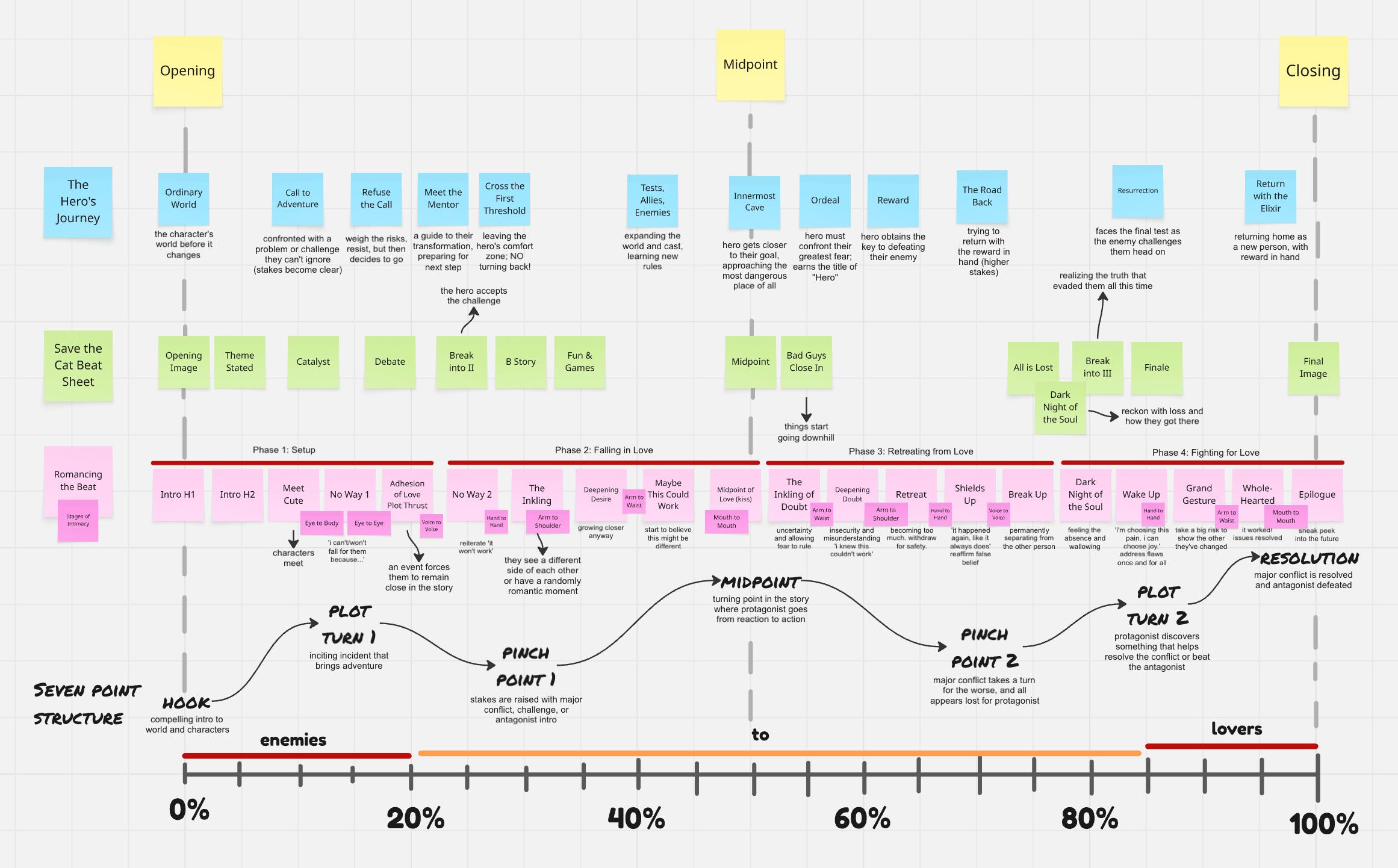
I then proceeded to build out my vision board on a timeline with the beats, keeping those sticky notes/bullet points for each part of the plot very brief as I still love discovery writing on a scene level, and now my plot is ready.
I know what beats I want to hit, and at what percentages I’d like to hit them, and those percentages help me divide my word count into scenes and chapters.
It might feel technical laying out like this, but this is the skeleton of a story that I’m ready to flesh out with magic and mystery and adventure. The rhythm is set. The goals are laid out to help me avoid writer’s block and burn out. Now the fun part begins.

I dove into the first whispers of the draft this week with a goal to hit 3,000 words, and it’s going well! Scrivener is my writing platform of choice, with an amazing database that tracks my word count in both days and months. It’s day 3 of my challenge and here’s where I’m at:

If you’ve had a story idea floating around in your mind, or you’ve been plotting and haven’t yet taken the leap, consider this your invitation to join me in writing a novel over the course of the next few months. We’re doing it sustainably, ethically, and with intention to bring forward the best stories we can.
Get a free copy of my Birthday Book Challenge Tracker to use in your writing challenge this summer, tracking your weekly word count and seeing your progress on a line graph!
A summary of the challenge can be found on my Instagram page if you’d like to follow along with small progress updates. Each day I’m learning more about how to build a lifelong career as a traditionally published author, and learning how to draft reliably is probably one of the most important lessons that can only come through trial and error.
This is how I’m showing up for my stories, one writing session at a time. I’m lucky to share that process with you.
Make sure you’re subscribed to get the next drafting update in your inbox at the end of the month! Let’s see how far we get—

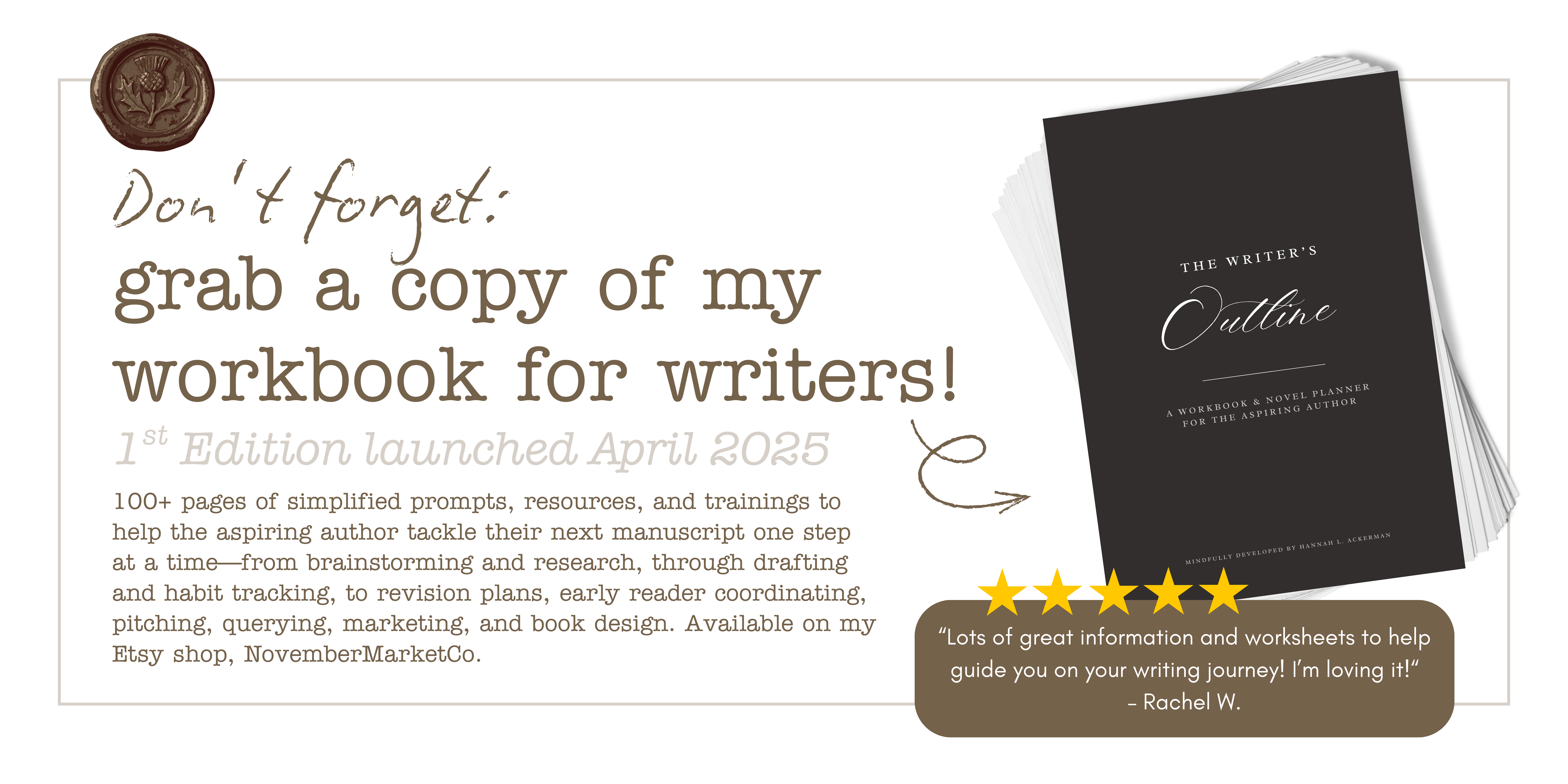
This is the workbook I built last summer to help prepare me for writing a book in 7 months, with the developmental questions, sprinting prompts, revision checklists, beta reader process outlines, and querying prep training I needed in order to get from first words to signing with my agent.
Purchasing a copy supports both your writing goals and my small business! You can also use the code WRITE25 to save 25% at checkout~

A quick, curated list of things I’ve been enjoying.
Fiction Reads: The Dragon Wakes with Thunder by K.X. Song, the sequel to her incredible Mulan retelling, The Night Ends with Fire. This duology has blown me away!
Nonfiction Reads: 101 Essays that will Change the Way You Think
Listening: Plot Twist with Victoria Aveyard and Soman Chainani and How I Write (including a very insightful interview with the CEO of MacMillan Publishers—if you’re interested in learning more about the business side of trad publishing, I can’t recommend it enough!)
Exploring: I’m trying to learn how to find balance in this unfamiliar space of drafting one book while another is on submission. It’s a totally new experience, and requires a lot of patience. We’re learning one day at a time; what a cool and nerve-wracking place to be!!
Thank you, genuinely, for reading my words On Paper & Light. This week the newsletter is going out to nearly 700 subscribers and I’m just speechless. Wow.
If you’re new to the space, drop in the comments and tell me what topics drew you here. I want to make sure that when my name pops in your inbox, it’s an article worth your time.
See you in the next one!

Keep reading:
What most authors get wrong about querying
·
Mar 31
Last week I asked my network what questions you’d like to see answered in the newsletter since I’m between projects. Almost unanimously, you asked for more posts diving into the nitty-gritty of the query trenches.
The query letter that got me 22 full requests
·
Feb 21
Welcome back to my newsletter, On Paper & Light. Here I chat about writing, language, art, design, and the psychology of each (especially when they intersect or fuse together). I also share regular updates on my novels-in-progress.
Comments
Nothing yet. Say the first thing.
Sign in to join the conversation.