
Hi. Handstamp is a weekly music newsletter created by me, Josh Coyne. In each edition, I talk to a creative person about live performances that have meant something to them. Previous guests include Anna B Savage, Big Special, Cassandra Jenkins, Chastity Belt, Chet Faker, Christian Lee Hutson, Courtney Marie Andrews, Craig Finn, Gold Panda, Holy Fuck, Idlewild, Jasmine.4.t, Jason Stewart, Madi Diaz, Mat Baynton, NoSo, Public Service Broadcasting, Richard Dawson, Rio Kosta, Searows, Uwade and We Are Scientists.
I’ve previously written about the mad, exasperating couple of years I’ve had. When bound to the sofa for months, I couldn’t have foreseen the life I’m currently living, as I ease myself back to normality. Without those setbacks, I would not have the perspective on my own achievements that I’ve gained.
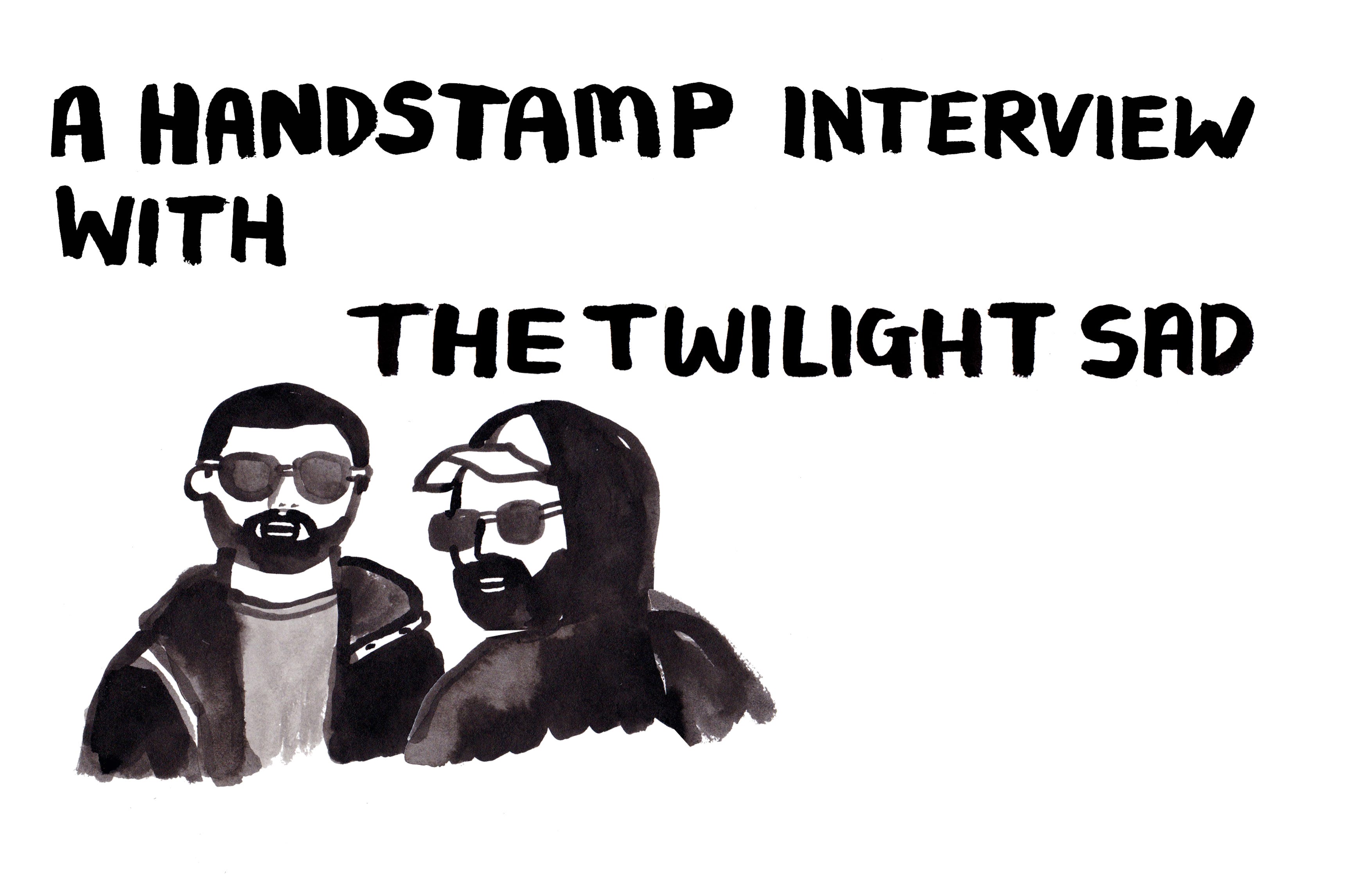
A few months ago, I spoke to James Graham – songwriter and vocalist of Scottish alternative rock band The Twilight Sad. It is almost certainly the most moved I’ve been by a Handstamp conversation, as we talked about the sacrifices necessary for the frontman to return to stage and a unique personal turning point that guided his pursuit of music. However, we started at square one.
James Graham: “I went to school in Kilsyth, but lived in a farming village about three miles away from there. We had about five streets, a school, a bowling green and a pub. Now, after leaving to chase the city, see the world and live that life, I’ve ended up back in a small village.”
Handstamp: So, did you grow up on a farm?
James Graham: “Nah, my dad grew up in Kilsyth and wanted to be close to it, but not quite in it. That’s actually how I met Andy, my bandmate, on the first day of high school, he was the first person to make friends with me. We grew up together.”
Handstamp: Were you surrounded by music at home?
James Graham: “Not really. My mum liked music and was in a band when she was younger but wasn’t going out to buy records really. My sister’s room was next to mine and all the indie music from that time came through the walls and I absorbed it that way. Then at high school, Andy became my teacher, giving me CDs to take home and listen to.”
“That’s actually how I met Andy, my bandmate, on the first day of high school, he was the first person to make friends with me. We grew up together.”
Handstamp: When you met Andy and your enthusiasm for music reached another level, did you go to see live shows right away?
James Graham: “Well, the first thing we bonded over was our love of Manic Street Preachers. I had seen them on Top of the Pops one night, just after Everything Must Go came out and it really clicked for me. Then at the supermarket the next day, I picked the CD up and hid it under the bread so my mum didn’t see it until we were checking out and I was like ‘surprise! My first ever gig was the Manics at the SECC in Glasgow, my sister had bought me the ticket for my birthday and that was definitely the moment I realised that this was going to be a big part of my life. It felt like the first experience of a drug, but I wasn’t on drugs because I was 12.”
Handstamp: Was Andy at that show with you then?
James Graham: “I’m not sure if he was at that show, but after that point, we went to every gig together.”
Handstamp: I love those stories where an artist can identify a moment that they really threw themselves into music. You hiding the CD from your mum is great and it’s worth noting that many parents would have still had that returned to the shelf, so it’s really a potential turning point in your life.
James Graham: “I think I’d just exhausted her so much that day, that she would have done anything to shut me up. [laughs]”
Handstamp: Well, the Twilight Sad fans reading this will be relieved that your mum was so ambivalent that day.
James Graham: “Well, she’s influenced me in so many ways, but now that I think about it, without that moment, a lot of things wouldn’t have happened. Since then, we’ve played with the Manic Street Preachers, when my mum was still alive and she was there. A real 360 moment. I’d never thought about it that deeply. The knock-on effect is sort of blowing my head off, to be honest.”
Handstamp: So, when you attended that first show, what parts of the show made its mark on you?
James Graham: “I’d never seen passion like that before. People were unashamedly passionate about those songs. Inhibitions were out of the window and it blew my mind seeing the sheer joy.”
Handstamp: That’s beautiful.
James Graham: “Yeah, well it wasn’t all beautiful. The Boo Radleys were the openers and they had pints chucked at them throughout. So, to go from that to total euphoria was an experience.”
Handstamp: I experienced something similar early. I went to see Red Hot Chili Peppers when I was a teenager and the opening band were bottled off stage.
James Graham: “Sounds like a horrible situation. I’ve never been bottled but we were opening for The Smashing Pumpkins around 2006, 2007 and the front row just gave us the finger the whole time.”
Handstamp: I don’t see how your music would go down that badly at The Smashing Pumpkins show.
James Graham: “Oh, it was just like ‘get off Billy’s stage’. Nobody would have been good enough. They were just like ‘who the fuck are these Scottish guys that think they can grace Billy’s stage?’. They’re all learning experiences. I have probably been in most live performance situations now, having played all types of stage and I wouldn’t have been able to do that if I didn’t have those experiences in the early stages.”
Handstamp: Certainly. I’ve never reached your heights but have played a decent amount of shows. I’ve been heckled by a guy in a morph suit, I’ve played to one family on a huge field in a cover’s festival that we should not have been booked on….
James Graham: “Oh no. I was recently talking to somebody about a show in Cork, where there was maybe five people in attendance. At the time it was totally devastating, because it was part of a proper tour. But there was one guy at the front, wearing our t-shirt and he had the fucking time of his life. Looking back now, while it may have not been nice for me, just imagine how good it would have been for that guy. Imagine your favourite band was playing exclusively for you. Quite the experience.”
Handstamp: Private show!
James Graham: “Exactly. Just not the type of private shows that makes people loads of money.”
Handstamp: In your teenage years, where would you go to see live shows then?
James Graham: “Glasgow was our local city, so we’d go there. The best venue in the city and in the world, in my opinion, is Barrowland Ballroom. It’s got nostalgia, history, the wooden sprung floor, all the things you’d want in a venue. My great grandfather actually helped lay the sprung floor. The area has never been the fanciest part in the city, which I liked. The surrounding area has been gentrified a bit now, so there’s both the threat of violence AND the threat of good coffee now.”
Handstamp: What about smaller rooms?
James Graham: “There’s King Tut’s Wah Wah Hut, which is 300 capacity and a bit of a rite of passage for local acts.”
Handstamp: Famously, Oasis broke through there I believe.
James Graham: “Yeah. My friend John Paul looks after most gigs there now. He’s the exact kind of guy you want to see when you turn up to play a gig. A lot of places, you’ll arrive and be treated like a bad smell.”
Handstamp: Outside of the first, can you pinpoint a show you’ve attended that has made the biggest impact on you?
James Graham: “A lot of the best sets I’ve ever seen, we’ve been the support band. We’ve been so lucky to support our heroes. To play, then get to watch the people who are the reason you are doing it in the first place is so special. We’ve played with The Cure so much now, which has given us the opportunity to play our music on some of the most famous stages in the world. Every gig on the last tour they did, before the latest record, I wanted to go and watch their gig every night as a fan and I watched every soundcheck too. To hear them play so regularly had a huge impact on me. The album they were touring is about grief, as Robert has lost some important people to him and I was going through something similar at the time. To watch him, the person, not the rock star, play those songs every night, pouring his heart out in some of the most amazing spaces in the world, that really affected me. It even helped me write our latest record.”
“I knew going into the tour that it would have to be a little bit different to our normal tours. I had my own battle with my health, which meant that I had to do it properly and prioritise the most important part of the day – the hour and a half that we’re on stage.”
Handstamp: How do you feel about having a relationship like that with a hero of yours?
James Graham: “He’s a friend now, which is amazing. Sometimes I feel like I have to separate Robert from the Robert Smith that I have admired and loved for so long. When you strip it all back, he’s just a passionate guy who loves playing music. It’s a great feeling to know that somebody who is so popular and such a genius still has the passion to talk to other musicians about their gig. He’s on stage for three hours every night, but he loves it.”
Handstamp: I love how much he values fostering talent. I have friends who played a festival he curated and they feel similarly about him. It’s especially so impressive because he’s been a known musician for so long and some in his position would have become jaded by decades of success.
James Graham: “Yeah, people can be really disappointing. Age doesn’t seem to fill many people with knowledge, whereas Robert is special.”
Handstamp: He features on your latest record, It’s The Long Goodbye…
James Graham: “He’s on three tracks, yeah.”
Handstamp: How have you felt about sharing the music from the record in a live environment?
James Graham: “I am still processing it all, if I’m being completely honest with you. I knew going into the tour that it would have to be a little bit different to our normal tours. I had my own battle with my health, which meant that I had to do it properly and prioritise the most important part of the day – the hour and a half that we’re on stage. I was 41 when we started touring the album, I’m 42 now and I wasn’t sure how I would cope, physically or mentally to be honest with you..”
Handstamp: What big changes have you made?
James Graham: “I did the tour sober. I would usually drink before a show to settle my nerves and anxiety, as I’m a very anxious person. I’ve never been happier with how I’ve approached things and how I’ve sang on this tour, because I know I prepared and couldn’t have done more. The songs I sing are always very personal but on this album even more so, so I knew it would be quite hard, but I think doing it helped me. I would not have been able to tour a year ago, so I feel really proud of myself, absolutely knackered but really proud. I was lucky to be surrounded by brilliant people, who were focused on putting on a great show. It was a cathartic experience.”
Handstamp: As somebody who has also had to make some sacrifices over the last year or so, due to health challenges, I can relate to how much more these achievements can mean under those circumstances.
James Graham: “100%. I really didn’t know if I’d be able to do it. Before the tour, I was walking a lot, to try and get myself in some sort of shape, as well as a better headspace. I also had to be ready to be away from my family, which is tough. When I was ill and my mum was ill, I was so focused on trying to be a dad, son and husband. All the other stuff was not even on my radar, I was just getting up every day to be a father, husband and a member of society who could do something. Luckily, when we did return, people seemed to like the record, which made getting up and playing the songs to people much easier.”
The latest The Twilight Sad record It’s the Long Goodbye was released in March 2026 via Rock Action Records. Subscribe to Handstamp Substack for future interviews. Follow @itshandstamp on social media and just bloody listen to Chief Springs on your chosen platform, will you? Illustrations by Alice Bowsher.
No posts
Comments
Nothing yet. Say the first thing.
Sign in to join the conversation.