
As a college student, my plan was to become a political campaign strategist. I loved the chess-like quality of the political arena, and like a lot of young people, I wanted to do something exciting and idealistic.
My senior year I worked in the Chicago press room of the Clinton campaign, where I called into radio shows playing an undecided voter who gradually became convinced to vote for Clinton. After graduation, I was accepted into a program that trained recent graduates to work on campaigns for the emerging progressive wing of the Democratic party.
At the time, progressive meant something different than it does now, because the Democratic party was different. In the 90s, Democrats could be moderate or conservative. Some were anti-abortion, pro-guns and “fiscally conservative.” Many were also working class — the real kind, not prep school kids slumming it. The progressive movement was, I thought then, about creating a modern progressive-style government — one that took care of Americans when they got knocked down, treated women and minorities fairly, and gave everyone access to the American Dream.
Ms Schank Goes to Washington
The program training took place on a small college campus in Washington, DC. For ten days, I learned, along with 20 recent graduates from around the country, how to organize and run a political campaign. Campaign strategists fresh off the ‘92 Clinton victory taught us to analyze the voter file to create a campaign strategy. Anita Dunn taught us to write press releases and run a press strategy.
But as the week progressed, the trainees and I also began to understand that in politics things were not always as they seemed. And, we got a taste of what proximity to power meant. At night in our dorm we speculated that our program was a covert operation to create a field team for Bill Bradley’s anticipated 2000 presidential run. Sen. Bradley was one of the chairs of the program, along with the recently ousted Governor of Ohio, Richard Celeste.
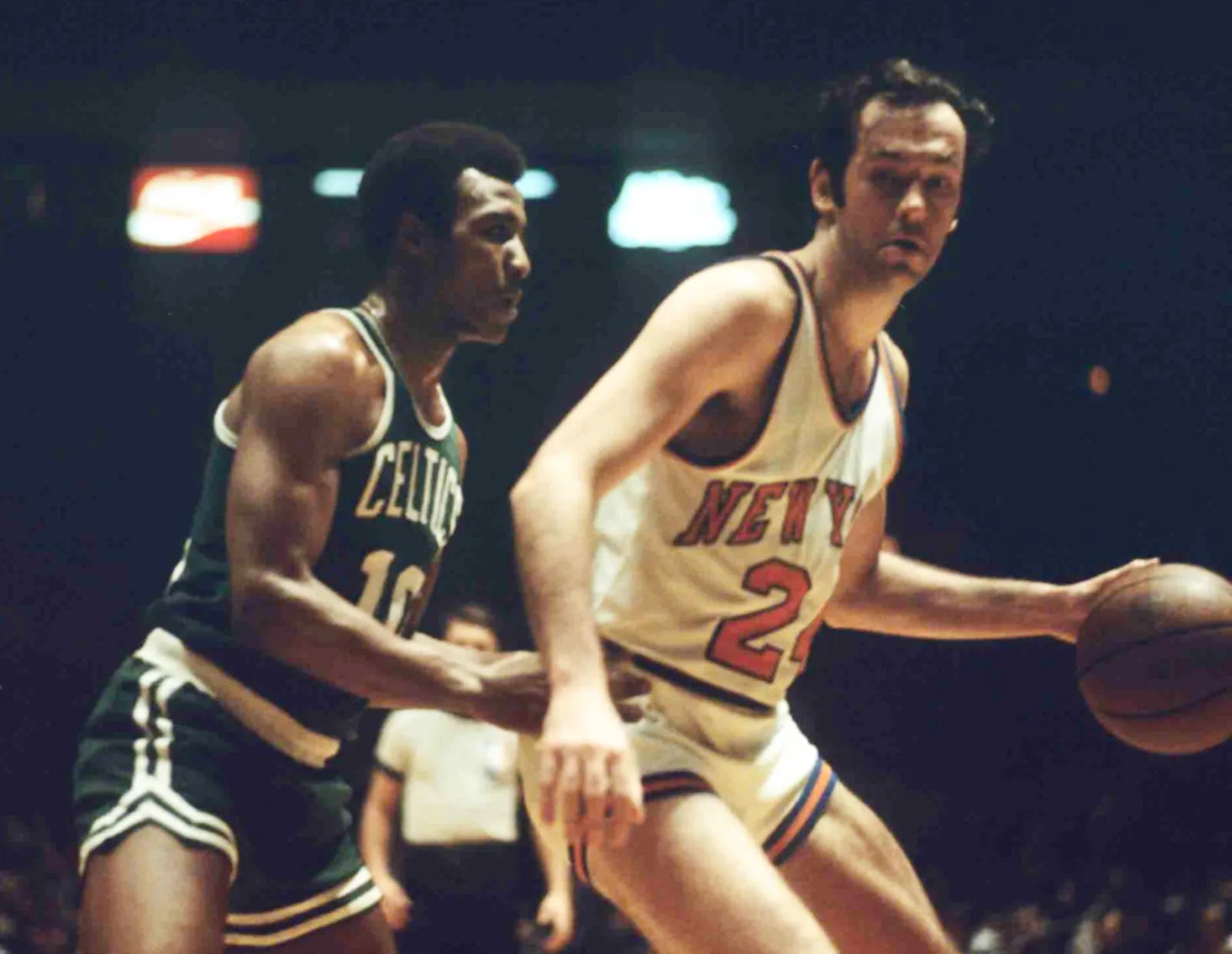
The last day of the program, we were sent into Senator Bradley’s office and told we could ask any question we wanted. Someone asked if it was more exciting to win a Senate race or two NBA championships with the New York Knicks. Without question, said Bradley, the NBA championships were the highlight of his life.
Our final night of the training we were treated to a private Bruce Hornsby concert. After playing a few songs, Hornsby asked if the audience had any requests. The trainees’ looked at each other wide-eyed with both the terror of requesting a song from a famous musician, and awe that we were in a position to do so.
Governor Celeste broke the silence by requesting Bennie and the Jets.
“Respectfully, Governor,” Hornsby replied. “No.”
The Governor tried again with Crocodile Rock, and was again rebuffed. I don’t remember what song they settled on, but I understood the message. Personal concerts by famous musicians, even if they vetoed your song requests, were the icing on the political cake.
For a year and a half I cranked out press releases, candidate statements and speeches on Congressional races across the country. I held signs at overpasses and blanketed neighborhoods with leaflets, organized volunteer door-knockers and gave talks at local DNC events. I lived on couches and spare rooms in southwestern Missouri, far-upstate New York, the south side of Chicago and exurban Virginia. I worked every single day without rest until election day, then slept for a month.
The hours and lifestyle were brutal. The pay was terrible. And once I moved beyond the traditional boundaries of Jewish America, I looked and felt like a foreigner in large parts of my own country. It was a terrible feeling — one I wasn’t ready to think about at 22. But the worst part was learning that politics was far more disgusting than I’d realized.
Of the four campaigns I worked on, I only believed one of the candidates deserved to be in Congress. The others were all hatable because they obviously wanted to be in Congress to prove they were humans of value, rather than to serve their constituents. Politics was the ultimate game, yes, but one with no actual winners. Because ultimately, American politics wasn’t about serving the American people. It was about winning.
The day of Yom Kippur eve, 1994 I was let go from my last campaign (last-hired-first -fired meant the press secretary got fired from a losing campaign first). As I sped up I-55, all of my belongings in the trunk of my Nissan Sentra, rushing to make it to my parents’ apartment in Chicago before sunset, I knew I was done with campaign work.
Use this One Weird Trick to Switch Careers
Around this time, the internet started to become a thing. Thanks to my father’s work in Computer Science, I’d had an email account since 1978, when I was 6 and emailed poems to my parents. I could code — poorly — in a few different languages. As press secretary I’d delighted my campaign managers by setting up Access databases and other 90s-era tools for managing massive amounts of data. So I went to work on the Internet.
For the next 15 years I built a career as a technologist, first in Chicago at Andersen Consulting, then in New York City where I launched early websites for CBS News, Perrier, Jaguar, IBM, and other big-name brands. Eventually, I ran my own user experience consultancy. But by 2013 I had to get out of tech. The exciting dot-com world of the ‘90s had given way to technology that treated the customer as the enemy. Clients asked me to design sites that lied to users, misdirected them, or made it impossible to cancel a subscription. I began looking around for my next career.
I was married with two young kids by then, and hadn’t paid much attention to political news since exiting the arena. But recently the news had wandered into my territory. The Obama White House had been going on for a while about this big Healthcare.gov launch, which even from my office in Manhattan sounded like an oncoming disaster.
The White House was hyping a red-letter day when Healthcare.gov would be turned on and everyone would enroll for healthcare and it would be beautiful. This struck me as odd. In tech you never, never, NEVER announce a giant launch date. In politics you do a giant launch date. In advertising you do a giant launch date. In tech, you do slow rollouts unless you want to ensure your site breaks into a million pieces when people use it. At that point in my career I’d worked on many projects where someone insisted on a big launch date, and not one, ever, hit the date. Zero.
But I kept thinking: the White House can’t be this stupid.
Predictably, the site failed spectacularly. Soon after, the White House put out a call for tech people to help the US government. I knew someone who’d been at a meeting at the White House about the tech problem, so I emailed asking if it was true she was at the White House. Indeed she was, she said, and encouraged me to join the team.
And that is how I ended up working in the Obama White House at the United States Digital Service (USDS) and for the Department of Homeland Security. At the time I thought maybe this was how life worked - you followed your interests, trying all directions, and in the end everything makes sense. I still think that is how life works, except for Jews in America the rules are different.
The United States Digital Service (USDS)
At USDS I was one of the older employees, because dropping everything you’re doing and moving to DC skews young. I’d worked out a deal with my 27-year-old boss where I spent four days in DC, which allowed me weekends home with my family in New York. A few other New Yorkers did the same commute, and we often saw each other on the train or at Penn or Union Station. Their career paths had been somewhat similar to mine, meandering through journalism or design, consulting, and advertising.

But the majority of USDS-ers were from Silicon Valley, which meant their corporate culture involved snacks, old t-shirts and letting their geek flag fly, while the New Yorkers were raised on sleek black clothing and the language of business. Many of the Silicon Valley USDS-ers were also extraordinarily wealthy, having been Amazon employee number 12, or an early part of Google, while the rest of the staff earned average creative class salaries.
The California people viewed working at USDS as something generous they were doing for the country which required a pay cut and living in a city they found archaic and silly. Meanwhile the DC and New York employees were not wealthy, not taking a pay cut — my USDS salary actually gave me a slight bump in earnings — and had a deeper understanding of how to behave and dress in the nation’s capitol. (I had one employee who got thrown out of a government building for wearing shorts.)
Like the tech field it drew from, USDS was also male-dominated and sexist as hell, while pretending to be the opposite. In tech, designers and researchers — who skew female — are paid less and don’t tend to get promoted to senior management roles. Meanwhile, engineers are overwhelmingly male, highly paid, and often move into leadership. It’s assumed that engineers can manage designers and researchers, but not the other way around. Is that because engineers are men and designers are women? Probably.
My first day at USDS, a male colleague who was also a parent asked how my kids were doing without their mom. At that point I’d been away from my kids for exactly one day.
“I could never do that,” he told me. “I feel like I’d miss so much.”
At USDS, I managed a small team of two engineers, two product managers and a designer. The (male) engineer complained to my boss that I wasn’t technical enough to manage him, which I figured meant my fallopian tubes get in the way of my understanding of cloud computing. Anyway, my 27-year-old male boss thought this was an appropriate criticism to pass along, because he was 27 years old.
Despite it all, I loved my job, and knew this was the work I would do for the rest of my life. The work was exhilarating in scale and enticingly challenging. For a year and a half, I served as a White House Digital Expert assigned to the Department of Homeland Security (DHS). I worked on the immigration system, the use of facial recognition by Customs and Border Control, reducing lines at TSA, streamlining airport security, and creating a universal government login.
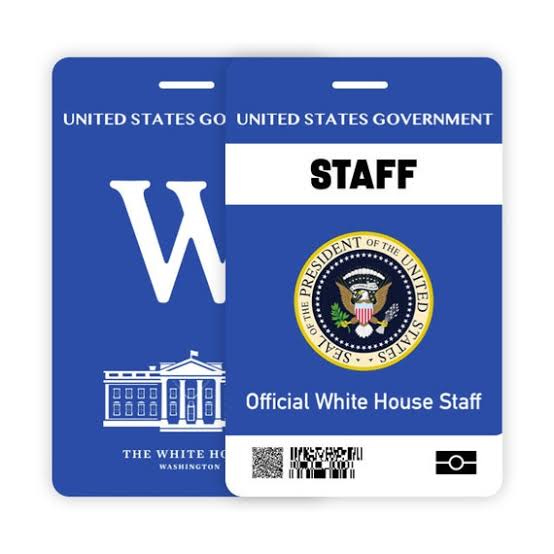
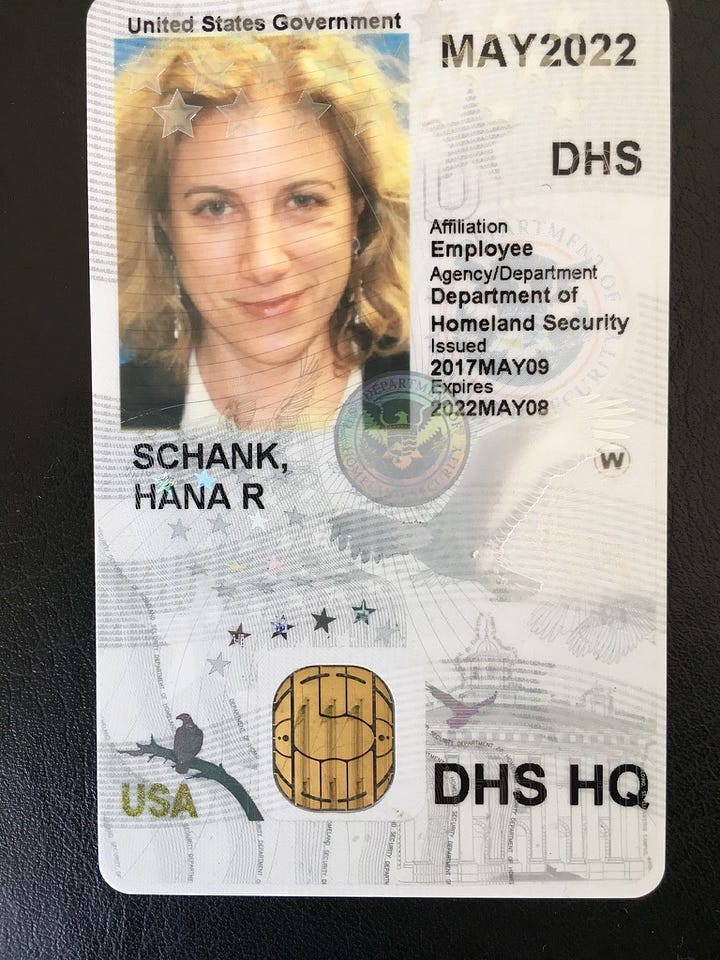
But at USDS, I was also reminded of everything I hated about politics. I hated the competition over power as demonstrated by badges. A blue badge meant you had access to the White House and the Eisenhower Executive Office Building (EEOB). A green badge gave you access to the EEOB, but not the White House. Both badges were enviable. My badge got me into DHS Headquarters but not the White House or EEOB, so I had to contact someone with a Blue or Green badge to enter the White House grounds, and on and on, turtles all the way down.
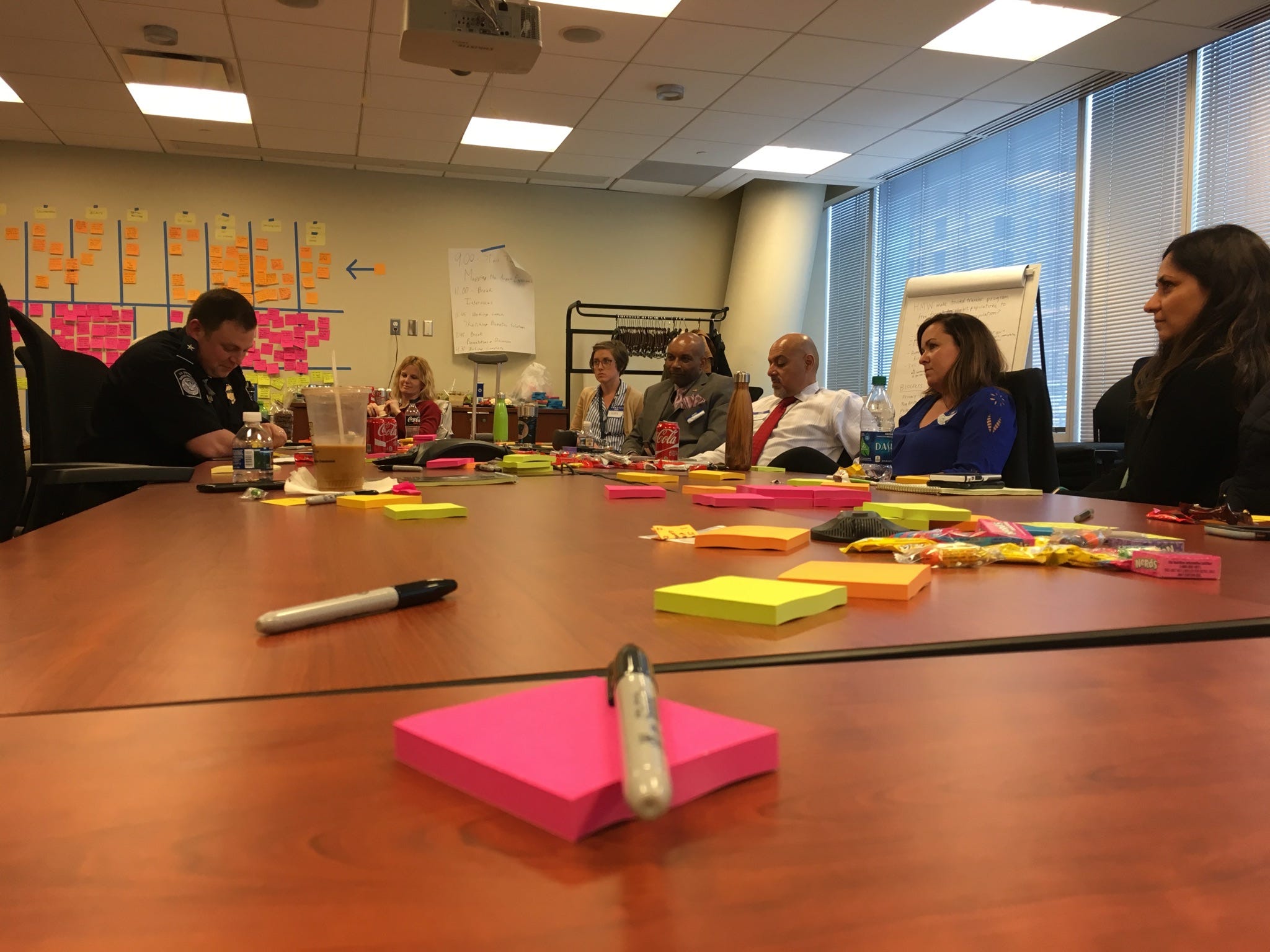
Outside of New York, politics and government is also not very Jewish. USDS was no different. There was one other Jewish woman about my age who was also a parent — we bonded immediately as two Jewish women in a very not-Jewish field. There were a few crypto-Jews, people with Jewish names who practiced no Jewish rituals. But mostly at USDS I was reminded why I lived in New York, where I could swear in meetings, use Yiddish expressions and take Jewish holidays off without using up my vacation days. Accordingly, at USDS I came to be know as the New Yorker. I knew this was code for New York Jew, but I’d spent much of my life as the New York Jew in the room, so I just shrugged, took my holidays quietly and moved on.
In addition to being older, poorer, more semitic and more female than most of my colleagues, I was also not a political neophyte. Many of my coworkers were Obama acolytes the way I had been a Clinton stan in the ‘90s. Some worked on his election campaign. I hadn’t voted for Obama in the primary, and wasn’t necessarily fired up and ready to go. I still thought political campaigns and government were disgusting, while many of my colleagues seemed to think we lived in Candyland.
One woman frequently cursed the DHS team’s existence at staff meetings, because DHS housed ICE and ICE shouldn’t exist. Others were bothered by the creation of a digital team for the Defense department, because war is bad. In these moments I found myself wondering, where did people think we were?

The White House was a seat of government, and governments do uncomfortable and often terrible things. Were people not familiar with history? Had they not heard of Vietnam? Did they not know the United States government fomented revolution in Central America, ran a secret bombing campaign in Laos, changed immigration laws to prevent Jews from immigrating during World War 1 and opted not to take in Jewish refugees during the Holocaust?
And yet, should we not have an army? Should we not have borders? What a privilege to think government was all unicorns and free healthcare. Clearly no genocidal socialist fascist governments in their family histories!
Aside from the USDS-ers living in a fantasy role playing game, I found a lot of my coworkers to be smart, insightful, and caring. I loved the agency’s guiding ethos: any problem was solvable if you thought about it the right way and pushed the right levers. The way USDS prioritized projects made my heart sing: to effect the most change for the greatest number of people, with the greatest need.
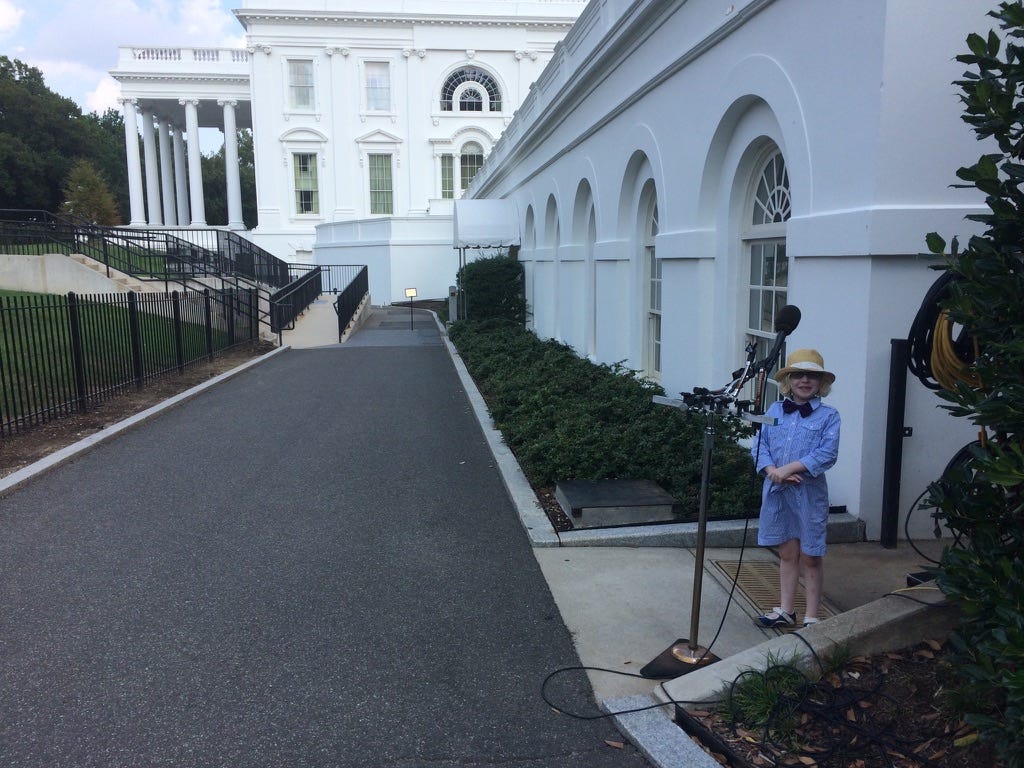
After the surprise outcome of the 2016 election, I expected such a smart group of people would want to understand what had happened. Our jobs were about understanding the unexpected. Surely people would want to pick apart why the US electorate had just voted against their own interests to put a reality TV star in the White House over a woman who was perhaps the most qualified presidential candidate in recent history.
Instead, the Democrats concluded the electorate was an ignorant sexist piece of shit. I know this because right after the election, I went around DC trying to get funding for a “What the hell just happened?” project. I wanted to understand why people voted against their own interests, or didn’t vote at all, and how the Dems had so badly misunderstood the electorate. But no one wanted to fund a deep dive into what had gone wrong. The voters were assholes, that was what was wrong. They needed to be educated to vote correctly, and the best way to do that was to pretend the 2016 election had been a bizzare aberration rather than a harbinger of things to come.
Soon after the election, people began leaving USDS. My 27-year-old boss quit first, followed in rapid succession by a size-able portion of the organization. That is: the people who could afford to quit did. The rest of us, having left the private sector and spent a year working in government, struggled to find new jobs where we’d wait out the Trump Administration and then go back into government. I stayed through the Trump transition, hoping that good work was still possible. I applied for a leadership role at USDS and hired a schools consultant to help me figure out how to relocate my school-aged kids to Washington, DC.
After I found myself in a project planning meeting for the border wall, I began applying for jobs. It seemed unfair that USDS had lured us into government under the guise of doing one kind of work, only to abandon ship as soon as the leadership changed. But again, these were not people who deeply understood government or politics. They understood technology and imagined that when combined with government, you could create beautiful services for Americans. They trusted Obama implicitly. And their families had never been massacred by well-intentioned patriots led astray by an immoral government.
It couldn’t be that all these smart people were wrong, could it?
Coming Next: The insurrection, border security and Black Lives Matter — what the Democrats were actually doing during the Trump administration
Comments
Nothing yet. Say the first thing.
Sign in to join the conversation.