
The day after Donald Trump was first elected to the highest office in the land, in 2016, I attended a scheduled field trip to Camp David with colleagues from the Obama White House. It was supposed to be a celebratory trip following the election of our nation’s first woman president. Instead, everyone was bleary-eyed and nauseous. As the bus pulled away from Lafayette Square and began the drive to the Maryland hills through a morose, sobbing rain, I heard muffled retching from the back of the bus. The sky cried with us.
Camp David is styled like your imaginary old-money friend’s ancestral family hunting lodge, with rustic individual cabins and a humble, inviting coziness. It is the most American of retreats, welcoming visitors to the calm of our nation’s inner beauty, all needs met by the US Army and the Secret Service, sensible wooden furniture, American flannels and plaids. Most people spent the day at the bar, but I dragged a younger friend to see the room where the Camp David Accords were signed.
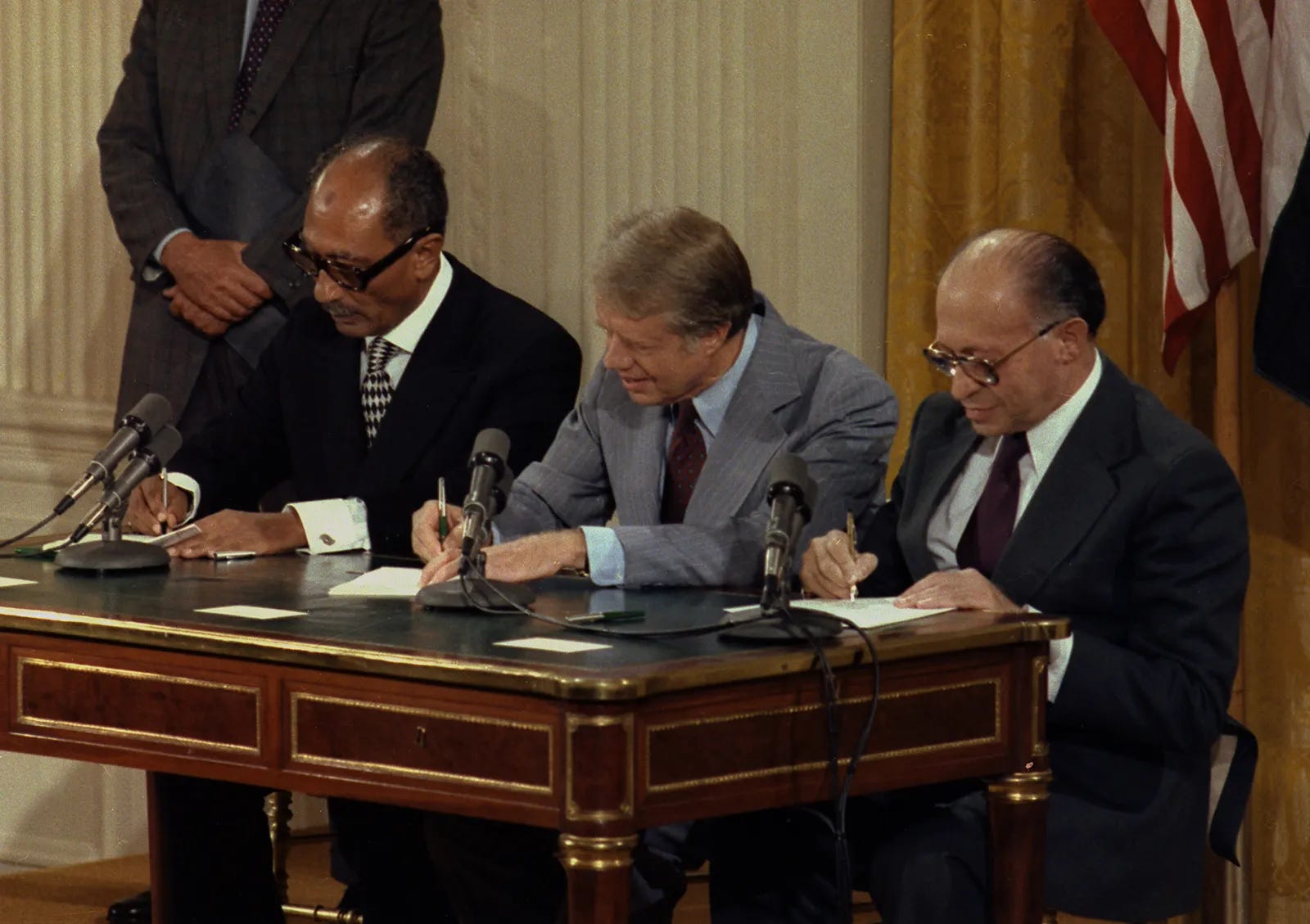
“What’s that?” she asked. I felt old, irrelevant, and Jewish. I didn’t know I was seeing the tip of something much bigger and more sinister, so I pushed it aside.
Soon after, much of USDS exited into the corporate sector or quit. But I wanted to keep doing the work I’d been doing - projects that benefitted large portions of the American population, modernizing and improving government for future generations, shoring up democracy so refugees, immigrants and historically marginalized people — a group which I assumed included Jews — would continue to be safe in America. This work was too important to leave, no matter the cost. Because I understood something important about the United States that I hadn’t know before USDS.
Our institutions were frail. Our government was old and unresponsive. Most government agency goals were disconnected from what Americans actually needed in the 21st century. Building new anything in the public sector was like turning the Titanic and cost bajillions of largely squandered dollars. Trust in democracy was at an all time low. And as Jen Pahlka, the first CTO of the US and founder of Code for America has said in talks and at events: No one is coming to fix the government. It’s up to us.
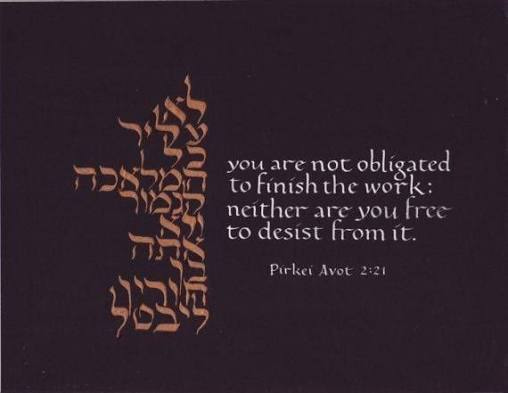
I thought about that sentence a lot, and still do. It resonated deeply for me, because my family and cultural history taught me no one is ever coming to save the Jews. In the Mishnah (the oral laws that accompany the Torah) Rabbi Tarfon writes, “You are not obligated to finish the work; neither are you free to desist from it.” That is: it’s not all on your shoulders, but do what you can to repair the cracks you see in the world
.Now that I’d seen the cracks in government, I couldn’t look away. Billions of dollars spent keeping tech companies in business and government systems only semi-functional, with no one willing to stand up to Big Tech or try a new approach. Decision makers who barely understood how to use an iPhone let alone build a system with a possible user base of 18 Million Americans. An employee at an immigration processing center who printed out the same form and then scanned it back into her computer multiple times a day because she didn’t know how to save files as PDFs.
In the end, I received three offers. One from IBM, where the tatted-up VP making the offer described the work, then paused and said, “I just bought a weekend home in the Catskills.”
And two from non-profits where I would not get a weekend home, but could continue the work I felt called to do. One offer meant moving my family to Baltimore. The other meant I could stay in New York. After a year of commuting on Amtrak, I wanted to be with my family in our home.
So I took a remote Think Tank fellowship, along with a handful of other Obama alumni still reeling from Trump’s inauguration. The work we’d expected to continue into a Clinton administration had abruptly ended, landing us at this carpeted, modern office on 15th Street rather than the dingy rooms of the West Wing, or click-clacking through the cavernous halls of the Eisenhower Executive Office Building.
Part of my fellowship was to report stories for national outlets on how “the work” was continuing in unexpected locales. My aim was to show how local governments could solve hard problems, like blight or homelessness. The idea was that in government, complex processes were often hamstrung by small, sometimes ridiculous roadblocks, and a lack of tech-fluency. Once you recognized this, you could identify the roadblocks, remove them, use Google Sheets instead of buying some terrible overpriced system you didn’t need, and finally get people the help they needed.
Not long after I started, trouble arrived. I profiled three local government officials who were doing “the work” for a large business magazine. And, I’d found subjects who checked my personal boxes for both the change I wanted to see in the world, and the change I could squeeze into a magazine article. Two of the government leaders I profiled were women, one of whom was over 50. In addition to continuing to evangelize “the work,” I also hoped to demonstrate to Obama World how to tell wonky stories to regular people. So I shared the article with an email list of Obama alumni, expecting they’d be pleased to see “the work” in a big magazine.
Instead, my boss and I immediately received an email from a woman in the group who was disappointed — frankly, she was offended — that there were no people of color in the article. The offended woman was a Midwestern bright-formica-White, so American she was named after a Great Lake. She was addressing me as a fellow White woman. But my life had not been that of a White woman the way hers had. She probably grew up in a town named after a pioneering fore-bearer who arrived in a wagon. Her father owned the town lumberyard and served as county clerk. Her mother was president of the Make America Beautiful club. Their July 4th barbecue was legendary. As a Jew, I had none of that in my background, yet I didn’t count in Great Lakes’ accounting. I said nothing.
The email was the first nick in what, over the next five years, would come to feel like death by a thousand paper cuts. A few months later, I was asked by the Tank to find a solution to a problem of their own making. Many projects at the Tank culminated in a panel discussion where people shared their research findings. Following Black Lives Matter, the Tank banned all-White panels. It didn’t matter if they were all-female. We were past Me Too and onto Diversity, Equity and Inclusion. Women were out, People of Color were in. I was on an upcoming panel featuring research I’d conducted with a white woman from Texas. If the panel only featured the two of us, it would be too many White people.
“Oh that’s ok,” I said, ready to out myself as a Jew at work for the first time in 28 years. Maybe times had changed. “I’m Jewish.”
For a few seconds, I felt a spark of hope that — for the first time ever — identifying myself as Jewish was going to result in something good.
“Unfortunately,” my boss said, “that counts as White.” She shifted uncomfortably as she explained my own identity to me.
“You know,” she added. “Because…” and then she trailed off.
..because Jews are doing just fine in the world? Because we control the banks and the media and are puppet masters orchestrating a new world order? A quarter of my family had been murdered specifically for not being White, so the news that I was now White was shocking.
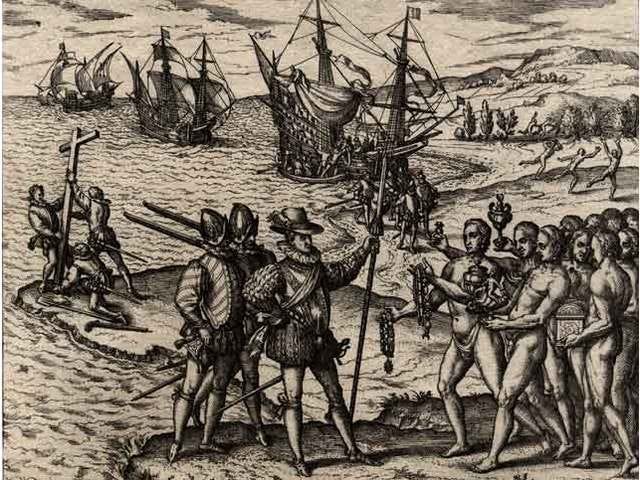
“I’m not sure I really count as a person of color, to be honest,” she said, trying to laugh it off. My boss was a very fair-skinned Latina — if not for her name, I would have assumed she was White. Either way, she was quite obviously descended from Spanish Colonizers. But no one cared about that. She counted and I didn’t.
I absorbed the fact that my ethnicity had been decided for me in a way that felt, to use the parlance of DEI, marginalizing as fuck. I was White? I wondered which equity committee at work made that decision. Had there been any Jews on it? Probably Barry, the Boomer CFO, and now that I thought about it, one of a surprisingly small number of Jews at the Tank, given the number of Jews in the universe who are Tank-qualified. Don’t-make-a-fuss, nothing-to-see-here Barry probably said Jews were White. Obviously we’re White, because the people who hold the power in this country are White, and Jews hold all the power, because … you know.
I’d spent my entire life passing as White, because I had been raised to believe that being Jewish would be a hindrance, and Whiteness was required for success. But people were rethinking America, and along with it gender norms and race. But somehow, Jewish was still not the thing you wanted to be.
Of course, all identities were invited on this DEI march to the future, as long as Jews agreed they were White oppressors. Jews who identified as anything else were not welcome in the future.
The day after the 2016 election, when I told my then-friend about the Camp David Accords, I ignored the very obvious thing she was telling me about the future of my place in America.
“Funny story,” said my friend, as we read about the lasting peace established between Israel and Egypt in the very room where it happened. Before the US opened their doors to her family, my friend said, Israel welcome them with visas and jobs. They’d moved there from India for a few years and her sister was born in Israel, while awaiting American visas.
She’d never mentioned it, because Israel wasn’t something you brought up in polite society. I thought this was because Israel was complicated. I didn’t understand she’d saying that Israel helped her family before the United States did wouldn’t have been prudent for her career or friendships. Soon after I evacuated my son after 10/7, this woman shared pictures of herself and her toddler waving a Palestinian flag at a Free Gaza rally.
“So proud my daughter can see people standing up for the rights of brown people,” she wrote.
I was prepared by then, because other White House and Tank colleagues had already praised the attack, while I was monitoring Israeli airspace and scrambling to evacuate my son from his gap year in Tel Aviv to safety.
But we’re not there yet. First, we need to about how after Black Lives Matter, I watched Progressivism, and the Tank, rot from the inside.
I will be pausing publication through the end of the month as we head back to Israel for the year. Wishing everyone a peaceful end to your summer, may you find a shady spot to sit in and enjoy the view.
H
Comments
Nothing yet. Say the first thing.
Sign in to join the conversation.