
Last month, I saw Washington DC-based jazz punk band The Messthetics in Toronto. Joining me was my usual live music companion the jovial RB. Along for the dad’s-night-out ride was our special guest my 20 year-old daughter, affectionately known to me as LD, just back in town after her year studying biology out East. The Messthetics are an instrumental trio, but on this tour they were showcasing their new Deface The Currency album, a collaboration with added fourth member, Howard University-trained saxophonist James Brandon Lewis. But what pulled me to them in the first place was the fact that the bassist and drummer from the band first played together in the much beloved post-hardcore punk act Fugazi, fronted for some twenty years by fellow Washington DC resident Ian MacKaye.
I grew up in suburban DC-Maryland in the Eighties and have deep fascination and affection for anything related to the area’s indie punk scene. Back then, it was all Morning-in-America, the cold war, family sitcoms and Miami Vice. The big book was Bonfire of the Vanities and hit bands like the wretched Dire Straits gesticulated toward the isn’t-it-ironic with made for MTV songs like “I Want my MTV.” The mainstream actively repelled me—an aspiring writer, the son of Eastern European Jewish immigrants, and a fish out of water Canadian suddenly living his life in the centre of Ronald Reagan’s USA.
But I digress…In high school I started to write poems and stories as well as my own angry songs to be bellowed in the basement at all hours of the night. I was having my own sort of punk rock awakening. Alas by then I was too late to fully tap into the DC punk scene that I didn’t really discover until it was already disappearing on the horizon like a Soviet satellite exploding over a still Siberian night.
Nevertheless I did manage a few notable trips downtown where I found a different DC hiding in the long shadows cast by the government buildings and their counterpoint, the areas of Northwest Washington I was forbidden from stepping foot in. I saw punk rock played in an alley between buildings, bring your own beer, plop yourself down on a milk crate if you need a break from the moshpit. I managed to see Jim Carroll read/play his poetry at dcspace, got into the 9:30 Club to see some of my then heroes play live (Billy Bragg, Bob Mould) and skipped out of school to get my Life is Hell book signed by a pre-Simpsons Matt Groening.
But when I couldn’t get myself to DC—which was most of the time—the default was the only “cool” place nearby. About 15 minutes drive from my house, at the farther end of the vaunted Rockville, Maryland shopping strip, sat a record store by the name of Yesterday and Today. To be honest, I’d semi-forgotten about the place until I started reminiscing to RB and LD about my Maryland days, lamenting my too little too late attempts to tap into the punk rock scene.
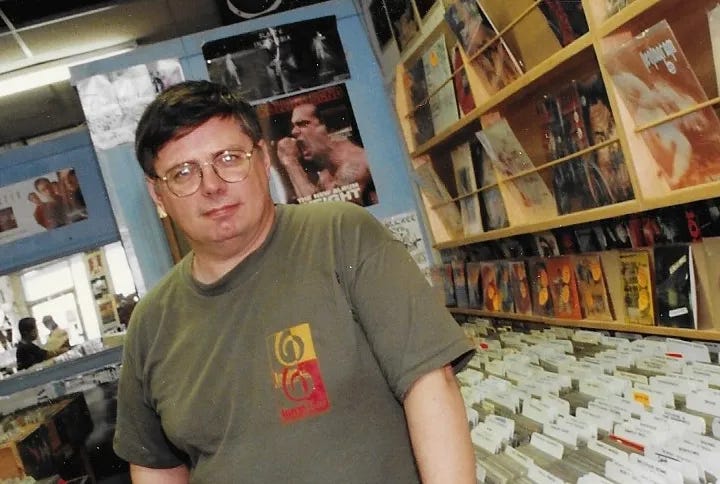
Yesterday and Today, could it really have existed? A punk rock record store on Rockville Pike? I remember it was smack in the middle of a strip-mall. The strip-mall’s main attraction was an Entenmann’s factory outlet. Entenmann’s is/was a famous brand of baked goods best known for its soft chocolate chip cookies and its chocolate dipped donuts. The factory outlet sold two-for-one and, weirdly, insisted on wrapping up your double purchase by inserting the whole thing into a machine that bound them tightly in white string, a kind of anachronistic old timey branding that gave you the feeling of emerging with the products of a bygone era.

Yesterday and Today was the opposite: you entered stuck in the past but found yourself emergent; behold the bustling future! Thousands of 45s, LPs, posters and more spoke to possibility, discovery, the urgency of now. Time in the record store washed away the laugh tracks, the corporate bottom lines and the sensitivities of Tipper Gore. I browsed for moody accoutrements to hang up in my bedroom, ogling a mind-bending array of posters featuring the music I most loved back then—moody UK stuff like The Smiths, New Order, Echo & the Bunneymen plus their American counterparts like The Feelies, R.E.M., Guadalcanal Diary, Wall of Voodoo. I drooled over posters, but I also listened. In Yesterday and Today the soundtrack was often local punk rock of the kind that I had never heard before. Bad Brains, Minutemen, Minor Threat plus the occasional appearance of local legends like The Slickee Boys and the like.
After the Messthetics played, I got in line to buy the vinyl and compliment the band on a great set. The three of us were buzzing. Like all punk rock, The Messthetics experience is better live. On stage, you can really feel the way the tight lines of bass guitar and driving drums compress the flights of grunge-jazz guitar and saxophone feints at melody into something compact and urgent. Give the song “Gestations” a listen on the new Deface album to hear a great example of this. Song starts off like it could be a track from In on the Kill Taker, then moves into a totally new, but still more or less punk-esque, direction.
But I digress….I approached The Messthetics and bought my album. I told the mild mannered, bespectacled drummer Brendan Canty that I spent my formative years in Rockville. He immediately brought up Yesterday and Today, noting he used to work there. I was floored. The drummer from Fugazi used to work at the place where I spent hours flipping through amazing LPs you could otherwise only get in Europe? Turns out that half the punk scene of DC worked in Y&T when they weren’t touring tiny venues up and down the eastern seaboard. Writes one musician who worked at the store on and off in the Eighties:
Skip didn’t expect much of us, but he loved being around people who made music. We loved being influenced by all the amazing records we listened to in the shop and took home to play for our friends and bandmates. At Y&T, it was common to be waited on by the person whose picture was on the record you are buying. That could be intimidating, but it cemented in my mind the idea that this is a community we are all part of.
Community. That word pops out because though I didn’t know it at the time, an artistic community was very much something I wanted to be part of. The kind of community that Skip Grof fostered at his ramshackle record store, employing punk rockers half his age and even helping them to release their own records.
It was to Skip that Ian MacKaye turned to when he wanted to independently release a record by his first band, Teen Idles. He advised MacKaye on how to go about it and, as MacKaye writes, “In December 1980, the Teen Idles’ “Minor Disturbance” E.P. (an eight-song 7”) was released. This was Dischord Records #1.”
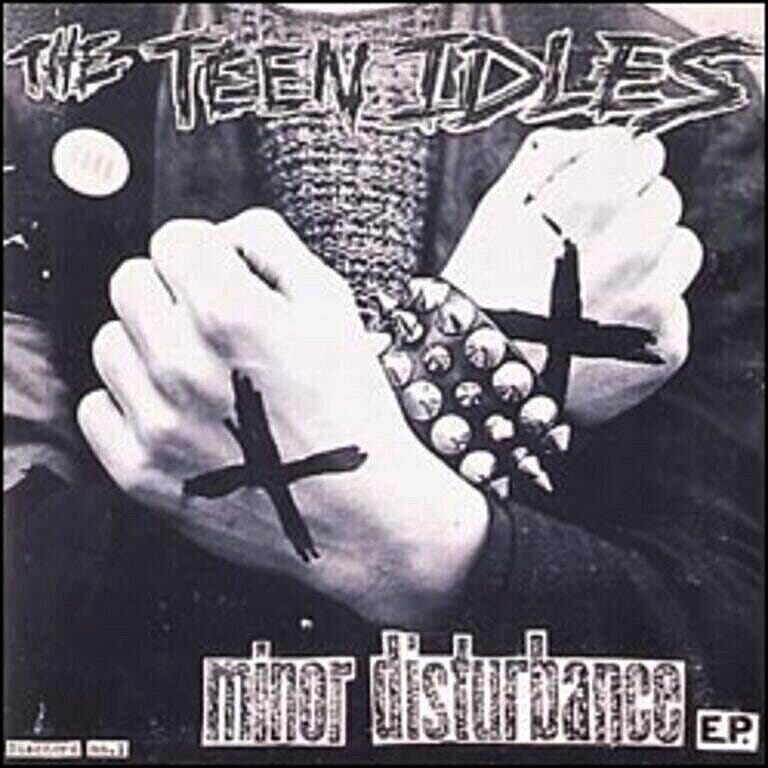
MacKaye would go on to run the Dischord record label for decades, releasing thousands of albums. After he moved out of his parents’ place, the label’s headquarters was a bungalow in Arlington, Virginia. In this modest house just across the Potomac River, a stone skip away from the centre of global power, punks lived, passed through and held basement practices. They also ran Dischord, mailing vinyl out to the surprising large number of people who, like me, dreamed of burning it all down, one insipid Casey Kasem top 40 hit after another.
I didn’t know any of this at the time. I didn’t know that Y&T was connected in any way to the DC punk scene I very badly wanted to be a part of. Hanging out in the store was the closest I’d ever be. But from a yearning distance I must have absorbed the key message. (Or maybe it was just some kind of weird osmosis from repeated listening to Repeater.)
All I can say is that first chance I got, I started my own magazine of underground writing and publishing. I ran it for twenty or so years. I was unwittingly following the MacKaye/Yesterday and Today playbook. That bigger lesson I somehow managed to learn: resisting the mainstream meant doing it yourself; it meant building other, better things. It meant that if you yearned for it and it didn’t exist you could will it into the world with your sweat and labour and commitment. So that’s what I took away, I suppose. I put my energy into a real alternative to the things I didn’t like, the things I didn’t see around me that I very much wanted to.
In those early days, I would send the glorified zine to all the small indie record labels that still thrived across the US and Canada. One day, I got a letter back from Dischord. There was complimentary note, artwork for a half page ad to run in the next issue of Broken Pencil, and a cheque for a few hundred dollars. I was shocked and moved. I’d done it. I’d made it to the big leagues.
No posts
Comments
Nothing yet. Say the first thing.
Sign in to join the conversation.