
“You look different.” I’ve heard that a lot since coming back from the Hoffman Process. And for the first time in a long time, I feel different too.
I first heard about Hoffman from my friend Jeff over coffee two years ago. He mentioned it was a personal development retreat that helped him unpack the patterns he learned from his parents, and how transformative it was for him. I brushed it off: Sounds great for you, but I don’t need that right now. I was wrapping up my second maternity leave, getting ready to go back to work.
As I’ve shared previously, my second transition back to work was difficult. I was dealing with postpartum depression, and going back to work triggered imposter syndrome in a way I had never experienced before. I questioned whether I was cut out for this, contemplated quitting, and constantly felt like I was failing at everything.
I started sharing my struggles more publicly and realized there were no great solutions for managing this phase. Unwilling to accept “it’s just hard” as the answer, I ended up leaving my product leadership role to start my company, Momentum Rising, to help moms navigate this transition.
Building my own business brought out so many patterns that had previously served me but were now getting in my way. From the start, I felt pressure to meet financial milestones to make it feel like leaving my corporate job was “worth it”.
When I launched my first group coaching program, I realized how much I relied on external validation to prove my value. How hard it was to feel like I was doing a “good job” without the feedback of a title or promotion or praise from my manager. How much I cared what other people thought of me and how much energy I spent trying to manage my image, especially as I build a founder-driven business.
This zero to one stage in particular, where I’m investing in the growth of the business and not yet making a steady salary, also brought up my complicated relationship with money and how the fear of losing it was making it harder to take risks.
I knew intuitively that these patterns were rooted in my childhood. How moving from Ukraine to America at age 7 was, in hindsight, a life-altering event. I’ve become more aware recently that growing up as an immigrant, and struggling to adjust, make friends, and fit in, left a deep wound and a belief that I don’t belong.
But I didn’t know how to heal from this trauma, and I was frustrated that I couldn’t seem to move past it.
Hoffman started coming up through people in my network who had benefitted from it. When a trusted executive coach suggested it, I knew I wanted to try it myself.
One of the reasons I wanted to attend was because I wanted to feel more confident in myself and my professional abilities. But the thing that tipped me over the edge was noticing how I was showing up with my parents, partner, and kids. Snapping at my mom when she gave me well-meaning advice. Getting frustrated when my girls were taking too long, being impatient and losing my temper. Getting defensive and judgmental with my husband.
I wanted to be less reactive and to become a better version of myself.
Over the last decade, I’ve done a lot of inner work. I’ve participated in group coaching programs, worked with executive coaches, and sat a 10-day Vipassana retreat in complete silence.
Each experience challenged me in its own way. I felt uncomfortable, stretched, and pushed to my edges. They all helped me get better at noticing my patterns, becoming more mindful of my reactivity, and practicing new mindset shifts.
But Hoffman was different. There is something about being fully immersed in an experience, completely offline for seven days, with nobody to worry about but myself. (Side note: as a parent, it was also strangely relaxing to not have to take care of anyone else for an entire week - they even cooked all the meals!).
After a week without my phone or the internet, my nervous system calmed down. I learned so much about myself through witnessing the bravery and struggles and wisdom emerging from the 37 other people in the group.
But what surprised me most was that I came out feeling incredibly proud of my Ukrainian heritage.
One day during breakfast, I heard the sound of women singing a beautiful Ukrainian folk song. It seemed to come out of nowhere. The voices were raw and haunting, almost wailing at times, carrying centuries of grief. Nobody around me seemed to notice, but to me it felt completely real.
Something compelled me to put down my oatmeal mid-bite and walk out of the cafeteria, outside the building, up the hill, and into one of the tents. Once alone, I collapsed onto the floor and sobbed for Ukraine. I cried for my country, my ancestors, and my family. It felt as though years of shame, anger, and sorrow were finally moving through me all at once.
When the tears finally stopped, I felt an incredible sense of relief.
I'd spent the last few decades feeling ashamed of being an immigrant and hiding my background. The war in Ukraine, which started two months after my daughter was born, suddenly brought back those memories I’d worked so long to avoid. It reminded me where I come from and the parts of myself I had spent so long trying to forget.
Becoming a mother, navigating any major transition, has a way of surfacing every old wound and question about who we are and whether we’re enough. During the process, I was able to face the fears and challenges from my childhood, and finally let go of the belief that something was wrong with me.
Now I see that there is nothing to be ashamed of. That my heritage, my upbringing, and my unique challenges are part of what make me who I am. And that the little girl inside of me doesn’t need to try so hard to fit in anymore, because I am already enough.
I feel inspired to bring my Ukrainian heritage to my children, to teach them where they come from. I feel gratitude and compassion for my parents for their courage to move to another country, start a new life, and raise me amidst so much uncertainty. And though my heart still grieves for Ukraine, I feel a deep inner knowing that I will one day visit my homeland with my daughters.
The best way I can describe it is this: I finally came home to myself.
Even though it’s only been a few weeks, I genuinely do feel different.
I feel more connected with my parents and my Ukrainian heritage. More patient and playful with my kids. Gentler and kinder with my husband. I’ve taken a few risks, personally and professionally, and had some tough conversations I’ve been avoiding for years. Some of the things that used to really bug me just… don’t anymore.
I’m able to slow down more, disconnect from my stress, and be more present. One of my commitments coming out of the process is to write a book, and I’ve been journaling every day without any goal in mind other than to write for fun.
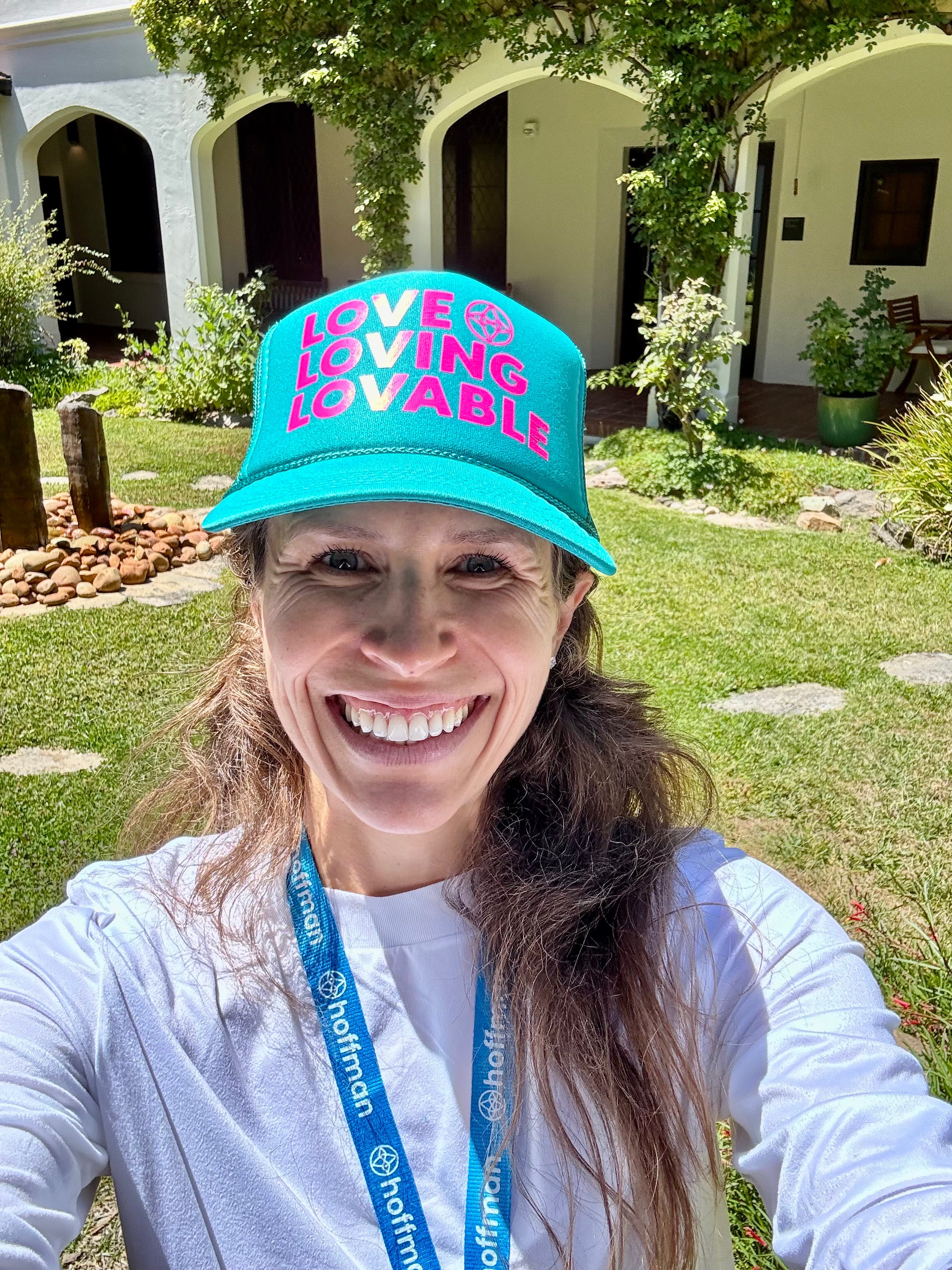
Most importantly, I trust myself more. I trust that despite all the doom and gloom on the internet, my family and I will be okay.
Because for the first time in 38 years, I truly believe that I am lovable. Not because of what I’ve accomplished or how productive I am or what I can do for other people. Just because I am.
Now, I will admit that I’m not suddenly a completely different person. I still have patterns, make mistakes, and get triggered. But the biggest difference is how I talk to myself when I have a hard moment.
My inner critic, who used to yell at me to push harder and tell me that I’m a failure, that I’m broken, is much quieter now. And in its place is something new: a deep belief that I am worthy of love exactly as I am. More than anything else, that's what feels different today.
So many of us say we want to change. We want more confidence at work. We want to be better parents and partners. We want to be kinder to ourselves.
But that kind of transformation takes hard work. It means making the financial investment, yes, but also making the time to be away from work and family. And if you’re a caregiver, it means asking someone else to handle your responsibilities while you’re gone.
It means facing the stories you’ve been carrying around for decades. Naming your fears out loud and deciding that your old wounds don’t get to define you. And finally admitting to yourself that the current way of living is not working anymore.
It’s challenging work. But if you find the courage to do it, I believe what awaits on the other side is worth the sacrifice.
The Hoffman process was deeply painful for me. I did some of the most intensive work I’ve ever done, physically and emotionally. And I think that’s what it takes to finally change the unconscious patterns that have been steering your life.
I came out of it feeling more grounded, more connected to myself, and more at home in who I am. More than anything, this experience reaffirmed why I started Momentum Rising: to help women navigate one of life's biggest transitions with more courage, self-compassion, and trust in themselves.
If you ever have the opportunity to do the Hoffman Process, I hope you say yes. You might come back looking exactly the same, but feeling completely different.
Namaste,
Tamara
PS - If you've done the Hoffman Process or another experience that helped you come home to yourself, I'd love to hear about it.
Comments
Nothing yet. Say the first thing.
Sign in to join the conversation.