
I could practically feel the sun on my face. It was another 60-degree “summer” day in San Francisco, but I was daydreaming about our upcoming family trip to Hawaii.
I started thinking about beach days, dinners outside, and the summer clothes tucked away in the back of my closet.
What was I going to wear?
I hadn’t looked at my summer clothes in a year. Did I already have enough, or did I need anything before the trip?
As I started mentally packing, I realized I always make the same mistake. I overpack...and then somehow arrive feeling like I have nothing to wear. I wanted this trip to be different: wear more of what I already owned, pack less, and only shop if I actually needed something.
Around that time, a friend mentioned she’d uploaded her wardrobe into AI so it could create outfits from the clothes she already owned. I thought, That’s brilliant. I should do that for this trip.
So I spent a few hours photographing my clothes and asked AI to build me a capsule wardrobe.
Then I had another thought.
Outfit planning is visual. I wanted to compare looks at a glance instead of scrolling through a chat, so I built a simple drag-and-drop planner.
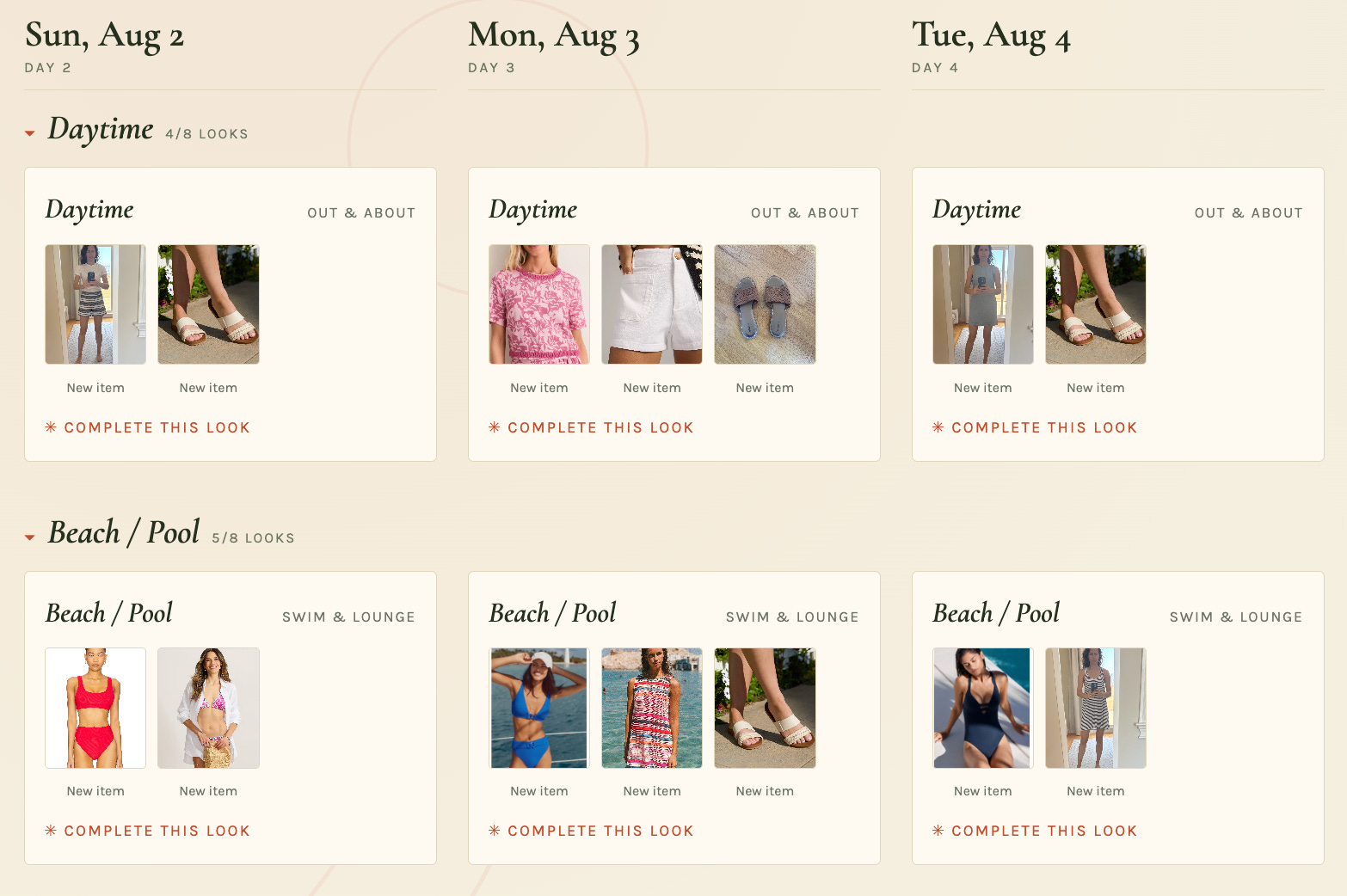
Once I started, I couldn’t stop. I connected my wardrobe to our itinerary so every outfit matched an activity. Then I turned it into a packing list, built one for my kids, and kept automating every travel headache. By the end of the week, I’d accidentally built a family travel operating system.
Below are the 26 prompts and workflows that came out of that experiment.
Note: Each prompt below is intentionally simple. Let AI ask follow-up questions, refine the results, and adapt them to your family's needs over time. And chances are, only a handful of these will matter to you. Focus on the recurring tasks that take the most time or create the most stress. That’s where you’ll see the biggest return.
I highly recommend creating a dedicated Claude Project for your family (you could also use ChatGPT Projects). It's a little more work upfront, but it turns these prompts into a repeatable system you'll reuse on every trip.
💡Tip: Use Wispr Flow to speak your answers out loud (and for dictating any future prompts or feedback) - it will be much faster than typing everything out.
Prompt
I want you to be my family’s dedicated travel planner. Before planning our first trip, interview me one question at a time until you have everything needed to make consistently great recommendations. Use what you already know, then efficiently fill in the gaps about who’s traveling, our travel style, budget, home airport(s), loyalty programs, food preferences, sleep schedules, packing habits, decision-making preferences, and recurring constraints. Ask follow-up questions only when they’ll meaningfully improve your recommendations.
Then summarize everything into a reusable Family Travel Profile that you’ll use as the default context for future trips. Treat it as a living document: update it as you learn our preferences, remember what worked, and only ask follow-up questions when something changes or a trip has unique requirements.
1. Book the smartest flight
Flights are usually the biggest expense of a family vacation, so it’s worth spending a few extra minutes getting the booking strategy right. Instead of manually comparing points, miles, and cash prices, find the best approach for your constraints.
Prompt
Using our Family Travel Profile, recommend the best way to book this trip. I’ll provide our destination, travel dates, loyalty balances, credit cards, and travel benefits. Find the best flights and payment strategy (cash, points, miles, travel credits, companion passes, or a combination). Consider point value, fees, perks, transfers, and flexibility. Constraints: [nonstop flights only, departing 9 a.m.–3 p.m. and arriving by 5 p.m. local time]. Rank the top three options and explain the tradeoffs.
2. Compare your lodging
Picking a place to stay gets a lot more complicated with kids, because now you’re considering questions like “Can a pack and play fit in the bathroom?”. Evaluate your lodging options based on your family’s needs, considering things like kitchens, laundry, sleeping arrangements, walkability, and budget.
Prompt
Compare the best hotels and vacation rentals for this trip. Consider our budget, travel style, kitchen needs, laundry, sleeping arrangements, walkability, and amenities. Recommend the best options and explain the tradeoffs.
3. Import your reservations
Once everything is booked, pull all your reservations into one master itinerary. The easiest way to do this is to connect Claude to your Gmail so it can automatically pull your travel details. If you use Superhuman, its AI search functionality is surprisingly effective - use it to find all of your reservations before importing them into Claude.
Prompt
Find every email related to my trip to [DESTINATION] and create a master itinerary. Extract flights, hotels, rental cars, activities, confirmation numbers, addresses, check-in instructions, cancellation policies, and anything requiring action before departure.
4. Explore your options
Once the logistics are booked, it’s time for the fun part. Instead of scrolling through endless blogs, use AI as your personal travel guide. Beyond the obvious attractions, it can uncover the places families tend to love most - calm beaches, neighborhood playgrounds, easy hikes, rainy-day backups, and other local gems you probably wouldn’t find on your own.
Prompt
Research this destination for our family. Organize recommendations into beaches, kid-friendly activities, hikes, rainy-day options, and hidden gems. Explain why each recommendation fits, suggest where it fits naturally into our itinerary, and flag anything that should be booked in advance.
5. Build your restaurant shortlist
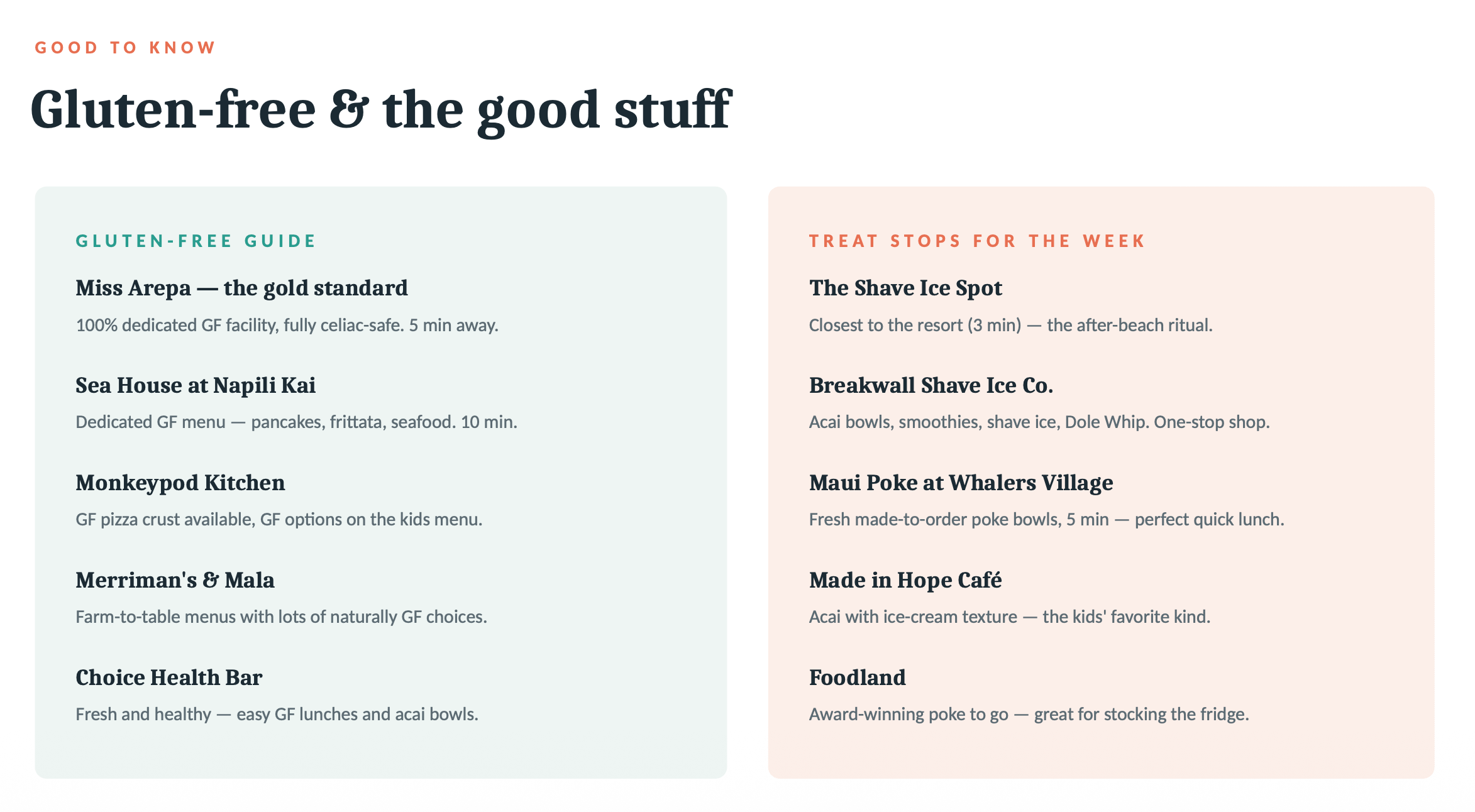
Every time we travel, the first thing I research is where we’re going to eat. Since I’m gluten-free, I can’t just wander into the nearest restaurant and hope for the best. I prefer starting the trip with a curated list of restaurants I already know will work.
Prompt
Using our itinerary and destination research, create a personalized restaurant guide organized by day and location. Include one reservation-worthy restaurant, one casual family-friendly option, one breakfast or coffee spot, and one backup option that accommodates our dietary needs.
6. Plan a date night
One thing my husband and I always prioritize on vacation is one kid-free night together. We find a trusted local babysitter, then plan a great meal or memorable experience, something we’ll both remember.
Prompt
Using our preferences, help us plan one kid-free evening. Research trusted babysitting services, recommend nearby restaurants or activities that fits our budget, and identify anything we should reserve in advance.
7. Design your itinerary
Once you've picked your experiences, it's time to build the itinerary. One lesson I’ve learned from 4+ years of traveling with kids: don’t over-schedule. I aim for one anchor meal or activity each day, then keep the rest of the day flexible.
Prompt
Using our destination research, restaurant guide, and chosen activities, build a realistic day-by-day itinerary. Plan around our schedule and pace with one anchor activity each day, intentional downtime, and backup plans for weather or changing schedules.
8. Book the remaining details
I always think I’m done planning until I realize there’s one final step: actually making the reservations. I always underestimate how much time that takes. Instead of mentally keeping track of it all, audit your itinerary and create one consolidated list of everything that’s still left to reserve.
💡 Tip: This is the kind of task list that’s perfect to hand off to a service like Duckbill. Have them track how far in advance the restaurant opens its reservation system, call the hotel to ask if they provide cribs to rent, email the spa to request a couples massage, etc.
Prompt
Review our finalized itinerary and identify every reservation, ticket, babysitter, restaurant, or other booking that’s still outstanding. Create a prioritized action list with booking deadlines, links where available, and any information I’ll need to complete each reservation. Flag anything that could sell out or should be booked immediately.
9. Share your itinerary
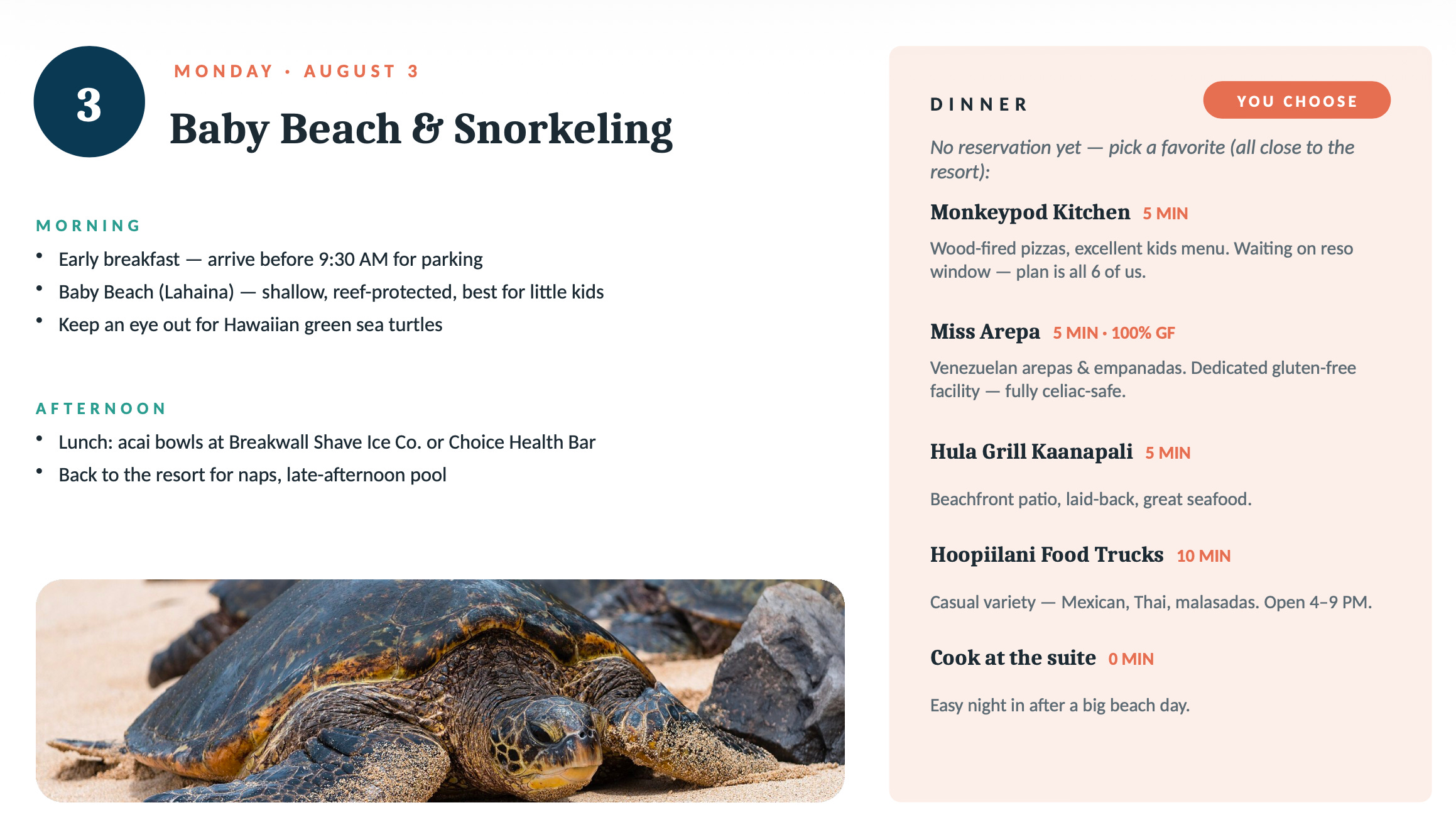
I recently learned about a simple yet magical prompt that is guaranteed to wow your fellow travel companions (in my case, my husband and in-laws): “Turn it into a deck”. Turn your itinerary into a visual, beautiful travel guide that you can forward to the entire party. You can even customize the theme based on your destination (“make it tropical”).
Prompt
Using our finalized itinerary, create a polished travel guide with each day’s schedule, reservation details, addresses, confirmation numbers, and any important notes. Organize it for easy viewing on a phone or printing as a PDF, with a clean, visually appealing layout that’s easy to reference throughout the trip.
10. Create a departure countdown
This workflow saved me the most stress before our trip. Instead of one giant packing day, I used AI to spread everything across the week - loads and loads of laundry, getting snacks at Trader Joe’s, downloading Bluey for the plane, reserving parking at the airport, and doing the actual packing. It even blocked time on my calendar so I knew exactly what to do each day instead of trying to remember it all.
💡 Tip: Share this list with your partner (and ask for help so you’re not doing all the prep alone!) by turning into a joint checklist you can both reuse.
Prompt
Create a personalized departure countdown starting seven days before our trip. Schedule each pre-trip task on the right day, estimate the time required, and spread the workload across the week. Include check-in, weather checks, charging devices, offline downloads, shopping, medications, airport parking, and packing. Create calendar blocks for each task based on deadlines and dependencies.
11. Prepare your home
One of my least favorite parts about vacation is coming back to a fridge full of spoiled food and ants in the trash. If you do a little prep before you leave, coming home from vacation will be so much better.
Prompt
Create a prioritized pre-vacation home checklist. Focus on the highest-impact tasks that will help us return to a clean, organized home (clearing the fridge, taking out the trash, holding the mail, etc). Then interview me about our home’s recurring routines and add them to our Family Travel Profile so future checklists become more personalized and require less input.
12. Shift your schedules gradually
When my husband and I traveled to Italy last summer, we used the jet lag app Timeshifter to gradually adjust to the 9+ hour time difference. For trips across time zones, create a similar plan so everyone eases into the new schedule instead of adjusting overnight.
💡 Tip: You can also use this to help your kids gradually adjust to daylight savings time.
Prompt
Create a gradual sleep adjustment plan beginning several days before departure and continuing through our first two days after arrival. Include bedtimes, wake times, naps, meal timing, melatonin timing/dosages, and light exposure recommendations.
13. Plan your grocery strategy
After a long travel day, the last thing I want is to drag two tired kids through a grocery store. Sometimes it's worth the extra cost to have groceries delivered before you arrive so you can walk into a fully stocked kitchen. Build your shopping list, then find local grocery delivery options or even place the order directly through Instacart (bless that MCP).
Prompt
Based on where we’re staying, recommend the best grocery strategy for our trip. Compare delivery, pickup, and shopping after arrival, then recommend the best option based on cost and convenience. Generate a shopping list for our first few days and, if possible, place the order or prepare it for checkout with our preferred grocery service timed to our arrival.
14. Prepare for emergencies
Hopefully you’ll never need this one… but knowing where the nearest urgent care, pharmacy, or children’s hospital is before something goes wrong makes the trip a lot less stressful.
💡 Tip: Always bring a thermometer, acetaminophen/ibuprofen, and bandaids so you’re not scrambling when someone wakes up sick in the middle of the night.
Prompt
Create an emergency plan for this trip. Include nearby pharmacies, urgent care centers, hospitals, emergency numbers, recommended first-aid supplies, and anything we should do before leaving to prepare for common travel emergencies.
15. Curate your wardrobe
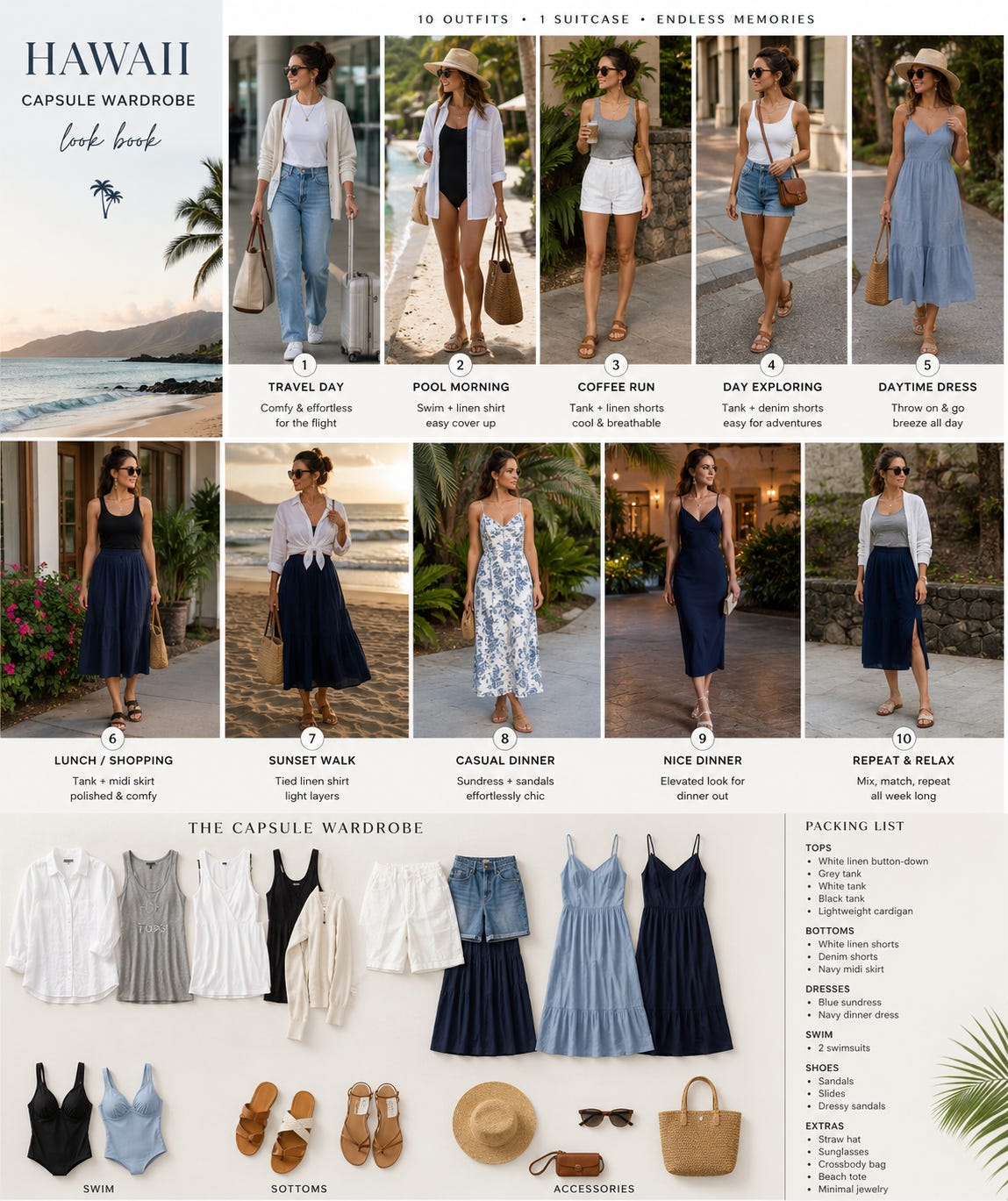
This is where my experiment started. I already knew I’d overpack out of anxiety instead of actually planning outfits. So I photographed my warm-weather clothes and asked AI to build a capsule wardrobe for the trip. If you’re feeling lazy, you can just describe the clothes instead of taking pictures, or find photos of the items you’ve purchased in your email.
Prompt
Build a capsule wardrobe using only the clothes I’ve uploaded. Maximize outfit combinations while minimizing the number of pieces I need to pack. Only recommend new purchases if they’ll fill a genuine gap, work with multiple outfits, and meaningfully improve the wardrobe. Explain why each item earns a place in the suitcase and identify any pieces that can be left at home.
16. Decide what you need
I used to keep a packing checklist in Google Docs, but I still had to edit it for every trip. Now I generate one automatically based on who's traveling, the weather, and our itinerary. It separates carry-on items from checked luggage and identifies what can be packed early versus the morning of departure.
Prompt
Generate personalized packing lists for everyone traveling. Adjust quantities based on trip length and weather, organize everything by category, separate carry-on items from checked luggage, and identify what can be packed early versus the day of departure.
17. Decide how you’ll get it there
I never want to be the family that’s bringing more suitcases than people. So we almost always rent bulky gear like cribs, toys, books through BabyQuip and ship basics like diapers, wipes, and sunscreen to our destination. For every item, decide whether it's easier to pack it, rent it, ship it, or buy it after you arrive.
Prompt
Review our packing list and recommend the best option for every item: pack, rent at our destination, ship ahead, or buy after arrival. Consider luggage space, airline baggage fees, rental costs, convenience, availability at our destination, and how often we’ll use the item. Flag anything that’s bulky or heavy enough that we should avoid packing it, and explain the reasoning behind each recommendation.
18. Decide where everything goes
Once you know what you’re bringing, the final step is deciding where everything belongs. What should stay in your carry-on? What can go in checked luggage? What do you absolutely need if your bags are delayed? Thinking through those decisions ahead of time makes travel day much less stressful.
Prompt
Optimize our luggage for this trip. Decide what belongs in checked luggage, carry-ons, personal items, and each child’s backpack. Prioritize keeping essential items with us in case checked luggage is delayed.
19. Check for blind spots
Because your itinerary, destination, and packing list are all connected, it can spot the little things families tend to overlook. This tip helped me remember to pack swim goggles for the girls instead of paying an arm and a leg for them at the hotel gift shop.
Prompt
Review everything we've planned for this trip and identify the items, tasks, and reservations we're most likely to overlook. Prioritize them by likelihood and impact, paying special attention to one-time items, destination-specific needs, and anything that's easy to assume has already been handled.
20. Work backwards from your flight
Travel day is really a series of transitions. The fewer decisions you have to make in the moment, the smoother the entire day will feel. Instead of asking, “What time should we leave for the airport?”, work backwards from your departure time, then build the day hour by hour. No more doing mental math while trying to get two kids out the door.
💡 Tip: Do this exercise with your partner and use it as an excuse to align (once and for all) on how far in advance you want to really need to be at the gate before you board.
Prompt
Starting with our flight time, work backwards to create a detailed travel-day schedule. Include when to wake everyone up, eat, leave the house, arrive at the airport, and board the plane. Allow for plenty of time for delays, potty breaks, and snacks.
21. Scout your airport
Even airports deserve a little research. Some have great play areas, nursing rooms, and kid-friendly restaurants. Others...don’t. Research every airport before you leave so you know exactly where to eat, recharge, and let the kids burn off energy before boarding.
Prompt
Research every airport and terminal on our itinerary. Summarize family-friendly amenities, dining near our gates, play areas, charging stations, and anything unique that will make traveling with young children easier.
22. Check your in-flight entertainment
You don’t want to learn the hard way that your flight doesn’t have seatback screens… Plan what kind of devices you’ll need to keep the whole family entertained on your flight.
Prompt
Research every flight on our itinerary. Summarize the available entertainment, Wi-Fi, power outlets, and kid-friendly content. Recommend what we should download before leaving and what devices or headphones we should bring.
23. Build travel snack boxes
My kids somehow eat twice as much on travel days as they do at home. A fellow mom suggested making a “snackle box” (a weekly pill organizer also works) with different bite-sized snacks. Apparently kids love the novelty of opening up the little containers one by one to reveal a surprise. Instead of tossing random snacks into your bag, have AI create snack box ideas based on the length of your travel day.
Prompt
Help me build travel snack boxes for the kids. Recommend healthy, portable, low-mess snacks, then generate a grocery shopping list organized by store section.
24. Pace the entertainment
Even if your kids use screens, chances are you don’t want six straight hours of movies. I’ve found the simplest screen-free activities are often the biggest hits - painters tape, reusable stickers, water-wow books, Post-it notes, etc. Generate a list of age-appropriate ideas quickly.
Prompt
Recommend screen-free travel activities based on my children’s ages and the length of our flight. Organize them into a timeline for when to introduce each activity during the trip.
25. Create personalized activities
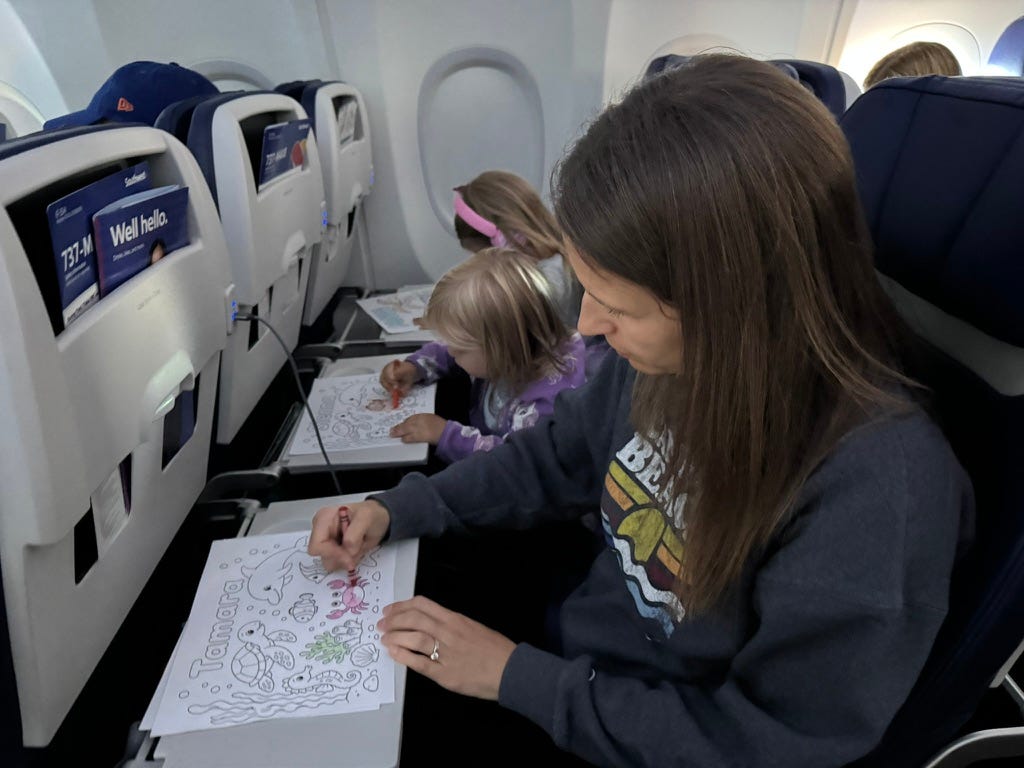
This one was a huge hit! Instead of packing a coloring book, print a few pages with each child’s name in giant bubble letters and themes related to your trip - airplanes, beaches, sea turtles, whatever they’re excited about. It takes up almost no room, feels personalized, and keeps them busy far longer than you’d expect.
💡 Tip: Make one for yourself too and use it as an opportunity to connect with your kids - coloring is surprisingly meditative.
Prompt
Create a printable black-and-white coloring page for my child. Put their name in large bubble letters across the top and include one simple illustration related to our trip. Use thick outlines and lots of white space so it’s easy for preschoolers to color.
26. Build a family travel hub
Instead of starting from zero for your next trip, build a travel hub that gets a little smarter every time you leave home. Over time, you can also turn your most-used workflows into dedicated agents so they handle recurring tasks automatically while your Travel Hub remains the long-term memory for your family's travel preferences.
Prompt
Help me build a reusable Family Travel Hub. Organize everything we’ve created into a system I can use for every future vacation. Include our Family Travel Profile, itineraries, packing lists, favorite destinations, restaurants, activities, travel gear, lessons learned, templates, and reusable workflows. After each trip, interview me about what worked, what didn’t, and what we should change so this travel hub gets smarter over time.
When I started planning this Hawaii trip, I just wanted help figuring out what to wear. Somehow I ended up vibe-coding my entire vacation.
Yes, AI helped me find great restaurants, build packing lists, and turn our itinerary into a polished travel guide. But those weren’t the biggest wins.
The biggest win was turning dozens of recurring decisions into one repeatable system.
Instead of juggling dozens of tiny decisions (what to pack, what to book, what I might be forgetting) I built workflows I could trust.
Ironically, I probably spent more time planning this vacation than any trip before it. But I wasn’t just planning one vacation. I was investing in every vacation that comes after it. The next time we travel, the hardest part will already be done.
I’m sure I’ll use many of these prompts again. But what I’m even more excited about is knowing that every trip from here should require a little less planning and leave a little more room to actually enjoy it.
Namaste,
Tamara
PS - Travel is just one example of how AI can lighten the mental load for moms. Every week we’re making the same decisions about meals, laundry, birthdays, school paperwork, gifts, and a hundred other invisible tasks that we carry around in our heads. Those can become systems too.
That’s part of the work we do together inside my group coaching program, The Rise Collective. We identify the recurring decisions that create the most mental load for your family, redesign them into practical workflows (many powered by AI), and build an operating system for work, home, and family life. Learn more about the program here - the first cohort launches in September.
Comments
Nothing yet. Say the first thing.
Sign in to join the conversation.