
Like most people with an internet connection and too much curiosity, I end up in strange YouTube rabbit holes. A few days ago mine was ballet.
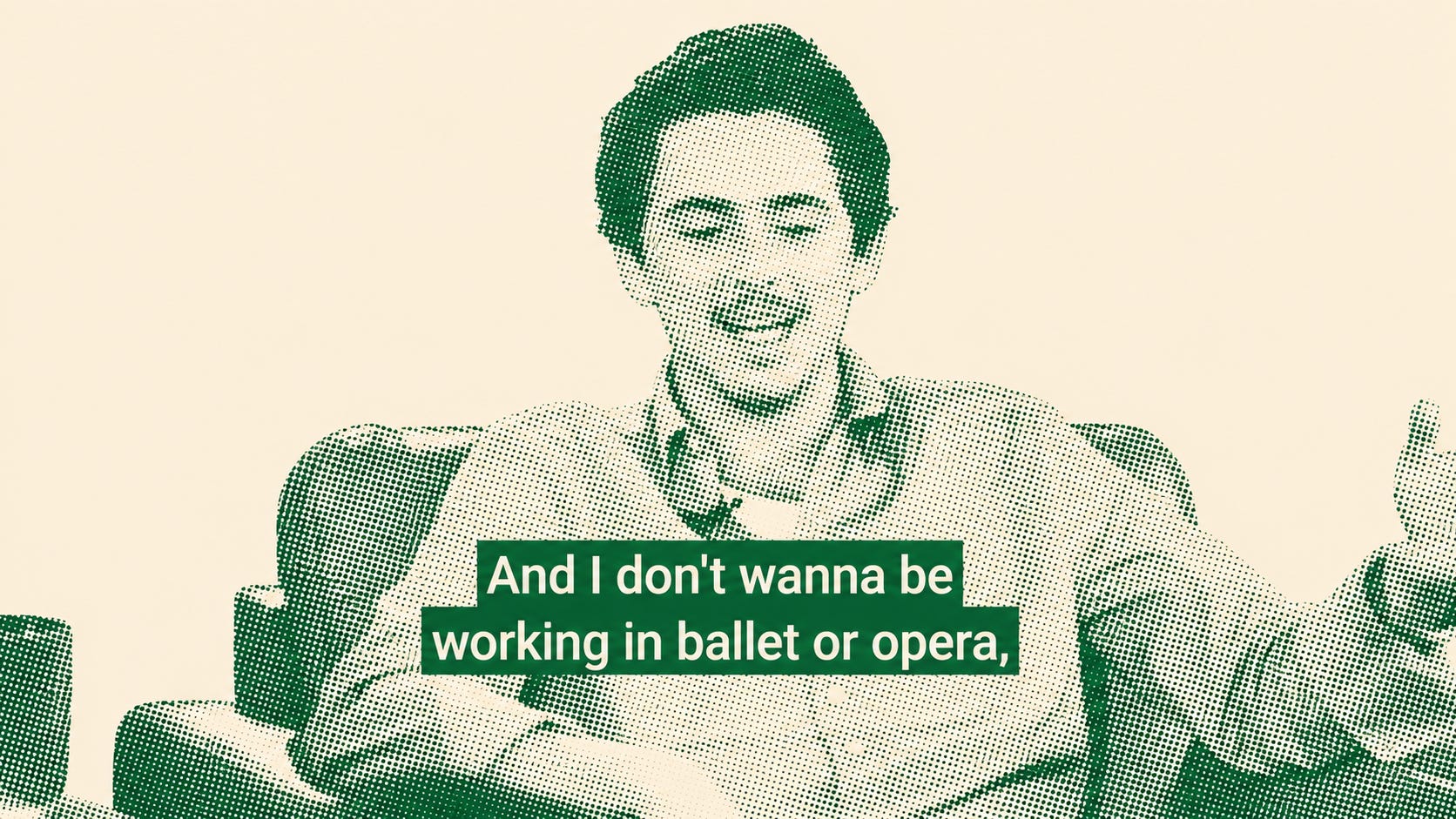
This was partly Timothée Chalamet’s fault. A clip of him talking about ballet had gone viral..

Seth Abramovitch@SethAbramovitch
Ok I did not hear this. This sucks
11:34 PM · Mar 5, 2026 · 61.7M Views
1.81K Replies · 2.57K Reposts · 56.5K Likes
..which then sent me into one of those algorithmic spirals where you watch one video out of mild interest and, forty minutes later, you are listening to someone explain the history of the Paris Opera Ballet as if you had been waiting your whole life for this exact content.
I do not particularly care about ballet. I am not a historian. I have no stake in pointe shoes, 19th-century French institutions, or who modernized what. But somewhere in the middle of all that, I found myself thinking about Physical Therapy.
More specifically, I found myself thinking about the distance between a thing being excellent and an audience (or individual person) actually being able to reach it.
As I understood the story, part of ballet’s problem at various points was not that the dancing itself was not entertaining or had utility. The problem was everything wrapped around it. The codes, the rituals, the ticketing, the feeling that this world was built for people who already knew how to enter it. The art could be beautiful. But the institution around the art could still make a newcomer feel like they had shown up to the wrong door.
One of the stranger truths about valuable things I’ve arrived at is that just being good is not enough to make people buy-in. People have to be able to picture themselves participating. They have to feel, and fairly quickly, that they have arrived at the right place at the right time. And if they don’t, a lot of them are lost before anything officially begins. That’s the part of physical therapy I keep thinking about.
There is a tendency in serious professions like ours to romanticize the center of the work and neglect the edges. We’re not special. Restaurants also obsess over the food and forget the reservation. Universities obsess over the education and forget the application. Media companies obsess over the journalism and forget the homepage. Physical Therapy, I think, has spent a long time refining what happens once the patient is in the room while treating everything before that as secondary, clerical, or somehow outside the real work. But that threshold is where people are actually deciding things. Sometimes before they even realize they are deciding.
Do I trust this place?
Do these people understand what I need?
Can this fit into my life?
Is this going to feel confusing, expensive, annoying, embarrassing, impossible?
Do I want to begin?
Those are not small questions. That’s the very beginning of the participation. And yet a lot of industries still behave as if entry should take care of itself. As if the burden belongs entirely to the person standing outside the door and that if they want it badly enough, they will figure it out.
Sometimes they do. A lot of the time they don’t. That doesn’t always mean they are flaky, unmotivated, or unserious. It may simply mean the system failed to reduce enough friction for a real person with a real life to see a way in.
And “right place, right time” starts to mean more than it first appears to. It’s not really about whether someone can make a Tuesday at 3:00. But moreso whether the whole structure around care helps a person feel that this is, in fact, the the thing for me and the right place for it.
That feeling can be created by a tone of voice; by a good question; by someone who knows how to make a person feel understood before asking them to comply; by a system that offers options instead of ultimatums; by language that sounds human; by a process that seems designed for the person’s actual life rather than for the convenience of the institution.
And it can be destroyed just as easily by making everything feel generic or by building an experience that quietly communicates: this works if you are already organized, already flexible, already initiated, already the kind of person our system was built around.
The thought extends well beyond the first phone call. It reaches into websites, referral handoffs, intake forms, billing language, treatment models, follow-up cadence, telehealth, hybrid care, and all the little moments where a person is trying to decide whether they can actually do this.
Friction, in that sense, is not merely logistical. It is interpretive. A person is not only asking, how do I get there. They are also asking, is this for me. Is there a version of this that fits my body, my schedule, my money, my responsibilities, my level of overwhelm, my current season of life.
Good systems answer those questions early. Bad systems answer them late, or not at all, and then act surprised when people disappear.
Once you notice that, a lot of things begin to look different. Dropout starts to look less like a downstream problem and more like an early warning. No-shows stop reading as moral failures and start reading as design feedback. “Patient engagement” becomes a shallower phrase than it first appears, because what people often need is not more encouragement after the fact. It is a clearer, kinder, more workable path before the fact.
The way I ended up watching ballet was not in a theater. It was on YouTube, on my couch, at 10pm, because an algorithm made entry effortless. Someone else might have found it through a live broadcast, or a free performance in a park, or a friend who dragged them to a matinee. The point is that there was no single correct way to access it. The art was the same but the doors were different. And the door that worked for me would not have worked for everyone.
The Physical Therapy version of this problem is the tendency to define the best care in advance and to decide, before meeting the patient, what the ideal format looks like.
Three times a week, in-clinic, forty-five minutes, manual therapy, home exercise program, see you Monday.
And for some people, that is exactly right. But for others, the version of care most likely to actually work might be telehealth, or a hybrid model, or a few visits with structured accountability between them. It might even be something we have not tried yet because we have not asked.
The best care is not the care the therapist believes in most. It is the care the patient can actually consume. And those are not always the same thing.
This is not an argument for lowering standards. It is an argument for expanding the definition of access. A treatment plan that is clinically ideal but logistically impossible for the person sitting across from you is not, in any meaningful sense, the best plan. It’s a plan that exists on paper. The patient needs one that exists in their life.
Which means asking and not assuming. Not defaulting to the model that is most familiar or most reimbursable or most aligned with how we were trained. But sitting with a person and figuring out what version of this is most likely to lead to them actually showing up, actually participating, actually getting better. That is the work.
Part of the burden belongs to the field itself. To build systems that do more than wait. To make entry legible. To make participation feel imaginable. To close the distance between needing something and being able to begin it and then to keep closing it, visit after visit, by offering care in forms people can actually use.
Great professions are not only good once you are inside them. They are good at helping you cross the threshold.
Ben Barron | LinkedIn
No posts
Comments
Nothing yet. Say the first thing.
Sign in to join the conversation.