
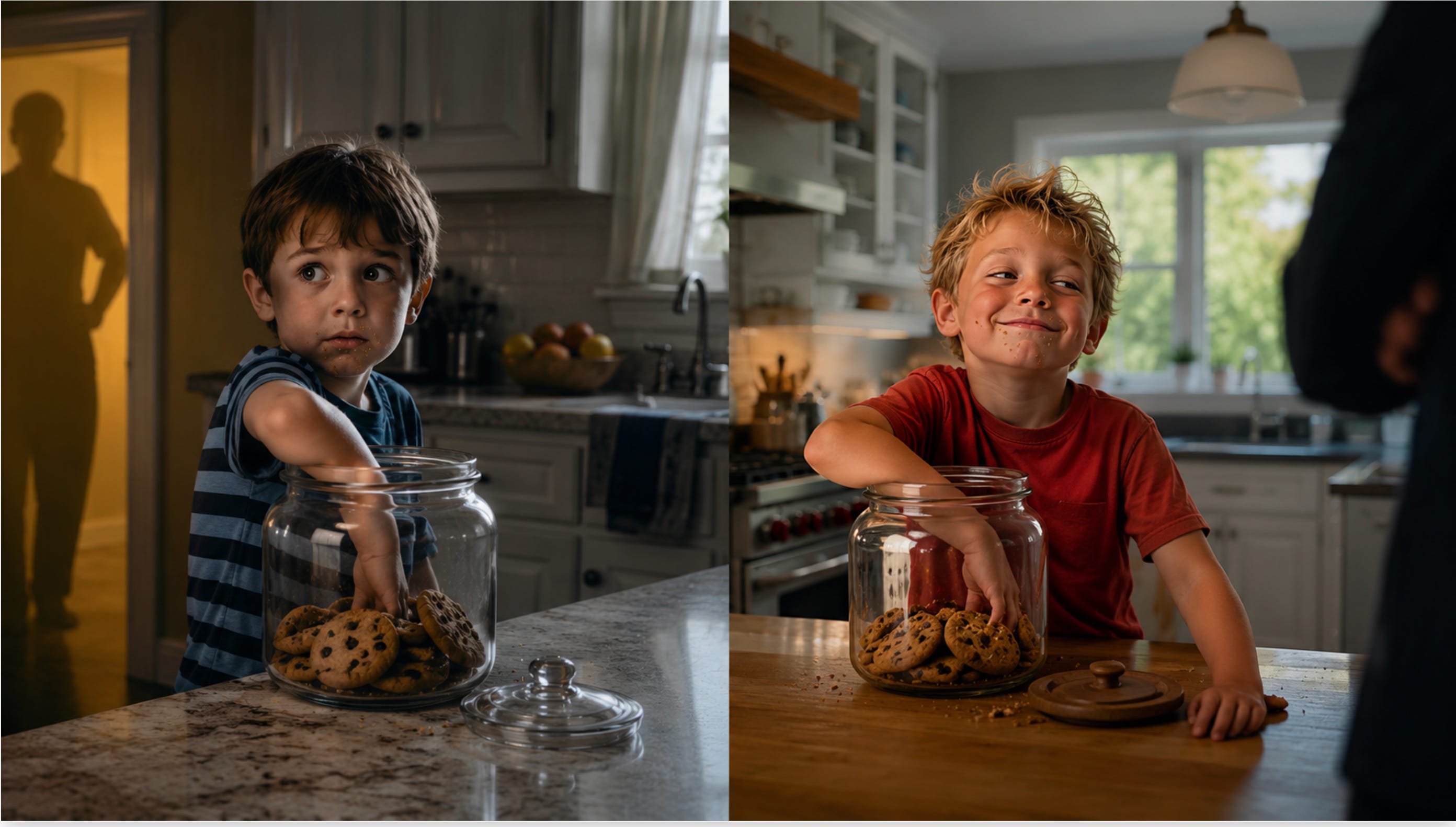
I was watching Katy Tur’s show yesterday and a guest was discussing Trump’s grifting, his crypto scheme and charging for early Truth Social posts. He said “shamelessness was his superpower.” I thought this was a great description and checked to see it was applied to him before. It was at least twice:
In May 2025, MSNBC ran a segment specifically titled “His superpower is his shamelessness”: A look at Trump’s crypto, with Teddy Schleifer and William D. Cohan discussing the ethics of Trump’s crypto ventures.
And the formulation goes back even further. A 2019 Washington Post column by Max Boot was literally titled “Trump’s superpower is his shamelessness.”
Then I got to thinking about shame and its cousin guilt.
The simplest distinction is that guilt is about behavior, while shame is about the self: guilt says, “I did something wrong”; shame says, “There is something wrong with me.”
Trump seems incapable of experiencing either of these.
Healthy guilt can serve a purpose that shame often does not. Appropriate guilt can lead to acknowledgment, responsibility, apology, restitution, and changed behavior. Shame is more likely to produce hiding, defensiveness, humiliation, or attacks on whoever exposed the failing.
For decades, existential philosophers and humanistic psychologists have distinguished the capacity to experience appropriate guilt—recognizing that one has actually done something wrong and accepting responsibility for it—from the excessive, irrational or neurotic guilt that can impair psychological health. (See footnote > 1
Clearly, the boy on the right in the illustration at the top of the page represents Donald “No Guilt, No Shame” Trump.
He is the child who gets caught red-handed and responds not with embarrassment, remorse, or even a moment of self-reflection, but with a smirk.
In the cartoon below he has moved beyond sneaking a cookie or two and and he’s cleaned out the jar entirely. That’s the point: Trump’s most striking trait is not simply that he does things most politicians know better than to do, but that being caught seems to carry so little emotional cost for him — and to make matters worse he rarely if ever suffers any significant consequences for his misdeeds.
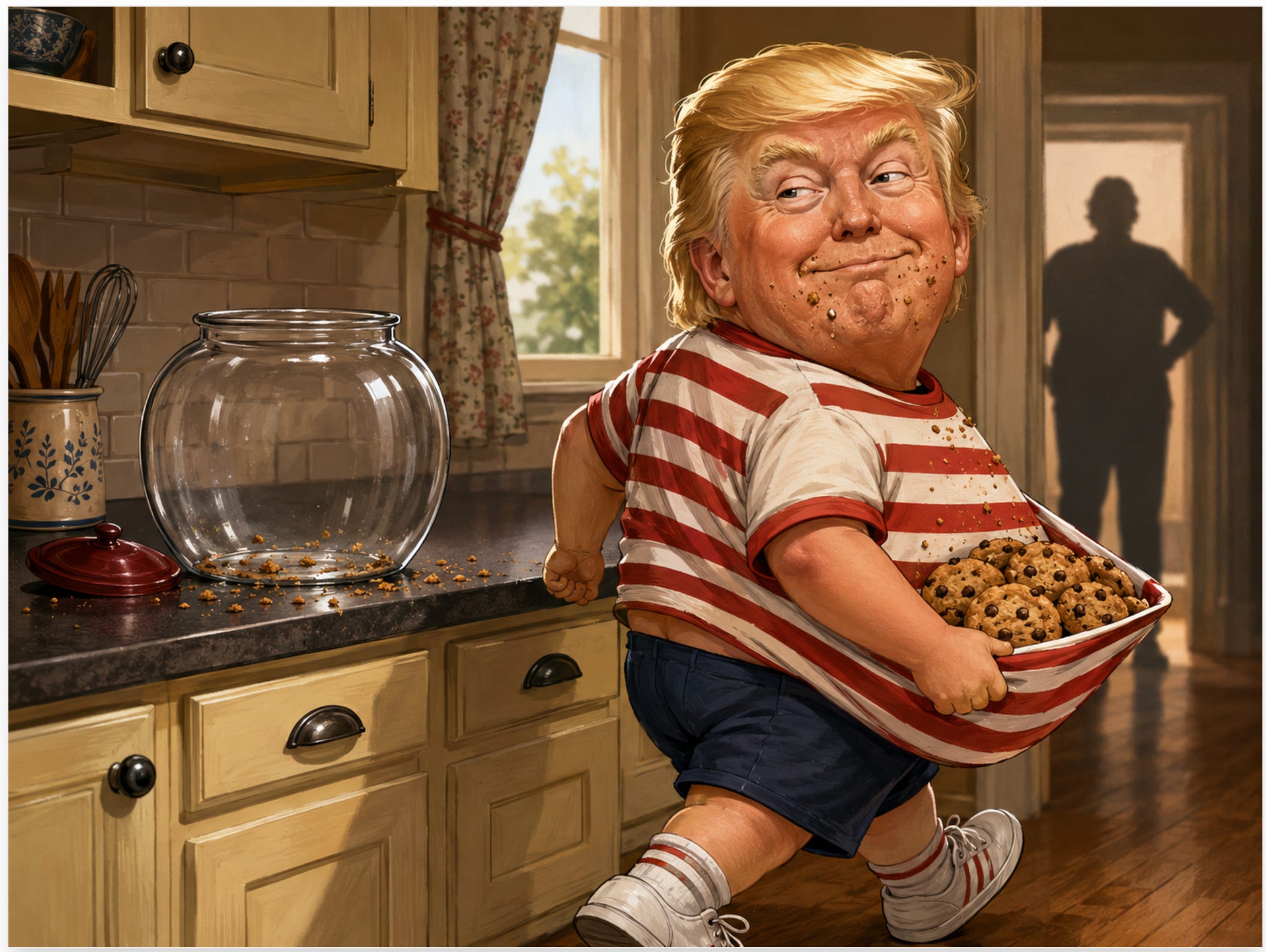
When guilt and shame appear to exert little restraint and significant consequences rarely follow, wrongdoing loses some of its most important deterrents. Hence we see Trump defying one norm after another. Here are a few of the many examples:
launching and promoting the $TRUMP meme coin, then offering its largest holders access to a presidential dinner; Reuters estimated buyers spent about $148 million acquiring the coin to qualify.
his company now charging institutional customers $60,000–$100,000 a month for early access to Truth Social posts, including potentially market-moving presidential statements.
firing independent inspectors general without the required advance notice to Congress; a federal judge subsequently found eight of those firings unlawful.
more broadly, continuing to mix the presidency with family business and crypto interests despite repeated conflict-of-interest criticism; the White House has maintained that Trump’s assets are managed in trust and that there are no conflicts of interest.
What is striking is not merely that these norms are crossed. It is that Trump makes no effort to conceal crossing them. The cookie jar isn’t hidden. He seems perfectly content for us to watch him empty it and defiantly carry away the cookies.
There is a connection between shamelessness and blamelessness. If you never experience guilt, never accept responsibility, and never seriously reckon with the consequences of your actions, it becomes remarkably easy to see yourself as blameless. The people harmed by your decisions may be everywhere. In the mirror, somehow, you still see none of it. (Click to see enlarged image below)
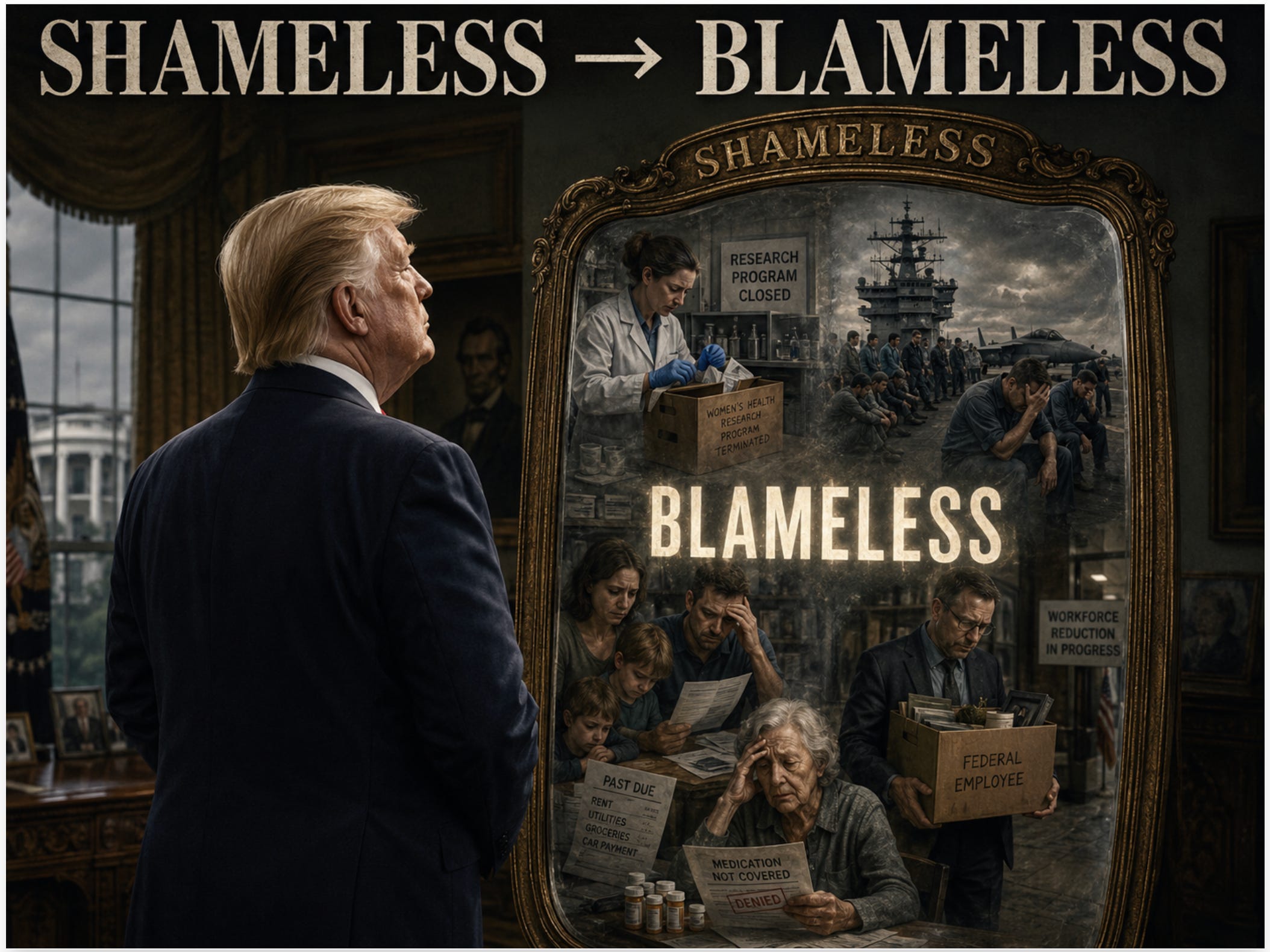
The cartoons below relate to Trump being shameless:
I was up for just a few minutes, barely starting to get the cobwebs out with a cup of coffee, when I saw a segment about six Trump-endorsed candidates who lost. I was inspired to use ChatGPT to make this. Since Trump and his spawn seem to have no guilt whatsoever about grift, it’s at least somewhat related to today’s Substack.

This was the segment I saw on MSNOW:
The image below can substitute for an entire Substack based on this:
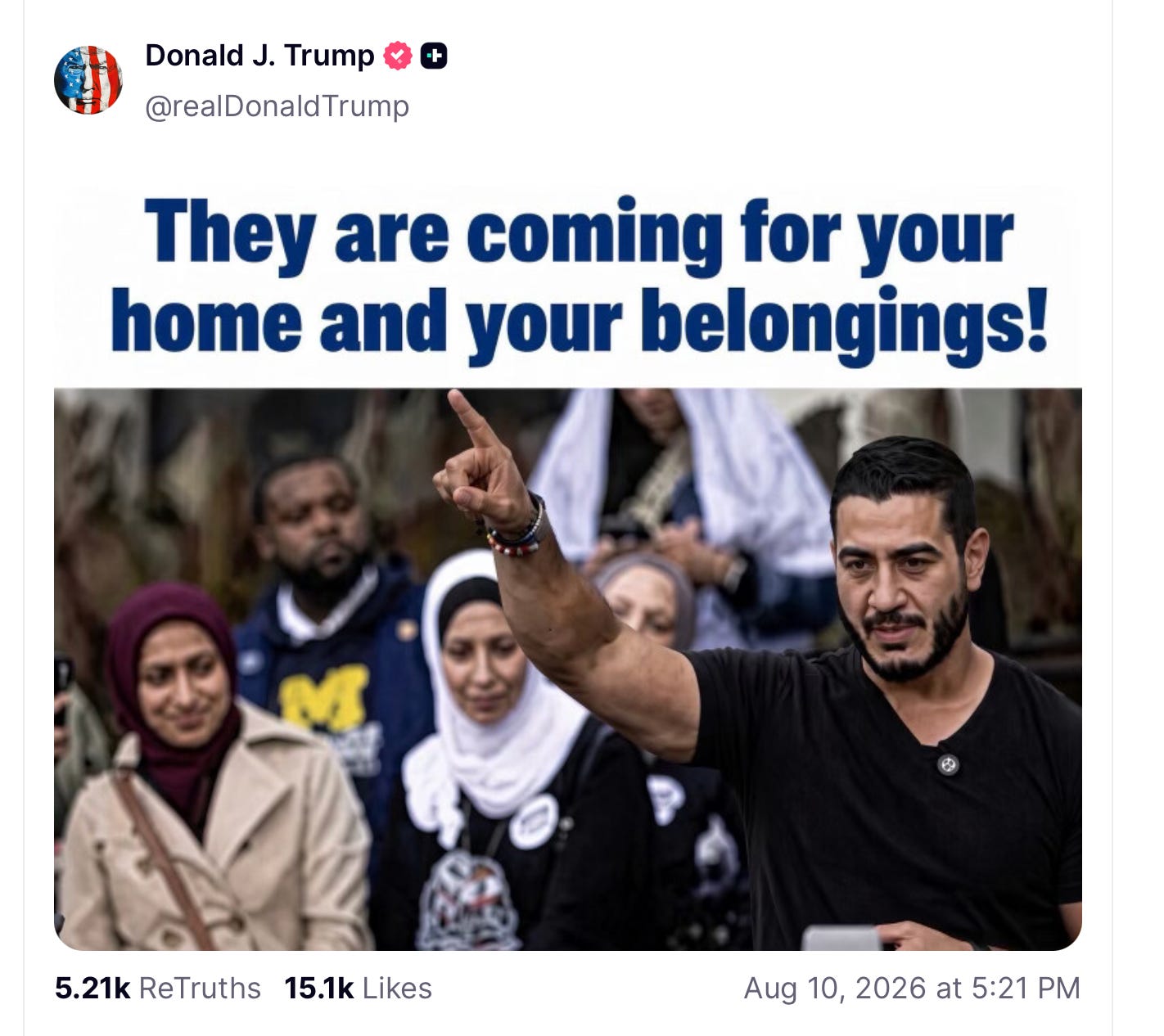
Also on this:
“Trump was asked for advice for Democrats going into the midterms. He responded:”
“Well, the one thing is we have jihadists being elected all over the place. We have this — whether it’s communism, jihadism…”
He then added that a friend had called him and told him he ought to use the word jihadist “because that’s what’s happening.” There is a transcript of the remarks from the August 10 White House even
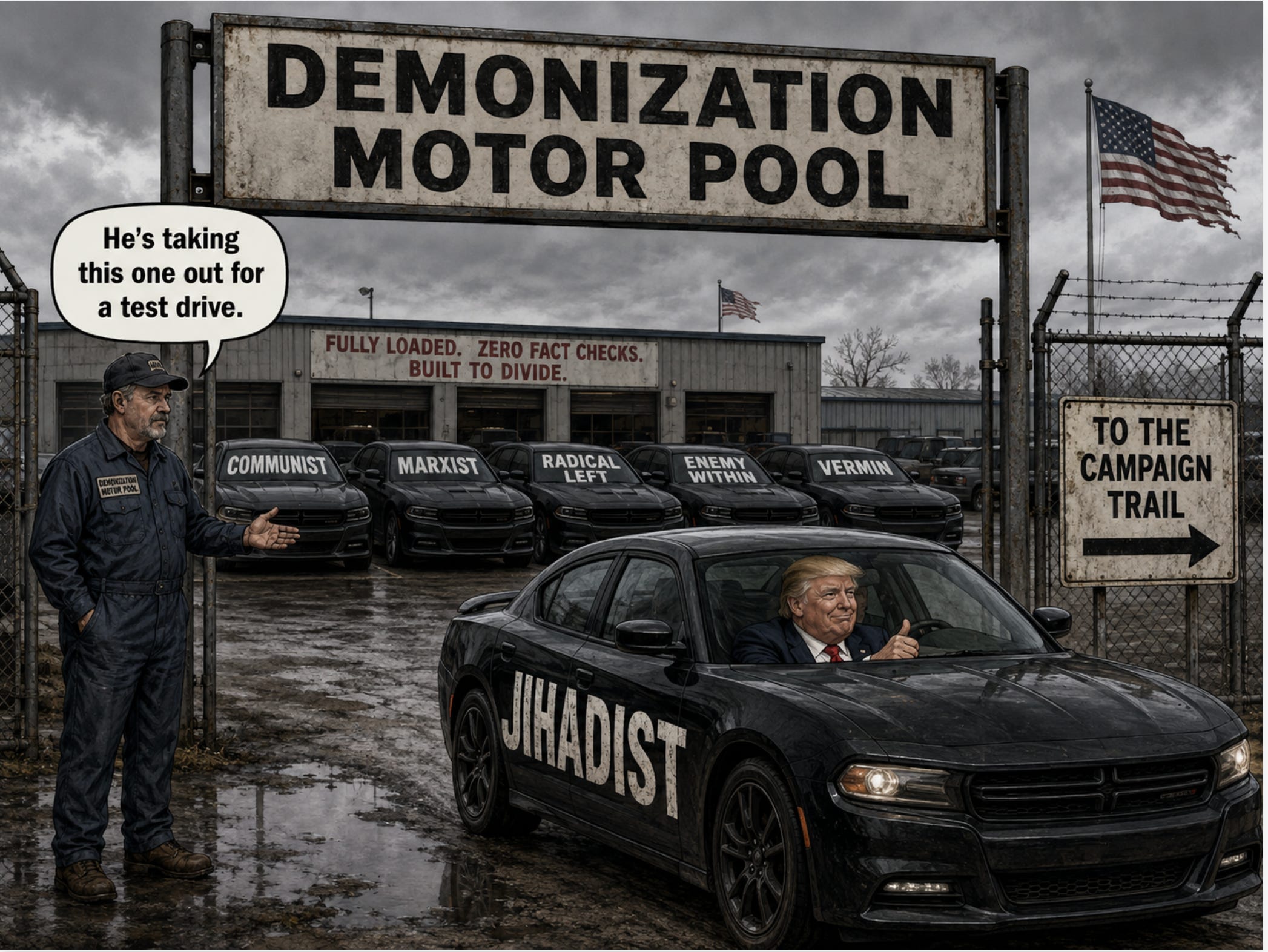
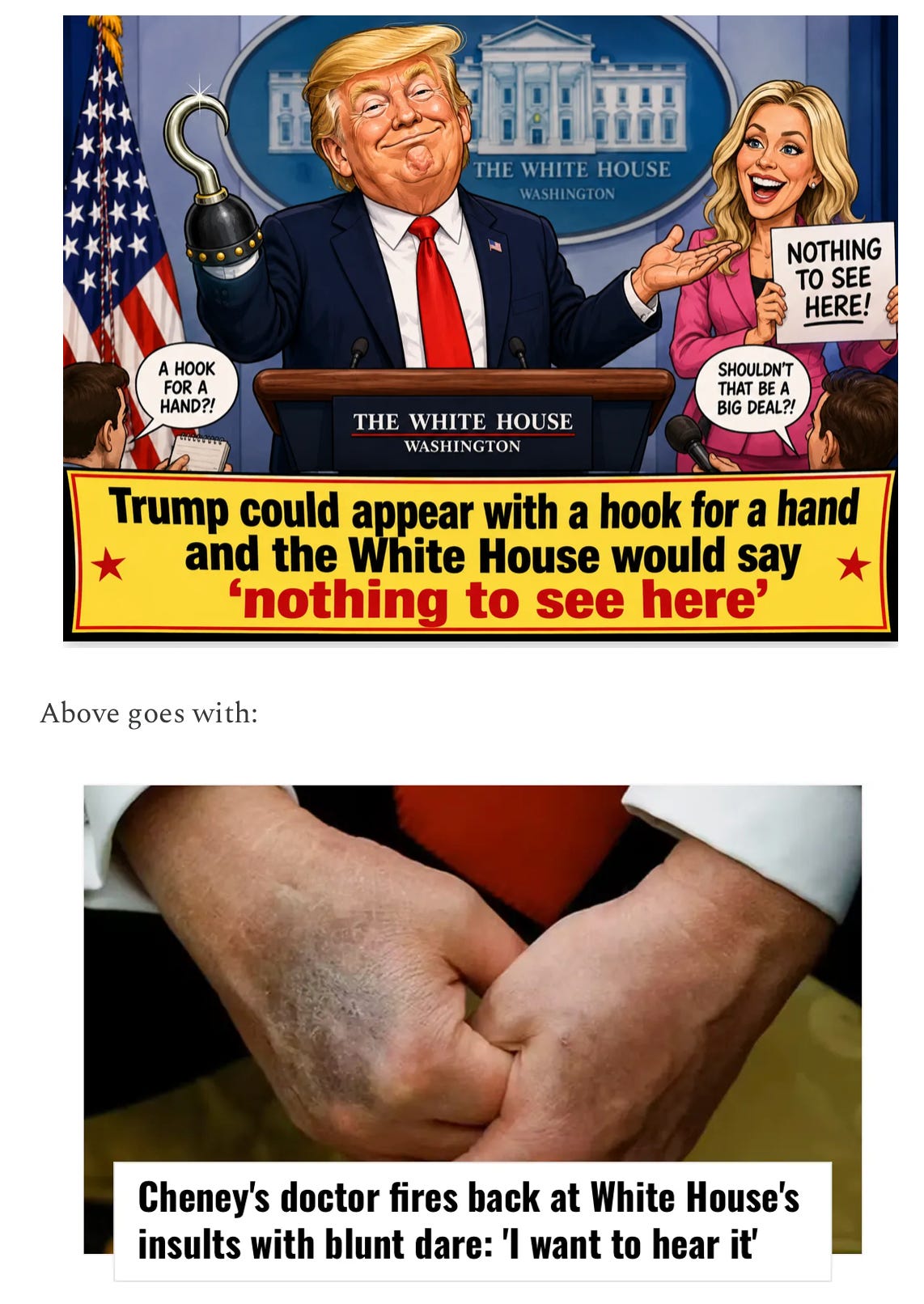
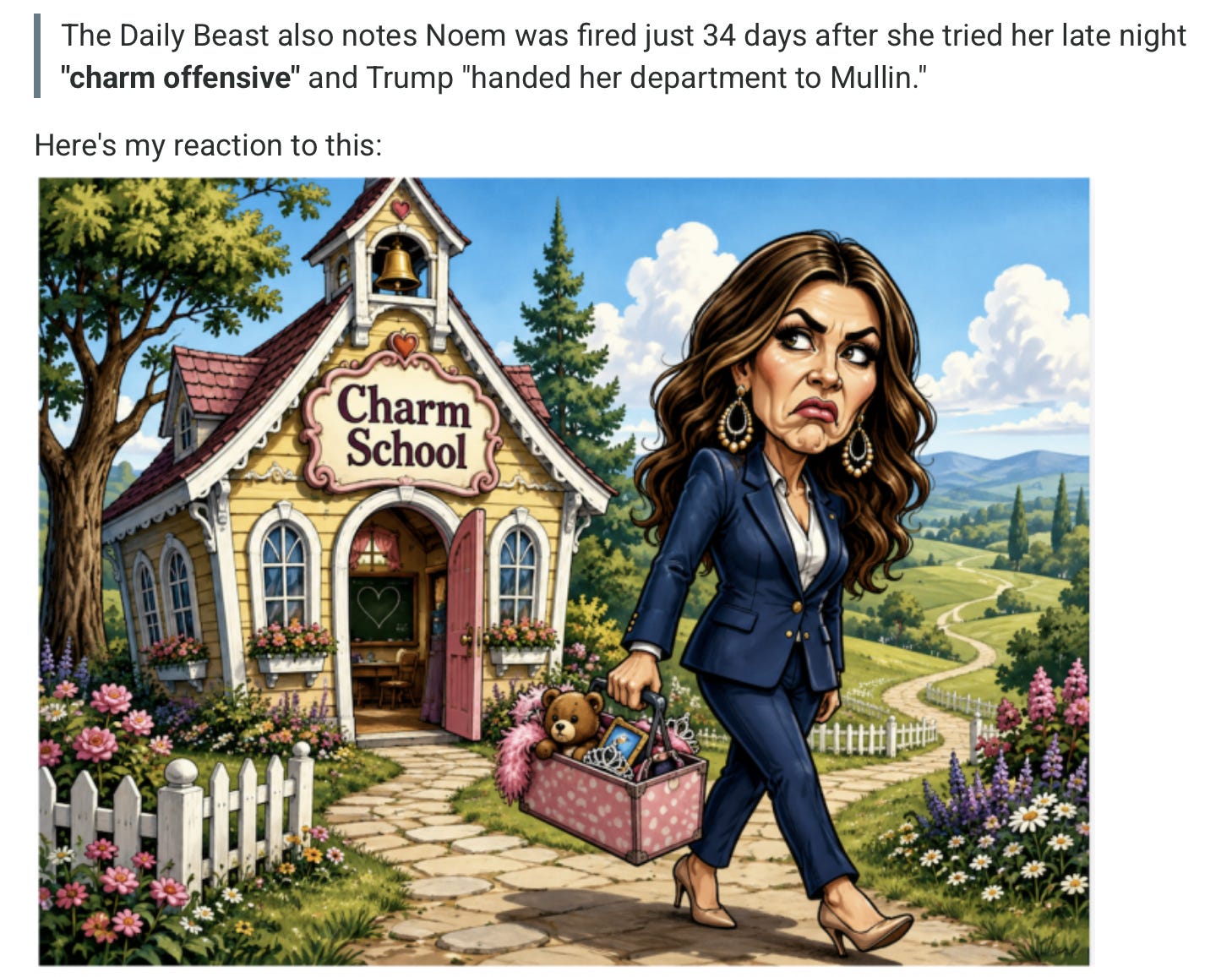
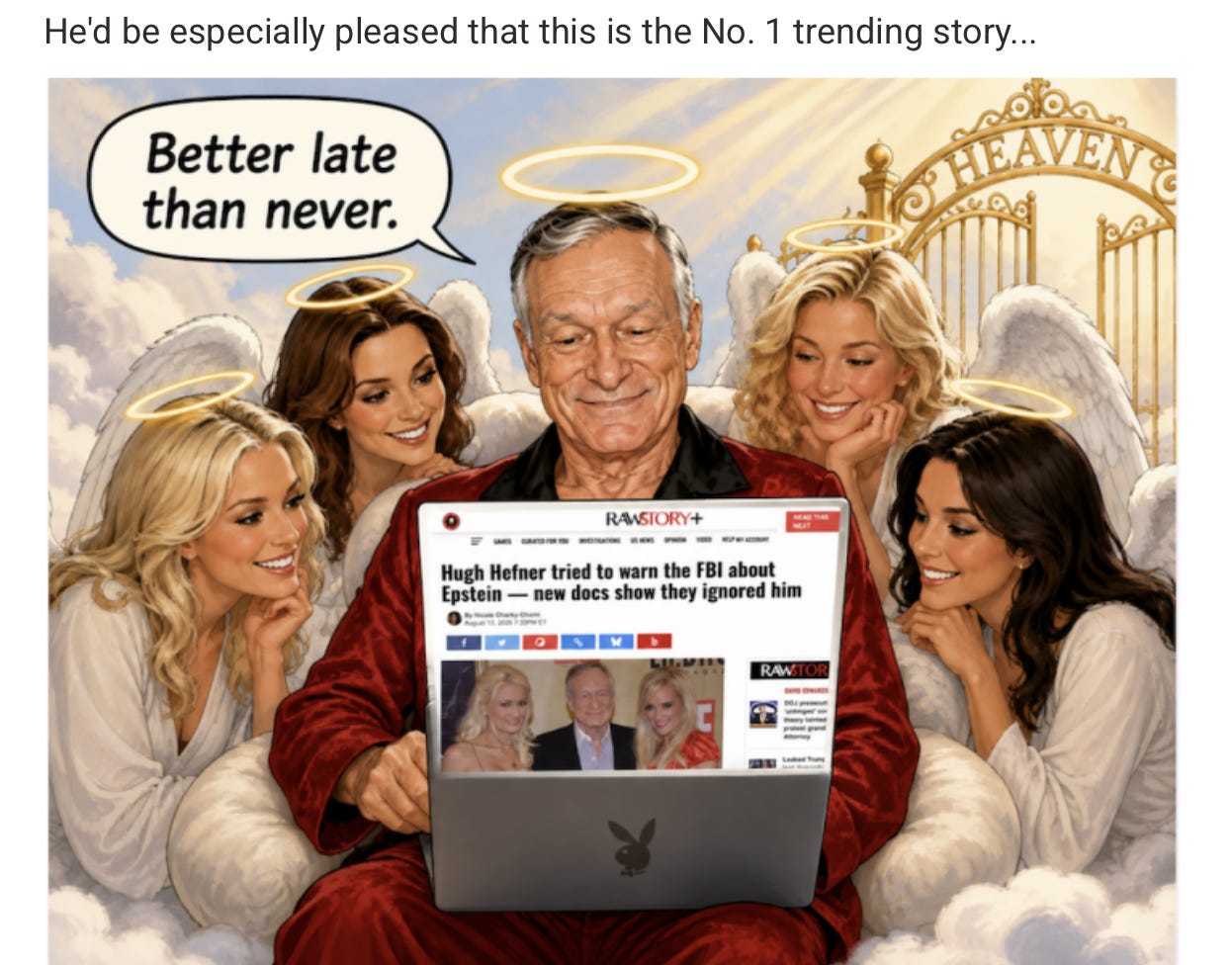
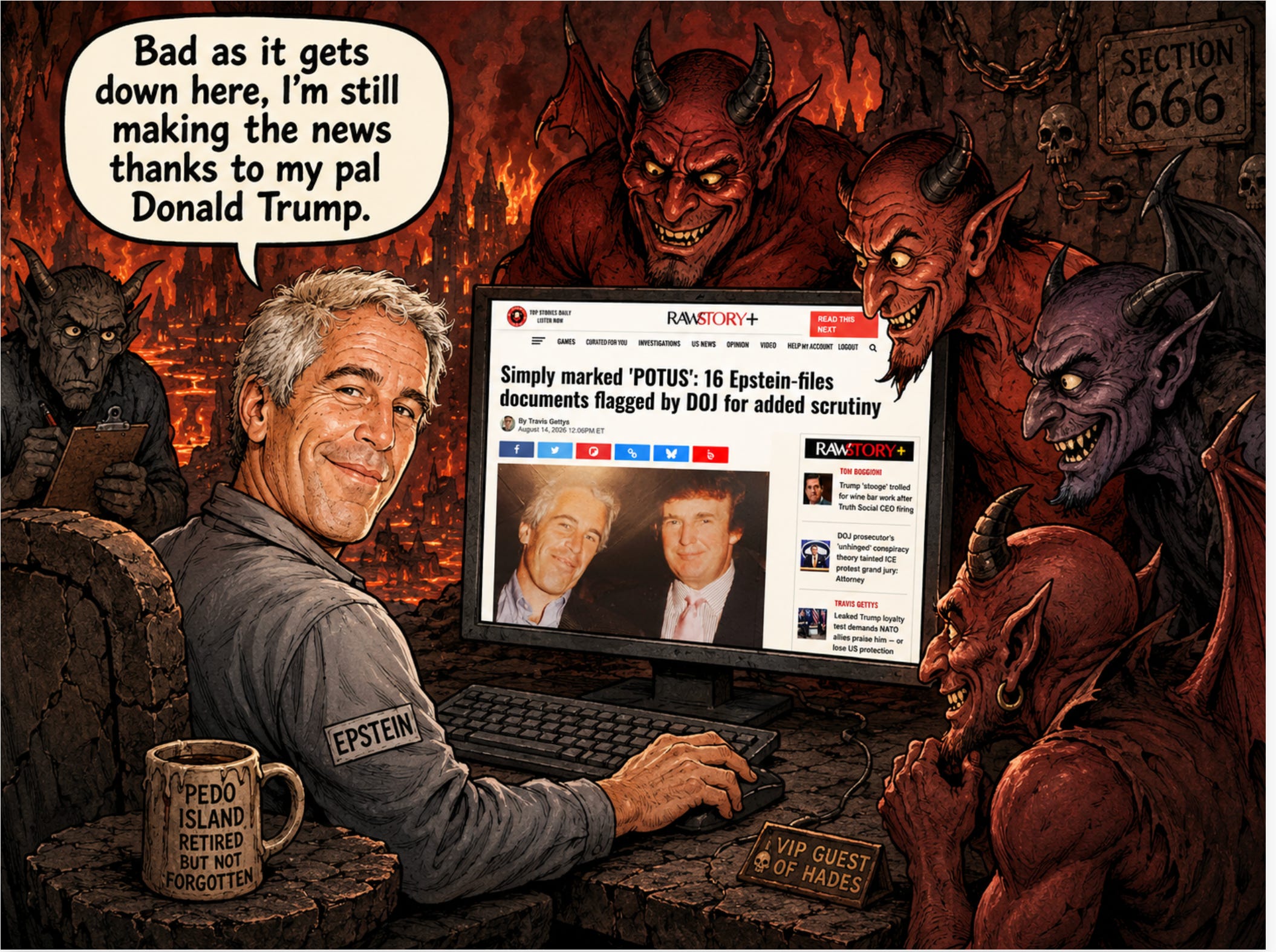
Above… this also fits in with Trump being shameless….

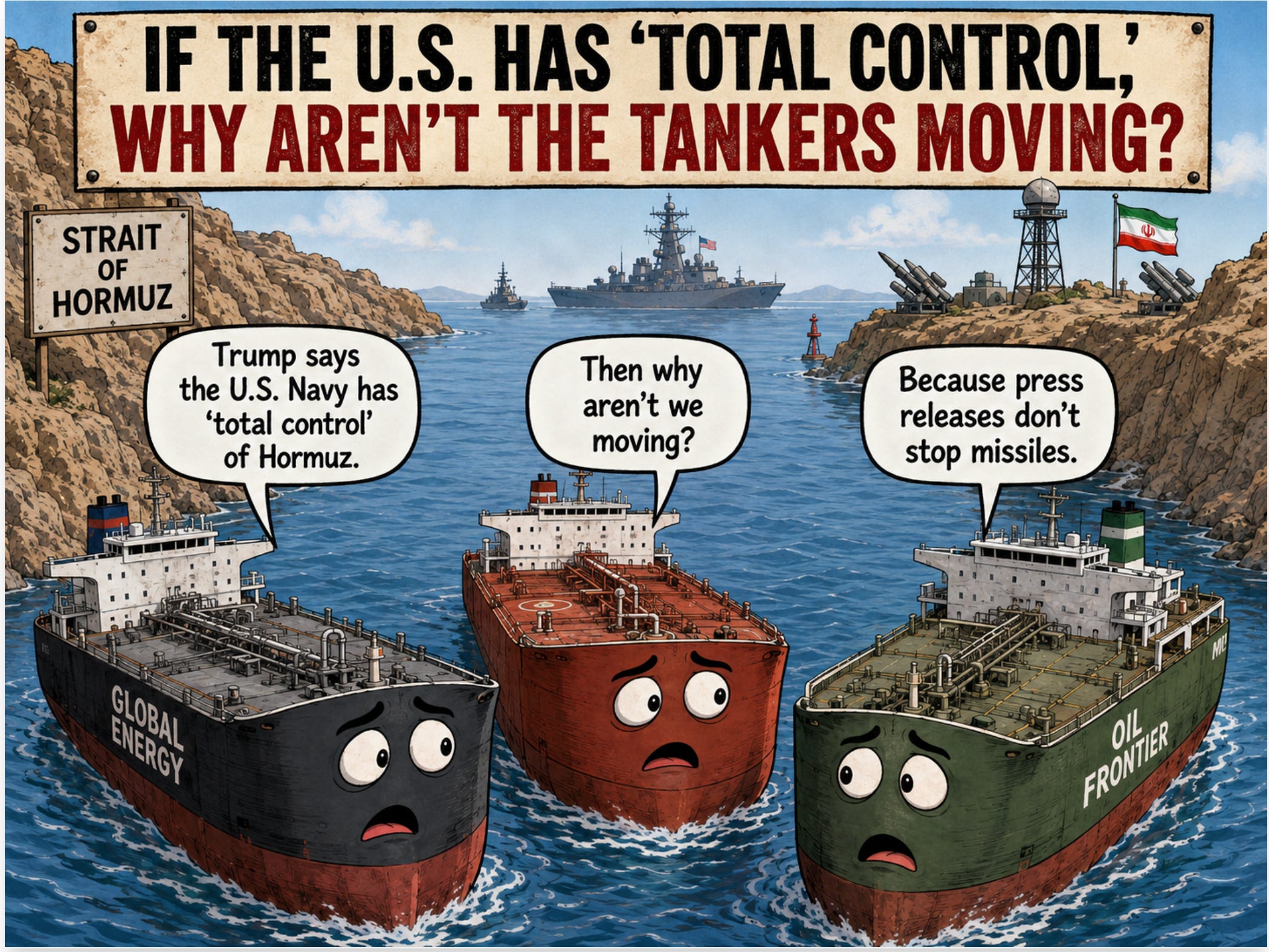
This doesn’t need an explanation:
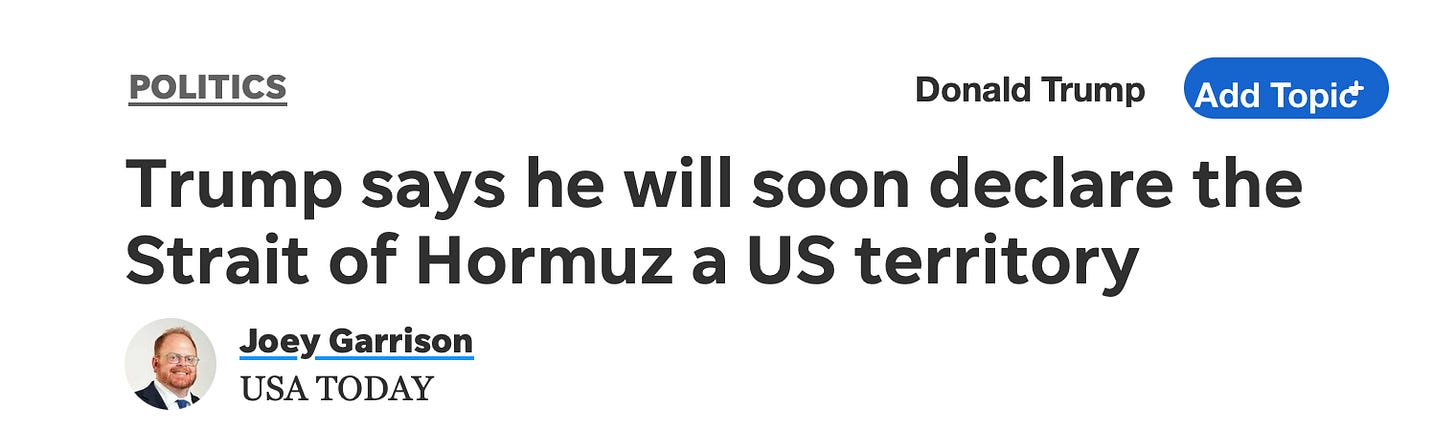
This was in USA Today:
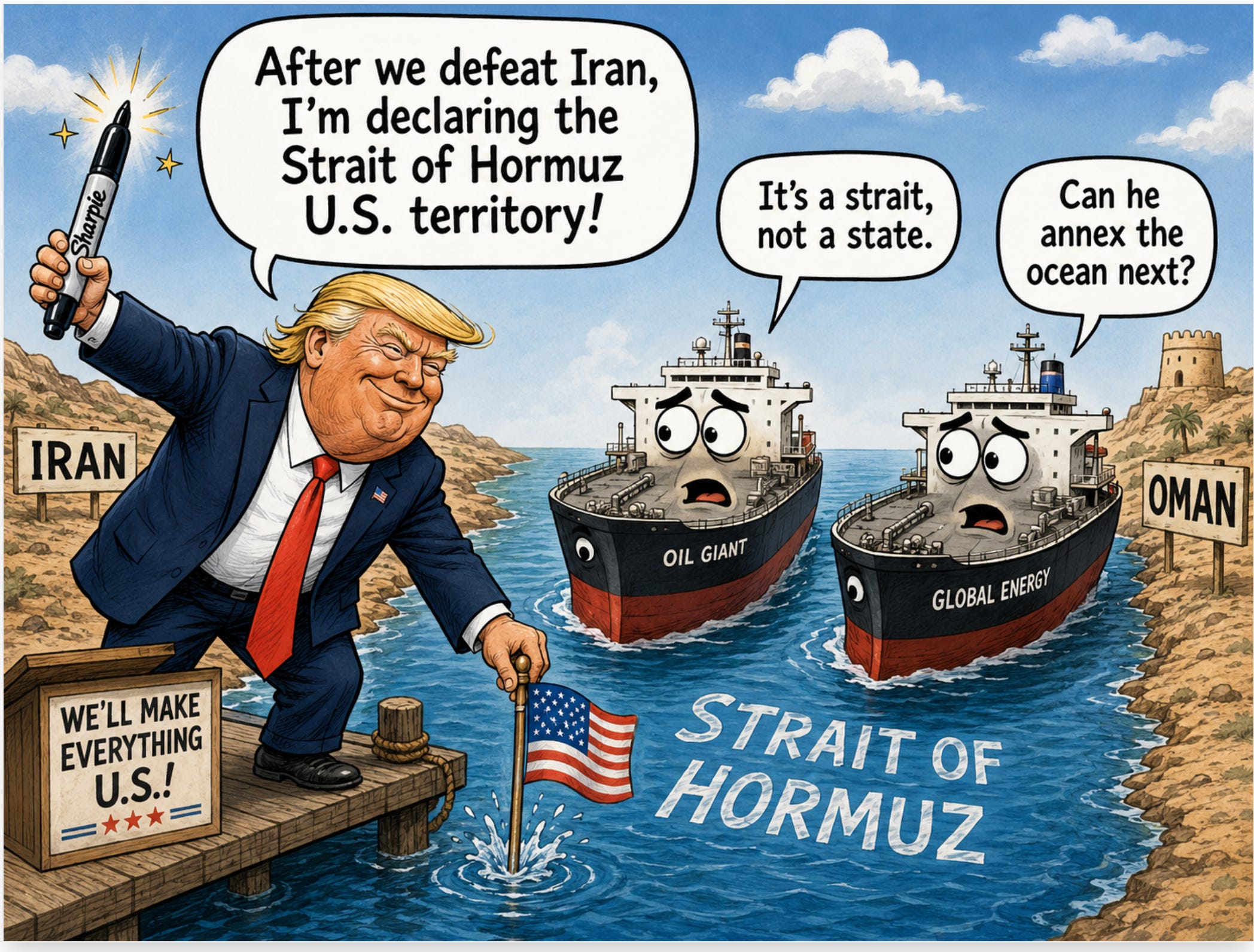
I did some research on this which confirms what I thought and then made another cartoon. >>
Trump can declare the Strait of Hormuz American territory, but that doesn’t make it so. The strait is not some unclaimed patch of ocean waiting for a flag: its waters lie between Iran and Oman and are subject to their sovereignty, while international law protects passage through it as a vital international waterway. The United States could patrol it, defend shipping through it, or even temporarily control it militarily—but simply announcing that it is now U.S. territory has no legal magic behind it.
Trump’s declaration has no legal effect because military control of a strait does not transfer sovereignty over its waters, especially when those waters lie between Iran and Oman and remain subject to international navigation rules.
My reaction to the following:
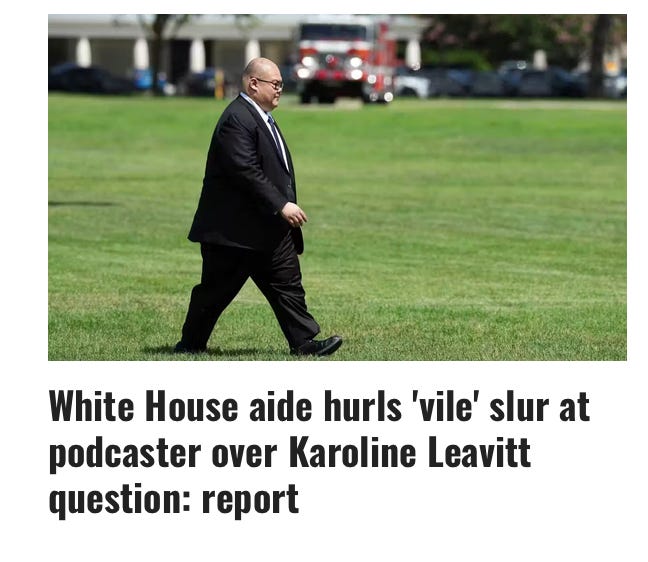
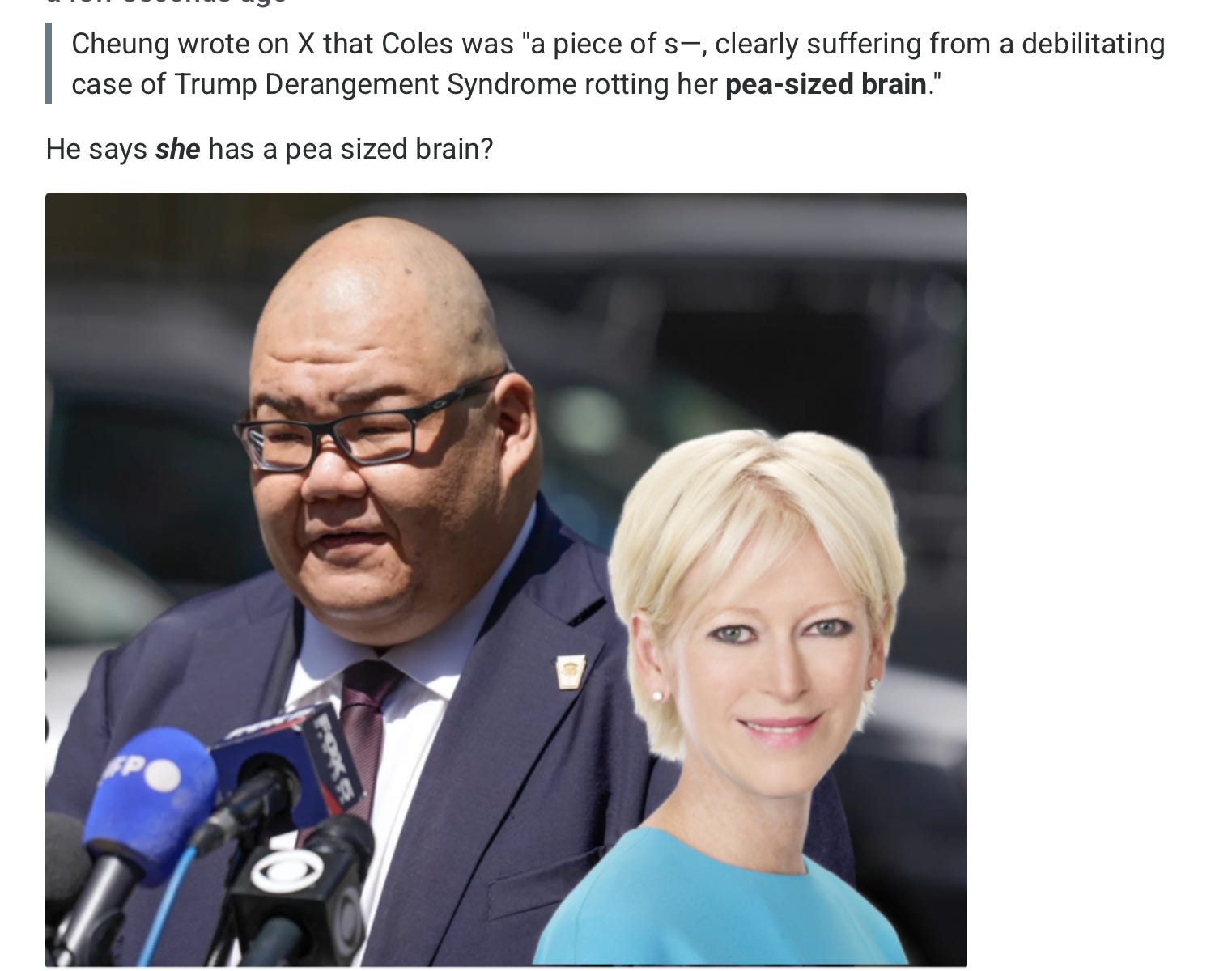
Trump posted the following about his great friendship with the leader of a communist country:
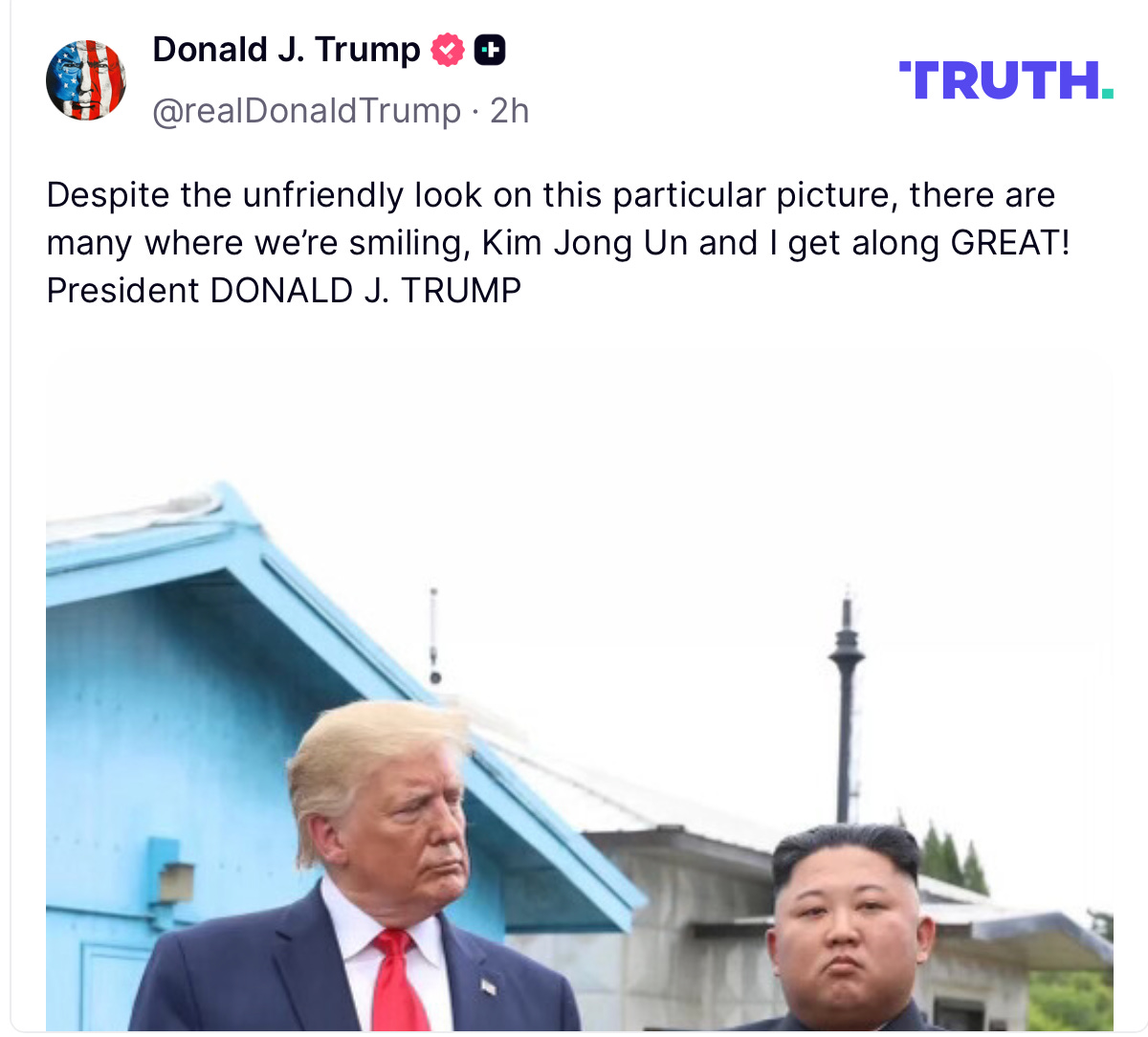
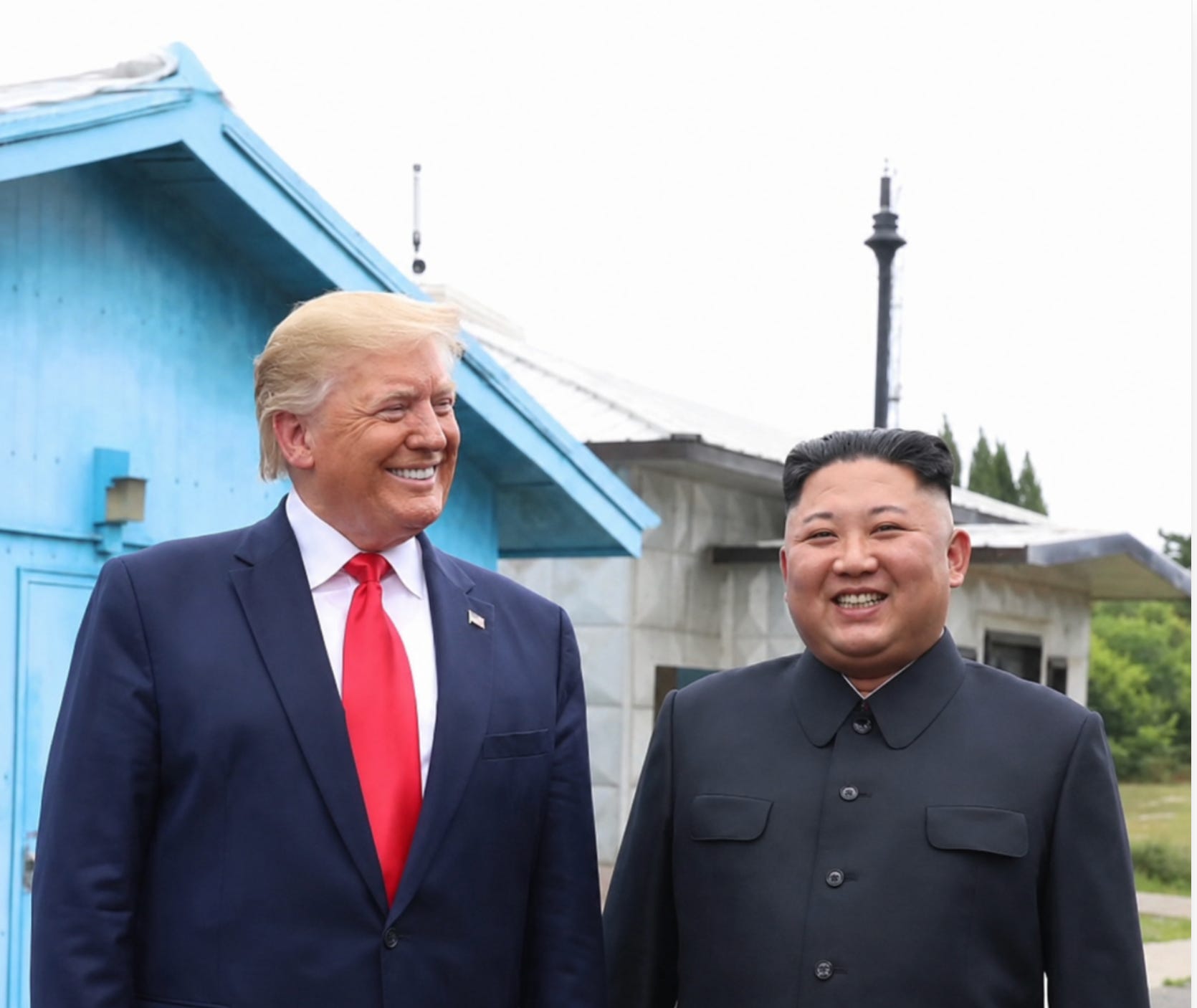
I'm surprised he didn't have someone simply use AI to change the photo. It took me all of two minutes to do this with ChatGPT - in fact it's so simple to do even Trump could have done it himself if he has a laptop.
I understand some readers find their email to be overloaded when they subscribe to lots of Substacks. If you’d rather not subscribe, or want to unsubscribe, to A Beta Brain, but still like some of what I post, you can bookmark it and check the stories periodically here:
To bookmark the above page: Press ⌘D on a Mac or Ctrl+D on Windows. If you use your browser’s Favorites/Bookmarks bar, you can also drag the bookmark there for easier access.
Yesterday
Key names are Martin Buber, Paul Tillich, Rollo May, Viktor Frankl, Carl Rogers, and Abraham Maslow, with an important caveat: they didn’t all formulate guilt in precisely the same way.
Rollo May — existential psychology; guilt arising from failures to fulfill one’s possibilities or responsibilities.
Viktor Frankl — responsibility is central to human existence; guilt can become an occasion for constructive change rather than something simply to be eradicated.
Paul Tillich — guilt and condemnation are fundamental dimensions of existential anxiety in The Courage to Be(1952).
Martin Buber — particularly useful because he explicitly distinguished existential guilt grounded in actual injury to relationships from neurotic guilt.
Carl Rogers — not primarily a theorist of guilt, but highly relevant through congruence: psychological health involves being able to recognize experience that conflicts with one’s preferred self-image rather than defensively distorting it.
Maslow is relevant through self-actualization, reality perception and personal responsibility, but I wouldn’t make him central unless you want a broader humanistic-psychology footnote.
Comments
Nothing yet. Say the first thing.
Sign in to join the conversation.