
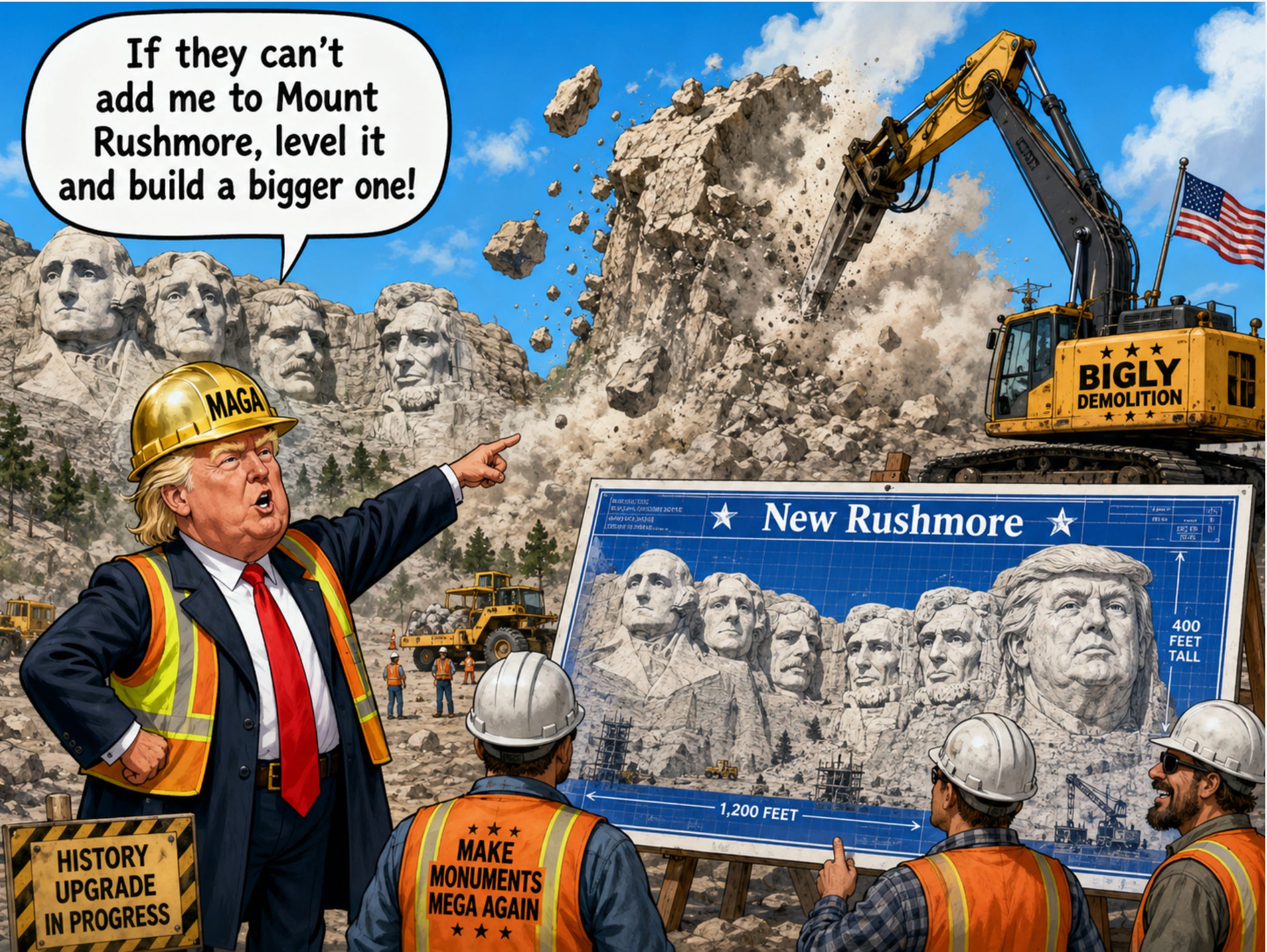
The cartoon is absurd, of course. Donald Trump is not about to level Mount Rushmore because geology makes it virtually impossible to add his face. But the joke works because the impulse behind it doesn’t feel entirely absurd. Trump has repeatedly expressed interest in being added to Mount Rushmore, and now, after failing to permanently attach his name to the Kennedy Center, he is once again finding ways to put it there.
The common thread may be more than vanity. Trump seems to want something rarer, more enduring than political power On the surface it may appear he yearns for a permanent place in the physical landscape of American history — buildings named himself and actual structures he builds. My sense is that he wants to enjoy as much of it as possible when he’s alive and doesn’t care as much as other world leaders do abut their place in history after they die.
I heard today about an “almost two-hour call” — a Kennedy Center board meeting conducted by Zoom on Thursday, August 13 — in which Trump participated. It isn’t clear how much of those nearly two hours Trump was on the call. If he spent anywhere near the entire time on it, that says a great deal about his priorities.
During that Zoom meeting, Trump’s hand-picked board ultimately voted 20–3 for a new way of putting his name back on the Kennedy Center after a federal judge had ruled the earlier renaming illegal and ordered his name removed. The board also voted to name the grounds around the center President Donald J. Trump Plaza.
It doesn’t take a psychoanalyst to tease out why Trump really wanted his name above the name of the Kennedy Center. JFK is an iconic and mythic American figure — think Camelot and his assassination. Add to that the fact that he was not only a Democrat, but one of the presidents who most powerfully defined the postwar Democratic Party.
History is full of rulers and governments trying to control public memory by changing names and removing monuments. Stalin’s name and image were stripped from countless public places during de-Stalinization, just as statues and symbols of defeated or discredited regimes have been removed elsewhere.
But Trump’s impulse seems almost the inverse: rather than removing others from an inherited symbolic landscape, he repeatedly tries to insert himself into it — and, where possible, literally above those who were already there.
I wonder whether, if he could, he’d simply go around removing monuments and street names honoring figures associated with liberal or Democratic political traditions. If he did, my city of Portland might no longer have a Martin Luther King Jr. Boulevard or a César E. Chávez Boulevard.
In partisan mythology, JFK occupies roughly the place for Democrats that Reagan does for Republicans. Trump seems much freer to encroach upon JFK’s symbolic territory than the GOP’s version of JFK, Ronald Reagan.
That contrast suggests that Trump may be more willing to appropriate JFK’s Democratic symbolism than to challenge Reagan’s protected place in Republican memory, where a direct claim to superiority could provoke a backlash from his own party.
Trump would rather compare himself to Lincoln. Lincoln is safer. He is a Republican, but he belongs to history more than to the identity of today’s GOP. Trump can place himself alongside Lincoln by suggesting he’s the greatest president since him. He doesn’t directly challenging the memory of Reagan, someone many current Republicans personally remember voting for, admiring and treating as the standard-bearer of their political generation.
The impulse toward symbolic self-aggrandizement isn’t limited to getting his name or face onto monuments. Trump has also remade the Oval Office in his own gilded aesthetic, reportedly wanting it to evoke Versailles.
It is all of a piece: existing national symbols and anything associated with the presidency do not seem grand enough until they bear his unmistakably grandiose, narcissistic imprint.
The Kennedy Center gets his name. Mount Rushmore should get his face. The Oval Office gets his gold.
What do the American people get?
Trump spent more than a decade starring in The Apprentice, a reality show built around Donald Trump playing Donald Trump. His second presidency has now been running for nearly 19 months, and at times it feels as though the format never really changed. The sets are far grander, the stakes are infinitely higher, and the audience is the entire country — held captive in a reality show we are no longer merely watching but living in, with Donald Trump insisting on remaining the star.

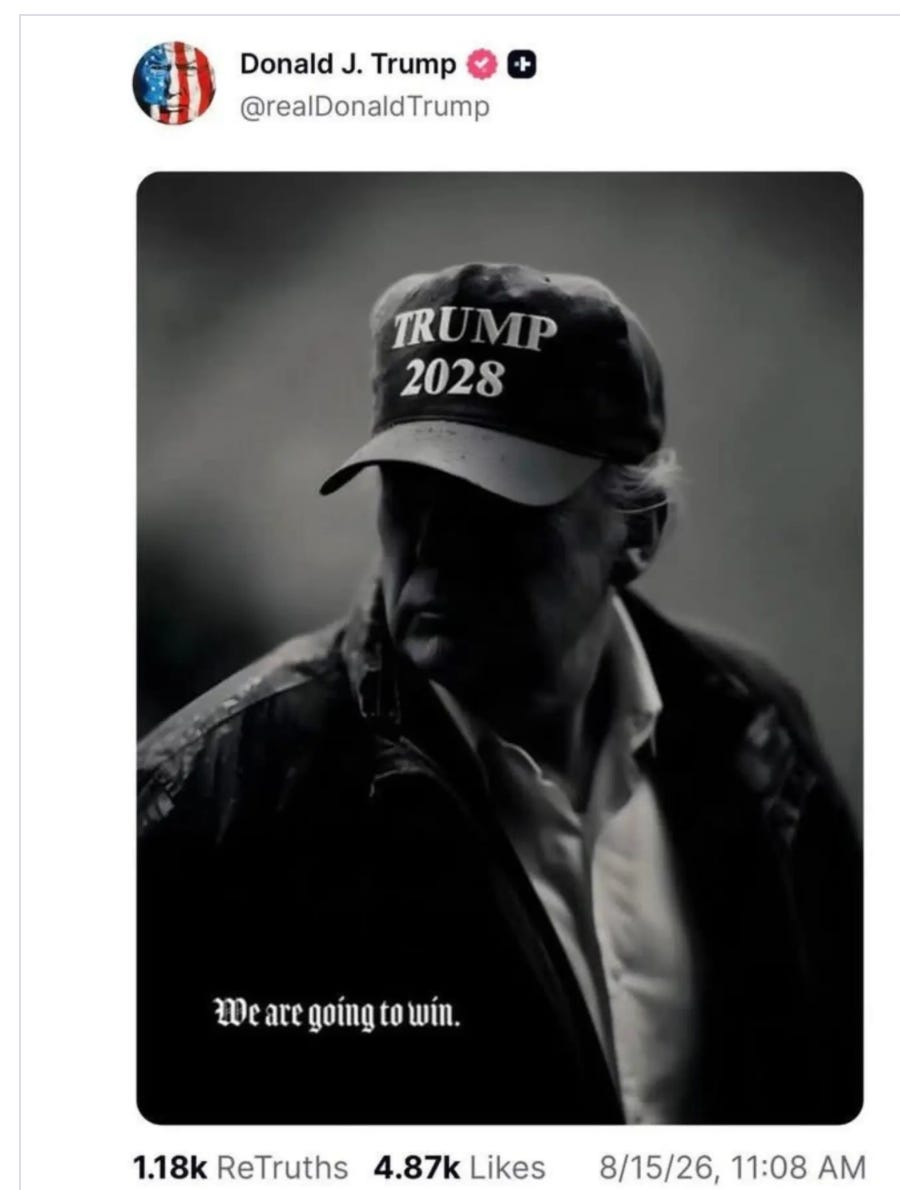
Yesterday this was posted by Trump:
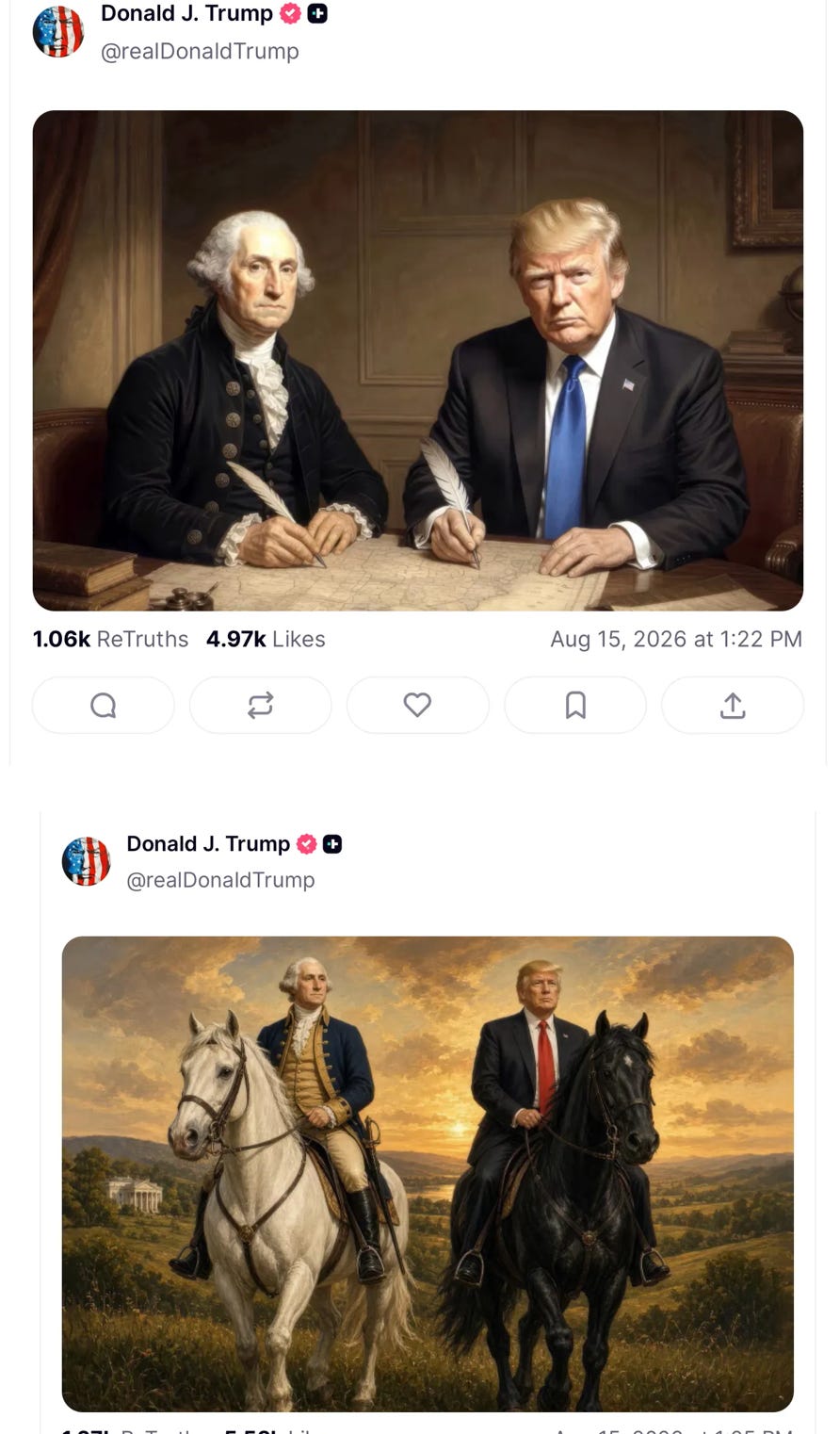
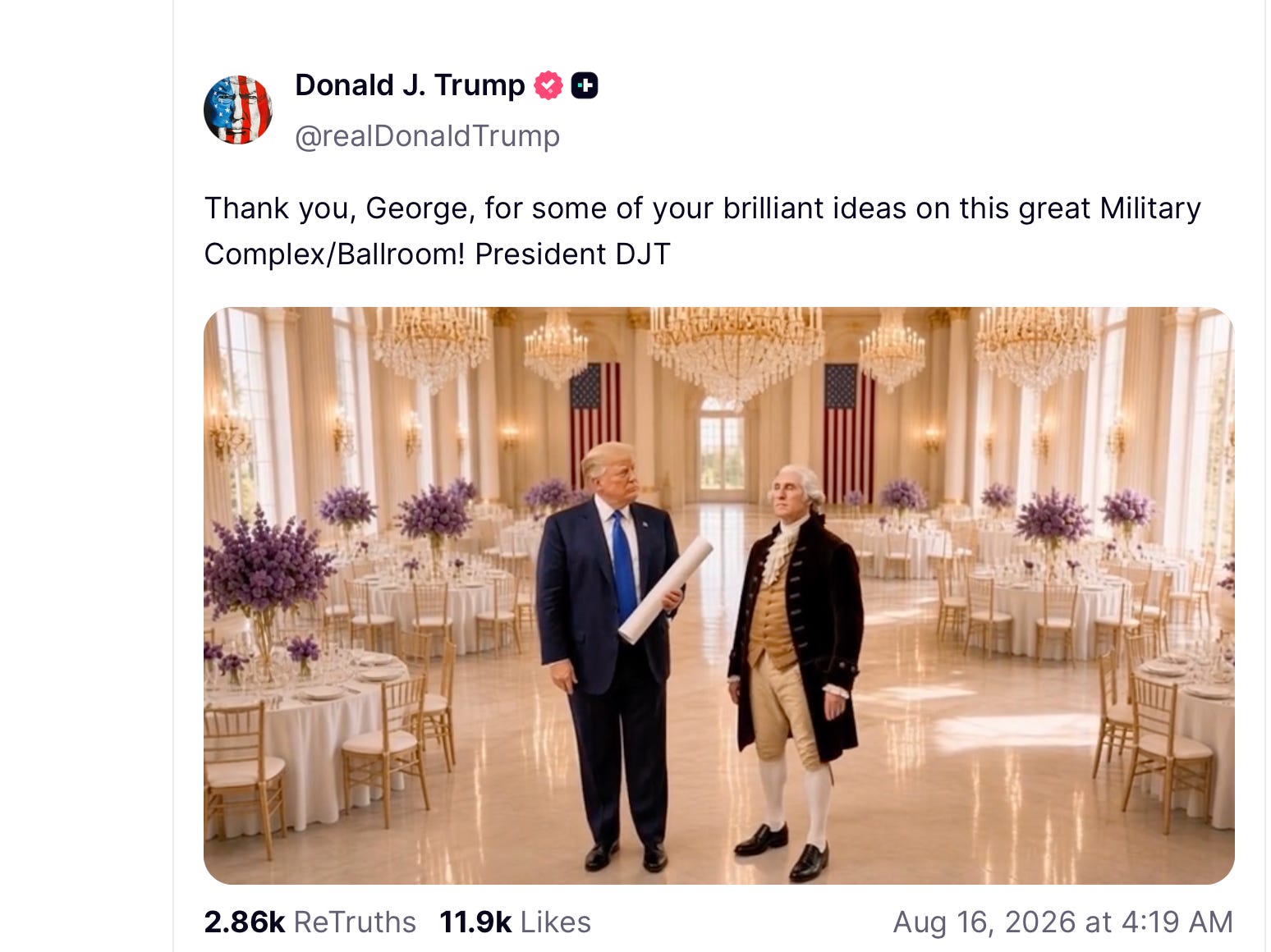
Call it grandiose or disgusting, Trump placing himself beside George Washington could hardly be richer. When an Army officer suggested in 1782 that Washington might become America’s king, Washington reacted with disgust and ordered him to “banish these thoughts from your Mind.” Washington fought to free America from a king—and later surrendered power voluntarily. He would not have regarded these images as flattering. He would have regarded them as a betrayal of everything the Revolution was fought to establish.
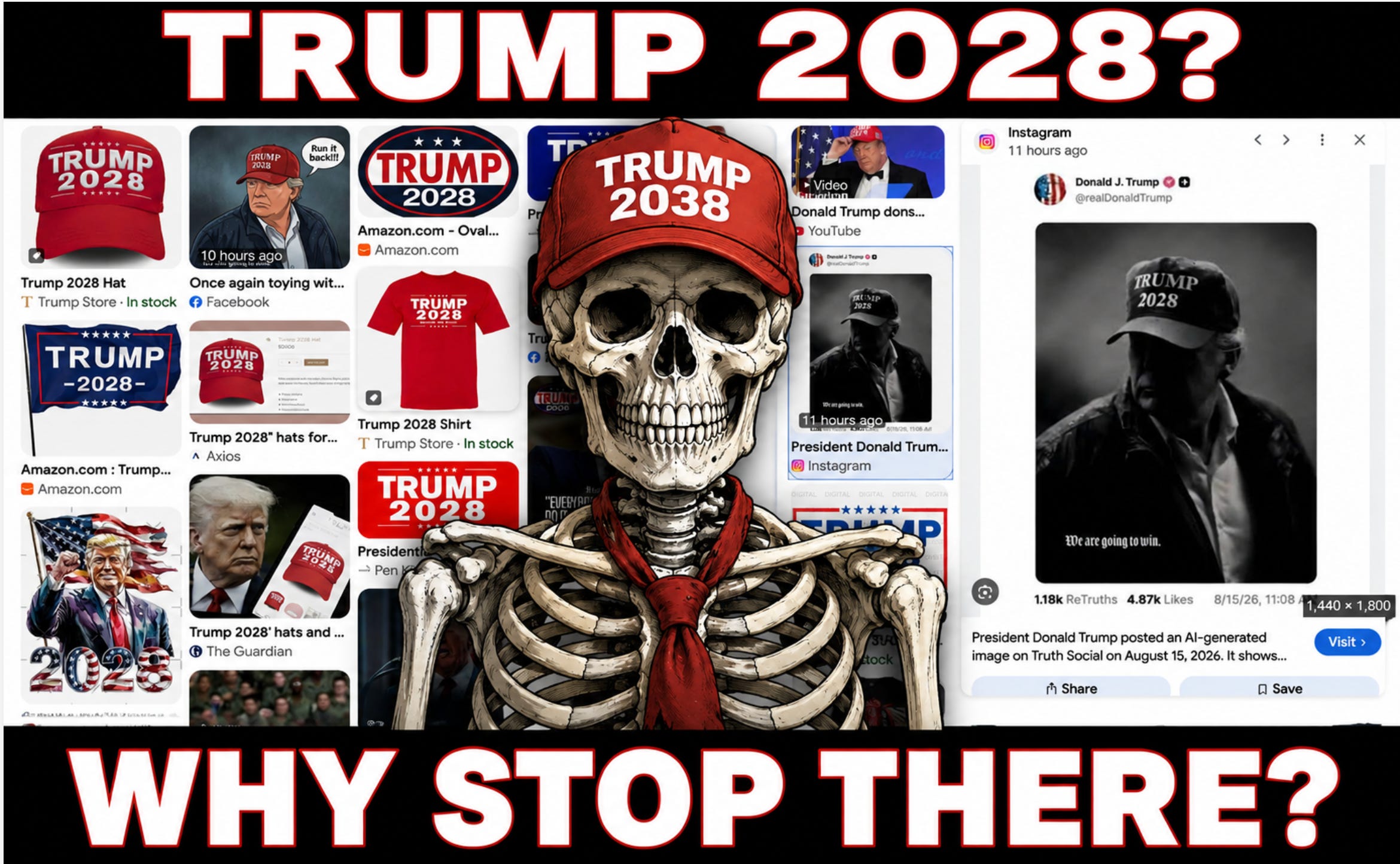
Lot’s of coverage of Trump posting this:
It prompted me to make this:
I understand some readers find their email to be overloaded when they subscribe to lots of Substacks. If you’d rather not subscribe, or want to unsubscribe, to A Beta Brain, but still like some of what I post, you can bookmark it and check the stories periodically here:
To bookmark the above page: Press ⌘D on a Mac or Ctrl+D on Windows. If you use your browser’s Favorites/Bookmarks bar, you can also drag the bookmark there for easier access.

Below is a cartoon riff on the famous Ludovico Technique in A Clockwork Orange.
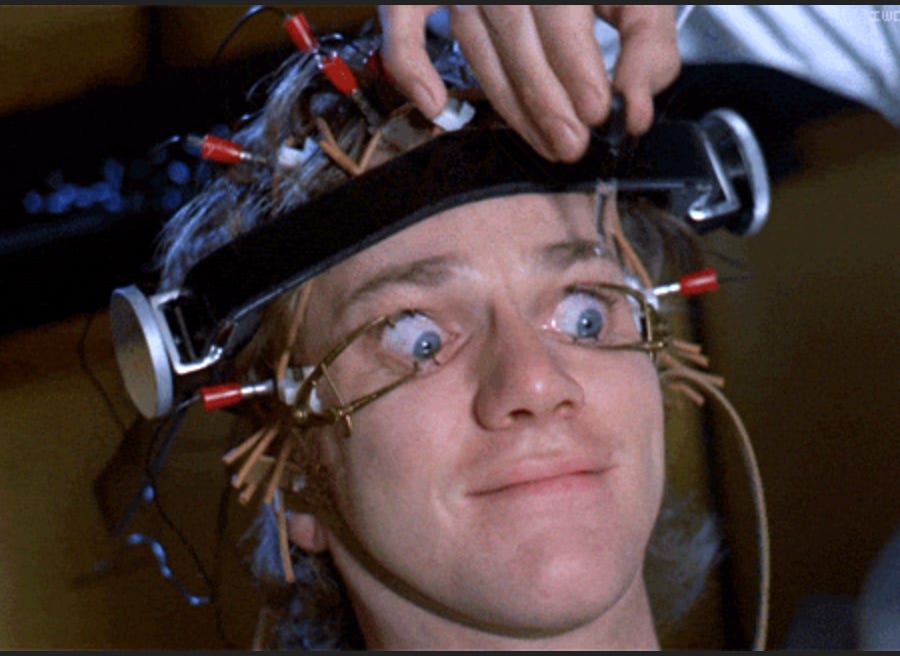
This is the fictional aversion-therapy procedure in which Alex is strapped into a chair with his eyes forced open and made to watch disturbing films while being conditioned to feel sickened by violence.
My version substitutes Trump for the violent films. The joke — with a bit of truth behind it — is that writing about Trump every day can sometimes feel like undergoing my own Ludovico Technique: eyes forced open, unable to look away, subjected to an endless loop of Trump because I have to keep watching in order to write about him.
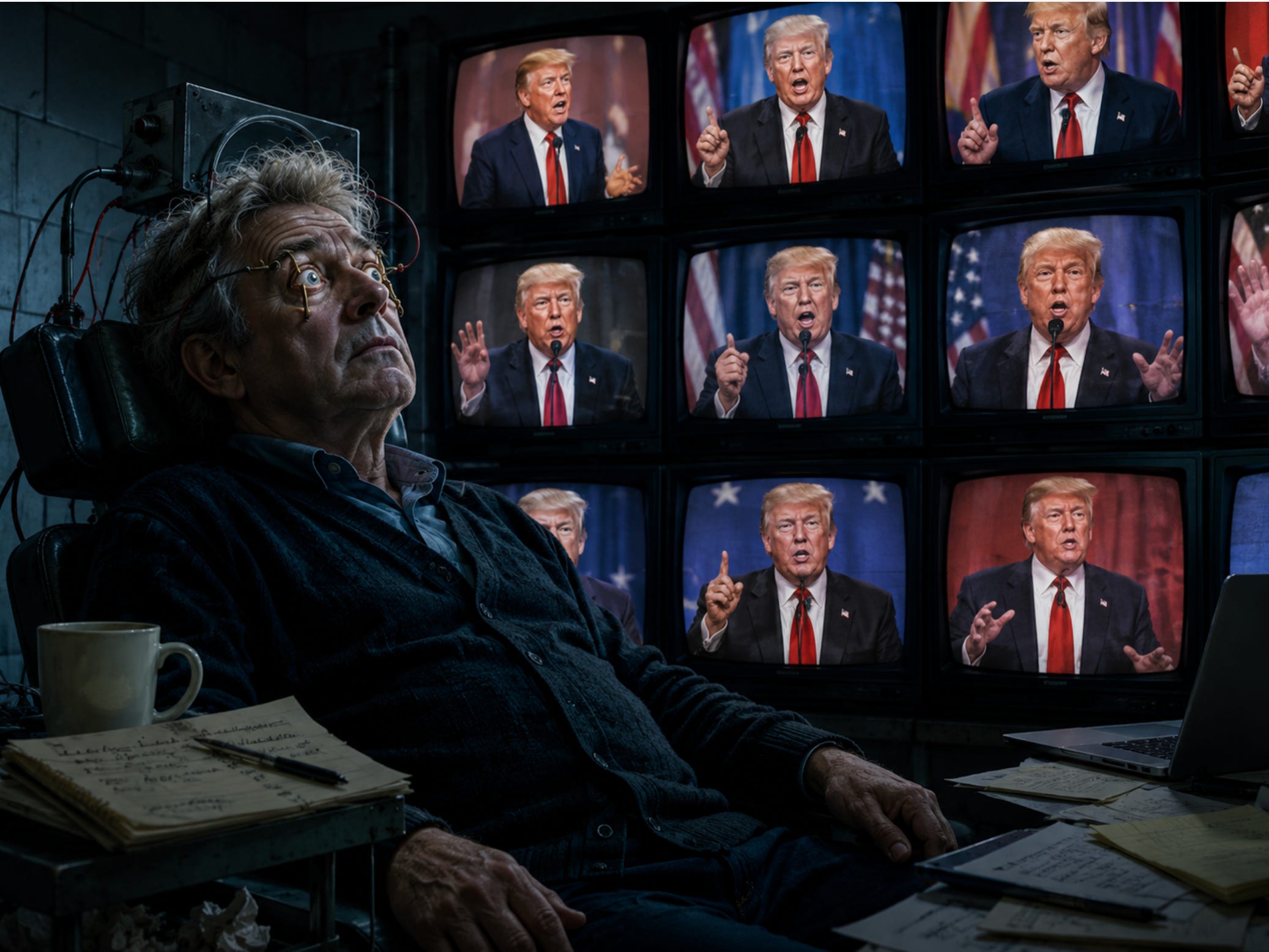
The cartoons below relate to Trump being shameless:., the topic of yesterday’s Substack

I was up for just a few minutes, barely starting to get the cobwebs out with a cup of coffee, when I saw a segment about six Trump-endorsed candidates who lost. I was inspired to use ChatGPT to make this. Since Trump and his spawn seem to have no guilt whatsoever about grift, it’s at least somewhat related to today’s Substack.
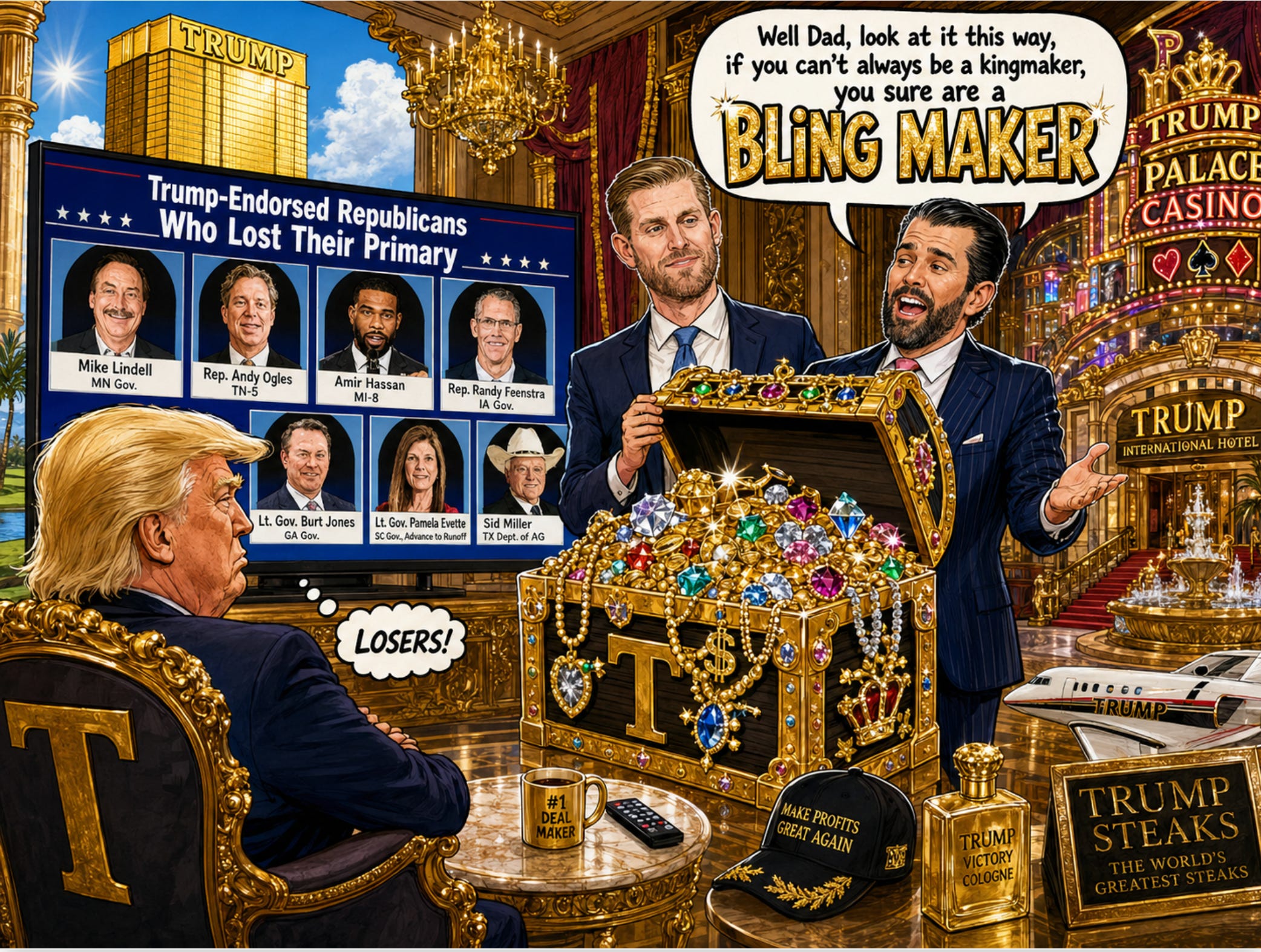
This was the segment I saw on MSNOW:
The image below can substitute for an entire Substack based on this:
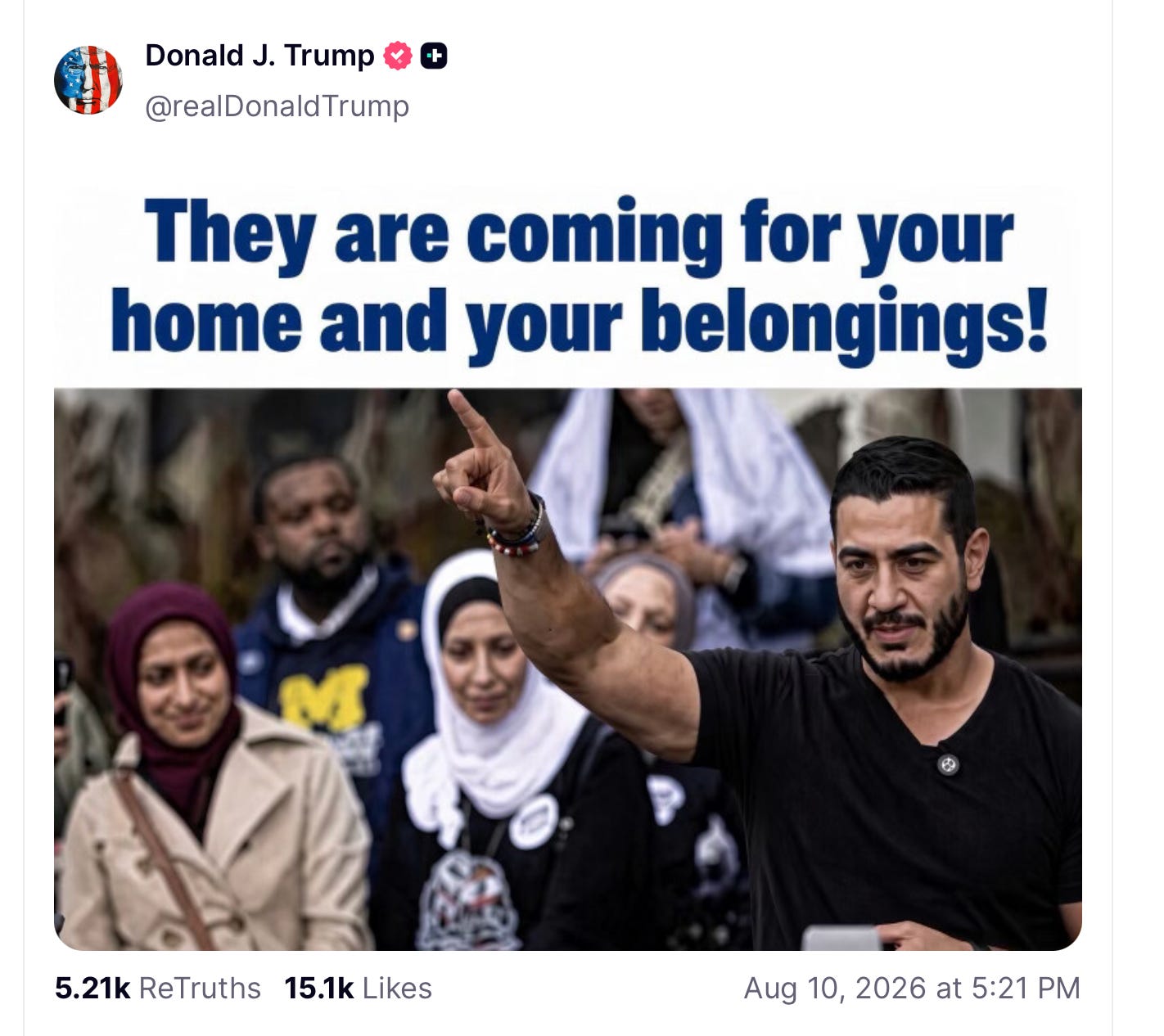
Also on this:
“Trump was asked for advice for Democrats going into the midterms. He responded:”
“Well, the one thing is we have jihadists being elected all over the place. We have this — whether it’s communism, jihadism…”
He then added that a friend had called him and told him he ought to use the word jihadist “because that’s what’s happening.” There is a transcript of the remarks from the August 10 White House even
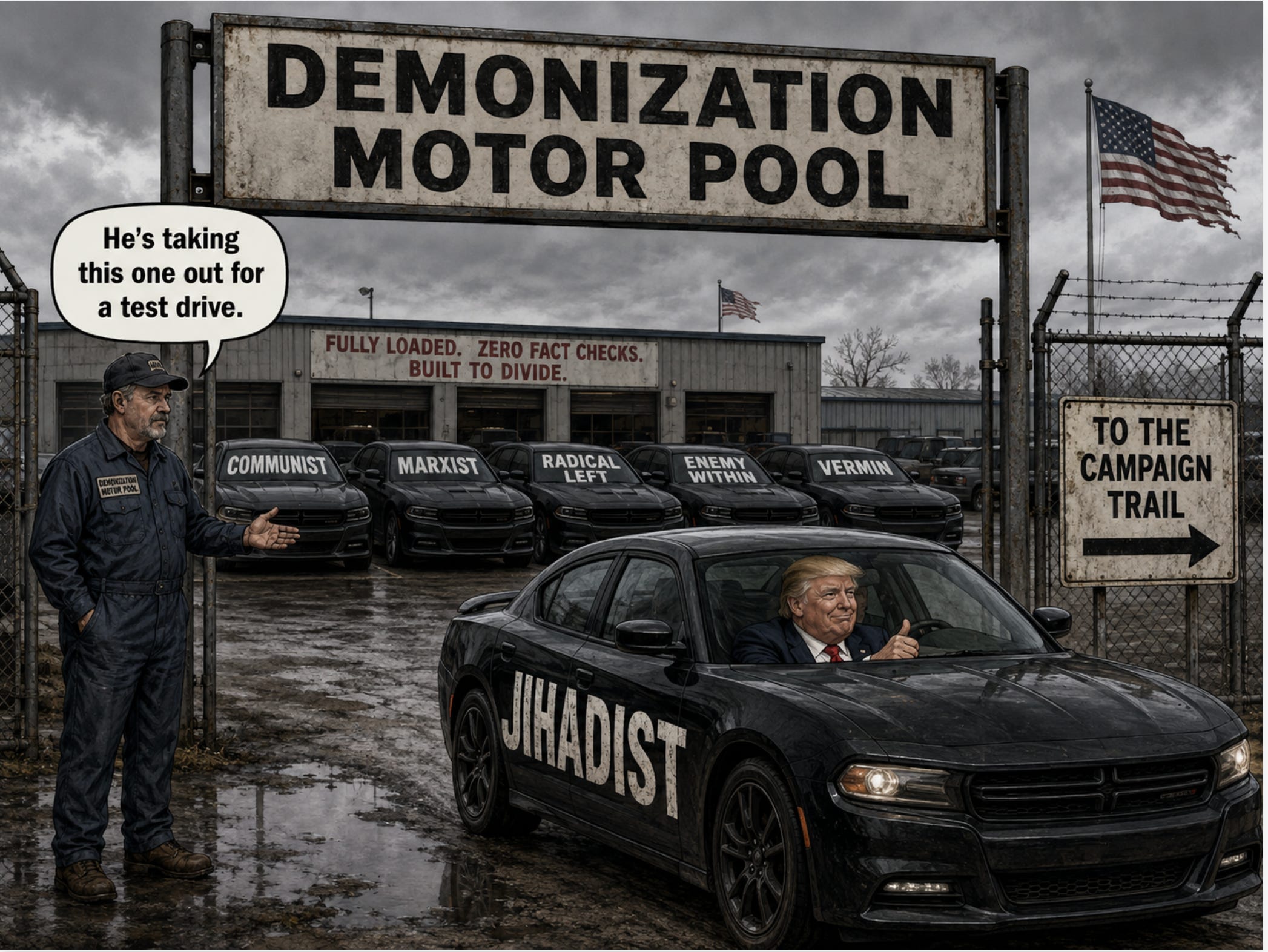
Above… this also fits in with Trump being shameless….
This doesn’t need an explanation:
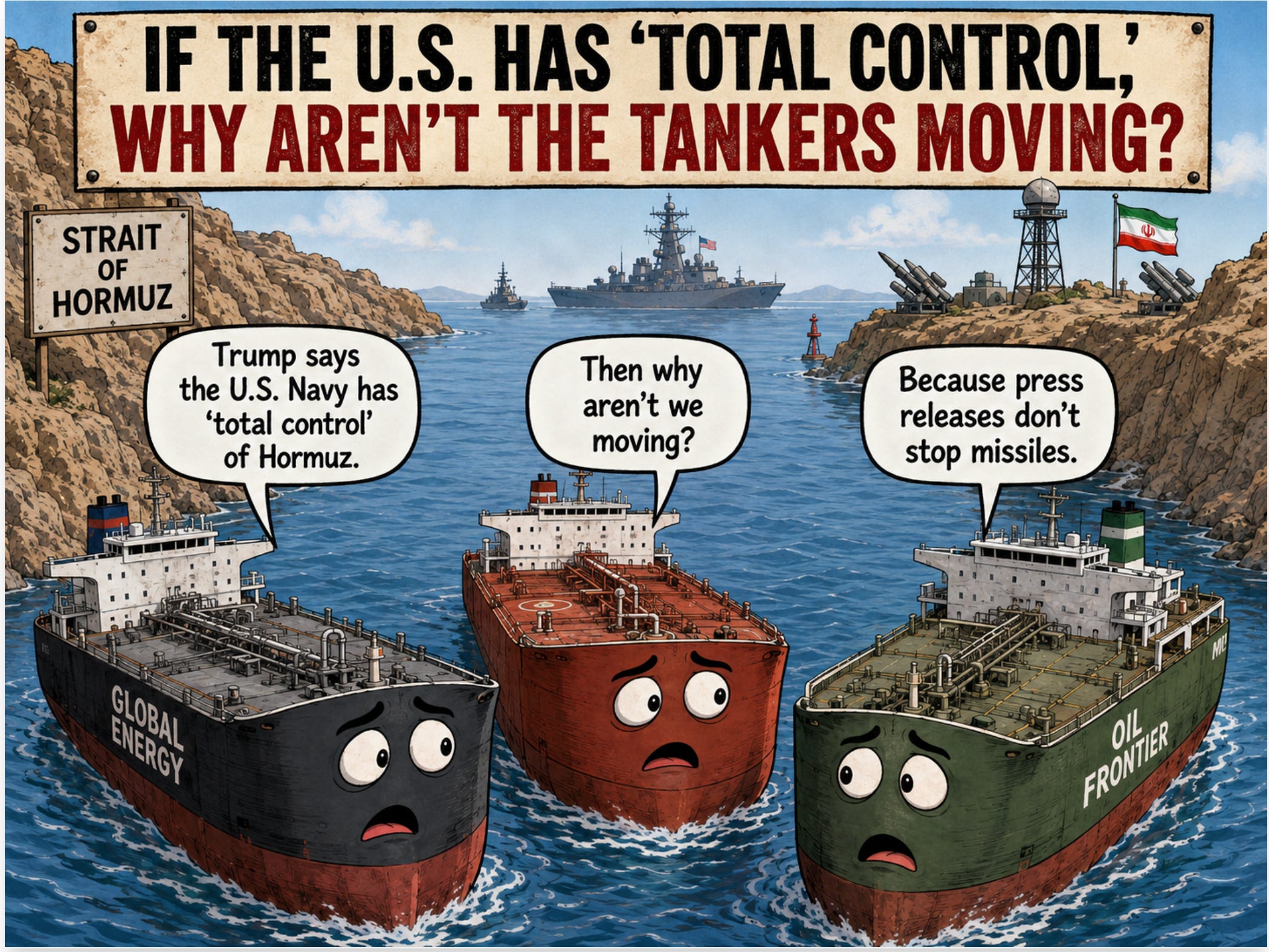
This was in USA Today:
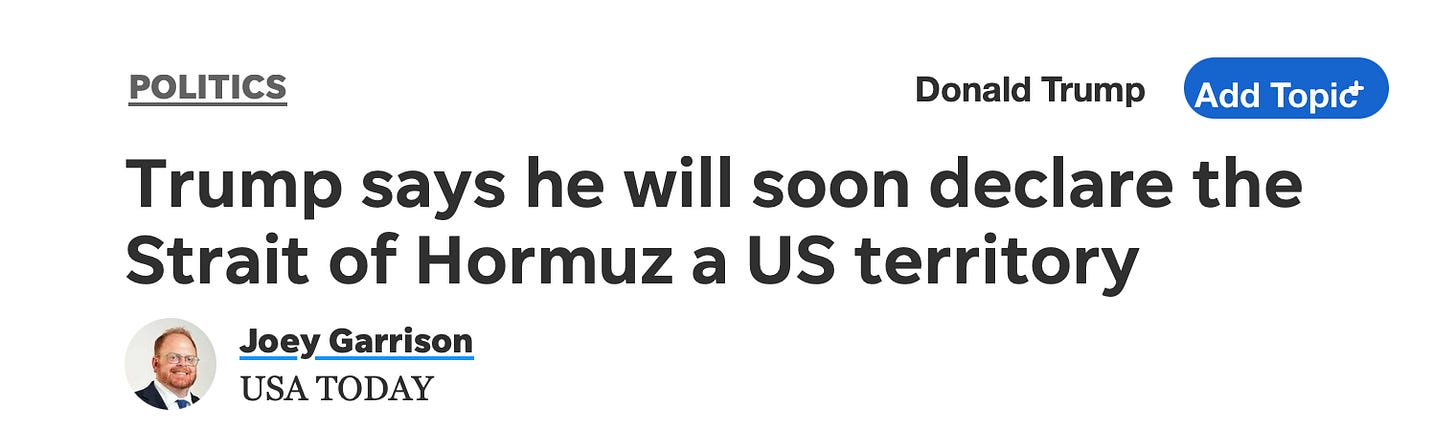
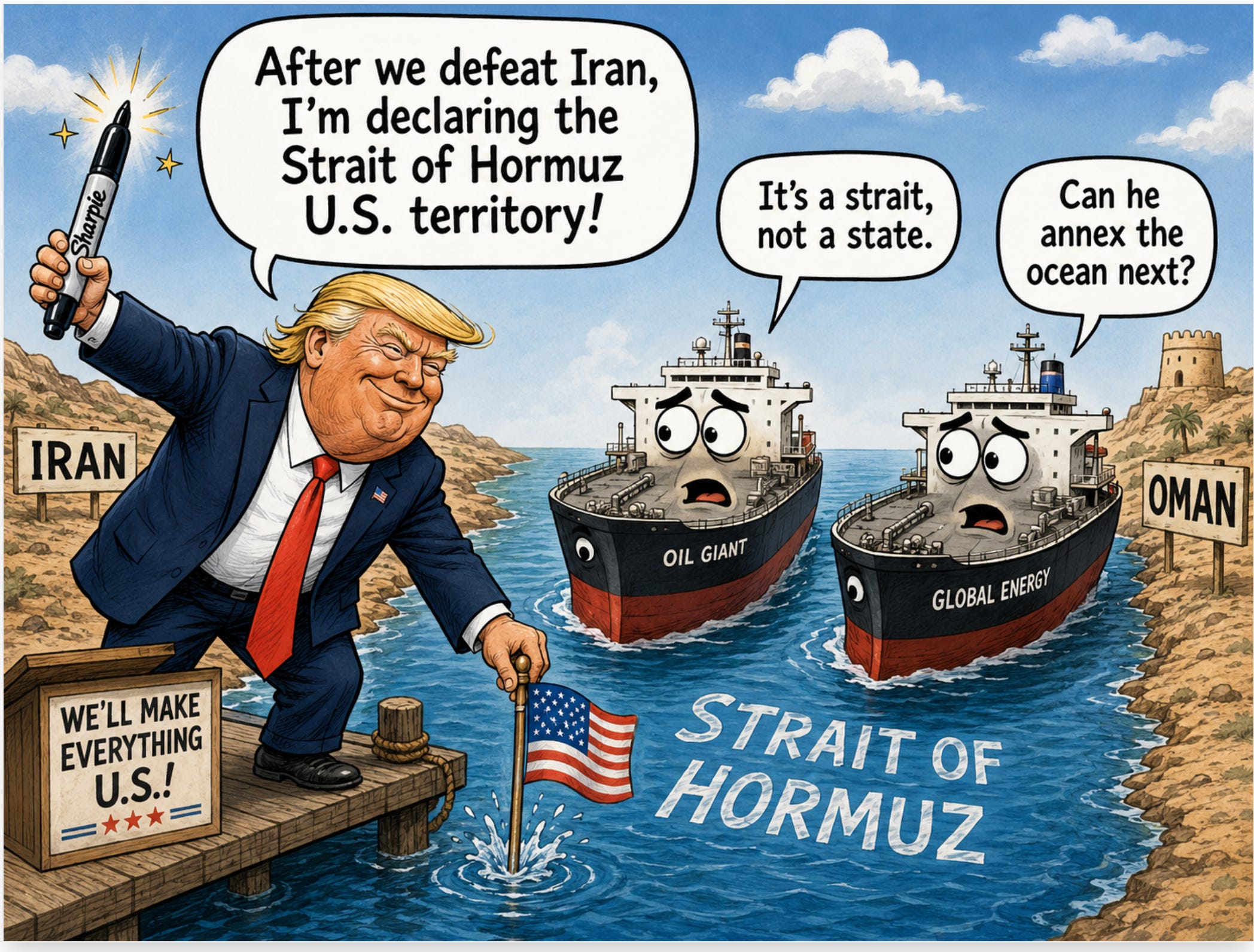
I did some research on this which confirms what I thought and then made another cartoon. >>
Trump can declare the Strait of Hormuz American territory, but that doesn’t make it so. The strait is not some unclaimed patch of ocean waiting for a flag: its waters lie between Iran and Oman and are subject to their sovereignty, while international law protects passage through it as a vital international waterway. The United States could patrol it, defend shipping through it, or even temporarily control it militarily—but simply announcing that it is now U.S. territory has no legal magic behind it.
Trump’s declaration has no legal effect because military control of a strait does not transfer sovereignty over its waters, especially when those waters lie between Iran and Oman and remain subject to international navigation rules.
My reaction to the following:
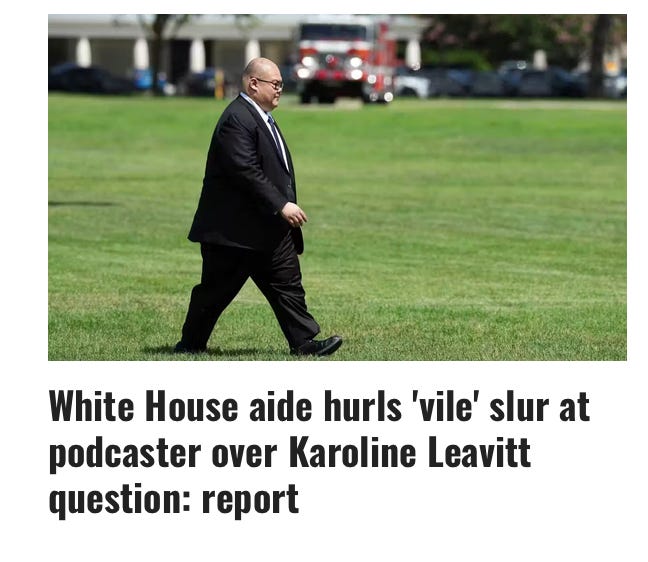
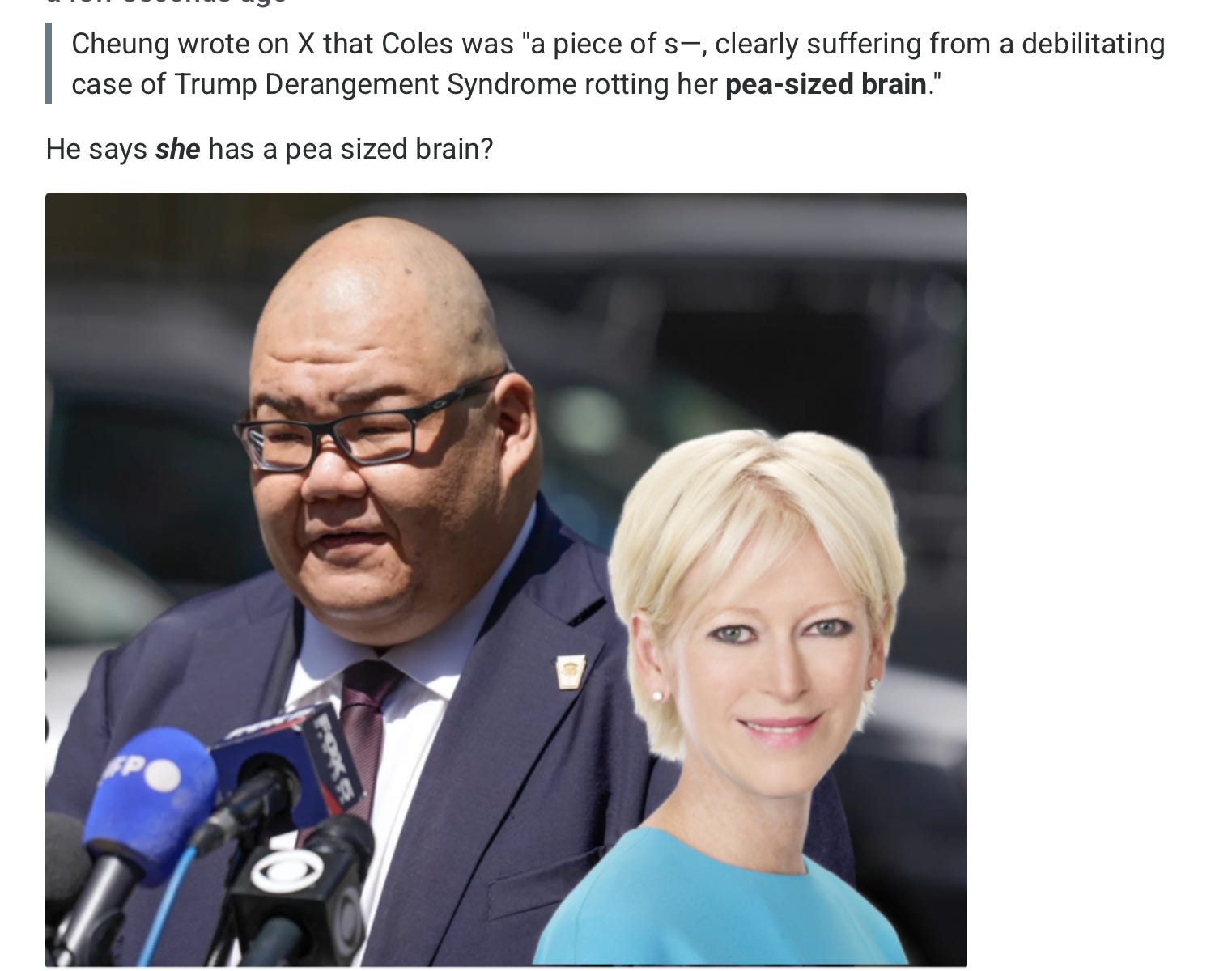
Trump posted the following about his great friendship with the leader of a communist country:
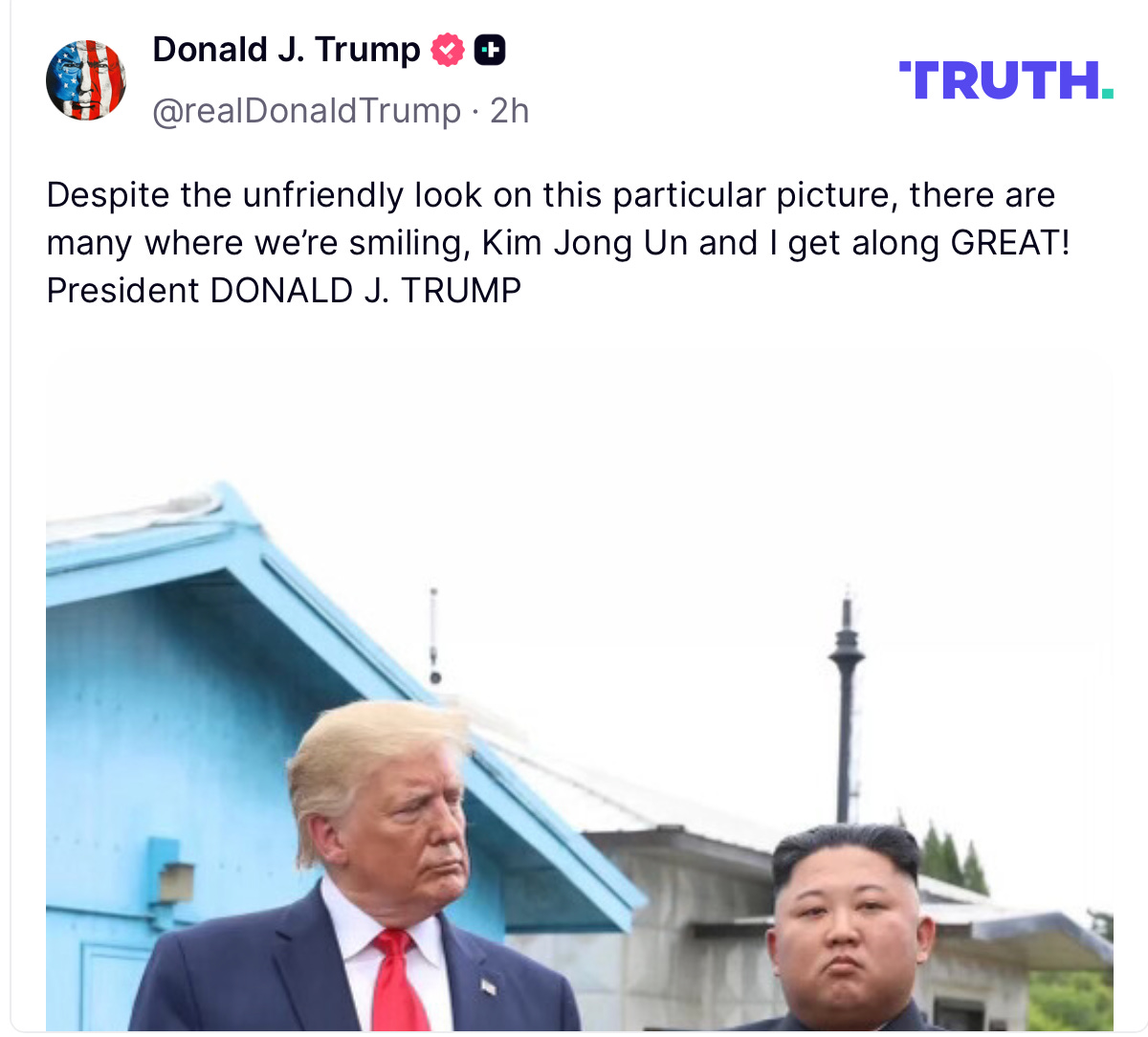
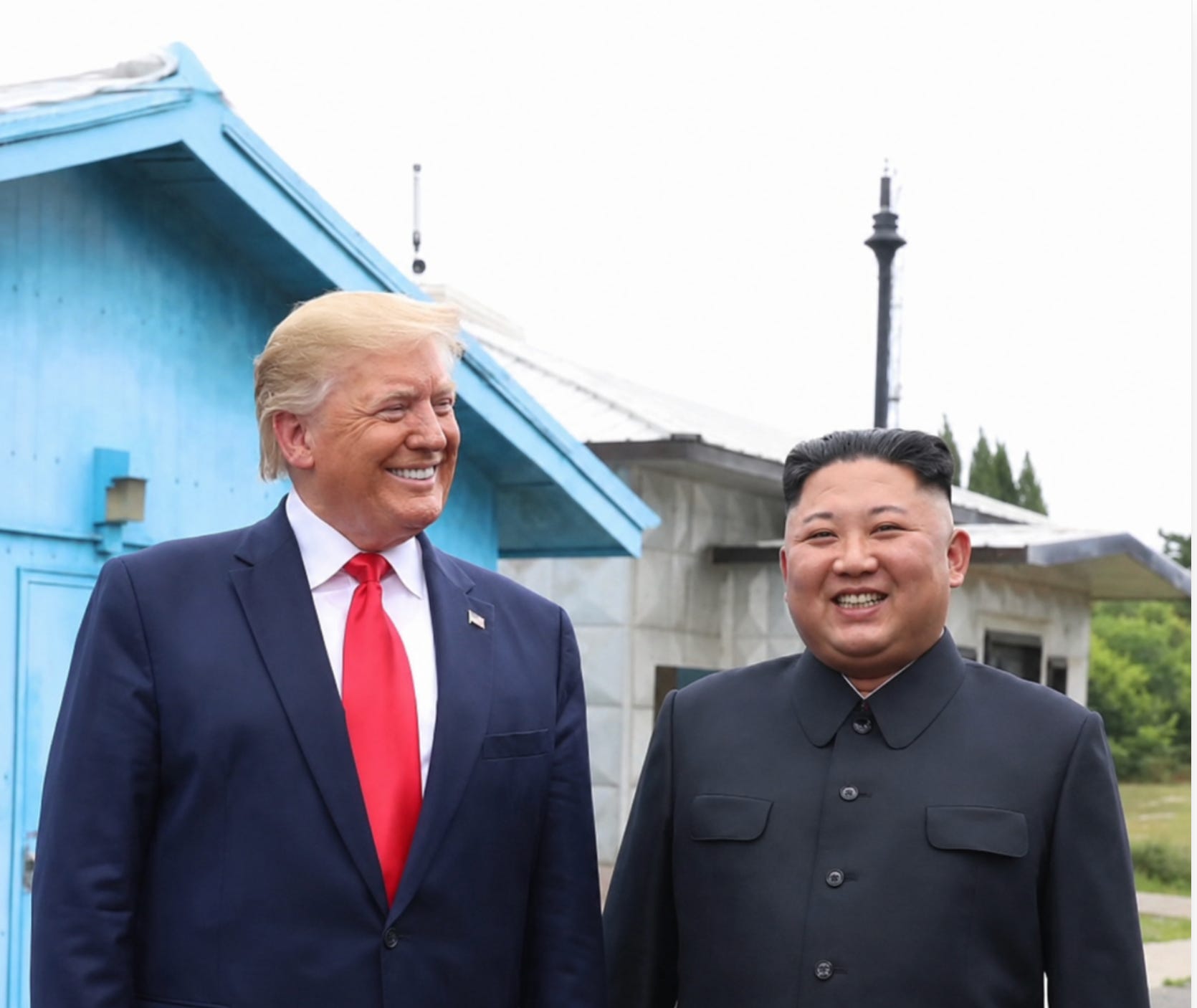
I’m surprised he didn’t have someone simply use AI to change the photo. It took me all of two minutes to do this with ChatGPT - in fact it’s so simple to do even Trump could have done it himself if he has a laptop.
I understand some readers find their email to be overloaded when they subscribe to lots of Substacks. If you’d rather not subscribe, or want to unsubscribe, to A Beta Brain, but still like some of what I post, you can bookmark it and check the stories periodically here:
To bookmark the above page: Press ⌘D on a Mac or Ctrl+D on Windows. If you use your browser’s Favorites/Bookmarks bar, you can also drag the bookmark there for easier access.
Yesterday
Comments
Nothing yet. Say the first thing.
Sign in to join the conversation.