
The Natalie Harp story continues to be in the news, seemingly with some new wrinkle every day. On Wednesday, for example, the Daily Mail published an article with the headline: “Trump’s under-siege aide Natalie Harp caught in foul-mouthed explosion as insiders reveal White House whispers about her close access to president.”
Meanwhile, Trump’s cozying up to Kim Jong Un is barely being covered.
Now attention is being paid to Trump’s involvement in cryptocurrency. On Wednesday, he hosted a group of crypto executives at the White House.
I consider the Harp story a distraction. The North Korea story is a serious international-relations problem because it upends our longstanding alliance with South Korea.
The crypto story is significant in another way.
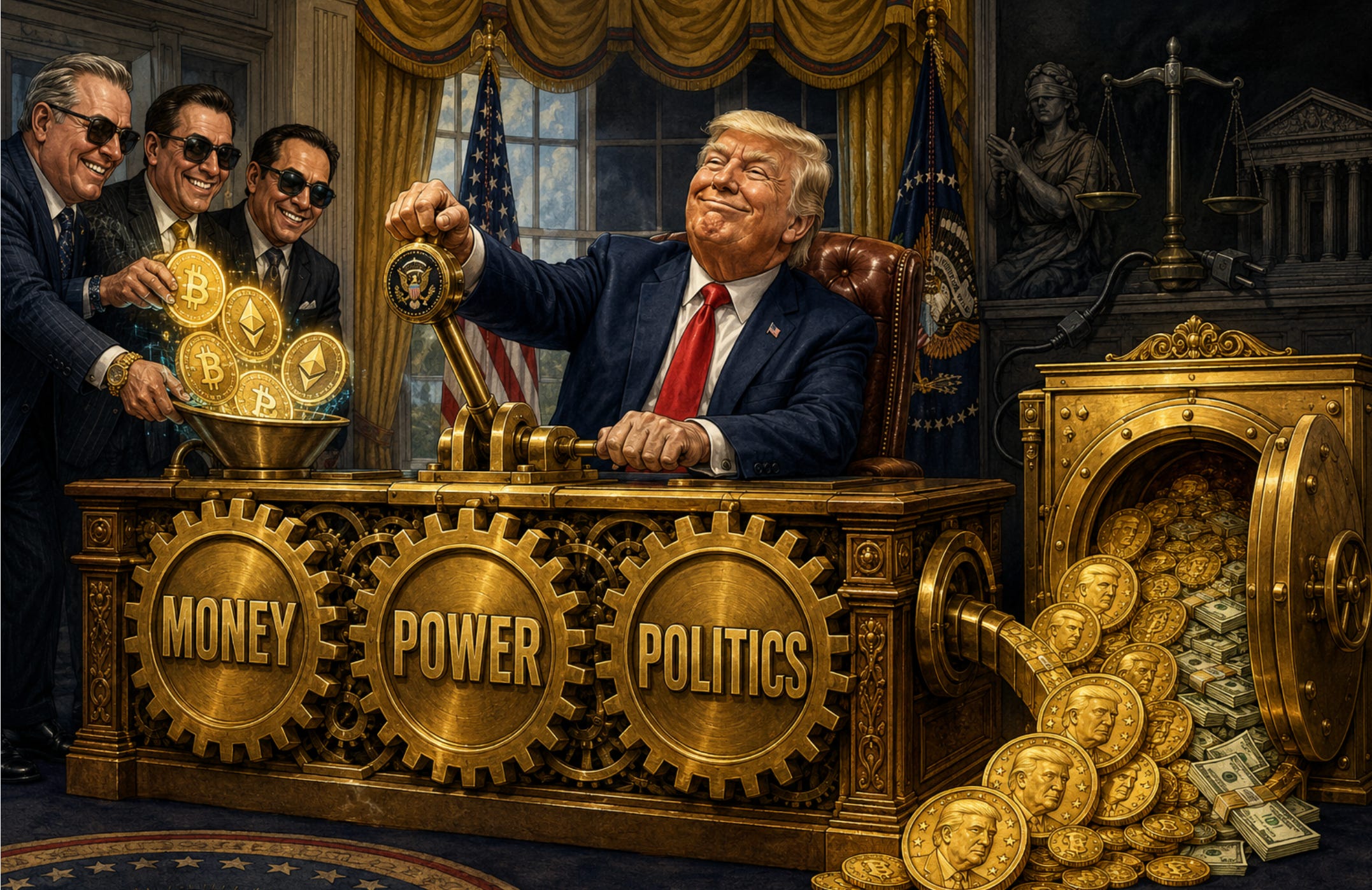
Trump’s crypto empire is part of the financial ecosystem surrounding his assault on accountable government. It provides a way for people seeking access or favorable treatment to enrich the president—and potentially themselves—while he weakens the institutions that might investigate them.
From what I can tell, this isn’t yet the stuff of blaring headlines. But there is evidence that much of the public already senses something is wrong. The challenge isn’t merely persuading people that Trump’s crypto profiteering is inappropriate. It is explaining why it belongs near the center of the larger Trump corruption story.
Crypto should not distract us from state violence, politicized law enforcement, attacks on elections and the courts, and executive impunity—issues at the very core of our democracy and constitutional government. Trump’s crypto operation does not directly cause these assaults. Its significance lies in how it fits into the same system of unaccountable power—and gives the president a personal financial stake in weakening the institutions meant to restrain him.
Crypto doesn’t have to pay directly for troops in the streets or prosecutors pursuing Trump’s enemies to serve his authoritarian project. Its role is less direct but no less insidious: the more opaque and less accountable the marketplace becomes, the more readily it can be used by people seeking influence—and by a president seeking personal profit.
Trump’s use of crypto moves the country further into a realm of shady deals that may never see daylight. It is another step toward an autocratic oligarchy in which favors can be sought through purchases, wealthy insiders prosper and the Department of Justice and other government watchdogs turn a blind eye.
At the same time, Trump is using his executive power and influence over Congress and federal regulators to shape the rules governing the crypto marketplace—a marketplace in which he and his family have an enormous personal financial interest.
This is where the crypto story and Trump’s assault on democracy converge: the president profits from a financial system whose value he can influence while weakening the institutions responsible for holding both that system and the president accountable.
The more the government becomes an extension of Donald Trump personally, the more valuable Trump-linked assets become. But becoming a multibillionaire does not, by itself, keep Trump in power. The political advantage comes when extremely wealthy people and powerful industries acquire a financial stake in keeping him powerful and beyond accountability.
Media moguls can influence what millions of people see and believe. The crypto industry offers Trump a different benefit: a money machine capable of enriching him, combined with a powerful financial constituency whose prosperity may be enhanced by his remaining in power.
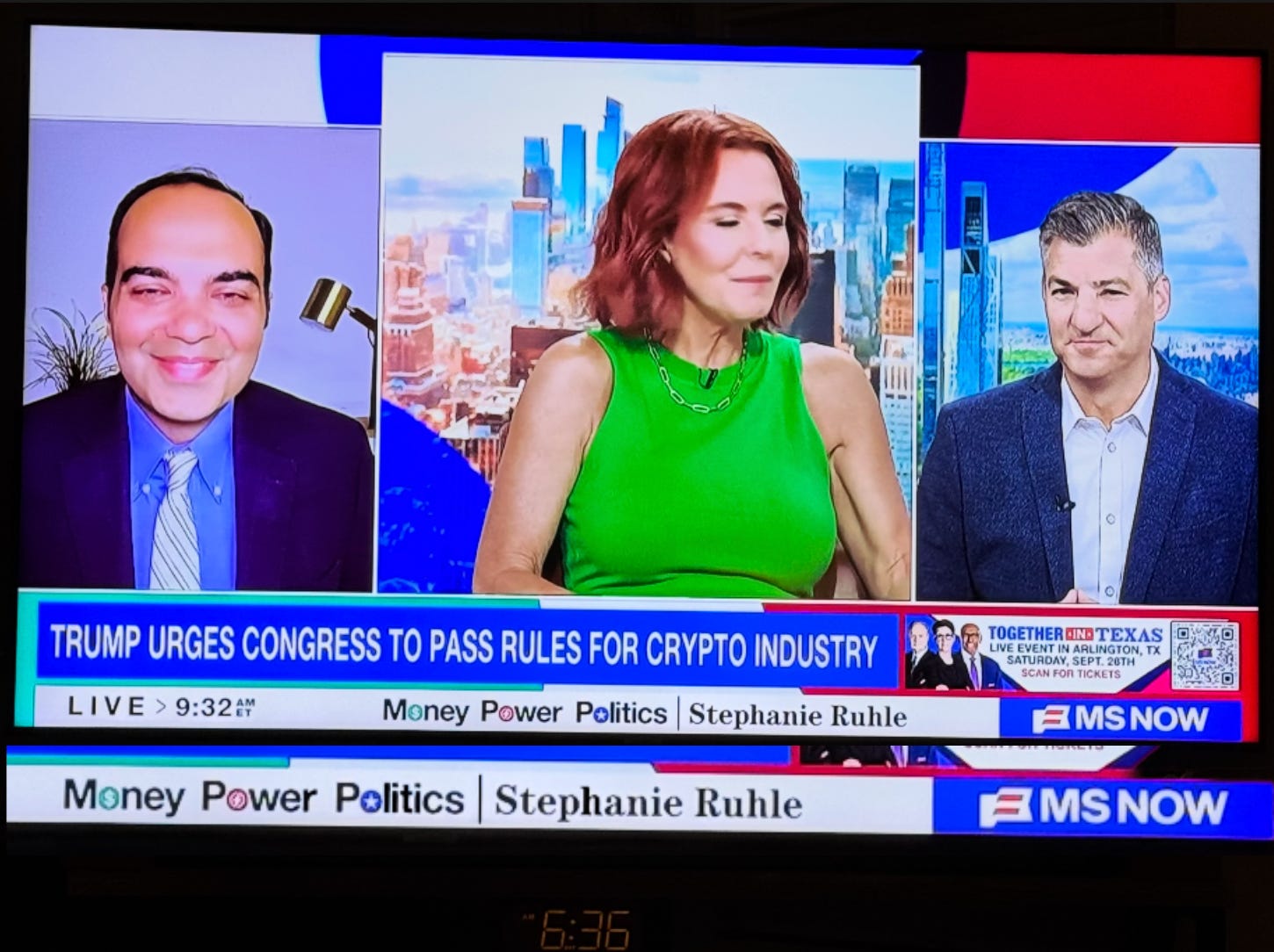
Stephanie Ruhle calls her MS NOW program Money, Power, Politics. No presidency has ever embodied that fusion more literally. Trump uses political power to generate private wealth, while wealthy interests acquire reasons to preserve his political power.
Under Trump, money, power and politics are no longer merely related. They have become a single, self-reinforcing enterprise.
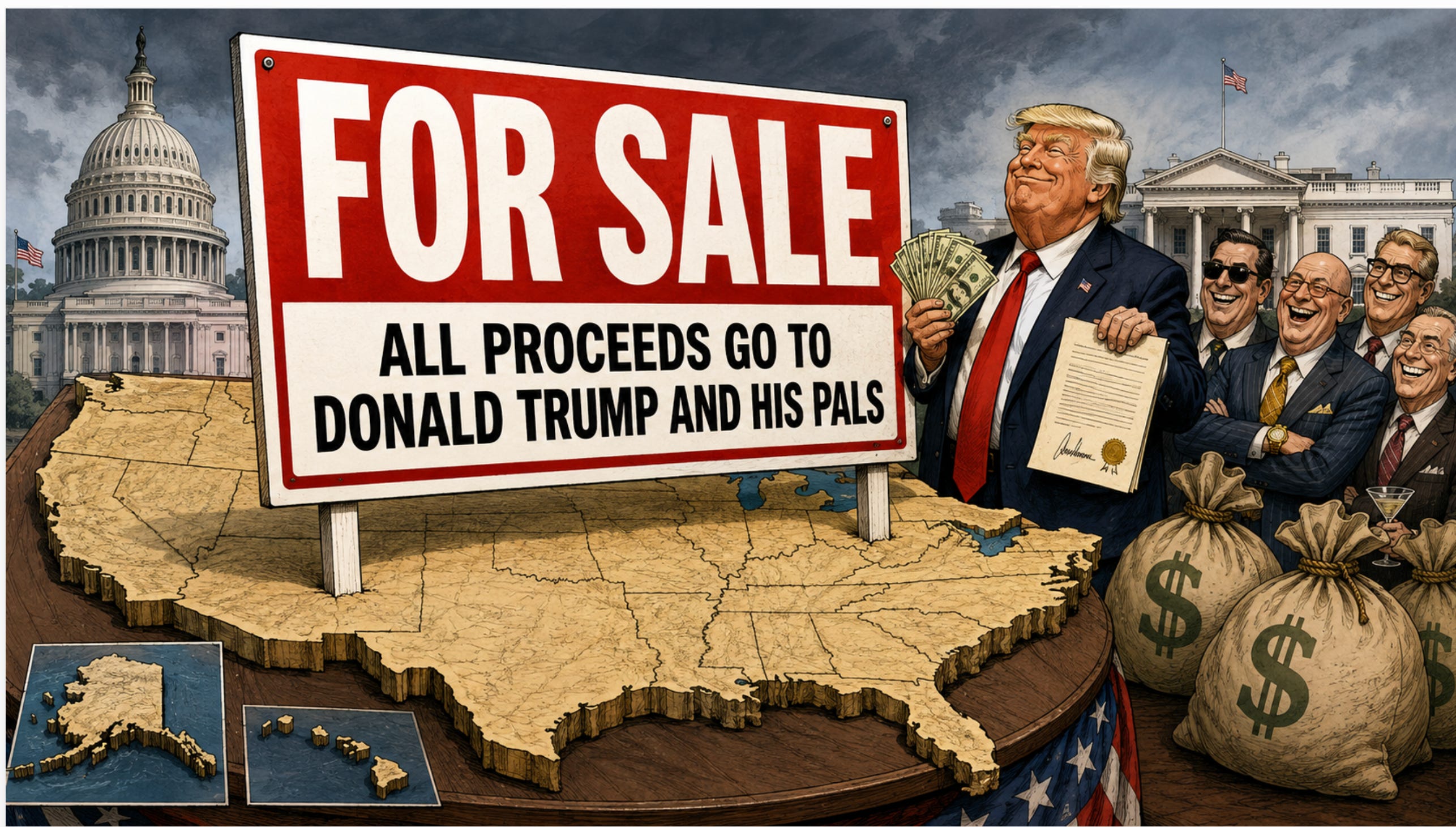
Tommy’s comment gave me the idea for this.

Addendum: On TV this morning Stephanie Ruhle was discussing the crypto industry.
Comments
Nothing yet. Say the first thing.
Sign in to join the conversation.