
Our third story transports us from the sexual transgression world to the world of charity and financial prudence. It concerns Mar Ukva, a first-generation Babylonian amora and the head of the diaspora, as well as the chief judge, in Shmuel’s time. The oven story is the first of a series of four, all of which address the charity-giving habits of the sages, and are offered as midrashim of sorts on the Torah obligations to give to the poor. The story goes like this:
מָר עוּקְבָא הֲוָה עַנְיָא בְּשִׁיבָבוּתֵיהּ דַּהֲוָה רְגִיל כׇּל יוֹמָא דְּשָׁדֵי לֵיהּ אַרְבְּעָה זוּזֵי בְּצִינּוֹרָא דְּדַשָּׁא. (יוֹם אֶחָד) [יוֹמָא חַד] אֲמַר: אֵיזִיל אִיחְזֵי מַאן קָעָבֵיד בִּי הָהוּא טֵיבוּתָא. הָהוּא יוֹמָא נְגַהָא לֵיהּ לְמָר עוּקְבָא לְבֵי מִדְרְשָׁא, אָתְיָא דְּבֵיתְהוּ בַּהֲדֵיהּ. כֵּיוָן דְּחַזְיֵוהּ דְּקָא מַצְלֵי לֵיהּ לְדַשָּׁא, נְפַק בָּתְרַיְיהוּ. רְהוּט מִקַּמֵּיהּ, עָיְילִי לְהָהוּא אַתּוּנָא דַּהֲוָה גְּרִופָה נוּרָא, הֲוָה קָא מִיקַּלְיָין כַּרְעֵיהּ דְּמָר עוּקְבָא. אֲמַרָה לֵיהּ דְּבֵיתְהוּ: שְׁקוֹל כַּרְעָיךְ אוֹתֵיב אַכַּרְעַאי. חֲלַשׁ דַּעְתֵּיהּ, אֲמַרָה לֵיהּ: אֲנָא שְׁכִיחָנָא בְּגַוֵּיהּ דְּבֵיתָא וּמְקָרְבָא אַהֲנָיָיתִי. וּמַאי כּוּלֵּי הַאי? דְּאָמַר מָר זוּטְרָא בַּר טוֹבִיָּה אָמַר רַב, וְאָמְרִי לַהּ אָמַר רַב הוּנָא בַּר בִּיזְנָא אָמַר רַבִּי שִׁמְעוֹן חֲסִידָא, וְאָמְרִי לָהּ אָמַר רַבִּי יוֹחָנָן מִשּׁוּם רַבִּי שִׁמְעוֹן בֶּן יוֹחַי: נוֹחַ לוֹ לָאָדָם שֶׁיִּמְסוֹר עַצְמוֹ לְתוֹךְ כִּבְשַׁן הָאֵשׁ, וְאַל יַלְבִּין פְּנֵי חֲבֵרוֹ בָּרַבִּים. מְנָא לַן — מִתָּמָר, דִּכְתִיב: ״הִיא מוּצֵאת״.
Mar Ukva had a poor man in his neighborhood, to whom he gave four zuz every day, leaving them in the hinge of the door of the recipient’s house. Lest this seem strange to you, this location is mentioned several times in the Talmud, in the context of expanding grain pushing out the door (b.Taanit 24a), and also in the context of leaving a remedy for night blindness for someone inside the hinge (b.Gittin 69a). Think of it as you would of a key left under a potted plant or under the doormat. The virtue of this arrangement was that there was no actual contact between Mar Ukva and the pauper, allowing the former to remain anonymous. But one day, the pauper got curious, and said: “I will go and see who is my benefactor.” It just so happened that, on that day, Mar Ukva was delayed in the study hall, and his wife joined him on his charity round.
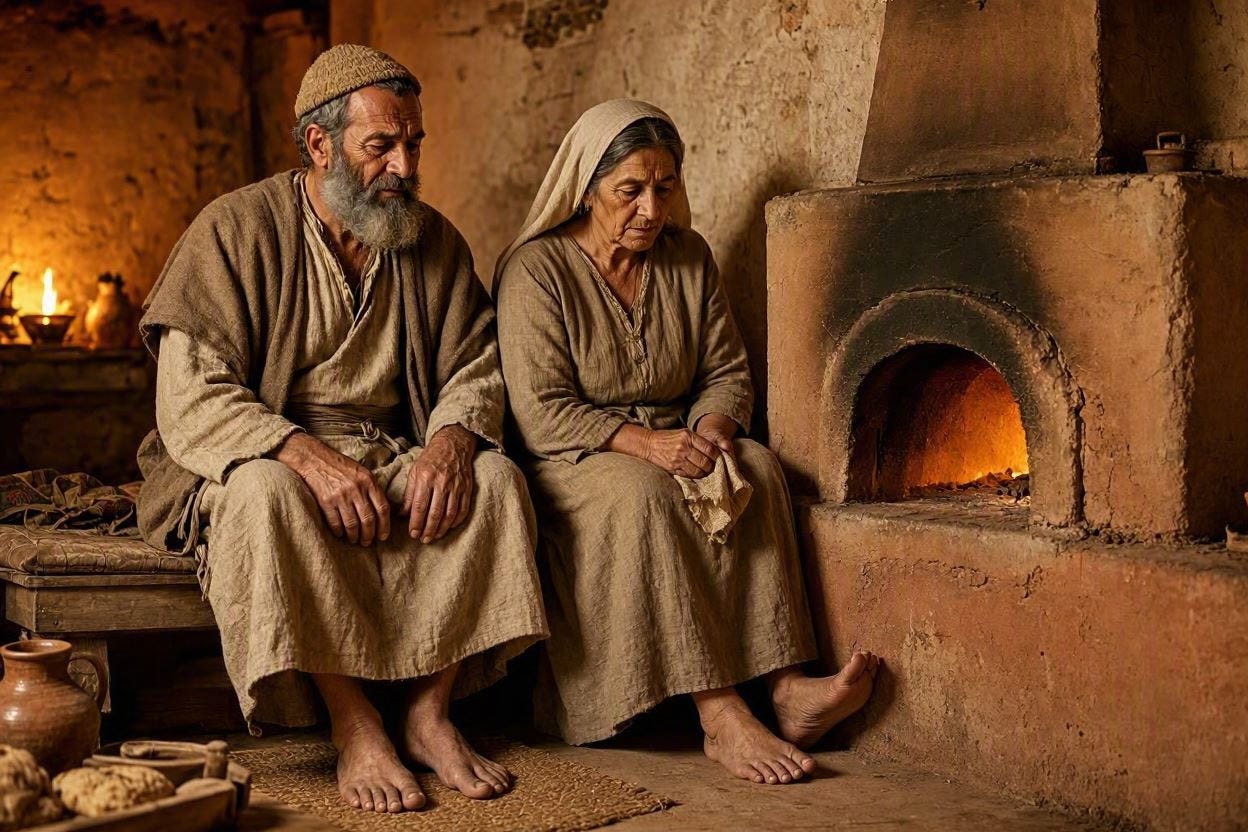
Apparently, placing the money in the hinge involved turning the door, and when the house’s inhabitants saw that the door was turning, the pauper went after them, to see who they were. Mr. and Mrs. Ukva fled from the pauper, presumably so that he would not find out who they were, and entered a furnace whose fire was already raked over and tempered but was still burning. Since we are not told that they got home safely, and since this would have to be an oven that would fit two people (or at least two pairs of legs) we might assume that this was a communal oven in some courtyard on their route home that they ducked into to throw off their pursuer.
We are then told that Mar Ukva’s legs were getting singed by the fire, and his wife said to him, “raise your legs and place them on my legs.” This suggestion deeply unsettled Mar Ukva; the Talmud uses the term halash da’ateih (חֲלַשׁ דַּעְתֵּיהּ) which, as Fraenkel explains, implies a state of extreme anger that also reflects some fragility, or loss of self control. Steinsaltz’s translation to English suggests here that Mar Ukva was upset because he understood “that only his wife was spared from burns, because she was more worthy.” But if we take this explanation seriously, it does not fully justify his discombobulation: wouldn’t any man rejoice at finding out his wife’s virtues? Ben Yehoyada hints at an explanation when he says:
הא דנעשה הנס לאשתו ולא לו נראה לי בס”ד דידוע אין הגבורות מתמתקין אלא בשורשן וכל מי שהוא ממדת הגבורה יוכל למתק הגבורות יותר. ולכן הבאירות שחפר אברהם אבינו עליו השלום שהיה סוד החסד סִתְּמוּם פְּלִשְׁתִּים וּמִלְּאוּם עָפָר (בראשית כו, טו) מצד הקליפות שלהם אבל יצחק אבינו עליו השלום חפר באירות ולא רבו עליהם כי הוא היה סוד הגבורה. לכן ממתיק הגבורות יותר וכיון דנמתקו הגבורות נמנעים ונחלשים הקליפות וידוע דהאשה היא בסוד הגבורה והאיש בסוד החסד לכן באיש אין אותיות ‘אש’ מחוברים יחד אלא יו־ד מפסיק ביניהם אך באשה אותיות ‘אש’ מחוברים ולכן אשתו של מור עוקבה היה לה כח למתק הגבורה ולהיות לה נס לקרר האש יותר מבעלה.
Using his explanation as a midrashic hook for Isaac’s biblical prowess in digging wells that did not provoke conflict, Ben Yehoyada suggests that scenarios involving heroism are overcome by people who have “a measure of heroism,” and, perhaps surprisingly, he remarks that “it is known that the woman is in the mystery of heroism whereas the man is in the mystery of mercy.” To this he adds gematric proof: the letters א and ש (forming the word “fire”) are linked in the word אשה (woman), but separated by a י in the word איש (man). That he associates femininity with heroism and masculinity with mercy appears to invert the stereotypical associations, and this, to me, could hint at the source of Mar Ukva’s distress. By offering him comfort and inviting him to lean his legs on hers, Mrs. Ukva is assuming the protective, enduring role in the relationship; were it not for her righteousness, this would imply physical sacrifice, but even so, it suggests that she can bear the weight of her husband’s presumably heavier legs. It is perhaps implied that Mar Ukva finds this emasculating.
This reading also explains why Mrs. Ukva rushes to placate her husband by explaining away—not to say minimizing—the virtues suggested by her fire resistance. She explains: “I’m usually inside the house, so the opportunity to give charity is always close by.”
There are several interesting ways to undersatnd this response. I think it’s pretty obvious that Mrs. Ukva is implying that, to the extent that her charity exceeds her husband’s, it is thanks to a happy accident of opportunity, rather than due to a loftier spirit or a more generous heart. Steinsaltz also suggests that charity distributed from inside the home is probably offered in the form of food, rather than money, and therefore can be enjoyed immediately, which is an advantage. This is an interesting take, considering that the mishnaic obligations to give charity come in both of these forms: through the tamhui—a food bank for the day—as well as through the qupah, a stash of money. I don’t recall reading that one was preferable to the other; giving charity as money is a practicality, because fresh food is not necessarily available at all times and places (see t.Pe’ah 4:9).
But on a deeper level, Mrs. Ukva’s response turns the entire story on its head, especially when considering the context of the story. The subsequent stories—one about Rabbi Abba and one about Rabbi Hanina—both can be read to imply some praise toward charity givers who avoid personal interaction with the recipients. Rabbi Abba, for example, would wrap coins in his scarf and toss the money behind him over his shoulder, inclining his eyes only to the extent necessary to protect the money from swindlers and ensuring that it gets into the right hands. Rabbi Hanina would send money weekly, and it was only through his wife that he found out that the recipient dined on fine tablecloths and thus was not in need of charity (he praised the swindlers nonetheless). But if we take Mrs. Ukva’s response seriously—and we must do so because, after all, her legs did not burn in the oven—then her form of charity, which involves interpersonal contact and making herself known to the recipients, is superior to Mar Ukva’s clandestine door-hinge practice.
This interpretation, of course, contradicts the coda to the story, which now reads as somewhat smarmy: Rabbi Yohanan cites Rabbi Shimon bar Yohai as saying that it is better to deliver oneself into the furnace than publicly embarrassing someone.
The insincere effect, including Mar Ukva’s inferior righteousness, is perhaps even intensified when considering the story’s immediate sequel, which also deals with Mar Ukva’s charity habits—but this time also addresses his death:
מָר עוּקְבָא הֲוָה עַנְיָא בְּשִׁיבָבוּתֵיהּ דַּהֲוָה רְגִיל לְשַׁדּוֹרֵי לֵיהּ אַרְבַּע מְאָה זוּזֵי כׇּל מַעֲלֵי יוֹמָא דְּכִיפּוּרָא. יוֹמָא חַד שַׁדְּרִינְהוּ נִיהֲלֵיהּ בְּיַד בְּרֵיהּ. אֲתָא אֲמַר לֵיהּ: לָא צְרִיךְ. אָמַר מַאי חֲזֵית? חֲזַאי דְּקָא מְזַלְּפִי לֵיהּ יַיִן יָשָׁן. אָמַר: מְפַנַּק כּוּלֵּי הַאי! עַיְיפִינְהוּ וְשַׁדְּרִינְהוּ נִיהֲלֵיהּ. כִּי קָא נִיחָא נַפְשֵׁיהּ, אֲמַר: אַיְיתוֹ לִי חוּשְׁבְּנַאי דִּצְדָקָה. אַשְׁכַּח דַּהֲוָה כְּתִיב בֵּיהּ שִׁבְעַת אַלְפֵי דִּינָרֵי סְיָאנְקֵי. אֲמַר: זַוְודַאי קַלִּילֵי וְאוֹרְחָא רַחִיקְתָּא. קָם בַּזְבְּזֵיהּ לְפַלְגֵיהּ מָמוֹנֵיהּ. הֵיכִי עֲבַד הָכִי? וְהָאָמַר רַבִּי אִילְעַאי, בְּאוּשָׁא הִתְקִינוּ: הַמְבַזְבֵּז — אַל יְבַזְבֵּז יוֹתֵר מֵחוֹמֶשׁ! הָנֵי מִילֵּי מֵחַיִּים, שֶׁמָּא יֵרֵד מִנְּכָסָיו. אֲבָל לְאַחַר מִיתָה לֵית לַן בַּהּ.
Mar Ukva had yet another beneficiary: a pauper to whom he sent four hundred zuz every Yom Kippur. Once, he sent his son to deliver the money, and the son witnessed the supposed pauper dripping old wine on the floor (Steinsaltz thinks for aromatic purposes, to accentuate the waste). Ukva Jr. concluded that the pauper was spoiled and did not need charity; Mar Ukva, though, thought that the pauper may fall into the category of the “formerly rich,” who find it difficult to adjust to reduced circumstances, and doubled his allowance. Upon his death, he checked his records, concluded that he had not given enough money, and donated half his money, looking to ease his way into the heavens. Despite the fact that this generous giving far exceeded the Usha regulation, which set an upper limit for charity of a fifth of a person’s wealth, the Talmud concludes that one can give more at death: after all, you can’t take it with you.
Read on its face, the story praises Mar Ukva’s excessive generosity, and explicitly creates an exception to the Usha regulation; read against the prior story, however, the story might present Ukva’s enhancement of his pauper’s allowance, and his panicked giving to ease his path in the afterworld, as somewhat silly, unwordly, and maybe excessively showy, especially when contrasted with his wife’s practical, no-nonsense giving. For all his effort to retain his anonymity, the praise he receives in the subsequent story paints an unconvincing veneer on his generosity; the evidence is in the burnt shins.
Comments
Nothing yet. Say the first thing.
Sign in to join the conversation.