
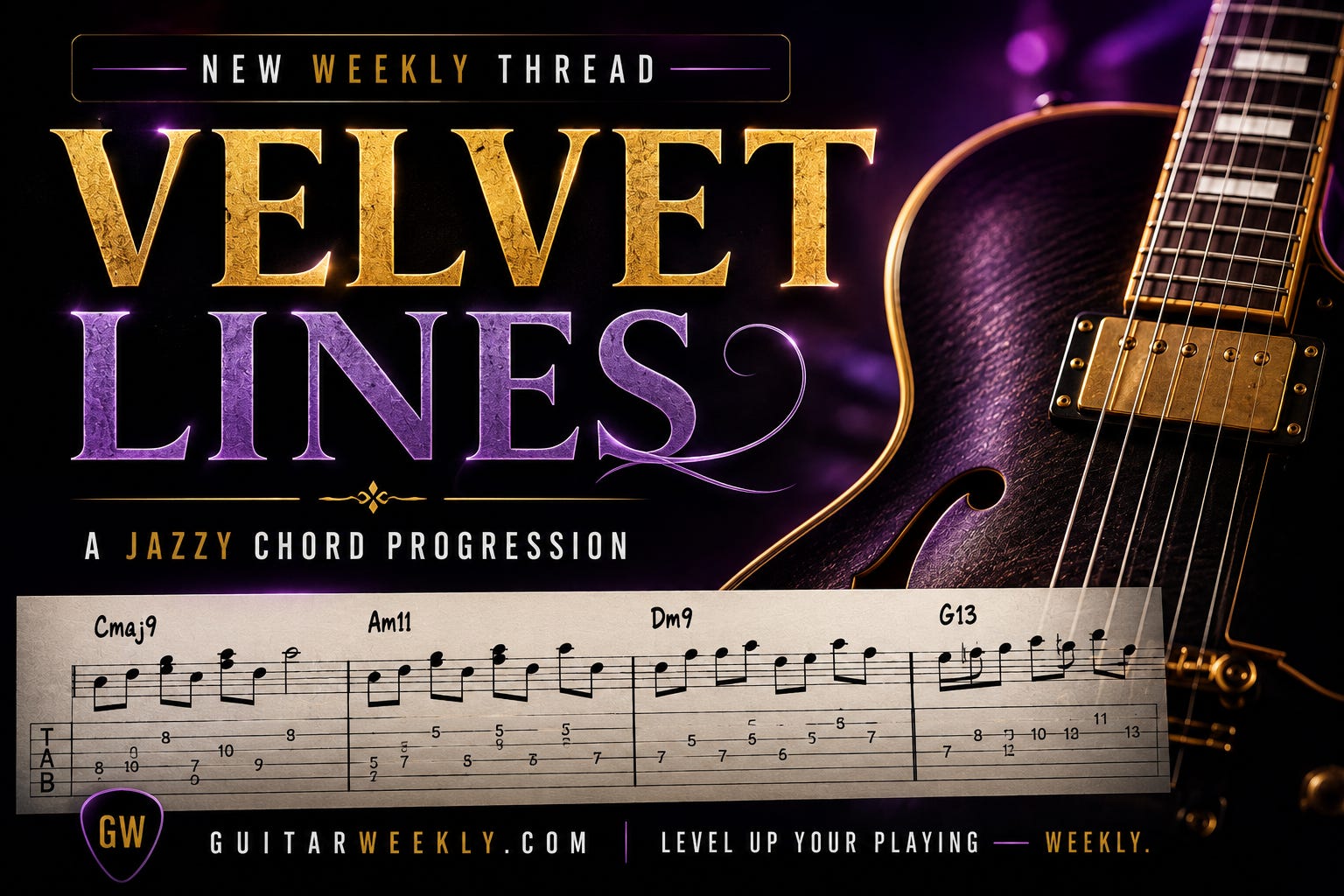
Quick note: this post is a preview of this week’s Guitar Weekly member lesson. The full Weekly Thread, including tabs, diagrams, Soundslice, and PDFs, lives at GuitarWeekly.com.
C - Am - Dm - G.
You probably already know that progression. It’s one of those friendly loops that shows up early and never really leaves.
But this week’s thread asks a better question:
What happens when you stop treating it like a beginner progression and start dressing it up?
In Velvet Lines in C, that familiar C-Am-Dm-G loop becomes:
Cmaj9 - Am11 - Dm9 - G13
Same I-vi-ii-V movement. Same key of C major. Same relaxed tempo. But with one added color note per chord, it starts to sound more like a jazz standard than a campfire progression.
The thread moves through the idea in three layers.
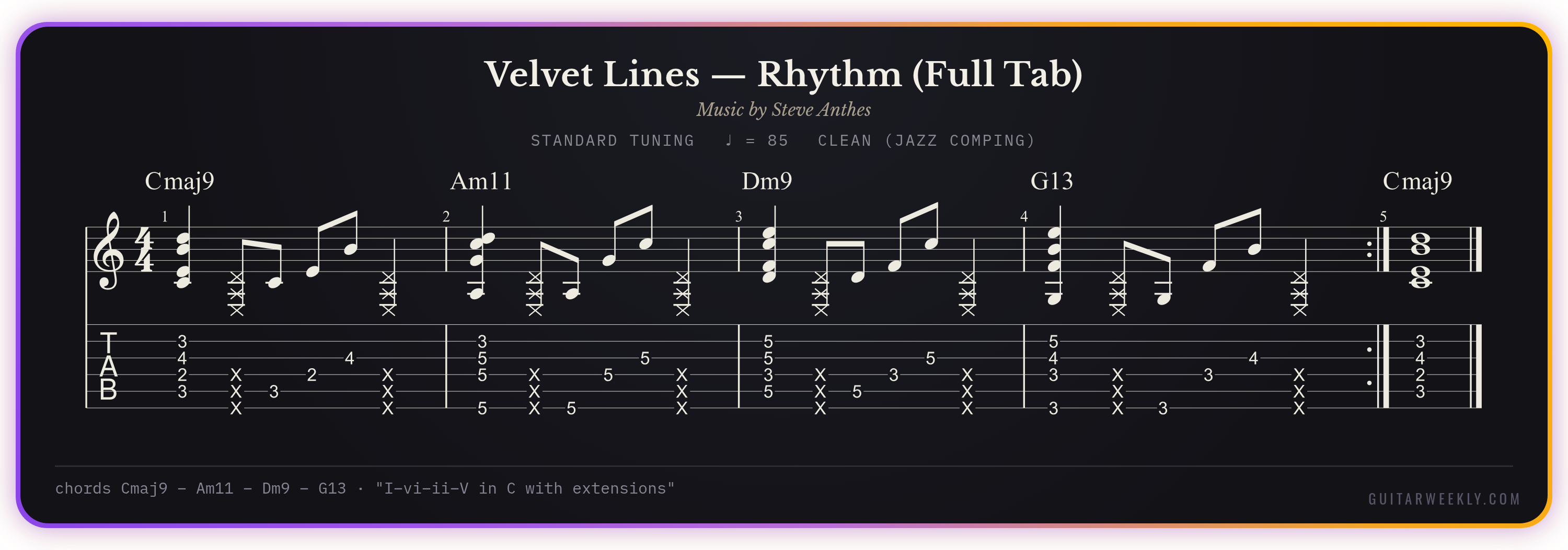
Thread 1: Rhythm
You learn the full extended chord grips and comp them through a soft muted-strum groove. The fill in each bar isn’t a separate lick. It’s the chord itself, picked apart.
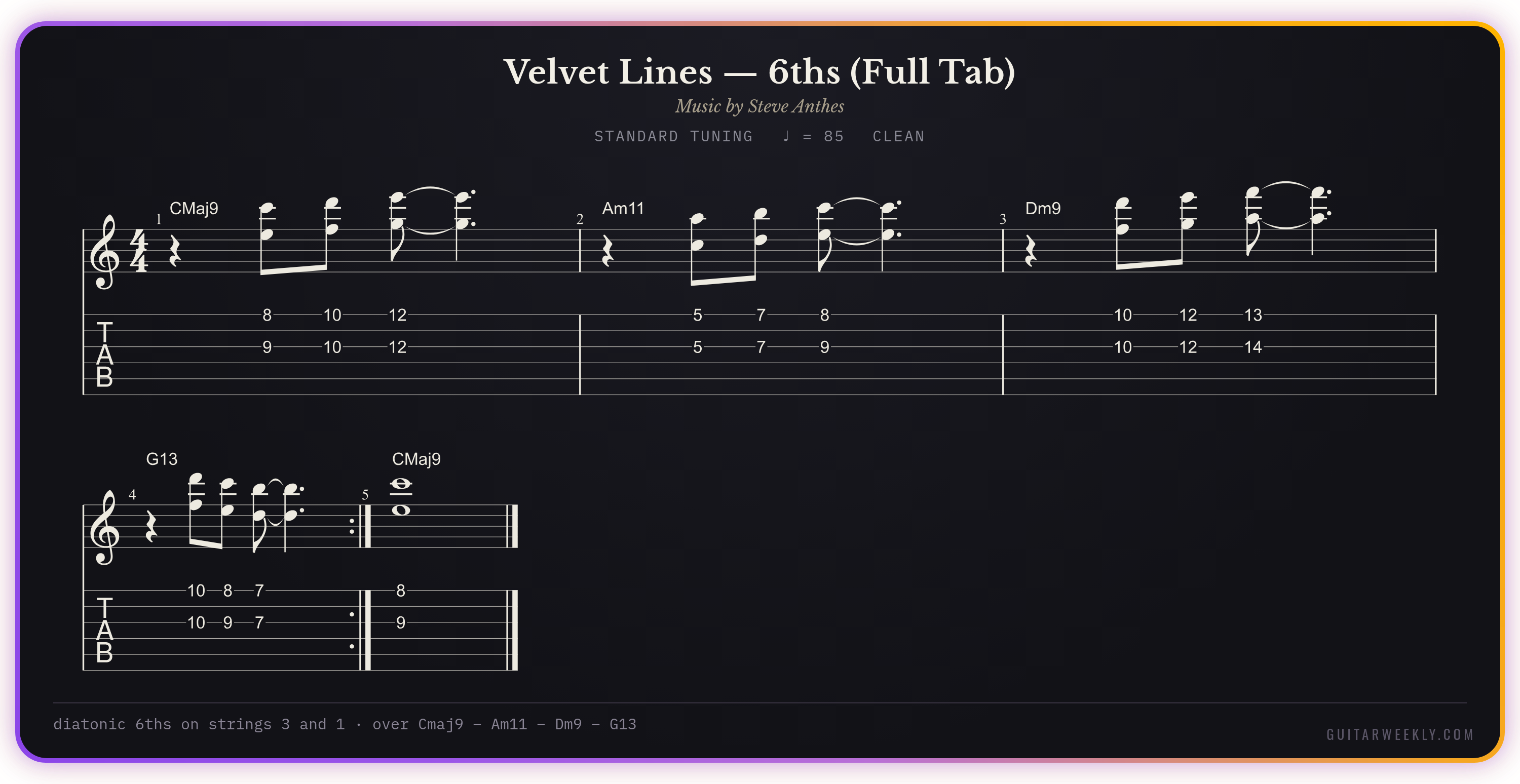
Thread 2: 6ths
The same progression gets thinned down to two-note sixths on strings 3 and 1. This is the “one guitar sounds like two” part: small shapes, open space, and a line that floats because it waits before entering.
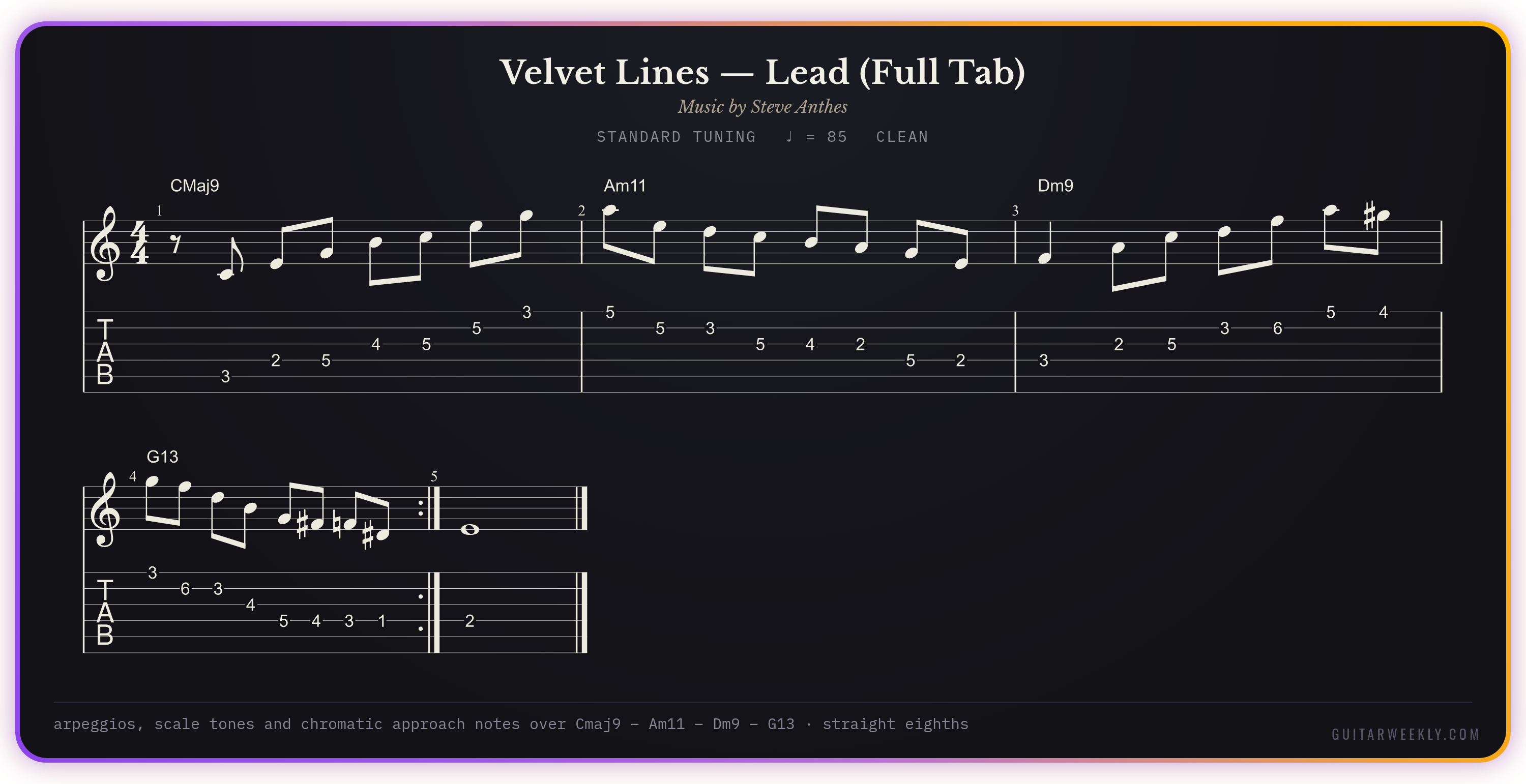
Thread 3: Lead
Finally, the harmony becomes a single-note melody. Instead of running one scale shape over everything, the line follows the chords underneath it: arpeggios, scale tones, and a few chromatic notes that point into the next chord.
That’s the real lesson hiding inside the pretty sound:
same progression, three lenses. Four notes, then two, then one.
If you’ve ever wanted a simple chord progression to sound richer, smoother, and more intentional, this one is worth spending time with.
Read the full Weekly Thread here:

No posts
Comments
Nothing yet. Say the first thing.
Sign in to join the conversation.