
A couple of us from Patch Plants were lucky enough to go to the Chelsea Flower Show this year (I say lucky because the ticket prices are far beyond the reach of the average working Gardener or Horticulturalist. Which gets you thinking, who’s it for?) and came away with a lot to reflect on. We were there not only to discover new plants to the market but discover trends in planting combinations, colour pallets and favoured gardening styles, particularly amongst the Houseplants and Balcony Gardens.
This article touches on some of my reflections, not only as Patch’s Horticultural Lead but as Kelly, Level 3 RHS trained Horticulturalist who studied through Edinburgh Botanical Gardens and the National Trust for Scotland and who’s worked as both a Glasshouse Gardener – the Victorian ornamental kind – Planting Planner and outdoor Gardener on everything from large estates to tiny domestic gardens. Kelly the socialist, the critical thinker and the passionate Plantswoman (among many many other things).
I’d like to start off by acknowledging that in the Horticultural world, I’m small fry, but that I was heartened by the honest and balanced opinion pieces on Chelsea shared by some of my favoured Substack big fry, namely Ann-Marie Powell, Alice Vincent and Sally Morgan, women from whom I took the reassurance that ‘it’s okay’ to have an opinion. Even on the mecca that is the Chelsea Flower Show.
One of the first things we experienced, rather than noticed, while walking through the houseplant section at Chelsea, was the greater degree of communication between indoor and outdoor spaces. Whether this was a nod toward climate change and our ability to grow what were previously perceived to be ‘indoor’ plants outdoors or an acknowledgement that we need more nature in our increasingly indoor-led lives; either way, it worked.
The sense of spill and overflow, whether through open studio doors or onto steps, created a real sense of connection between spaces. So often THE GARDEN is treated as a separate space, a ‘room’ you go out to; with GARDENING seen as an outdoor activity. But the displays this year broke down that barrier and allowed for much more dialogue between the indoors and out. Hopefully this started conversations about growing houseplants as gardening and what a ‘garden’ looks like - a bandwagon I won’t get off until the music is mainstream. See my article Home as Garden: Reframing what a garden is and can be if you fancy getting to grips with the horns and whistles of the argument.
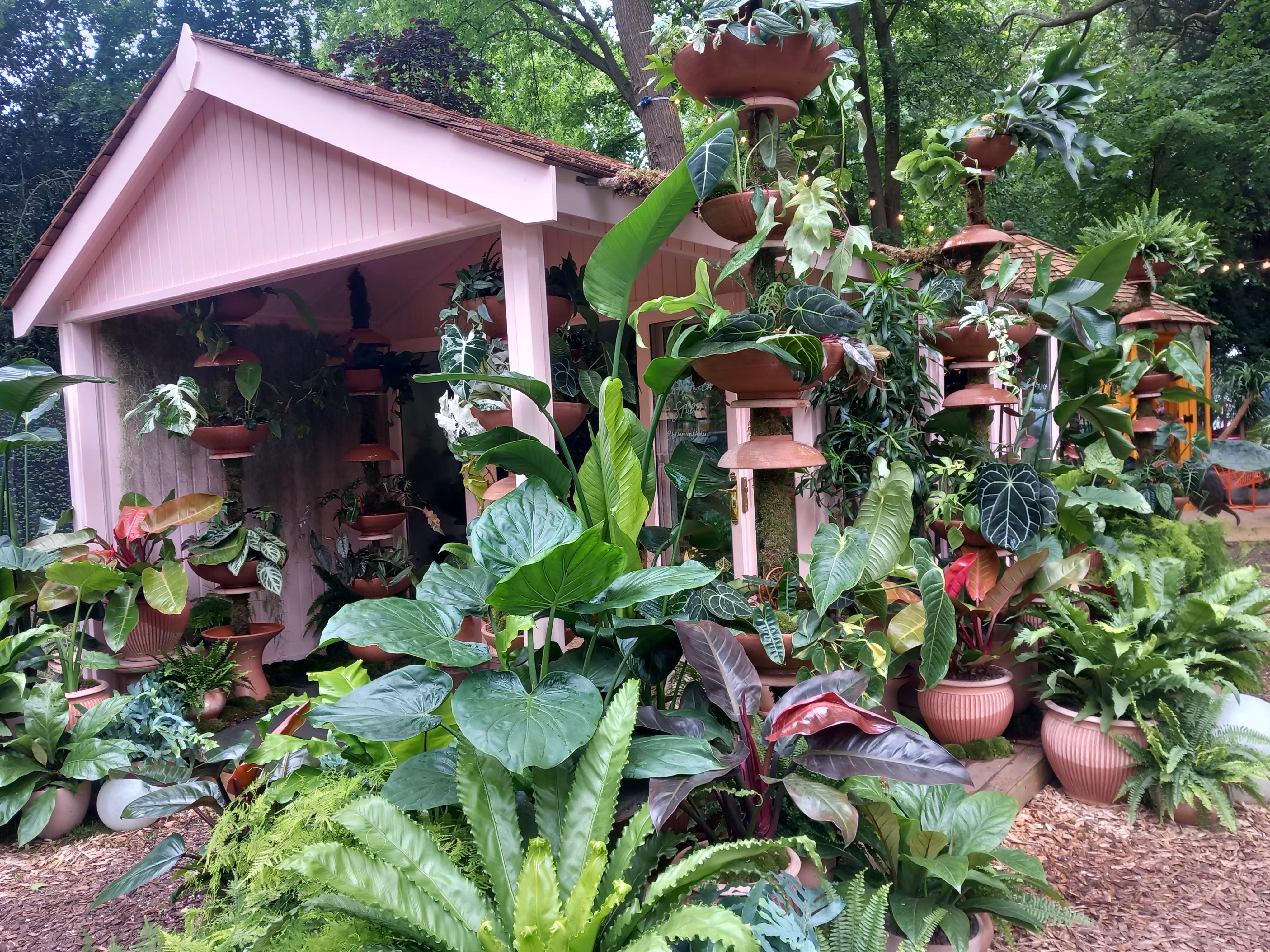
One of my favourite houseplant displays to demonstrate this flow was Botanica Studio’s ‘Hanging Gardens of Botanica’ (above) who, in collaboration with Bergs Potter, explored the all important cycle of rainwater from evaporation and humidity to rainfall and running rivers.
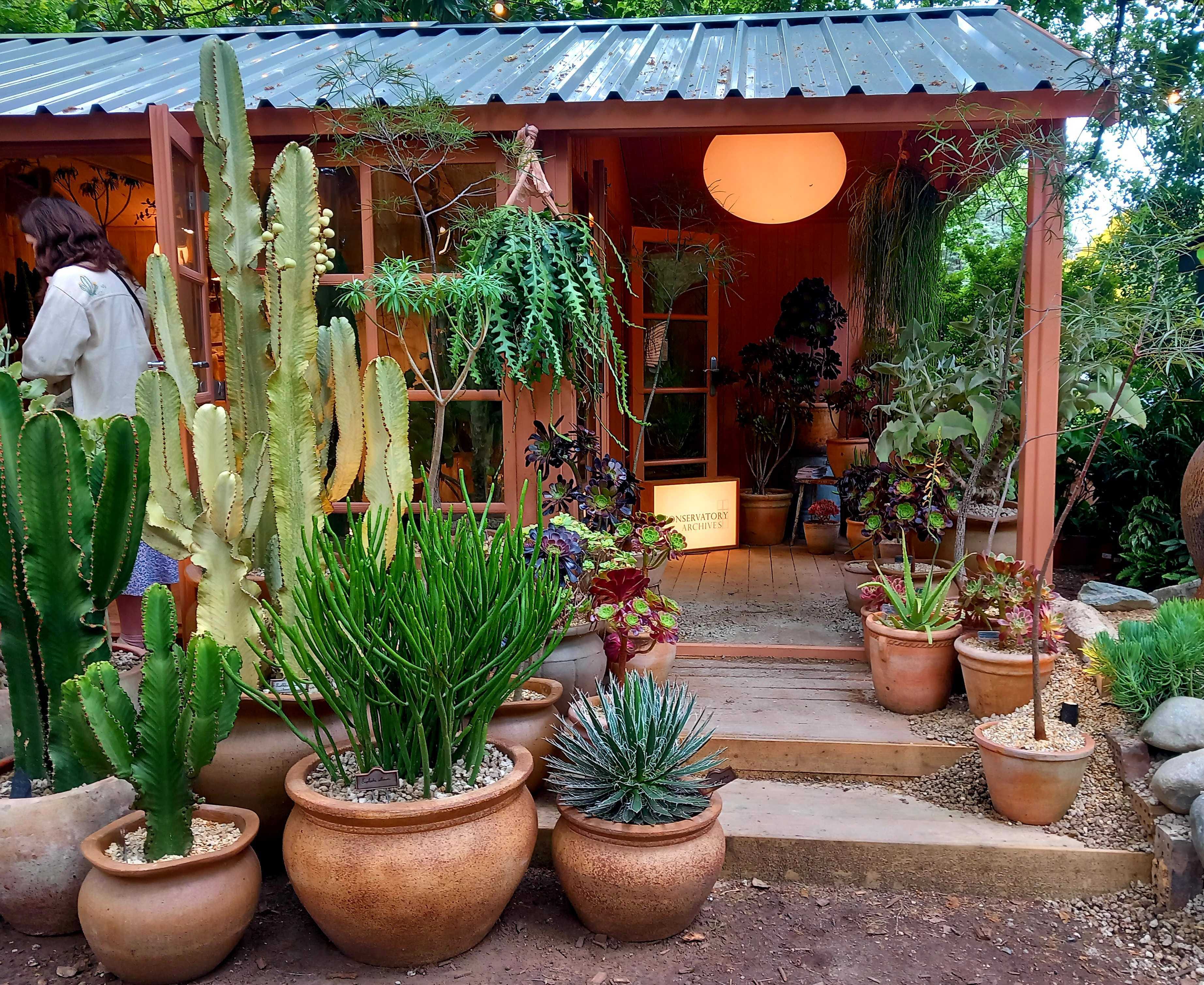
In glorious contrast, but still on the theme of water (just a lot less of it) Conservatory Archives stole the show with their ‘An Ode to Endurance’ display (below), celebrating the adaptations and resilience of cacti and succulents in harsh, hot, rain-sparse environments.
From these trickling streams of consciousness the theme of water went on to thread through the show.
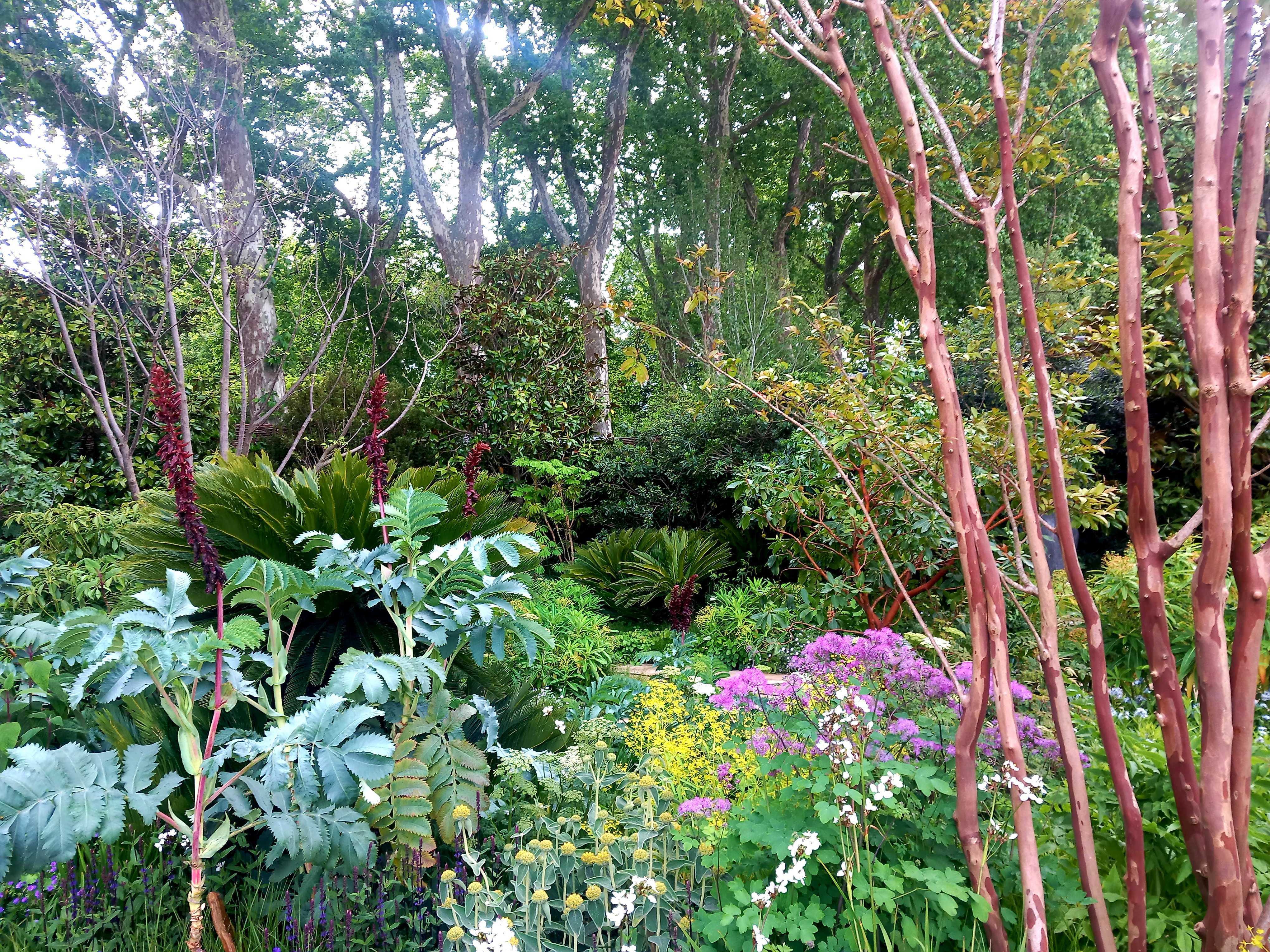
The theme of drought tolerant or resilient planting has carried through from Chelsea 2025 into this year and is likely to make an ever increasing appearance as our summers start creeping into spring. While this shift included plants we are already familiar with in British gardens, including Artemisia, Irises, Valerian, Phlomis and the water-seeking tap-rooted Lupins and umbellifers like Ferula, Wild Carrot, Fennel and Dill; what was surprising was the greater visibility of more ‘exotic’ plants. Plants like Arbutus unedo from the Med as well as Cycas revoluta and the Great Honey Flower or Melianthus major, a native of the Southern Hemisphere. These were particularly showy in Tom Stuart Smith’s The Tate Britain Garden (below).
While for many of us the lack of rain (or storms and floods) and increasing heat induce climate anxiety, there is a view which tempers this panic with an embrace of the extended growing season as an opportunity to grow plants that were previously considered tender, a view espoused on Gardeners World no less. While this view doesn’t deny the concern around climate change and our need to reduce its progress, it does embrace its inevitability and asks, what’s possible?
What I found fascinating was that in contrast to drought tolerant planting there appeared to be an obsession with including water in the garden. There were rills rills rills running rampant! And ponds or pools. While functionally rills can serve to harvest and channel rainfall runoff and ponds serve not only as reservoirs but wildlife havens, the predominant reasoning behind these features seemed swayed more towards their aesthetic value and soothing effect.
The presence of water is calming, whether this be a still reflection or a burbling stream in the background and I couldn’t help but wonder if our increased need for it in the garden betrays an underlying anxiety about its lack. Are we creating an illusion of flowing abundance as a placebo?
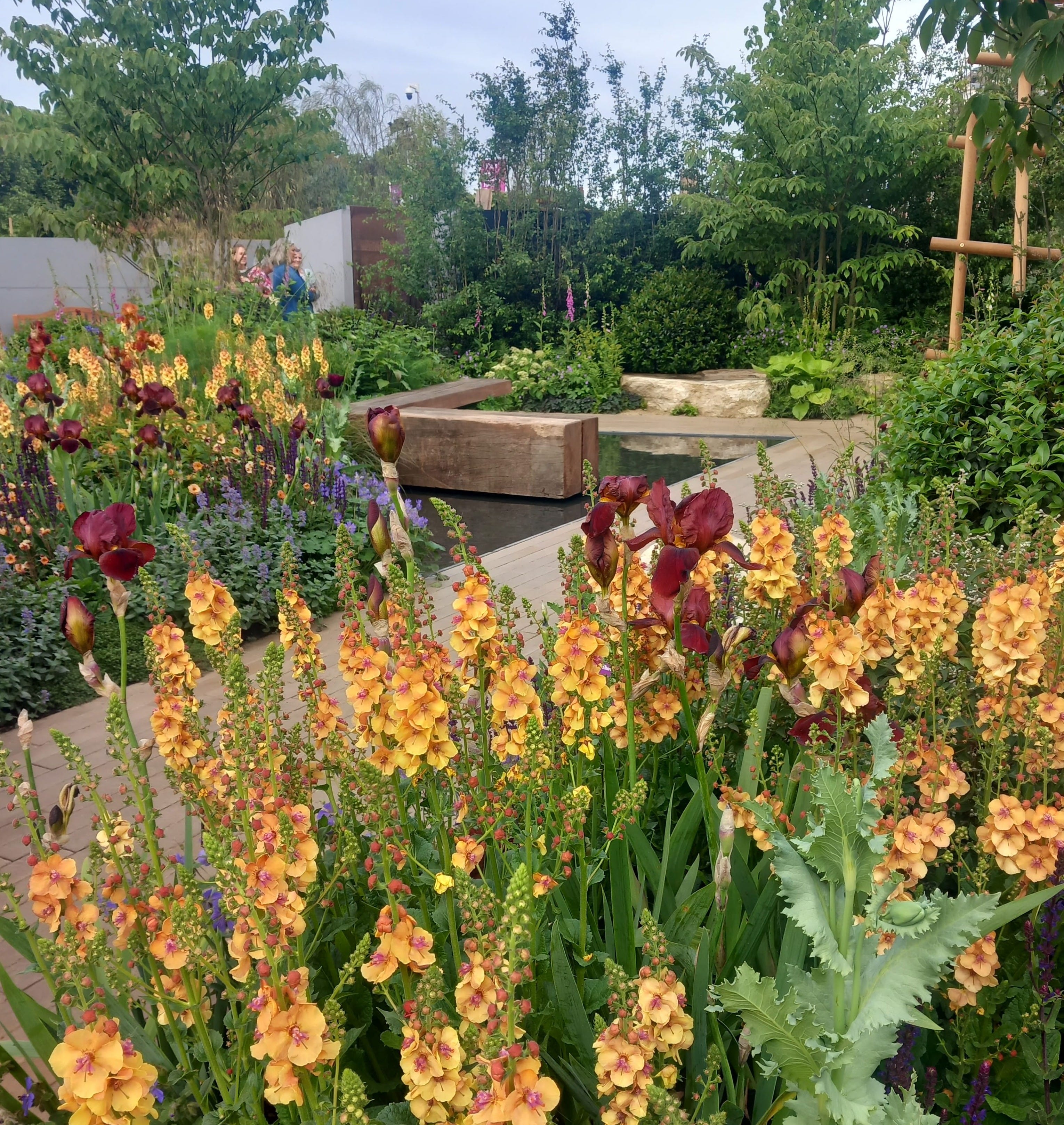
Rob Hardy’s glorious Trussell’s Together Garden below.
The third major trend to take shape this year was the intentional use of plants that were previously considered ‘weeds’ or wild flowers , plants we’re more used to seeing on roadside verges, self-seeded in pavements or softening the skirts of hedgerows. From Poppies to Evening Primrose, Foxgloves, Verbascum and Vetch, these ephemeral self-seeders speak to a planting style more in tune with seasonality, one that is looser and more relaxed, more in harmony with and reflective of the British countryside rather than forced upon it.
Personally I love this style and the soft, dainty elegance it brings, but what struck me as a Gardener, is how little information there was on the short-lived and messy nature of these largely indigenous plants in what are being sold as designed and cultivated gardens.
And this is the thing with Chelsea that makes me eye-roll. It’s showing a moment in time, namely, mature gardens at their peak. It betrays nothing of the huge amounts of money or years worth of time that would naturally go into creating gardens that look like the displays, nor the patience, the calculated editing, the self-seeded surprises or crafted pruning that contribute to the ‘final’ experience.
I had a friend helping to plant up one of the show gardens this year and she spent nearly a whole day meticulously picking out last year’s brown, dead shafts from amid the new shoots of perennial grasses before they could be planted. This is not reality. Reality is messy. And gardens planted with annuals and biennials particularly so.
This is not to pooh- pooh the awe, fun and splendour of the pantomime that is the Chelsea Flower Show, but it is to press home the idea that if Designers are going to create a shift in consciousness towards more conservation-aligned naturalistic planting, then they need to manage expectations too.
A close up of The Lady Garden Foundation ‘Silent No More’ Garden.
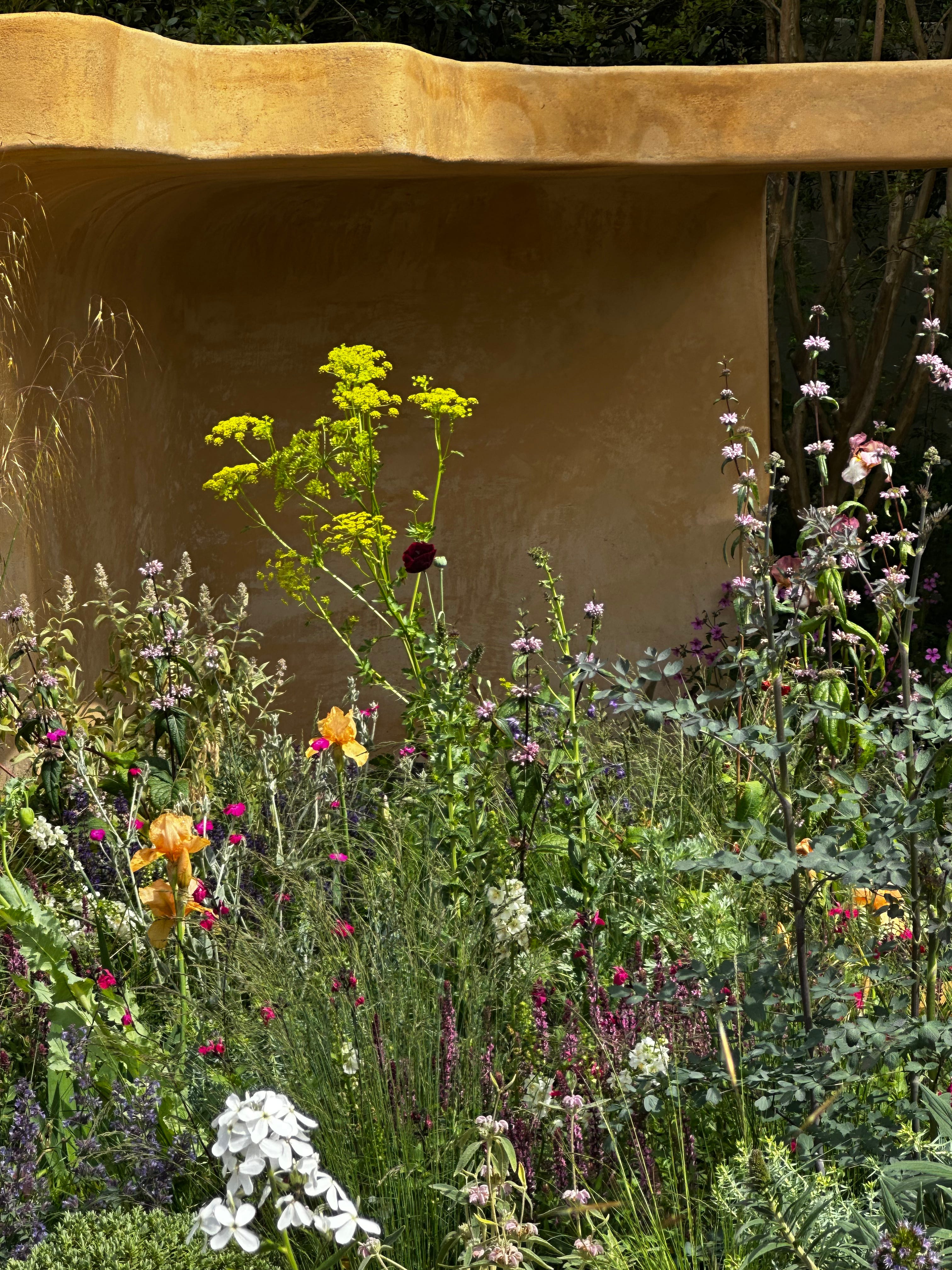
And what are these expectations? That there’ll be a lot more having to live with dead stalks and yellow leaves as well as patchy spaces in your beds in between the waves of beauty that are early and late flowering plants. There’ll be a lot more having to embrace insects and pollinators that also bite and sting you, moths that fly at your face, birds that leave berry-stained droppings on your patio, foxes that leave skat in your flowerbeds and badgers that rootle through your compost heap.
Not to sound scathing, but have you ever witnessed either the ‘lady who lunches’ (and pays a Gardener to get their hands dirty creating her ‘Chelsea’ garden) or desk-based, city-dweller’s reaction to wildlife? These are both gross stereotypes, but, if so, you’ll know why I feel it’s important to stress the importance of the reality of a garden versus the idea of one.
There’ll also be a lot more gathering up of leaves dropped by deciduous trees and hedges which saw a huge upsurge in advocacy this year, particularly in the Woodland Trust’s Forgotten Forests, Sarah Eberle’s Protect Rural England Garden and most significantly, the Tales from the Riverbank and Hedgerow In The Sky balcony gardens (below).
Again, I saw the use of trees across designs as a mimicry of the natural word’s canopy, mid and understory. Even in the smallest of spaces, trees were brought to the front and given central stage. Not only as a clever tactic to create the illusion of height, space, movement and maturity, but also to provide habitats for birds and increasingly important, shade from heat.
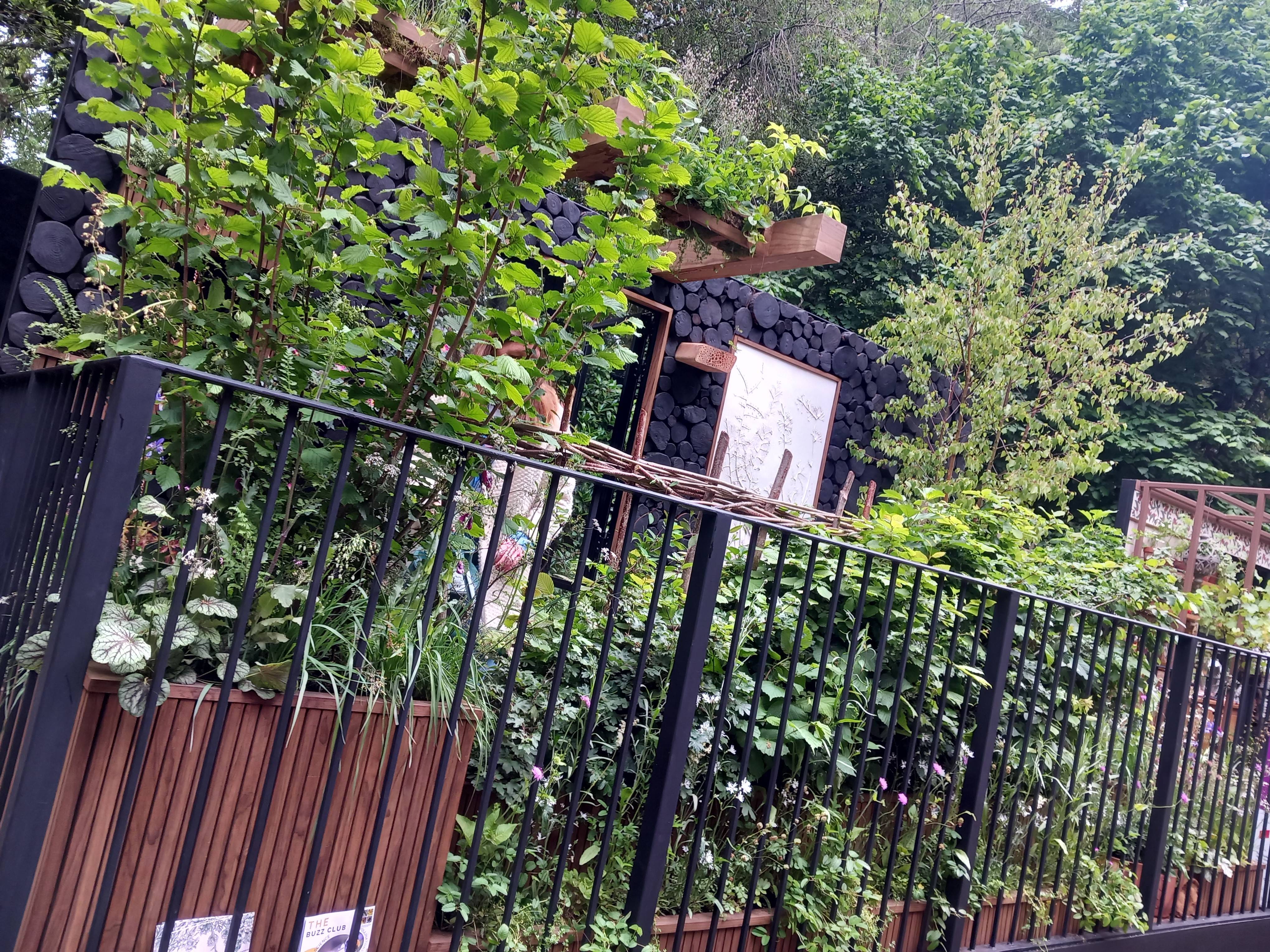
No more neat and clean and sanitised.
As suggested by Bees & Beyond in her latest post, The Untidy Garden Is the Thriving Garden, with ‘mess’ comes habitat and with habitat come ecosystems. Given the rate at which ecosystems are being destroyed world wide on a daily basis, some Gardeners would argue it’s our moral obligation to do what we can to counter this, whether this be on our balcony, backyard or 15 acre garden. I agree.
Chelsea, I may not be your typical target audience, but you did get me thinking, and that’s something 🤔
We’d love to hear some of your thoughts, reflections and views on Chelsea this year, or indeed, how gardening is changing and what you make of it all. Feel free to leave a comment to get the conversation started.
Comments
Nothing yet. Say the first thing.
Sign in to join the conversation.