
All too often we find plants dotted about a room. We find them filling vacant spaces rather than being positioned according to their needs (light, humidity) or their ability to lift a space, to breathe life into a room, to create focus and to feature fully rather than accessorise. In this article I suggest that – given plants are our living, breathing co-habitors – we give them the respect they deserve and place them centre-stage.
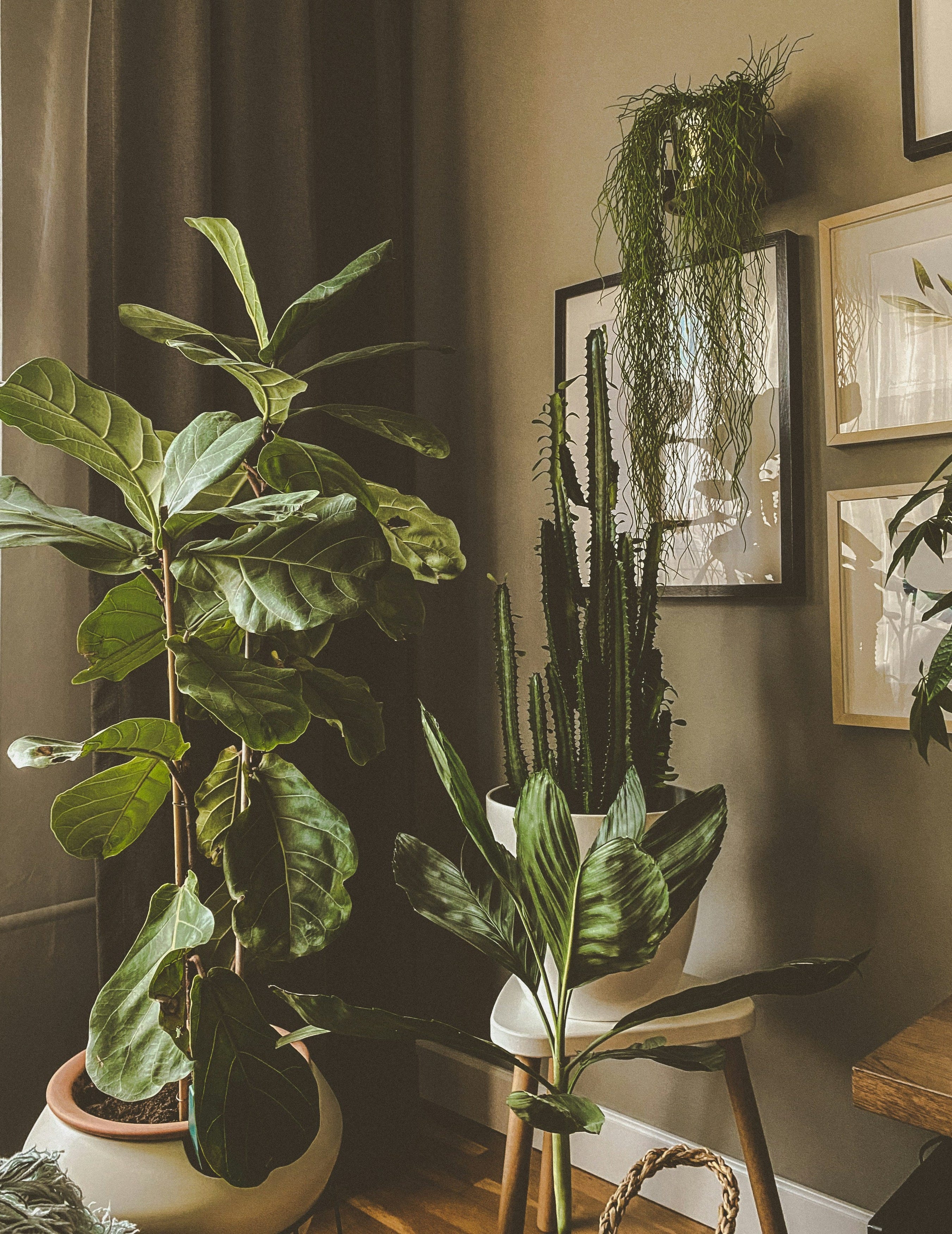
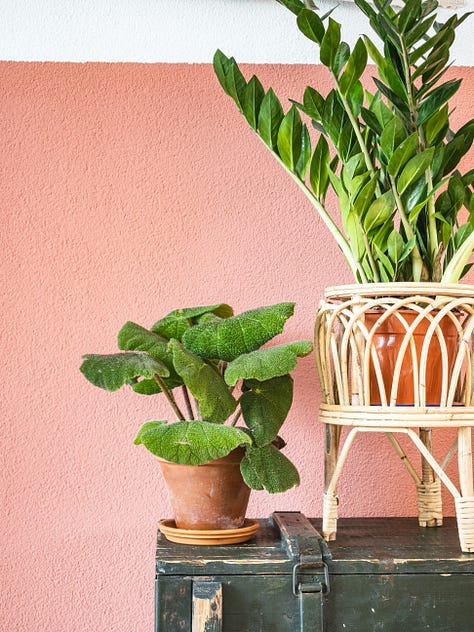
Photo by Alp Duran
In one’s own home, there aren’t really any rules except do what works for you in such a way that you enjoy it and feel comfortable. But there are some guidelines you can follow if you want to maximise your space and, even better, boost the benefits of houseplants.
One design guide I stand by is that if you have a plant that is more than a metre tall, show it off. In this case you’re essentially growing a small tree or shrub in your home. The chances are you’ve chosen it because of its size and also because of its shape and form – either its architectural trunk and stems, or its large shapely leaves. While I hate to compare plants to inanimate objects, in this instance I encourage you to treat your plant as you would a prized piece of handcrafted furniture or an artwork.
Give it space.
Even if your home is small, by giving space to even one large plant, you’re making a statement about what’s important to you. You’re adding an evergreen, organic feature to your furnishings. Whether your preference is a sculptural Fiddle Leaf Fig tree, or a more wild and shapely Monstera deliciosa, you can influence how your plant interacts with the space through careful pruning, training or staking, all of which will determine its profile and the way it plays with the light and airflow through a room.
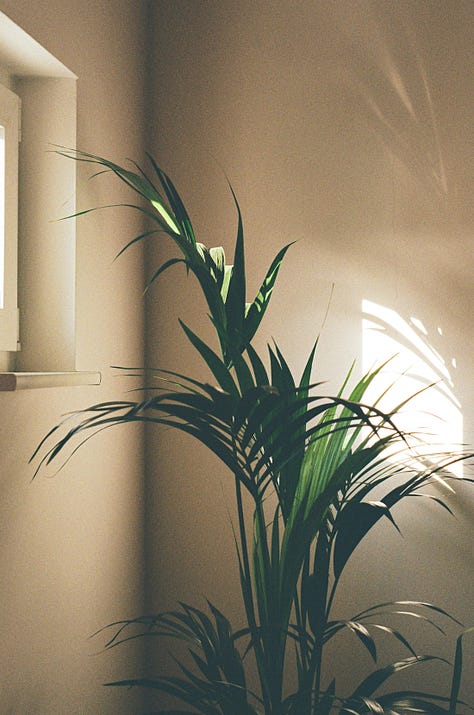
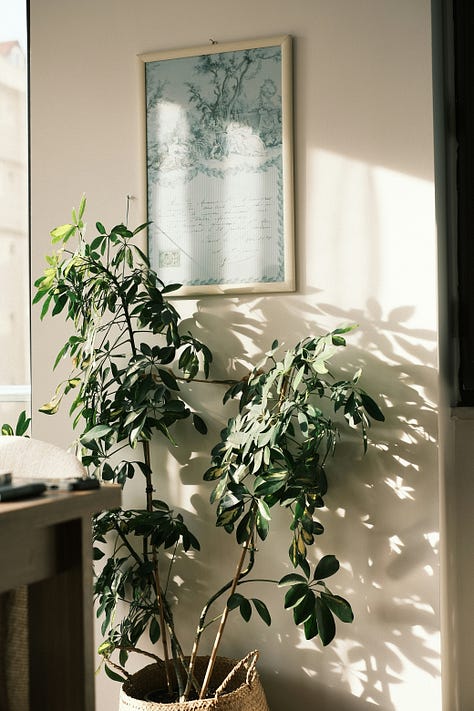
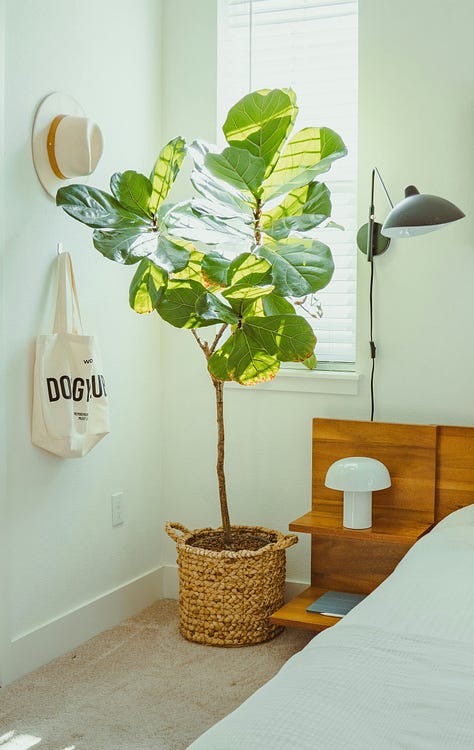
With smaller plants, we can tell a different story. We can perhaps be a bit more playful. So often I walk into spaces in which houseplants look lonely and a little lost, either because they’ve been plonked down and forgotten about or because they’ve been deliberately placed in the hopes of some transformative effect that didn’t quite manifest. Often these grand intentions are good – grounded in a belief that having plants in the home is good for us, which is indeed true – but with little thought given to the effect their display can have on our appreciation of them.
So, let’s think out of the box. Or rather, let’s introduce a box, place a plant on it, stand back and see how it looks.
With smaller and medium-to-tall plants, try grouping them together in odd numbers of three or five. This immediately has the effect of creating an intentional display. It has more impact, visually, but also on the plants themselves. By being close together, the water vapour they lose through their leaves via transpiration lingers longer amidst the canopy they create, increasing the humidity, which most of our exotic houseplants need and enjoy.
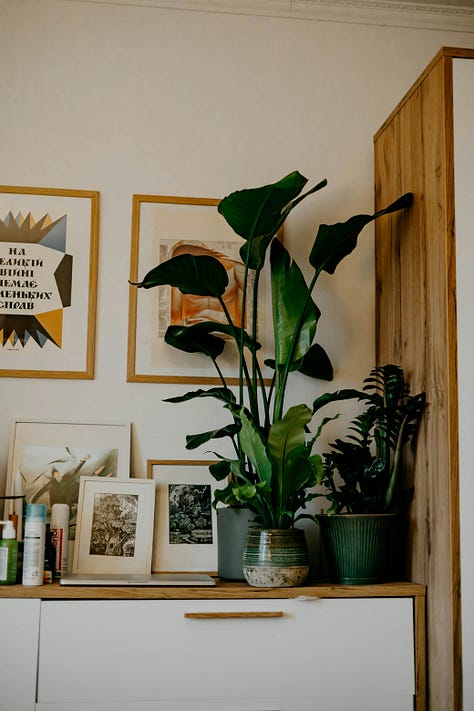
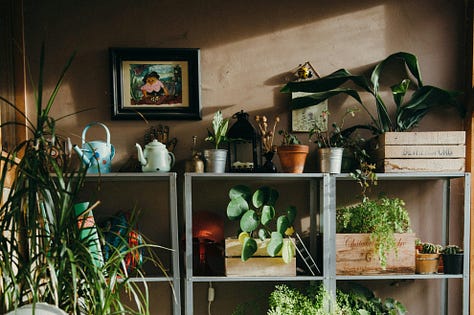
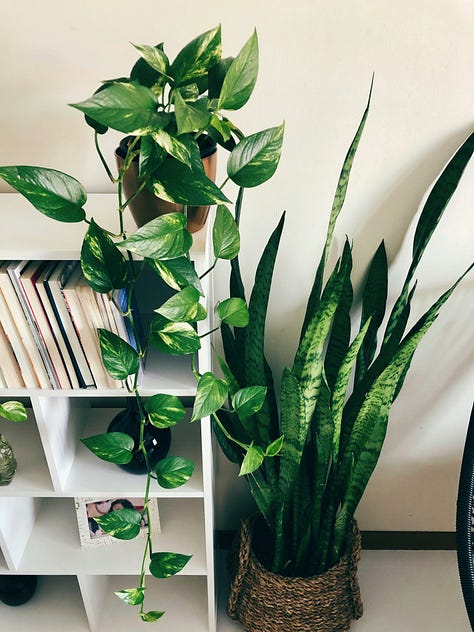
When displaying plants in a group, consider:
- Staging a taller or larger plant towards the back of the group, a plant that’s knee high towards the foreground, and a smaller or fuller foliage plant at the front. Your intention should be to mimic the way plants grow in the wild, re-creating a ‘tree’ canopy, an intermediate layer, and an understory.
- Using props to create layers and raise plants up or stage them at different levels, staggering sizes or creating a tiered display. Whether these are built-in like mantelpieces, bookcases and shelves, or free-standing like plant stands, chests, side tables, drums, upturned tins or even piles of books. Have fun with this!
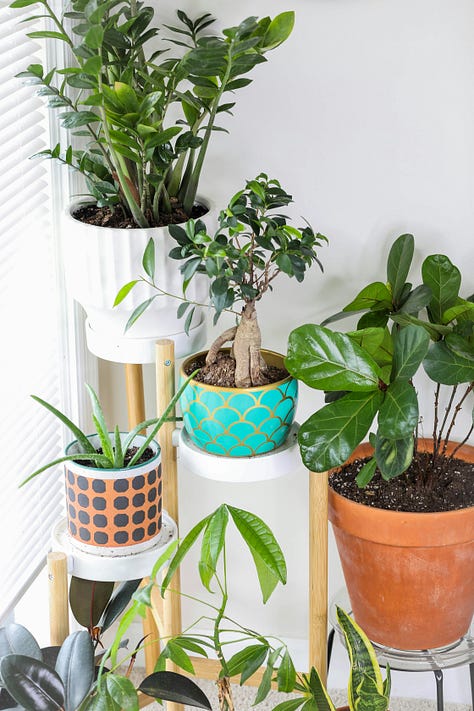
- Contrasting leaf shapes by placing a strappy, simple leafed plant like a Sansevieria or Snake plant beside a plant with compound leaves like a ZZ plant (Zamioculcas) or the soft elliptical shaped leaves of a Peace lily or Chinese Evergreen can be highly effective. This will break up the composition, balancing sharp vertical edges that carry your eye upwards with more fluid lines that flow, fall and spill, creating a fullness.
- Alternatively, exaggerating the structural nature of your plants stems and leaves by grouping the plants that share these complementary characteristics. The tall thick stems of a Corn Plant (Dracaena fragrans), pointed blades of a Snake plant and broad sweeping leaves of an Aspidistra or Cast Iron plant for example, all lean heavily towards the linear. Together they make a striking statement and add a pillar-like architectural influence to any room. A grouping of plants with naturally larger, softer and more curvaceous forms, however, would lean much more heavily towards creating an immersive, jungly effect.
Not only do houseplants contribute shape and form to our interiors, but they also introduce colour into the home. If your decor is of neutral tones, plants provide the opportunity to add a green wash, to play with shades of the colour that range from a dark saturated forest green, all the way through emerald and tea tree green, to pale minty whites.
Variegation plays a huge role here. Multi-coloured or patterned foliage plants lend visual texture to your decor, even providing a rich palette of colours that you can use to pick up in your soft furnishings, wallpaper or paint. What better inspiration than nature’s paintbox.
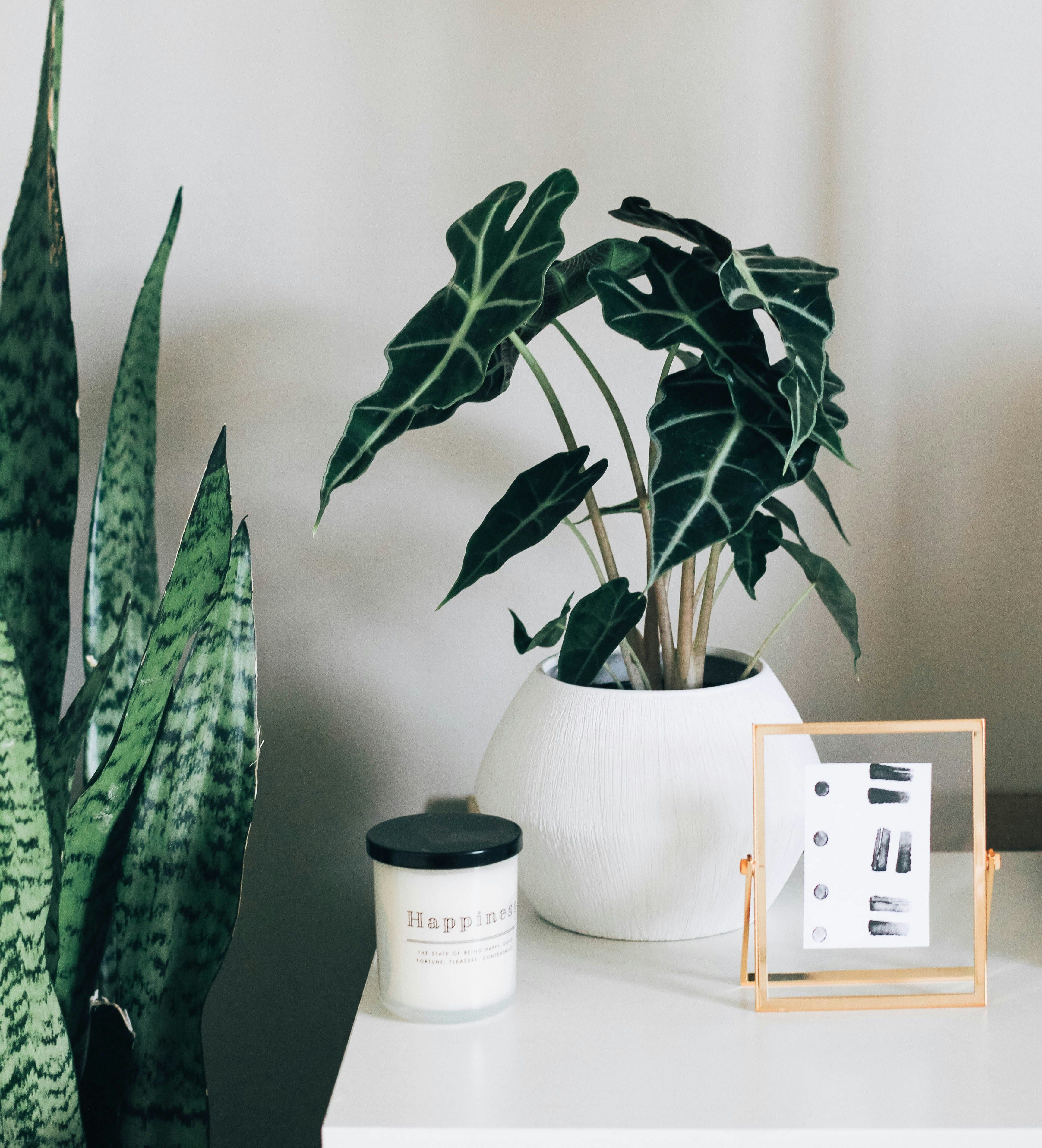
Photo thanks to Kara Eads
If you’re bolder you can play with using your houseplants to add pops of colour, ushering in tones of pink and crimson, hot orange, neon, yellows and red. As long as they are positioned in spots that meet their needs first, there’s no reason why they can’t also pack a punch.
On the subject of colour, it’s not only the leaves and flowers of plants that can elevate your interiors, but the decorative pots you dress them in too. Decorative pots are so much more than just containers, they’re ornaments, and for this reason they’re often more expensive than the plants you’re going to put in them. The impact they can have on how good your plants look in a particular spot, whether standing alone for impact or grouped together to create a feature, is invaluable. Whether they’re high gloss, matt, woven, natural or synthetic, shabby chic or in vogue, good pots show an artful eye and conscious consideration.
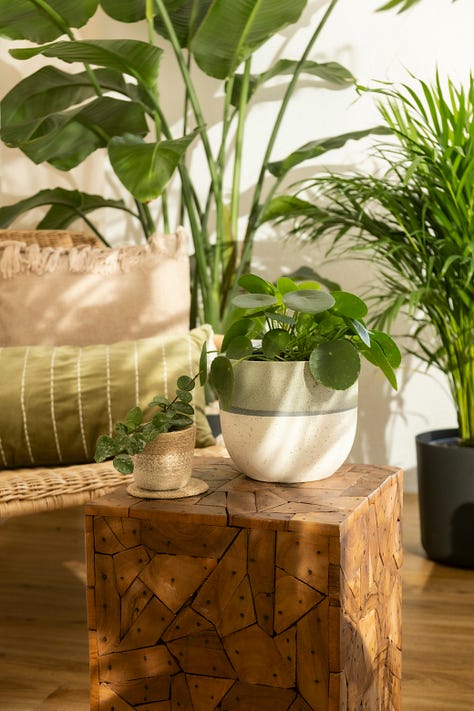
Whether we’re aware of it consciously or not, by bringing plants into the home we’re stimulating old parts of what scientists might call our ‘primitive’ brain. Our nervous systems have evolved to live in and with the natural world. This extends to the way in which we scan our lived environments for signs of softness and safety. Straight lines, sharp edges and bare surfaces might be contemporary signs of cleanliness and sophistication, but they are all quite hard and unyielding on our psyches.
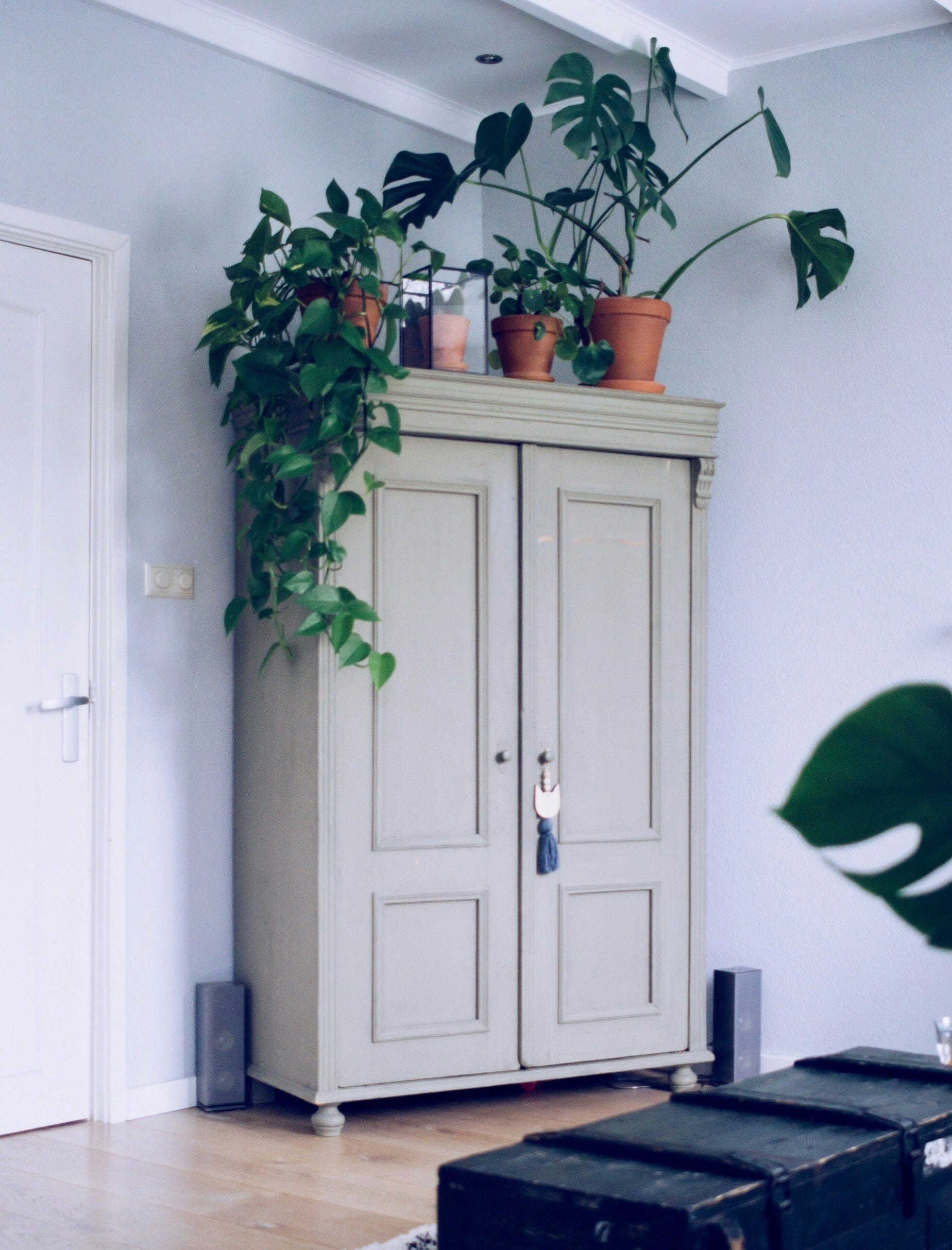
Image thanks to Sven Brandsma
By softening hard edges and adding a sense of movement, flow and growth by including living plants in our homes, we stimulate our parasympathetic (rest and digest) nervous system. To maximise this effect on our minds and bodies I advise introducing hanging plants – either from shelves or the ceiling – or using plants as an organic green screen between rooms. This can also buffer sound, creating a sense of intimacy or perceived privacy, and increase the humidity in an indoor space. Not unlike having structural plants with strong vertical stems, having plants descending from above lifts or carries the gaze through a room, breaking the visual field and inspiring our natural, innate sense of curiosity. Inadvertently, we also feel calmer and more connected to something larger than ourselves.
Before I draw this article to a close, I feel it’s my duty to the vegetative community and you, dear reader, to remind you that for plants in the home to have a positive impact on both your decor and wellbeing, they need to be in good health.
Above and before aesthetics, good plant health means two things:
Positioning the right plant in the right place
Selecting plants suitable to your level of knowledge and skill
There are a wealth of plants available with which to create an indoor garden, so even if you’re a complete novice or have a shady apartment, there should be enough options to meet your aesthetic needs. And if you need some guidance on practicalities like which plants need more or less light or how often to water them, feel free to peruse our Plant Clinic page.
Once you’ve got these two pointers nailed, the floor is yours, and I wish you many happy hours of styling your home to suit your sensibilities.
Comments
Nothing yet. Say the first thing.
Sign in to join the conversation.