
Jake Hobson starts by apologising for missing my call – he was up a ladder, cloud-pruning an evergreen oak tree. As the Founder of Niwaki, a business that is not only named after the Japanese art of pruning, but specialises in the very tools with which to do so, it is perhaps the perfect reason to be held up. Shears set aside and feet on solid ground, he spoke to me about finding inspiration in Japan, fine-pruning his garden and why three-legged ladders are better than four.
“I first went to Japan as a wannabe artist. I was studying sculpture at the Slade School of Fine Art in London, and I’d heard about Japan from a flatmate’s girlfriend who happened to be Japanese. She told me about the cherry blossom and how deep-rooted it is in Japanese culture. When I got there, I discovered the gardens, and found them fascinating from a sculptural point of view. I was particularly interested in the way the trees were pruned and trained to create a sense of landscape. Lo and behold, this approach was known as ‘niwaki’.
‘Niwaki’ means garden tree. If you’re a gardener in England, you might understand that to be a pretty tree to plant in a back garden, but in Japan it implies pruning and shaping a tree to fit the scale of a garden. I really like that sculptural, human element.
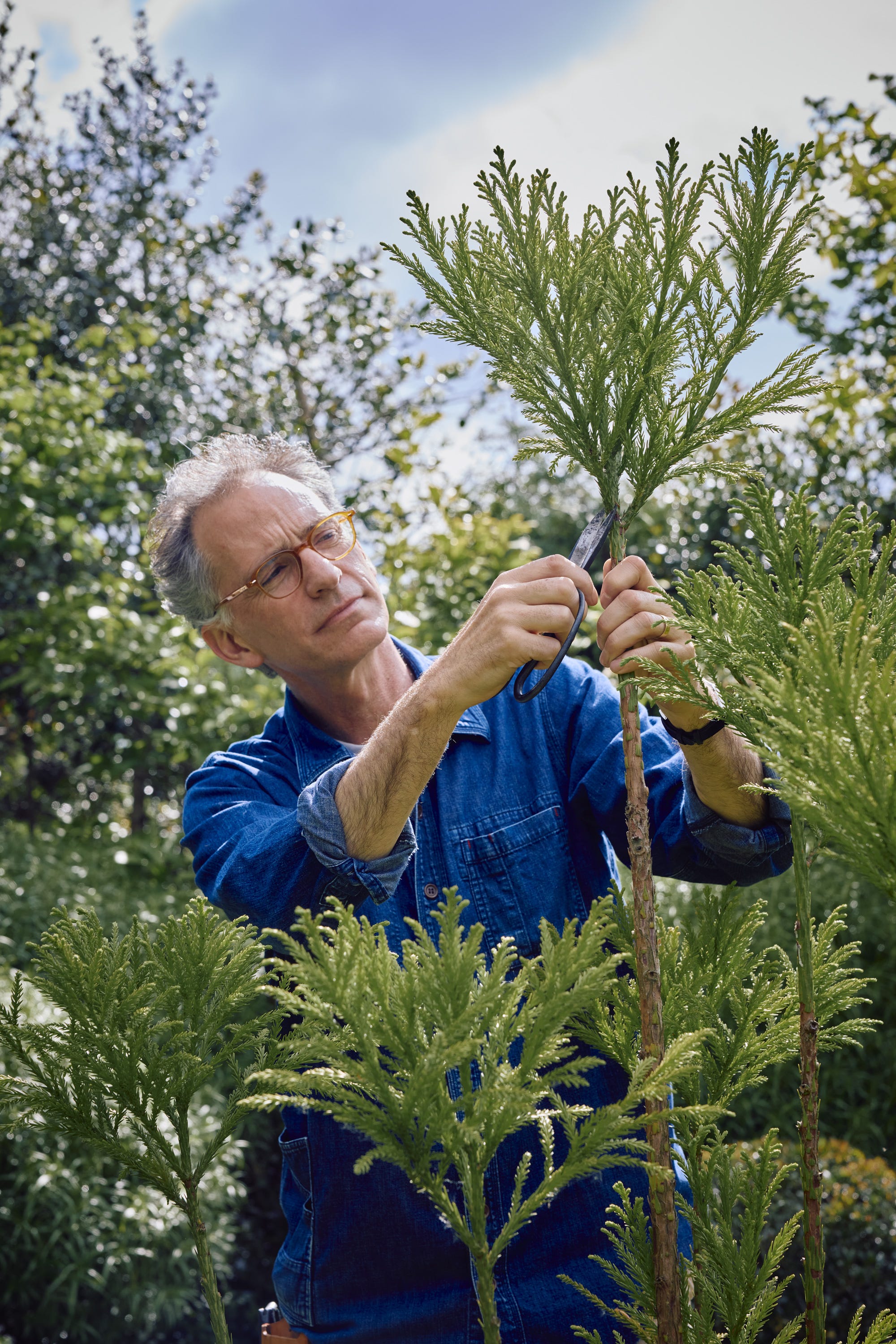
I lived in Osaka with my wife Keiko and worked at a tree nursery for a year, learning about the Japanese approach to pruning. When I came back to England and started using the tools I’d picked up in Japan, I quickly appreciated how good they were – and realised I couldn’t find anything like them in the UK. That was the foundation of the Niwaki business.
It started with a Tripod Ladder. Four-legged ladders and gardens do not go well together, and we hadn’t figured that out in England, whereas in Japan they’d figured that out a long time ago. So a Tripod Ladder was our first product, as well as a pair of secateurs, topiary clippers, and garden scissors. More than 20 years later, we’re still selling all four, alongside a growing range of new products.
Japanese gardening is about permanence. I think for English gardeners, the pleasure comes from designing a plant scheme and seeing it grow throughout the seasons, and making changes the following year. In Japan, gardens are much more long term – they’re designed, built, planted and nurtured, and they’re very rarely tweaked. It’s about creating a sense of a landscape and slowing down. That’s why a lot of the tools we sell at Niwaki actually come from the agricultural industry – in Japanese gardens, they tend not to work the soil as much as we do here. The focus is more on maintaining and shaping a landscape over time.
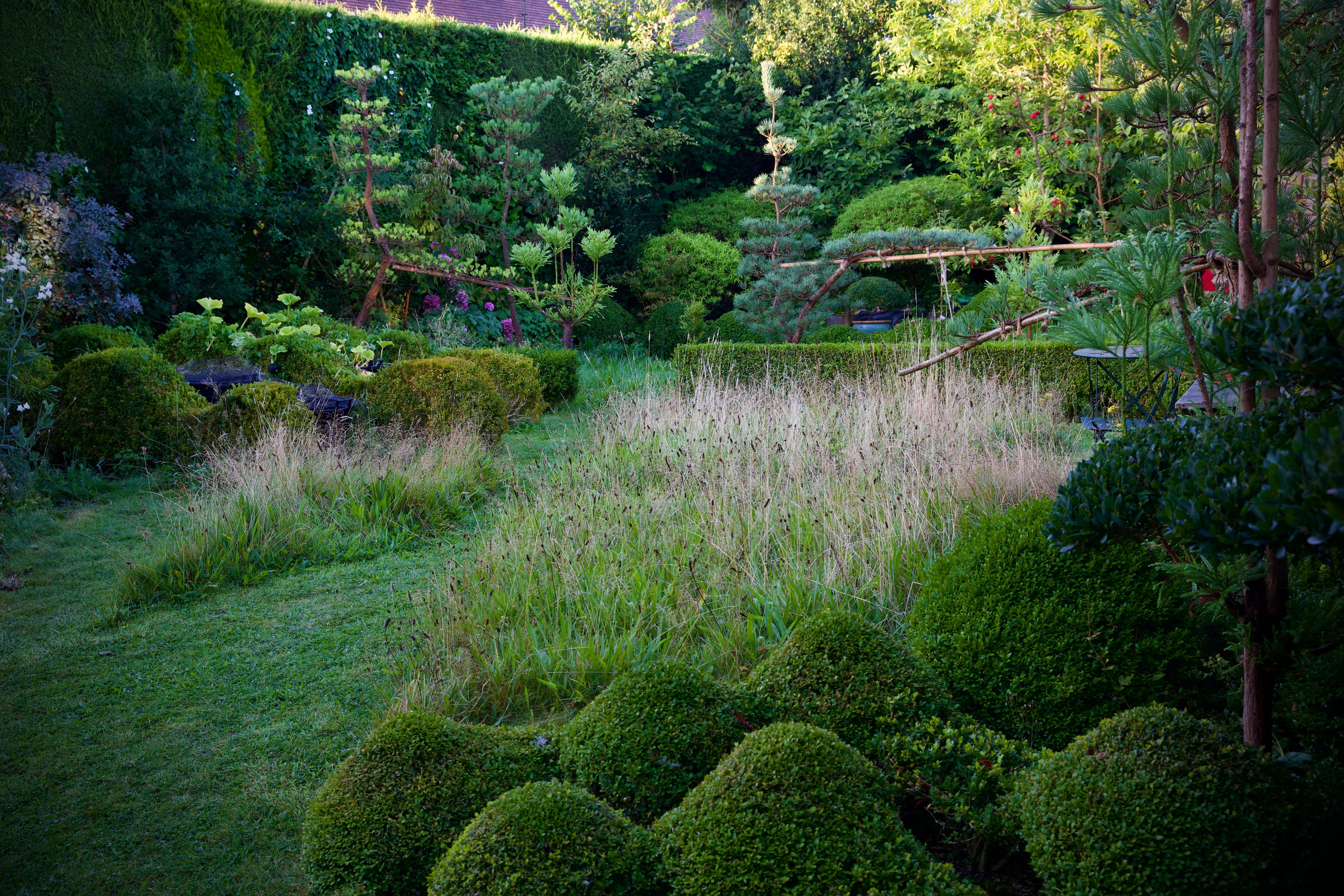
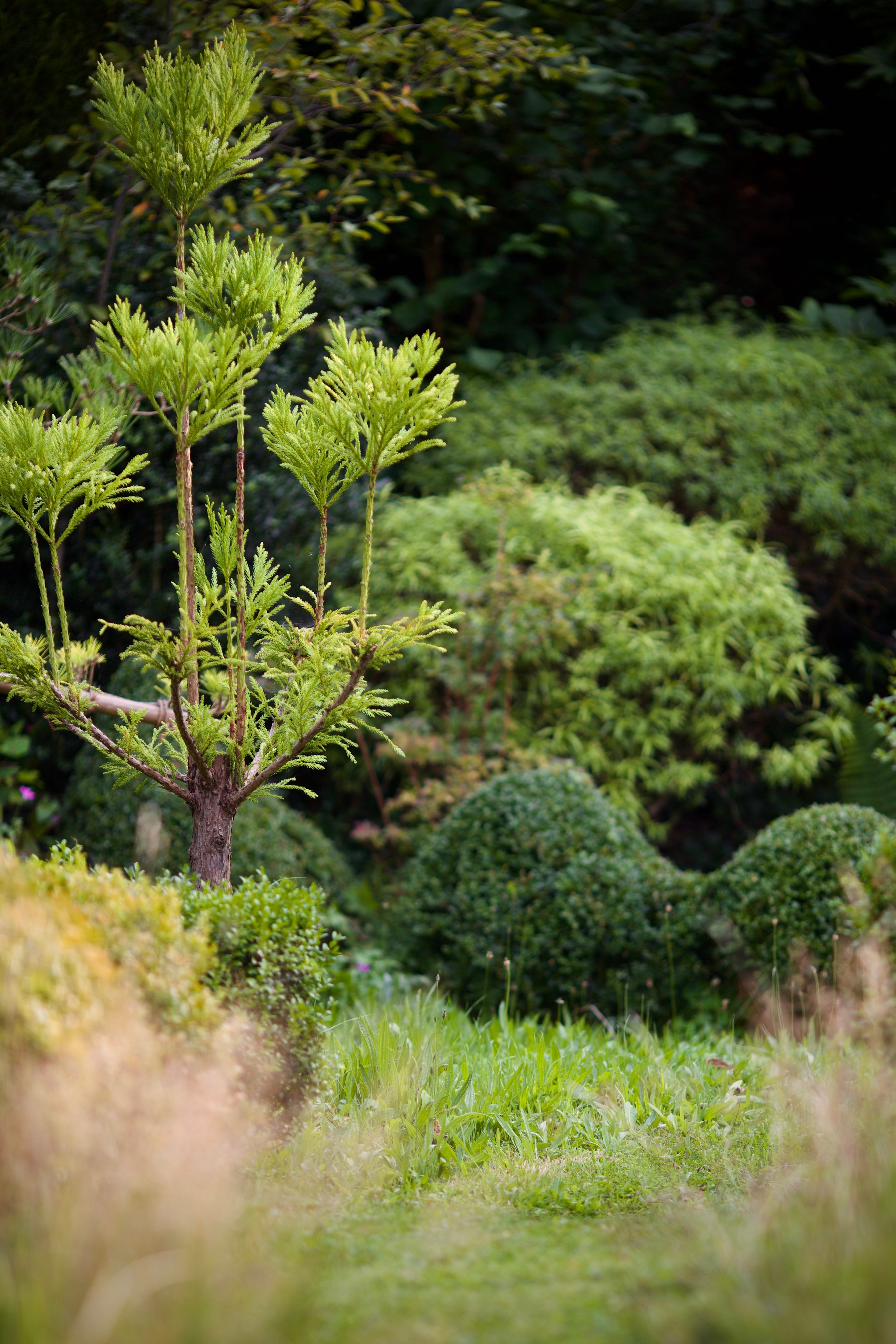
Inspired by the principles of Japanese gardening, my garden is one to look at rather than spend much time in. Our living room has a big open window, and my office comes out into the garden, so it’s very much about creating framed views from the house. There’s flowing organic and wavy-shaped box interspersed with Cryptomeria japonica, my favourite Japanese tree. I prune it in a very particular Kyoto style called Daisugi, which has strong verticals to it, and they punctuate the flowing horizontal lines in the garden. It starts off strong and sculptural in the front and peters out to wildness in the back with a small orchard area. We don’t mow the grass throughout the summer: instead, we mow a small diagonal path through it. It’s very deliberate and styled, but with looser, wilder areas in between.
A lot of thinking goes on in my garden, and I think that’s almost as important as actual gardening time. I can look at a branch for a year or two and then suddenly, for very few reasons I understand, I’ll decide to chop it off. I like to come home, have a cup of tea after work and then go for a potter in the garden. It can be for two minutes, or three hours. Not because of the work but because of me and what I want to be doing. There’s no point having a garden you resent because of the amount of work it needs.
Being out in the garden, being surrounded by plants – whatever you’re doing – is good for everybody. Sometimes I start a pruning job, and I realise I’m not in the right state of mind to do it; I can’t relax or focus on the process, and in that moment I know it’s time to put the scissors down and do something else. But at the same time I think slowing down, learning a process and doing something that’s going to have a permanent impact on a plant – make it flower better or work better alongside another plant – takes you out of your day-to-day and into part of something detached from us. I take pleasure and comfort in that, and I think it’s very relaxing.
Every gardener should own a pair of secateurs, whatever kind of gardening they do. You also need a spade if you’re going to plant something or dig something up. Hori Hori (a traditional weeding knife made from carbon steel) is one of our bestsellers and is invaluable for anything subterranean, whether you’re weeding or planting or just rummaging around. If you’re into topiary, then you need a good pair of shears. Weight and balance are very important. Of course, all tools need looking after, and cleaning and sharpening is essential.
A lot of people are so cautious with plants, but learning about them by doing something to them is much more important than reading about them and deciding you’re not going to risk it. Certainly you should acknowledge and learn – if you hack away at a plant and it dies, don’t do it again, but it’s not a reason not to hack at it the first time. It’s a mixture of being brave enough to make the chop and being curious enough to understand what you’ve done and why it has or hasn’t worked. Don’t hold back.”
Find out more about Jake and Niwaki’s great stuff from Japan at niwaki.com. You can also visit the Niwaki Flagship Store in Semley or the London Store at No. 38 Chiltern Street.
Comments
Nothing yet. Say the first thing.
Sign in to join the conversation.