




I have never been to Japan. But Japan looms large in my world, especially Japanese cultural exports.
I grew up watching kaiju flicks. Total nerd stuff. Godzilla, Ghidorah, Rodan. Metaphors and allegories for mankind’s violence to the natural world and how these primal forces, in the form of literal “god-lizards”, struck back. Godzilla, especially the epic, contiguous 1990’s “Heisei-era”, is my jam, and even the newest American Legendary series isn’t always terrible, while Toho’s monster reboot via Shin and Minus One are among the best in the kaiju canon ever. EVER.
Japanese animation, or manga, has also always been huge for me. I grew up on Akira, Battle of the Planets, Robotech/Macross and Voltron. Later, Evangelion and Cowboy Beboy bookended my twenties with more dystopian tropes. We raised the kids on Miyazaki. Fuck Disney, Studio Ghibli is peerless. The Joe Hisaishi soundtracks alone are untouchable. Miyazaki’s archetypal characters, whether Haku, Chihiro, Nausicaa or Mononoke and her wolf mother, are welded onto my imagination and worldview. Manga now monopolizes two thirds of comic book sales in some channels of trade, especially as a Disney-fied Marvel continues to nerf it’s leading IP like The Hulk, X-Men or Blade, all while Dragonball, Attack on Titan, Demon Slayer, Naruto and the seemingly endless One Piece continue to colonize the mindspace and wallet share of American readers.
Japanese music too, but in a different, dialectical way, is iconic.
Japan is a very rigid, structured, traditional society, even as it has ultra-modernized. Anything this tightly bound needs a pressure release. So Japanese rock, punk, hardcore and doom metal is truly original and unhinged. Bands like Boris, GISM, Eternal Elysium, Bastard, Sigh, Otoboke Beaver and Church of Misery are the YANG to mainstream Japan’s tightly wound YIN. Unhinged, yes, transcendentally violent and trippy, creative and outlandish in a way that American or British peers rarely can match, and a reminder that there is a long dark side to Japan’s history, the war crimes against the Chinese in World War Two, bloody centuries of feudalism, Yakuza gang violence and rising inequality, suicidal depression and racist nationalism. Japanese musical counter-culture reflects this right back in there/our faces and is inimitable.
There are other cultural aspects about Japan I deeply vibe with. As part of the Marshall Plan after World War Two, much of their industrial leadership, which had been collaborators with the Emperor and the Axis, was purged, creating a huge opening to creatively reinvent their economy as an industrial juggernaut with an enormous middle class. Their resulting technological prowess gave us the many consumer brands we take for granted. They have a strong cooperative sector and agroecology farming movement, and many farmers and farmworker organizations that obsess over food fairness, quality and sustainability. Their social justice movements and trade union sectors are vocal and active. They obsess over American music like jazz and hip-hop, and have colonized Western apparel trends and made it their own, whether denim jeans, or leather booths and jackets, and have created a globally respected craft economy of some of the highest quality durable goods in the world, shaming us in how much we have lost by letting our productive infrastructure and skilled jobs get sent overseas to China, the Caribbean, or Southeast Asia by the bipartisan American powers that be.
And I have always had an, at best, ambivalent relationship to Japanese food. It’s an outlier, because I am otherwise enamored with all East Asian cuisine, whether Szechuan, Hunan, Thai, Malaysian, Cantonese, dim sum, bao, dry pots, hot pots, banchan, pho, pad thai, banh mi, fried chilis in oil, gochujang or bebimbop. I literally can’t get enough. Any day, every day.
But Japanese food, I don’t know, it’s just never really been my thing.
It’s too precious, for one thing, so skillfully made and tightly wound, so rigid and rigorous in its production and execution and very obviously, consciously so. This isn’t to say that a Chinese fast food cook is not also a highly skilled, highly trained culinary artisan; have you ever nailed making General Tso’s or sautee “feathered” chicken for a stir fry at home? Doubt it.
But Japanese food, whether sushi, sashimi or ramen, takes years, even decades to master, I feel guilty eating these expertly crafted works of art. I also just don’t like raw fish. Please smoke or cook my fish. Or pork, the basis of the best ramen, I just never acquired the taste for pig, blame it on my kosher-adjacent childhood. Sure, tempura is cool, delicately fried. Onomiyaki, yakitori, yes, highly competent, but I rarely seek them out. And yes, I really love miso and dig tofu, but these are ingredients and flavor bases, not the main events.
Maybe I need to go to Japan, maybe a trip winding through the streets of Tokyo or Nagoya wandering into tiny ramen shops staffed by ancient cooks who have been perfecting their art since before I was in diapers would change my mind (especially if I had already acquired some stellar Japanese denim and leather).
Or maybe I am missing the point, that Japan’s leading food culture isn’t their craft restaurant experiences.
Maybe the main event here is Japanese grocery, their obsessive commitment to ultra processed foods, their vast consumer packaged goods sector, their mastery of large scale industrial processing and balancing of sweet, savory, crunchy, delicate and umami-rich pantry staples, their epic assortment of ramen, rivaled only by their neighbors in Korea where it’s called ramyun, all heavily wrapped in plastic, cardboard and cello destined for some Pacific gyre. This is, after all, a grocery newsletter.
I have moved back to NYC recently. I now spend a lot of time in Midtown Manhattan. I kept walking by one of those Japanese specialty grocers on 5th or 6th Avenues and tried to avoid going in when I was hungry. It’s always a bad idea to do a grocery store walk when hungry.
So after a long day of work, I went out for some dim sum off of Herald Square, then made a conscious beeline for Hashi Market. I’d at least treat myself to some mochi, right?
As I expected, the store is packed, and still pristine even in the early evening. Tightly, neatly merchandised from floor to ceiling, well lit, clean smelling and sterile. Not comforting, but efficient, technophilic.
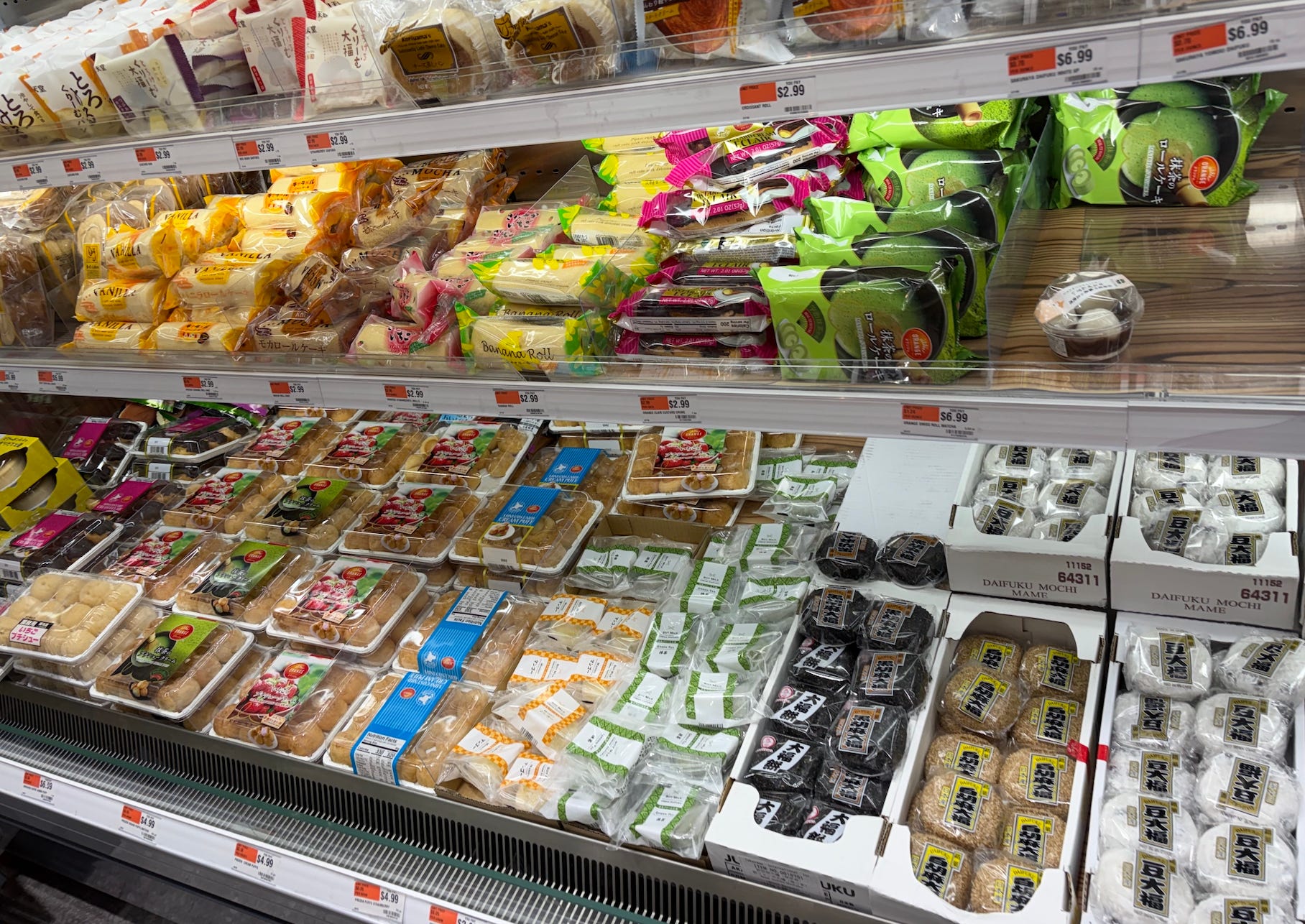
I spot the grab and go cases first, stuffed with pastries, cream buns, roll cakes, bean paste mochis and colorfully labeled drinks. Right off the bat I break my professional discipline and grab a couple mochis and a roll cake, which looks like a giant Twinkie folded in on itself. Next door is a cooler of iced tea. Just tea, mind you. No kombucha or coconut water, just dozens of sizes and flavor options of green, bold green, jasmine, white, hojicha, golden oolong, genmaicha and various latte mixes, as well as a few organic options.
Across from the tea is a hot case, filled with grilled chicken and fried chicken trays, as well as miso soups, gyoza, Spam musabi and various teriyaki glazed meats, as well as a cold case, filled with freshly made sushi and sashimi, the spicy salmon rolls, eel avocado rolls, the ubiquitous California rolls, and a shelf of “side dishes” like seaweed and ginger slices.
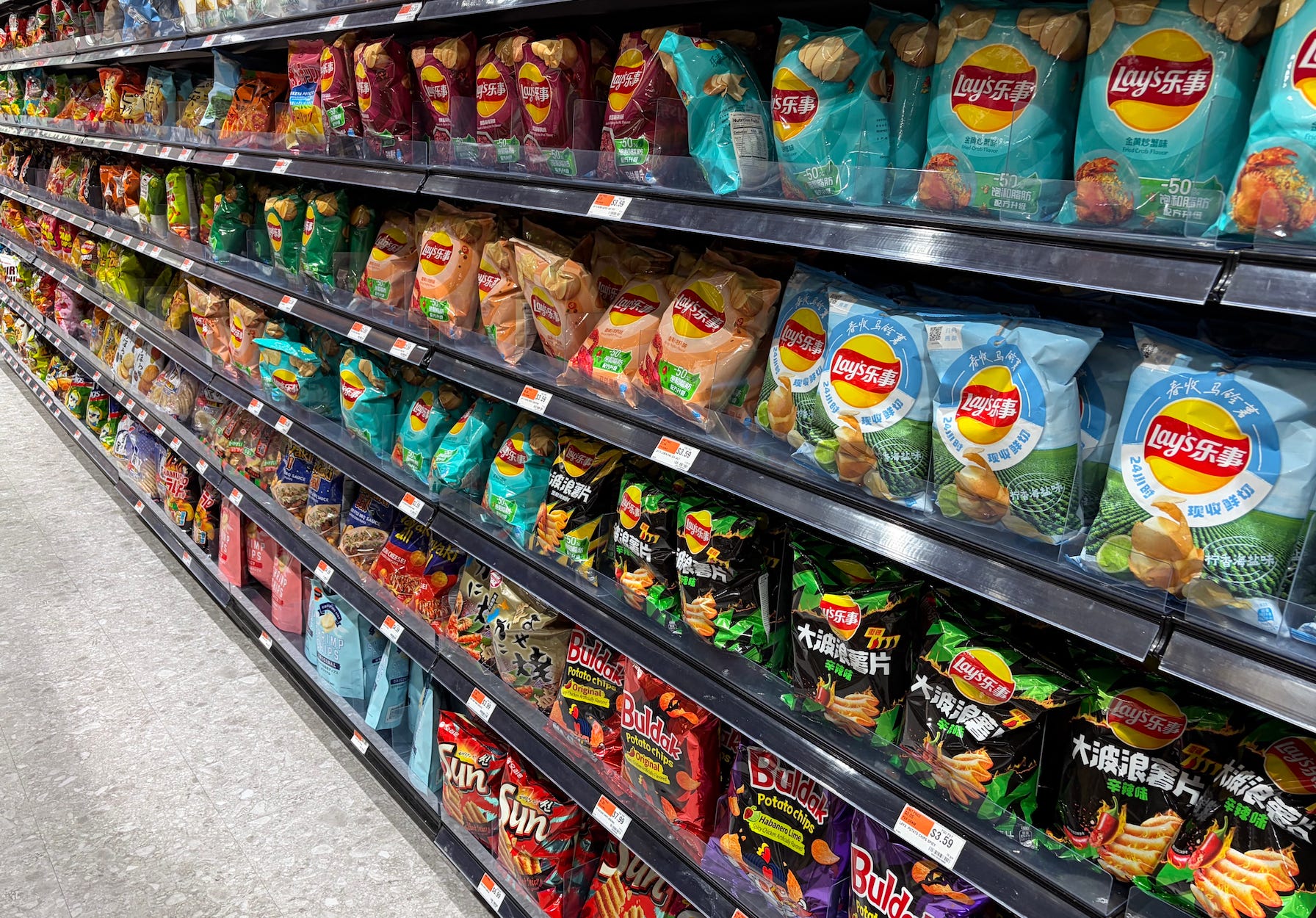
The first hint of the Japanese CPG tsunami that occupies three fourths of the store is in an upright case, Calbee Asian Chips and Japanese versions of Frito Lay’s Sun Chips, all “bold” and “tingly” and “savory” flavored, beating you over the head with their tempting umami bombs, their utterly uncompromising dedication to craft, even if it is rationalized, homogenized, yet still punk rock-ishly unhinged in their pursuits of flavor intensity, satiety and addictiveness.
American snacks can’t hold a fucking candle to their Japanese counterparts, all dialed up to 11, perfected through industrial formulation, the polar opposite of those iconic ancient chefs toiling away making ramen for 75 years, yet somehow the same conceptually, just scaled up geometrically through food science, automation and mechanical engineering. Perfected, deviously so.
Next to this hint of CPG mastery is another cold case, filled with what I think are fruit and cream sandwiches, the grapefruits, kiwis and strawberries center cut and wrapped in luxurious, velvety sugary cream foam and enveloped by something white and doughy. I get a vicarious blood glucose spike by just being in the vicinity and fight the urge to buy one, lest I spend the next 48 hours in a semi-diabetic psychosomatic meltdown.
There are also some actual sandwiches, pork cutlets and tuna, that remind me of the precious little Marks and Spencer grab and go coolers in the UK. Adjacent is yet another cooler, this one stacked to the gills with horizontally merchandised cans of teas, sodas, sparkling waters, beer, juices, coffee, yogurt and milk-based drinks, many with colorfully illustrated Manga characters on their labels.
The fruit case provides a welcome reprieve for me. The store doesn’t have an actual produce section, just a few shelves of dragonfruit, packaged kiwis, berries, lychee and longans, stone fruit and pears, plus cut mango, pineapple, melons, papaya and grapes. I grab a cup of papaya while avoiding the yogurt parfaits on the next shelf up. The Force is strong in this one.
But I can no longer avoid center store and the four aisles of packaged food paradise.
Once again, as I dive in, I really need to re-emphasize that the Japanese are CPG masters, rivaled only by Mexican CPG (stay tuned on that). The packaging design, the fonts, the color breaks, the sizing, the formats, the assortment choices, the flavor options, the logos and mascots, the smooth integration of Japanese and English writing that keeps the products both foreign and familiar, and the wickedly amoral targeted marketing of high fat, high salt, high sugar, low nutrient yet calorie dense num nums to kids of all ages.
Shelves and shelves of Turtle Chips and Roller Corn, a full set of Frito Lay Japanese analogues in mystery flavors with no English lettering other than ingredients, in colors that would be quite out of place in an American grocery store, strange shades of blue, peach, crimson and leafy green above a shelf of Buldak potato chips that seem to be everywhere these days, facing a full set of Japanese Mondelez import heavy hitters like Oreos and Ritz. A full set of various dried plums and vast options of rice crackers, sweet, savory, Teriyaki and Wasabi flavored, sesame and peanut spiked, next to several shelves of square and round wafer cookies and shelf stable mochi and square thin boxes of Pepero snacks, pretzels, Pocky’s and chocolate bars.
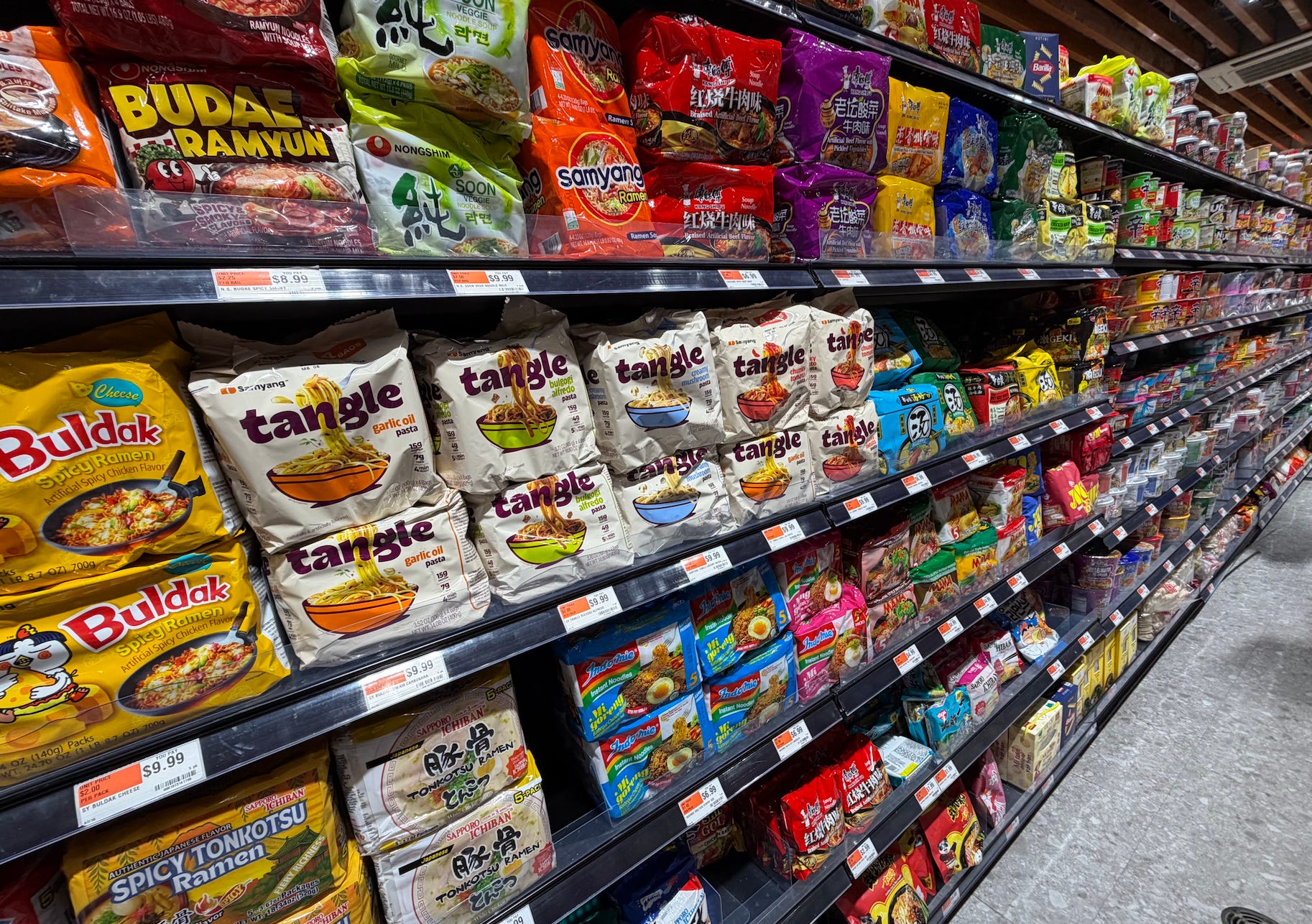
The ramen aisle is the stuff of legends. This isn’t the old school Maruchan set you see at your basic normie convenience store. Stacks of King Noodles, Cup Noodles, Myojo, Buldak, Shin and Nongshim cups and shelves and shelves of ramen packets from Buldak, Ichiban, Samyang, Nongshim, Indomie and a half dozen other brands in the whole rainbow of colors and font libraries, half English/half Japanese lettering, the packaging styles ranging from the Euro-subdued to modernist block colors to hyperactive Gen Z anime shouty ADHD color combos, all laced with liberal quantities of glutamic acid isomers and enough salt to float the sunken Titanic up from the depths and straight down Broadway.
The shop has an admirable aisle of marinades, sauces, chili oils, chili pastes, cooking oils, seasonings, sesame oils, salad dressings and shelves and shelves of soy sauce, just in case you actually also cook for yourself and want the real deal authentic stuff, and yes, plenty of the iconic Laoganmai and their stoic chef logo, drolly staring out at you from the half-finished jar in your fridge, judging you for not using enough chili paste in your ramen, you silly Americans.
A beer cooler. Sapporo, lots of Sapporo, bottles, cans, cases, six packs. There are other brands, but all I see is Sapporo. No soju though. I don’t drink much, but every once in a while, I need a bottle of this smooth, understated Korean booze, the Yin to the Japanese CPG Yang. Alas, not tonight, and I am better for it.
A whole four foot upright of Furikake, an esteemed and delicate seasoning that I realize I have not had in years, and here, overwhelmed with the wealth of choices, choose to remain free of Furikake for the time being.
Japanese freezer sets are also works of art, with dozens of frozen mochi and colorfully packaged ice cream bars and novelties, for kids of all ages, the sweet Samangos, Peperos, Noir Bars. The Mochi game is endless, with dozens of flavors, formats, pack sizes, color breaks, font styles merchandised near a couple shelves of ice cream pints, above a coffin cooler and several upright shelves of edamame and various dumplings, the gyoza, mandu, pot stickers, shu mai, soup dumplings among the Mongols’ greatest gifts to civilization.
An upright cooler in the back of the store is stacked with ready to cook ramen noodles, leading into a 12 foot cooler of just fresh tofu, miso, kimchi and assorted pickled vegetables, an epic epilogue for this CPG story, with a more than token appreciation of some of the healthiest and most nutrient dense packaged foods in the industry as bookends to all this UPF insanity. Craving ramen? Then, bro, just add some tofu and kimchi, your gut and gut flora will thank you even if your hypertension won’t.
I’m toast after a long day of meetings and now this extemporaneous store tour. I pick up a triangle rice ball Onigiri, something spicy something something, and wander up to check out with the vanilla roll cake, red bean mochi and cut papaya, the cashier very obviously on her cell phone with her mom, who nonetheless checks me out quickly and efficiently, apologizing that she’s also on the phone with her mom while working, and I wander out into the humid midtown evening with my snacks, which I consume well before I get to the subway, my belly and soul briefly captivated by Japanese import CPG convenience hegemony.
I may pass on the sashimi, and I’ve never been to Japan, but I’ll patronize Hashi any day. I’ll just eat elsewhere before I shop.
(Perspectives are 100% our own and do not reflect sponsors.)
Thanks to Jamie and Cang for giving me a quiet place to write.
Comments
Nothing yet. Say the first thing.
Sign in to join the conversation.