
Recent efforts by governments to restrict youth access to social media (such as in Australia, the UK, and elsewhere) have provoked (finally) a free-speech backlash. I’ve been watching some of this dialogue, particularly on LinkedIn1 (for which, I now try to avoid as much as possible). Opinions differ about the correct course when it comes to social media, naturally, but a common refrain I’ve been seeing particularly since the UK ban has been something along the lines of: “We need to do something to address social media harms, but a ban is not the answer.” While I have some sympathies with the underlying logic, I don’t think this approach is going to work.
Not always, but very often the people I’ve seen making this argument seem to have been the CEOs or other administrators for companies involved in some kind of media literacy, youth advocacy, or tech approaches to youth wellness. Meaning, a lot of them seem to have something to sell, which doesn’t disqualify their opinion2 but is nonetheless worth remembering given the old slogan: “It is hard to get someone to learn something if their job depends upon them not knowing it.”
Obviously, I’m sympathetic to the free-speech angle of this logic. Youth bans and age-gating have very serious free-speech implications. We’re basically handing governments the ability to track, not just youth, but adults on the internet. They may also get substantial control over content directly (though bans and age gating and outright censorship) or indirectly (via trial decisions that are too expensive for social media companies not to comply with government wishes). Is this really what we want? I think that’s absurd, but maybe that’s just me.
However, the “social media harms” angle of this argument is dicey I think. It’s dicey for several reasons.
· “Harms” is both vague and causal. Exactly what are we talking about? In some areas, increasingly evidence suggests time spent on social media is neither correlated nor causally associated with youth mental health. According to CDC data, youth mental health has now been improving for years (though many people have blithely ignored this despite pointing to mental health data in the past). Bullying went down, not up, during the social media era even with cyberbullying factored in according to National Center for Education Statistics data. That doesn’t mean there are no reasonable concerns…are we talking about adult content slipping into child feeds, or catfishing, or poor content moderation of harassment and threats (all legitimate concerns)? Just saying “harms” leaves it to the reader to imagine what you mean, and often their suppositions won’t be evidence based.
· “Harms” is also highly emotive language. It’s unlikely to convince people to be less inclined to endorse highly restrictive approaches to “protect the children.”
· It still makes it sound like social media is a major issue for youth though the data suggests that, even with a few reasonable concerns, social media really just isn’t. The pressing problems for youth remain families in distress and dysfunctional schools. Mike Males has been banging this drum with good CDC data, but people just aren’t listening to the degree they should.
· Ultimately the “harm” language feeds directly into the narrative of people pushing for bans, not detracts from it. To do that we need to be clearer.
I think these arguments are made in good faith (again, acknowledging some financial incentives for at least some of these folks), but are just not convincing. Here’s where I think arguments really do work. My suggestions are:
· Drop “harms” from the vocabulary entirely. If there are specific areas of concern, detail them specifically, not with vague and alarmist language like “harms”.
· We need to be clearer that the evidence just doesn’t support people’s moral intuition about social media. That includes beliefs that social media influences mental health, reading, grades, time spent with friends, etc. The evidence just isn’t there. Social media does seem to detract from watching TV, so that can be fun to point out.
· Nor is there evidence social media use is addictive in any coherent sense. Any “addiction” language should also be struck from our vocabularies.
· Discussing science is often hard, nuanced, and we need to be careful of making people’s eyes glaze over. But pointing to it patiently and repetitively does work over time.
· We need to be clear with people that bullying is at historic lows during the social media/smartphone age. We need to be clear that youth mental health is improving not getting worse.
· We need to be clear that the main places kids have problems is within their own families and schools. CDC data makes clear that youth suicides track the academic school year beautifully. That’s correlational data, sure, but there’s no such correlational data now for social media or smartphones. All those Anxious Generation graphs are outdated.
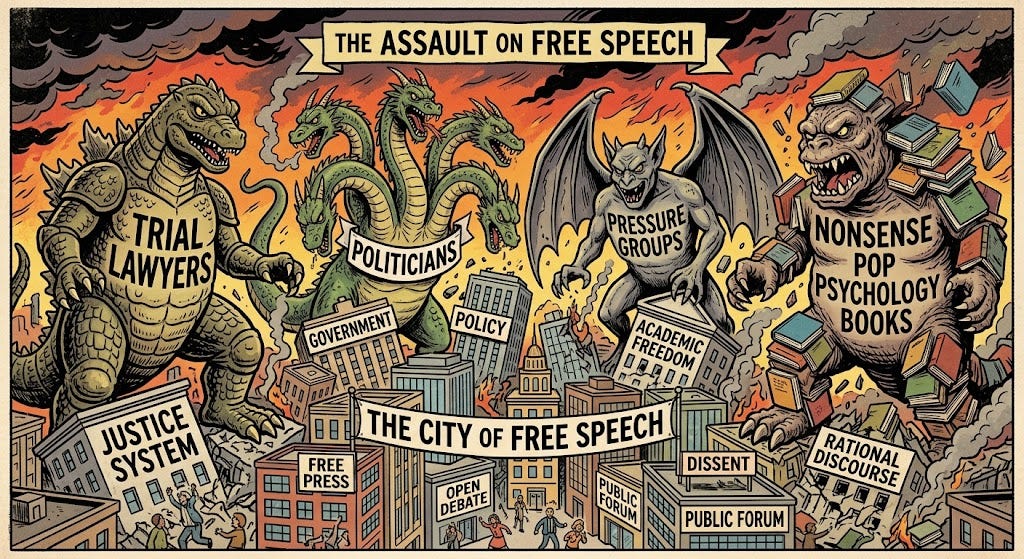
· We should be honest that, yes social media companies have massive financial conflicts of interest and often are deeply unlikeable and have contributed to their own current problems. But we should also note that trial lawyers, people selling pop books to the public stoking anxieties, advocacy groups, etc., also often have massive financial incentives as well. The conflicts of interest cut both ways.
· It massively helps to remain patient and calm. Sometimes people get mad when you tell them their worst fears aren’t true. But sometimes, if you give them a day or a week or a month or a year, they may reconsider that position. I won’t claim to always be good at taking my own advice here, but I find it really does work.
· Compassionately remind people that the “your lying eyes” effect (i.e., confirmation bias) is real. Anecdotes are not evidence and the 1980s was no period of bliss for youth.
· Point out that what concerns do exist for youth and social media (getting into dumb fights online, sharing personal information, controlling algorithms and notifications, etc.) can be handled with good media literacy. Banning imparts no such skills.
· So far, evidence suggests bans just don’t work. Preference falsification suggests that kids and, more surprisingly, even some of their parents, circumvent the bans once they are in place. Sometimes people don’t really want what they say they want.
· We should point out better all the past moral panics over books, radio, kaleidoscopes, comic books, rock music, Dungeons and Dragons, video games, etc. The patterns for social media/smartphones/AI are all the same. Help them look for the signs, like the inevitable unwarranted comparisons to cigarette smoking.
· And, yes, we should talk about the free-speech implications too.
Basically, the only way to challenge a moral panic is to meet it’s arguments head-on with good data, patience, and compassion. Most people really do want what’s best for kids. They’ve just allowed their heads to be filled by the scary and profitable nonsense from politicians, advocacy groups, news media and books like the Anxious Generation. Unwinding all that garbage will take time, but it can be done.
Most social media algorithms are easy to train, but I find LinkedIn more stubborn. In fairness, it probably keeps wondering why I say I’m not interested in posts on social media policy, despite publishing articles on the same. Mostly, I’m trying to stay sane.
I may return to the issue of financial conflicts of interest in this realm in a future post.
No posts
Comments
Nothing yet. Say the first thing.
Sign in to join the conversation.