
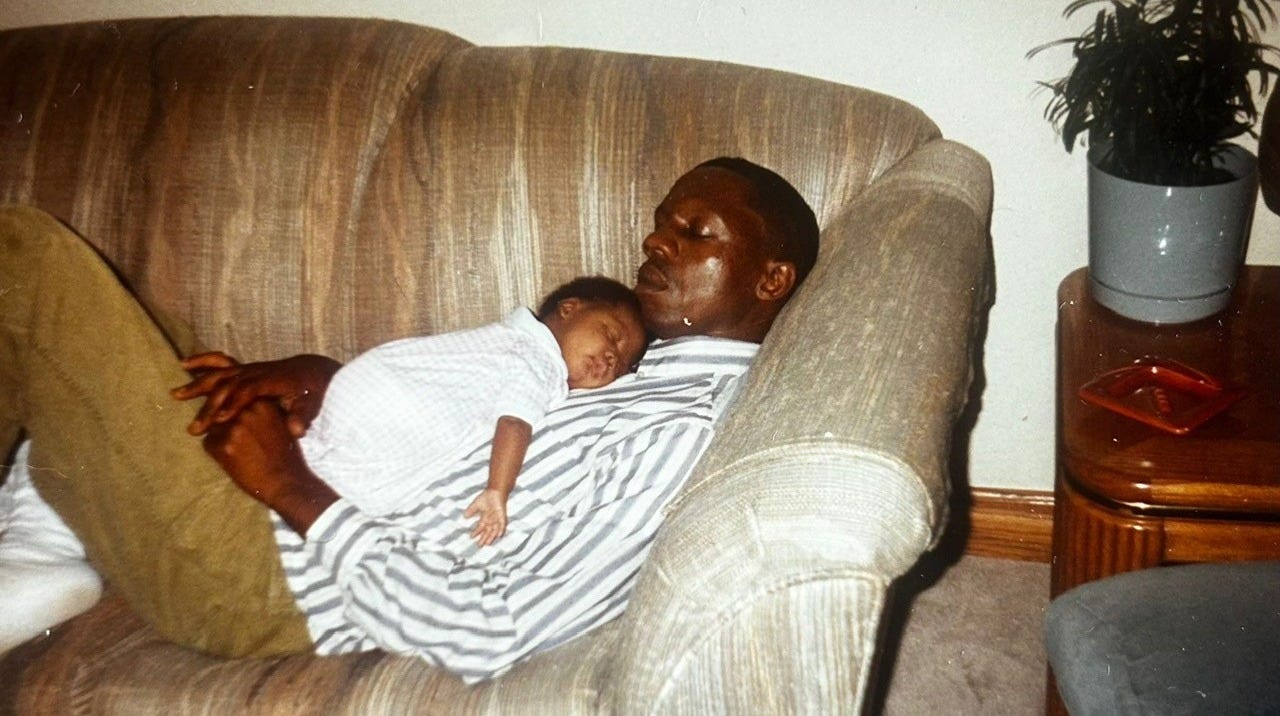
Saginaw nestles along the banks of its namesake river in central Michigan, a small city that most people in the state pass without remark, or else remember only in passing. Once sustained by the long reach of the automotive industry, it has since settled into a quieter, diminished rhythm; its streets marked as much by what has left as by what remains. In the early years of this century, when gang affiliations held sway in certain neighbourhoods, Saginaw was a regular fixture on lists of America’s most dangerous cities. Though gang violence declined a little in the 2010s, Saginaw has remained above national crime standards and often achieved the unwanted accolade of having Michigan’s highest crime rate, above even Detroit. The city provides a familiar, quintessentially American story: bereaved parents pleading with local authorities to do something to combat gun violence. To this day, Saginaw is spoken of with caution, if it is spoken of at all.
Yet that version of the place – circulated outward, flattened into statistics and reputation – doesn’t tell the whole story. For those who grew up there, life during troubled times resolved itself into something more secure and navigable. For some of Saginaw’s children, like Tirrea Billings, the presence of a loving father provided a shield to protect against the city’s hazards.
In the early years of this century, Tirrea was among the children who played outside until dusk, moving through streets dotted with the faded grandeur of vernacular late nineteenth and early twentieth century wood-panelled houses. Those dwellings stand on largely unfenced plots, often interspersed with gaping spaces where the wretched legacy of mid-twentieth century redlining halted progress: like elsewhere, Saginaw’s black neighbourhoods were sectioned off on maps and labelled ‘hazardous’ for mortgage financing. What remains is an Upper Midwestern urban landscape that could be mistaken for anywhere in Illinois, Indiana or Ohio.
For Tirrea, living in the Buena Vista Township neighbourhood, Saginaw was defined less by danger than by familiarity: the stretch of a street, the edge of a yard, the slow drift of an autumnal Sunday afternoon following the service at Prince of Peace Baptist Church. In summertime her father would often barbecue, as she moved between yards with children who lived nearby, inventing elaborate worlds from ordinary things. Each household was equipped with its own swing set that, in the logic of childhood, became spaceships “swinging across the universe” to Tirrea as she played with her neighbours Ashley and MiKayla. Their neighbourhood sat close to the edge of farmland; beyond the residential streets stretched fields of corn, dry beans, soybeans and sugar beets.
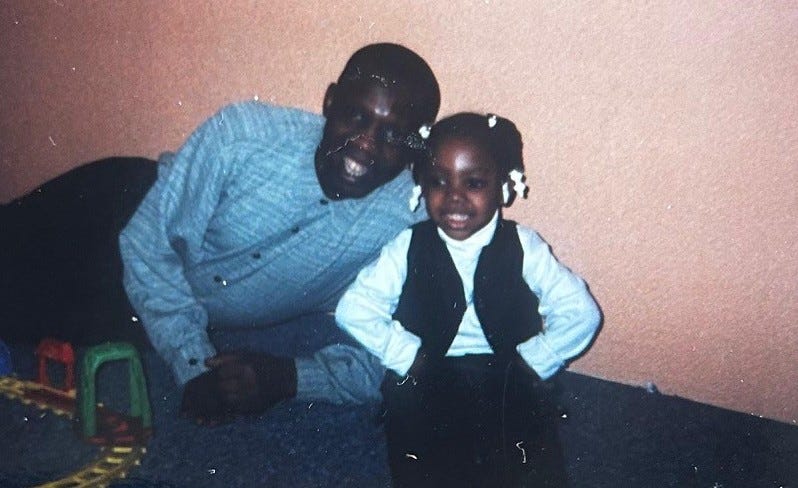
On Saturday mornings, the hum of her father’s lawnmower moving steadily across the yard marked the beginning of the weekend. He cut the grass faithfully every week and took pride in the landscaping around the family home; though left the tending to the rose bushes to Tirrea’s mother. He would stow the lawnmower back in its place in the garage alongside the bikes, scooters, footballs and jump ropes belonging to Tirrea and her younger sister. All the while his radio would be set to Kiss 107.1, ensuring that old school R&B provided a soundtrack to family life.
When the confines of small city life narrowed or the weather turned to harsh winter, Tirrea found comfort in the calm, ordered rooms of Hoyt Library. This was a different kind of space altogether, where the limits of the city gave way, however briefly, not to farmland but to something larger and more expansive.
“My father fostered my love for reading and writing, for education. I get my drive and my ambition from him; he taught me self-confidence.”
It is tempting to treat places like Saginaw as explanatory in themselves; to see in their economic decline or reputation for violence the outlines of the lives lived within them. But for Tirrea, what endured was not the instability of the city but the steadiness of her father. He fostered in her a love of reading and writing, and with it a sense that education was essential; not an escape, exactly, but a way of understanding the world more clearly.
Tirrea credits her father for so much that defines the person she is today. From him came her drive, her ambition and, perhaps most importantly, her sense of self-confidence: qualities that do not emerge from place alone, and which would come to matter more as her life moved beyond Saginaw. He reinforced that confidence constantly, often through a phrase he had repeated to her since she was a baby, becoming an almost daily mantra: ain’t nobody better than you.
That confidence was nurtured deliberately from an early age. Tirrea grew up fascinated by nature, animals and the outdoors. Her father encouraged those interests by taking her to nature trails around the Shiawassee National Wildlife Refuge and Ojibway Island, where she searched for insects, watched wildlife and developed an early ambition to become an environmental scientist. He bought her microscopes and science kits, treating her curiosity as something worthy of investment.
The same encouragement carried into adolescence. By high school, Tirrea had immersed herself in volunteering, completing more than one hundred hours of community service each academic year through organisations such as the Mid-Michigan Children’s Museum, the Mid-Michigan Children’s Zoo, the Disability Network of Mid-Michigan and the McNally Hospitality House. She became president of multiple student organisations, including National Honor Society, Freshman Mentors and Future Farmers of America, whilst also playing football (“soccer”) and competitive cheerleading throughout her school years. The breadth of those commitments reflected not only ambition, but the confidence to believe she could inhabit positions of responsibility and leadership.
When Tirrea attended an interview for her first job, as an administrative assistant at the Saginaw Conservation District, her father drove her there and waited outside. She emerged having been offered the position on the spot and told him the news. He replied as he hugged her, “I knew you would get it because, like I’ve always said, ain’t nobody better than you.”

It is only later, and often indirectly, that the significance of that kind of fatherly presence becomes fully visible; most clearly in the effort required to maintain it. Tirrea would later come to be in a relationship with a man who, like her father, was deeply committed to his children. In one sense, he came to be defined – in her eyes – by how persistently he tried to inhabit the role of father. Yet like so many others, and as I touched on in my own story of father exclusion, he endured cruel efforts to prevent him from having a relationship with his young daughter and son, from his earlier marriage.
They lived in Manassas, Virginia and in the years they were together, Tirrea’s boyfriend faced a concerted effort from his ex-wife to limit his role in his children’s lives. The terms of his court-ordered access were formally set – weekends, in theory – but in practice those arrangements bent under the pressure of work and daily life. What remained was something narrower than parenthood as it is usually imagined: a schedule to be adhered to, a boundary to be enforced. Fatherhood became something continually negotiated within institutional constraints rather than simply lived.
His attempts to move beyond it, to see his children more often – often at their request – were met with inflexibility from the children’s mother. She was unwilling to allow anything outside of the short windows the court permitted. Time with his children became something that was meagrely rationed; his fatherhood itself rendered fragile and conditional.
The difficulty was not only the restriction of time, but the transformation of fatherhood into something provisional: dependent on permission, mediation, compliance.
Tirrea describes how unfair it felt seeing him trying to be there for his children, even when his work commitments meant he couldn’t always meet the exact terms of the court-ordered visitation agreement – which was for every weekend, but his work schedule only made it possible for him to have his children every other weekend. What struck her most was how any attempt for flexibility to make up the time with them was met with resistance. “He genuinely tried to be present for his children whenever he could, despite a work schedule that already limited his time with them. Yet any effort he made to see them outside of the agreed weekends was quickly shut down with reminders of ‘what the agreement says,’ which felt less about the children’s needs and more about enforcing boundaries at his expense.”
“The children’s inability to spend regular time with their father started affecting the closeness of their relationship. He often felt that their mother fed them false narratives about him, when in reality he simply wanted to be a present and involved father and do what was best for the children.”
With Tirrea’s support and understanding, he adapted to that constraint the only way he could. Weekends with the children, when they came, were crammed to excess: time stretched yet compressed at once, as though it might compensate for all that could not be shared during the week. “He would fill the weekend to the brim with activities, which was fun but equally exhausting. The limited time we had with the kids made him feel like he had to pack everything into a couple of days; to try to make up for time not spent with them.”
Though not married, Tirrea embraced a stepmotherly role. She enjoyed the visible lightness to her partner in those precious moments he was allowed to spend with his children; a version of himself that seemed briefly restored. But it did not last. When the children left, the absence reasserted itself just as quickly, settling into a quiet, persistent weight he carried. It shaped his moods, his habits and, in time, the space between him and Tirrea. “He was noticeably and visibly happier when he had his kids. The moment they left, he went back to a state of depression.”

There were mornings Tirrea woke with a cautious hope that nothing would arrive from his ex-wife – no message, comment, or small provocation of some kind – that might hijack the rest of the day. And yet often it did. What could not be dealt with within one relationship was frequently displaced into another.
“The situation really put a strain on his mental health. It also put a strain on our relationship; he was often absent and in a bad mood. I would wake up every day just hoping his ex-wife wouldn’t do or say anything to piss him off, because then he would take it out on me.”
Over time, the situation grew harder for all concerned. It became increasingly apparent that the children’s interests would be better served if they lived with their father full time. And yet, the barriers to that happening – legal, financial and interpersonal – were immense. Tirrea’s partner wanted to pursue full custody and believed he could make the case for it; that his attention to schooling and insistence on instilling good values in the children amounted to more than the occasional role of care the court straight-jacketed him in. But the court’s conditions for achieving custody, including the physical space of his home and his financial resources, remained just out of reach.
“From everything I witnessed, there was a strong argument for them being better off living with him. He was far more involved in their lives, supporting their schooling, spending quality time with them and providing enriching experiences. In contrast, his ex-wife came across as little more than a ‘glorified babysitter’, with the children often left to sit in their rooms when at home with her. Despite this, the court always sided with the mother, largely because she lived in a bigger home with her parents and could offer more space.” The court’s supposed logic didn’t quite add up for Tirrea: “What I found hardest to accept was that even when there were concerns about the children’s safety around her new husband, my ex still couldn’t secure full custody and was effectively required to obtain a larger living space before he would even be considered.”
For Tirrea, the contrast to her own childhood was difficult to ignore. She had known a version of fatherhood that was steady, formative and constantly close at hand; here she was witnessing one that was contingent, negotiated and repeatedly denied. What troubled her most was not simply the restriction itself, but how easily paternal absence could be interpreted as indifference rather than obstruction. It altered how she understood not only her boyfriend’s experience, but the broader narrative surrounding fathers in his position; and the ease with which absence is assumed to be chosen, rather than imposed.
He did not give up. He continued, despite the constraints, to insist on a firmer place in his children’s lives. He would, eventually, secure full custody of his children; but not before the struggle had taken its toll on his and Tirrea’s relationship. As I can personally attest to, an excluded father can fight an all-consuming battle for a relationship with his children, or he can try to live his life. He cannot do both.
Tirrea understands this, just as she understands the value of fatherhood itself – recognition of which in no way undermines motherhood: “Contrary to popular belief, fathers provide a different level of love and parenting that a mother can’t give alone. I know some mothers play both roles because they have to. But if they don’t have to and they’re choosing to anyway, needlessly shutting their children’s father out, then that’s an issue. We should not shy away from calling that out.”
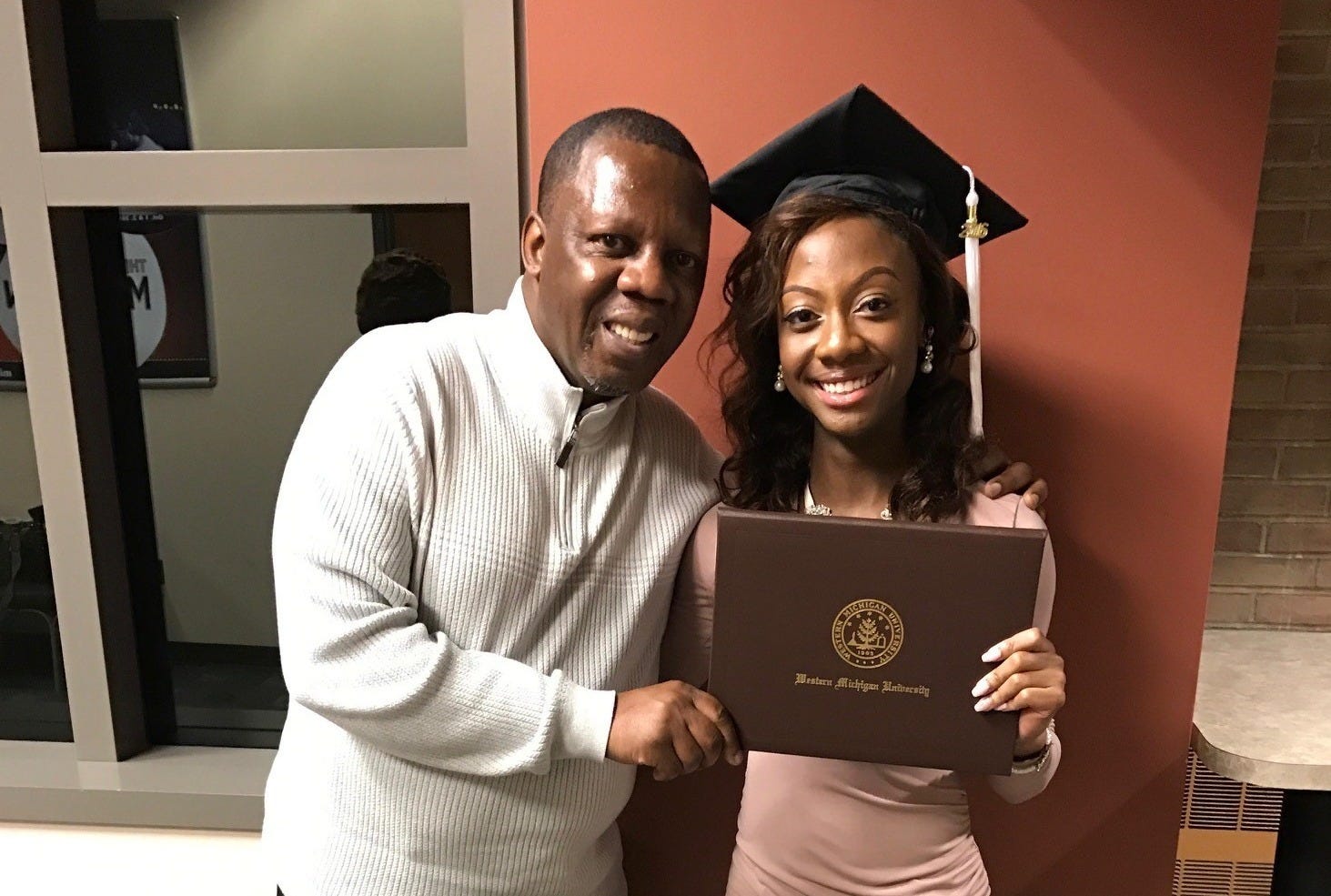
To hear Tirrea reflect on her experience is to gain a clear insight into her as a person. These two close up versions of fatherhood, her own dad and her former partner, helped shape and then confirm a sense of social justice that burns to the core of who she is. It has driven her through a career in the nonprofit sector, highlighting its shortcomings in what she terms “the nonprofit industrial complex” and chronicles through her philanthropy unfiltered Substack platform. It has carried her to the University of Southern California, where later this year she will begin doctoral studies in Organizational Change and Leadership.
“My father has had an astronomical impact on my life, and I wouldn’t be where I am now without his love, guidance and support. I know what having a present father has meant for me. I couldn’t imagine what the cost would have been if that opportunity had been deliberately stolen from him, from us both.”
Sharing my own version of father exclusion with Tirrea, she instantly had a profound understanding of the ordeal I have faced. She never questioned my experience; she recognised it instantly. “The hoops and ladders my ex-boyfriend’s ex-wife would construct to make it difficult for him to be a present father were frustrating and absolutely heartbreaking to witness. The powerlessness that father exclusion brings is something I watched consume a good man who wanted nothing more than to show up for his kids.”
Tirrea’s empathy for my own struggle, grounded in what she lived through with her ex-partner, has been striking by its rareness. She explains, “I learned a lot from that relationship about how family courts are always partial to mothers, even if the kids would be better off living with their father.”
Speaking to Tirrea also brought back childhood memories of the weekends my sister and I spent with our father. Though that experience was an ocean and decades apart from hers, and from the perspective of the child, I instantly recognised the urge to pack every moment and try to make up for that which was lost during the weekdays. I remembered, too, something I had forgotten: my father wrestling with a sense of unfairness, masking his hurt from my sister and I, so as not to burden us or poison our time together. But it was unfair, it was all so utterly unfair.
From her own brush with father exclusion, Tirrea understands this. “It made me realise how often the narrative of the ‘absent father’ is manufactured and deeply unfair. From what I’ve witnessed, many fathers desperately want to be present, but are put in positions where mothers make it impossible for them to be involved and, over time, some simply give up. I’m glad my ex didn’t give up, he now has full custody of his children, and I’m so happy that he fought for them and their well-being. But I’m also aware that many fathers don’t get that outcome, or even the opportunity to try.”

The difficulty, Tirrea came to realise, is that fathers in these situations are often required not merely to remain present, but to continually prove the sincerity of their desire to do so.
What made witnessing that struggle so painful for Tirrea was not just sympathy for her ex-partner, but an acute awareness of what his children stood to lose. Fatherhood, to her, has never been an abstract ideal or political talking point; it is something she has experienced intimately and continuously in her own life. She has come to understand that fatherhood also depends partly upon recognition; on whether paternal care is acknowledged, trusted and simply allowed to be.
Perhaps this is why Tirrea recognised the injustice of father exclusion so immediately when I brought it up: she had spent her entire life living inside the opposite reality. She knew what it meant to grow up with a father who was consistently there; not only physically present, but emotionally attentive, invested in her interests and unwavering in his belief in her. Seeing another man struggle simply to maintain contact with his children sharpened her understanding of how profoundly formative that kind of presence can be, and how damaging its deliberate disruption may become. It forced her to confront the possibility of an entirely different childhood to the one she herself had known; one without the encouragement, steadiness and security of paternal love.
Looking back on her early years, what strikes Tirrea most is not just that her father was present during childhood, but that his support never receded as she grew older. The same man who once walked nature trails with her, bought her science kits and waited outside her first job interview remains equally invested in her writing, academic work and professional ambitions today. His encouragement did not belong to one stage of her life; it formed part of the foundation beneath all of it, encapsulated in five words: ain’t nobody better than you.
“I’m grateful that I grew up in a two-parent household. But if for some reason I wasn’t afforded that opportunity, I believe it would have been so important to my upbringing to be able to spend time with both parents equally, as much as possible.”
She pauses on this, before adding, “I couldn’t imagine not having my father in my life. He’s shaped so much of who I am.”
Who is Brooklyn for?
·
May 29, 2025

“The film is about amplifying community voices in Brooklyn,” she says. The black frames of her glasses match her tied-back hair and fit her face perfectly. It’s a face of character and depth. As she speaks, she exudes a calm, steady confidence somehow enhanced…
The Right to Bed-Stuy
·
April 3, 2025
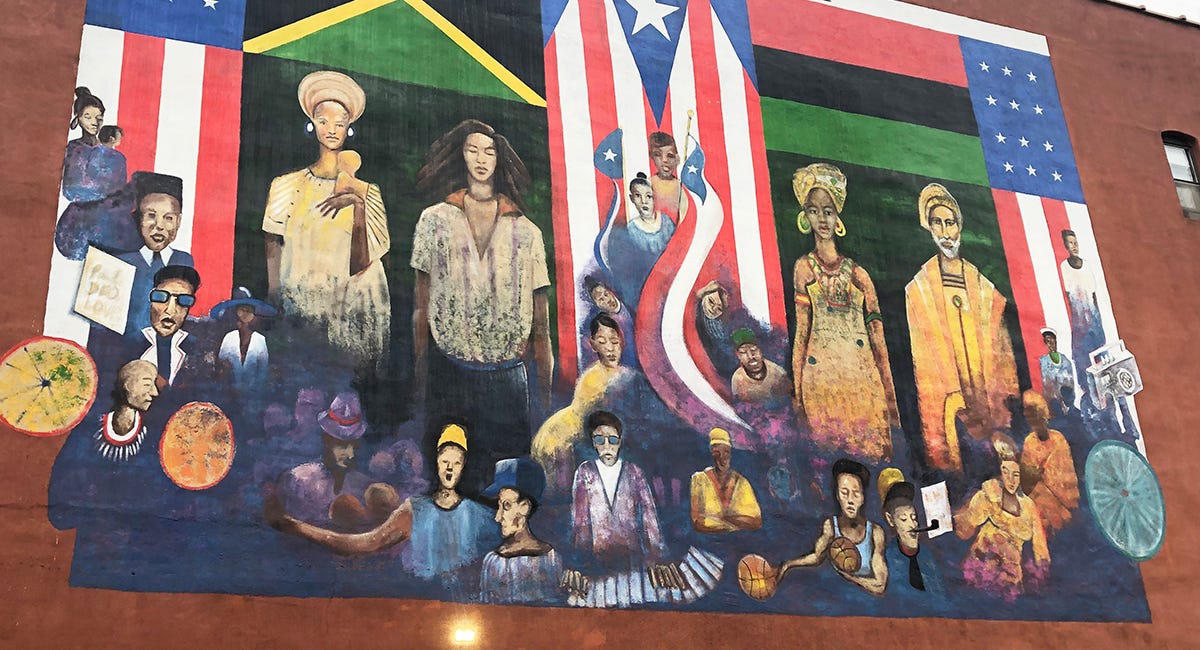
It’s an unseasonably hot autumn day, about 25 degrees Celsius. I turn from Franklin Avenue onto Hancock Street, hugged tight by imposing four-storey Italianate brownstone terraces that frame each side of the road. Stoops worn smooth by decades of hard footsteps on soft sandstone seem to whisper secrets from a storied …

Thanks for reading Gridlocked! This post is public so feel free to share it.
No posts
Comments
Nothing yet. Say the first thing.
Sign in to join the conversation.