
Thinking about good football teams, the Cardinals are not a team you think about. Particularly not after the firing of Don Coryell, which caused the team to fall into a rut of being bad for 30 consecutive years, between 1977 and 2008.
30 years, with one exception.
The 1984 St Louis Cardinals are an oasis. A lake in the middle of a desert. A very good football team in the midst of 30 years of uninterrupted misery for the Big Red, and at the centre of it all is the player every franchise dreams of.
The young franchise quarterback.
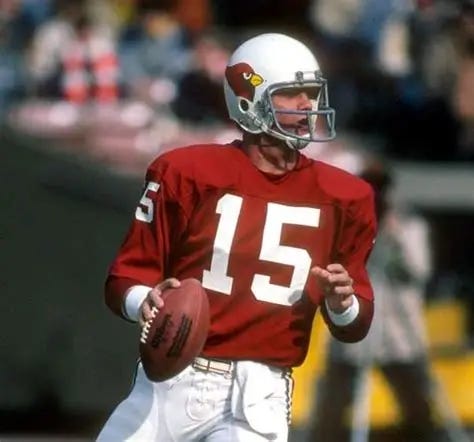
At just 25 years old, Neil Lomax took his Cardinals to the brink of the promised land, all the way to the win-and-in game for the NFC East championship in the final week of the season against the Washington Redskins, which lives on today as one of the greatest games in St Louis Cardinal history.
For the briefest of stretches, Neil Lomax was one of the best QBs in the NFL, the foundation the St Louis Cardinals were going to build on for years to come, and then, just as suddenly, he was gone.
Allow me to tell you the story.
Neil Lomax was never destined for athletic spotlight.
Born on February 17, 1959 in the suburbs of Portland, Oregon, to parents Carol and Dave, nobody would’ve ever told you that this was the kid who was going to make such a splash at the NFL level. In his youth, Neil was a good kid, with many talents, but he was the kid who appeared destined to be good at all sports, great at none.
On the baseball diamond, Neil could throw 90 mph, in a day when that still meant something. This got him letters from small college programs, but no offers. On the golf course, Neil’s idol was Jack Nicklaus, and his goal was to become a professional golfer, but he fell barely short of that path too.
On the football field, even at the high school level, Neil was too slow to play most positions, but too small to be a lineman. This left him as a QB by default, in a run-centric mid-1970s Pacific Northwestern high school offence. In his Senior year in high school, Neil threw just seven TDs.
He could throw the ball, but very rarely did, so needless to say, he was not high on the recruiting lists of the top programs.
Nevertheless, Neil was growing into his eventual 6’3”, 215 pound frame, big for the time, and was also a great kid. Once coaches were forbidden in public schools from leading the team in prayer before games (in the mid-1970s), he regularly took this job upon himself, and this is but one of many stories regarding the character of Neil Lomax.
In the words of his high school football coach, Neil was not a guy you ever thought was going to be a great player, but he had the combination of the physical tools and the locker room traits that made him worthy of taking the chance on, to see if you could get anything out of him. This was the recruiting pitch Neil’s coach gave to the local FCS program, the Portland State Vikings, whom he begged and begged to give the local Portland kid a chance.
The rest is history.
Neil Lomax just so happened to be the right man in the right place to be the foremost beneficiary of Mouse Davis’s famous (or infamous) run-and-shoot offence, which made Neil Lomax from a player who threw seven TD passes in his senior year of high school into the NCAA’s all-time leader in passing TDs at the time of his graduation, with a whopping 106 (or 107, sources disagree) in only 35 starts.
In 2026, there is a weariness associated with the phrase ‘run-and-shoot,’ but going into the 1981 NFL Draft, this weariness does not exist. Despite his FCS competition, there is serious noise about Neil being a top five pick. One must always be skeptical with regard to praise (or scorn) for players immediately preceding the NFL draft, but Cowboy executive Gil Brandt made a point to say ‘it’s not just the system with Neil.’
There is no QB need in the first four spots, but Neil is a real candidate to go either fifth (to the Cardinals) or sixth (to the Packers). However, at this point, we must get to the overarching issue in the Neil Lomax story.
The state of his legs.
Neil has a pronated ankle condition, meaning his feet are flat, and his ankles point inwards.
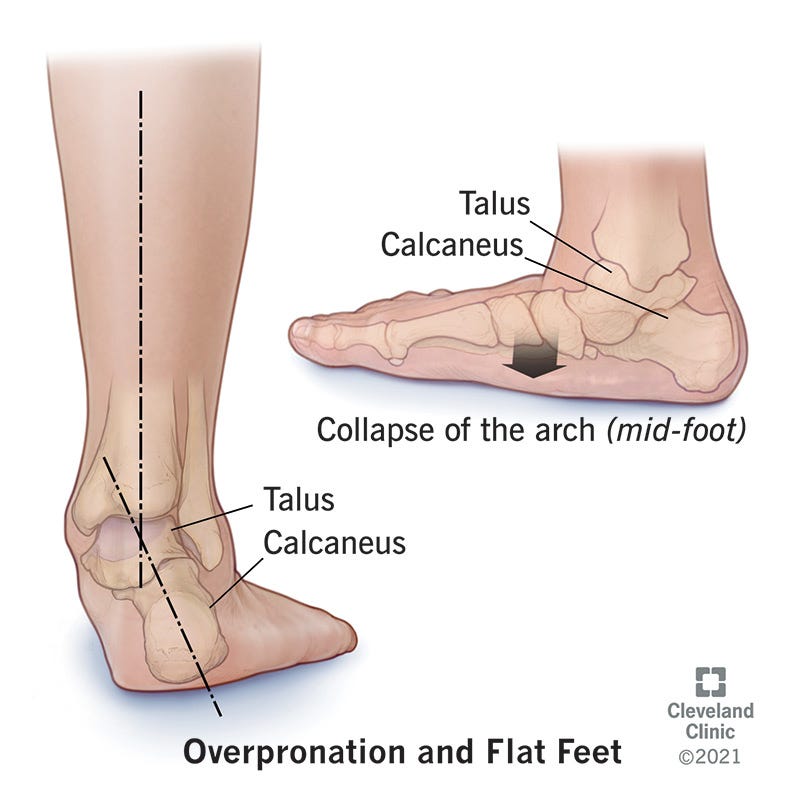
It’s not so obvious as to be seen from a mile away, but one could tell if they were in the same room with Neil that his feet and legs were not normal. This would be fine if it were simply a visual deformity, but it isn’t. Such a condition puts extra stress on one’s feet, knees, and legs, making injury to each much more likely. Many teams believe Neil simply cannot last more than three or four years in the NFL, if he even makes it that far, and drop him from their board for medical reasons.
This condition turns Neil Lomax into a pressing question. He’s the best statistical QB in college football history (as of 1981), a first ballot college football Hall of Famer (once FCS players become eligible in 1996), and a clear top five talent. He’s also shown no propensity towards injuries as yet. However, with the state of his ankles, he’s going to be at great risk of injury with the increased stress of the pros. If he makes it five years, he’ll be lucky.
What do you do with a player like this?
When we get to the 1981 NFL Draft, the NFL makes clear what it thinks of the talented young man from Portland. He does not go fifth to the Cardinals. He does not go sixth to the Packers, who pick QB Rich Campbell (one of the biggest busts of all time) instead. He does not even go 26th overall to the Cowboys, and once he falls past Dallas (the last team that has shown real interest), it becomes clear that the top five talent has fallen out of the first round altogether, but he will not have to wait much longer.
In the second round, there is still no QB need at the top four spots, but when we get to the fifth pick of the second round, 33rd overall St Louis Cardinals, they cannot look this gift horse in the mouth for a second time. They select Neil before anybody else can, and the Portland lifer is packing his bags for St Louis.
Neil finds himself drafted into a Cardinal situation that once would’ve been a dream environment for a rookie, but by 1981, that is no longer. Just four years ago, this offence was still booming under the stewardship of head coach Don Coryell and starting QB Jim Hart, but now, Coryell is long gone, driven out by disputes with owner Bill Bidwill. Jim Hart is still here, but is now 38 years old, with all the mileage of having been the Cardinals’ full-time starting QB since 1967.
This is 1981, and although Jim Hart is Mr. Cardinal, 1967 to 1981 is a lot of years. They’ve taken their toll, and over the last four years, the offence has slipped, from at least 11th in points per game all but one year between 1967-1977, and top ten more often than not, to 23rd in points per game in 1978, 17th in 1979, and 19th last year. That lack of scoring is why Neil is here.
The Cardinals are already on their third head coach since Don Coryell, with Coryell disciple Jim Hanifan currently occupying the post. Jim for one is over the moon that his team was able to land Lomax in the second round, declaring publicly that it was like having two top five picks, instead of just one.
That excitement leads Hanifan to bench Mr Cardinal midway through the 1981 season, and play Neil in seven games as a rookie. This is premature, and goes very badly, with Neil generating a painful -0.203 EPA/Play (29th) in his seven starts, compared to Hart’s still respectable -0.035 (15th).
However, the team’s record turns around under Neil, going 4-2 with the rookie compared to 3-7 under the old legend, despite Neil’s dramatically worse individual performance, and in an age where the team winning more games meant the QB was better, point scoring be damned, this led Hanifan to plant his flag with Neil as the permanent starter of the Cardinals moving forward.
Individually, 1982 did not go much better for Neil, with -0.109 EPA/Play (21st) and 89 ANY/A+ still looking pretty ugly on a stat sheet. It’s 1983 that represents the turning point. Jim Hanifan poaches Ron Dowhower from the Denver Broncos to be his offensive coordinator, and in the 1983 offseason, Ron and Neil set to work overhauling Neil’s mechanics, refining his reads, and making Neil from a raw talent into a refined NFL QB.
In the words of all involved, 1983 is when Neil Lomax truly arrives in the NFL.
EPA/Play still doesn’t buy it, with Neil’s -0.071 still ranking just 23rd, but his estimated CPOE improves from -4.2 in both 1981 and 1982 to 1.2 in 1983. His sk%+ improves from borderline unusable (70 in 1981 and 68 in 1982) to merely bad (84 in 1983). As a result, his ANY/A improves all the way to 5.81 (111 ANY/A+), and the team’s record improves to 8-7-1.
With all due respect to the beloved Jim Hart, 1983 is the first sign of life out of a St Louis offence since 1977, and it feels good to be back on the upswing again. A 24 year old, 111 ANY/A+ QB (CJ Stroud, in modern parlance) is not a privilege the Cardinals have ever been blessed with, or will ever be blessed with again (as of 2026). This is a big moment in the history of the franchise.
And Bill Bidwill almost tears it all apart.
For those who do not know, in the days before the salary cap/floor, NFL owners had license to be much more scrupulous, and Bill Bidwill is notorious for never spending money to try to make his Cardinals better. Don Coryell walked out over this. Every coach the Cardinals have ever had has walked out over this, if Bidwell didn’t fire them first.
In the 1984 offseason, Neil gets an offer for much more money from the Denver Gold, in an effort to try to lure the Cardinals’ best QB prospect in history to the USFL. Neil does not want to go to the rebel league, but absolutely would have, if not for Bidwell cracking, and making him the highest paid player in Cardinal history, with a whopping $3M over four years.
To give credit to Bidwell, he did break the bank (in Bidwell terms) to keep our young QB in town, but as always in St Louis, this payroll increase must mean cuts elsewhere. For the Cardinals, who got into the habit of almost exclusively hiring offensive coaches, this always means cuts on the defensive side of the ball.
Heading into 1984, the Cardinals have had top ten offence more often than not since 1967, but have not had a top ten scoring defence since 1974, and will not have one again until 1993. The cost of loading up on offence on a Bidwell team is to more or less completely punt on the defensive side of the ball, with the idea that every game can be won 35-30, much cheaper than those same games can be won 35-17.
Our Cardinals are going to have to deal with this all season long, and as a result, despite a turnaround and an 8-7-1 season last year, with at least an offence that appears primed to get even better, we’re still expected to be really bad. The Packers, who have not had a positive point differential in a non-1982 season since 1974, are expected to be better than us. The New Orleans Saints, who haven’t had a winning record ever, are expected to be better than us.
To put it bluntly, we have no expectations whatsoever, largely because of our owner’s absolute insistence that paying to be good on just one side of the ball ought to be enough. It is with that lack of expectation that we walk into Lambeau Field for week one, to face those same Packers who have not had a positive point differential in 12 years (for reference, the New York Jets had a positive point differential in 2015, 11 years ago), and face them as four point underdogs.
That is what the world thinks of the St Louis Cardinals. Four point underdogs against the Green Bay Packers, who have done very little of anything since Vince Lombardi (a man who died in 1970) left the team. This is what the world has always thought of the St Louis Football Cardinals, who have always been an afterthought in our own city, and who have not won a playoff game ever.
This is the perception that we need to rid ourselves of, and week one in Green Bay would be a great place to begin.
I say would be, because it does not happen.
In a game where we win the total EPA match 7.35 to 2.75, outgain Green Bay 417 to 265, and Neil himself generates 0.261 EPA/Play (no lean feat in 1984), we lose 24-23, primarily due to two factors. First, we were penalised for 79 yards, compared to the Packers being penalised for 11, and second, we missed an extra point and a FG in a game we lost by one point.
It often comes up in conversations about Neil that if he was so great, how come he has a losing career record? To people who say things like that, I ask you to tell me what exactly Neil could’ve done about a game like this. Neil did his part. He outplayed Packers’ QB Lynn Dickey, who just last season had a 139 NY/A+. He’s one of the best QBs in the world, and Neil outplayed him quite easily.
We just didn’t win.
Get ready to see more of that.
Thankfully, it’s not an issue in either of our next two games, as we score a combined 71 points in defeating the woeful AFC East combination of the Bills and Colts in the next two weeks. In week four, the story changes. Neil’s great start falters, as we go to New Orleans, to face the league’s best pass defence, and Neil struggles to a -0.039 EPA/Play performance, but we will not face the NFL’s best pass defence every week.
Looking at our week five opponent though, I wish we could go back and play New Orleans again.
We’re back home in Busch Stadium for week five, after back to back road games in Indianapolis and in New Orleans. However, it does not exactly feel like home cooking, to come back home and face the 1984 Miami Dolphins.
We all know the story of the 1984 Miami Dolphins. You combine perhaps the best QB in NFL history (1984 Dan Marino) with not one but two borderline Hall of Fame receivers (Mark Clayton and Mark Duper), in addition to a top ten defence in points allowed, and you get a team that’s off to a historically hot start.
Through four games, the Dolphins have outscored their opponents 128-48. They have trailed for a total of one minute and seven seconds, through 240 minutes of play, and may even be unlucky to have put up these numbers, as their total EPA differential is better than 90 points, through four weeks, compared to their real point differential of just 80. All of this is not against tomato can opponents either, as the Redskins (1983 Super Bowl participants) and Patriots (1985 Super Bowl participants) are both victims of the Miami domination.
To say this is a scary week five opponent is an understatement. It’d be more accurate to say there has never been a better team through one month in the history of the post-merger NFL, as of 1984, and if we probe all of NFL history, there is only one possible opponent (2007 Patriots) that look scarier at the one month mark than these Dolphins do.
This juggernaut of unprecedented scale comes to Busch Stadium to face our St Louis Cardinals, who have not been relevant since 1977.
After a start that already has us sitting at 2-2, in an era with five playoff teams per conference, where even 10-6 is not a guarantee of a playoff position, there are only so many losses we can afford, so, to put it lightly, it is terrible luck to find the 1984 Dolphins on our schedule. The vast majority of NFL seasons do not even contain a challenge as big as the mountain we’re preparing to climb in week five, but in this game, we also get an opportunity to prove that we are the real deal. Are we the Cardinal teams of the last half decade, who can be swept aside with minimal effort by a top opponent, or are we a team entering a new era, behind our new franchise QB?
Things do not start well, as at the dawn of the second quarter, the Dolphins are already out to a quick 12-0 lead, and this provides a gut check moment for a young team trying to come into our own. The Cardinal teams of the past five years may have folded, may have just called it a day in the face of an early two TD deficit against one of the best football teams of all time, but not us.
Not this 1984 Cardinal team.
Welcome to Neil Lomax’s Year.
We begin our comeback efforts with the Lomax trademark, a beautifully layered seam pass, over the LBs but in front of the safeties, to TE Doug Marsh, who in 1984 is a weapon like he has never been before, and never will be again. This gets us 29 yards and a foothold in Miami territory. We do not slow down from there. All remaining yardage on this drive comes courtesy of backup RB Stump Mitchell (some rushes, some completions), and before you know it, we have narrowed the score to 12-7.
We’re not out of this game yet.
The problem with this is that even though we may score, the Dolphins still have the lethal combination of Dan Marino and Mark Super Duper on the other side, and there is nothing Neil and the offence can do about that. Miami scores quickly to boost their lead back to 19-7, putting the pressure back on us.
Touching the ball with five minutes left in the first half, we try to sprinkle in enough rushes to keep Miami from getting the ball back before the break, but it’s just too easy, including the 22 yard TD pass to an absurdly wide open Doug Marsh, who scores the ultra rare (for a TE) untouched catch and run touchdown. This narrows the score to 19-14, but also leaves over a minute left on the clock for Dan Marino, which our poor overmatched defence just cannot hang with. It takes only 50 seconds of the remaining clock for Marino to throw yet another TD pass, this one to Mark Clayton, forcing us into the dressing room facing a 26-14 deficit.
What a quarter.
Everybody knew this was going to be a high scoring game. The pre-game over/under was set at 50.5 points, which is big in 2026, and gargantuan in 1984, but even at that, nobody expected this. In total, there were five offensive possessions in the second quarter (three for Miami, two for us), resulting in TD, TD, TD, TD, TD.
That’s a sequence straight out of a game in 2026. It has no place in 1984, but when you pit Dan Marino, having an easy day against our overmatched defenders, against Neil Lomax, who is not going to be denied, this is what you get.
To begin the second half, both offences slow down just a touch. We get the ball first, but a penalty on kickoff that forces us into bad field position ultimately proves costly. Neil completes passes of 16, five, and 18 yards, but stuffed up inside our own 20 to begin the possession, this only gets us out to the Miami 45, where we are forced to punt. Miami gets their FG blocked in response, so we get the ball back with six minutes remaining in the third quarter, still facing the same 26-14 score, and go right back to the first half showcase.
Neil and the pass game account for 56 of 83 total yards (25 of them to Doug Marsh, having the game of his life) as we score yet another TD without much difficulty to narrow the score to 26-21, but there just is no stopping Dan Marino, and the Dolphins make their TD look even easier than ours, putting us back down 12 as the third quarter comes to a close, and this is where, despite Neil’s best efforts, everything falls apart.
On the first play of our next drive, Neil drops back to pass, and finds an open Pat Tilley for a catch and run that looks like it can go a while. This is another first down, and a great start in our efforts to narrow the deficit to five yet again.
Until it isn’t.
Pat Tilley is a great receiver, a former Pro Bowler in the time that still meant something, with hands made of velcro (seventh in catch rate amongst all WRs in 1984), but on this play, his hands fail us. He’s caught from behind by CB William Judson, who knocks the ball out, directly into the hands of Safety Don McNeal, and just like that, this game is over.
Miami manages only a FG off this turnover, but without any two point conversion rule until 1993, a 36-21 deficit is three possessions. Too much to overcome in the time we have remaining, especially against one of the best football teams of all time. We do not stop scoring, netting another TD to narrow the score to 36-28 with about four minutes to go, but our defence is so unprepared for the task of defending the Miami Dolphins that Miami nearly scores another TD on accident just trying to run the clock out. We never see the ball again.
We lose, 36-28, to the white hot 1984 Miami Dolphins, and fall to 2-3 on the season. On the surface, it is very easy to look at this game as one we were never even in. That we never stood any chance of winning, but that would be wrong. We got ourselves into a deep hole in the first quarter, so deep we couldn’t crawl out of it, but in the final three quarters, I believe we proved a lot today.
Miami’s total score in their four games prior to this one was 128-48. In their next four games, this gets even wider, with a combined score of 141-42. In the middle of this stretch lies the lowly, never discussed, oft-forgotten in their own city, St Louis Cardinals, who did not take the Dolphins to the brink, but fell only one step short of that.
We started a step slow in the first quarter, but once we got that behind us, we stayed with Miami step for step. Nobody in the first half of the 1984 season was able to do that, for any amount of time. Nobody except us. We did not win, and did not get near winning, because the Dolphins put up 0.458 EPA/Play as a team in a game played in 1984, which is unheard of, but this is an article about an offensive player, and against a defence that had not allowed positive EPA to any QB in the first month of the season, 0.584 EPA/Play for Neil Lomax is extremely impressive, especially true since we were trying to make a comeback, so the Dolphins knew we were going to be throwing.
Once again (a recurring theme in the career of Neil Lomax), he did not win today, but he put up 0.584 EPA/Play against a white hot defence. What more can we possibly ask of him? It is Neil’s fault that our paltry Cardinal defence allowed a nonsensical 0.827 EPA/Play to 1984 Dan Marino, rendering what could’ve been a career defining performance for Neil moot before it even began?
This is unadjusted EPA/Play we’re discussing here. Football reference’s EPA model, as best I can tell, compares against expectation from 1999 and onward, just as NFLFastR’s does. In other words, when using it to grade QBs from 1984, it’s biased low, comparing against a higher expectation than Neil and Dan Marino were actually playing against, yet we still got 0.827 vs 0.584.
Just what do you want Neil to do about the fact that 0.584 EPA/Play was not enough? He doesn’t call defensive plays. He did not choose to have messed up ankles, causing him to fall far enough for the Cardinals to draft him in the second round, finding himself in this mess. It’s a loss on his QB record, but what more could we have asked him to do to help us win?
This Dolphins matchup encapsulates the entire Neil Lomax story, in one game.
308 yards, on only 37 pass attempts, with no sacks, no INTs, and 0.584 EPA/Play, yet Neil lost, and not only did he just lose. He was so far behind for most of the game that he never even had a real chance of winning. This one game is the epitome of an elite QB in a doomed situation. No QB would’ve won this game. Especially with the Dolphins locking number one WR Roy Green tighter than Fort Knox, with at least a double team on every play, it’s almost impossible for anybody to play better than Neil did today, and he still did not even get close.
When people choose to grade QBs using team W-L records, this is the type of game, and player, that is punished.
Nevertheless, at the end of the day, this is a game about winning and losing, and our Cardinals currently sit at 2-3. That’s bad, and worse, week six takes us on the road to Texas Stadium, where we have beaten the Cowboys in their stadium only six times in 25 seasons of being divisional rivals. That’s bad enough, but if you take out the first four years, where the Cowboys were expansion and the Cardinals were established, we have beaten them only twice in Texas Stadium in the last 20 years, and not at all in the last seven seasons.
To say we typically have bad luck in Texas Stadium would be a polite way of putting it, but we just went 15 rounds with the 1984 Miami Dolphins, so even coming into Texas Stadium as full touchdown underdogs against a 4-1 Cowboy team, Dallas does not intimidate us anymore.
We walk the dog all over America’s Team, in their home stadium, never giving them a chance to breathe. Neil comes out and shreds another defence that had not given up positive EPA to anybody in the first month, to the tune of 354 yards passing on only 29 attempts, plus three touchdowns, good for 0.291 EPA/Play.
This time, Neil’s elite performance actually nets us a win. A convincing one too, as we beat Dallas 31-20 on the road, to move back to 3-3 on the season, and set to work convincing the world that we’re no team to be a seven point underdog anywhere, against anybody.
While we’re talking about light work for Neil against elite defences, it makes sense also to touch on week seven against the 1984 Chicago Bears. The 1984 Bears are not quite the 1985 Bears, but they still have Mike Ditka, Buddy Ryan, the 46 alignment, and everything that comes along with it, making them 1984’s number three defence in points allowed, and number one in yards allowed.
Somebody forgot to tell Neil Lomax that he ought to be intimidated.
As the NFL would eventually find out, when teams have a QB that is not scared of the pressure, and a WR that can’t be covered one on one, the 46 alignment is not particularly effective. In our case, there is no eventually. Neil does have a habit of getting sacked a lot, but taking a lot of sacks and being scared of pressure are two different things.
To compare Neil’s presence in the pocket to a modern player, I would say the comparison is Ben Roethlisberger, a player who was known for being quite easy to put hands on as a defensive player, but very difficult to actually tackle. Neil Lomax is quite the same. Invariably, allowing defenders to get hands on you so often will result in a ton of sacks (just like it did for Roethlisberger), but this style allows Neil to stand in, and convert throws that many other QBs would not. This is the perfect formula for beating the Bears.
The second part of this formula is all-world WR1 Roy Green. Infamously dubbed not the best WR, but the best player in football by John Madden, 1984 is Roy Green’s Year too. Blessed both with crazy speed, and route running skills that are underrated, that he can use to get open without relying on speed, I would say a good player comparison for Roy Green is Stanley Morgan, who we are all very familiar with around here.
In the words of no less an authority on defence than Bill Parcells, ‘trying to cover Roy Green one-on-one is suicide,’ and Neil will see the benefits of such an elite WR1 all season long, but in no game are those benefits bigger than they are in this game. The 46 alignment entirely relies on covering receivers one-on-one on the outside, locking them up long enough for the pressure to get home.
Standing in, taking the pressure, and throwing the ball deep to Roy Green is the way Neil Lomax and our Cardinals play offence every week. We were made for this. Our style of offence is perfectly designed to defeat the 46. I don’t intend to sound arrogant, but styles make fights, and in Neil Lomax and Roy Green, we have the perfect personnel and playstyle to take down the Chicago Bears.
If we could’ve played these Bears 100 times, we would’ve beaten them 100 times, and today, we wipe the floor with their vaunted defence. Neil himself has 271 yards passing (166 of them to Roy Green) on only 24 pass attempts, plus two key scrambles (20 yards on a third and 19 being the biggest), for an overall 0.422 EPA/Play day against the Chicago Bears.
To underscore just how perfect the 1984 St Louis Cardinals are for the task of taking on the 46, we generated 19.23 total EPA against the Bears in this game. Chicago will not allow that much EPA in a game again until December 17, 1989, more than five years from now, well after the departure of DC Buddy Ryan and several key defensive players.
To put it bluntly, nobody put it on these Bears the way we did. Not Marino. Not Montana. Not Dan Fouts. Nobody could repeat what Neil Lomax did in this game, and once again, he is actually rewarded with a win, a runaway 38-21 win against a good Chicago Bears team, to get us back on the winning side of the ledger, now 4-3, going into the biggest game of our young season.
Despite being nearly halfway through the season now, we have only played one of our eight divisional games. That one game was a convincing win on the road in Dallas, which is a good start, but in reality, this schedule imbalance means everything we’ve done so far means little. Our offence has been white hot ever since we came home from New Orleans, and that’s all well and good, but in truth, our season is going to be decided as we play seven of our final nine games in the NFC East division.
This is going to be a gauntlet, but lucky for us, the biggest hill to climb is the first one.
When you’re an NFC East team in the 1980s, you can do whatever you want against your other opponents, but you are not a threat until you have beaten the Washington Redskins. Over the last two seasons, that has extended from the NFC East to the entire NFL, as Washington has gone 8-1 and won the Super Bowl in the shortened 1982 season, then 14-2 with a Super Bowl loss in 1983. They are the monolith of the NFL, without question, and if you want to prove you’re more than just a fluke, a game against the Washington Redskins is the place to do it.
As we stand, the Skins are 5-2, but with losses against the 1984 Dolphins and 1984 49ers, accompanied by five blowout victories, this is not exactly the typical 5-2 squad. They may not be the absolute top of the food chain anymore, but nor were the 2023 KC Chiefs, and who did that team ever beat?
If we win this game, boosting our record to 5-3 while dropping Washington’s to 5-3, we would claim a provisional first place in the NFC East, for the first time since we last won this division in 1975, but the football world is giving us a fat chance to do that. They’ve grown to respect Neil and our offence, setting the over/under at an extremely high 52.5, but they respect Washington’s offence more, so we walk into this week eight game as home underdogs again.
It’s hard to blame the bettors out there for respecting the Joe Theismann-Art Monk-Joe Gibbs offence more than they respect the Neil Lomax-Roy Green-Jim Hanifan offence. They’ve proven a lot more than we have, but this is no longer 1982. It’s no longer 1983. This is 1984, and in 1984, this Cardinal offence is coming straight for your throat.
We start slow enough, with some handoffs and dump offs on the first few plays, all to Ottis Anderson, but with just one misstep, we’re going to hurt you.
Roy Green is covered by three different Redskins, but it just doesn’t matter, as he outruns and gets behind them all, and Neil does not miss. Two and a half minutes into the game. 7-0 Cardinals.
From here though, our offence that’s been so explosive over the last four weeks falls into a grinding rhythm. We are able to get into Washington territory one time, but do not score, as Neil completes only one pass more in the first quarter, meanwhile Washington ties the game at seven.
On the first play of the second quarter, Neil is finally able to break the slide, completing a 12 yard pass to Roy Green, but can only muster dump offs beyond this, as we’re able to net only a FG and a 10-7 lead. Our next drive goes similarly, with Neil completing a couple big balls but still not generating any sustained rhythm. This puts us in position to kick a FG that would give a 10-7 lead, but Neil O’Donoghue misses the kick, a sentence that I warn, you will grow tired of reading as this season goes along.
This lack of rhythm on offence remains the pattern for much of the game, as Neil goes back into an extended dry spell, not completing another pass until the clock reads four minutes remaining in the third quarter. By this point in time, the scoreboard reads 21-10 in favour of Washington, and the mood in Busch Stadium is growing dire. This has never been a crowd known for absolute belief in their Cardinals, largely because the Cardinals have not given the fans much to believe in over the 25 years we’ve been in St Louis. It seems in keeping that we’d get to the big game against Washington, the biggest game this franchise has participated in since 1975, and have our white hot offence grind to a halt once we get here.
Not so fast.
As it happens, Neil has been playing much of this game with a lost contact lens. It fell out of his eye earlier in the day, and in the days before football teams carried two of everything, even at home, it has taken this long to procure a replacement. Multiple times, after our repeated failed offensive drives, Neil reports to his coaches that he saw Roy Green wide open. When his coaches asked why he did not throw the ball if he saw it, Neil responds that he could not make out Roy Green, only a red jersey, which left him uncomfortable pulling the trigger.
Now, that is all behind us. Neil finally has his contact lens back in his eye, and the offence immediately begins clicking. We play some ugly offence on this drive of ours, but we do see one of those beautiful layered passes between the LBs and safeties to TE Doug Marsh that this upstart Cardinal offence is quickly becoming known for. That goes for 28 yards.
A 12 yard scramble with a 15 yard late hit tacked on the end gets us to the Washington 29, where on second down, Ottis Anderson drops a wide open TD pass, but no matter. We convert on third down instead, capping the drive off with yet another catch by Doug Marsh, narrowing the score to 21-17.
Washington is able to widen that gap back to 24-17 with a FG at 11:51 of the fourth, but it takes us no time flat to get back to square, as Neil finds an open Roy Green, who just runs away from Darrell Green (the supposed fastest man in football) on the way to an 83 yard TD reception. From here, we only need a converted extra point kick to get back to even footing, and I must admit that last sentence was a lie. Neil O’Donoghue misses this PAT. We are not all square. We do score a TD, but find ourselves still trailing, 24-23.
Can you feel my eyes rolling?
This missed extra point could’ve killed us, but thankfully, our defence finds a way to stop the Redskins, netting us the ball with six minutes left, behind by one point, and it looks too easy. We get to the Washington 30 without seeing a third down, and on fourth and two from the Washington 22, the lead feels like it’s in our hands as we send out the FG team.
Famous last words.
I respect the Cardinals for trying to stick by our guy, but this is why teams are so ruthless when cutting kickers in 2026, as Neil O’Donoghue sends the ball sailing wide right. We have missed our third kick of the day, and are actively blowing our chance to get a vital division win over the Washington Redskins.
Wins over the Redskins are not easy to come by, especially not when your QB is seriously struggling, unable to see for half the game. If we’d made the extra point and both FGs, we’d be up 30-24 right now. Instead, we have to ask our defence to hold one more time, and thank goodness they do. We’re going to get one more shot, with two and half minutes left to play, still trailing by one point.
Once again, moving the ball just looks easy. We walk to the Washington 22 with minimal effort. However, it’s there we run into some difficulty. Neil does not recognise blitz until it’s too late, and finds himself sacked at the 29 yard line with 33 seconds left to play.
This has gone from a great situation to nervous time in the blink of an eye. This is still FG range, but would you really want to trot our kicker back out there, after what we’ve seen today, to try to kick from 46 yards? Not on your life. We need to get closer, or it’s almost assured that Neil O’Donoghue is going to miss again.
Lomax is up to the challenge.
It’s not pretty. In fact, it’s what we call a ‘suicide pass’ to Pat Tilley. He can barely get up afterwards, but he holds onto the ball. It’s a 21 yard gain, to put us on the eight yard line. From this range, Jim Hanifan feels comfortable to just send out the kicking unit, and we watch with breath held as the ball flies through the uprights from 21 yards away.
Take a deep breath everyone.
The final score is 26-24. The Cardinals have won. We have beaten the Washington Redskins, and climbed into first place in the NFC East for the first time since 1975.
One only wishes that win did not have to be so difficult, but it’s not Neil Lomax’s fault. The completion percentage was rough in this game, as a result of the contact lens issue (just 20 for 38), but he still managed to throw for 361 yards and three TDs against no INTs, generating 0.415 EPA/Play along the way, in a game where the team needed every thousandth of it.
Special teams issues continue to hold us back, but on offence and defence, we did not just defeat defending NFC Champion Washington, we made an example of defending NFC Champion Washington. We outgained them 456 to 296. We won the total EPA match by better than 14 points. The real game was won by just two points, because everything that could go wrong for us did go wrong for us, short of missing the final FG too, but in terms of quality of play, this game was not as close as that.
Am I crazy, or are the St Louis Cardinals the top team in the NFC East right now?
There’s no way that can be true. The St Louis Cardinals aren’t relevant, and (aside from a brief Don Coryell blip), the St Louis Cardinals have never been relevant. There is a reason that even in 2026, the Cardinals still find themselves the team with the smallest fanbase in the NFL, based on social media mentions. With all due respect to the die-hard Cardinal fans (I know you’re out there), in the grand scheme, nobody cares about the Cardinals. Nobody will ever care about the Cardinals.
And yet, here we are.
After a 0.527 EPA/Play day from Neil in an another easy (34-14) win in Philadelphia in week nine, we find ourselves at 6-3, tied for first place in the NFC East with the Dallas Cowboys, a team we destroyed on their home field, riding a streak of three multiple possession wins in our last four games, plus a Washington win that could’ve been by multiple possessions too if not for all the missed kicks.
We came into this stretch of games not having won in Dallas since 1977, and having beaten Washington just once in seven tries in the 1980s. Now, we have thoroughly demolished Dallas. We have significantly outplayed Washington, and in so doing, we have claimed the NFC East for our own. It’s ours to lose. All we have to do now is defend it.
Easier said than done.
Neil Lomax has just played the best month of his life. Between September 30 (against Miami) and October 28 (against Philadelphia), Neil has played five games, the worst of which saw him generate 0.291 EPA/Play, and remember, that number is still biased low. There are no player of the month awards in 1984, but I’m going to unilaterally award NFC Offensive Player of the Month to Neil right now for October of 1984.
However, this is where we get into the first problem of why Neil’s 1984 is so overshadowed and barely remembered by fans today, because even though October of 1984 is the best month of football Neil has ever played, it is still not as good as that damned Dan Marino is doing on the other side of the league.
In the last five games, we have managed to generate a total of 74.67 EPA on offence, which considering this number is still biased downwards, is nuts. If we adjust expectation to be more in line with the reality of 1984, my estimate comes out to about 93 total EPA as an offence. This would make us far and away the best offence in the league in virtually any month of virtually any season, but not in October of 1984.
In their last five games, the Miami Dolphins have managed to generate an utterly absurd 114.47 total EPA, which if we adjust to a more correct expectation, is about 133 total EPA, in just one month. That’s about 0.433 EPA/Play as a team, over the course of a full month, and as such, nobody is talking about the best month of Neil Lomax’s career, where our Cardinals generated 0.310 EPA/Play as a team.
On top of the fact that nobody ever talks about the Cardinals anyway (in 1984 or in 2026), Neil Lomax is the only QB in NFL history that can say he had the best year of his career at the same time as 1984 Dan Marino, and as such, the opening nine games of the season, that would’ve made Neil the MVP frontrunner in either 1983 or 1985, find very little play in the media in 1984.
By the end of October, barring a monumental collapse that does not come, the MVP of this season has been decided already. It’s Marino. This shuts Neil out of the front page headlines altogether, which is the only thing that may have brought his plight, doing great things for the lightly regarded St Louis Cardinals, some attention, but now, since Dan is putting up the gaudy numbers, even more gaudy than Neil’s own gaudy numbers, Neil is doomed to toil in silence.
That’s a shame too, because we’re out of October now, and I have to get into the second reason that nobody remembers Neil Lomax’s 1984 season.
November.
I’ll be straight with everybody. This is an article about Neil Lomax. I’m here to say good things about Neil Lomax, but I have to be honest too, and to say that Neil goes from Hero in October to Zero in November is an understatement.
His white hot October comes crashing down on November 4, where we welcome the 5-4 Los Angeles Rams into Busch Stadium as touchdown favourites, but Neil does everything he possibly can to blow it. Everything that you could imagine to go wrong goes wrong in this game. Neil is sacked six times. He turns the ball over four times, in a row, in our final four possessions of the game, greatly aiding the Rams to overhaul our 13-10 third quarter lead into a deflating 16-13 loss.
This continues into week 11, where far from the seven point underdogs we were the last time we played the Cowboys, now we play them as four point favourites, but we act like the furthest thing from. This is a miserable day to try to play football, in freezing temperatures (on November 11), gusting winds, and associated wind chills far below freezing. As a team that loves to throw the ball, and throw the ball deep, this hurts us a lot.
We are clearly the better team than the Cowboys, outgaining them 435 yards to 250, netting 25 first downs to their 16, and out-possessing them 83 plays to 63, but the fact of the matter is that we turn the ball over six times in this game. Neil himself turns it over three times, in a row, in the second half. Again.
In the end, we take a divisional loss we cannot afford to take, against a team we are clearly better than. Nevertheless, the scoreboard reads 24-17 Cowboys. The standings read 7-4 Cowboys, 6-5 Cardinals. Our hot streak is well and truly over. We have given up our hold on the NFC East, and this abominable month is not even half over.
November 18 takes us to the Giants Stadium, to take on the New York Giants. Normally, this Bill Parcells defence would prove tremendously intimidating, but right now, we cannot score against anybody. It does not particularly matter who is defending us, and this Giant game is the same old song.
Once again, we outgain our opponents, 336 yards to 267. Once again, we net more first downs than our opponents, 20 to 14, and once again, we handily win the possession game, 74 offensive plays to 64. However, once again, in a story that is getting really old, we turn the ball over six times, Neil himself accounting for four of them, three of those coming in the second half.
As a team, we turned the ball over five times in our hot streak from September 30 to October 28. Neil himself turned the ball over just three times. In November, he has matched his turnover output from the entire month of October, in just the second half, of three consecutive games. The overall team has turned the ball over more than we did in the entire month of October, in two games in a row.
For a minute there, it looked like we were the best team in the NFC East. Now, we’re in fourth place, at a lowly 6-6. To our credit, these have been three one score losses in a row, in which we’ve been the better team in all three, according to yardage gained, first downs gained, and time of possession, but when you turn the ball over 16 times over the course of three games, being the better team doesn’t mean anything. You’re going to lose.
For our last game in this November from hell, we get the chance to take on the 4-6-1 Philadelphia Eagles, and stop me if you’ve heard this story before, but we turn the ball over three times in a row in the fourth quarter, and can only watch as the Eagles overhaul our 14-6 fourth quarter lead into a 16-14 fourth quarter deficit.
I can’t believe this.
There is no possible way I’ve just watched the same movie four times in a row. In each of these last four weeks, we’ve been in a good spot, with a second half lead. In each of these four games, we’ve squandered that good position by turning the ball over at least three times in a row at some point in that second half, throwing our defence, that’d been doing a good job prior, to the wolves.
It feels as if I’ve put the same game tape on to replay four consecutive times, but these are indeed four different games, and at last, we’re going to prove it, because this one has a different ending.
In this Philadelphia game, we get the ball back, with one minute 50 seconds left to play, and an opportunity to prevent a four game losing streak. Finally, something goes right. On first down, Neil finds an open Roy Green (a precious rare thing these last four weeks) for 11 yards and a first down. On the next play, the Eagles get too focused on pass rush, leaving the middle wide open, and Neil scrambles through the gaping hole for an 11 yard gain.
On the Philadelphia 46, we waste first down spiking the football. Second down is an incomplete pass. On third down, we actually hand the ball off to OJ Anderson. An interesting idea, but not a successful one, and this leaves us with an unfortunate fourth and six, from the Philadelphia 42, with the season on the line.
Not even one month ago, everything looked so promising. With a 6-3 record, plus wins over the Cowboys and Redskins, the world was at our fingertips. Now, should we fail on fourth down, we will fall to 6-7, not technically mathematically eliminated from the playoffs, but the closest thing to it, especially with six conference losses and three divisional losses, meaning we will not win a tie break over anybody.
After winning seven of our final ten games in 1983, and six of our first nine in 1984, a collapse of this magnitude was not supposed to happen. We were supposed to be a team on the upswing, but now, that upswing comes entirely down to this fourth down and six. A completion, and a win, means we’re still only one game behind in the NFC East, with games remaining against both New York and Washington. An incompletion means we are finished, on the spot.
The relief is immense as Neil finds a curling Roy Green, beneath weirdly soft zone coverage, given the situation. It’s a nine yard gain, to the Philadelphia 34. From here, it takes just a few more yards for us to feel comfortable sending Neil O’Donoghue out there to try to keep our season alive.
That itself is a heart wrenching process, but ultimately, the kick sails through the uprights, and we end the worst month I’ve ever seen a great offence have with a 17-16 win in Philadelphia, to keep our season alive.
When I say the absolute worst month of football I’ve ever seen a great offence play, I mean it. After generating positive 74.67 EPA as a team in October, we plummeted all the way to -65.47 in November, despite gaining over 300 yards of offence in each game, due to 19 team turnovers in just one month, more than half of them out of Neil individually.
It’s important to note that it’s the turnovers that are hurting us. We’re not being held to three and outs. Teams are not shutting us down. We’re killing ourselves, more so than being held back by any opposing defence, and that’s by design.
Over the last month, teams have finally got the hint. In his first three years, the conventional wisdom for how to play against Neil Lomax and the Cardinals has been to send pressure, because Neil gets sacked a lot. However, for the first nine games in 1984, teams were getting massacred trying to do that. They’d get to Neil a lot, yes, but with Roy Green and Pat Tilley, we’d hurt the opponent more than they’d hurt us.
What if they could take that away?
In the month of November, the entire NFL world flip flopped on how to defend us. What if instead of needing to send a lot of pressure, because Neil will go down a lot, what if you just drop back into a two-high shell (sound familiar, modern fans?), taking Green and Tilley out of the game, and see if Neil goes down a lot to just a four man rush?
This proved to be the perfect ticket to defend our style of offence. Over the month of November, I can scarcely remember a time when any team sent pressure at Neil. Instead, they sent strong three and four man rushes, and played deep drop zone concepts.
Neil is a fantastic young quarterback, but he is still a young quarterback. The bet was that he would not be patient enough to avoid forcing the ball into coverage for an entire game, and the league turned out to be correct. In the last four weeks, without fail, sometime in the second half, Neil would be caught trying to force the ball to Roy Green in coverage, creating an INT. In some games, this happened multiple times.
The solution to this conundrum is to just be patient, taking eight yard gains on checkdowns until eventually, the defence is forced to come to you. In the modern game, Joe Burrow has made a career out of doing exactly this, but it is much easier said than done to ask a young QB to look away from the electric Roy Green.
In week 14, this problem is solved by just not giving Neil the ball at all. On the road in New England, we drop back to pass just 16 times, with not a single deep ball attempted. Neil throws for only 92 yards, by far the lowest contribution of His Year, but he’s sacked only once, does not turn the ball over at all, and without all the mistakes, our offence hums like it had been earlier in the season, blowing away the 8-5 Patriots in their stadium, by a humiliating final score of 33-10.
Might I remind you that the New England Patriots are only one year away from going to the Super Bowl, with the same head coach, starting QB, and etcetera that they have in this game at the end of 1984.
We’ve just killed them, in their home stadium.
We’re so far above them that we took a 27-3 lead into halftime, and let off the gas for the entire second half, not taking the risk to allow the opponent back into the game with second half turnovers for the fifth week in a row. Even if we ignore 1985, the 1984 Patriots walked into week 14 with the seventh best record in the NFL, and were nothing but lamb for slaughter in the face of our Cardinals.
When not shooting our own feet, this is what the 1984 Cardinals can be.
Our problem is that it might just be too late. We sit at 8-6, with the Giants, Redskins, and Cowboys all at 9-5, in the simultaneous fight for the final NFC wild card and the NFC East championship. Our horrendous November has surrendered the right to control our own destiny.
Fortuitously, our final two games are against New York and Washington, but we can only drag them down into ties, and we have no influence on the Cowboys at all. If Dallas wins out, we simply cannot catch them. There are a lot of potential playoff scenarios here, but the key one is this. We must avoid a one way tie with New York, or a three way tie with New York and Dallas. In both cases, the Giants will win. We will miss the playoffs.
On the condition that we win out, we will win any other tie break. We can afford a one way tie with Washington. We will win a three way tie break with New York and Washington. We will also win a four way tie between ourselves, Washington, New York, and Dallas.
In short, we need some help from Dallas, but if we get that help from Dallas, we can win some tie breaks. Despite our nightmarish November, not only are the playoffs still a possibility, but the NFC East’s first round bye is still in play.
First things first though. For any of this tie break minutia to make any difference, it is imperative we defeat the New York Giants in week 15. An 0-2 record against any divisional opponent will end our chances immediately. We’re not going to have one against either Washington or Dallas, but New York still stands the chance of sweeping us, which will knock us out of any tie break.
That cannot happen.
This time, we get to play the New York Giants in Busch Stadium, and this time, we come into the game with a whole new mindset. No longer will we try to force the ball over the top. This time around, we begin the game with a 12 yard catch and run to Roy Green, followed immediately by a 14 yard catch and run. This poses serious problems for the Giant defence, and although a missed FG (eye roll) means we score no points on this drive, and an OJ Anderson fumble on the Giant 26 means we score no points on our next drive either, the Cardinal offence looks to be back, and we see it in action on the first series of the second quarter.
There are no deep balls, no spectacular showcases, but there are also no third downs, and no difficulty. We stalk right down the field, eight yards at a time, and score an easy TD to finally open the floodgates. On our second series, we finally get another chance to see that beautiful Neil Lomax layer ball, between the second and third levels of the defence, which turns into a 44 yard catch and run TD for Stump Mitchell, as we enter the half with a 14-7 lead.
When an Earl Ferrell fumble on the Giant 37 takes yet more points off the board, and New York scores a TD in response to tie the game at 14, this begins to evoke some uncomfortable thoughts of our November patterns, but on kickoff return, Stump Mitchell gets us all the way out to the Giant 40. We do not do very much with this opportunity, finding ourselves on fourth and five from the Giant 35 yard line.
Even in 1984, there is little point punting from the 35 yard line, so we line up to go for this, and I don’t know if fear of a fourth down run threw the Giants off, or whether their fourth down package did not account for the specialised ultra-conservative Cardinal defensive gameplan, or what the hang up was, but on this fourth and five, the Giants come out with seven defenders lined up within five yards of the line of scrimmage, leaving a rookie CB to cover Roy Green one-on-one on the outside, and so, for the first time in a month, Neil finds him clear behind the defence.
This is what I meant earlier, when I said that if you take what the defence gives you for long enough, playing this conservative style, eventually they will give in, and leave Roy Green single covered. When that opportunity comes, you had best not miss, and Neil does not.
21-14 Cardinals.
One might wonder if we learned the wrong lesson from this success, as on our next series, Neil uncorks two 50/50 balls Roy Green’s way, both of which fall incomplete, and we have to punt, to which New York responds by again tying the game, this time at 21, but as we get the ball back again, this time with four minutes left in the third quarter, we settle back into what’s been working for us.
A checkdown that becomes a 15 yard catch and run for OJ Anderson isn’t pretty. A seven yard swing pass to FB Earl Ferrell is not pretty. I’ll admit that Neil escaping a collapsing pocket to find an open Pat Tilley 16 yards down the field is quite pretty, but a ten yard checkdown to OJ Anderson on a third and seven is right back to the basics, and before you know it, we’ve used seven minutes of the clock, and scored another TD, earning ourselves a 28-21 lead with twelve minutes left to play.
When New York goes three and out on their series, we get the ball back with the clock reading 10:17, and Neil has to do very little. His only duty is to drop back to throw on third and 11 (a play the television broadcast misses, as it cuts away for a special report on the situation in Kuwait). Nevertheless, it’s a 14 yard completion, and Neil’s work for the day is officially done. The run game does the rest of the work, as we burn five and a half minutes off the clock, kick a FG, and go up ten points with less than five minutes to go.
This game is over.
Little happens in the final five minutes, and once they tick away, we have defeated the New York Giants by the final score of 31-21, to pull ourselves to 9-6, and as we retire to the dressing room to watch the game starting at 4PM in Texas Stadium, we watch as the Washington Redskins overcome a 21-6 halftime deficit and a 28-23 fourth quarter deficit to defeat the Dallas Cowboys 30-28, meaning the Cowboys have given us the help we needed. The NFC East’s door remains open, with the standings showing Washington at 10-5, with ourselves, the Giants, and the Cowboys all tied at 9-6.
That means one thing. If there is a tie breaker for the NFC East championship (read: if we beat Washington in week 16), the Redskins are guaranteed to be a part of it, and we will have swept the Redskins. Considering the first tie breaker in multi-way ties is win percentage in games amongst the teams involved, we will win any tie break involving the Redskins.
Our mission is now very simple. Go on the road to RFK in week 16, and defeat the Washington Redskins.
Regardless of what happens to the Giants or Cowboys, defeating Washington will guarantee the NFC East Championship, a first round bye, and a second round playoff game at home against the Chicago Bears, a team we already set afire at Busch Stadium earlier in the season, whom we match up extremely well against.
Let us not look too far into the future, but the St Louis Cardinals have never won a playoff game, and have never even played a home playoff game. A win in Washington would mean there is only one home playoff game (in which we would be heavily favoured) between us and the NFC Championship.
How sweet does that sound, to a St Louis Cardinal team that has been invisible since 1977, and not especially notable at any point in our history?
I must say, that idea sounds pretty good to me, but there remains one mountain we must climb in order to make that a reality, and it’s no less a mountain than the two-time back to back defending NFC Champions, on the road, in their stadium.
We made a really good showing against Washington in week eight, but that was at Busch. It was before the month of misery that we had to endure in November, and it was without the pressure of our playoff lives being on the line. Our playoff lives were on the line last week too, and Neil generated 0.471 EPA/Play against New York, so it’s not a question of whether or not we can take the pressure, but the Giants are not the Redskins. This is an entirely different type of battle, and to begin, Neil does not seem to be taking it very well.
The Redskins make clear immediately that they’re not going to play Neil like the Cowboys or Giants did, by sending seven rushers on the first play. I cannot remember the last time I saw Neil get blitzed, but prepare to see it a lot in this game. If you remember October, we killed this style of defence, so much so that the league had to come up with a completely different way of defending us, but this is not October. December football is completely different, and while we are not intimidated, we do not acclimate ourselves well either.
Neil misses an open Pat Tilley on first down, forces the ball to a covered Roy Green on second down, and is fooled by a disguised pressure and sacked on third down. This is the worst first drive of our season. It couldn’t have come at a worse time, as Washington marches straight down the field for a 6-0 lead, after a missed extra point kick.
Our second drive goes little better. We do find one first down a 15 yard dump and run to OJ Anderson, but can get no further, and end the drive with another 50/50 ball to a covered Roy Green on a third and nine. Commentator John Madden calls defensive pass interference. The referees do not, so we punt the ball away.
Getting the ball back with two minutes left in the first quarter, things begin to look batter, with a 16 yard catch by Earl Ferrell and at last a ten yarder to Roy Green, but this good luck turns terrible, as Neil completes a pass to Ottis Anderson, who fumbles the football on the Washington 42, taking away yet another chance to score, and instead setting the Skins up to take a 13-0 lead, which they do in short order.
As I look at this 13-0 deficit, my mind cannot help but drift back to the game against the Dolphins, all the way back in week five. We faced a 12-0 deficit at the beginning of the second quarter that day, scored every time we got the chance except twice in a mad dash to make it up, and still lost 36-28. If that same thing happens today, our fantastic season is over.
What about that, but worse?
The teams trade punts for most of the second quarter, until a Joe Theismann INT sets us up on the one yard line, allowing us to narrow the score to 13-7 without having to play any offence, but this relief is short lived, as the Skins immediately score again to boost the lead back to 20-7, and our offence just cannot get in gear. A three and out and a blocked punt net Washington three more points for a 23-7 lead, and as the half comes to a close, just for one more kick while we’re down, a good two minute drill is soiled as Neil throws an INT in the Washington end zone.
We walk into the locker room facing a 23-7 deficit.
Talk about a buzzkill.
For a team who came out with such a great performance in the biggest game our franchise has had in ten years last week, it’s a new biggest game of the last ten years this week, and we’re choking this one away.
It’s the same story as all the other times our offence has struggled this season, a simple matter of beating ourselves.
We have been in Washington territory five times in the first half, and come away with a measly seven points. For reference, Washington was in our territory five times in the first half, and are sitting on 23. That’s the difference between the great and the good in the NFL. The great teams, even if less talented than the good teams, do not defeat themselves.
This Washington defence cannot stop us. If they could, we wouldn’t have gotten over the 50 yard line five times in one half, but if we can’t score, it just doesn’t matter how many yards we accrue. We learned this lesson the hard way throughout the entire month of November, where we outgained and out-possessed our opponents in every game, yet lost all but one, and we’re continuing to learn it now.
The first drive of the second half does not necessarily make this better, but at least it doesn’t make it worse, as we drive into the Redskin red zone, coming away with three points and a 23-10 deficit. However, when Washington uses their possession punting the football away, leaving the gap at just 13 points, they’ve left the door slightly open. That is what Dan Marino did not do back in September, and the Redskins are going to live to regret leaving this door ajar, because with an offence as explosive as ours, a slight opening is all we need.
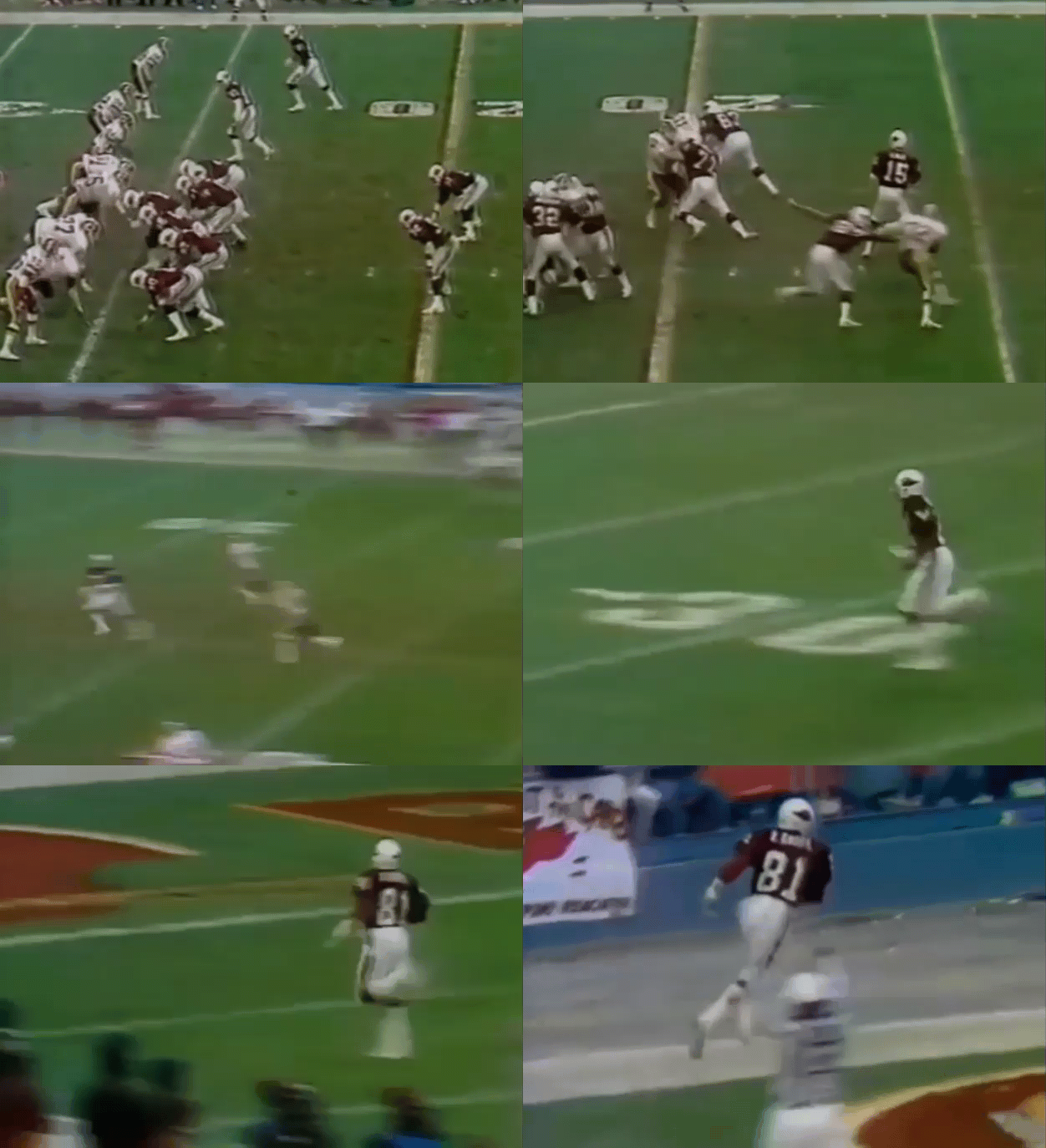
The Skins botch the pass off, busting the coverage, leaving Roy Green one-on-one with a LB. He easily gets behind the whole Redskin defence, making it easy for Neil Lomax to drop the ball over their heads, into Roy’s hands. Before you know it, the gap is reduced to 23-17 in favour of the Redskins.
At this point, we have all but given up trying to run the ball. As Roy Green steps into the end zone to score this TD, we are about seven minutes into the second half. In that time, we have not rushed the ball at all. There are two scrambles for 17 yards out of Lomax, and absolutely zero designed rushes. It’s clear that Jim Hanifan has decided if we’re going to win, we’re going to do it through the air.
Washington extends the gap back to 26-17 on their next possession, and Neil goes back to work, completing six of seven passes for 53 yards on this drive (with five yards of assistance from the run game), narrowing the gap back down to 26-20. This game is quickly winding down, and while Washington does manage to eat up more than five minutes on their next possession, trapping us in bad field position as a result, they do not score, leaving us with the ball, on our own six yard line, with 8:01 left in the season, needing a TD to keep ourselves alive.
There’s no need to go quick here, with eight minutes remaining in the game, but we’ve been going quick for the entire second half, and we’re in the zone. No reason to stop now.
In 1984, most coaches beginning one of the most important offensive possessions in the history of the franchise on their own six yard line would start the series with a conservative handoff. Not Jim Hanifan. We drop back to throw. Neil hits the back foot and rips a slant pattern to Danny Pittman for 21 yards. That’s a much better way to get out of our own end zone. On the second play, Neil stands in and takes an almighty wallop in order to get the ball to an open Roy Green on a crossing pattern for 28 yards. We’re in Washington territory already.
At this point, CBS commentators John Madden and Pat Summerall have the following exchange on national TV:
Madden: We talk about Joe Theismann being tough, but this Neil Lomax is pretty good himself.
Summerall: He’s also so young.
Madden: He’s going to be great.
It’s not often I proclaim the great John Madden to have missed the mark, but he’s a little late to the party on this one. Neil Lomax is not going to be great. He is great already, evidenced by the first 22 minutes of this second half, where we have called run just twice, officially giving the team’s fate over to Neil, saying we will go where he takes us.
Where Neil has taken us is from the brink of absolute disaster, down 16 at halftime (three possessions in the era before the two point conversion), to a great spot, within six points, on the Washington 45 from our own six within just two plays, now looking at a serious chance to take the lead.
From here, we slow down a little, by which I mean Neil’s next completion only goes for nine yards, setting up a second and one where we can finally go back to the run game, setting Ottis Anderson loose for 12 yards. On the ensuing first down, Neil finds the hot man for six yards with pressure in his face, and on second and four, the Skins send pressure again, which just makes it too easy.
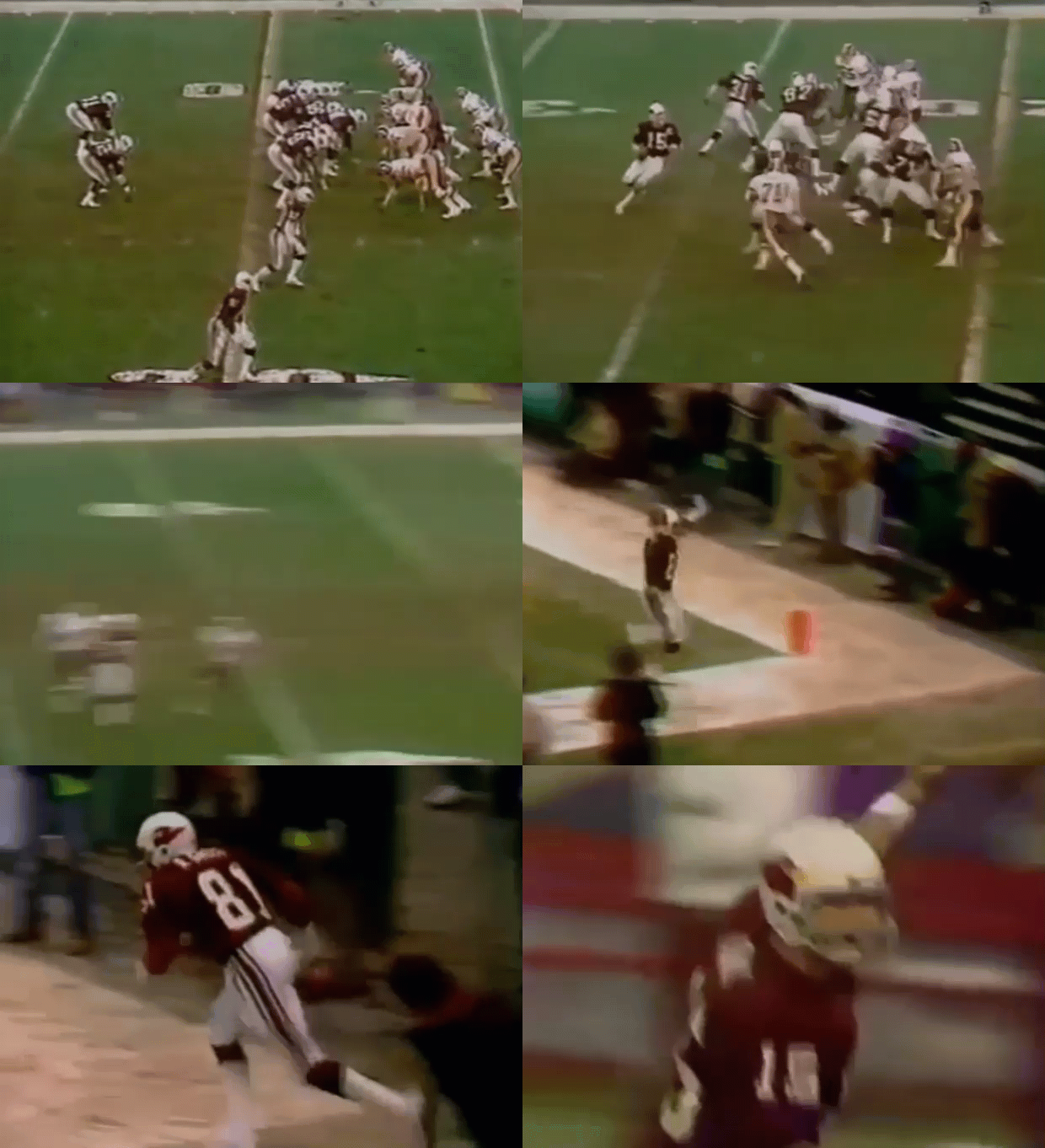
From the edge of catastrophe, the Cardinals have taken the lead, 27-26.
This drive is what our offence has been building towars all season. It took us just a minute and a half to get from our own six yard line into the Washington end zone, and for a player who just a few weeks ago was having serious trouble with faltering in big spots in the second half, how about Neil Lomax?
There are still over six minutes left in the game, but Neil is 22 for 25 for 267 yards and three TDs in just the second half already. In 2026, we’re somewhat desensitised to stat lines like this, as teams regularly throw the game plan out the window, allowing the QB to take the team wherever he may take them, but I implore you to keep in mind that we’re in 1984.
In 1984, things like this just do not happen, and when they do, it’s almost always a QB throwing his team out of the game. Not in this case though. This time, Neil has thrown our team back into the game, and he’s going to have to do it one more time, as the Redskins run off four and a half minutes kicking a FG to take the lead back, leaving us in a 29-27 hole, with 1:31 left to play in the season.
As the players jog onto the field, it cannot be known that this is the most important minute and 31 seconds in the history of the St Louis Cardinals, as the importance of this drive depends a lot upon events that have not happened yet, but it is well known (some might say tiresome) by 1984 that the entire history of this franchise has been spent losing the important games to the Cowboys and the Redskins.
To be quite blunt, that is what the St Louis Cardinals as a franchise are known for: getting ourselves into a position where we can play an important game against either the Cowboys or the Redskins, and failing to win that game. That’s what the Cardinals do. If you’re a modern fan, think of the Buffalo Bills. The Bills get themselves into positions to play big games against the KC Chiefs, and they lose those games. That’s just what they do. It’s what they’ve become known for.
It would be beyond euphoria if the Bills were to get into one of those life or death games against the Chiefs and actually win one of them, and it’s that same feeling going through the head of every fan in St Louis right now. We’re in a massive game, a life or death game, against the hated Washington Redskins, and for once, we’ve found ourselves in a situation to actually be able to win it. It did not look like we would in the first half, but thanks to Neil’s 267 second half yards and counting, here we stand, on our own 20 yard line, with only 50 yards standing between us and field goal range, and 1:27 with which to work after the kickoff return.
Having used all our timeouts on defence, 1:27 is less time than it looks. On top of this, RFK Stadium is going absolutely bananas, to the point where the start of the drive is delayed by an officials’ timeout, in an effort to get the fans to quiet down (remember those?), which doesn’t work. With no such thing as silent signals or snap counts in 1984, this raucous crowd forces us to work under centre.
This doesn’t hurt too badly, as the Skins are playing the classical defence against a team with 1:27 and no timeouts. They’re allowing yardage in the middle, but defending the outside hard. On first down, Neil takes an eight yard gain in the middle of the field, but this wastes 17 seconds before we can get another play off. We won’t win the game that way.
On second down, we see for the final time Neil’s prodigious ability to layer a ball, this time over the corner in the flat but in front of the safety, as Danny Pittman dips out of bounds with a 13 yard gain. This leaves us on our own 41, with 1:03 left to play. That’s an acceptable pace, but acceptable only.
The first and ten play is a swing out to Willard Herrell, who stumbles out of bounds with a seven yard gain. On second and three, Neil elects for a checkdown to OJ Anderson. This goes for a solid 13 yards, but OJ is tackled in the middle of the field. By the time we can get up to the ball to spike it, there are only 35 seconds left on the clock. By the time the ball actually hits the ground, we are left with only 32 seconds.
32 seconds left, on the Washington 39 yard line.
This is not FG range, but we do not need a first down to get into FG range.
Football games do not get any closer than this. It’s second and ten after the first down spike. The difference between a first round bye and missing the playoffs is going to come down to whether or not our St Louis Cardinals can get another ten yards or so, with two more tries and 32 more seconds.
Second down is wasted on a flip out to OJ Anderson that goes for one yard, meaning we now have 25 seconds, facing third and nine, on the Washington 38 yard line, and on this third and nine play, Neil makes what some might call a mistake.
I’m not sure if I choose to label it a mistake or not, but he completes another slant pattern to Danny Pittman, for only six yards, leaving us in fourth and four from the Washington 33. When Pittman hits the ground, there are 19 seconds left on the clock, ticking away quickly.
In truth, I don’t think there’s a choice to make in this fourth and four situation. Neil O’Donoghue has been in the NFL eight years. In those eight years, he’s attempted 11 FGs from 50 yards or further, making only three of them. In addition to the struggles he’s had in general this season, there is no evidence at any point in his career that he has the range to be able to do this. It’s a risk, but I think the obvious call is to go for it on fourth and four, and see what happens.
However, with no timeouts and precious few seconds to make a decision, the Cardinals end up making no decision at all. The star offensive players (Lomax, Anderson, Green, Tilley) run back into the huddle, under the assumption that the offence is staying on the field, but the special teams unit also runs onto the field.
This entirely eliminates the possibility of running an offensive play, as there’s no way we can get all these guys off the field, get a play in, run it, and stop the clock again, all within 19 seconds. The only choice is for the offensive guys to clear out, and put our season onto the right leg of Neil O’Donoghue.
Famous last words.
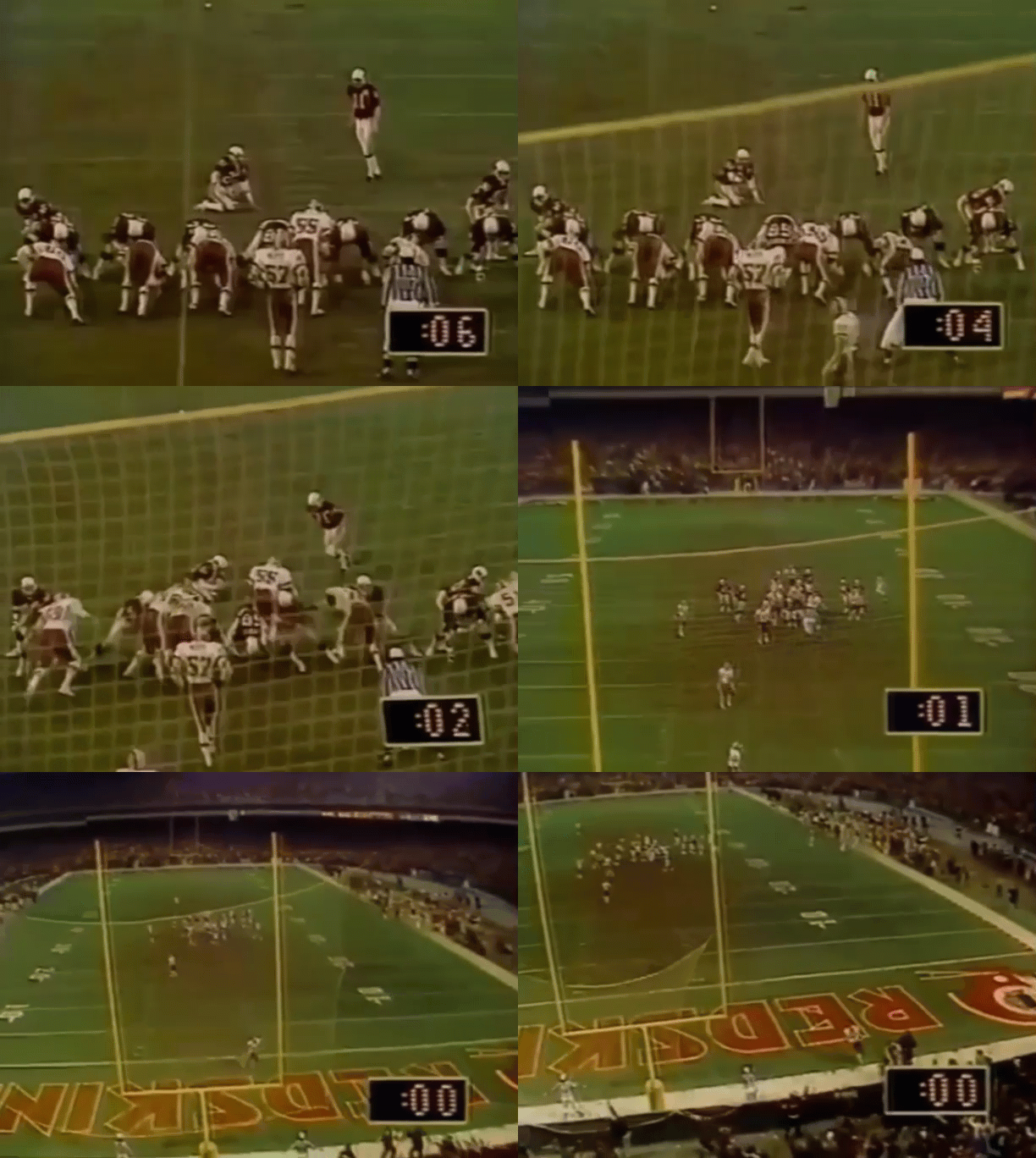
The kick comes up short, and just like that, we’ve lost, 29-27 to the Washington Redskins, dropping us into a three way tie with the Giants and Cowboys for the NFC’s final wild card position, a tie that we cannot win, so that’s it.
It’s over.
Despite Neil Lomax’s heroic effort, throwing 32 passes, completing 28 of them for 315 yards and three TDs just in the second half, that 23-7 first half deficit we built ourselves was just that little bit too much. Despite outscoring Washington 20-6 in the second half, all 60 minutes count, and over the course of 60 minutes, Washington had just that little more than we did.
This game hurts. It hurts badly.
It hurts because, for one last time, it’s the same old story. We outgained Washington, 487 yards to 356. We achieved more first downs than Washington. Heck, we even scored more TDs than Washington, and won the total EPA battle over Washington, but despite all this, we lost today for the same reasons we lost in November. We could move the ball all we wanted, but ultimately could not put up an amount of points commensurate to how many yards we gained. In particular, I know that first half, where we found ourselves in Washington territory five times, converting five tries into just seven points, still looms large in the heads of many a St Louis Cardinal fan to this day.
It’s not Neil’s fault. Not really. It’s far from his best game of the season, but you can’t blame a QB with 468 yards and 0.257 EPA/Play on 49 drop backs for a loss in any game. However, as Neil said himself after the game, if only he had just one more down. If only we could’ve had just one timeout, so we didn’t have to spike the ball on first and ten from the 39, and instead could’ve run a real play. We could’ve maybe even run an offensive play on the fourth and four at the end, and just saw what happened. It couldn’t have gone any worse than the kick did.
In the end, none of it happened. We did not have one more down. We did not have one timeout, and furthermore, we are not getting a first round bye. We are not playing a home playoff game against the same Chicago Bears we’d already taken to the cleaners earlier in the season. We are not going to the NFC Championship.
In truth, the St Louis Cardinals die at RFK Stadium on this day.
It wasn’t supposed to be this way. Even if our entry into the ranks of the playoff teams is delayed by one season, we’re still supposed to be a team on the upswing, led by a young QB who, for the briefest of moments, largely driven by one of the clutchest second half performances I have ever seen in the nationally televised game of the week on the road in Washington, is seen as the next big thing by the masses.
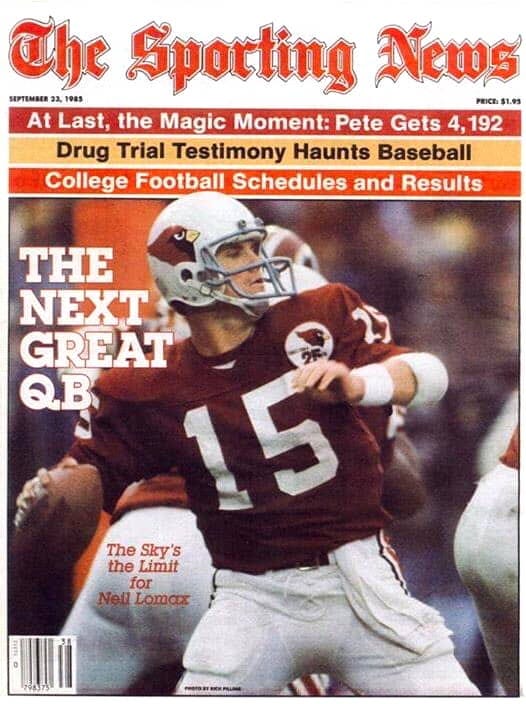
Look at this cover of the September 23, 1985 edition of the Sporting News. In particular, look at what’s relegated to a non-cover story, so that Neil Lomax can have all the glory. If you want to read about Pete Rose achieving the mythical 4192, you’re going to have to dig into the magazine, but if you want to read the magazine’s opinion about Neil, it’s right there on the front cover.
The NFL’s next great QB, Neil Lomax.
Let me tell you, nowhere in the article itself does the publication acknowledge the possibility that Neil could be so utterly forgotten in the year 2026. Instead, it compares him to greats of the game. No lesser names than Johnny Unitas, Bart Starr, Terry Bradshaw, Fran Tarkenton, Roger Staubach, Joe Montana and Dan Marino are all mentioned, by name, in this cover story discussing St Louis Cardinal QB Neil Lomax.
That’s the bar Neil is shooting for, after such an elite season at the age of just 25. There are legitimate comparisons being thrown around at the beginning of 1985 between Neil and the greatest quarterbacks of all time. The 1985 Cardinals are fully expected to finally break through, and make the (non-expanded) playoffs for the first time since 1975. The hype is real. The NFL world expects huge things coming out of St Louis, primarily because of our talented offence, led by our prodigious young QB.
Instead, just four years into the future, on September 23, 1989, the St Louis Cardinals no longer exist, and our prodigious young QB is retired, never to throw a football professionally again.
In a great shame to myself, and all the other Neil Lomax fans out there, his body very quickly gives up on him. 1985 is beset with shoulder and elbow problems, and I find him on an injury report for his ankles as early as the first game of the 1986 season. As it turns out, Neil never really has significant trouble with his ankles, but in the classic case of overcompensation, deformed ankles manifested into a bad knee. The bad knee turned into an unworkable left hip, and when Neil got himself a much needed hip replacement at the age of just 30, that was the end of his NFL career. Within just four years, he’d gone from a potential future all-time great, to out of the league, never throwing a professional pass past the age of 29.
For the modern fans in the audience, the most recent QB to generate the hype of potentially being an all-time great is probably Josh Allen, and imagine how the NFL world would’ve reacted if Josh Allen’s career had been over already.
Josh Allen right now is older than Neil Lomax was when he threw his final NFL pass, and just think about that for a second. Josh isn’t particularly old, even in NFL years. He’s still on the right side of 30. Even modern fans more than likely have a vivid memory of his 2020 breakout season, and yet, if we put him on the Lomax timeline, his career would be over already. Not just on the way down, but completely over. Retired.
That’s how fast Neil’s body gave up on him.
In the one season Neil truly got to showcase his talents, he posted 4614 passing yards in 1984, a figure that would’ve led the league in either 1983 or 1985, but not in 1984, because of that damned Dan Marino. He threw 28 TDs, third in the NFL. He also ranked third in the NFL in Net Yards Per Attempt, with 6.96 (121 NY/A+), behind only Marino and Montana. He ranked third in Adjusted Net Yards Per Attempt, with 6.70 (122 ANY/A+), behind only Marino and Montana.
In EPA/Play terms, Neil comes in with 0.072 (remember, biased low) on the season, which ranks sixth, behind Marino, Montana, Dan Fouts, Joe Theismann, and Tony Eason, but it must also be taken into account that Neil’s team relied much more on the pass than any of those five guys ahead of him, as Neil finished the 1984 season with 673 total touches of workload, ninth most ever in a season at the time.
Marino, Montana, Fouts, Theismann, and Eason had 638, 509, 586, 611, and 557 total touches in the 1984 season, respectively. The very closest of these guys is 35 touches behind Neil, which is almost a full game’s worth, and the others are much further behind than that. Neil had to take much more of his team’s offensive load upon himself than any of the other elite QBs did, meaning opposing defences (as we saw, particularly in November) could key in on the pass, making his sixth placed ranking in EPA/Play, and third place ranking in yards per attempt, each much more impressive in real life than than they look on paper.
In the 1984 season, Neil Lomax was better than any QB not named Marino or Montana. He did not get an MVP vote. He was not named All-Pro. He did not even make the playoffs, but had his body not given out on him, he would’ve been well on the way do doing all three of those things, over a long and fruitful career.
Unfortunately, his body did give up very quickly after 1984. From a 121 NY/A+ this season, he would never get above 106 ever again. He would never again rise above 113 ANY/A+. He does lead the NFL in passing yardage in 1987, but that’s a result of Neil leading the league in touches more than anything else, and he only has one more top ten appearance in the EPA/Play rankings, in his final season (1988).
As went their star QB, so followed the St Louis Cardinals. The team got off to a hot 3-1 start in 1985, but faded away, and the team never showed life again. They remained in the basement for the rest of their time in St Louis, all the while Bill Bidwill and the city of St Louis got more and more willing to move on from each other, ultimately culminating in a move to Phoenix in 1988.
One has to wonder. What if the Cardinals had found a way into the 1984 playoffs? What if we’d roasted the 46 defence in the playoffs, as we’d done in the regular season, finding our way into the NFC Championship game? Would that have been enough to get the team and city over the line on stadium talks? Could the Trans World Dome have been the house that Neil Lomax built?
We’ll never know the answer to any of these questions, and over the years since his early retirement, Neil Lomax’s name has found itself buried in the football discourse, drowning under the weight of playing his career in a city without an NFL team, drowning under the weight of his best season being thoroughly overshadowed by 1984 Dan Marino, and drowning under the weight of making only 101 starts in his career, retiring at what should’ve been the peak of his powers, never making a throw past 29.
I think Neil Lomax is a player who deserves to be remembered.
For one thing, Neil is a good man, and a great player, who did not ask for his ankles to be jacked up. He was low profile. He was unselfish. He stayed out of the limelight as much as possible, but nevertheless, he could’ve been the saviour of football in St Louis, if only his body had allowed it.
For another thing, Neil has the numbers on a football reference page to warrant more attention than he gets. His career ANY/A+ is 104, higher than Joe Theismann’s. His peak ANY/A+ in one season of 122 is a match for several of the greats, including John Elway (career high: 124). His career record is a losing one, at 47-51-2, but that’s basically the same as the beloved Mr Cardinal, with Jim Hart’s record reading 87-88-5. All of this despite Lomax not really having a prime, ascending to a very high peak in 1984, and falling sharply off immediately afterwards.
In the end, all those teams who failed Neil Lomax in their physicals before the 1981 Draft were proven correct. His body could not stand up to the rigors of the NFL, but they were also proven incorrect. He was able to last long enough in the NFL to allow his top five upside to shine through, at least for one season, and if you were the Cardinals, would you take this career with a second round pick, given the chance to do so again?
One hundred percent.
If we were to go to the Packers, and ask if they’d repeat their choice to select a QB other than Neil Lomax with their sixth overall position, I suspect you’d get a different response. That tells me all I need to know.
All in all, I love Neil Lomax. First of all, I’ve loved watching him play in preparation for this article, but overall, I love the entire Neil Lomax story, from a kid who played QB because he couldn’t play anywhere else to a favour spot at local FCS Portland State to the master of the run-and-shoot to the NFL’s best QB not named Marino or Montana, only to have it all taken away from him, without even reaching 30, by legs that just were not built for the stresses of the NFL.
Neil’s name has been forgotten in the interceding 36 years since his retirement from pro football, but I sincerely hope I’ve brought him and his abilities back to your mind, at least for a little while. If I’ve done that, I’ll be happy.
Thanks so much for reading.
I’d like to thank everybody who made it all the way to the end. You guys are truly the champs, but now, I’d like to hear from you. If you remember this season (or the St Louis Cardinals in general), tell me what you think. In particular, if Neil Lomax had normal ankles, do you think the St Louis Cardinals ever would’ve left? Could the city have let go of a team with such a great young QB on the roster? This is a very interesting question to me, and I’d love to hear your opinions on it.
Comments
Nothing yet. Say the first thing.
Sign in to join the conversation.