
There comes a point in every gardener’s life when optimism must be replaced by paperwork.
The lavender is not “resting.” The rosemary is not “thinking about coming back.” The hydrangea did not “have a hard winter.” It is dead, and after weeks of snapping twigs and whispering encouragement into the mulch, I have been forced to accept that I am running a small botanical cemetery.
So, to prevent myself from buying the exact same plant next Saturday, I have begun writing obituaries.
Lavandula angustifolia, age four years, passed away after a brief relationship with North Carolina humidity. She arrived silver-leaved and fragrant, with the confidence of someone who had never spent August in the South. The plant tag said she enjoyed “full sun and well-drained soil,” but failed to clarify that she preferred Provence and not a clay basin behind my air-conditioning unit. She is survived by twelve identical replacements at the garden center, all of whom look frightened.
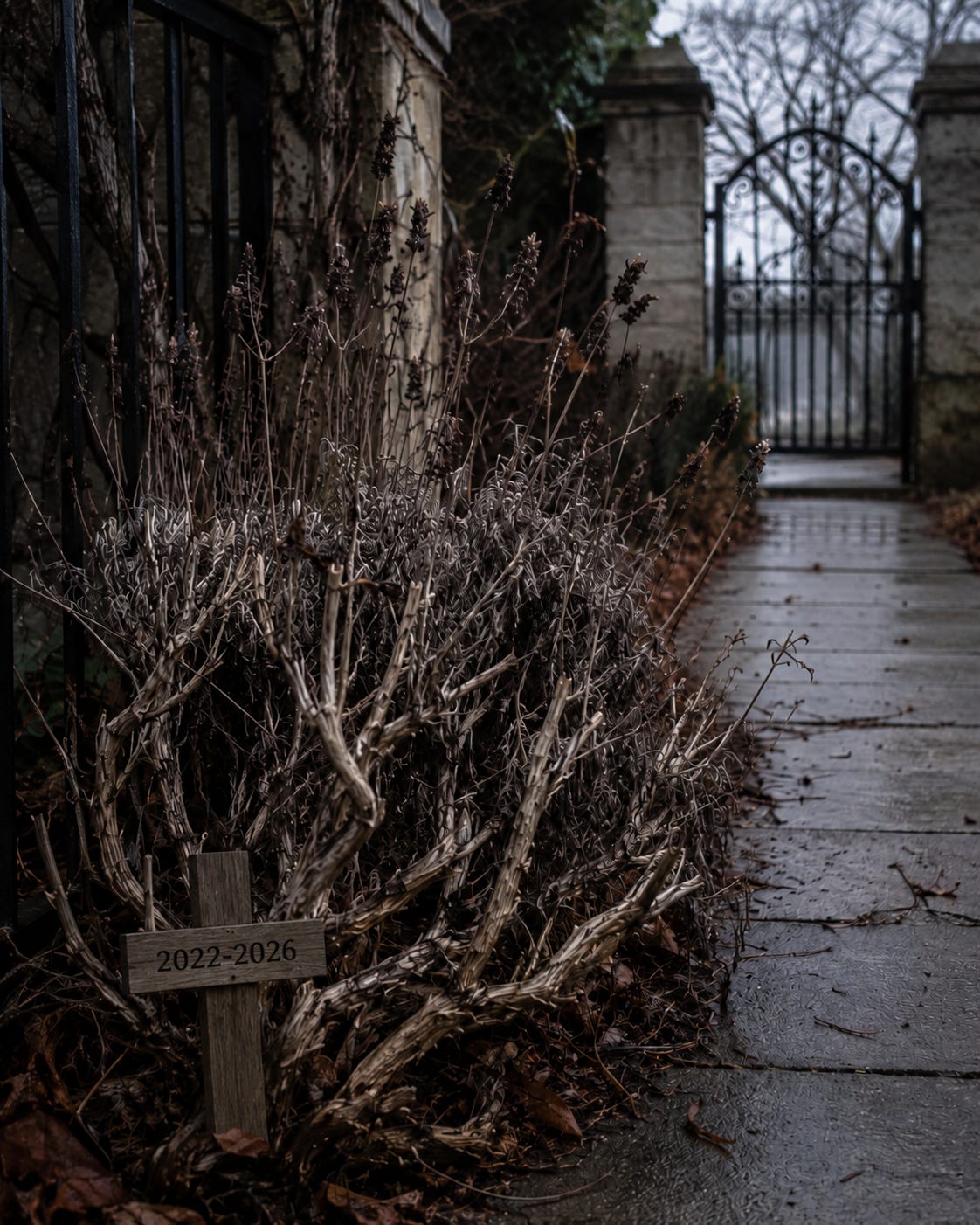
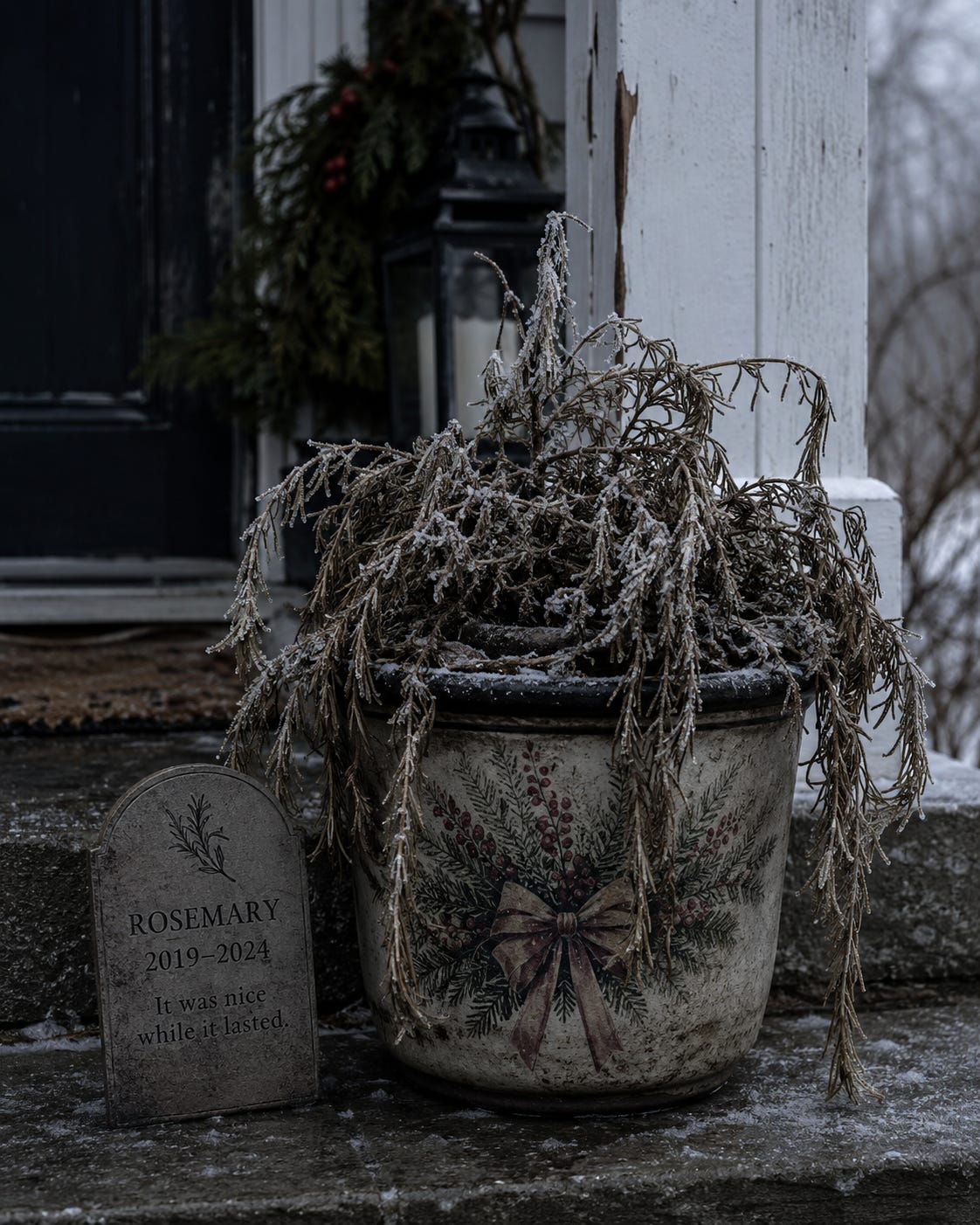
Rosemary officinalis, alleged perennial, died under mysterious circumstances sometime between Christmas and February. Possible suspects include cold, wet soil, wind, root rot, neglect, excessive concern, and the fact that I kept tugging on it to see whether it was still anchored. In life, Rosemary contributed approximately two tablespoons of leaves to roasted potatoes. In death, she became a brittle gray monument to fourteen dollars poorly spent.
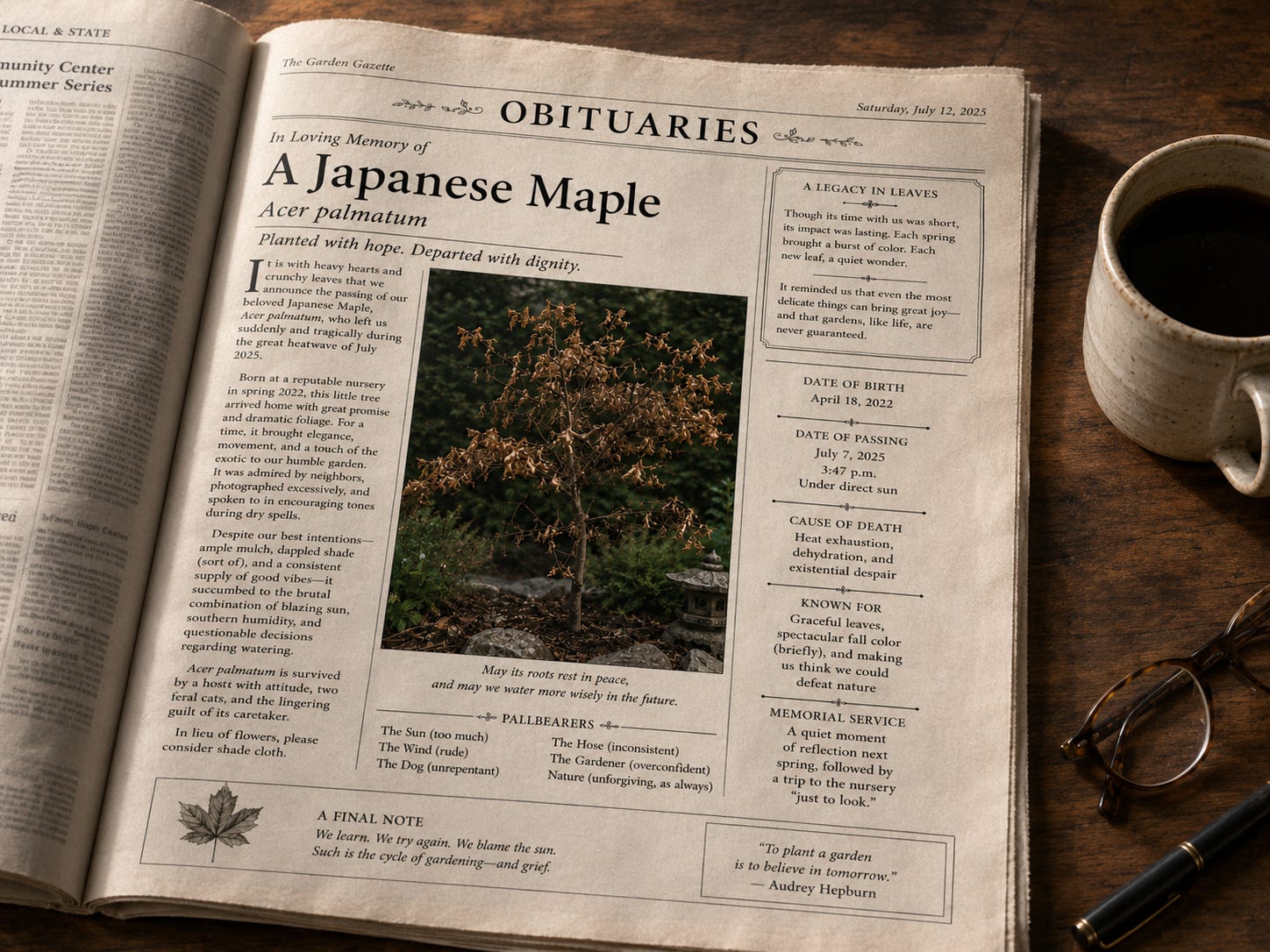
The Fancy Japanese Maple, whose name I have forgotten because grief has erased it, departed during the hottest week of July. It had been selected after three nursery visits and emotional investment normally reserved for choosing a spouse. I planted it in “dappled shade,” which turned out to mean direct sun from 2:00 to 5:00 p.m., also known as the daily cremation window. Its leaves curled inward with the dignity of aristocrats receiving terrible news. By August, it resembled an umbrella struck by lightning.
A tray of twenty-four delphinium seedlings died collectively before developing personalities. They were raised beneath grow lights, gently misted, rotated daily, and praised with embarrassing sincerity. Upon being transplanted outdoors, they were eaten overnight by something that left no footprints, droppings, or note. I assume slugs, though the speed and efficiency suggest organized crime. The accused were later found beneath a flowerpot, bloated and unrepentant.
The Blue Hydrangea, purchased because the label showed impossible cobalt flowers, passed after producing three years of respectable pink blooms out of spite. Technically, it may still be alive, but the plant I was promised never existed. Soil amendments were applied. Aluminum sulfate was purchased. Charts were consulted. The hydrangea remained pink, demonstrating that plants, like cats, recognize desperation and use it for leverage. Its obituary is therefore symbolic.
One basil plant, age nine days, died on a kitchen windowsill during a weekend trip. This was not my most complicated loss, but it was perhaps my most honest. Basil asks for sunlight, warmth, and enough water to avoid becoming a Victorian pressed specimen. I provided two of the three, then left town. It died exactly as expected, which somehow made it worse.
Gardeners rarely admit that we killed anything. We say it “didn’t take,” as though the plant declined a job offer. We say it “wasn’t happy there,” implying it packed a tiny suitcase and left. We blame the weather, soil, nursery, moon, rabbits, voles, fungal spores, municipal water, and occasionally the plant itself for lacking resilience.
Sometimes those excuses are even true.
Gardening is mostly the practice of placing living things into uncertain conditions and pretending we are in control. Some flourish. Some sulk. Some vanish overnight. Some survive despite our incompetence and become enormous, forcing us to explain that yes, the mint was intentional.
The dead plants leave gaps, but gardeners are strangely resistant to emptiness. We dig them up, amend the soil, reconsider the light, and install another hopeful victim. This is not denial. It is horticulture.
May they rest in compost.
-G
No posts
Comments
Nothing yet. Say the first thing.
Sign in to join the conversation.