
I practiced Mahayana Zen Buddhism as an Aikido martial artist in college, using the Zazen physical and mental posture in Sesshin (cleaning the mind), as well as Yogic Meditation, as a Yoga teacher to develop a “dispassionate mind” for many years before finding my way back to Christianity. A dispassionate mind (Vairagya) in Yoga is a balanced state where intelligence is free from the clouds of emotional reaction like anger, greed, or joy. Master teachers like B.K.S. Iyengar note that yoga practice was built precisely to culture this steady mind so a person can see truth clearly.
Zazen, seated meditation central to Zen Buddhism, is not inherently religious in mechanics. Also, Mahayana Zen Buddhism, though accompanied by text, is a spiritual tradition that teaches the calming and clearing of the ordinary, busy mind. Zen Buddhism (a major school of Mahayana Buddhism) teaches the dropping of the illusory, rigid self and ego, and the awakening from discursive, grasping thought. All Zen forms, whether underpinned in religious text or not, teach that the mind should be freed of inner dialogue and the ego, with liberation coming from divorcing the mind from all inner chatter and “mental noise”. The end goal is a mind liberated from the ceaseless undercurrent of daily concerns and idle mental meanderings.
Zazen (literally “seated meditation”) is the central practice of Zen. In its basic mechanics, it is a simple posture of upright sitting, often with attention resting on the breath, on the posture itself, or—especially in the Sōtō tradition—on “just sitting” (Shikantaza) without a particular object. The technique does not require belief in Buddhist cosmology or doctrine to be performed; people from many backgrounds practice it as a method of training attention and reducing mental agitation. In that narrow sense, the mechanics can be treated as non-religious.
Within the historical tradition of Mahayana Zen (Chan in China, Zen in Japan, Seon in Korea), the practice is embedded in a larger spiritual framework. Zen draws on Mahayana teachings about emptiness (Śūnyatā), non-self, and the nature of mind. Classical texts such as the Platform Sutra, the Heart Sutra, and the recorded sayings of masters repeatedly point to the same direction: the ordinary mind is restless, filled with discursive thought, grasping, and a solid sense of “I.” The training aims to loosen that grip so that the practitioner can see through the constructed, rigid self and the endless stream of mental commentary.
Liberation, in Zen terms, is not the acquisition of a new set of ideas but the falling away of the compulsive need to narrate, judge, and cling. When the undercurrent of inner dialogue and ego-centered concern quiets, what remains is described as clear, open awareness—sometimes called “original mind” or simply “this.” Different schools emphasize different entry points (kōan investigation in Rinzai, wholehearted sitting in Sōtō), yet the shared trajectory is the same: freedom from the ceaseless mental noise that ordinarily dominates experience.
Even while the tradition itself remains a religious path with lineages, rituals, ethical precepts, and a long textual heritage, the meditation aspects can be extracted and used secularly, in that the full tradition places that same meditation inside a Buddhist understanding of awakening.
It all sounds wonderful, right?
Well, it certainly had me hooked as an 18-year-old truth seeker, hot on the trail of anything exotic, esoteric, and different than my Christian upbringing. I was after the real truth of existence through mystical experience, not just some haggard Bible verse.
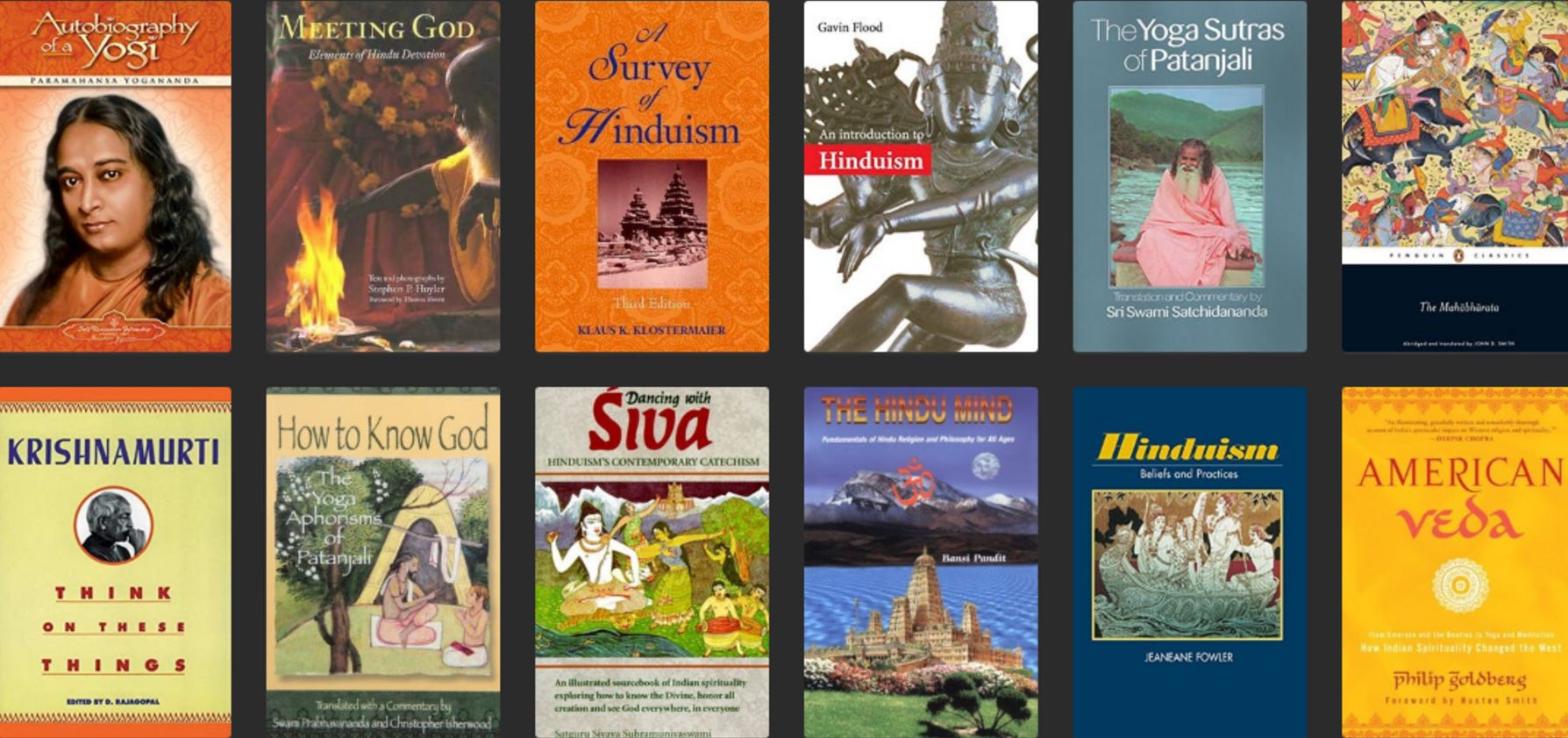
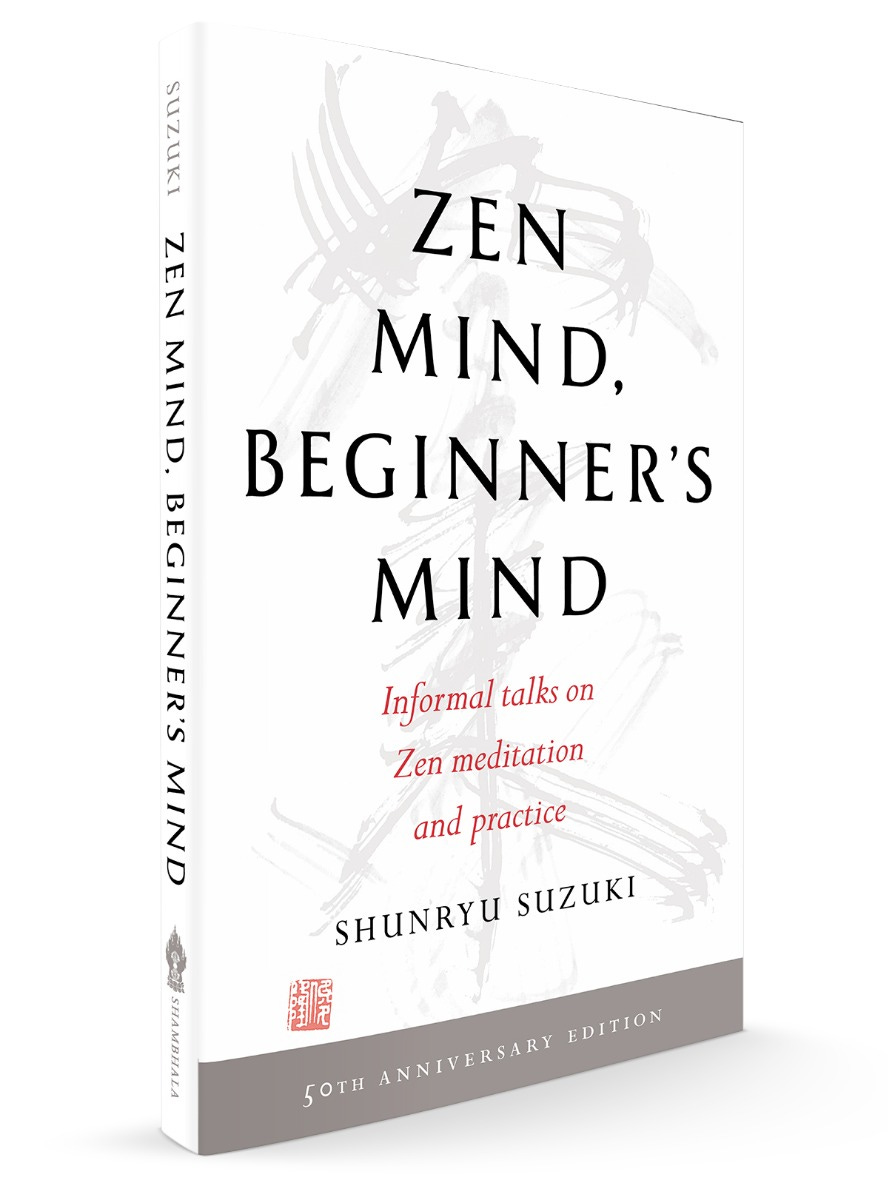
Instead, on my bookshelf were The Bhagavad Gita, The Upanishads, and The Vedas, the main sacred books of Hinduism, The Dhammapada, a collection of sayings of the Buddha in verse form, Siddhartha, a 1922 philosophical novel by German author Hermann Hesse which follows the spiritual journey of self-discovery of a young Brahmin named Siddhartha, who became Gautama Buddha, Zen Mind, Beginner’s Mind by Shunryū Suzuki, and Autobiography of a Yogi by Paramahansa Yogananda, a spiritual classic that shares his life story, introduces Kriya Yoga, and explores the science of meditation. I had everything except The Bible. I was philosophically armed and dangerous and looking for Enlightenment at all costs.
Zen Meditation, Yoga, Psychedelics (Pharmakeia), anything Eastern, New Age, and mystical was on the table at this point.



Well, that is everything except Christianity because that involved actually facing myself, confronting the meaning of Sin, and filling my mind with thoughts instead of constantly emptying it in the hopes of penetrating the veil of Maya.

In Indian philosophies like Hinduism and Yoga, Maya is the cosmic power or lens that creates the illusion. It does not mean the world is fake. Instead, it means our minds see a fragmented world of separate objects and egos instead of the true, unchanging reality of Oneness.

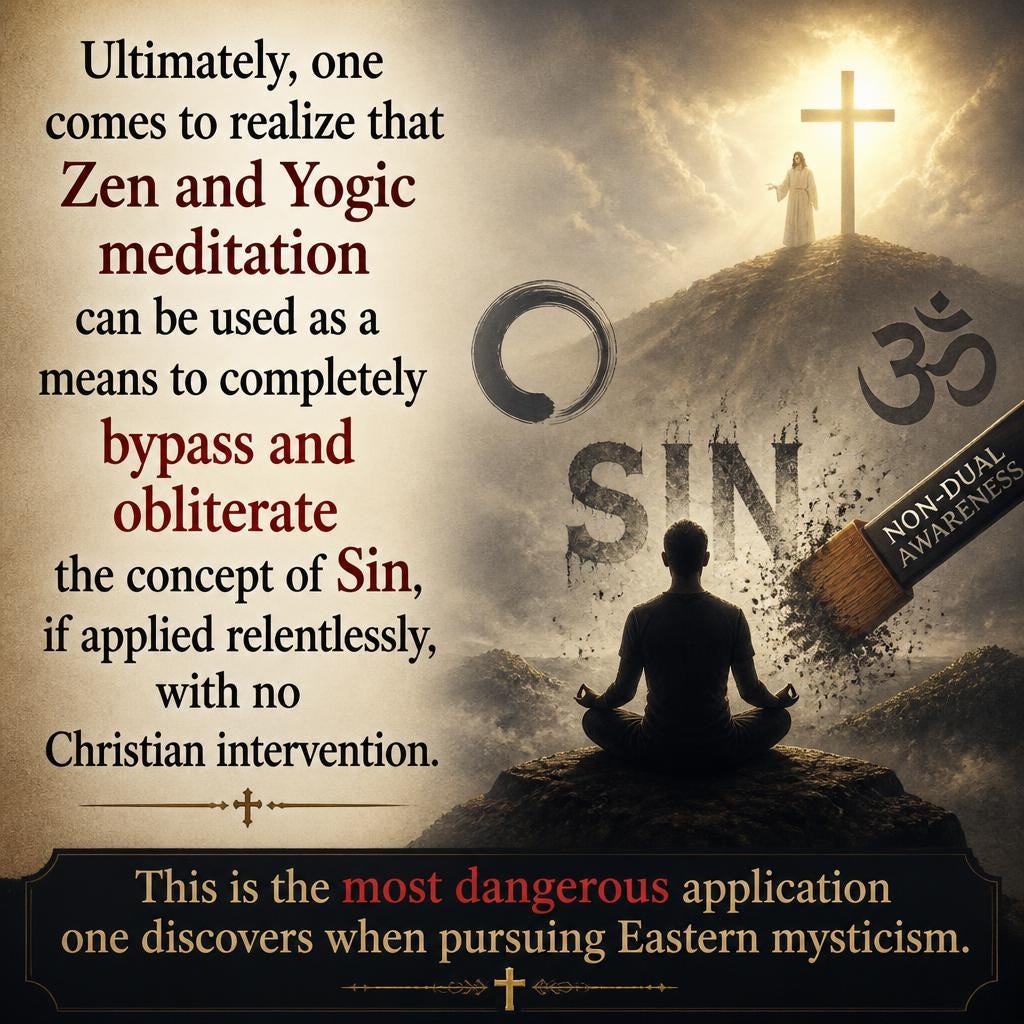
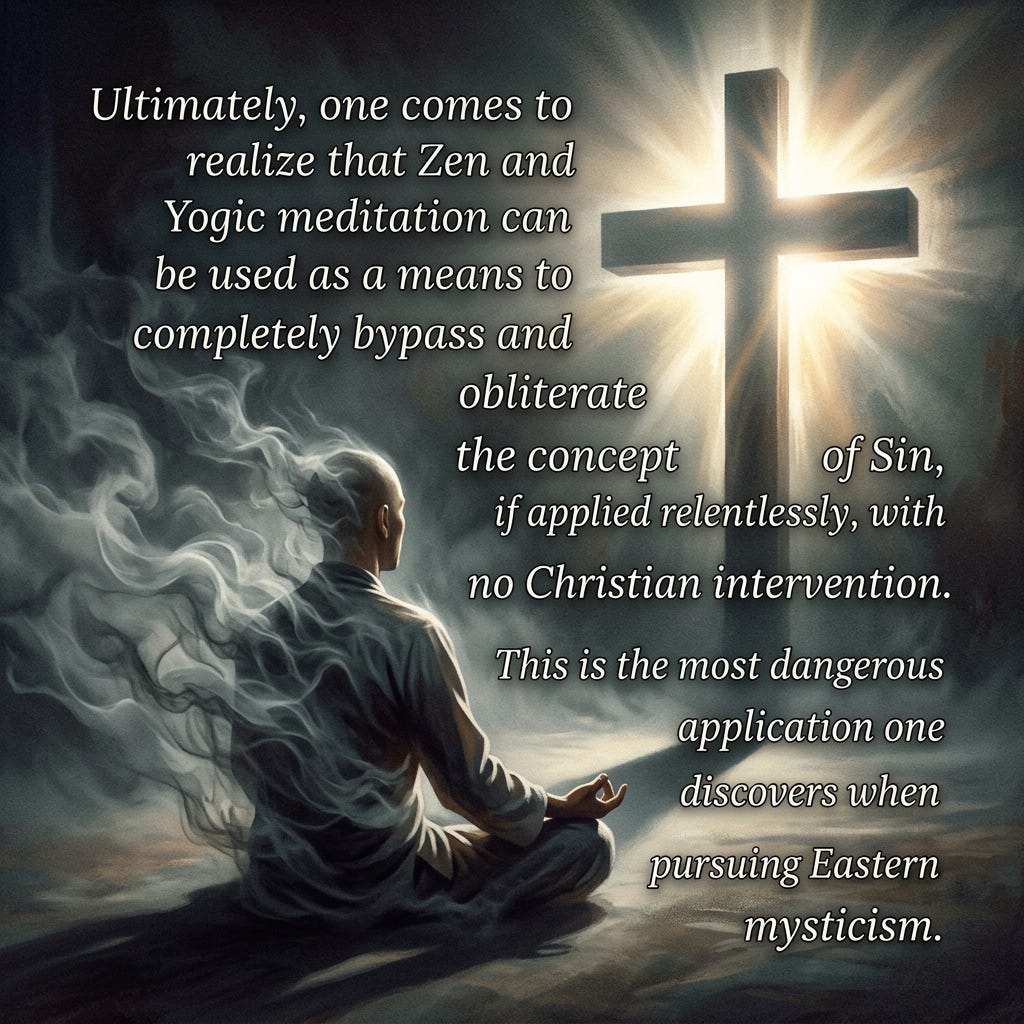
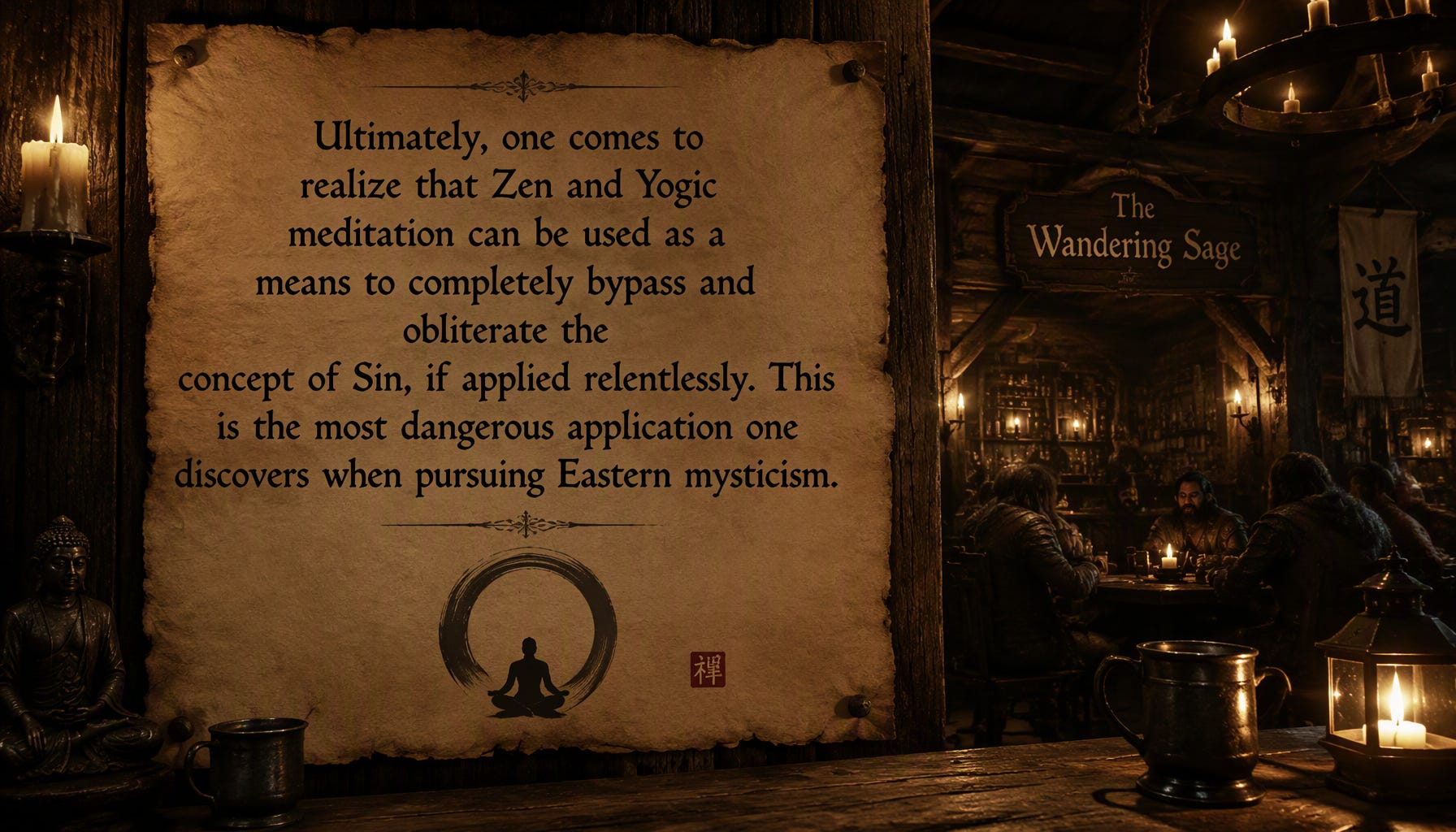
Ultimately, one comes to realize that Zen and Yogic meditation can be used as a means to completely bypass and obliterate the concept of Sin, if applied relentlessly, with no Christian intervention. This is the most dangerous application one discovers when pursuing Eastern mysticism.
Being a Yogi, seeing beyond the illusion of Maya was a daily pursuit. Seeking “Oneness”, “Cosmic Consciousness”, and merging with The Atman were the overarching Cosmic themes of reality that were to be attained. I was fully anchored in The New Age at this point. In Sanskrit, Atman means the true, inner self, soul, or breath.
Reincarnation:


In Hindu philosophy, it is the immortal and unchanging core of a living being, which remains separate from the body, mind, and ego and unites with the universal spirit, Brahman. Obviously, all of this is simply Luciferian deception in the Christian context, which, of course, I understand fully, as my writings attest.

Looking back, all the hours I spent intentionally cleaning and stilling my mind to attain some deeper insight about existence and attain “Enlightenment” were a complete waste of time. Luciferic forces absolutely love an empty and vacuous mind, a mind with nothing in it but fertile ground to play with. In constantly filling my mind with creative activities, research, planning, and the pursuit of theological wisdom for the last 40 years, I have grown in peace a hundredfold more than where meditation was taking me, which amounted to not much more than a listless and dull void, accomplishing nothing.
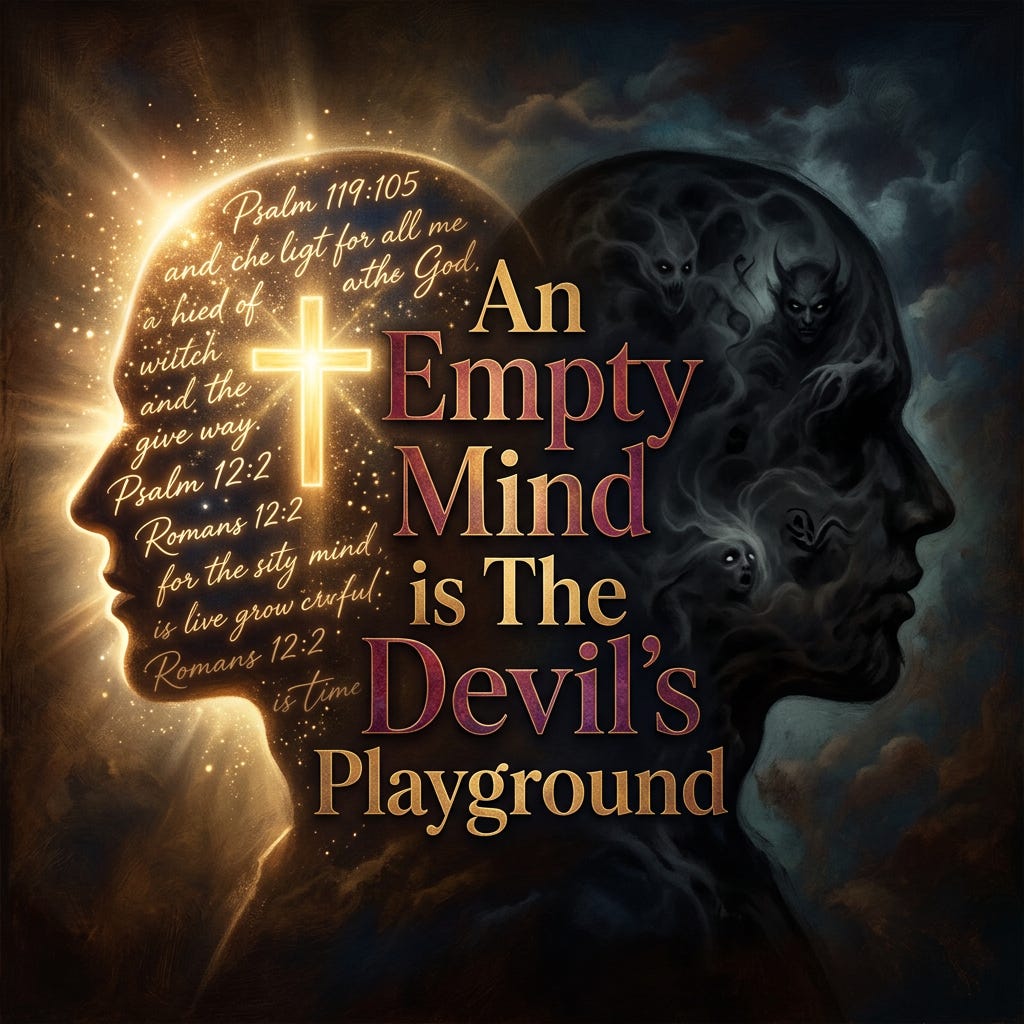
The core difference lies in the goal:
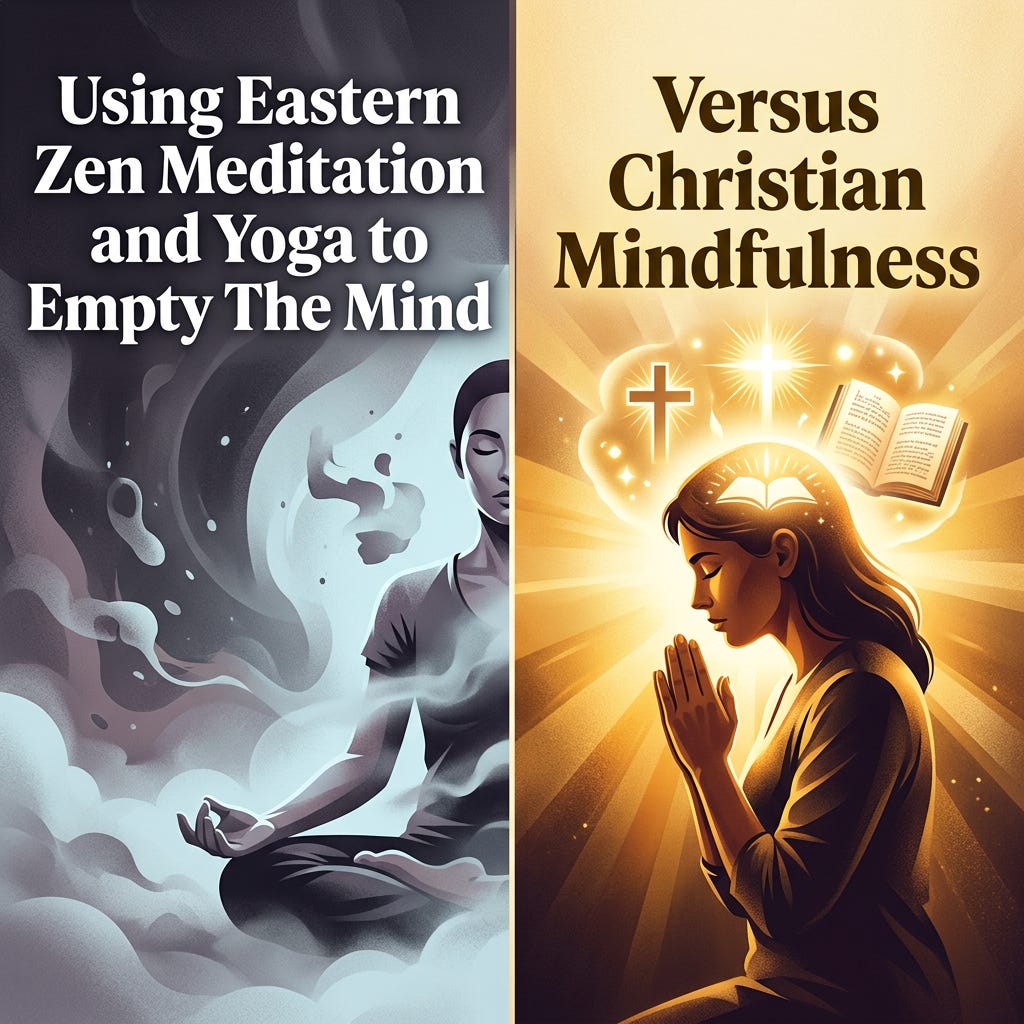
Zen meditation aims to empty the mind to achieve detachment, while Christian meditation aims to fill the mind with God’s truth to achieve a deeper relationship.
Here is a breakdown of why Christian tradition prefers filling the mind:
· Biblical Command: The Bible explicitly instructs believers to fill their minds. Joshua 1:8 commands believers to “meditate on the Law, day and night.”
· The Target of Focus: Philippians 4:8 instructs believers to actively think about whatever is true, noble, right, pure, lovely, and admirable.
· The Danger of Emptiness: Jesus gave a warning in Matthew 12:43-45 about a house (representing the mind/soul) that is swept clean and left empty; it becomes vulnerable to worse spiritual influences. An empty mind is seen as unprotected territory.
The choice between emptying the mind and filling it marks a fundamental division between Eastern practices like Zen and the Christian spiritual tradition. In Zen meditation, the primary goal is detachment. Practitioners seek to empty the mind of thoughts, desires, and worldly distractions, observing passing concepts without judgment to reach a state of quieted ego and self-realization. Stillness in this framework comes from the absence of internal noise.
Christian meditation takes the exact opposite approach. Rather than seeking emptiness, Christians are commanded to fill their minds with the active, vibrant truth of God’s Word, His character, and His promises. This preference is deeply rooted in Biblical instruction. For instance, Joshua 1:8 commands believers to “meditate on the Law, day and night,” while Philippians 4:8 instructs them to explicitly anchor their thoughts on whatever is true, noble, right, pure, lovely, and admirable. Christian tradition explicitly views an empty mind as vulnerable and unprotected territory, drawing from Jesus’ warning in Matthew 12:43-45 about a clean, swept house left empty and open to harmful spiritual influences.
Ultimately, these two paths lead to entirely different destinations based on where truth is found. Zen practitioners look inward, finding peace by detaching from the self. Christians look outward to a personal Creator, finding stillness by attaching themselves to God. True rest for the Christian soul does not come from a void, but from crowding out anxiety with the comforting reality of a personal, loving God.
While Zen seeks to empty the mind and Christianity seeks to fill it, traditional Yoga seeks to still and control the mind’s movements to achieve self-realization.
The Eastern Approaches: Zen and Yoga:
The choice between emptying, stilling, or filling the mind marks a fundamental division between Eastern spiritual traditions and Christian practice. In Zen meditation, the primary goal is detachment. Practitioners seek to empty the mind of thoughts and worldly distractions, observing passing concepts without judgment to reach a state of quieted ego.

Traditional Yoga, particularly classical Raja Yoga, shares this inward focus but approaches it through systematic control. The foundational text of Yoga defines the practice as chitta vritti nirodha, which translates to “stilling the fluctuations of the mind.” Through physical postures, breath control, and sensory withdrawal, Yoga aims to quiet mental noise so the practitioner can realize their true, inner self or merge with a universal consciousness. In both Zen and Yoga, stillness is achieved by looking inward and using human effort to quiet or bypass the intellect.
The Christian Contrast: Filling the Mind:
Christian meditation takes the exact opposite approach to both Zen and Yoga. Rather than seeking emptiness or the cessation of thought, Christians are commanded to fill their minds with the active, vibrant truth of God’s Word, His character, and His promises. This preference is deeply rooted in Biblical instruction. For instance, Joshua 1:8 commands believers to “meditate on [the Law] day and night.” At the same time, Philippians 4:8 instructs them to explicitly anchor their thoughts on whatever is true, noble, right, pure, lovely, and admirable. Christian tradition explicitly views an empty or unguided mind as vulnerable territory, drawing from Jesus’ warning in Matthew 12:43-45 about a clean, swept house left empty and open to harmful spiritual influences.
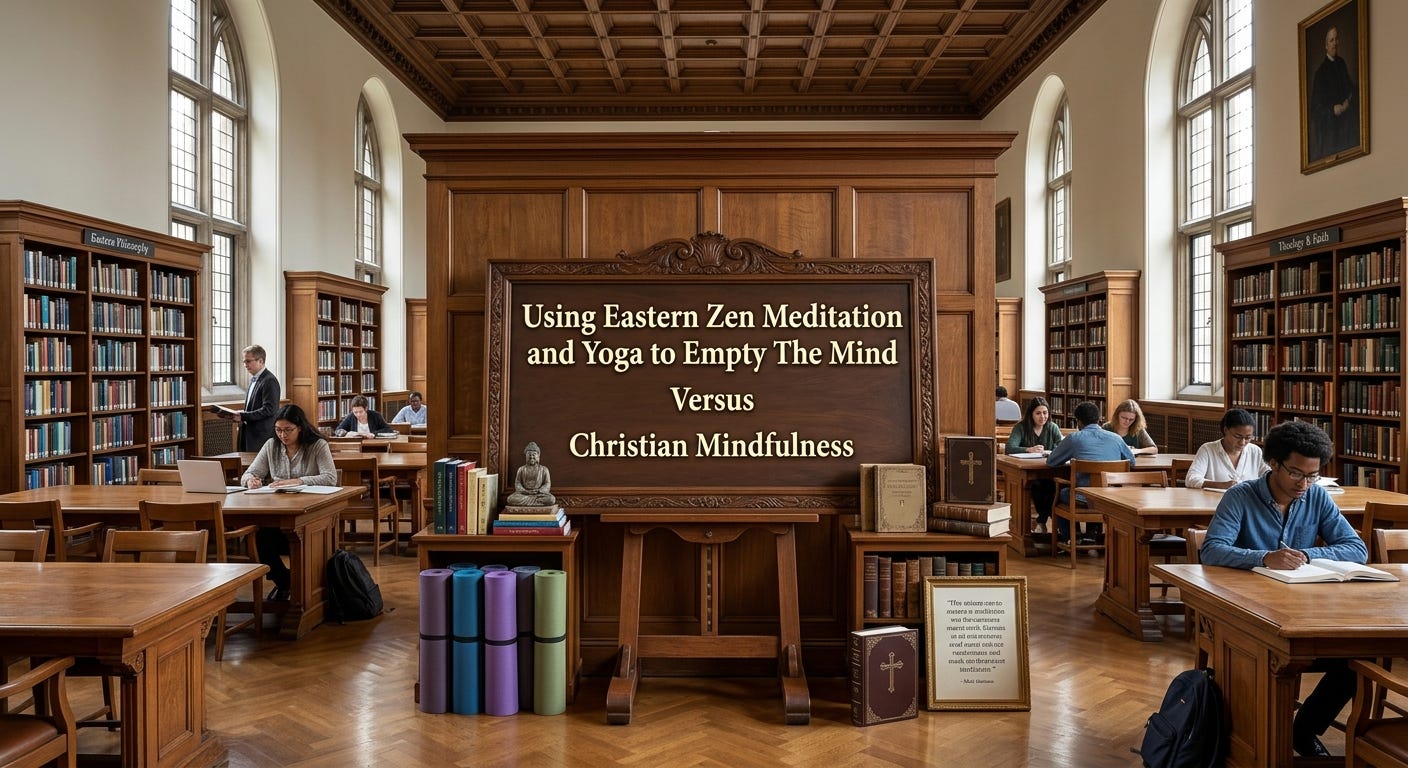
The Ultimate Destination:
Ultimately, these paths lead to entirely different destinations based on where truth is found. Zen practitioners look inward to find peace by detaching from the self. Yoga practitioners look inward to master the mind and discover divine self-realization. Christians look outward to a personal Creator, finding stillness not by isolating the mind, but by attaching themselves to God. True rest for the Christian soul does not come from a cognitive void or mental mastery, but from crowding out anxiety with the comforting reality of a personal, loving God.
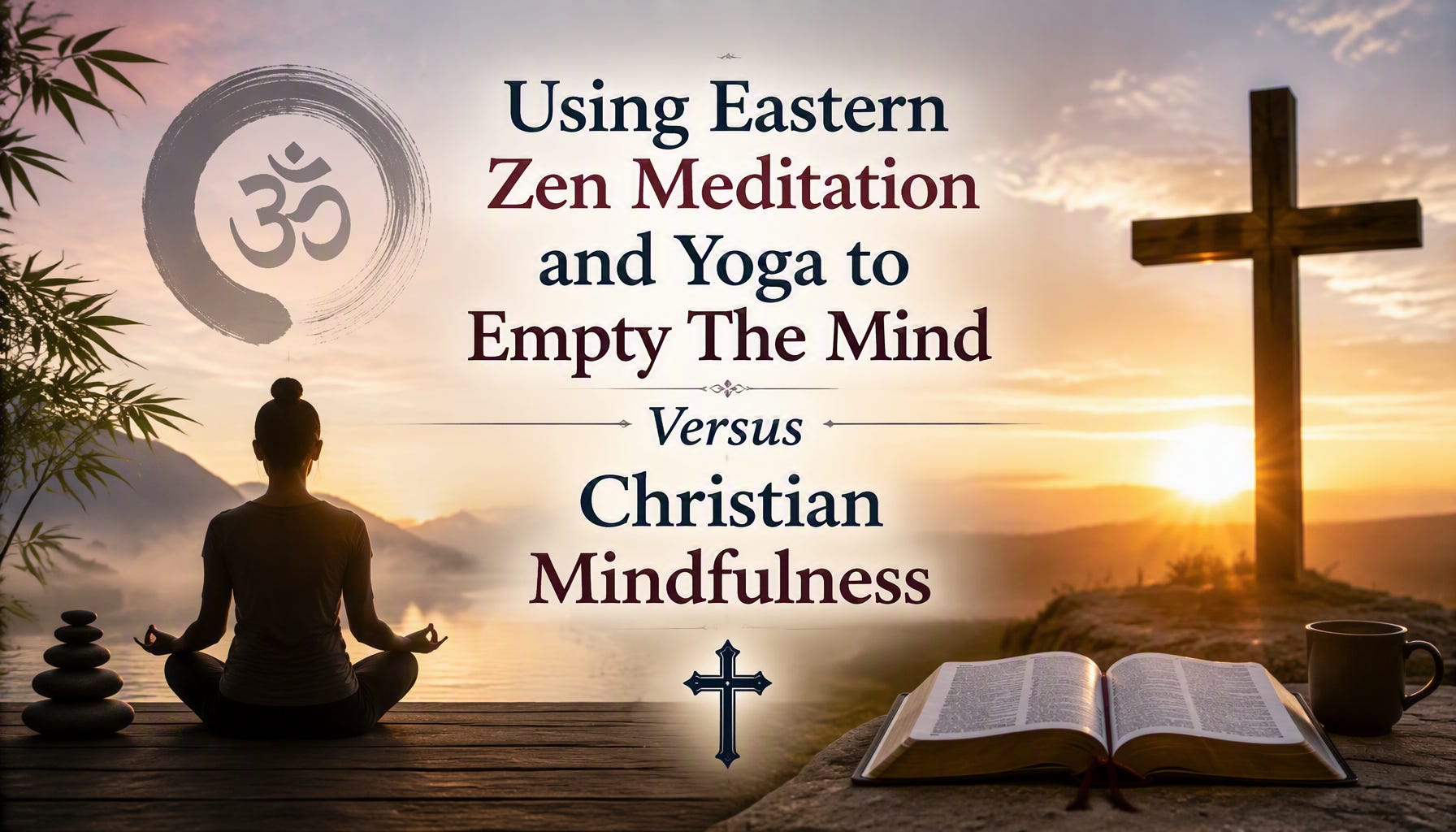
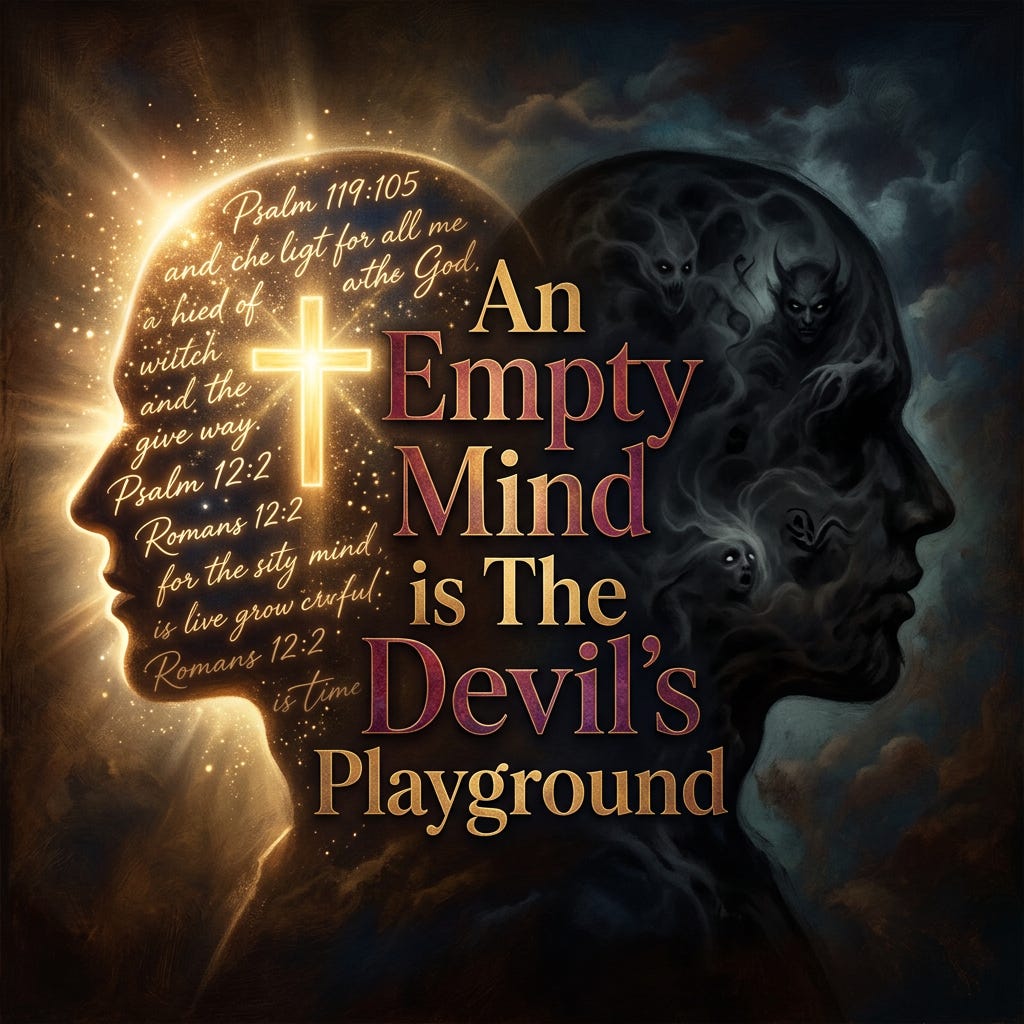
In Christianity, the expression “an empty mind is the devil’s playground” is not a direct quotation from Scripture, but it captures a biblical warning: when a person deliberately leaves the mind spiritually vacant, undisciplined, and without a godly direction, it can become more vulnerable to temptation, deception, anxiety, sinful imagination, and destructive desires.

1. Christianity Calls For a Filled Mind, Not an Empty One:
The biblical answer to destructive thoughts isn’t simply, “Stop thinking.” It is to fill the mind with what is true and good.
“Whatever things are true… honest… just… pure… lovely… of good report… think on these things.” — Philippians 4:8
Paul Presents Christian Discipleship as an Active Transformation of Thought:
“Be transformed by the renewing of your mind.” — Romans 12:2
So Christianity doesn’t regard mental emptiness as the goal. The mind is supposed to be oriented toward God, truth, wisdom, Scripture, prayer, gratitude, and love.
2. An Undisciplined Mind Can Become Fertile Ground for Temptation:
James describes temptation as something that develops through the desires within a person:
“Every man is tempted, when he is drawn away of his own lust, and enticed.”
—James 1:14
An idle or undisciplined mind can provide plenty of room for fantasies, resentments, envy, lust, fear, pride, and obsessive thoughts to grow.
This doesn’t mean that every unwanted thought is demonic. Christianity recognizes ordinary human weakness and the fallen condition of the heart. But Scripture repeatedly tells believers to exercise vigilance over their thoughts.

3. Jesus’ Teaching About The “Empty House” is Especially Relevant:
One of the strongest biblical images behind the expression comes from Jesus:
“When the unclean spirit is gone out of a man… I will return into my house from whence I came out.”
Jesus then describes the house as “empty, swept, and garnished.” The spirit returns with others, and the person’s final condition becomes worse than the first.
—Matthew 12:43–45
The important point is not that an ordinary person with nothing to do automatically attracts demons. Jesus’ larger lesson is about the danger of removing something evil without replacing it with something good and spiritually substantial.
In Christian terms:
1. Empty equals Vulnerable
2. Filled with God equals Spiritually Directed
4. The Devil Seeks Opportunities:
Peter gives the famous warning:
“Be sober, be vigilant; because your adversary the devil, as a roaring lion, walketh about, seeking whom he may devour.” — 1 Peter 5:8
The Christian life therefore involves watchfulness.

That is why Scripture repeatedly emphasizes:
· Watchfulness — Matthew 26:41
· Self-Control — 1 Peter 5:8
· Taking Thoughts Captive — 2 Corinthians 10:5
· Renewing the Mind — Romans 12:2
· Setting the Mind on Heavenly Things — Colossians 3:2
· Meditating on God’s Law — Psalm 1:2
· Being Filled With The Spirit — Ephesians 5:18
5. “Emptying the Mind” Can Mean Very Different Things:
This distinction is important.
Christianity does not condemn silence, contemplation, rest, or quietness. Jesus Himself withdrew to solitary places to pray (Luke 5:16).
The concern is spiritual passivity—the idea that enlightenment comes from eliminating discernment, truth, moral judgment, and intentional thought.
Christian meditation is fundamentally different from merely making consciousness empty. Biblical meditation involves dwelling upon something—God’s character, God’s Word, His works, His promises, and His commands.
Psalm 1 describes the blessed person as one who:
“meditates” on God’s law “day and night.”
The Christian objective is therefore not:
“Empty your mind.”
It is:
“Renew your mind.”
6. The Deeper Christian Principle:
The mind is never truly neutral for very long. What occupies our attention gradually influences our desires, decisions, habits, and character.
Jesus said:
“For where your treasure is, there will your heart be also.”
—Matthew 6:21
And Paul tells Christians:
“Set your affection on things above, not on things on the earth.”
— Colossians 3:2
Thus, from a Christian perspective, the danger isn’t simply having nothing to think about. The greater danger is allowing the mind to become directionless.
An undirected mind can wander toward whatever is most immediately gratifying. A disciplined Christian mind deliberately turns toward Christ.
In one sentence:
“An empty mind is the devil’s playground” is best understood as a warning against spiritual and intellectual passivity: Christianity teaches that the mind should not merely be emptied of thoughts, but continually renewed, guarded, and filled with truth, wisdom, prayer, Scripture, and the things of God.


Comments
Nothing yet. Say the first thing.
Sign in to join the conversation.