
Thanks for reading Gregory B. Sadler - That Philosophy Guy! This post is public so feel free to share it.
Last week, as I was producing lecture videos on Musonius Rufus for an upcoming academic class I’l teaching this Fall, focused on love, friendship, sex, and desire, two of his lectures I focused on in particular have to do with the topic of marriage. One of them focuses specifically on a question that rears its head every so often: Is marriage an impediment or hindrance (empodion) to engaging in philosophy?
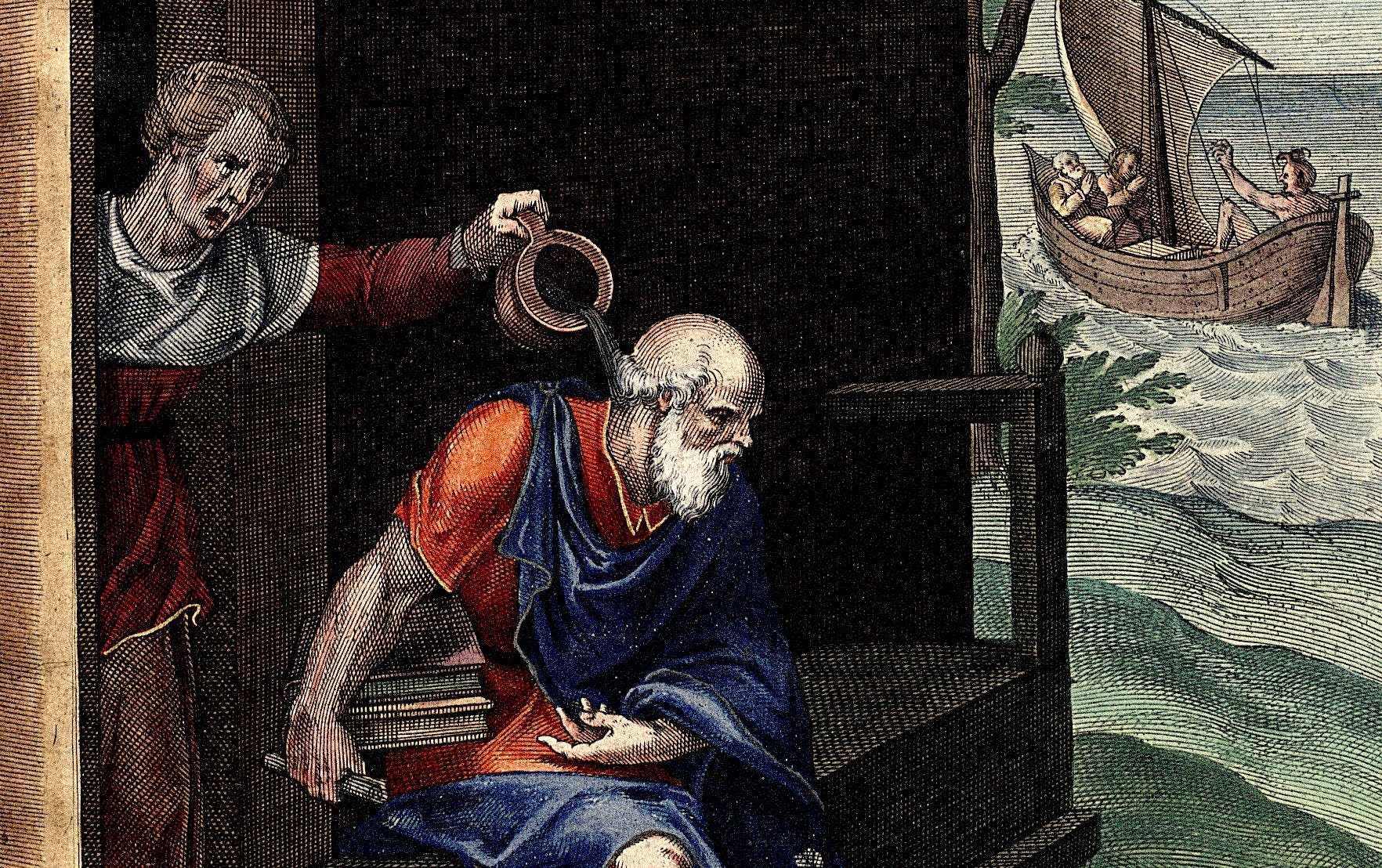
His answer is a pretty emphatic No, and he provides a number of reasons why that wouldn’t be the case, at least for doing the sort of philosophy as a way of life that a Stoic like Musonius understands by the term “philosophy”. Among them is pointing out some cases of philosophers, recognized as paradigmatic among the ancients, who were in fact married. He lists Pythagoras, Socrates, and Crates.
Now why bring this up? Every so often in the online philosophy world, you do see the conversation about the matter getting rehashed, with quite a few participants grudgingly acknowledging that there were a few philosophers who got married, but arguing that the majority of them didn’t. Sometimes, they’ll shift the ground and point out philosophers who did get married did so later in life (e.g. Mary Wollstonecraft), or didn’t have children, or even didn’t write anything down (e.g. Socrates) so they can write them off.
The situation isn’t quite so simple and straightforward as just looking at which philosophers were married or not. We have instances of philosophers who were themselves not married but did recommend marriage to others, or at least saw it as not an impediment to engaging in philosophy. Some of them, like Musonius’ student Epictetus, caught some flack for not getting married (or having children) themselves. Immanuel Kant is one example of a bachelor (and most likely virgin) who did view marriage positively(though admittedly a bit oddly), but just didn’t envision it for himself.
There were also philosophers who made criticisms of marriage as an institution in their time and culture, and who weren’t committed to each other monogamously, but who nevertheless were lifelong partners, like Jean-Paul Sartre and Simone de Beauvoir. Definitely not “married” in the strict sense of the term, but certainly doing their philosophical work while in an intensive relationship with each other.
So there’s clearly a good bit more to say about the issue than just which philosophers were at some point married and which ones weren’t. But just for today’s post, I’m going to note the philosophers who were in fact married. We can follow up by exploring the other aspects of this matter in other posts.
In the ancient period, not surprisingly, there are quite a few philosophers who were married. We ought to mention that Crates was himself married to someone equally a Cynic philosopher, Hipparchia, who chose a life with him. Aristotle was married, and titled one of his most important works after his son Nicomachus, the progeny of that marriage. Metrodorus, Cicero, Seneca, Plutarch, Marcus Aurelius all engaged in philosophical work (among other things) and were married. There are quite a few others who we know had children (usually it is their sons who are mentioned) and who might have been married. Others who had children we are pretty clear they weren’t, like Aristippus the founder of the Cyrenaic school, whose daughter Arete both continued it and had a son of her own, named after his grandfather.
When we move into the later portion of antiquity when Christianity becomes a major cultural and intellectual force, and then into the Medieval period, pickings become slimmer, not least since many of the authors engaging in philosophy (as well as other disciplines) in the West are committed religious of one sort or another. There are some though, for example Boethius. I suppose technically we could include Abelard and Heloise as well, though that relationship certainly is an unusually complicated one. Maimonides was married, as was Christine de Pizan.
In the modern period, those who have taken some sort of religious vows continue to contribute to philosophy, but many more philosophers are laypeople. Quite a number of them remain unmarried, though that doesn’t always keep them from having relationships and children (Descartes is a good example). But there are a number of them who do get married, including Francis Bacon, Ralph Cudworth, Francis Hutcheson, George Berkeley, Margaret Cavendish, Jonathan Edwards, Montesquieu, Denis Diderot, Edmund Burke, Maine de Biran, Thomas Reid, Johann Wolfgang von Goethe, and Alexis de Tocqueville. There’s William Godwin and Mary Wollstonecraft, married to each other.
One might quibble a bit and say something like: “Well, those aren’t the most important philosophers of their times.” Those sorts of judgements do vary from era to era, but even granting current common conceptions of that hazy value, those are all thinkers worthy of reading, and they all managed to do their work despite being married. If you really do demand some philosophical star-power, how about G.W.F. Hegel? He was married. Or John Stuart Mill, who married Harriet Taylor after her first husband’s death. William James also comes to mind. Bertrand Russell liked marriage so much he not only wrote a book about it (Marriage and Morals), but engaged in the ceremony with four distinct partners! Martin Heidegger
From the 20th century onward, there are actually so many people producing work in philosophy that we could easily come up with an extensive list of philosophers who make significant contribitions and are married. I’ll resist the temptation to name more than a few of them whose works I find particularly valuable and enjoy, knowing that readers may well come up with their own lists. Maurice Blondel, Lev Shestov, Max Scheler, Gabriel Marcel, John Wisdom, Dietrich Von Hildebrand, Julia Annas, and Alasdair MacIntyre all come to mind immediately for me.
What should we make of all of this? Well as I noted above, there’s a lot more to be said, and a good bit deeper thinking to be done, about the topic about whether or not, and if so how, marriage gets in the way of doing philosophy well. But we’ll bring this beginning of a conversation to a close here. If you’ve got your own thoughts about it. feel free to chime in with a comment.
Gregory Sadler is the founder of ReasonIO, the co-founder of The Stoic Heart®, a speaker, writer, and producer of popular YouTube videos on philosophy. He is co-host of the radio show Wisdom for Life, and producer of the Sadler’s Lectures podcast. You can request short personalized videos at his Cameo page. If you’d like to take online classes with him, check out the Study With Sadler Academy.
Comments
Nothing yet. Say the first thing.
Sign in to join the conversation.