
👋Hello, my friend. I’m excited to bring you the latest episode of the Intentional Wisdom podcast today with my friend Jon Muedder. A lot to learn from this one from a leader who is running his business (and life) in an admirable way. I hope you enjoy it.
I’ve known Jon Muedder professionally for more than eight years. Over that time, most of our conversations have sounded pretty normal: podcast edits, production timelines, creative briefs.
What I didn’t fully appreciate for a long time was everything he was carrying alongside that work.
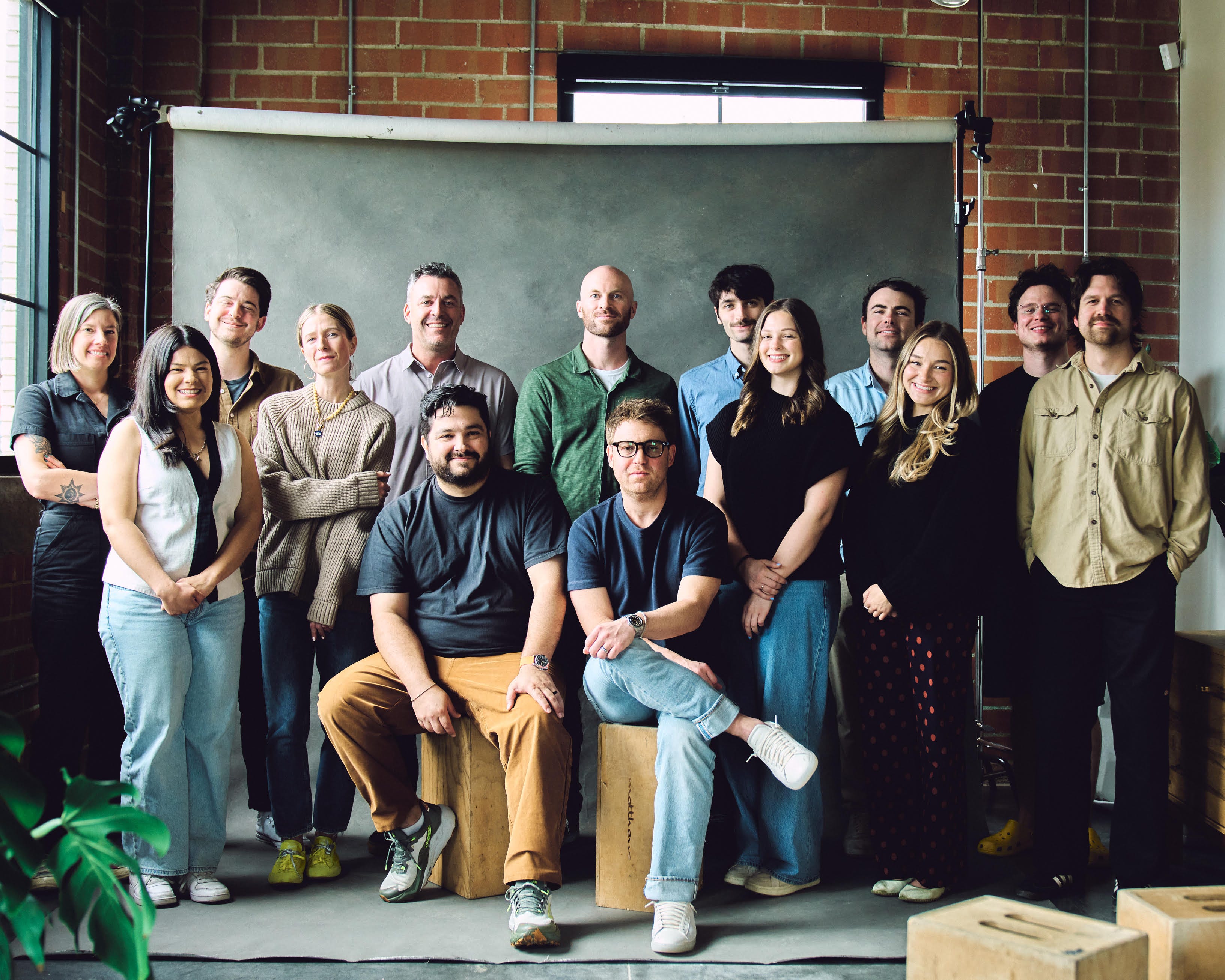
Jon is the founder, president, and executive producer of Caravan — the production company that helps me make my day-job podcast, Streaming Income. Caravan produces incredible work across documentary film, commercial production, and branded storytelling. They’ve worked with brands like Nike, Harley-Davidson, and Airbnb, and even produced a feature-length documentary with J. Cole featuring appearances by Jay-Z and Drake.
But what’s always stood out to me just as much as the work itself is the quality of the people behind it. The interactions never feel transactional. They feel thoughtful. Very much human.
That’s a big part of why I wanted to interview Jon on the podcast. To understand what makes him tick as a person and a leader. Below are a few takeaways that stuck with me most.
Jon and I spent some time talking about obsession, craft, and what separates truly exceptional people from everyone else.
We kept circling back to the same idea:
The best people operate from internal standards.
They aren’t just trying to meet expectations set by a boss, a client, or a company. They’re trying to meet their standard — and usually, that standard is even higher.
Nobody is forcing them to spend hours going down rabbit holes in their area of expertise. They do it because they genuinely care. They can’t really help themselves.
That’s where craft comes from.
Jon described Caravan’s approach as “assembling the Avengers” for every project — pulling together the exact right people for the specific story they’re trying to tell rather than relying on a rigid, one-size-fits-all structure.
I loved that framing because you can feel it when you work with people like that.
One thing Jon said really resonated with me.
For years, he felt like he was failing at work-life balance because he couldn’t achieve some perfect, steady equilibrium between career and family.
Eventually, he realized:
Life isn’t balanced day-to-day. It’s balanced season-to-season.
There are intense stretches at work where family gets less of your energy than you’d like. Then there are periods where work quiets down and family takes center stage again.
What mattered more was bringing intentionality to both.
Jon and his wife Allison started approaching their family life with the same level of thoughtfulness he brought to business planning. They began doing annual planning together as a couple — talking through goals for:
their marriage
each of their kids
and their family as a whole
I like the idea: Be intentional about what you’re aiming for when it comes to balance, but give yourself some grace when reality gets in the way any given day or week.
This was the part of the conversation I haven’t been able to stop thinking about.
When Jon’s son Finn was two years old, he was diagnosed with Hunter syndrome (MPS II), a rare terminal genetic disease that affects only a few hundred boys in the United States.
Many children with Hunter syndrome develop normally until around age four or five before beginning to regress physically and cognitively. Many die in their early teens.
What struck me most wasn’t just the diagnosis itself, but how Jon and his wife responded to it.
They became deeply involved with Project Alive, a nonprofit focused on advancing research and support for families affected by Hunter syndrome. Jon helped rebrand the organization and pushed for them to invest heavily in documentary storytelling to raise awareness and funding.
At one point, Caravan paused commercial work for three months so the team could travel the country producing films about families affected by the disease — including Jon’s own family.
Over the next several years, those efforts helped raise millions of dollars for research.
Today, Finn is 11 years old. He’s:
walking
talking
swimming
riding a bike
…milestones the family once wasn’t sure would be possible.
He entered a clinical trial at age five, and just weeks ago, that treatment received FDA approval. Project Alive is still fighting to expand access for older boys who currently fall outside the approved age range.
I mentioned that I’ve known Jon for eight years, but through all of those years of working together, I never fully grasped the scale of what he and his family were going through behind the scenes.
A good reminder of one of my favorite quotes: “Be kind, for everyone you meet is fighting a battle you know nothing about.”
I also asked Jon about his leadership style, how that’s developed over time and the frameworks he uses to run the business and keep his team aligned. In addition to discussing some frameworks and tools like EOS and Working Genius (references below), Jon talked to me about Caravan’s core values:
Craft
Collaboration
Care
He told me they originally had a much longer list of values — all individually good, but too broad to actually guide behavior. A challenge from his CEO forum pushed him to distill everything down to the three ideas that mattered most.
Corporate values can often be pretty hollow and not particularly impactful day-to-day in the business. But by simplifying and getting really intentional about it, it feels like Jon and team have landed on values that are useful and guide the way the company operates.
The quality of the work. The attention to detail. The refusal to settle for “good enough.”
Resisting the temptation to treat client relationships as transactional.
Jon said one of the questions they ask internally is:
Are we behaving like a vendor, or like a true partner?
Remembering that every person you encounter is carrying something you probably can’t see.
When 50 or 100 people show up on set for a production, that’s 50 or 100 different lives unfolding in real time:
different struggles
different fears
different responsibilities waiting for them when they go home
I have to say, as a client of Caravan, you can feel these values working with Jon and team day to day — a testament to the culture they have built.
There’s a ton more to this conversation so I hope you’ll get a chance to check out the full thing.
I’m proud to feature this conversation on the podcast as Jon represents the kind of leader I want to spotlight through Intentional Wisdom — someone building something ambitious while still letting character shape the way they operate.
—
Note: If you want to support Finn and other boys affected by Hunter syndrome, I’d encourage you to learn more about Project Alive and the work they’re doing to help families navigate both treatment access and the broader realities that come with this disease. See links below.
The EOS Life by Gino Wickman
Traction by Gino Wickman
From Strength to Strength by Arthur Brooks
Five Types of Wealth by Sahil Bloom
The Working Genius by Patrick Lencioni
“Finn”: Our Story (Documentary)
Thanks for reading. If this conversation resonates with you, I’d love to hear what stood out.
And if you haven’t yet, you can listen to the episode on Apple Podcasts and Spotify or watch the full episode here on YouTube:
Thanks as always for reading!
Greg
No posts
Comments
Nothing yet. Say the first thing.
Sign in to join the conversation.