
Back in 2018, I wrote a book in my native Portuguese called Crónicas de um planeta que era azul (“Chronicles from a planet that was blue”), a collection of short stories, or sometimes something closer to images painted with words. These pieces are written, very loosely, from the perspective of an alien being studying our planet. Through that lens, they aim to draw parallels between human life and the lives of the countless other organisms that share spaceship Earth with us. This is the English translation of that book, which I will be sharing here on Substack, one chapter at a time.
Link to Prologue
Link to Chapter 2
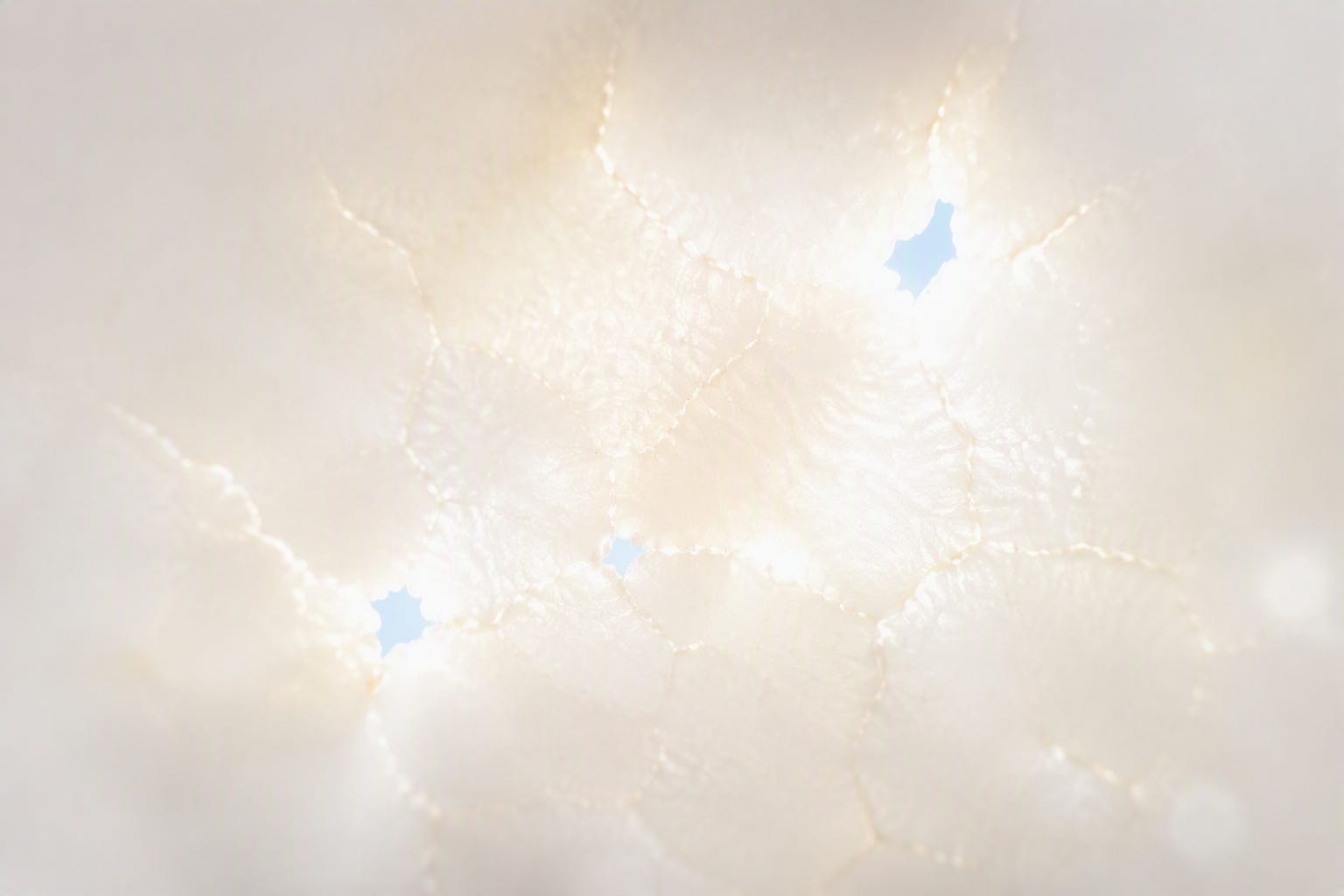
A prison? The confined space to which he was restricted felt smaller with every passing day. His tiny cell had no windows, only the mercy of a dim, trembling light that clouded more than it revealed, blurring the boundaries of his existence.
Where was he? How long had he been there? In truth, he had no clear memory of any other place or state of being, and the near‑total absence of sensory stimuli made it impossible to grasp the passage of time. Sometimes he listened. Just listened. He tried to interpret those scarce auditory impressions with the naïve curiosity of someone experiencing experience for the first time.
Lost in the gentle cradle of that sheltered existence, he drifted through long hours, or perhaps mere seconds, lost in thought. Was this all he could expect from life, or only a brief antechamber to something still waiting beyond? Was this place the whole of the Universe, or merely a closed shell concealing the vastness of an unsuspected world outside?
Lately, he had begun to suspect that it wasn’t his prison shrinking, but his own body growing. He could feel changes in his limbs, which each day became not only longer, but stronger. And then one day — or perhaps it was night — in a moment of true epiphany, he finally understood that the dimness in which he lived was due not only to the lack of light in his little cell, but also to the simple fact that he had, until then, never realised his eyes were closed. It was on that day that he first felt the impulse to do something to change his condition.
The strength within him, growing day after day, became the spark that at last ignited in him a fierce resolve to fight for freedom.
After his first hesitant attempts to use his limbs against the matrix that held him, he soon realised that the key lay in his head. Something hard was growing beneath his eyes, and instinctively he knew he should use it as though it were a hammer. He hammered and hammered at the white barrier until, at last, his effort was rewarded: a first, brighter crack traced itself across the dull white that surrounded him. In the joy of that moment, he let out a brief sound from his throat, a first call that surprised him as much as the extraordinary revelation that his confinement might indeed have an end.
The hard work continued, and from that first crack many others soon followed, until eventually tiny holes of light pierced the veil that hid the rest of the world from him. He realised he could now use his limbs as levers to hasten his labour. When the shell finally gave way, he was blinded by the joyful, exuberant brightness of the daylight waiting for him outside. And when his eyes at last adjusted to the Sun’s thermonuclear radiance, he saw, outlined against the glorious blue of that spring morning, the sweet and tender expression in his father’s eyes gazing at him from behind a great orange beak.
The little bird had at last emerged, after four long weeks of incubation. He left behind the broken shards of his egg and drew a deep breath of the fresh morning air, certain that his life had only just begun.
The full book will soon be available on Amazon. In the meanwhile, you can support my work by buying me a coffee.
No posts
Comments
Nothing yet. Say the first thing.
Sign in to join the conversation.