
Back in 2018, I wrote a book in my native Portuguese called Crónicas de um planeta que era azul (“Chronicles from a planet that was blue”), a collection of short stories, or sometimes something closer to images painted with words. These pieces are written, very loosely, from the perspective of an alien being studying our planet. Through that lens, they aim to draw parallels between human life and the lives of the countless other organisms that share spaceship Earth with us. This is the English translation of that book, which I will be sharing here on Substack, one chapter at a time.
Link to Chapter 1
Link to Chapter 3
Clinging to a miserable plank of oak, the castaway held fast, stubbornly, to life. Around him the ocean’s fury was finally burning itself out, and the waves, though still terrifying, seemed on the verge of granting a respite to the poor soul. When the storm ended, the inevitable certainty of death arrived. Alone in that infinite salty desert, with no hope of rescue, he laid his head against the old wood that had circled the globe so many times, and waited for his end. Hours passed, or perhaps days, and death felt ever closer. Yet from the delirium of sun and thirst, something rose to the surface of his thoughts and tugged at the last threads of his consciousness. A sound that did not belong there.
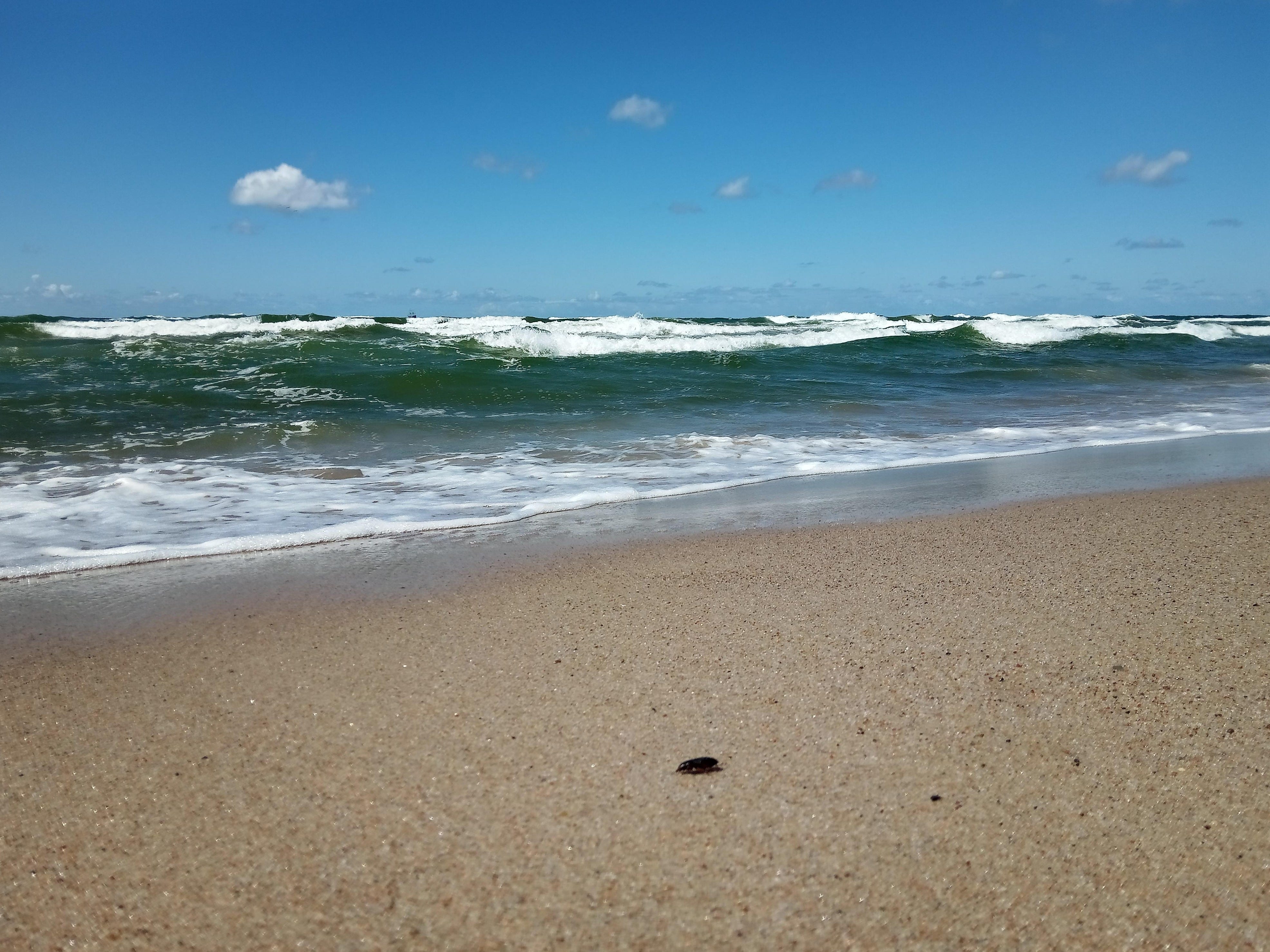
Somewhere in the depths of his brain, restless neurons detected a pattern that stood apart from the monotonous murmur of sea and wind. Surf. Blue, vigorous waves breaking on a beach of white sand. In an effort that felt titanic, he lifted his head just enough to look towards the direction from which the sound seemed to be coming. And then he saw it. An island. The archetype of a tropical island of the southern seas. A vast curve of gleaming white sand, flanked by imposing palms and coconut trees. A pale ribbon licked time and again by the surf of the deep blue ocean, first broken into white foam and then dissolved into the dirty-white stain of wet sand. Faced with the possibility of survival, the body found strength where none had been left. Arms that moments before had lain inert became powerful oars, swiftly steering the improvised craft towards land. Salvation?
On that island he found the bare minimum needed to sustain the body. Food was abundant, both in the small forest and in the lagoon rich with the fruits of the ocean. Water ran through a narrow stream, from the island’s only hill down to the sea, as fresh and sweet as a delicacy from the heavens. With the materials at hand — small branches, twigs, and leaves — he built an improvised shelter that kept him dry on rainy nights. Beyond that, the tropical climate that prevailed there ensured that nights were never too cold for his meagre wardrobe, and the wood dried by the violent tropical sun easily yielded flame in the hands of a skilful man. Yet man is not sustained by the well-being of the body alone. On that island there was not the faintest trace of salvation for a mind scourged, day after day, by the most utter solitude.
The castaway devoted his many hours of free time to thinking. At times he thought in silence; at others, he thought aloud. One day he held long philosophical debates with a coconut palm; on another, he spent hours absorbed in the flames of his fire, pondering the eternal questions of existence. One day, after many long months had passed since his troubled arrival on the island, he came upon a glass bottle that had washed ashore. The bottle was still sealed with a cork, and that bottle, together with some paper and pens he had salvaged from the wreck, gave him an idea. He would write a message and send it out to sea inside the bottle, in the hope that one day it might be found by someone who could save him. He wrote something like this:
I am a castaway, stranded on an island for many long months. I do not know the island’s exact location, but I know that I am several hundred kilometres northeast of New Zealand. I feel terribly alone. Please save me. In return for this kindness, I offer here a small fruit of the long hours I spend thinking about life: Life is a collection of ideas, thoughts cast into the sea, lost in space, felt in the flesh with the searing force of a red‑hot iron.
He continued his life as before, fishing in the lagoon, hunting in the forest, and drinking water from the stream. He tried to convince himself that sending the message had changed nothing, that surely no one would ever find it. Yet he could not stop himself from spending part of his days gazing at the horizon, nor from walking the length of the beach in search of new bottles. One morning, like so many others, he rose and walked towards the shore. What he saw left him stunned. Not one, nor two. Hundreds upon hundreds of bottles, identical in every way to the one he had cast into the sea with his message, filled the lagoon. The bottles chimed softly in the gentle swell, their green glass contrasting with the turquoise of the waters. He picked up one of the bottles and immediately noticed that it, too, contained a message. He opened it and read:
I have lived for many long years in a vast city. I, too, feel terribly alone and would like to be saved. To whoever may help me, I leave this thought on life: Life is a long wait, a slow withering towards an inevitable end; its final outcome depends largely on what we learn from those we encounter along the way.
Still incredulous, he picked up the next bottle, whose message read:
I ask whoever finds this bottle to save me from my loneliness. In return, I offer this thought of mine: Life is a winding path, but the faster we travel it, the sooner we reach its end.
Now with little surprise, he found a third message in the following bottle:
Here on the farm where I live, the solitude is overwhelming. Save me! As for life, this is what I think of it: Life is a great mystery, the most beautiful creation of the Universe. We must make the most of the little we are entitled to.
He went on gathering bottles along the shore, in each one finding a plea for help and a small adage about life. They were written on papers of different colours, some in pencil, others in pen or even marker. Styles and handwriting varied, and the languages were as many as those spoken on the planet. To his astonishment, he discovered that he was able to make sense of all of them, from the letter written in Cyrillic, which read:
Here in the tundra, solitude is as long as the winter. I need help. I leave here a thought of mine about life: Life is made of all the little nothings, everything that happens in between the events we usually consider important.
To the letter written in Japanese characters, which solemnly declared:
I live in a jungle of concrete and neon alongside another thirty million souls. We all live atrociously alone and are in need of salvation. During the long hours I spent thinking, I came to understand this about life: Life is a route of lost destinations, a goal of unfinished purposes, a memory of forgotten remembrances.
He kept all the hundreds of bottles beside his hut, carefully lined up on the sand like pieces in some forgotten game. He also stored all the messages in a small watertight wooden box, spending the days that followed reading and re‑reading them, unable to find any explanation for such a phenomenon. From that entire wellspring of human feeling, he drew a single conclusion: his situation was no worse than that of any other human being, perhaps even better than that of many. Encouraged by this epiphany, he finally decided to take hold of the reins of his own destiny.
From that day on, he devoted himself to the construction of a raft with which he would return to civilisation. After three months of arduous labour, he set out to sea in a fragile yet hopeful vessel, driven by both a sail and a pair of oars. He carried aboard provisions sufficient for several weeks and departed full of confidence in his ability to reach inhabited lands. He took with him the many messages he had received on the island, along with several of the bottles that now sustained his vital reserve of potable water. Before departing, he cast a new bottle into the sea, with a message inside it. The new message said:
I have decided to leave my island and set out in search of people like myself. I wish you all the courage to find, in turn, a path that will carry you beyond the limits of your own prisons. And life? My friends, life is what we make of it!
The full book will soon be available on Amazon. In the meanwhile, you can support my work by buying me a coffee.
No posts
Comments
Nothing yet. Say the first thing.
Sign in to join the conversation.