11. The four uses of the Greek aorist tense
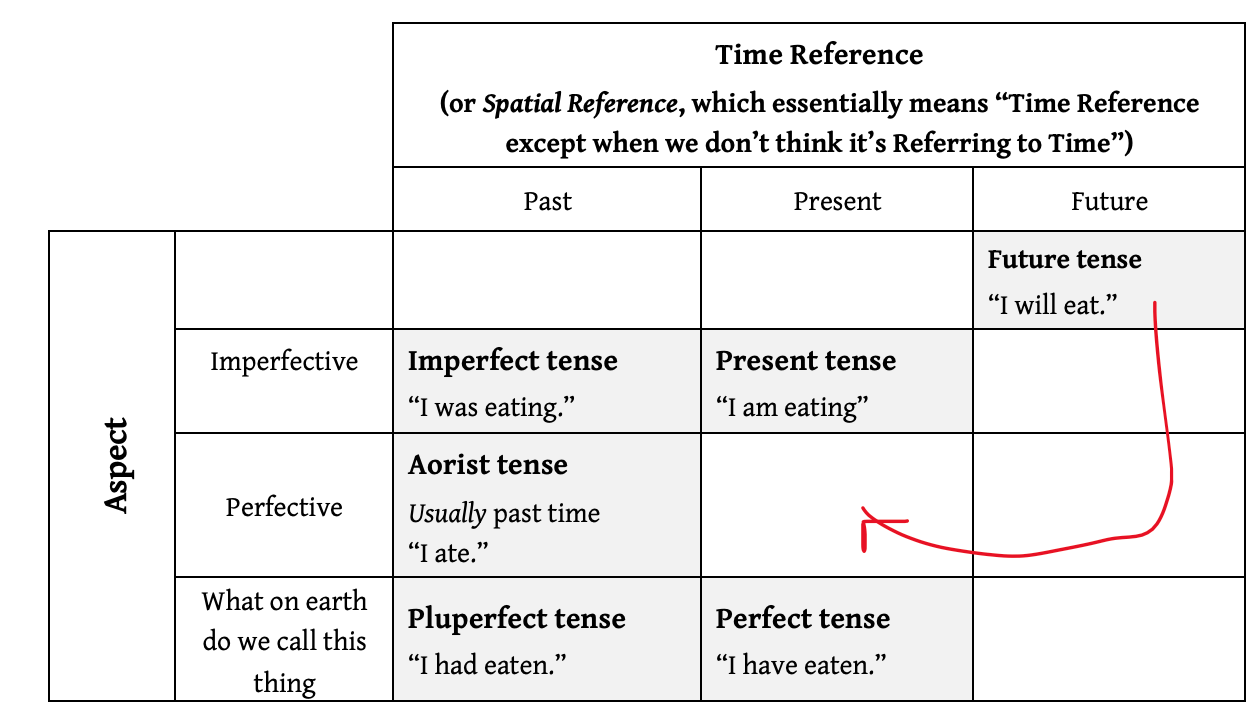
Listen now | Anna Brotherson reads aloud her Substack article, The Four Uses of the Greek Aorist Tense. This is the eleventh episode in the series analysing Koine Greek linguistics.

Easy-to-read articles and reflections on Biblical Greek (Koine Greek), with a focus on how tense, voice and aspect contribute to meaning-making in the New Testament.
Subscribe:.rss.atom.json.md.m3u.pls
Live Last read · last published · next check
Saves to your Listen queue, to pick up on another day or another device.
Listen now | Anna Brotherson reads aloud her Substack article, The Four Uses of the Greek Aorist Tense. This is the eleventh episode in the series analysing Koine Greek linguistics.
(TBH I thought there were only three, until I wrote this article...)
Listen now | The building blocks of Greek aspect (plus a brief reflection on the encoding of time in verbs).
The building blocks of Greek aspect (plus a brief reflection on the encoding of time in verbs).
Anna Brotherson summarises existing claims about Greek tense and aspect, and highlights some problems with these explanations.
The existing claims about it, some problems with the existing claims about it, and the promise of a new series of intelligible and helpful claims about it. (And a lot of lists.)
Anna Brotherson gives four reasons why we need to stop talking about the "passive voice" in Greek, showing how it can skew interpretations of texts.
Anna Brotherson reads aloud part two of her argument that there's no passive voice in Ancient Greek (adding a touch of romance and historical fiction).
Listen now | Someone had to say it.
Listen now | An introduction to the Natural Semantic Metalanguage