
This could either be hard to hear, or perhaps you already know: your parents may not trust you with money.
And they may have good reasons not to trust you. Heck, you may not even really trust yourself with money.
The good news though is that if you can acknowledge it, see it, and understand it, you can change it. Before any of the assets involved in the Great Wealth Transfer move in a good way, something else needs to transfer first: trust.
I know it because I did it, I built trust with myself, then with my mom and sister, and it changed the course of my family’s life for generations to come.
But, first, I’d F-it all up, royally. If you have too, it’s not too late.
• • •
When I was rebuilding after my bankruptcy, I needed capital to rebuild. I had ruined my credit, and after turning everywhere else (I even asked my ex-ex-ex boyfriend, and he said no), the last person to ask was my mom.
Asking her was terrifying. Our relationship was complicated. And she was not sitting on a pile of money. My mom was an art teacher in her seventies and still working because she needed the paycheck; she had barely $200,000 saved for her own retirement.
What she did have was a credit score she had spent her whole life protecting. It was around 800, and she was so proud of it. I knew she was going to say no, but I also thought to myself: “If my own mom won’t invest in me, what kind of a loser must I be?!”
I’m glad I let myself face that fear. Once I admitted that I felt like a loser, I could stop treating my mother’s answer as proof that I was one and start showing her, and myself, what had actually changed. (It’s a good hack. Try it!)
I also realized life was giving me a huge opportunity to stop repeating the very patterns that resulted in me losing again and again. So, I asked.
And she said no.
But I didn’t treat the “no” as evidence my mom didn’t believe in me (even though at that time, I’m sure she did not). I could have made it about all the ways I thought she had failed to support me (I had always been looking for evidence of that).
Instead, I did the inner work around it, and then showed her the numbers, the plan, what I had learned, and the structure I intended to put around the risk. I showed her I understood what I was asking her to put on the line.
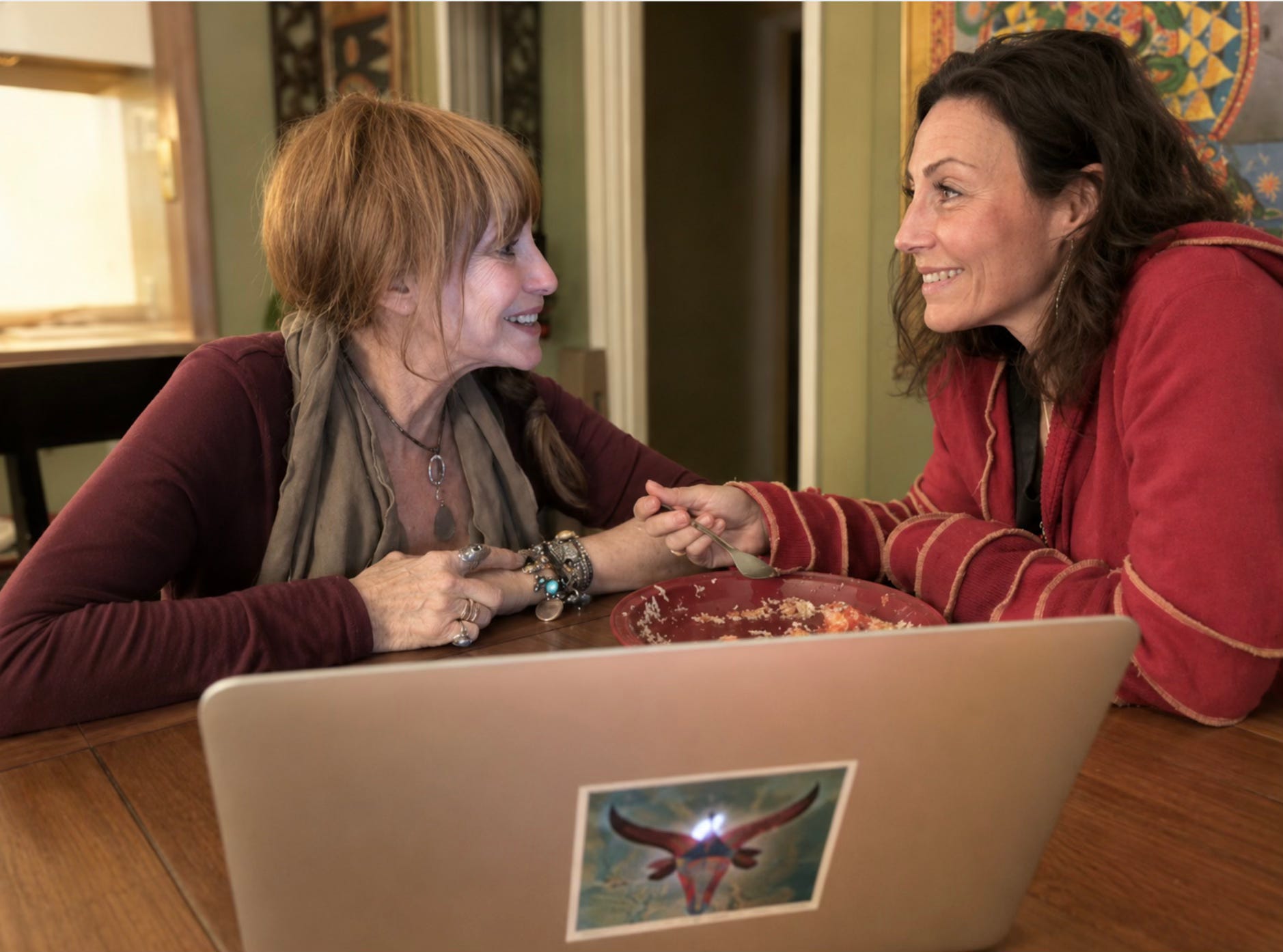
Most importantly, I committed to her that no matter what, I would take care of her for the rest of her life. I didn’t say that lightly. With fear, willingness, and hope for the future, she said yes. (If it would be helpful for you to see me asking my mom to invest in me, her saying no, and then yes, you can get the BTS + so much more in the Financial Liberation Challenge here.)
With access to $150,000 in business credit from my mom, I rebuilt the foundation of the companies I lead today, which last year hit $13.5M in revenue, and have made the Inc. 5000 list 7x since then. Today, my mom is living her best life, retired, and earning a supplement to her social security as the treasurer of our eco-system.
Here’s what was even more important than the money: my ask and my mom’s decision to say yes changed our relationship with each other and with our entire approach to our collective family wealth. My mom, my sister and I have been making financial decisions together ever since, instead of allowing money to remain a source of silence, fear, or leverage.
The point of all of it is, I had to grow up into the person I was asking my mother to trust. You may need to also.
• • •
Keith, who joined me this week on The Great Wealth Transfer Podcast and YouTube video, had to grow up too, and because he did, he likely saved his family from financial catastrophe. I don’t mean this lightly. If Keith had not stepped up when he did, he could be sitting in financial devastation stuck in a court process right now instead of living his best life caring for his family’s resources.
Keith’s dad worked on Wall St. for fifty years and kept pretty much all the family money in cash, while believing Keith spent money “like a drunken sailor.” There was no way he would entrust the family money to Keith. That began to change six years ago. Keith asked his dad to sit down with me and his stepmom to talk about it. His dad said yes. I think he was relieved that Keith was initiating this conversation, and doing it with a friend and lawyer. When we talked about the resources he’d spent a lifetime accumulating, his dad told me he liked to worry about the money. I could see that Keith needed to step up so his father could spend the last years of his life not worrying.
When we looked at why Keith’s dad earned the money to begin with, his dad was able to see that what he really wanted was to make sure his kids wouldn’t need to worry like he did. I suggested the starting place was for Keith and his dad to start by looking at everything he had together, and his dad agreed.
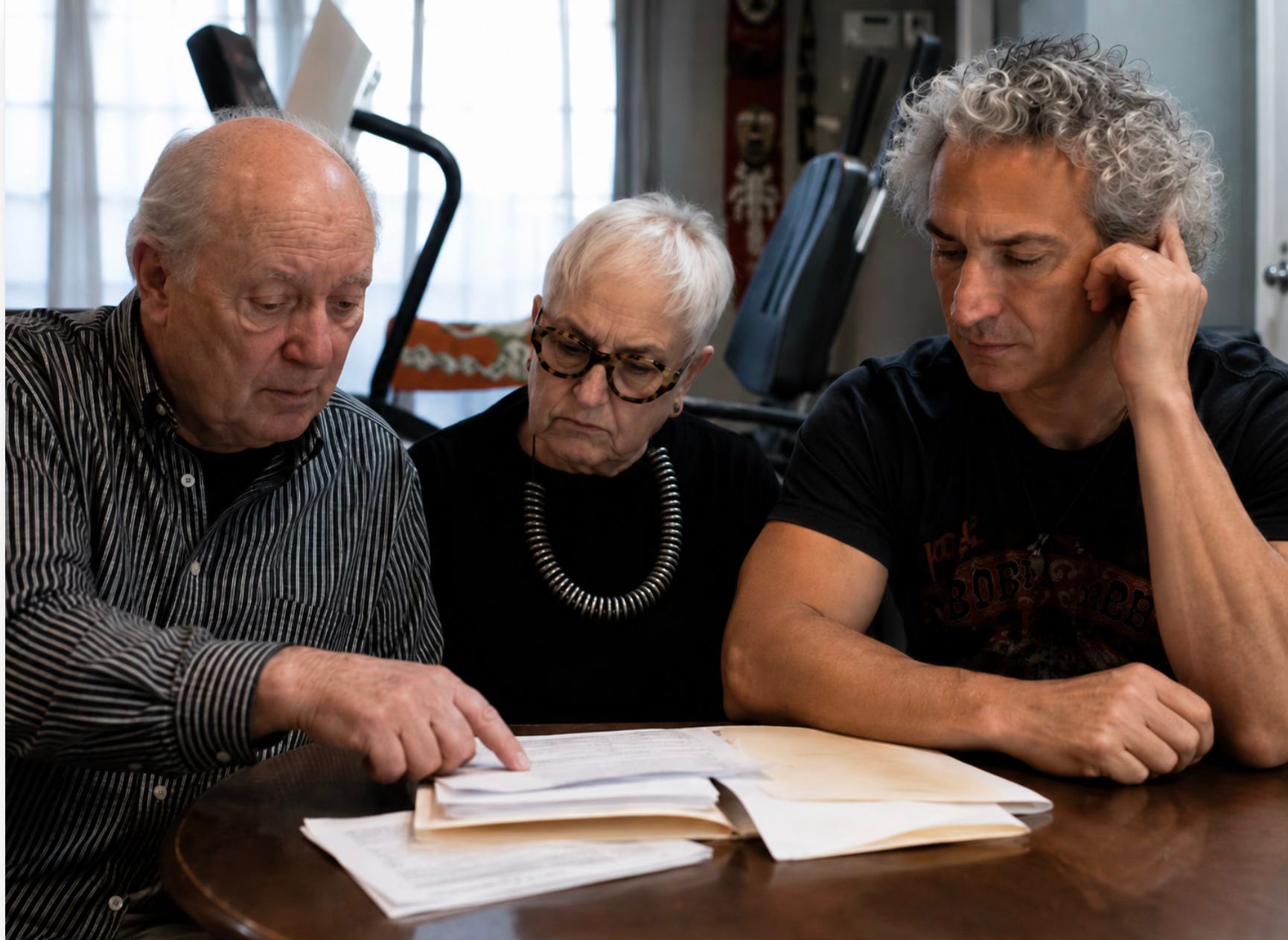
Keith spent an entire week going through every file, folder, account, and asset his father owned, and, for the first time, he was able to see his family’s financial life as a whole, rather than as an invisible source of money handled offstage.
He inventoried everything, and that inventory functioned as Keith’s apprenticeship in becoming a steward of their family’s resources. Keith saw what there was, how the pieces fit together, what his father was trying to protect, and what would eventually need to be managed across three generations.
Here’s the crazy part: within six months of that conversation, Keith’s dad began a significant cognitive decline. Today, he’s living in a memory care facility where he’s happy as a clam, has no anger, fear, or any lashing out, and is post-worry, which I understand is quite rare for someone with dementia.
I believe that Keith’s dad is at peace because Keith was able to step up into his role as a steward of their family’s wealth before it was too late. I call it karmic reward. When you do the work to so that the senior generation can pass on resources during life; in a way everyone can enjoy the resources together.
If Keith’s dad had gone into decline before we had the conversation, their family could have literally lost almost everything to the costs of Keith’s dad’s care, court costs, potentially conflict, and a whole lot of confusion. Instead, Keith no longer has to work a soul sucking job to prove his worthiness to his dad, and instead now gets paid to be in his right role as the steward of their family’s wealth. Best of all, his parents can rest easy because Keith is handling everything for his dad, his stepmom and mom, his siblings, and all the grandkids.
• • •
It’s true that many parents use money to control their adult children. Some refuse to share information or keep moving the goalposts. And, they even keep treating us, capable adults, as if we are irresponsible teenagers.
But here’s the question you need to ask: are we?
Sometimes our parents do not trust us because we are still acting like teenagers around the family money. Maybe we want access without accountability or we take questions as criticism. Maybe we’re asking our parents to trust that we have the best of intentions when we haven’t shown them that we can tolerate oversight or put the family’s long-term well-being ahead of what we want right now.
It doesn’t make us bad or wrong, but it does mean that there is a lot of growing up left to do. There was for Keith and for me.
Here’s part of what I came to understand, as I did my own growing-up work around money: every family has a business, even if nobody owns an actual company.
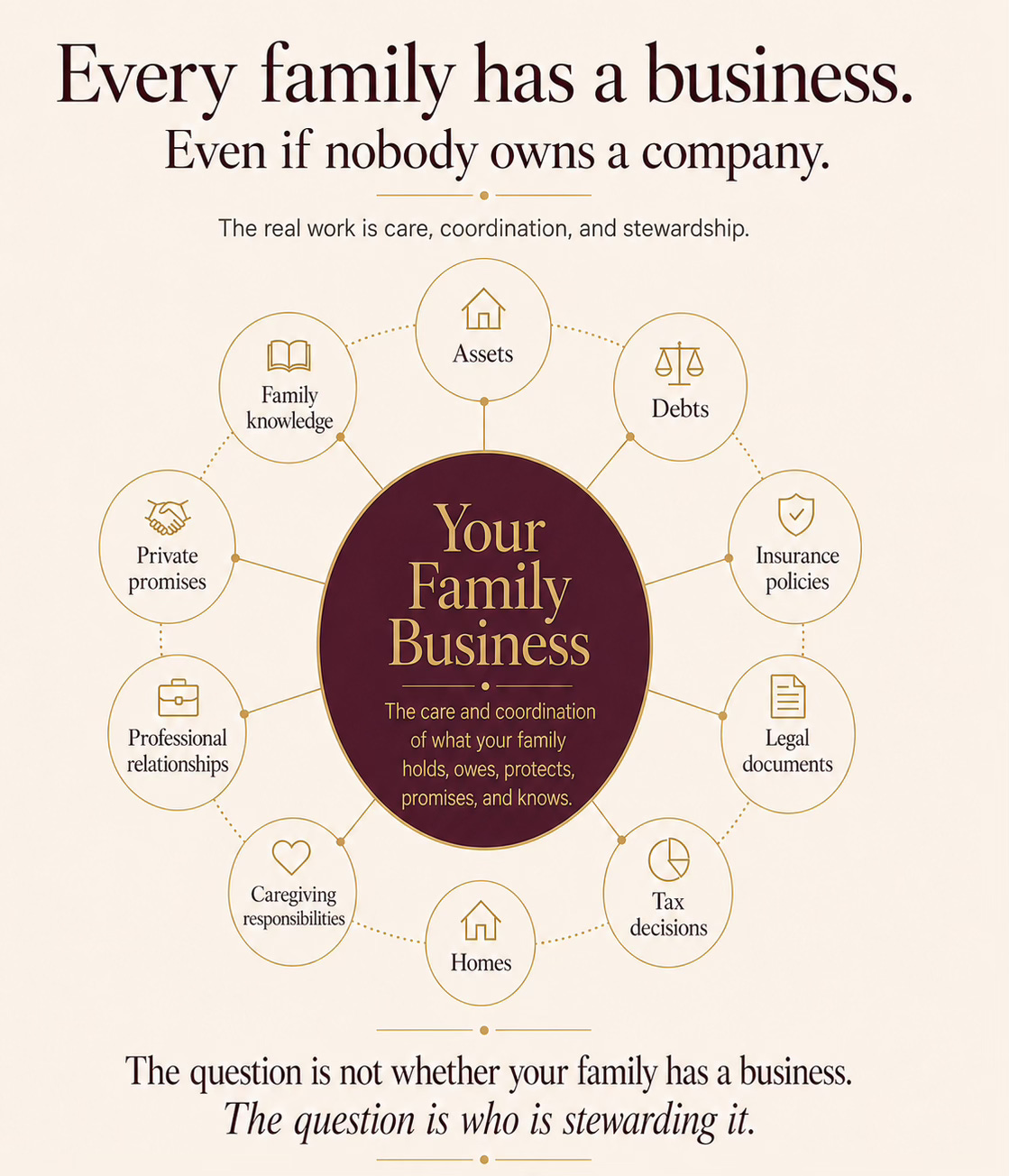
The “family business” is the care and coordination of your family’s assets, debts, insurance policies, legal documents, tax decisions, homes, caregiving responsibilities, professional relationships, private promises, and the years and years of accumulated knowledge about how everything came to be.
And, someone usually holds most of that knowledge. It may be your father, your mother, a sibling, the family accountant, or the lawyer who drafted documents twenty years ago. Sometimes, no one holds the entire picture at all, which is part of the problem. This is, ideally, where you come in as what I call a “Family Wealth Steward” - and you don’t have to be rich, or even think you are rich to be one.
The person who becomes the Family Wealth Steward is the person who learns to hold the whole picture of the family’s resources with wisdom, care and coordination.
Becoming your family’s wealth steward doesn’t mean declaring yourself the head of the family or lording control over everyone. Please no. You also don’t need to become a lawyer, insurance professional, financial advisor or accountant. But as I wrote in “Don’t Wait Until You’re ‘Rich Enough’ to Build This,” you do need to understand how the family’s legal, insurance, financial, and tax decisions affect one another, and the cost of fragmentation.
You need to know, for example, whether an asset is titled correctly, whether the will, trust, health care directive and power of attorney still reflect the family’s real life, insurance coverage matches the actual risks, tax decisions are being made proactively, and if the professionals involved are all working from the same information. And, more than that, you need to know when you do not know enough, and, most importantly, be willing to ask the right people and learn.
• • •
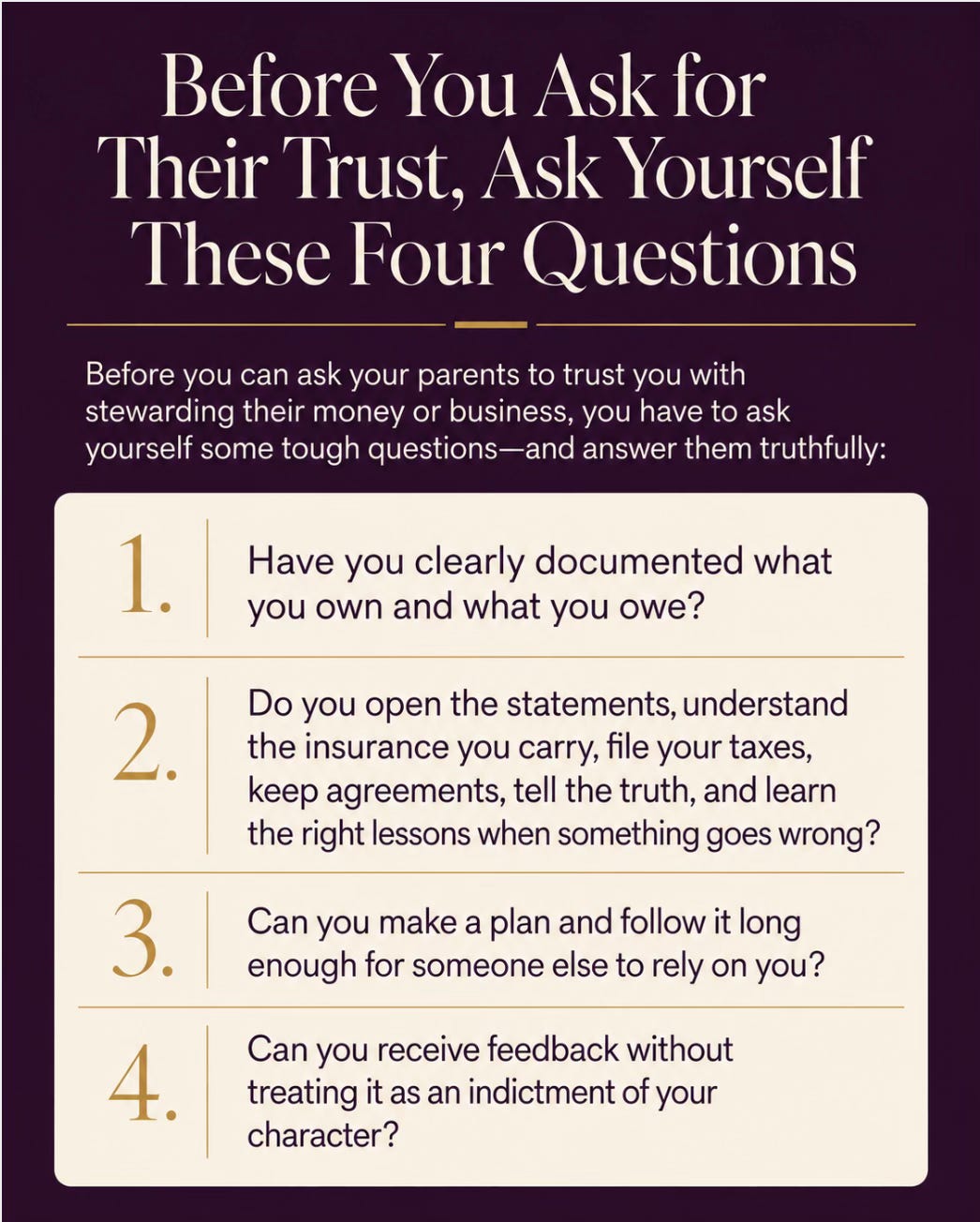
Before you can ask your parents to trust you with stewarding their money or business, you have to ask yourself some tough questions. And, you have to answer them truthfully:
Have you clearly documented what you own and what you owe? Do you have your own up to date estate planning documents in place?
Do you open the statements, understand the insurance you carry, file your taxes, keep agreements, tell the truth and learn the right lessons when something goes wrong?
Can you make a plan and follow it long enough for someone else to rely on you?
Can you receive feedback without treating it as an indictment of your character?
If not, it’s not too late. Your parents likely don’t expect perfection, but they are looking for evidence that you can face reality. Then comes the harder step: approaching them without the conversation devolving into the same pattern as your teenage fights.
So, instead of asking, “Do you have a will?” you might say something like: “I’m stepping into the next stage of my adulthood around my financial life, and I want to make sure I understand what I need to about your care needs for the rest of your life. Would you be open to a conversation about that?”
This is stewardship, and it could very well be the most important next initiation of your life.
• • •

No posts
Comments
Nothing yet. Say the first thing.
Sign in to join the conversation.