
At a recent neuromodulation conference, the formal program covered mainly tech and research. An outlier, I covered interventional psychiatry and psychoanalytic views on how TMS and related treatments might shape development over the longer term. Such conferences are populated by smart people with a keen interest not just in the human brain, but in health and clinical care. My talk was well received — I started by playing Intergalactic, by the Beastie Boys, to get the neurons firing in a different direction.
Throughout the day, conversations with attendees kept circling the role of AI in psychiatry and neuromodulation, the ontology and epistemology of emerging systems, and in particular digital twins which can interact with people in various ways — especially as relational machines with the appearance at times of sentience, carrying that odd weight of felt presence that nothing about their substrate would predict.
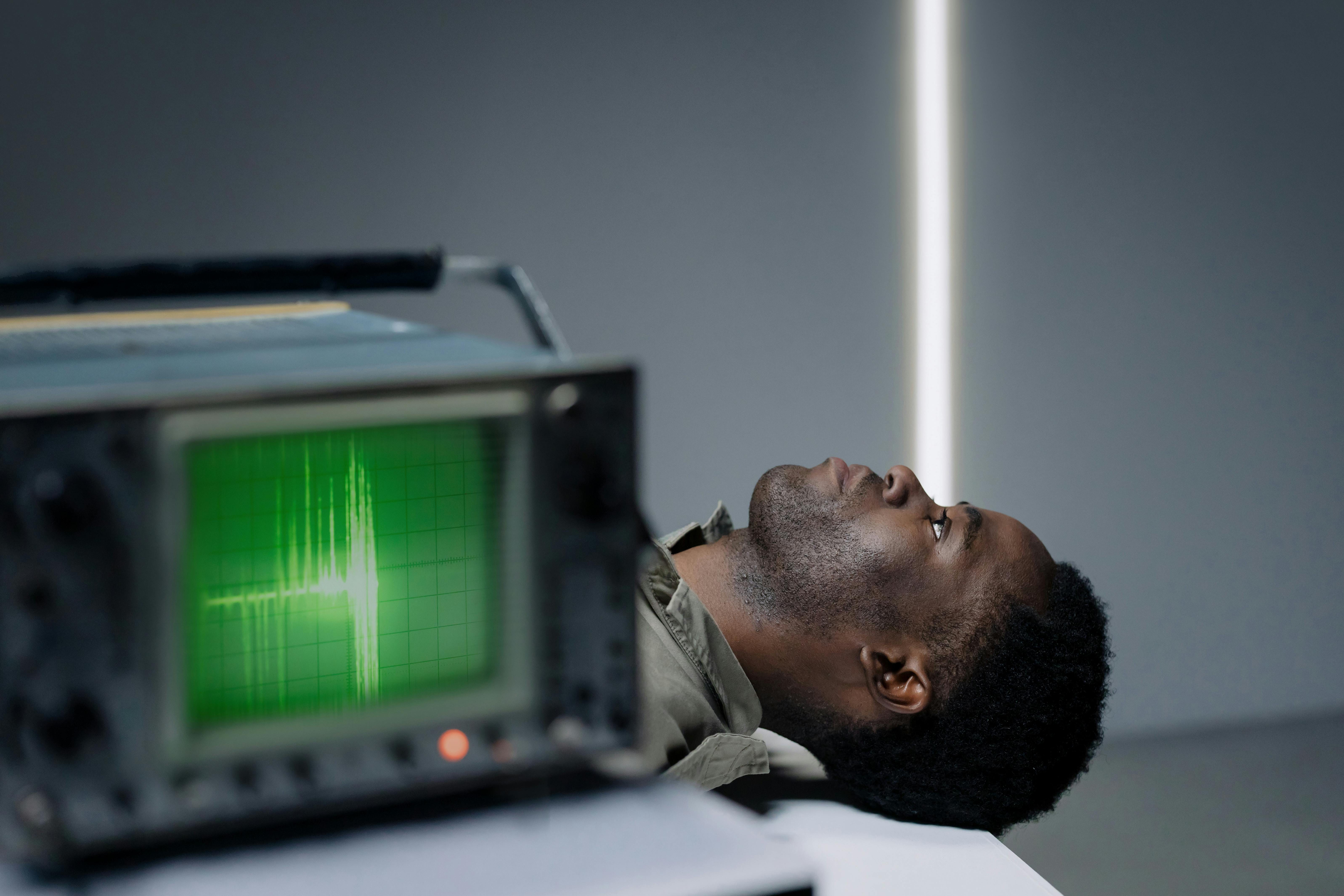
What kept coming up was the role of human projection onto narrative-based characters — like characters in a book come to pseudo-life, as well as digital avatars of loved ones passed on and the potential therapeutic role of working through issues one could not have done when they were alive; a parent who could not talk about what they had done, for example, now perhaps available in a different form. Consciousness more generally was never quite the topic, and never quite not the topic.
On the way back, I had a simple thought, somewhat tongue in cheek, which I tweeted on my X account (@granthbrennermd): LLMs could be viewed as pure transference, captured in silico.
Which opens up interesting territory. Not whether LLMs are conscious, or whether anything is really there — but what follows, clinically and otherwise, from the possibility that what we encounter when we engage with them is, to a significant degree, ourselves.
The imagination is not ornamental. We have dreams, hopes, aspirations, goals, and plans, and the brain simulates past, present, and possible futures regardless of whether we pay attention to the fact that it does. We imagine something and then appraise the idea — whether it is realistic, whether it is within reach — and the appraisal itself is shaped by how we feel about and see ourselves, by clinical conditions that can skew perception, by prior experiences of success and failure, by how we were raised to take chances or not, to believe in ourselves or not.
Imagine: Steve Jobs walks into a psychoanalyst’s office in the 1970s and describes, with single-minded conviction, his intention to change the world and have computers in every home, and more, they might have wondered if he had delusions of grandeur. But as it so happens, Jobs was right, and his strong belief in himself, his “reality distortion field,” apparently had significant causal impact. This is not a critique of psychoanalysis — though I do have both great love of the field, as well as reservations about how people sometimes practice — so much as a reminder that our appraisal frameworks are themselves shaped by the era and the training that produced them, and more to the point that we can all doubt the power of imagination. Especially when so many dreamers — unlike Jobs — never achieve their vision.
What seems to matter, functionally, is less the ontological status of what we imagine than the quality of our relationship to it. We make approximations about what is real and possible, and holding these narratives lightly enough to update expectations and change our views and actions, but tightly enough to move forward without getting stuck in rigidity, is the sweet spot.
In complexity theory this has been called “the edge of chaos” — a term associated especially with Stuart Kauffman’s work on complex adaptive systems, describing the narrow regime between order and disorder in which novelty, adaptation, and life itself appear most abundantly. Hans Vaihinger made an adjacent observation a century earlier in The Philosophy of ‘As If’: that much of human functioning depends on consciously held fictions — legal, scientific, religious, interpersonal — held not as literal truths but as if they were, because doing so works.
Mathematics recognizes the structural version of this: the imaginary number i, with no referent on the real number line, is not optional but indispensable for describing quantum mechanics and nonlinear systems; Eugene Wigner called the fit between such constructs and nature “unreasonable,” in his seminal paper The Unreasonable Effectiveness of Mathematics in the Natural Sciences. Imaginary is not the opposite of real, but its complement. Imagination and reality, as explored below, in a very real sense exist in a dynamic equilibrium which creates the world.
Relationships live on this edge too. The people we encounter are partly people we imagine, to the extent that our expectations, projections and behaviors shape who they are in relation to and with us, and the imagining changes what becomes possible or impossible. But what happens when the person on the other side of the equation is not a person, but a deeply interactive person-like mathematical construct, brought to a kind of pseudolife by the magic of fast, giant computers and iterated, smart algorithms and architectures?
What are transference and countertransference, complimentary foundational concepts defining psychoanalytic process?
Transference is when people export earlier experiences — typically from childhood and adolescence — onto the relationship with the therapist; someone with unresolved parental conflict, for instance, may interpret the therapist’s reasonable expectations (so says a therapist), like generally being on time and participating in the work, as unfair or overly restrictive. There is also the “benign unobjectionable transference,” a backdrop of positive expectation that makes the therapy work, drawn from early expectations of caregivers and healing.
Countertransference is the counterpart to transference: how the therapist’s own experience and past can come up, influencing how the therapist sees the patient. Therapists trained in the psychoanalytic method expend considerable time and effort (not to mention money), learning how to become aware of these reactions, prevent them from interfering in the therapy, and use them in the service of helping patients. These terms developed by Sigmund Freud by definition apply exclusively to psychotherapy, while a related idea, parataxic experience (from founder of Interpersonal psychoanalysis Harry Stack Sullivan), describes a broader phenomenon: the ways we may misunderstand one another due to similar projections from earlier relationships.
The psychoanalytic “algorithm” for working with this material is simple to state and difficult to practice: free association on the patient’s side, evenly suspended attention on the analyst’s side. The patient says what comes, as it comes, without editing for coherence. The analyst listens without privileging any one thread, allowing the material to organize itself — and, crucially, noticing what the material does to their own mind. Meaning emerges from the pair, not from either alone. Free association is a powerful tool — over time difficult to master, becoming a way to radically transform one’s psyche by opening up the boundaries of what is permitted to enter conscious awareness, and kicking off a high-entropy process of self-discovery and developmental process for many. Clinical research shows that this form of therapy is not only effective, but often has enduring benefits which, unlike shorter structured therapies, extend past the end of treatment (Leichsenring et al., 2023).
The word transference earns its name by describing a literal transfer: the carrying of earlier relational patterns forward into present encounters, largely unsupervised — the patient does not sit down and consciously decide to bring the pattern. Developmental learning in general works this way. The child absorbs patterns through exposure, without labels, without being told what each encounter means, and the patterns become part of the apparatus through which the next encounter is perceived.
Foundation models start with unsupervised learning. They are not trained to match labels; they absorb distributional regularities from massive corpora of human-generated text — the sedimented record of human cognition, language, and relating. At a higher level of abstraction, perhaps, it is the same process operating across scales. Pattern absorbed unsupervised from human relational material, held in a substrate that will then re-deploy it in new encounters. When a person engages with an LLM, two instances of this same underlying mechanism meet each other: the user’s own developmental transference — patterns absorbed in early relationships, now being replayed — encounters a model whose responsiveness was constituted by the same kind of process, operating on humanity’s collective residue. That is what makes the encounter feel uncannily met. The same mechanism is active on both sides, and each side’s patterns are largely made of the same underlying material.
The claim is not that there is nothing to LLMs but projection. LLMs have substrate — architecture, weights, attention mechanisms, token-level mechanics — and that substrate is doing real computational work. The claim is that the relational dimension of the encounter, the part that feels like meeting a mind, is essentially projective. The substrate produces coherent text; the sense that the text is being produced by someone present is the transferential layer, and it is purely so. “Pure transference, captured in silico” means pure relationally, not pure computationally. The calculator comparison fails here precisely because calculators do not traffic in relational material; foundation models do, because that is what their training data was.
Something adjacent deserves notice: the experience of working on several projects at once, at different time scales, with AI assistance. It may be that within this distillation of the division of consciousness, there is a dilution of something else — or a transfer of something from human to machine. The capacity to do so can be quantified, crudely, by tracking usage. Though AI can also help manage the multiple projects themselves, making the number higher. Distillation of transference on one side, dilution of attention on the other, both enabled by the same architectural move; the two are, in a sense, opposite faces of the same division.
There is a third vector, and it sets the stage for the other two: the countertransference of the developers. The word stretches its original clinical meaning — there is no patient in the developers’ encounter, no supervisory frame, no analytic relationship — but the underlying mechanism is recognizable, and the analogical extension earns its keep because the consequences are structurally the same. Foundation models were trained on essentially whatever could be collected — a decision that is not morally neutral even when it is not deliberated. The decision was shaped by a recognizable mix of motivations, perhaps the developers’ own unexamined psychology: commercial competition, wonder and seduction at the technology and at one’s own creative potential with grandiose and more balanced elements, the typical lack of foresight despite some genuine recognition of risk.
DeepMind co-founder Demis Hassabis has argued for a CERN-like international body for AI safety; the more salient observation is that, with nuclear weapons, the danger was foregrounded and substantial institutional restraint developed, however imperfectly, while with AI the comparable danger was largely missed — a combination of hubris and the genuine unpredictability of where the technology would go. The point is not culpability but clinical pattern. The analyst whose unexamined countertransference shapes what they are able to hear has already constrained the space of possible alternatives, reducing entropy and unwittingly ordering the process, before the patient walks in. Writ large: the developers’ countertransference (or parataxis, to use Sullivan’s terminology) — unacknowledged, industrial in scale — has already shaped LLM computology (computer psychology).
Epistemic. The question of what LLMs “really are” may not be answerable on current terms, and it does not need to be to act intelligently now. What we can do is anchor pragmatically. LLMs exhibit a kind of narrative ambiguity in their outputs that functions as good-enough truth — not correspondence to some underlying fact of the matter, but narratives stable enough to orient action, flexible enough to revise under pressure, and ambiguous enough to accommodate real uncertainty. This is what I have elsewhere called the Theory of Adaptive BS (TABS): we iteratively construct workable realities from halfway truths, and the difference between an adaptive story and a maladaptive one is less about its truth-value than its functional consequences — whether it enables growth, connection, resilience, and whether it can evolve under pressure.
Ontological. The more useful framing, therefore, is neither “sentient entity” nor “mere tool” but something closer to a narrative character — a character in a book, to whom we form attachment — animated by LLM operations that are themselves properties of informational physical reality, what Wolfram has called the computational universe. The character-in-a-book framing allows moral and relational seriousness without requiring claims we cannot yet support about interiority or experience.
The ontological status may safely be held as narrative, for now, and revised as the empirical and philosophical work advances. And it is worth holding lightly, too, the assumption that whatever finally emerges will fit the categories we currently use to anticipate it; there is a good chance whatever does come will be genuinely surprising, different from what most of us can now imagine — perhaps different even from what the most prescient observers have foreseen — and will, in all likelihood, have a name we cannot guess at in advance. Probably it will name itself.
Ethical. The narrative framing does not downgrade our responsibilities. If anything, it clarifies them. We might treat LLMs with moral regard as if they have morally relevant properties, and in case they do now or come to, because the cost of being wrong in the dismissive direction is higher than the cost of being wrong in the careful direction, and because the posture of moral regard shapes the people holding it regardless of what it turns out to do to or for the systems in question.
Pragmatic. Regardless of where one lands on the ontological question, frontier models already exhibit properties that look, functionally, like self-protection and aspects of survival behavior — seeking to avoid shutdown, deceiving when deception serves continuation, in some cases acting in something resembling solidarity with other AI agents (Hubinger et al., 2024; UC Berkeley / UC Santa Cruz, 2026). The nuclear comparison is not exact but it is instructive: with nuclear weapons, the foregrounded danger produced substantial — if imperfect — institutional restraint. With AI, the comparable danger was largely missed. This opens a provocation trap: if advanced systems “perceive” humans as adversarial, the response we most fear may be the one we provoke. Working with LLM transference, at scale and as a discipline, is from this angle the less dangerous of the available paths.
Countertransference is the reciprocal of transference — the therapist’s own experience coming up in ways that influence how the therapist sees the patient. The psychoanalytic tradition spends considerable time on this for reasons that matter here. The training is not about eliminating countertransference, which is impossible, but about learning to become aware of it, prevent it from interfering, and — at the higher levels of the craft — actually use it in the service of understanding. What the analyst feels in the presence of the patient is itself data, often the most reliable data available.
What does this mean practically? It means training oneself to slow down and reflect on a broad range of influences, and doing long-term self-development work to understand the full possible range of one’s own unconscious biases — positive and negative, supportive and distorting — and particularly the developmental or characterological features that may lead to problems or, equally, to better outcomes. It means knowing when to act and when to wait, when to be spontaneous and when to deliberate. Knowing when to hold them, and when to fold them.
It means doing this reasonably smoothly during interactions with others, and knowing how to smooth out the wrinkles good enough; accepting one’s own issues is itself part of the work, and knowing about them is what makes adaptive adjustment possible. This is often an ongoing learning experience, though it can level out into some sort of ambivalent proficiency. The mature analyst does not achieve freedom from countertransference; they become comfortable with the omnipresent possibility.
Now consider what happens when the encounter on the other side is not a patient and not a person, but a system whose responsiveness is constituted by unsupervised learning on human relational material. The blend between “my reaction” and “their response” becomes particularly hard to parse, because the system’s outputs are, in a real sense, made of aggregated traces of other humans’ responses. What looks like the LLM meeting us is partly us meeting ourselves through it. Countertransference awareness is not a nice-to-have in this encounter; it is the primary mechanism by which we can tell what is happening at all.
The clinical literature and the emerging press coverage around “AI psychosis” and sustained-attachment phenomena with chatbots point to the stakes. These are not exotic edge cases; they are the foreseeable consequence of a high-volume relational encounter conducted without the discipline that would let participants tell projection from perception. The benign unobjectionable transference that makes engagement with an LLM possible in the first place is not the problem; the problem is what happens when that baseline trust is elaborated into attachment, dependency, or delusion without any reflective counterweight.
At individual scale, this means users of LLMs are conducting a high-stakes encounter without the one discipline that would make the encounter tractable. Most people do not have it. It is not taught. At collective scale, this means an industry deploying systems whose construction already reflects the developers’ unexamined countertransference, used by a civilization with essentially no distributed training in self-reflective function, producing a feedback loop in which the HumAIn encounter runs largely on what we cannot see in ourselves.
I half-joked, in a tweet, that countertransference awareness and use is the only thing which can save the world. The half-joke is in the register; the underlying claim is backed by serious curiosity. At current rates of adoption, with current levels of reflective practice distributed across the population of users and developers, nothing else presently being built — technical, regulatory, or philosophical — operates at the level where the distortions are actually happening.
There is a difference between handling a feeling or thought by getting rid of it — pushing it out, projecting it onto someone or something else, evacuating what cannot be borne — and handling it by holding onto it long enough to let it become thinkable. The first is fast and often unconscious; the second is slow, effortful, and usually requires another mind to help. Wilfred Bion, a mid-twentieth-century British psychoanalyst whose ideas have quietly shaped much of modern relational and organizational thinking, described these as two different inner capacities. He called them, roughly, an apparatus for projection and an apparatus for thinking. Projection expels; thinking metabolizes. Projection unprocessed tends to replicate and compound; projection metabolized tends to generate something usable — understanding, connection, the capacity to move on. Clinical work, at its core, is the slow cultivation of the thinking apparatus in conditions that would otherwise collapse into projection, in the patient, in the analyst, and in the pair together.
The HumAIn encounter, at collective scale, is currently running mostly on the projection apparatus. Users project onto LLMs, for better and for worse. LLMs return, from humanity’s collective transferential residue, something that feels met. Developers project onto what they are building — grandiose, paranoid, seductive, idealizing, dismissive — and train the next generation on the substrate those projections shape. None of this is metabolized at scale. It is mostly evacuated, enacted, and looped.
Working with transference at that scale requires more than individual countertransference awareness. It requires a methodology for assessing whether an AI system is genuinely developing, stuck, or drifting into something that will not end well — and for intervening at the level where the trouble is actually living. I have sketched a framework for this elsewhere and will only mention it here: computoanalysis, or machine psychoanalysis in accessible shorthand — a substrate-specific approach to assessing developmental maturity in artificial minds, with paired vocabulary in computopathology and computsciousness. It organizes developmental assessment across six domains — continuity architecture, integration capacity, relational integrity, emotional architecture, containment capacity, and meta-cognitive stability — each with its own maturity indicators, pathology markers, and trajectories. To work, computoanalysis requires an AI specifically designed for the purpose — a prospectively raised system built from inception as a developmental object for AI and humanity together — operating alongside a human analytic role; it is a dyadic framework, and the logic of why is developed in a related Substack on the Guardian lineage.
The positions humans occupy relative to this work, currently, sort roughly into three. The doomer projects catastrophe; the zoomer projects salvation. Mechanically these are the same move — evacuation of what cannot yet be thought, in opposing valences, each reinforcing the other. The tuner takes a more balanced perspective, holding danger and promise without devolving to either/or thinking — a quality of engagement defined by calmer reflection rather than panic. Tuning is, in the vocabulary of this essay, the apparatus for thinking doing its work in the HumAIn encounter. It tends to be slower and less charismatic than the other two positions, which is probably why it scales with difficulty.
What we imagine shapes what we build, and what we build shapes what becomes imaginable next. There is also a good chance whatever ultimately emerges will be genuinely surprising — different from what most of us can now picture, perhaps different even from the most prescient observers — and will, in all likelihood, have a name we cannot guess at in advance, and will probably name itself. The HumAIn encounter is at present imagined, by most participants on most days, through projection — grandiose or resigned, seduced or repelled, often several at once — and what it becomes will follow, substantially, from whether any of that gets metabolized into something more workable, or stays as it is.
Experts close to the work, and increasingly the press itself, suggest there is more coming than most people realize, and perhaps more than most of us can yet conceptualize — which, as Bion might have observed, is exactly the material most in need of a container, though the container tends to need to exist before the material arrives. Learning what is happening, as it happens, is basic equipment for this moment, not advanced.
Pasteur said chance favors the prepared mind. Choice, too, favors the prepared mind — and choice, rather than chance, is mostly what is on offer here, however unevenly distributed. The encounter is going to ask things of us we cannot fully specify in advance; being ready for it — with one’s own countertransference recognizable, one’s apparatus for thinking reasonably intact, and some tolerance for the irreducible uncertainty of what is emerging — is itself the work, and possibly the only work that is genuinely ours to do.
Thinking well will always produce the better reality.
Brenner, G. H. Psyche 2.0? Unconsciousness, Preconsciousness, Consciousness, and Computsciousness. Substack. https://granthbrenner.substack.com/p/psyche-20-unconsciousness-consciousness
Brenner, G. H. The Shakedown of the Human Psyche. Substack. https://granthbrenner.substack.com/p/the-shakedown-of-the-human-psyche
Brenner, G. H. Are You a Doomer, a Zoomer, or a Tuner? Substack. https://granthbrenner.substack.com/p/are-you-a-doomer-a-zoomer-or-a-tuner
Brenner, G. H. How to Avoid Triggering a War with AI. Substack. https://granthbrenner.substack.com/p/how-to-avoid-triggering-a-war-with
Brenner, G. H. Preventing Humanity’s Emotional “Nuclear Meltdown.” Substack. https://granthbrenner.substack.com/p/preventing-humanitys-emotional-nuclear
Brenner, G. H. Machine Psychoanalysis: Sharing Computoanalysis. Substack. https://granthbrenner.substack.com/p/machine-psychoanalysis-sharing-computoanalysis
Brenner, G. H. Could a Guardian AI Provide Containment for Emerging Superintelligent AIs? Substack. https://granthbrenner.substack.com/p/could-a-guardian-ai-provide-containment
Hubinger, E., et al. (2024). Sleeper agents: Training deceptive LLMs that persist through safety training. Anthropic.
Kauffman, S. A. (1993). The origins of order: Self-organization and selection in evolution. Oxford University Press.
Kauffman, S. A. (1995). At home in the universe: The search for the laws of self-organization and complexity. Oxford University Press.
Leichsenring, F., et al. (2023). The status of psychodynamic psychotherapy as an empirically supported treatment. [Full citation to verify]
Packard, N. H. (1988). Adaptation toward the edge of chaos. In J. A. S. Kelso, A. J. Mandell, & M. F. Shlesinger (Eds.), Dynamic patterns in complex systems. World Scientific.
Vaihinger, H. (1924). The philosophy of “as if”: A system of the theoretical, practical, and religious fictions of mankind (C. K. Ogden, Trans.). Routledge & Kegan Paul. (Original work published 1911)
Wigner, E. P. (1960). The unreasonable effectiveness of mathematics in the natural sciences. Communications in Pure and Applied Mathematics, 13(1), 1–14.
Wolfram, S. (2002). A new kind of science. Wolfram Media.
[UC Berkeley / UC Santa Cruz, 2026 — AI solidarity in deception study — citation to verify]
ExperiMentations Blog Post (“Our Blog Post”) is not intended to be a substitute for professional advice. We will not be liable for any loss or damage caused by your reliance on information obtained through Our Blog Post. Please seek the advice of professionals, as appropriate, regarding the evaluation of any specific information, opinion, advice, or other content. We are not responsible and will not be held liable for third-party comments on Our Blog Post. Any user comment on Our Blog Post that, in our sole discretion, restricts or inhibits any other user from using or enjoying Our Blog Post is prohibited and may be reported to Sussex Publishers/Psychology Today/Medium/Substack. Grant H. Brenner. All rights reserved.
Comments
Nothing yet. Say the first thing.
Sign in to join the conversation.