
It’s two o’clock on a Tuesday in New York, and I’m standing over my kitchen sink eating a rotisserie chicken straight out of the bag.
It’s been three weeks since I spent June in Copenhagen in what I coined my 30 Days of Design. I went because I’ve always wanted a Scandinavian summer. I also have been meaning to go to 3DaysofDesign for several years now and what a lovely time that was.
I laugh to myself because, just weeks ago, at roughly the same time of day, only six hours earlier, lunch looked different. This story actually starts four or five years ago when I learned that GANNI employed an in-house chef who every day cooked lunch for the team at its Copenhagen headquarters; if you know me, well then, you know I couldn’t stop thinking about it.
Then, in Fall 2024, T Magazine published a story making the case for eating lunch with your coworkers. It felt like the perfect excuse to introduce my niche obsession to the internet. The video reached nearly a million people. Better yet, it led to a lovely friendship with Eva, GANNI’s chef, and eventually lunch at the company’s HQ in late 2025. Naturally, it was served on “GANNI HOUSE” branded dishware in a bright, colorful lunchroom.
After that, I couldn’t shake a bigger question circling in my mind: was GANNI an anomaly, or was company lunch simply part of the fabric of Danish work culture?
Fast forward to this June. I didn’t actually arrive in Copenhagen planning to write this story. I’d loosely told myself I wanted to keep a diary of my month there, or maybe I’d write something about 30 Days of Design, but I wasn’t sure what that would become.
Halfway through the trip, almost on a whim, I posted an Instagram story: I’m working on a story about lunch culture in Copenhagen. Which design companies should I eat with? That’s how I found myself sitting down with the teams at Louise Roe, Frama, Fredericia, and Muuto over the course of my final week.
My only request was: please don’t do anything because I’m coming. I wanted to eat the lunch everyone else was eating, be part of the team for a day, and see what the company lunch could reveal about these brands and their larger culture.
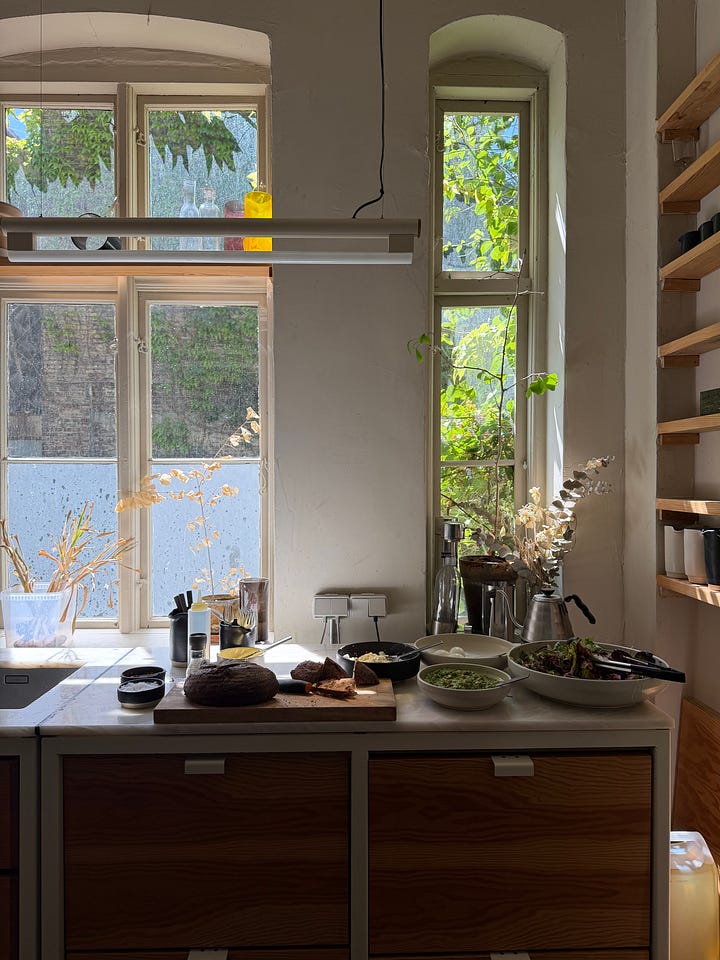
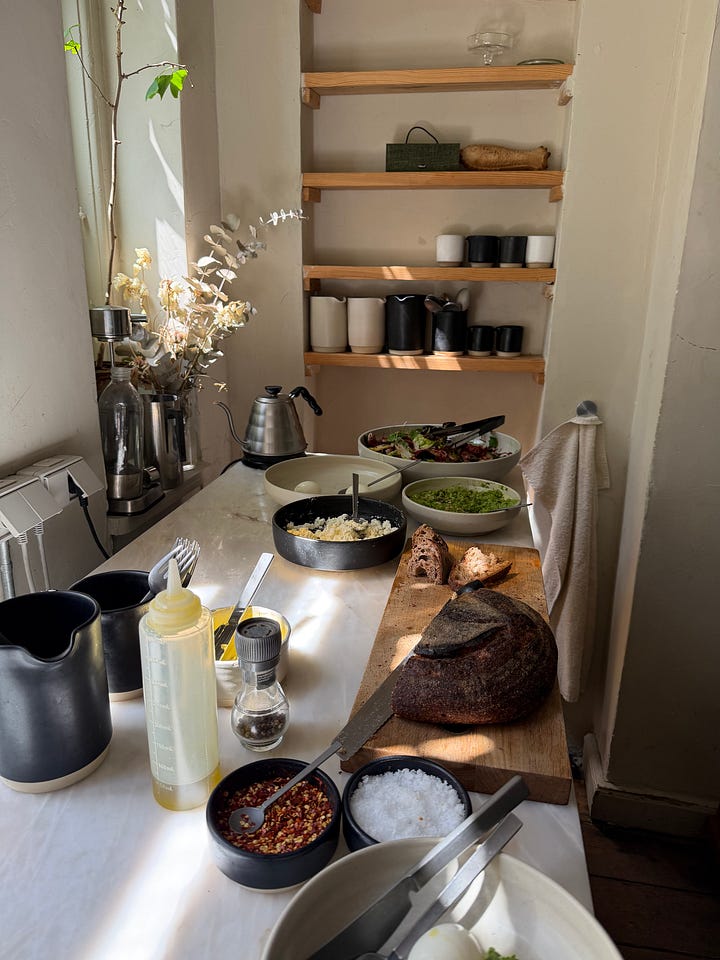
FRAMA has become as much a hospitality brand as it is a design brand. The Copenhagen company has opened destinations across the city, from Apotek 57 next to its showroom to newer concepts like Bar Vitrine and Cabin. Lunch at headquarters feels like a natural extension of that.
Served family-style, the menu is built around vegetables, grains, fresh bread, and seasonal ingredients that change throughout the year. Leva, FRAMA’s in-house chef, told me she approaches every meal with a focus on “seasonality, sustainability, resourcefulness and, most importantly, nutrition.” She also works closely with FRAMA’s international team, drawing inspiration from their home countries and making sure everyone’s preferences are heard.
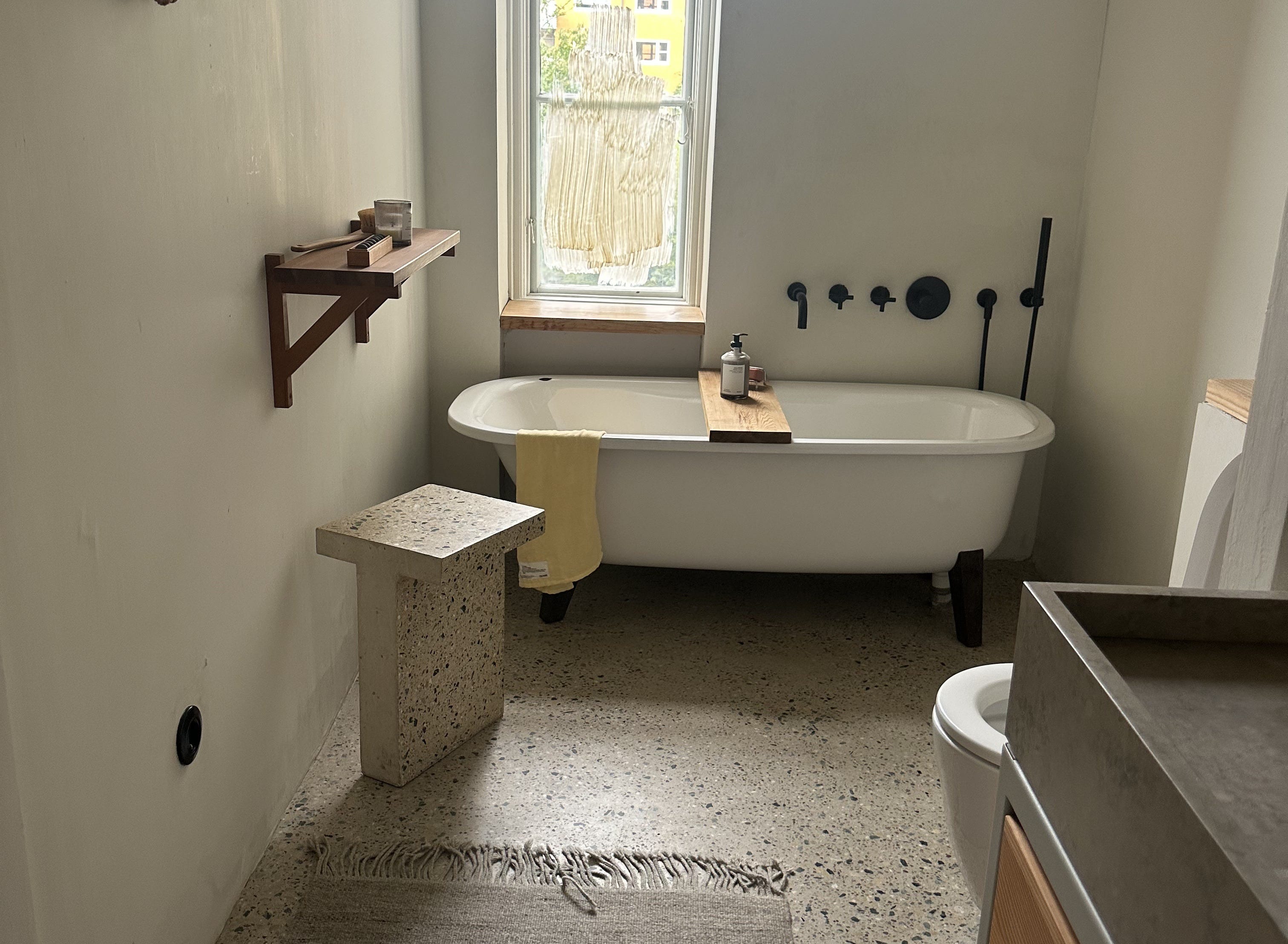
Like so much of the brand, it wasn’t trying too hard. Nothing felt precious.
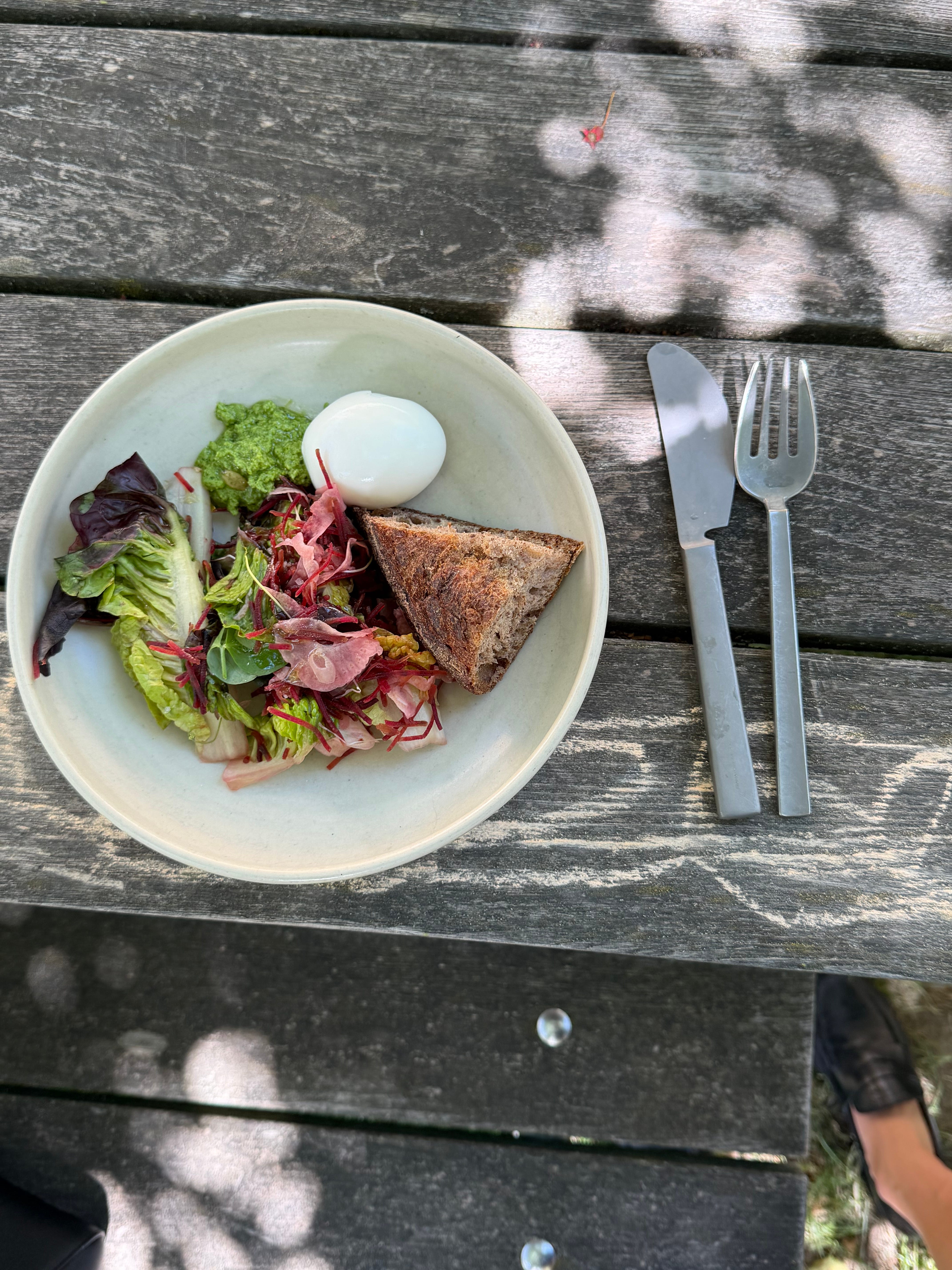
I met Marie, who leads PR at FRAMA, and together we headed to the kitchen, designed like the rest of their office, as a home kitchen. We grabbed FRAMA’s own shallow bowls and cutlery, assembled our meals–a simple, fresh salad, a homemade pesto, hard-boiled eggs, and sourdough–filled a carafe with sparkling water from what was, unsurprisingly, an Aarke machine, then carried our plates out into the garden, where colleagues from across the company had already settled around FRAMA’s outdoor tables (not a laptop or zoom call in sight). It all felt perfectly on-brand.
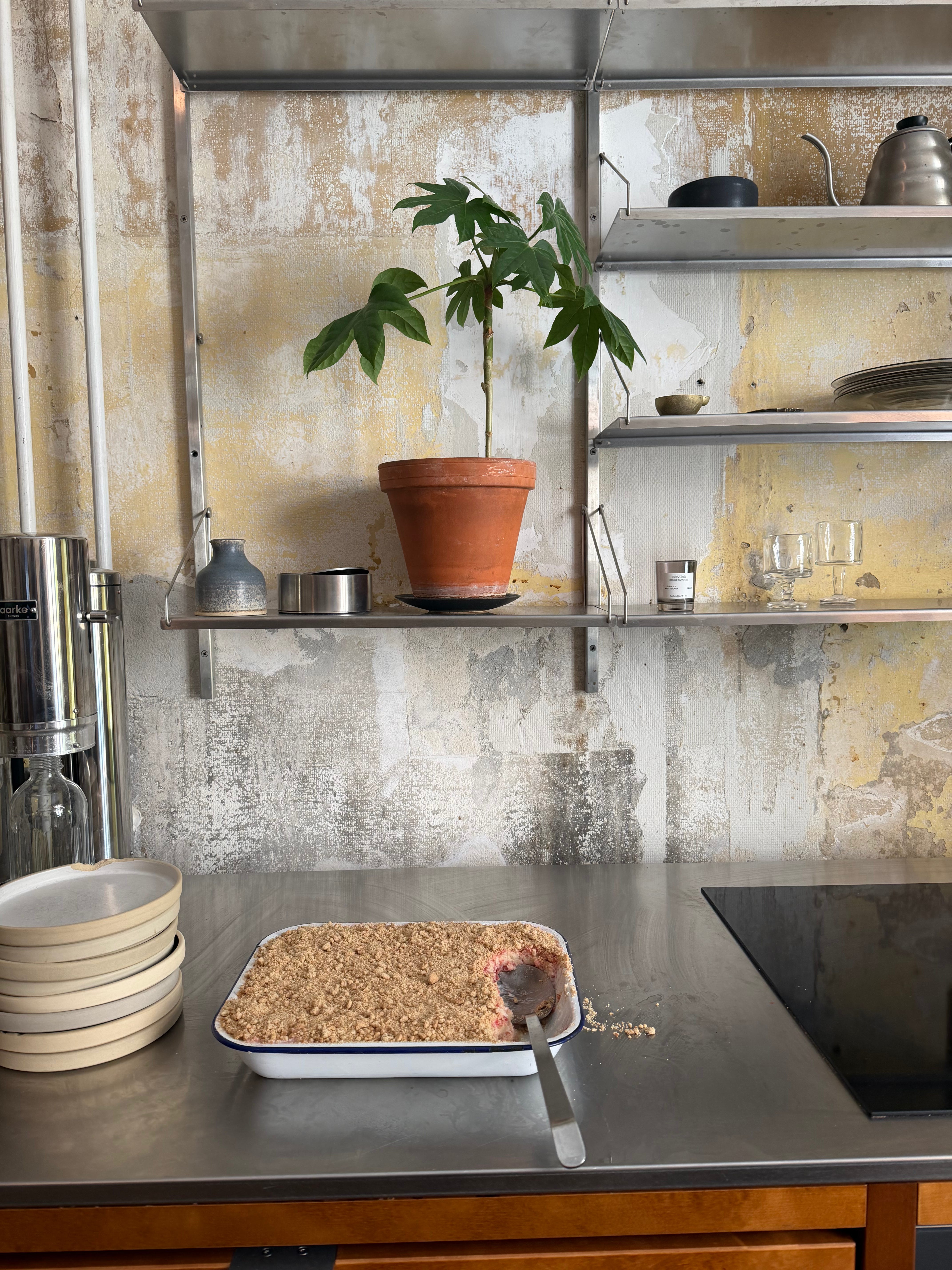
It happened to be Thursday when I visited FRAMA, which, if you can believe it, is “cake day” at nearly every company I spoke with in Copenhagen. After lunch, we wandered back inside, where Leva was serving that week’s creation from the upstairs kitchen. It was all exactly as delightful as it sounds.
I first met Louise Roe Andersen in 2023 after a friend had started working for her and tipped me off to the café at the brand’s Copenhagen showroom. We only spoke briefly, so I was pleasantly surprised when we reconnected three years later ahead of 3daysofdesign–and again amid the chaos of the brand’s opening reception–that she remembered me. By the time I joined her team for lunch on my final day in Copenhagen, it felt like catching up with an old friend.
Behind a frosted glass door at the showroom sits Louise Roe’s small corporate team. When I visited, they were unpacking samples from Paris Fashion Week. I met everyone, and we headed into ROE BAR’s commercial kitchen, where Louise introduced me to chefs Marco and Lukas. “Emma wanted to experience a normal lunch here, so I didn’t tell you she was coming.” They looked down at that day’s meal–a beautifully plated noodle dish–and started laughing. “Well, I’m glad we decided to make this today.”
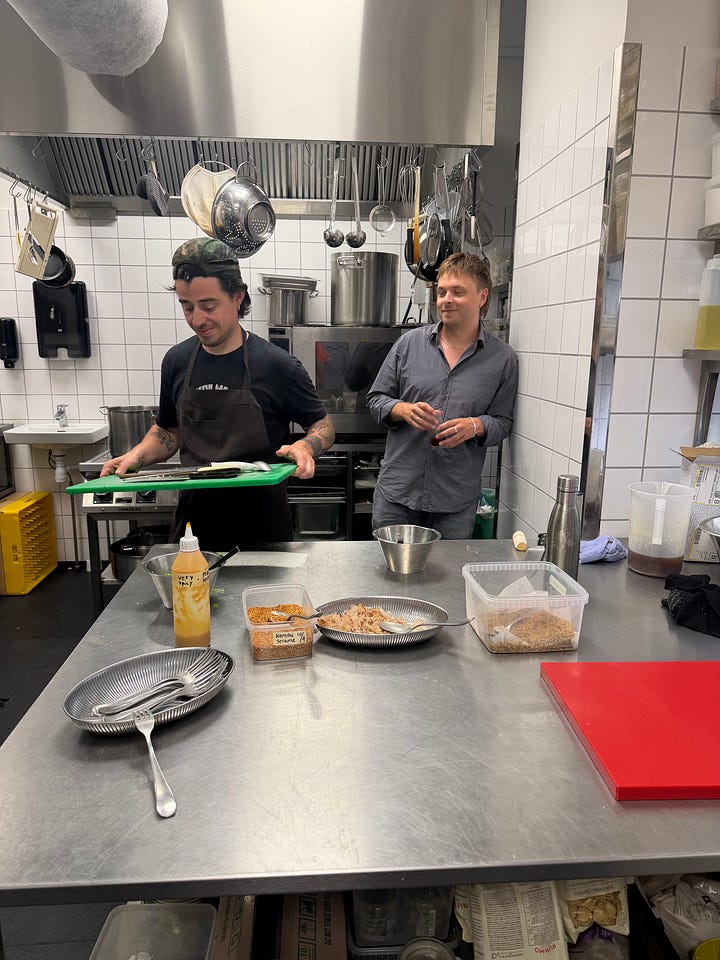
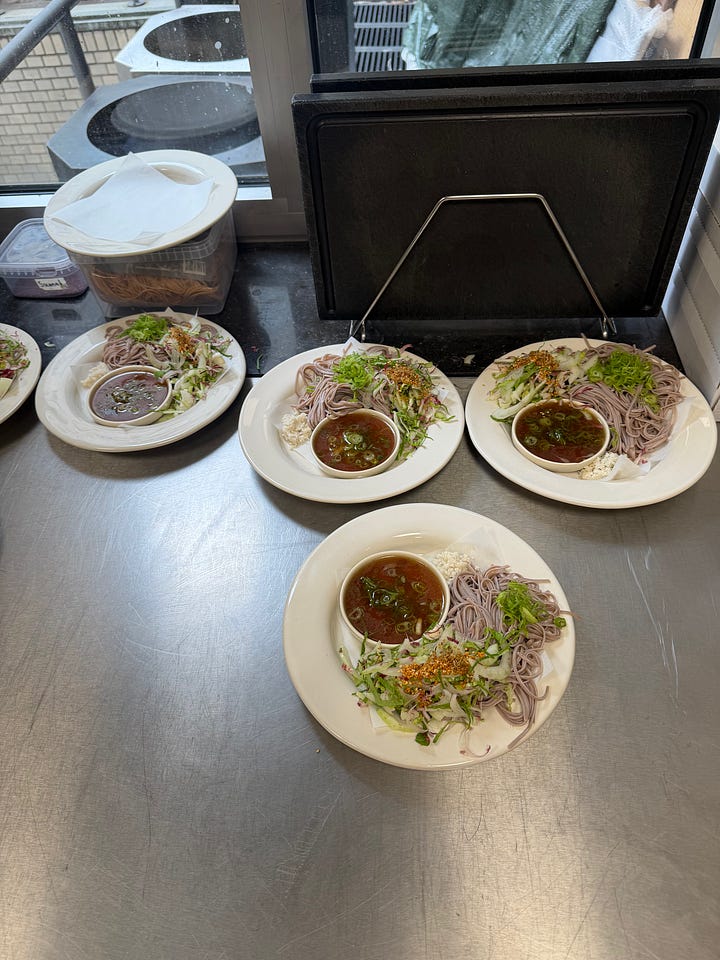
Louise told me the chefs love to experiment. With a team of less than ten, lunch becomes an opportunity to test new dishes they couldn’t realistically make for a much larger company or serve in the café. We of course ate on the brand’s dishware, and gathered around a round table on chairs from the latest collection.
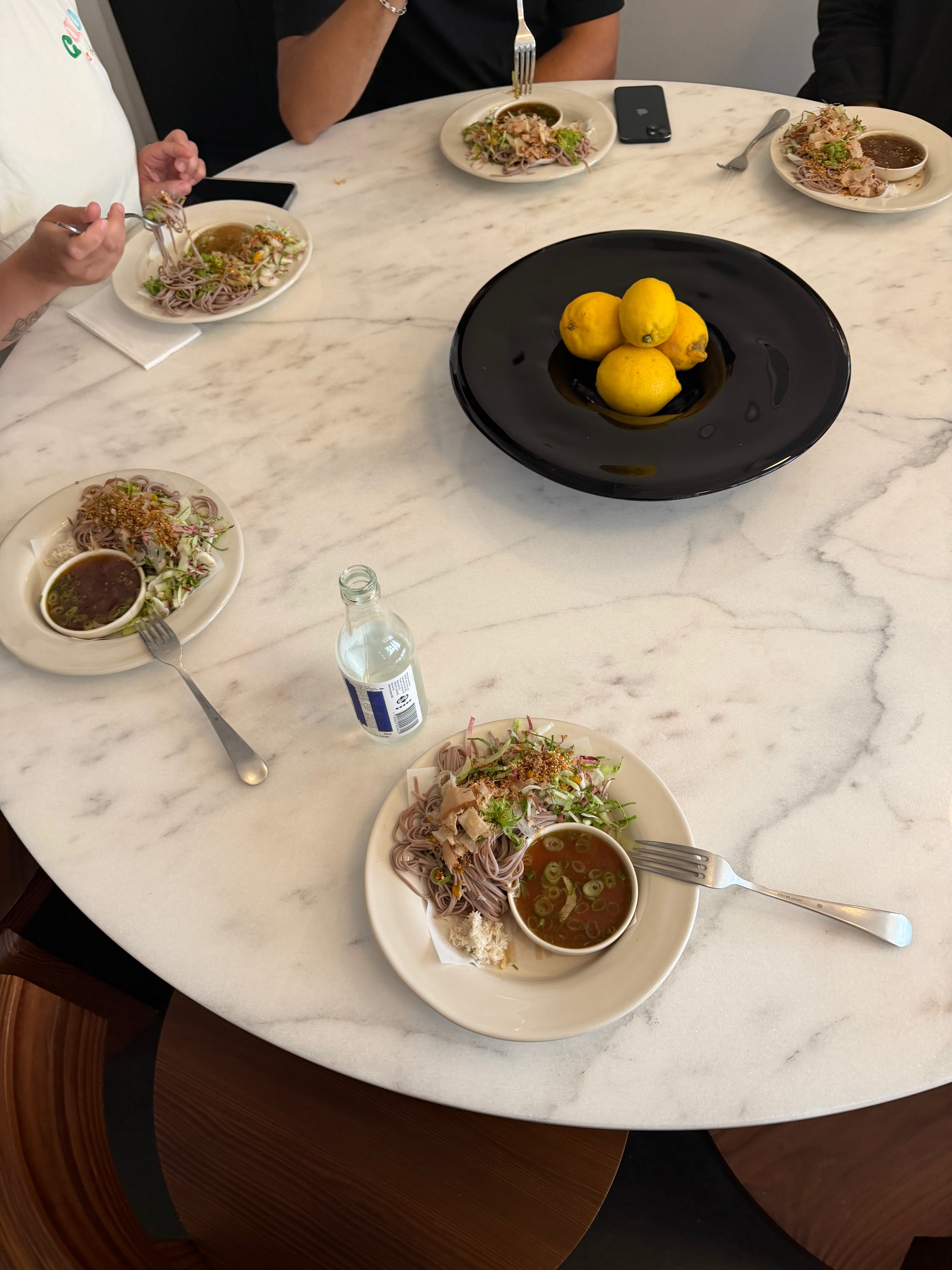
It reminded me of the early days of working at a startup, when the entire company could fit around a single table. There’s a closeness that comes with being that small, and that was reflected both in the meal and the team’s banter.
Fredericia’s Head of PR, Teresa Bødkergaard, was actually the first person I pitched this story to. After hosting me for a private tour of the brand’s 3daysofdesign exhibition, we’d planned to reconnect later in my trip for lunch. She suggested a few restaurants near the office. Instead, I asked if I could join the team for their regular canteen lunch.
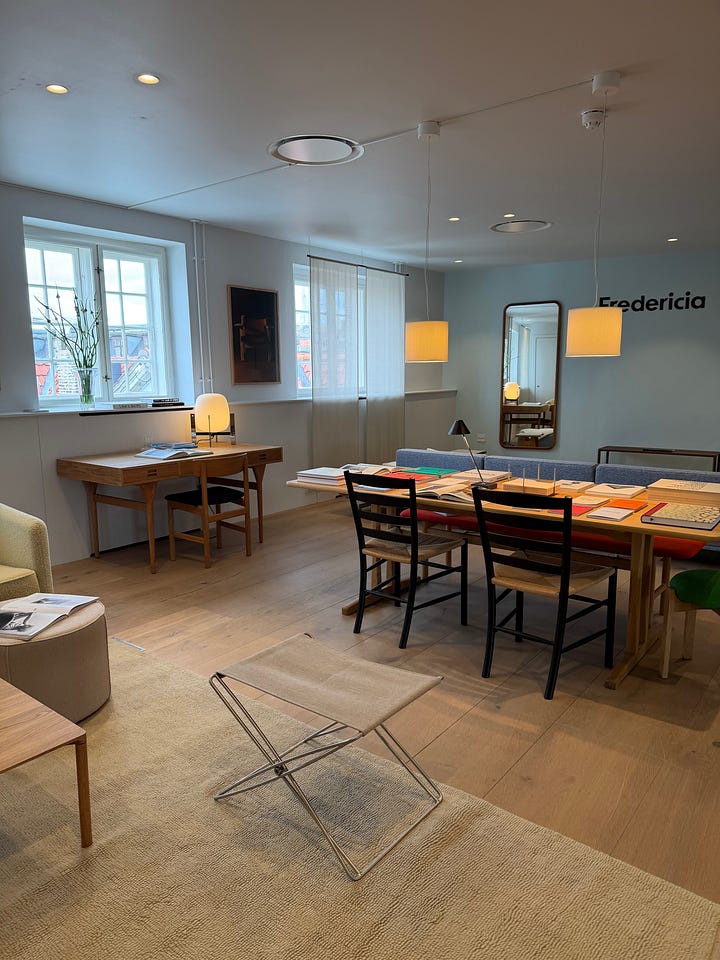
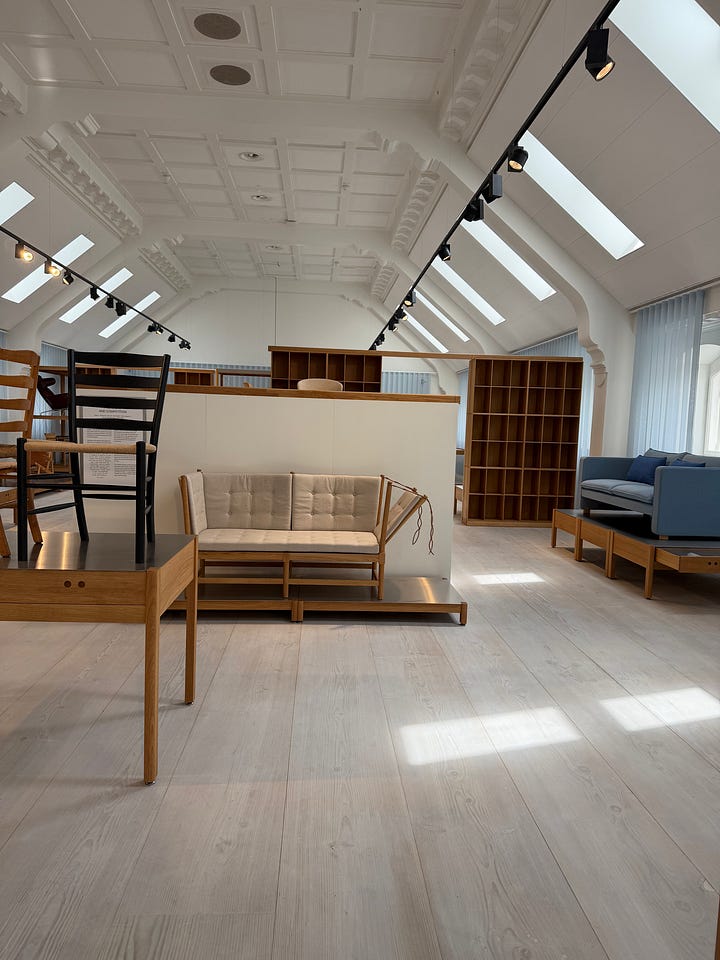
That was when she tipped me off to Meyers, Fredericia’s catering partner. Founded by culinary entrepreneur Claus Meyer–known internationally as the co-founder of Noma–the company runs restaurants, bakeries, and workplace canteens across the country (serving more than 30,000 meals daily!). Rather than treating lunch as cafeteria food, it’s designed so that each company’s canteen feels more like a mini restaurant.
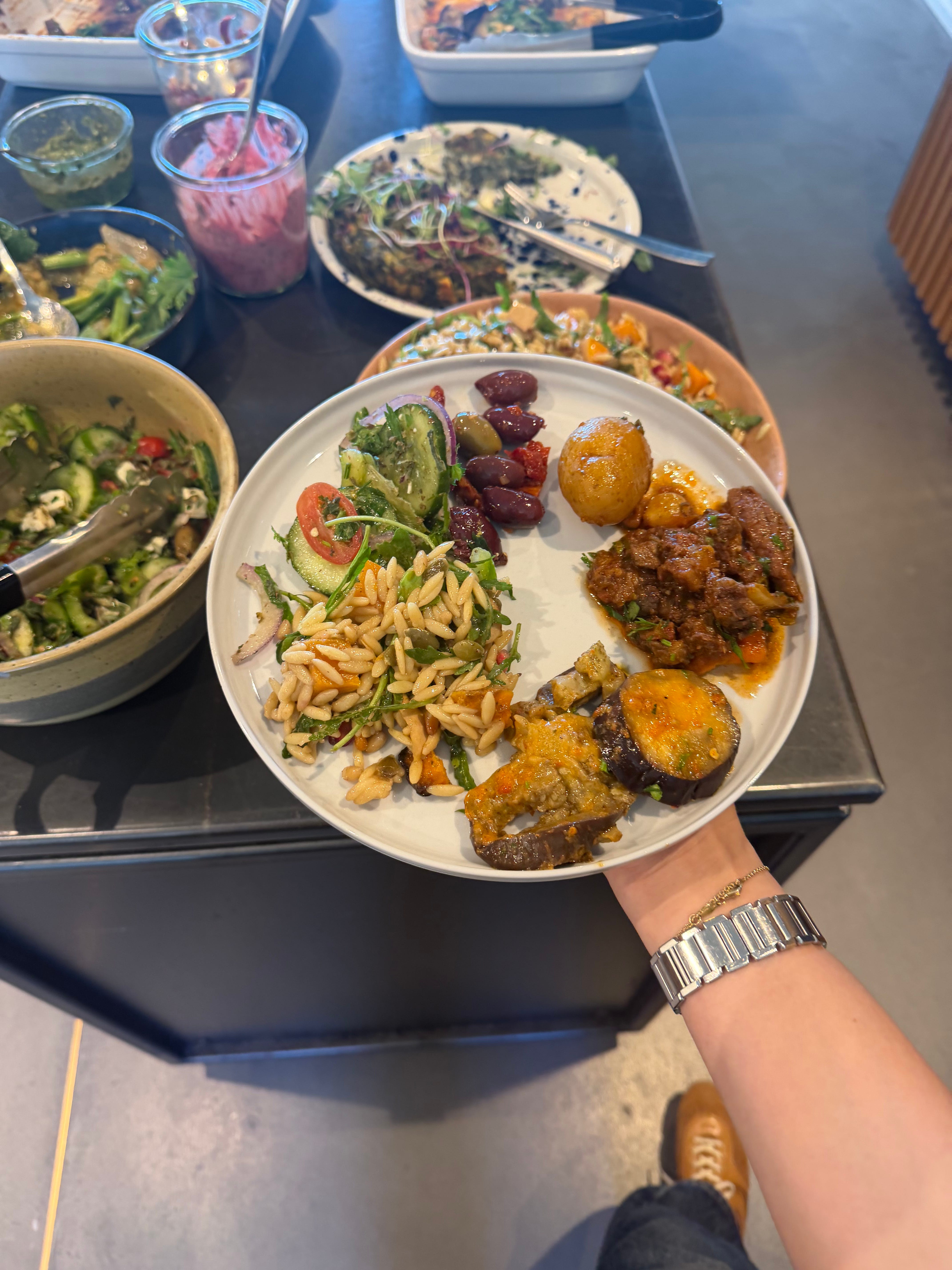
When I visited, lunch was Mediterranean: roasted vegetables, salads, fresh bread, grilled meats, served family style in the top-floor kitchen. It was a gorgeous day in Copenhagen, so most of the team sat around tables on the terrace.
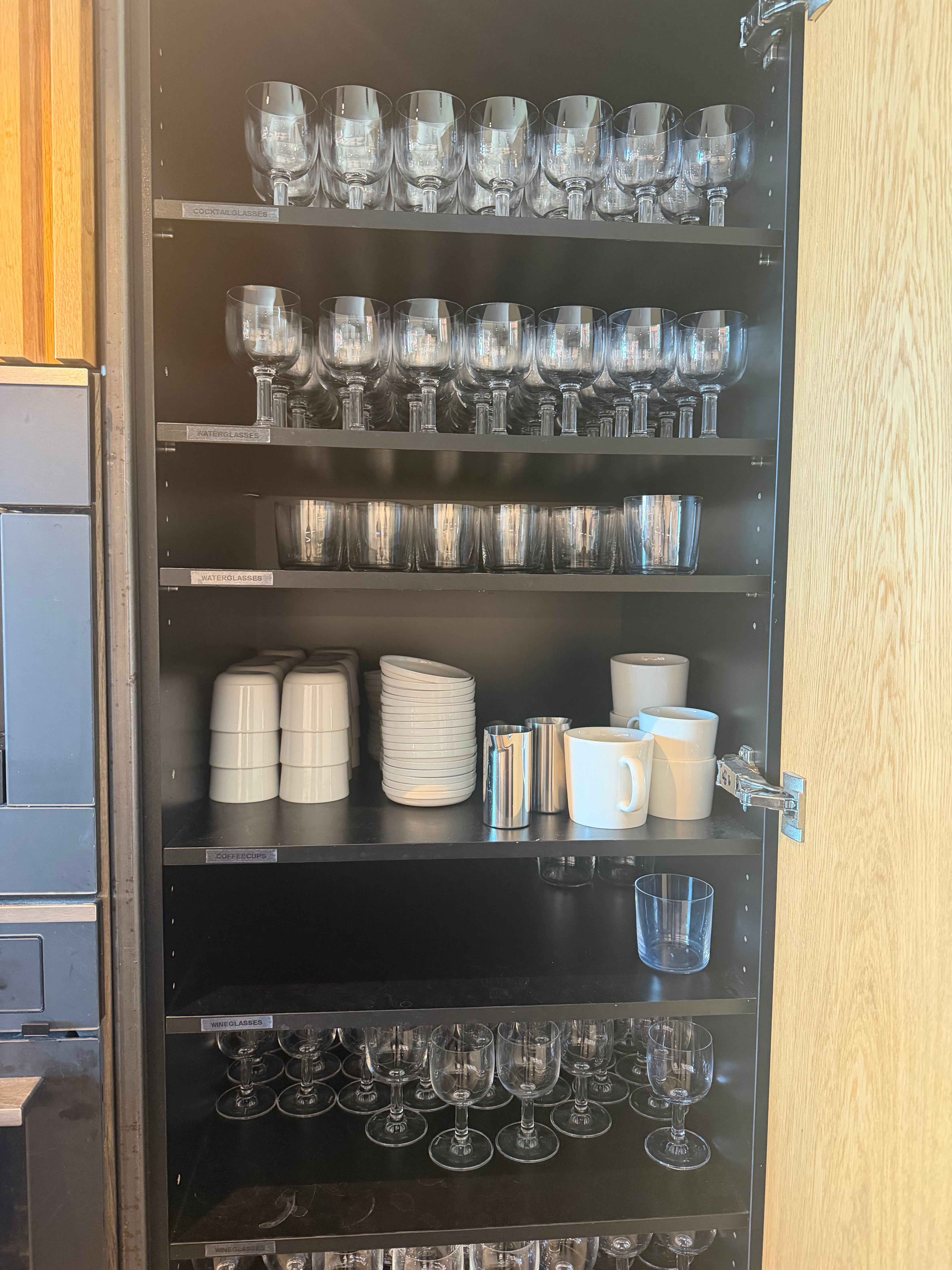
After lunch, I asked Teresa if I could peek inside the kitchen cabinets (this thing I do whenever I have the chance– a la Surroundings episode three). While FRAMA and Louise Roe use their own tableware, Fredericia doesn’t make dishes or cutlery. Instead, the shelves were filled with products by designers the company has collaborated with or admires: Alessi glassware by Jasper Morrison, Stelton serving trays by Arne Jacobsen. Teresa smiled and called them “friends of the house.”
It struck me that the attention to craft extended beyond Fredericia’s own products. Good design isn’t limited to what the company manufactured, but is also reflected in the objects they choose to surround themselves with.
Muuto was the largest company I visited by far; about 100 people work out of the brand’s Copenhagen headquarters. The design is very fitting for the brand: bright colors, open workstations, and multiple seating arrangements.
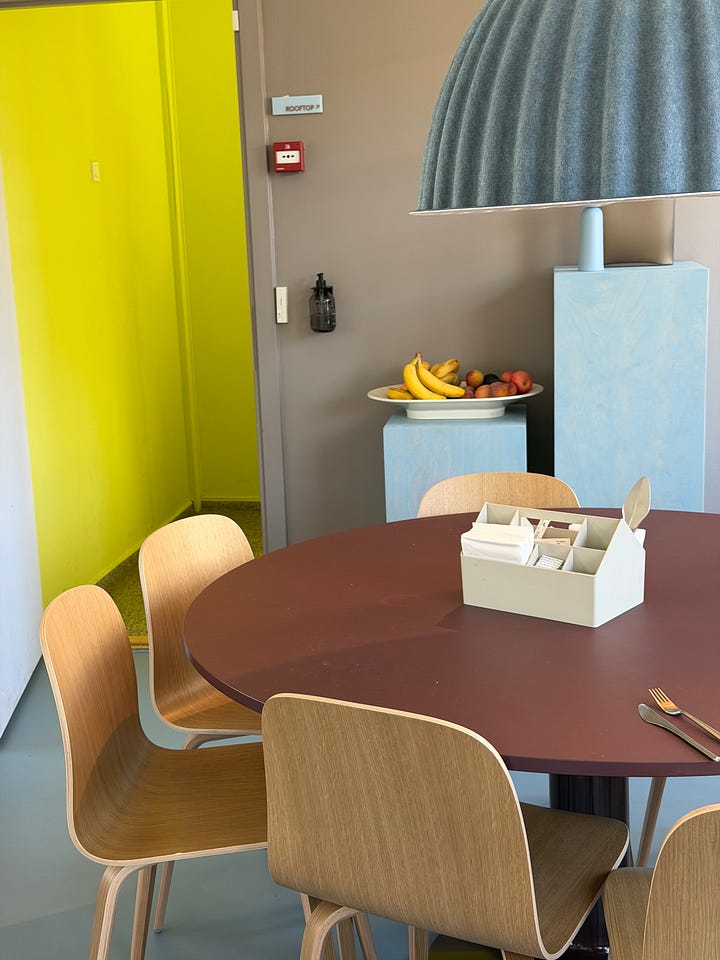
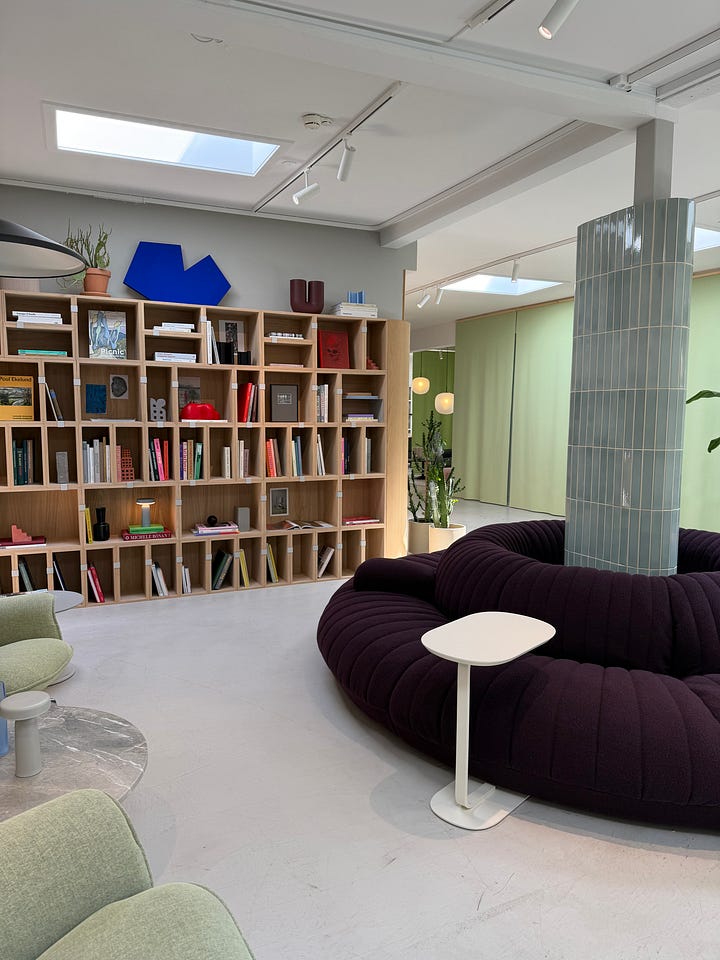
I joined Louise Nyboe Andersen, Muuto’s Global PR Manager, for the company’s daily lunch. Unlike some of the smaller brands, Muuto partners with Copenhagen catering company Gastronomiexpressen for its meals, and in-house chef Michael Drescher prepares, plates, and serves everything from the office lunchroom. Lunch is served on Muuto’s tableware, carafes, and even branded napkins–reinforcement that, here too, no detail would be overlooked.
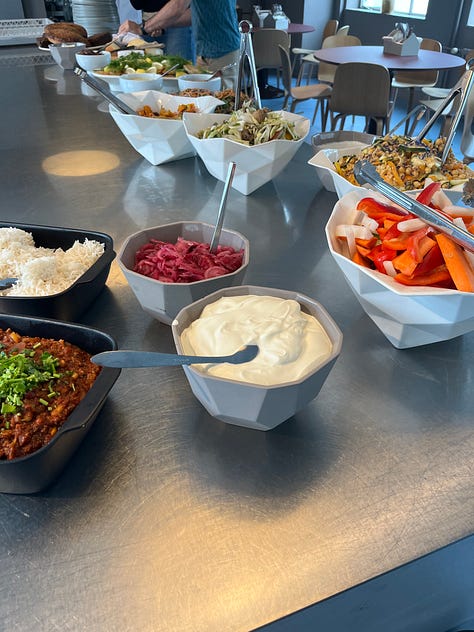
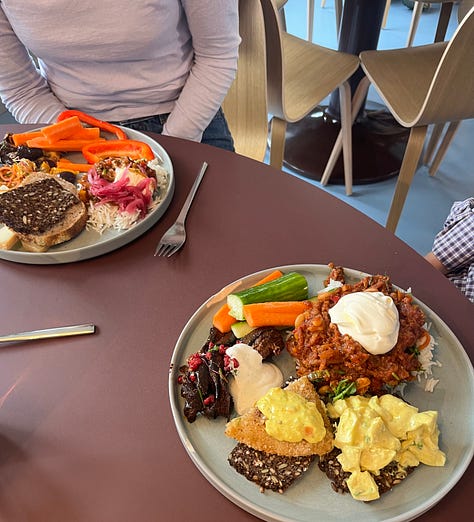
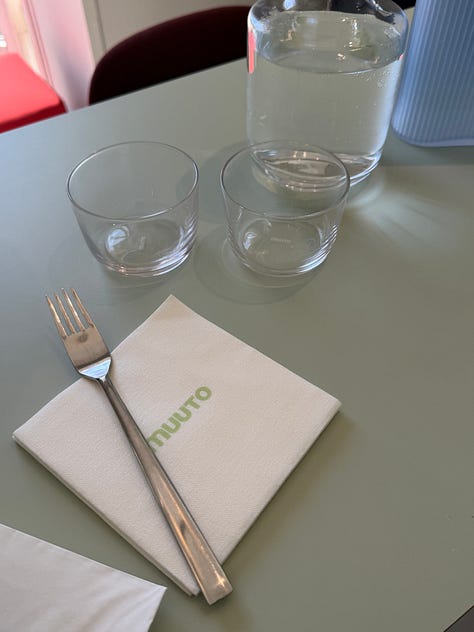
Visiting Muuto convinced me that what I’d been seeing wasn’t just the product of small creative studios. The logistics were different from Louise Roe or FRAMA, but the philosophy wasn’t. Nearly 100 employees still stopped what they were doing, gathered around tables, and made time for lunch together. Many even carried their plates up to the rooftop to enjoy one of Copenhagen’s warmest summer afternoons.
After a week of eating lunch with Danish design companies, I left convinced that the meal itself isn’t really the point; it’s making time for it. And Cake Thursdays? Those should be implemented everywhere, effective immediately.
My sincere thanks to everyone at Louise Roe, FRAMA, Fredericia, and Muuto for inviting me to the table.
P.S. I’ve also just launched paid subscriptions after two and a half years writing on Substack. Most essays will remain free, but paid subscribers will get additional reporting, behind-the-scenes dispatches, and early access to certain projects. More to come!
No posts
Comments
Nothing yet. Say the first thing.
Sign in to join the conversation.