
In our last post we busted some persistent myths about alpine strawberries and shared real-world productivity data from our trials. We also explained why these little berries deserve far more respect than they often get — especially from anyone who has dismissed them after one disappointing experience with under-ripe or poorly grown fruit.
If you’ve been following along, you already know my story with ‘Ruegen’ and the French restaurant, the devastating computer crash that swallowed years of trial data, and the Spanish farm that proves these berries can ship commercially. The big takeaway? Alpine strawberries (Fragaria vesca semperflorens types) aren’t just cute border plants or novelties. When grown right, they deliver concentrated wild flavor, long-season production, and serious culinary value.
Now it’s time to get specific. Starting with this post, we’ll profile individual cultivars in depth — their flavor signatures, growth habits, quirks, productivity, and best uses (fresh eating, desserts, drying, or gourmet applications). Along the way, I’ll share what we’re learning from our ongoing hydroponic, container, and seed-saving trials.
One of the newer cultivars we’re growing right now is ‘Waldsteinchen’ (sometimes called ‘Mini Red Alpine’). This compact, day-neutral variety is turning out to be a real standout for both outdoor and indoor growing.
Here are our early observations from plants that are now fruiting:
Fragaria vesca ‘Waldsteinchen’
Extremely compact and dense growth — plants stay around 8 inches (20 cm) tall, ideal for small spaces and containers.
The small plants produce surprisingly large berries.
Super early producer with a classic fraise des bois profile: deep red, conical berries that develop an intense sweet-aromatic flavor with wild strawberry notes. Some describe hints of vanilla or floral undertones when fully ripe and dark.
Runner-free in most conditions — it focuses energy on forming a tight clump and continuous flowering/fruiting from spring through frost. Year-round in indoors or in warmer growing zones.
Berries are small (typically 2.5–5 g) but deliver a serious flavor punch. They excel eaten fresh when fully ripe, as a luxury garnish, or turned into fruit leather.
Here’s a video to give a little bit different perspective on a ‘Waldsteinchen’ plant.
Because of its compact size and runner-free habit, ‘Waldsteinchen’ is an excellent candidate for indoor gourmet strawberry growing, including countertop hydroponic systems.
Alpine strawberries in general adapt surprisingly well to controlled indoor environments. Their smaller root systems and day-neutral nature allow them to keep producing flavorful berries long after outdoor seasons end — a game-changer for year-round gourmet eating.
‘Waldsteinchen’ is part of our careful seed-saving program. Here’s how we produce the vigorous seed we offer:
We start by sowing preconditioned seed that has been frozen for at least a month. This helps ensure quick, strong germination. We then select the first seeds to germinate for our seed-saving stock. These are sown in what we call “clumps” — either in 38-cell propagation trays or in Jiffy grow blocks.
Growblocks are 4” x 4” x 2.5” deep coir blocks. We remove the top fabric and surface-sow the seeds.
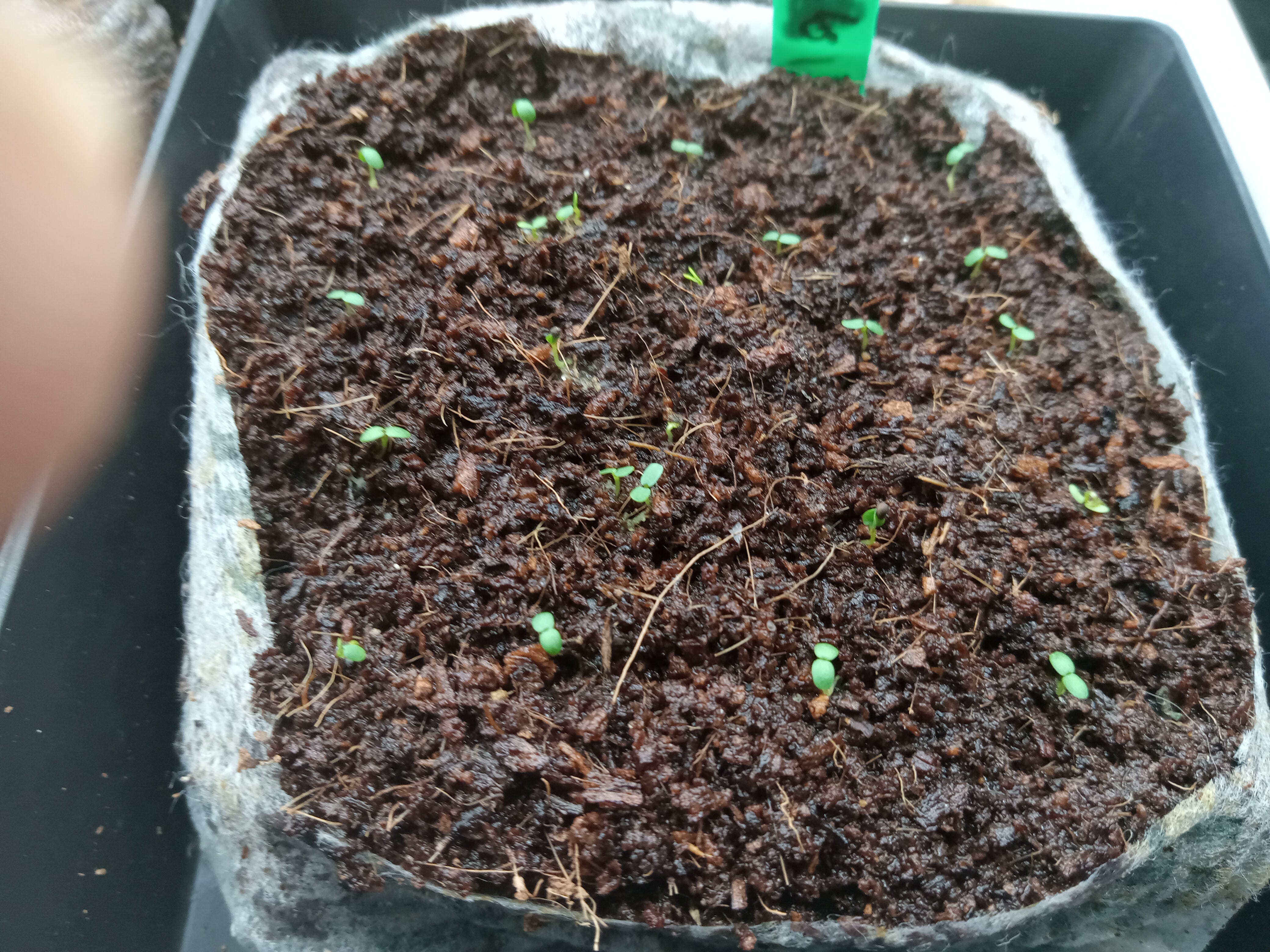
When the plants are ready, (a good indication is when many roots are growing outside the fabric) the entire block is transplanted onto the soil surface in a 1-gallon Roottrapper II fabric bag. We’ll share more about this system in upcoming articles.
In 38-cell propagation trays, we sow 5–6 seeds per 2-inch cell. The photo below (taken May 10th - 12 days after sowing) shows a strong ‘Pineapple Crush’ clump that germinated in just 7 days.
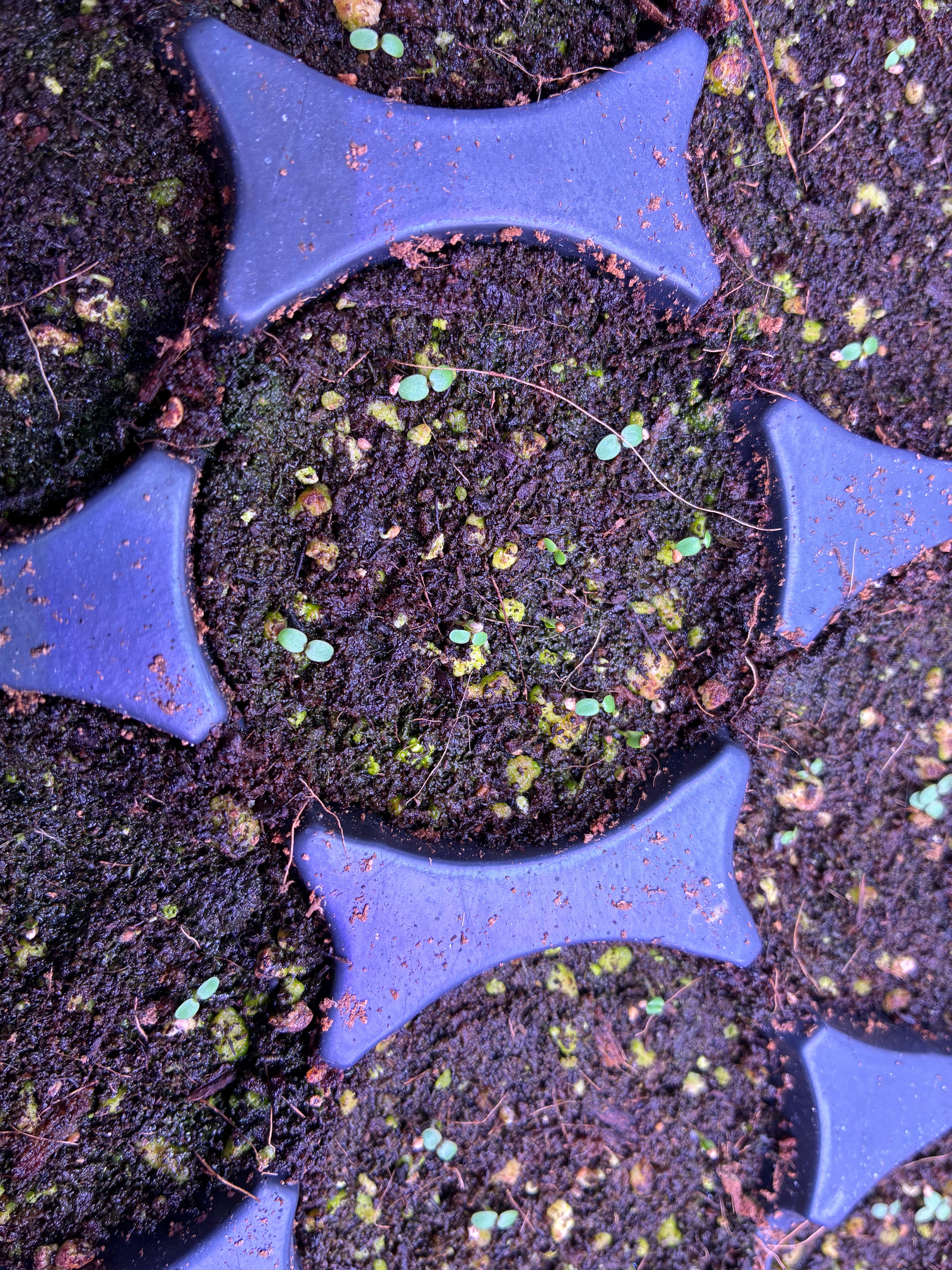
Sowing in clumps is a shortcut that delivers higher first-season production. A single plant grown from one seed can take a full season (or longer) to form a productive clump. A well-grown clump, started early enough, can produce in its first season close to what a second-year single plant would yield. We’re running ongoing trials to refine the optimal number of seeds per clump and quantify the differences.
Fruit is harvested when it is very ripe, usually mushy to insure that the seeds are mature. They are then dried in a food dehydrator on medium heat no higher than 95F. Dried fruit is placed in airtight containers with silicon packs and refrigerated. When there is sufficient dry fruit to further process it is dropped on a 1 ft x 1 ft piece of window screen. The corners are brought together and the screen is formed into a ball. The ball is rigorously rubbed against the internal fruit which thrashes the seeds from the pulp. It is then put through a Clipper Office Tester And Cleaner. Once thoroughly clean and dry it is frozen for at least a month and then a germination test is conducted.
If ‘Waldsteinchen’ or any of the other alpines we’ve discussed appeal to you, we have viable seed available from our shop. We focus on maintaining clean seed stock and only offer cultivars that have proven themselves in our trials and in real gardens.
Current seed offerings include:
‘Waldsteinchen’ (‘Little Red Alpine’)
‘Pineapple Crush’, ‘Déesse des Vallées’, ‘White Solemacher’, ‘Mini White Alpine’ and more
Musk strawberries and wild frais des bois
Click this link to visit our store.
We intentionally offer small quantities because we grow everythingm ourselves and prioritize quality over volume. Many customers report noticeably better germination and vigor compared to mass-produced seed.
If you’re tired of bland supermarket strawberries and want to experience true fraise des bois flavor at home — whether in a backyard bed, raised planter, container or indoor system — these plants can deliver.
Are you curious about what the Jiffy Growblock looks like now in May? Here it is on May 5th.
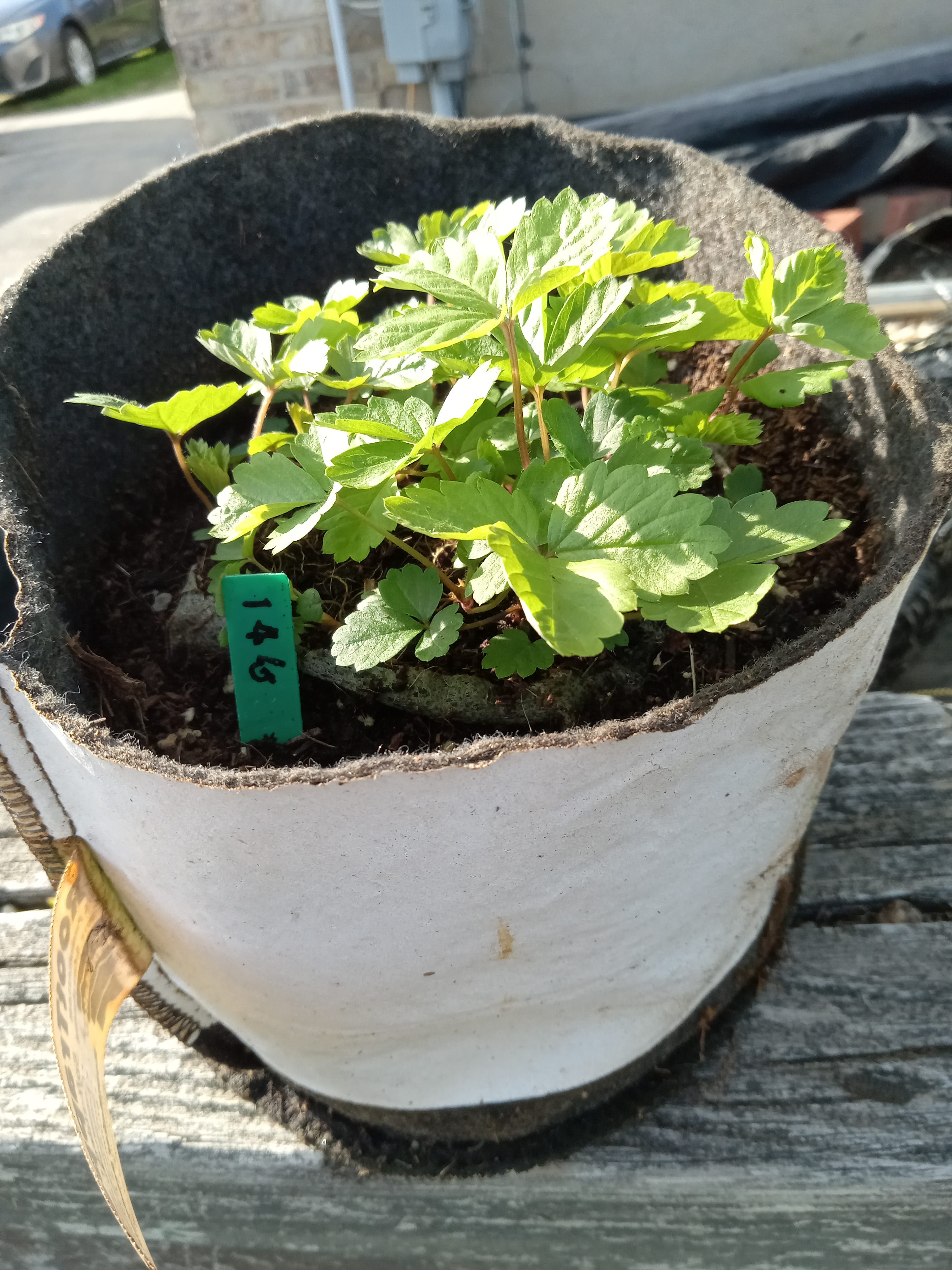
We have mentioned Roottrapper II containers without much explanation. We are working on a special edition post about growing gourmet strawberries in containers. We will explain the reason we grow strawberries in Roottrapper IIs. We hope to get that special edition out before the June newsletter.
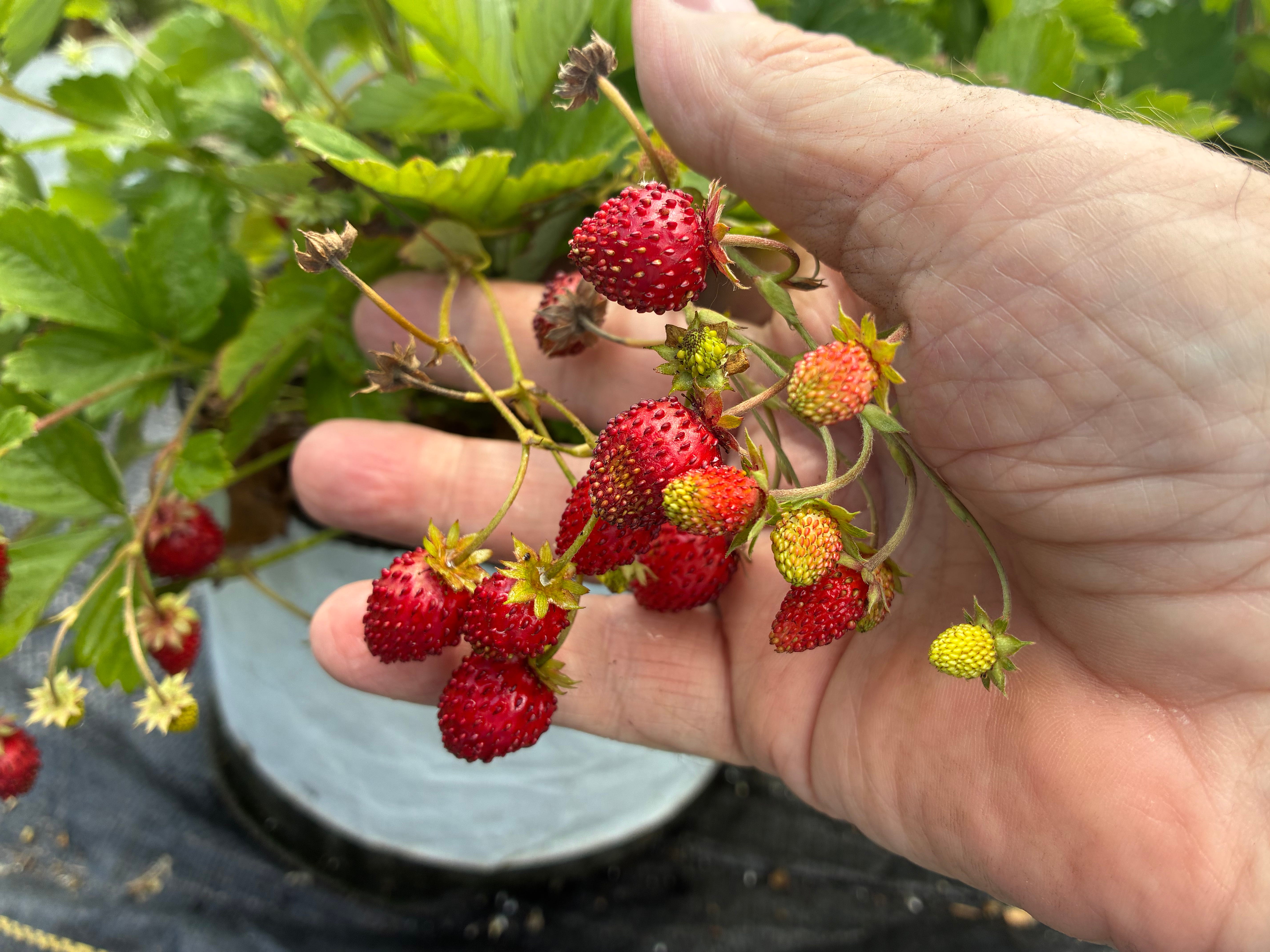
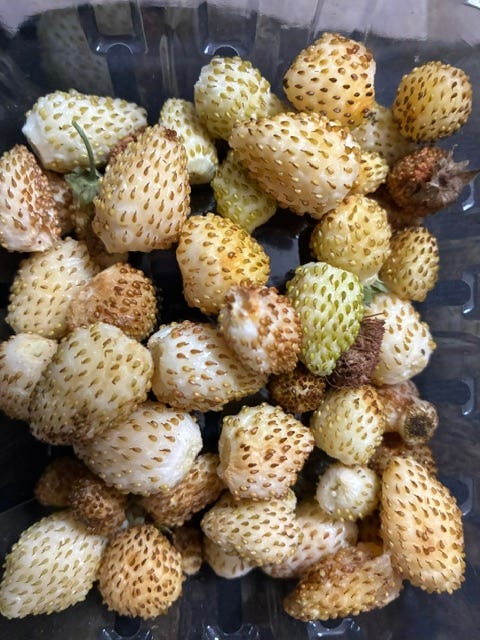
Seed saving kicked off in earnest on May 15th with our first ‘Pineapple Crush’ harvest of the season. Here are the berries that were harvested.
In the June post/newsletter, we’ll spotlight ‘Déesse des Vallées’ as the next cultivar profile and finally explain where the Roottrapper containers get their name.
Which cultivar are you most curious about next? Drop a comment below or reply to this email. In the coming posts we’ll profile more cultivars.
Thanks for reading — and happy growing! 🍓
No posts
Comments
Nothing yet. Say the first thing.
Sign in to join the conversation.