
If you open any social media app today, you might think fiber is the newly crowned king of health. According to research from Nichefire, people on TikTok and Reddit are calling it “fibermaxxing.” They are dumping massive scoops of seeds and powders into everything they eat.
And, with the massive rise of GLP-1 lifestyle conversations, consumer habits are shifting fast. People are searching for natural ways to feel full. This has led to a major debate online. Some influencers are even asking if fiber is now more important than protein.
Growing up I don’t recall ever discussing macronutrients, fiber, or protein. I do remember my Abuela pushing steak down my throat, convinced I was low on iron. Not really sure about that, but we did not have the easy tests or apps to monitor our health back then.
Today, we are empowered with a wealth of information. That’s mostly a positive, but sometimes, it is simply too much information that is misinterpreted. That is why I set out to give you a brief, practical overview of what is trending. Let’s look at what the science actually says, in terms we can all easily understand.
Here is the quick answer to the big debate: fiber is not more important than protein. In fact, they are best friends.
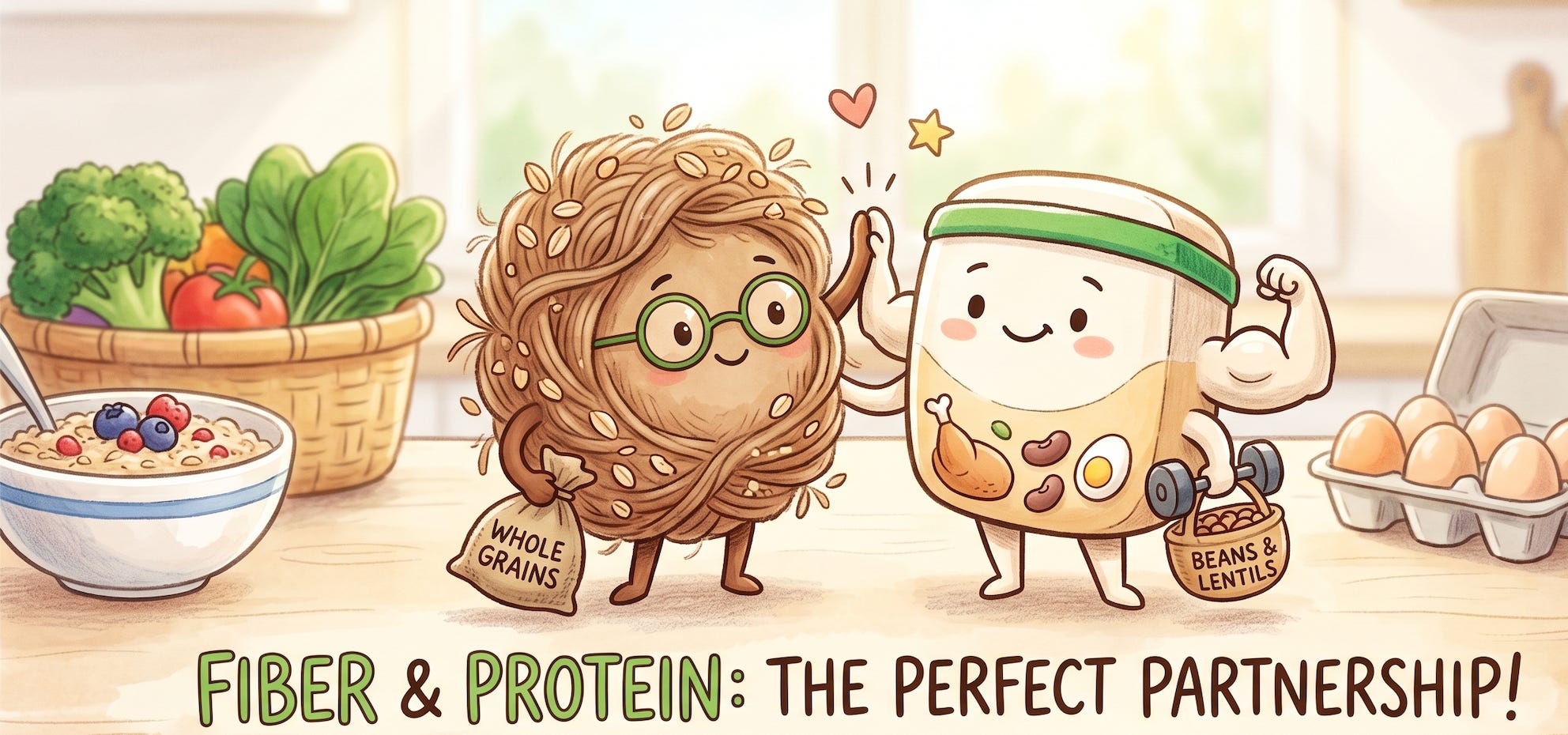
To feel your best and manage your weight, you need both. It is a beautiful partnership I recently saw called “nutrient synergy”.
Protein handles the first phase of fullness: It triggers the hormones that tells your body “I am satisfied” (satiety) in your small intestine and keeps your muscles strong.
Fiber takes over for the second phase: It slows down digestion and keeps you full hours later.
When you eat them together, you get stable energy without the blood sugar crashes.
Fiber is having a major moment because of the massive conversation around GLP-1 medications and weight loss. Everyone is searching for the ultimate secret to feeling full. Fiber from real food is one of the body’s natural triggers to tell your brain you are satisfied. In order to reap these full health benefits, clinical research recommends consuming about 30 grams (can depend on gender & age) of fiber per day. There are two types of fiber that are being discussed:
Soluble fiber acts like a tiny sponge in your gut. It binds to cholesterol and gently carries it out of your body. The process helps lower your LDL (the bad cholesterol).
Insoluble fiber acts like a natural sweeping brush in your gut. It adds healthy bulk and physically keeps things moving through your tract. A process that may prevent uncomfortable constipation.
Another benefit of fiber, it feeds the good bacteria in your microbiome. These bacteria produce healthy compounds that naturally signal your brain to quiet down those late-night food cravings. It mimics the exact fullness cues people are looking for today.
This partnership is especially critical for anyone taking GLP-1 medications. Those medications intentionally slow down your digestive tract, which could lead to uncomfortable constipation. Pacing your fiber and staying hydrated is one of the best, most natural way to keep your system running smoothly.
On social media, people love extremes. But going from a low-fiber diet to fifty grams overnight can be a recipe for disaster. It can cause painful bloating, gas, and severe stomach cramps.
If you do not drink enough water, a sudden spike in fiber can actually stop your digestion completely. Too much fiber can also act as an anti-nutrient, flushing out healthy minerals before your body can absorb them.
My go-to approach is simple: start slow and drink up. Increase your fiber by just five grams a week. At the same time, make sure you are drinking plenty of water throughout the day.
Walk down any grocery aisle and you will see countless fiber supplements, gummies, and processed bars. High-quality supplements certainly have their place, especially if your busy schedule makes it hard to hit your daily goals. However, it is important to check the labels carefully. Some options on the shelf use isolated fibers (powdery fibers extracted in a factory, stripped away from the original plant, and added to processed foods) that can cause uncomfortable bloating and gas.
Real, whole foods are always your best option. They deliver fiber alongside vital vitamins and antioxidants that some supplements cannot replicate.
Here are a few fantastic, fiber-rich whole foods you can add to your daily routine:
Kiwi: These are digestive powerhouses. Eating two kiwis a day is a gentle, natural way to support gut regularity.
Chia Seeds: These are packed with soluble fiber. Here is a quick kitchen secret: grinding your chia seeds breaks their tough outer shell. This helps your body absorb their healthy omega-3 fats, while still giving you all the fiber benefits.
Lentils and Beans: A single cup of cooked lentils delivers a massive fifteen grams of fiber, along with a healthy dose of plant-based protein. And, if you’re worried about the gas - the more you eat, your body will get used to them. Start small doses more often and start with lentils as they are easier to digest.
Avocados and Raspberries: These are delicious, low-sugar ways to boost your daily fiber total.
Ah, my continued trend — balance mi amigos!! Healthy eating does not require strict rules, expensive supplements , or viral internet trends. It is about simple, balanced choices that fit your real life.
To help you put this into practice, try combining your proteins and fibers at dinner tonight. If you need some inspiration, here is a quick, balanced meal idea from my kitchen:
Betty’s One-Pan Roasted Veggie & Chickpea Skillet
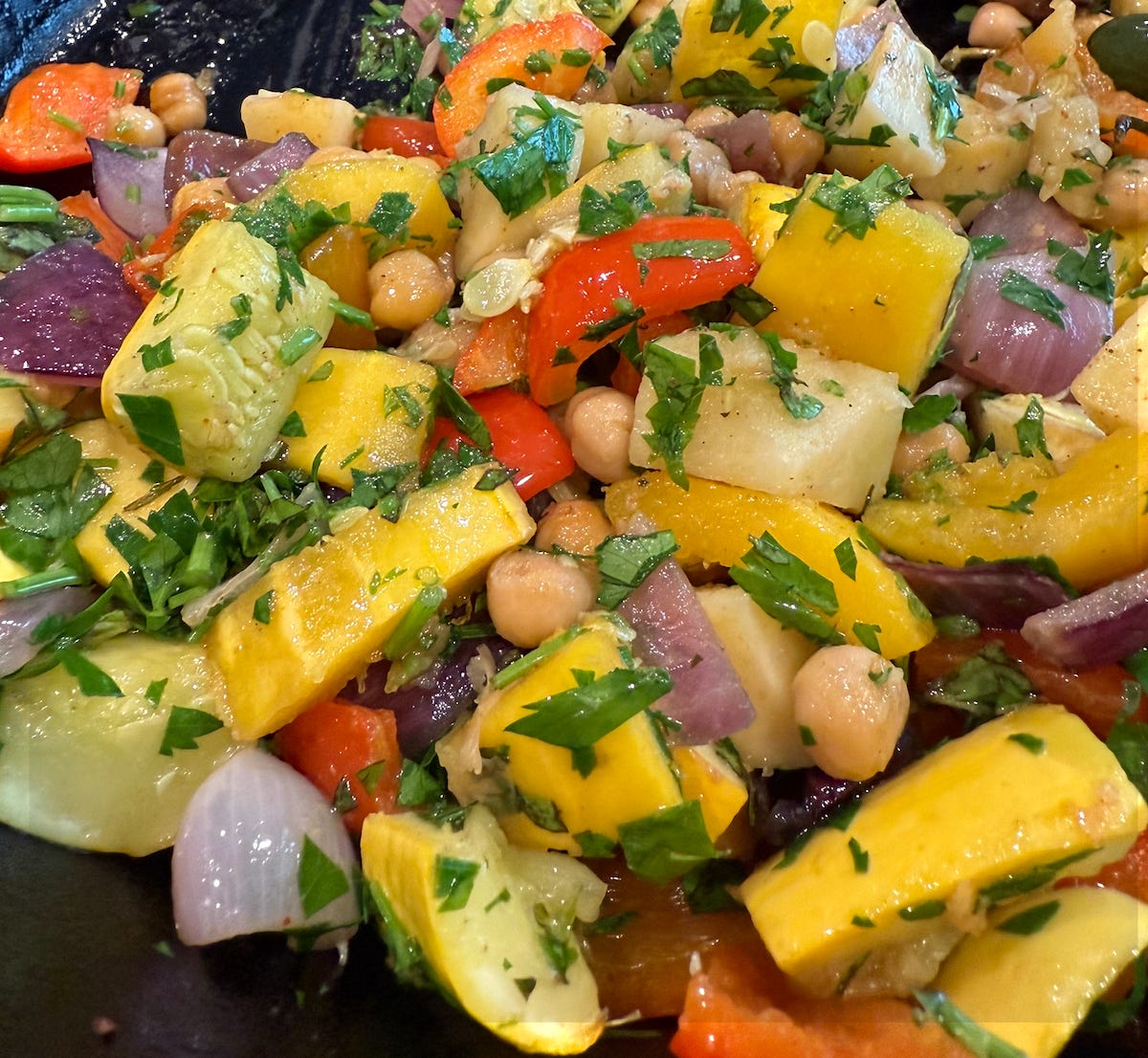
This quick, customizable dish is a powerhouse of plant-based protein and fiber.
Suggested Base: 1 cup of canned, rinsed chickpeas tossed with 1 cup of chopped broccoli and 1/2 cup of sliced bell peppers, seasoned and roasted in a skillet with 1 teaspoon of olive or avocado oil.
The Fresh Finish: Half of a sliced avocado and a handful of fresh leafy greens.
Estimated Macros per Serving:
Calories: ~475
Protein: ~19 grams (excellent plant-based protein!)
Carbohydrates: ~60 grams
Healthy Fats: ~20 grams (mainly heart-healthy monounsaturated fats from the avocado and the natural oils in chickpeas)
Fiber Breakdown (A massive ~21 grams total!):
Soluble Fiber (~6g): Primarily from the chickpeas and avocado. This type of fiber forms a gel-like substance in your digestive tract, which acts like a sponge to help lower LDL (”bad”) cholesterol and slows down glucose absorption to prevent blood sugar spikes.
Insoluble Fiber (~15g): From the chickpeas, broccoli, and peppers. This fiber acts as a natural sweeping brush to help keep things moving smoothly through your digestive system.
This “30-minute” meal is nutritious, delicious, comforting, and will keep you full all evening.
Let us keep things simple and delicious. Have you noticed the fiber trend on your social feed lately? Email me or comment and let me know your favorite way to get more real food on your table.
Saludos y buen provecho,
Betty
Thanks for reading GourmetBetty! This post is public so feel free to share it.
No posts
Comments
Nothing yet. Say the first thing.
Sign in to join the conversation.