
None of this is financial advice. Do your own research. By reading this newsletter, you acknowledge and accept the terms and conditions outlined in our disclaimer.
GM Investors
The Digital Asset Market Clarity Act sits at the edge of the Senate calendar with the August recess days away. Majority Leader John Thune has told colleagues the chamber will stay until the work is finished. Senator Cynthia Lummis is working nights and weekends, insisting the bill cannot die without a recorded vote after eleven months of negotiation and more than three hundred pages added at Democratic request. White House staff are now engaged on the ethics text. Institutional capital, senators from both parties, and the administration itself are pushing for a floor test before lawmakers scatter.
This is the central story in current crypto market analysis. Without Clarity the industry remains caught between the SEC and CFTC, capital continues to look offshore, and the United States risks falling further behind jurisdictions that have already written comprehensive rules. Here’s what our desk is watching.
The Guns Aren’t Quiet Yet. But $690K Says They Will Be.
US-Iran. Military pause. Rain Trade has the verdict before the headlines do.
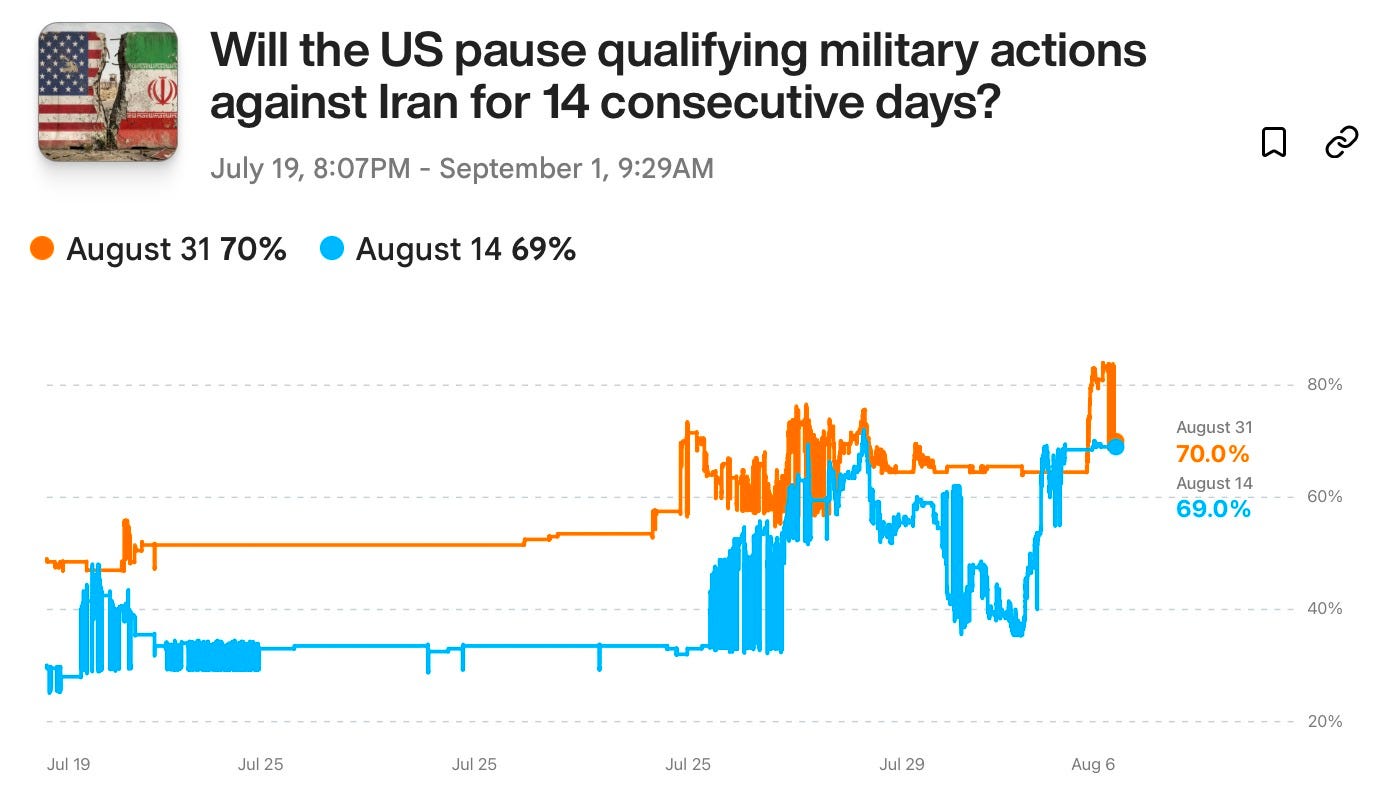
This isn’t crypto. This isn’t stocks. This is two governments deciding whether to keep shooting.
And $690K Volume says they’re done.
August 14 at 69% is the “next week” trade.
August 31 at 70% is the “this month” trade.
Both say the same thing: de-escalation is the base case.But 30% “No” is your hedge. Your tail risk. Your “what if someone miscalculates” insurance.
Trade on Rain Trade
The United States Senate is currently grinding through the weekend. Lawmakers are in a frantic attempt to pass the bipartisan CLARITY Act. If the bill fails to pass before recess, federal market structure rules will likely be stalled until mid-2027. Senators Cynthia Lummis and John Kennedy are publicly demanding an immediate floor vote. They want to prevent America from falling behind in the global digital asset arena. The urgency is palpable, especially as Russia recently signed its own comprehensive crypto law.
Senator John Thune explicitly stated the chamber will simply stay in session. They plan to remain in Washington until this massive legislative package is finished. Behind the scenes, the administration is heavily engaging with bipartisan negotiators. Senator Thom Tillis noted the White House is actively reviewing the text lines right now.
Treasury Secretary Scott Bessent and SEC Commissioner Paul Atkins are both supporting the effort. They have publicly offered direct technical assistance to Congress to advance the bill. Institutional support for this framework is quickly reaching a boiling point. The Blockchain Association recently marched on Capitol Hill to deliver formal constituent letters.
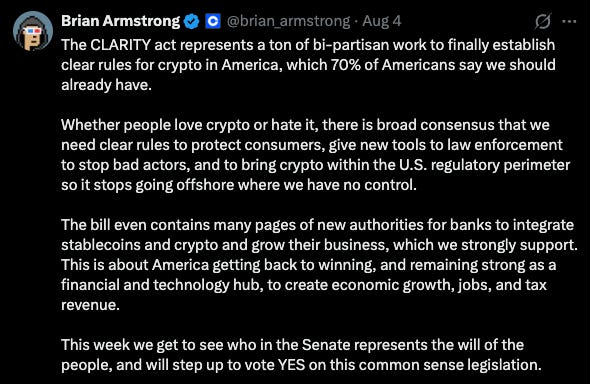
These letters represented over 3,000 individuals and 115 companies demanding swift legislative action. Coinbase CEO Brian Armstrong has also publicly rallied his massive user base. Armstrong noted that 70% of Americans currently want clear rules for the industry. He emphasized that the bill restricts insider trading and integrates stablecoins into banking.
The framework aims to give digital commodities a clear regulatory pathway. It places centralized actors under strict Commodity Futures Trading Commission oversight. It also closes the massive regulatory gaps that allowed disasters like FTX to occur. However, deep political fractures are currently threatening to derail the entire process.
The CLARITY Act, despite having a lot of institutional support, has an uphill fight in Washington. The bill must secure key votes before an impending congressional recess. Core Senate text now stalled by ethics fights over presidential crypto ventures. Senators Ruben Gallego and Thom Tillis floated a compromise that would bypass the gridlock through the White House.
Democrats continue to push for aggressive state attorney general enforcement powers. They also want lawmakers to permanently eliminate the sunset clause in the bill. Democratic leaders urged Republicans to postpone a premature vote before the recess. GOP leaders have ignored that request and say a vote is in the works.
Our desk is closely monitoring the key data points on Capitol Hill:
Cloture Threshold: The bill needs 60 votes to break a filibuster, but TD Cowen cautions it's 10 votes shy.
GOP Defections: Republicans hold 53 seats. But Sen. Josh Hawley (Missouri) is voting NO under pressure from Missouri community banks.
Limited Bipartisan Support: Only 2 Democrats in the Senate broke ranks during the committee markup on May 14.
Polymarket, Lowered Odds of 2026 Enactment to 13% from 50% in July.
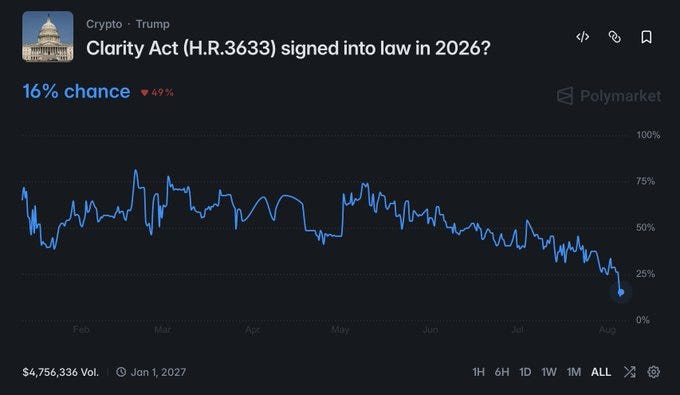
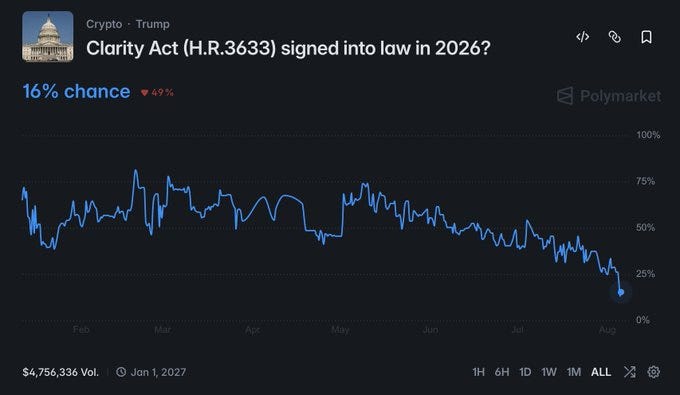
The official Senate recess is August 10 to September 11. That schedule makes Friday, Aug. 7, the last realistic working day for action. Our desk expects that if lawmakers miss this short window, the next legislative shot will come in mid-2027.
The outcome of this legislation is important for the future of crypto market analysis. Federal rules allow legitimate banking integration, protect retail consumers, and free up billions in institutional capital. But without conclusive legislation, volume and liquidity will inevitably migrate offshore.
As politicians bicker over external regulatory borders, the market is turning its attention to internal protocol rules. Crypto is not only struggling for its survival in Congress, it is fighting a parallel battle over its own monetary design.
While Capitol Hill wrestles with market structure, Ethereum is fighting a bloody civil war over its native token economics. Ethereum is fighting an intense internal civil war over its native token economics. Core developers have ignited severe turmoil across altcoins with EIP-8363, a radical “Tapered Issuance Burn” proposal. The upgrade targets validator rewards as staking increases, completely removing the foundational 1.5% yield floor. Over an 18-month phase-in, validator yields would drop from roughly 2.6% down to 1.2%.
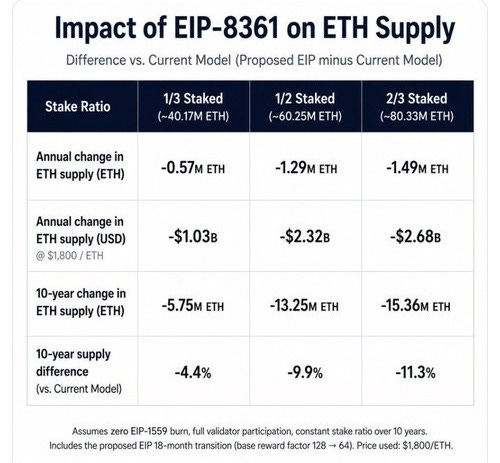
Proponents like Jérôme de Tychey argue endless issuance dilutes native ETH holders and centralizes validators. He estimates capping staking issuance could save close to $1 billion annually. However, the backlash across decentralized finance has been blistering. Leaders from Aave, Ether.fi, and Lido warn the yield cut will destroy ETH borrowing strategies and force massive unstaking.
The market priced in this systemic risk immediately. Following the proposal, Lido plummeted 15.89%, Ether.fi dropped 11.47%, and Aave slid 5.67% as traders frantically de-risked. Yet, while Ethereum and DeFi grapple with internal governance drama, our desk is focused on a massive macro trading rotation. Traditional hard assets are breaking out in a sequence that historically triggers explosive Bitcoin rallies.
Chinese investors are leading this flight to safety, driving 14 consecutive days of gold ETF inflows. Gold decisively broke its multi-month wedge pattern and reclaimed its 50-day SMA at $4,169. Peter Brandt projects a run toward $4,830, while copper simultaneously printed a brand-new all-time high.
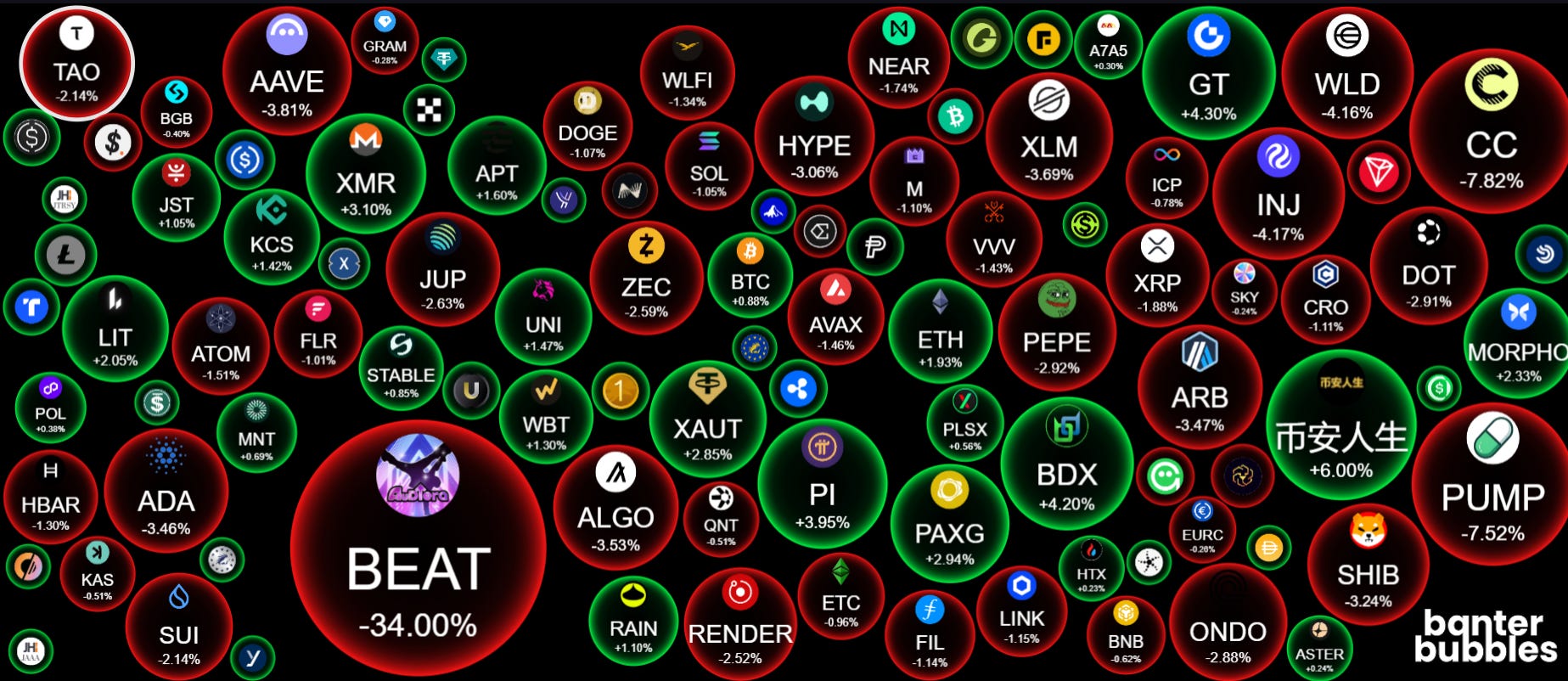
The crypto market is facing notable downside pressure today, heavily dragged down by a staggering 34.00% plunge in BEAT alongside widespread red across major altcoins. While selective pockets like PI and XAUT print steady green, the prevailing risk-off mood highlights strong corrective momentum.

The market is completely mispricing the timeline of this generational trade. The Senate’s partisan gridlock over the CLARITY Act is generating immense short-term anxiety. However, the institutional groundwork it has laid is entirely irreversible at this stage. Wall Street is already building the deep infrastructure required to onboard digital assets.
Whether the bill falls short this week or gets delayed to 2027 is secondary. Ethereum’s internal yield debate is merely a localized distraction compared to global liquidity shifts. Gold and copper are screaming that hard assets are the ultimate inflation escape valve. Bitcoin’s current sideways consolidation is a textbook setup mirroring every major previous cycle breakout.
We are aggressively accumulating this sideways chop while retail investors are distracted. The institutional capital driving 14 straight days of gold ETF inflows will seek absolute scarcity. The Senate can certainly stall the rules, but they cannot stop the cycle.
In an environment where political noise is high but actual liquidity and conviction remain low, having the right execution tools matters more than ever. That’s why we’ve partnered with Rain Trade, a platform built for traders who need speed, precision, and clean betting odds in volatile conditions like these.

None of this is financial advice.
Do your own research.
As a valued subscriber to Good Morning Crypto, you are part of the wider Crypto Banter ecosystem - and that means you get first access to something we’ve been building behind the scenes. We’re thrilled to announce the launch of The Insider, Crypto Banter’s brand new publication designed to give our community a deeper, closer look at everything happening across our network. As an existing Good Morning Crypto reader, you’ve been added to The Insider as part of our founding subscriber rollout. You’ll continue to receive Good Morning Crypto as normal - The Insider is an exciting addition to your inbox, not a replacement.
Comments
Nothing yet. Say the first thing.
Sign in to join the conversation.