
I am obsessed with plants, not in the way in which I simply like to pop into the garden centre at the weekend. No (that would be far too simple). Instead, more in the way in which plants fascinate me - their characteristics, how they adapt to their environment, how you can simply forever be learning more about them.
Notebooks brimming with scribbles of Latin and common names alike, my notes app is full, and I daren’t shut my tabs on my phone's internet browser. Books stack up, magazines are annotated, and I have a screenshot folder that looks like a blooming garden. My mind is at honestly running at max capacity, so I figured it is probably worth having a space to note down the plants that are currently occupying my mind.
Not so much a tried and tested bunch, more of a conscious stream of plants which have made me stop in my tracks to attempt to remember them. Who knows, maybe it’ll provide inspiration, or at least give me back some brain space.
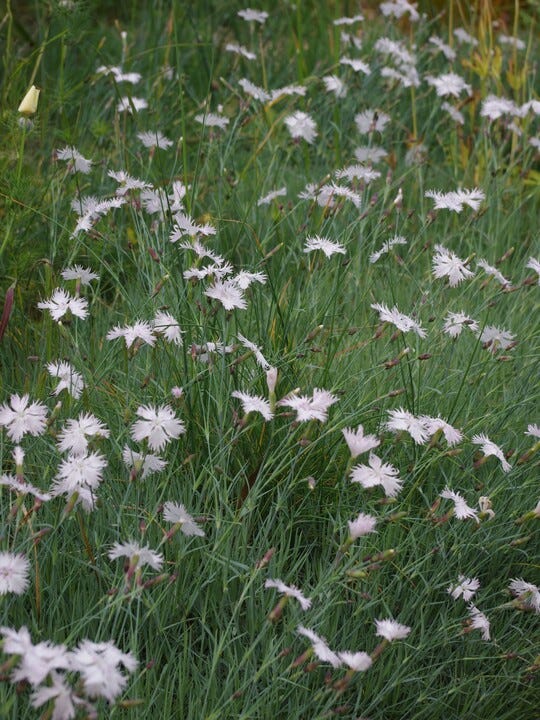
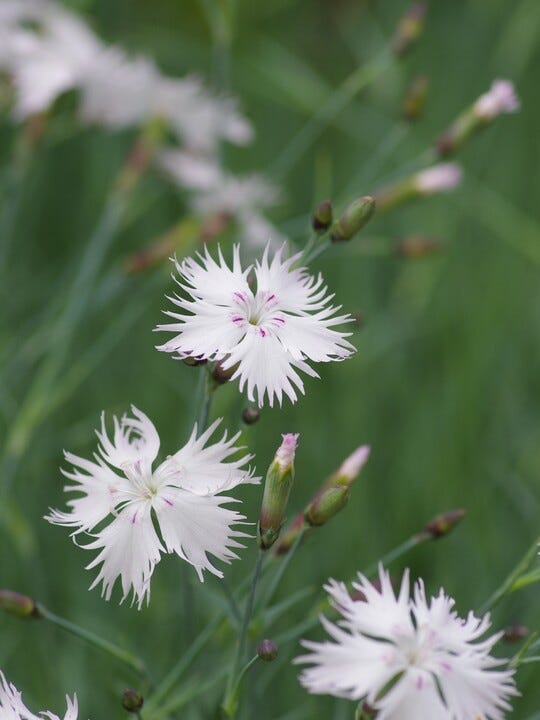
I’ve gone through quite the journey with Dianthus1. In March 2024, I planted two, on the recommendation of a family member. Not in flower, I trusted the process, and to my horror, one was a shade of pink that makes my skin crawl. I’m not afraid of colour in a garden, but this one hurts my soul. Yet, it exists still - I’m not ruthless in a garden unless I have to be. Until I find the right replacement, I push through, as the foliage is honestly fantastic and it thrives in my extremely dry garden.
Finally, I’ve found some contenders - at the top of that list is Dianthus - frilly white. Not an exact cultivar name, as listed on Beth Chatto’s website, this specific plant has long lost its true name, but it is a beauty.
Dianthus with their slender silver foliage are made for the increasingly warmer, drier summers and plants that don’t need a helping hand are always welcomed with enthusiasm here. What I particularly enjoy about this specific plant is its sort of informality, which goes against the tight clumping nature of what I have currently - the looseness of the way the foliage sits and spreads across the front of the border.
The thing about horticulture is the more you learn, the more your taste develops, and you drop the loose preexisting notions you picked up from family or society2 as you gain more experience. The alpine section of the garden centre never used to interest me, feeling a little stuffy and unexciting compared to overspilling perennials; I would swiftly walk by their tiny pots in favour of bigger and better.
Alpine plants have gone through periods of being wildly in fashion, and wildly out of fashion. But, shaking off the classic arrangement of seeing these neatly placed in rock gardens, alpine plants have a lot to offer us in terms of climate resilience. Their native habitat is harsh: exposure from every angle, wind, rain, snow, burning hot sunny summers. So an average garden in the south of England? A walk in the park for them, so to speak.
The benefit lies in knowing where to incorporate Alpine plants: in gravel paths, the edge of dry borders and my favourite, any destitute gap that no other type of plant really wants to deal with.
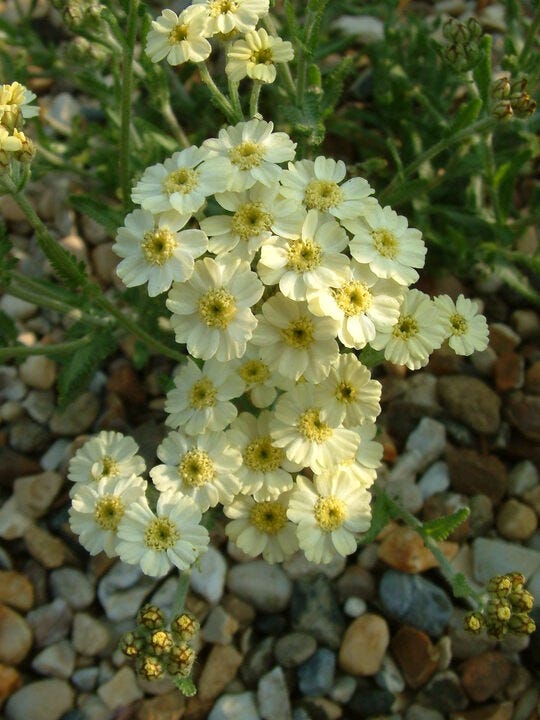
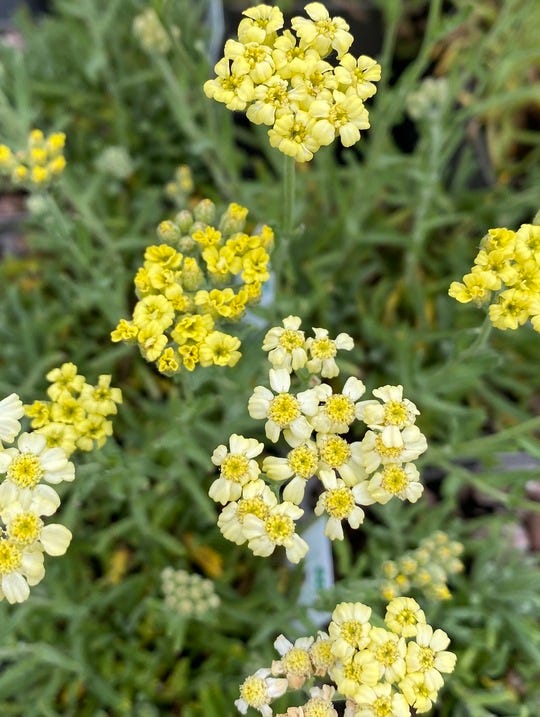
Not all alpine plants are made equal, at least in my eyes anyway. So, it made sense to turn to Beth Chatto for inspiration on finding small specimens to interplant in dry areas - ones that pique interest, but mostly there to complement the larger statement plants already planted. This Achillea x lewisii ‘King Edward’ has the sweetest light lemon shade to it, which I find helpful to highlight areas of green foliage and bring a bit of interest in lower light. Having made use of other species of Achillea throughout the garden, the flower characteristics fit in beautifully too.
— Achillea x lewisii ‘King Edward’


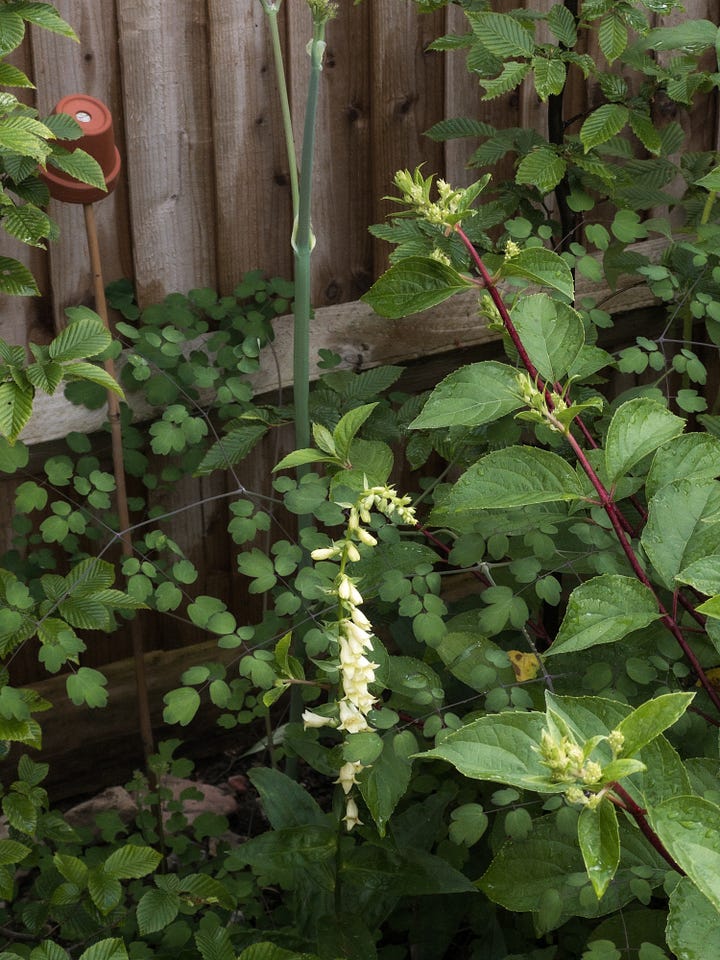
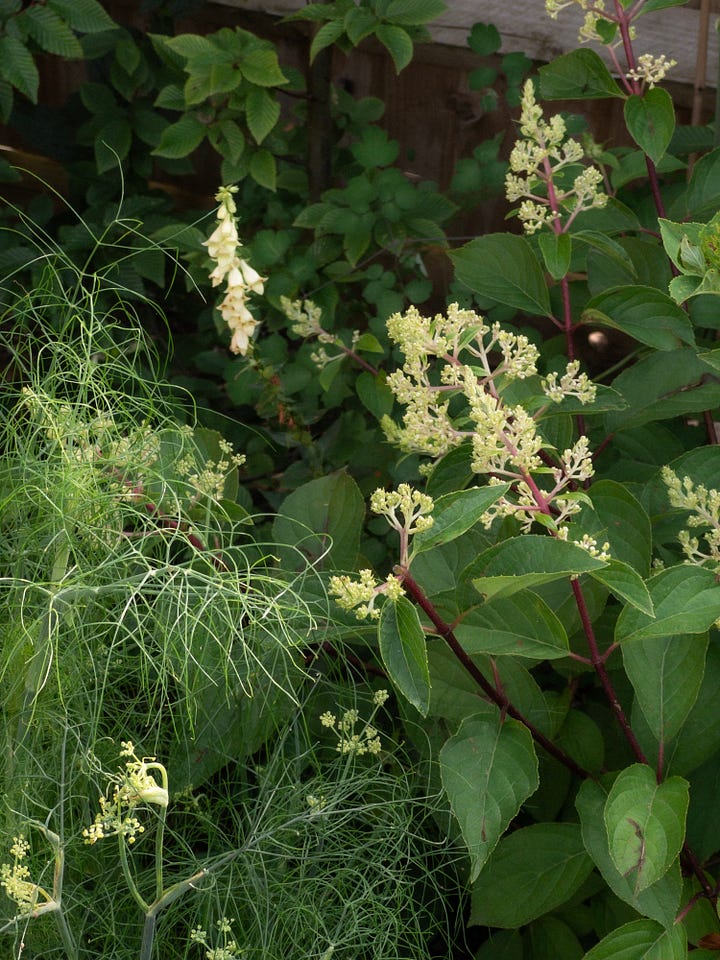
A beautiful relative of our native Digitalis purpurea, originating from slightly warmer climates in North-West Africa & the Mediterranean (although it is very hardy, so don’t be put off) is one plant I have formed a small obsession with. The blooms are smaller, more delicate in the palest buttery yellow - like little glow sticks lighting up the shadier areas they are typically found in.
Our native Foxglove is a well-known biennial, which takes a bit of planning when first establishing within garden borders (although, after some time, the self-seeding does the work for you) - but with the D. lutea, you have the added benefit of it being a perennial. Not only does it return year on year, but it also freely self-seeds. Perfect for lighting up dense greenery, which is exactly how I’ve used it to bring some interest to the base of the hornbeam hedge I’m currently establishing on my southern boundary.
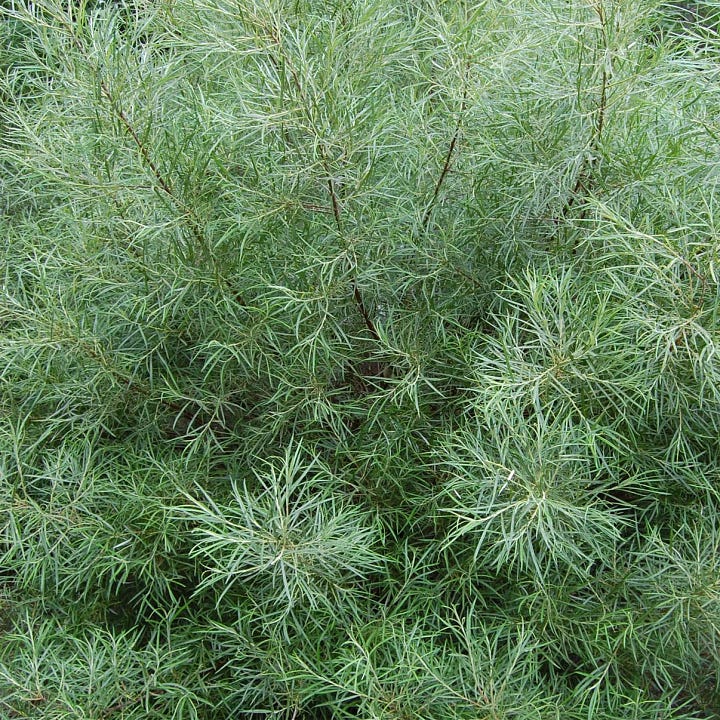
So, I haven’t been specifically looking for shrubs for the garden of late; it is June after all. But with a central bed project to create in spring, I’ve slowly been curating a planting list - I’m feeling the pressure a bit with this part of the garden, because I’ve moved a little from, I’m learning, testing and playing to I have some experience under my belt, I’ve invested in my horticultural education, so I really feel like I should be making the best decisions I can kind of mentality (unneccessary pressure is my speciality). The thing that is becoming increasingly obvious to me is prioritising plants that can not only deal with where our climate is at now, but are adapted to continue to move with it.
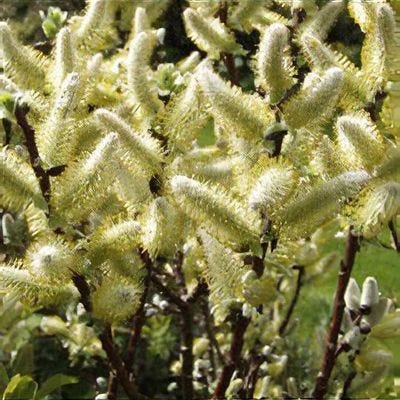
This Salix took my eye mostly because it looked like a giant Rosemary, with its rolled glaucous leaves - the beautiful nursery3 which I popped into had used this plant to blend the section from herbs to shrubs, and that served as inspiration enough for me to add it to the planting list.
Providing architectural shape, a natural resilience to dry summers (and wet winters) and actually, seemingly puts on a delightful show of yellow catkins in the winter - it feels like an all-round shrub that will sit perfectly amongst grasses and wafty perennial flowers alike.
— Salix elaeagnos ‘Angustifolia’
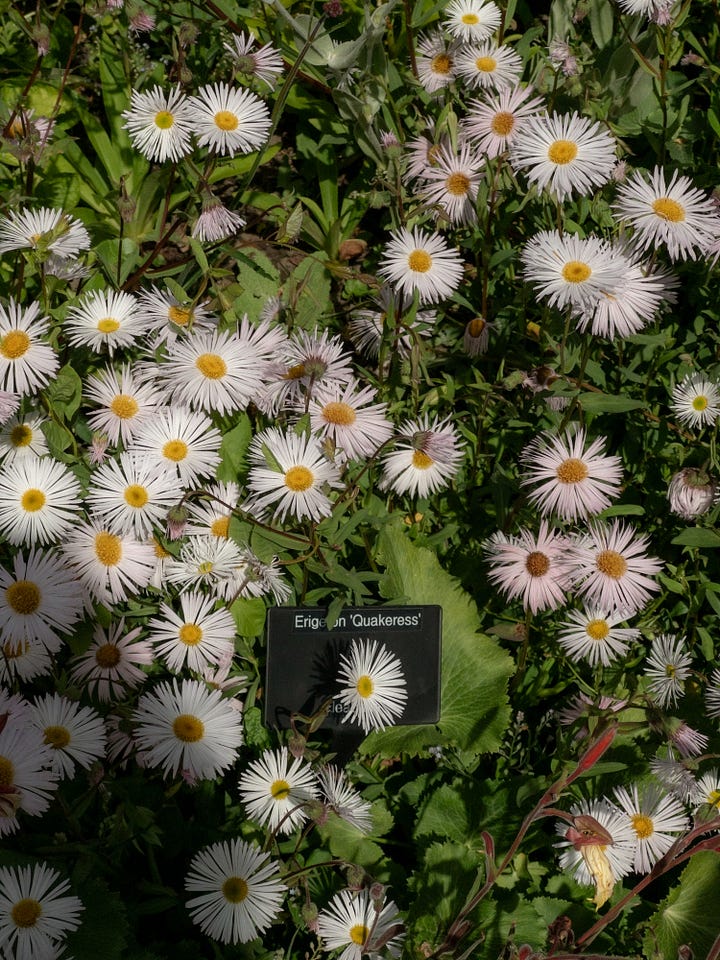
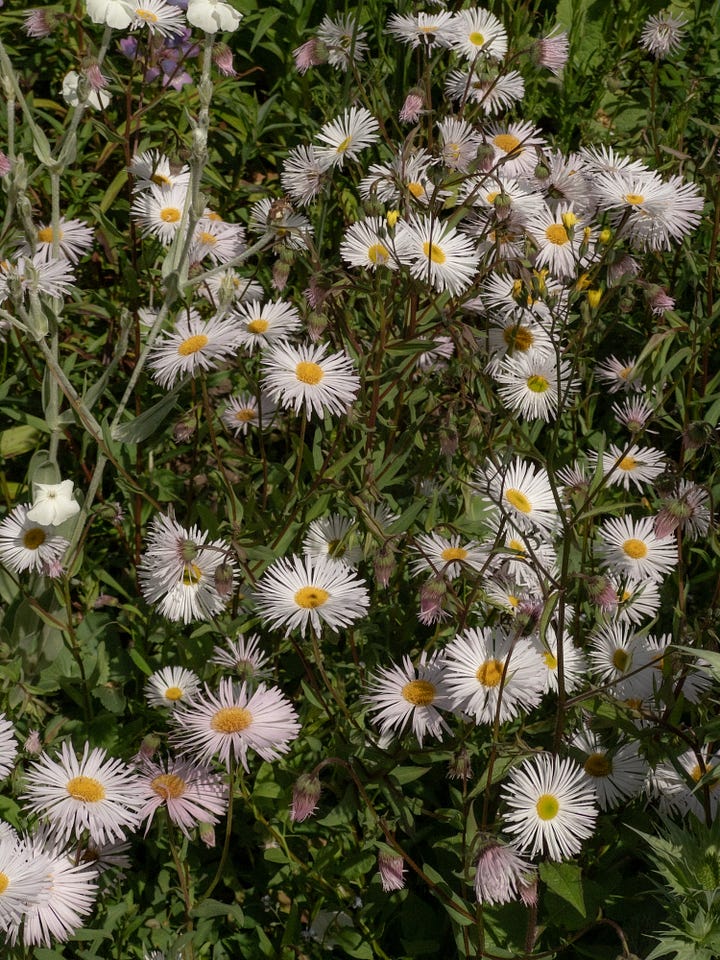
No garden is truly complete without Erigeron karvinskianus, it’s a tried and tested perfect self-seeder which spills and drifts over borders, pavements and pots. It’s the first plant I ever planted, and I will never grow tired of it. But, you know as they say, if you fall in love with a genus, why not explore a little more? (They do say that, right?)
I popped over to Goodnestone Park a couple of weeks ago to see the delights of early June in the garden; it didn’t disappoint. One thing I quickly noticed in their herbaceous borders surrounding the vegetable patches was the Erigeron ‘Quakeress’ spilling at the sides. A slightly bigger daisy-like flower head, in the lightest lilac, illuminated the edge before it touched the grass. With the slightly larger flowers, it seemingly acted as a bit more of a structural support to the perennials behind too.
Seemingly after some looking, you can get it in white - the cultivar E. ‘White Quakeress’, but for me the lilac really seemed to illuminate and help add some interest, especially when the edge of the border spilt directly on the grass.
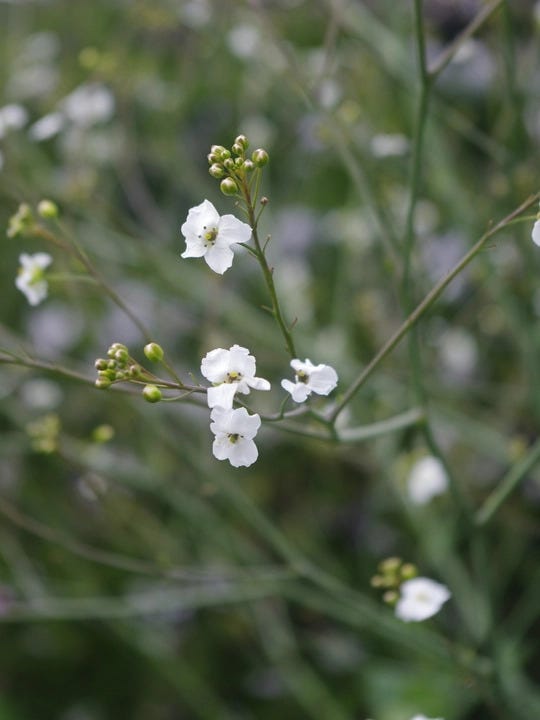
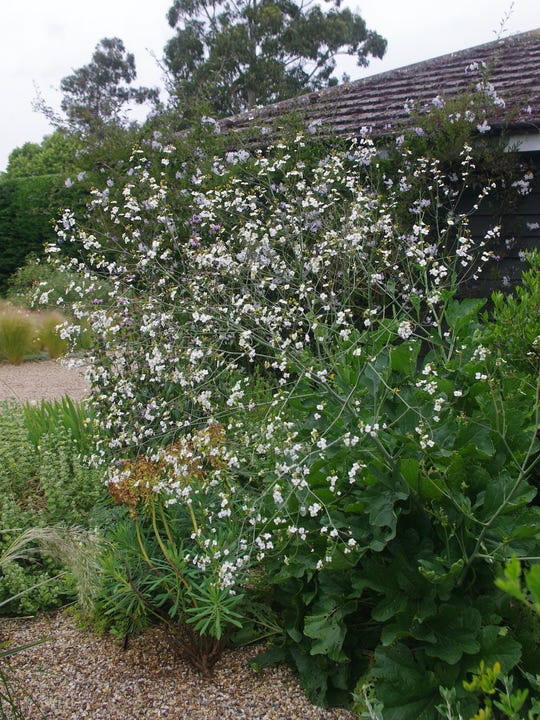
I do love a plant that resembles a flowering explosion - it’s more is more, it’s a haze of joy. Commonly known as Greater or Flowering Sea Kale, which isn’t actually too much of a stretch for a common name for once, whilst not actually a true Kale - it shares the same Brassicaceae family. And apparently edible, although perhaps not the reason you would add this to the garden - but worth knowing eh?
The flowers are white, small, appearing on mass - not just pretty they support pollinators and it is scented, which is always a joy. A note of honey, which is very fitting considering the bees will be frequenting it regularly.
It feels unique, a good blend of delicate intricacies with the flowers and the natural structure you would expect from a brassica. I will 100% be adding this to my planting list for the next project.

Thank you for reading, allie x
Hopefully, you enjoyed this post, if you did, I would be eternally grateful if you would share/restack so I can reach more people like you.
Also, you can find me on other parts of the internet, if you fancy: IG, TikTok.
ergh petrol station flower > oh your foliage is nice > that colour is hideous> but you’re thriving > oh wait, there are more understated ones that fit my dreams
like large grass lawns in modest gardens or well, any garden that isn’t a park
Edible Culture in Faversham if you’re local to Kent, it’s brilliant
Comments
Nothing yet. Say the first thing.
Sign in to join the conversation.