
“We know no spectacle so ridiculous,” Macaulay wrote, “as the British public in one of its periodical fits of morality.” The British public is, in fact, rather more phlegmatic than the great historian gave it credit for. But as for much of its press, Macaulay could scarcely have been closer to the mark.
Over the past few weeks, a moderately prominent academic has been subjected to the sort of political and media scrutiny that would escape most politicians — indeed, most criminals. In so many ways, the strange and sad Jason Arday affair could not better embody the contradictions of our age, or the dreary fever of much of the radical right and its media allies.
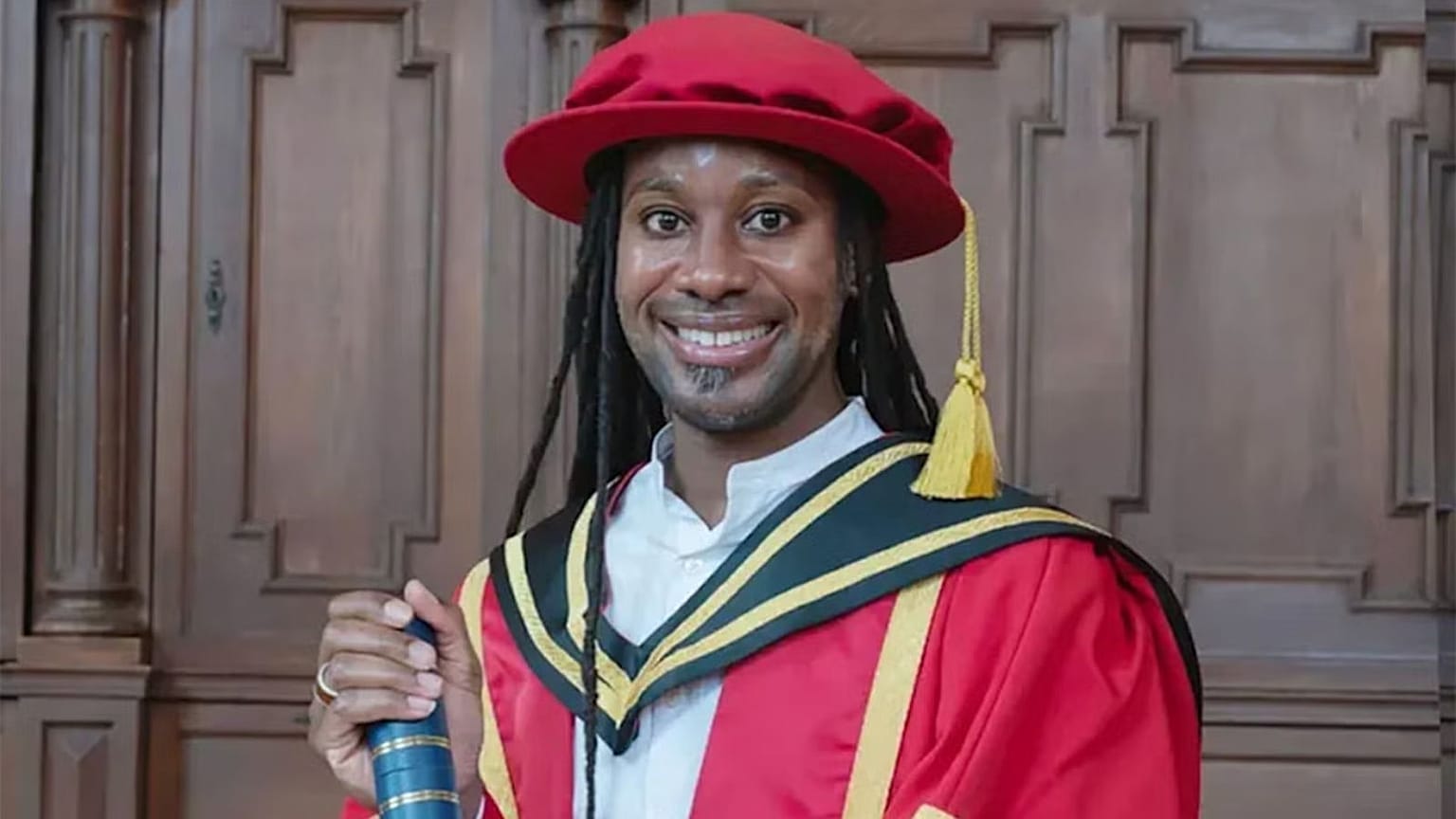
Jason Arday was neither blameless nor innocent. He was an author of his own misfortune, if, according to some reports, not always necessarily of his own work. But he was turned- unduly- into a moral panic: made the talisman of a corrupt order which neither necessarily exists nor which he even necessarily represented.
Again, this is not to absolve Arday. Moral panics do not require an imaginary transgression. Those at their centre may indeed have made mistakes, to have sinned. What distinguishes a panic from simple morality though is that the real or alleged transgression comes to mean something bigger: it comes to stand for something those talking about it need it to mean as opposed to what it does - for one man to become a parable when he is not, or might not be.
The sociologist Stanley Cohen’s foundational definition of moral panic could almost have been written for this story:
“A condition, episode, person or group of persons emerges to become defined as a threat to societal values and interests; its nature is presented in a stylised and stereotypical fashion by the mass media; the moral barricades are manned by editors, bishops, politicians and other right-thinking people.”
At the centre of this Cohenesque panic, Arday himself became not just a fool or knave, but a danger: not simply an academic accused of misconduct or lies, but the embodiment of a collapsing meritocracy, hollow diversity and “woke” institutional capture. From the start the story was explicitly racialised. Newspapers introduced him as Cambridge’s “diversity poster boy” and reused that framing repeatedly. Commentators treated his case as proof that DEI, sociology or “race-based social engineering” was corrupt. His individual conduct was being used to prosecute a much wider argument about Black advancement. Let us not forget, that the allegations entered the mainstream through an openly ideological source- from a man who had previously argued that under true meritocracy Black people would largely disappear from prestigious positions. This is conveniently omitted from much of the coverage.
Three things came together to make this story what it was. The first was timing- it was an interesting story, taking place in the middle of the dog days of summer. The grim reality is that if Arday’s tale had broken in a busier news cycle, the attention might not have been so intense and disproportionate. The press can be right in the particulars and still terribly wrong in the aggregate. This is especially so after his resignation from Cambridge- yet piece after piece still came, not just about his academic work, but every part of his life- no secret, no embarrassment, no petty humiliation was off limits. Secondly, It was clearly driving eyeballs. Arday found himself at the centre of the content and culture wars, chewed up and spat out. Thirdly, it is part of a wider ideological battle, through which for many commentators and press organs there are no enemies to their right, but only existential threats to their left.
By this I mean that, on the contemporary right, wrongdoing is too often a personal failing when committed by an ally, but a systemic revelation when committed by an opponent. Perhaps, in fairness, this is true of all political tribes. But consider some of the other stories of this summer and how often this is true. A former neo-Nazi could be rehabilitated and invited to become a Conservative council candidate. A deceased columnist repeatedly guilty of punching down, often accused of racism and misogyny could be remembered as mischievous- even brave. Though he made mistakes Rod Liddle was allowed to be larger than his worst words on his worst day- because he stuck it to the libs.
Jason Arday was allowed neither complexity nor redemption, because he had ceased to be a man and had become a proof positive, whatever the investigations said. His alleged mistakes could not remain individual: with a nudge and a wink, with DEI in the background and foreground, they cast suspicion on minority academics more generally, on attempts to diversify the university sector and, eventually, the public sector more broadly. His story was commercialised and extrapolated to speak to an increasing preoccupation on the British right, not always stated but increasingly present: the idea of a “two-tier” country in which white people are quietly being oppressed. It is another sad American import into British politics: racialised white anxiety. And it is good business. Arday may have been a chancer, at times, but he was unfortunate to find himself at the centre of the both moral panic and content machines. That is not to say that everyone who wrote about Arday, or everyone who found his story distasteful, was motivated by racial impulses. But to deny that those impulses formed part of the story is to choose not to see what we all really know.
Of the many ironies of this story, perhaps the darkest is that the radical right ultimately treated Arday in much the same way as the progressives who had celebrated him: as a symbol, an avatar, an embodiment of something greater. Jason Arday was repeatedly denied the right simply to be a man - fallible, complicated and capable of redemption - because neither side had much use for one. Cambridge made him a symbol of institutional progress; his critics made him a symbol of diversity defeating merit; and even in death, his name and reputation remain another tool in the ceaseless, airless, brainless culture war. In every iteration of that war, the human being disappears. The obvious compromises, complexities and mutual understandings are never admitted, the offers of redemption unsaid, because too many people, too many interests and too many X accounts, depend upon the war staying unwon.
PS We talked about this on News Agents today. You an watch in full here.
No posts
Comments
Nothing yet. Say the first thing.
Sign in to join the conversation.