
⚠️ Heads up traders! This is PART 1 of my weekly Gold Insider report.
Full flow breakdown, technical key levels, and my trade ideas will drop tomorrow.
Gold is already up 12% in August, and we’re not even through the month yet. This week’s rally started on Wednesday after the US Treasury announced to double its buyback of long-end bonds starting Sep 9. The market reacted instantly - dollar hit three month low and surging long-term yields eased.
Meanwhile, Fed minutes on Wednesday showed that “many participants“ said rates might need to move higher this year, meaning the September or December rate hike is firmly on the table.
So we have an interesting tension now where the Treasury is trying to ease pressure on the long end and the Fed still considering higher short term rates.
In this week’s macro brief, let’s focus on that tension - what the Treasury is doing, why, and how it fits with the hawkish Fed and Gold market.

Imagine the US government as a guy who spends way more money than he earns. To be fair, all governments are “that guy“, but US does it on a spectacularly large scale.
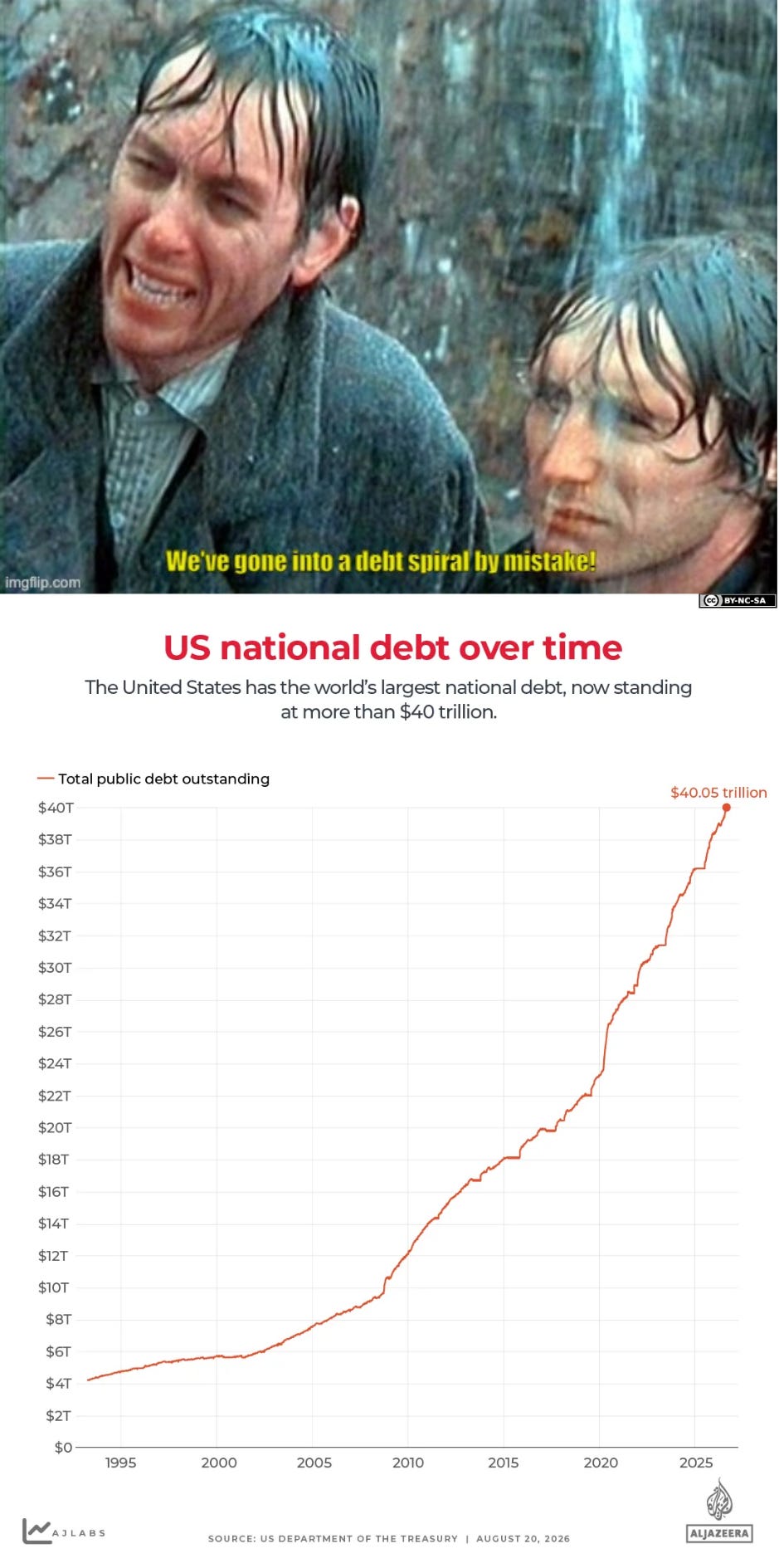
So every week, the guy has the same problem - he needs money. He gets it through selling short-term and long-term I-owe-you notes (Treasury bills and bonds) that basically say - Please, give me money now and I promise to pay you back more than you lent me in the future.
Our guy has a pretty good reputation and usually keeps his promise. So there are plenty of buyers: from pension funds, banks, and foreign governments to money market funds, hedge funds (as was disclosed recently), and ordinary people like you and me. This is called the primary market - buying new debt straight from the source.
But those buyers are clever. They know that once they buy a 30-year Treasury bond, they don’t have to actually hold it for 30 years to earn some. Maybe the interest rates are about to be cut, and that Treasury bond is about to become way more attractive than the new bonds coming to the market. So they re-sell that 30-year bond to another buyer at a higher price, and that next buyer can do the same thing later. That process is called trading old debt on the secondary market, and it’s huge - estimated at $32T of dollars.
So our guy is busy raising money every week selling new notes while there’s also a huge secondhand market where his old notes are constantly changing hands.
And occasionally, the guy does the math and decides he doesn’t want that much debt sitting out there for the next 30 years. So he goes to that secondhand market and buys some of that old-issued notes back. This is a buyback and this is what Wednesday was all about.
Every week, I read through hundreds of news, data releases, and positioning reports to map out how each economic event will move the Gold market. I turn that work into a weekly Gold plan that I use myself.
Inside this week’s plan:
Every support and resistance zone on my chart
5 setup ideas with exact entries, stops, and profit targets I’m using
My capital protection plan with exact alerts when to reduce/cut my position
The interactive Trade Board: input the current price and it shows you which setups are live and which need extra confirmation.
When you join premium, you also get:
The Gold Spotter indicator - my proprietary warning system that shows major market trend shifts before everyone else.
Proprietary SAGE indicator - a rule-based system designed to put you in high probability buy setups and keep you away from trashy ones.
Mid-week level updates on Telegram - Levels shift and when they do, I send you an update.
One trade won’t make your year. A process you can repeat every week just might.

These bonds get retired and he can say to those previous bondholders “I don’t owe you money anymore.“
All sounds great, if not for a small problem - our guy just spent money buying that debt back. And since money is scarce, he now needs to issue new IOUs - this time short-term that mature in a few months to cover for that buyback.
This whole silly story boils down to one point: the US government isn’t actually paying down the debt. It just replaces the long-term debt it owned over 30 years with more short-term debt that needs to be repaid sooner.
To give you another example that sticks: Imagine you have a 30-year mortgage and you decide to replace it with a series of short-term loans. And while it turns out cheaper right now, you’re now dependent on short-term interest rates set by the Fed - when you renew the loans again and again, that interest can go lower, but it can as well go higher.
Which raises the question:
Why would Treasury make itself more dependent on short-term interest rates when the Fed is actively debating on raising them?

1/ Politics
The midterms are close. High long-term yields are a very visible political problem since they feed directly into mortgage rates. And these have already moved up to 6.7% from ~6% before the war.
Voters notice when their mortgage payment is suddenly a hundred bucks higher, while short-term Treasury bills is something most of the people never think about.
So the government is choosing less trouble today for a bigger debt problem later.
2/ Short-term debt is actually cheaper right now
The current short-term rate is 3.5%-3.75% and this is the rate that goes up if the Fed decides to hike this year. But compare that to the bond market’s long-term interest rates - the US30Y jumped above 5.33 this week. When you borrow for 30 years, you lock that rate all the way till the end.
Short-term borrowing has an obvious advantage - you’re saving money right now by paying less interest (3.7 against 5%) and you can roll over the debt - borrow for a few months, pay the current lower interest, and borrow again when the bill matures.
The risk of larger debt - if short-term rates eventually get hiked - is the future post-election problem. Plus the current administration has been pushing for rate cuts for a long time. If mid-terms go in their favor, the rates should get lower and make the current short-term borrowing even a better deal.
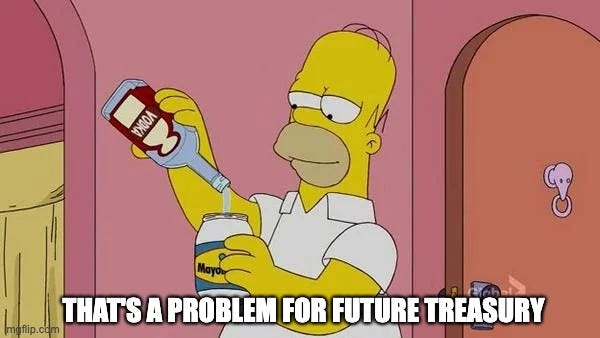
What the Treasury is planning to do is not new. The Fed used the exact same curve flattening strategy in 1960s - the Operation Twist. But the difference is who’s actually implementing it this time.
The Fed controls monetary policy and it decides on the most appropriate rates independently - even when higher rates will make the debt more expensive. So when the Fed starts buying bonds, like it did in 2020 for example, the main purpose is to support the economy (ideally) and financial markets.
The Treasury, on the other hand, is responsible for paying the bills and borrowing the money. So when it implements the same strategy, it’s exposed to whatever happens with the short-term rates.
That’s not a direct conflict of interest because both institutions are functioning independently but it does make the bond investors think - What will happen if short-term rates stay high?
If investors think that this situation can put more pressure on the monetary policy decisions, that can affect their confidence in the Treasury debt and the dollar-based assets.
And interestingly, we didn’t see Gold rise only against the dollar this week. It also rose higher against the euro and the yen - meaning Gold was gaining value across currencies.
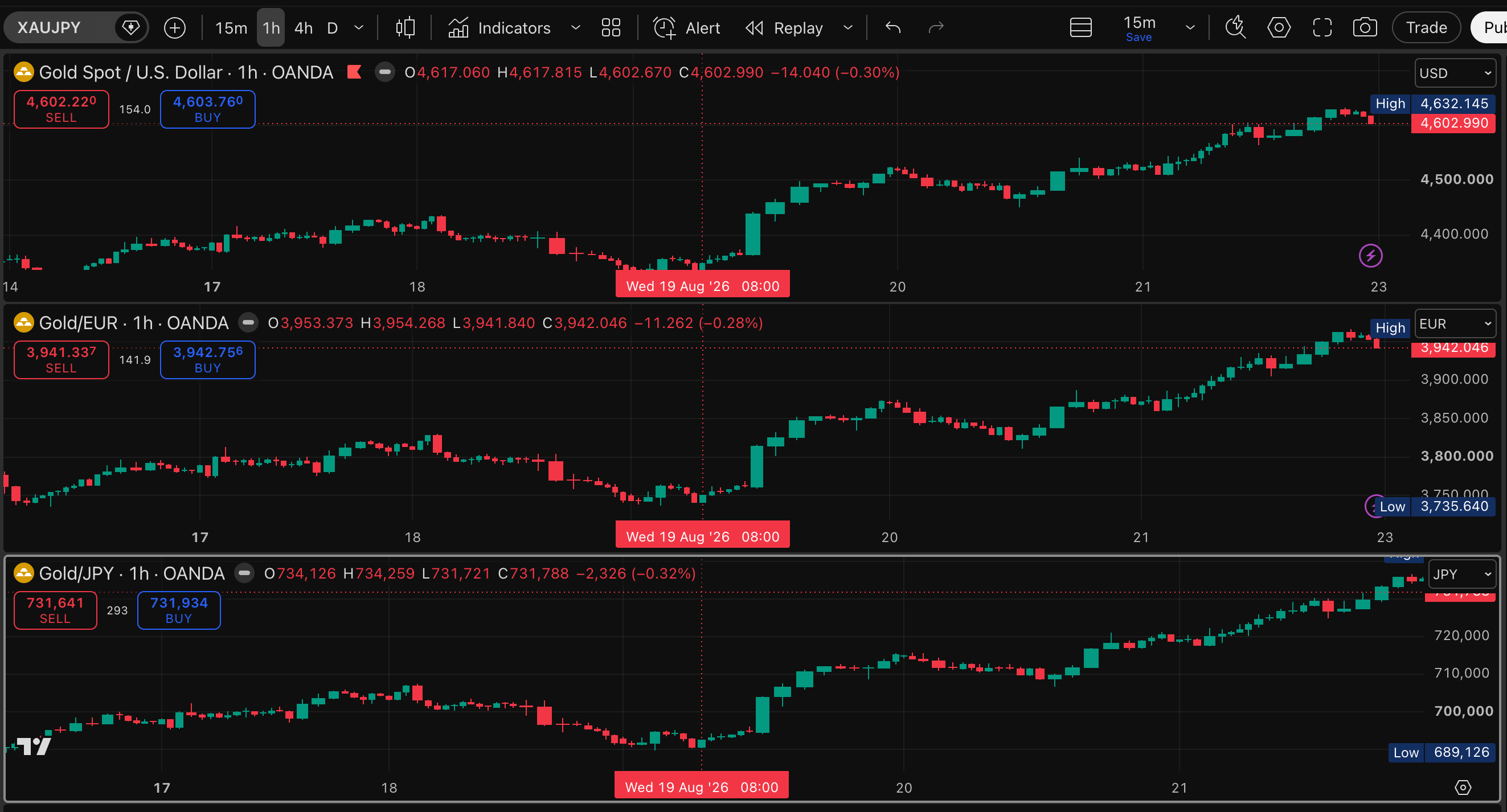
If that’s a signal that investors are getting more concerned about debt, and confidence in fiat currencies, this move higher has the potential to be more long-lasting than a simple technical Gold bounce against a softer dollar.
The US debt has already crossed $40T this week with inflation above target and borrowing costs high. The government now has only so many options.
It can either 1. accept the borrowing costs and let the interest rates eat into budget. It can 2. cut spending or it can 3. raise taxes. And you as you can imagine neither of the three will increase its popularity before mid-terms.
But there’s also another option - and the most important for Gold - it can let inflation and the weaker currency ease the burden of the debt. That’s the exact scenario when buying Gold and bullion pays off to the fullest.
The announced buyback of $4B is a needle in a stack of $32T hay market, but it acts as an important signal - that the government is ready to step in if long-term rates to move too high and too fast because it cannot afford a higher cost.
A reserve asset carries more value when the market sets its price. But once the government starts muddling the market, it becomes less attractive as a long-term investment.
Foreign holdings of US treasuries have already been on the decline and have fallen again in June 2026.
Would the buyback cause more losses for the US Treasury? Maybe. But what we do know is that the Treasury’s announcement just gave foreign countries another reason to diversify into other assets - including Gold.
Central banks buy slow, but unlike short-term hedge funds, the price floor they create doesn’t disappear when one inflation number surprises higher.
Safe trading,
and remember: All that glitters is not Gold,
Joe
Comments
Nothing yet. Say the first thing.
Sign in to join the conversation.